KitGuru KitGuru.net – Tech News | Hardware News | Hardware Reviews | IOS | Mobile | Gaming | Graphics Cards


Ray tracing 8-game average FPS
Here we present frame rate figures for each graphics card, averaged across all 8 ray traced games on test today. These figures can disguise significant variations in performance from game to game, but provide a useful overview of the sort of performance you can expect at each resolution tested.

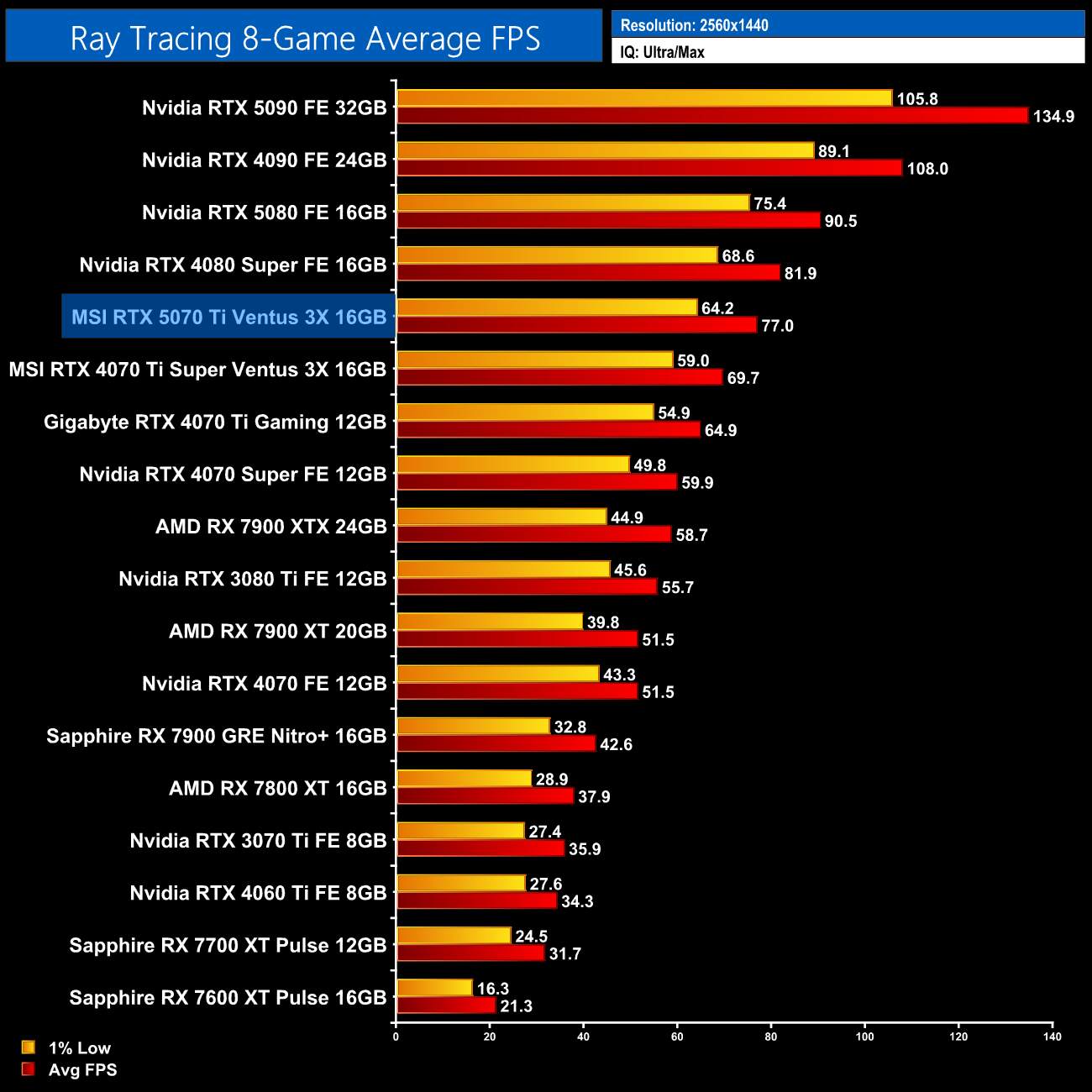

Overall ray tracing performance scales very similarly to the rasterised numbers we looked at earlier in the review. On average, at 1440p the 5070 Ti is 11% faster than the 4070 Ti Super, making it 6% slower than the 4080 Super but it's clearly better than anything AMD has to offer – coming in 31% faster than the 7900 XTX. Gains over the two generations-old 3070 Ti show sizable gains too, with over double the performance on offer.
At 4K, the gains over the 4070 Ti Super now stand at 12% on average, with a 32% lead over the 7900 XTX. Performance is also roughly 2.5x better than the 3070 Ti, though a large part of that is no doubt down to the fact the 8GB card can't really play ray traced games at 4K.
Cost per frame, launch MSRP data
Please note this only compares ray traced performance and value.


Ray traced cost per frame paints the RTX 5070 Ti in a very positive light – it's the best value GPU we have seen for ray tracing, at least when looking at the MSRPs. It's a 12% improvement over the RTX 5080 at 4K, for instance.
Cost per frame, current pricing data
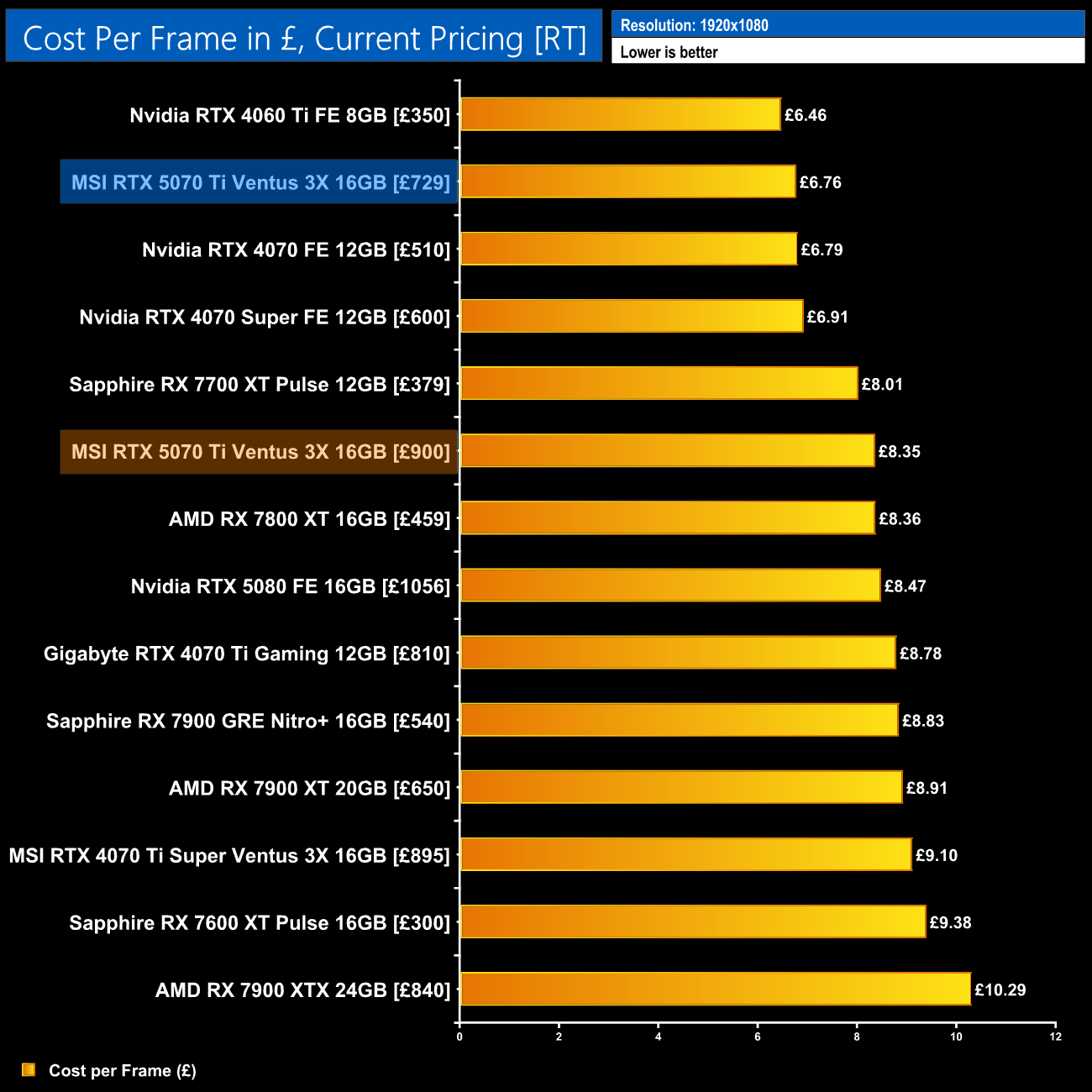
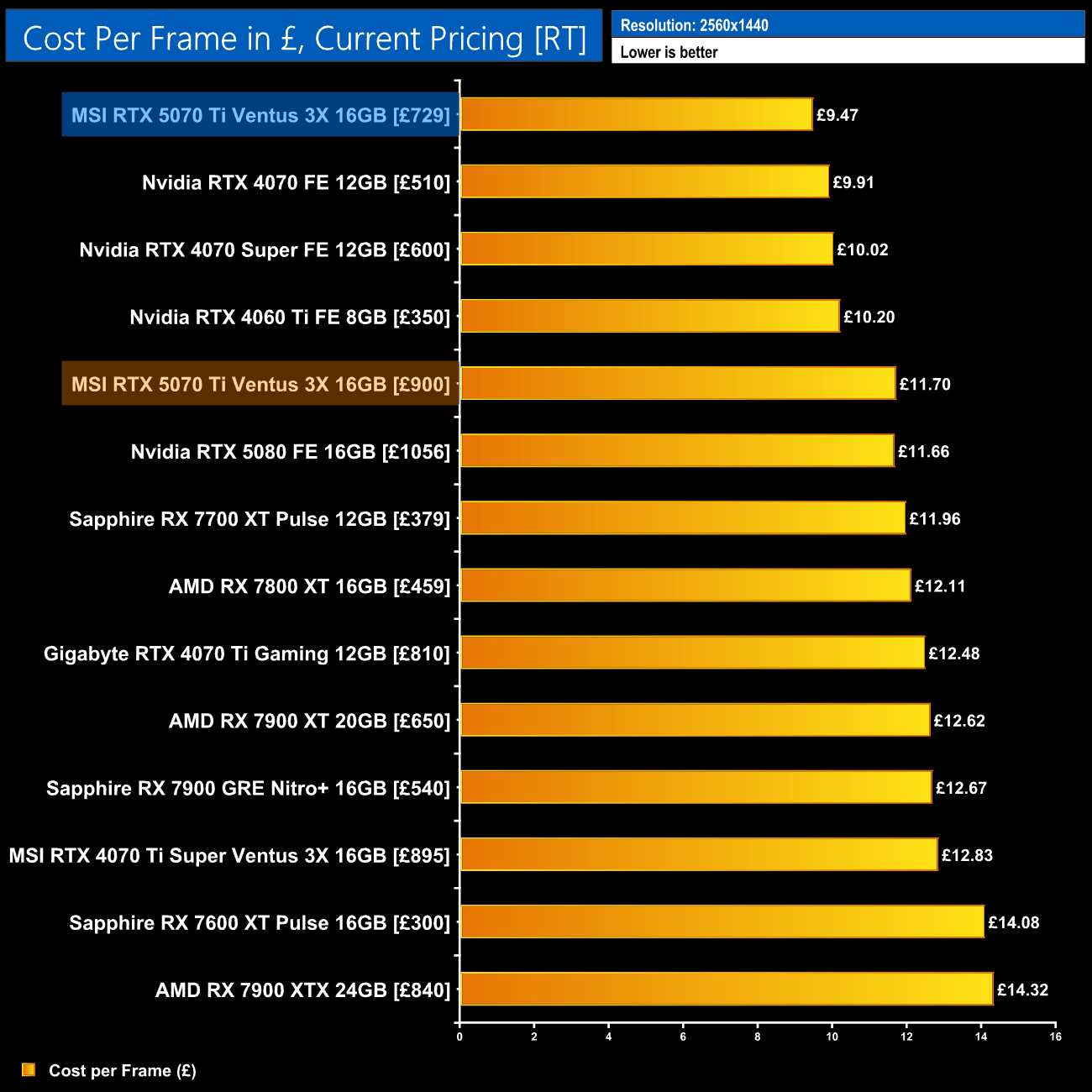
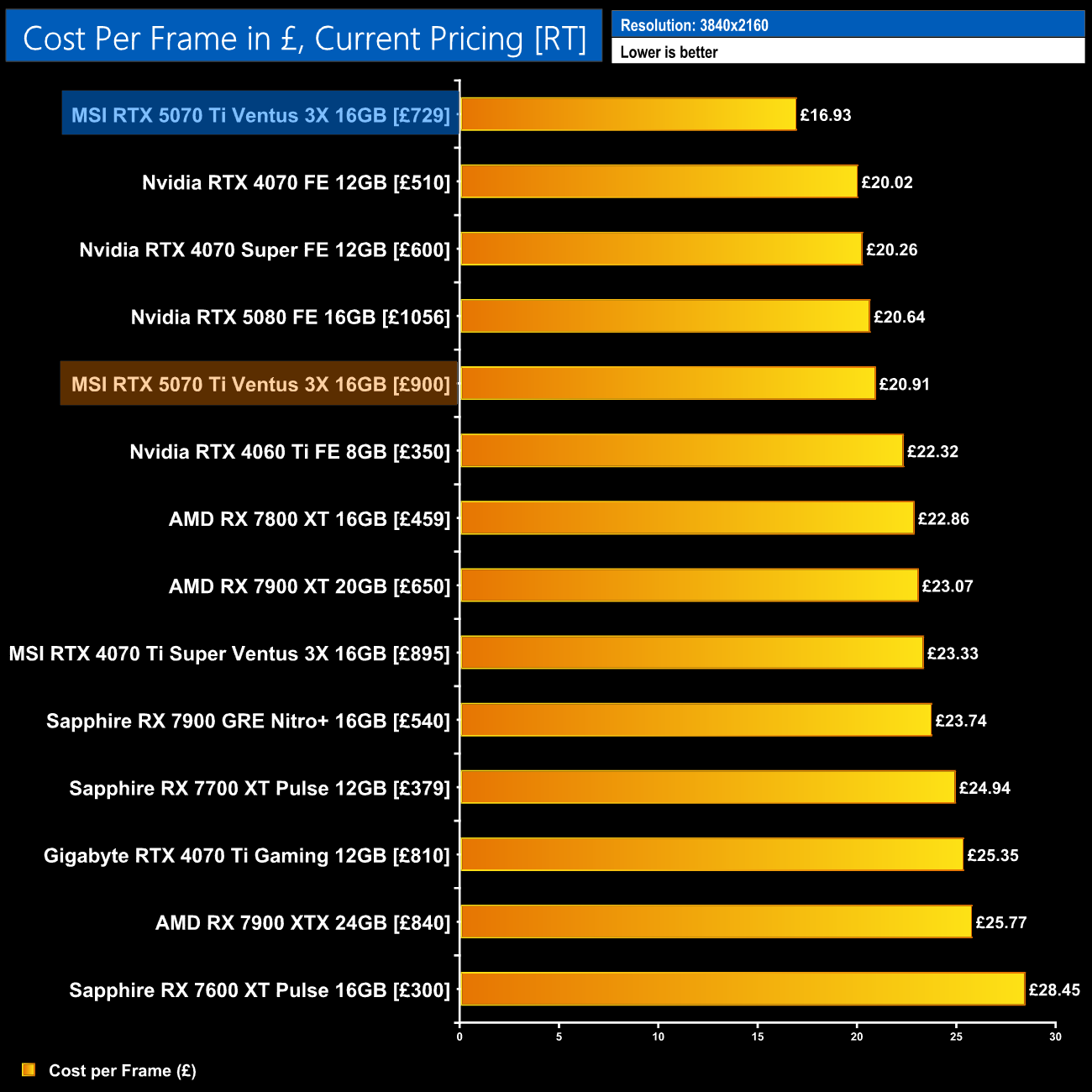
Once again, the picture changes when looking at current street pricing, and this data does assume the 5070 Ti will land at £729, which remains to be seen. But if that is the case, it will still be the clear value leader for ray tracing cost per frame.
However, if we factor in the hypothetical £900 price point again, value slips down the table – not as dramatically this time, given it'd still make more sense than any of the AMD competition when it comes to ray tracing, but the 5070 Ti would clearly not be nearly as competitive at this higher price point.