KitGuru KitGuru.net – Tech News | Hardware News | Hardware Reviews | IOS | Mobile | Gaming | Graphics Cards


DLSS Multi Frame Generation
Next, we give a few examples of the sort of frame rates – and latency numbers – you can expect when using Multi Frame Generation (MFG) with the RTX 5070 Ti. This isn't going to be as complete an analysis as per our RTX 5090 review, so please do check out that content if you are interested.

The first thing to point out is that the experience using MFG at 4K isn't nearly as satisfactory as we saw from the RTX 5080 and RTX 5090, and that's for one simple reason – the base frame rate is considerably lower. That impacts latency, as if the 5070 Ti can only hit 30-40fps before MFG is enabled, latency will only get worse once the various frame gen settings are enabled.
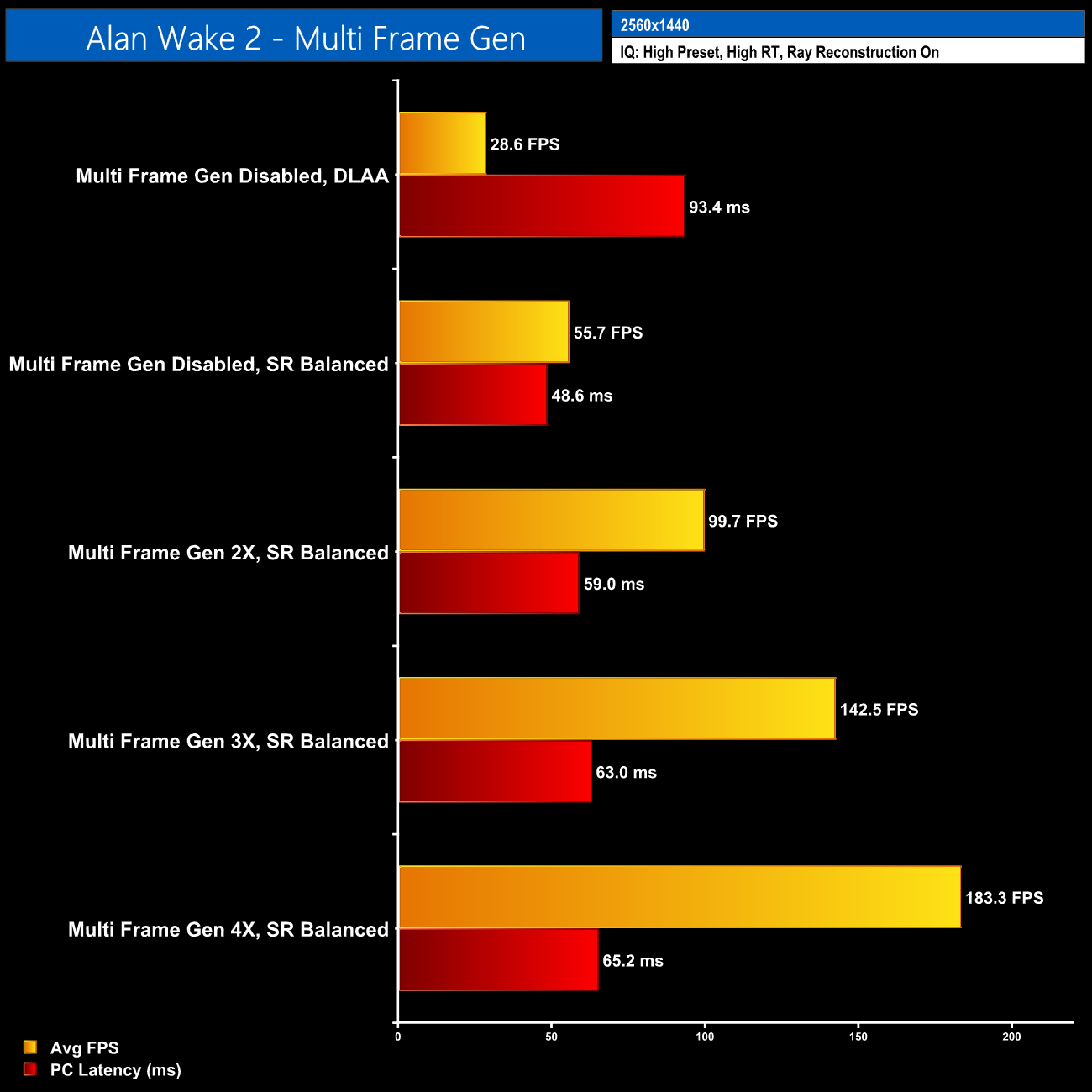
Because of that, we've also tested at 1440p, where base frame rates are much higher, resulting in lower latency. Of course, MFG still increases latency relative to only using Super Resolution, but it's more manageable at this resolution.

We can see the same in Cyberpunk 2077 – at 4K, when only using Super Resolution Performance mode at 4K, the 5070 Ti delivers 45fps baseline. Whacking on MFG will give frame rates hitting up to 144fps when using MFG 4X, but the latency is approaching 60ms in that instance.
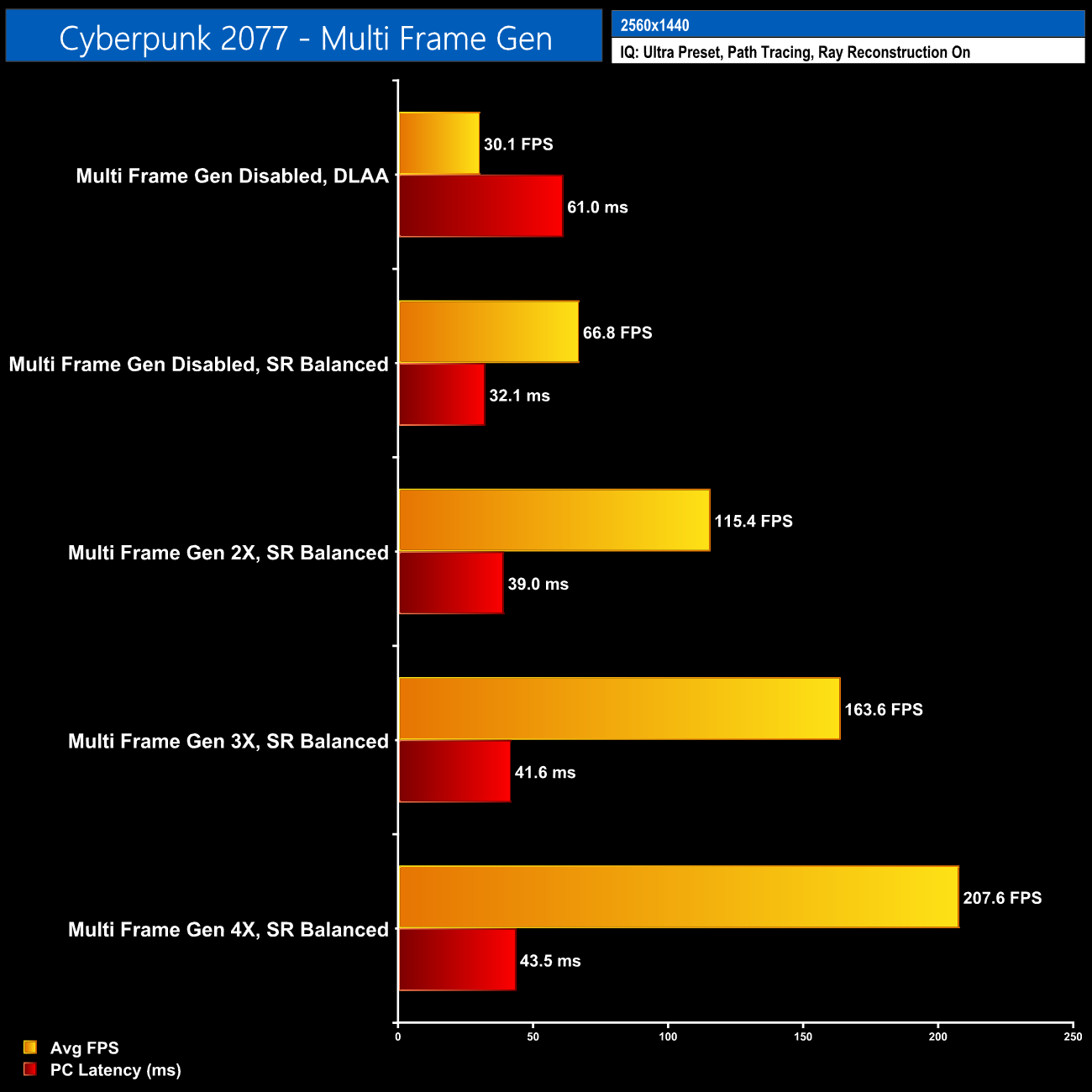
Drop to 1440p, however, and the 5070 Ti can do 67fps baseline when using Super Resolution Balanced mode, so latency has a much lower starting point, and as such only tops out at 44ms when using MFG 4X. It's still not perfect, as we pointed out in our RTX 5090 review – traditionally, latency should go down as frame rate increases, not up, but it's worth keeping in mind.
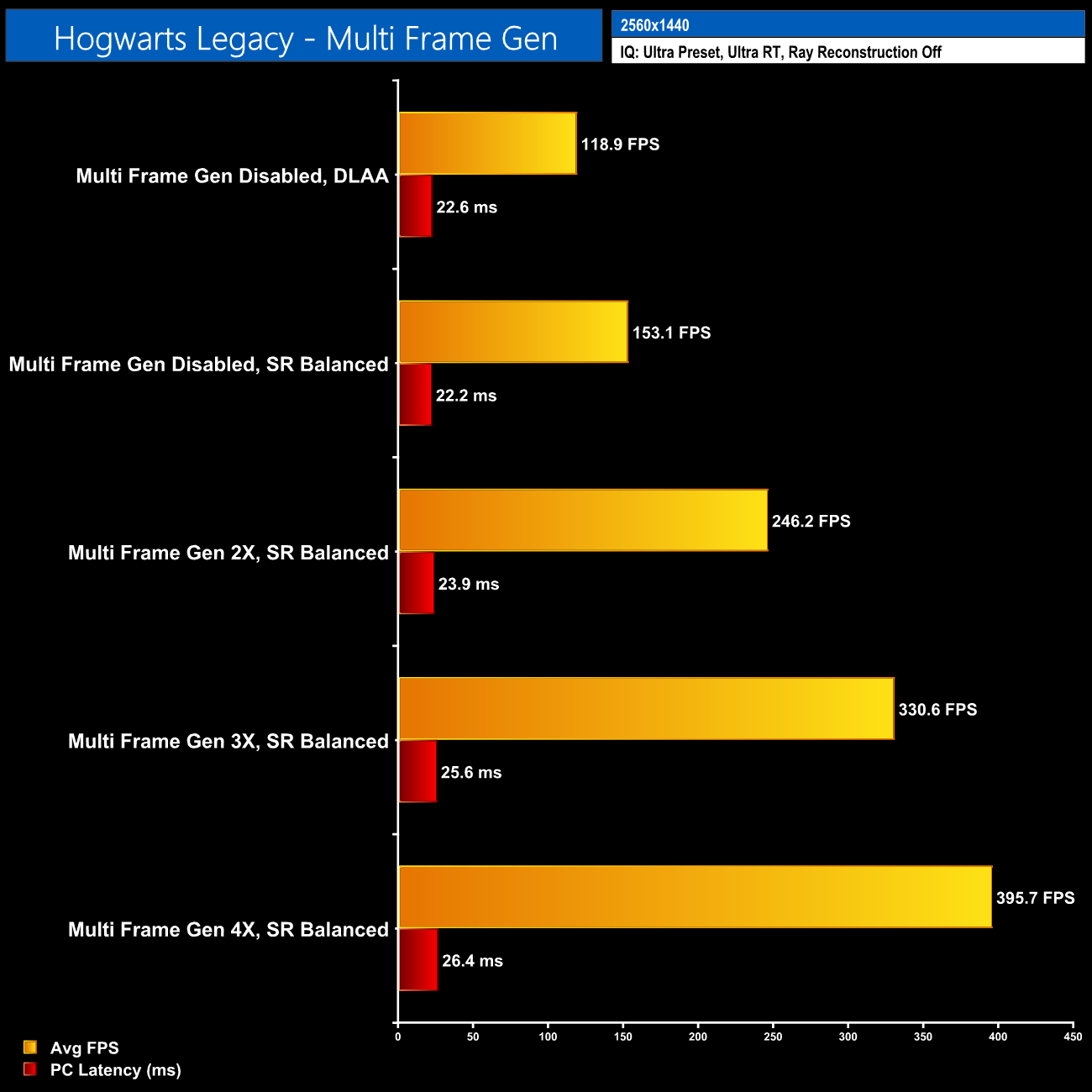

Of course, some games are easier to run than others, and Hogwarts Legacy is no problem to use at 4K with MFG, given the frame rate is already at 120fps when only using Super Resolution Performance mode – as such, the latency hit to MFG isn't so noticeable, topping out at 34ms, while frame rates hit 281fps on average.
Performance versus RTX 4070 Ti Super
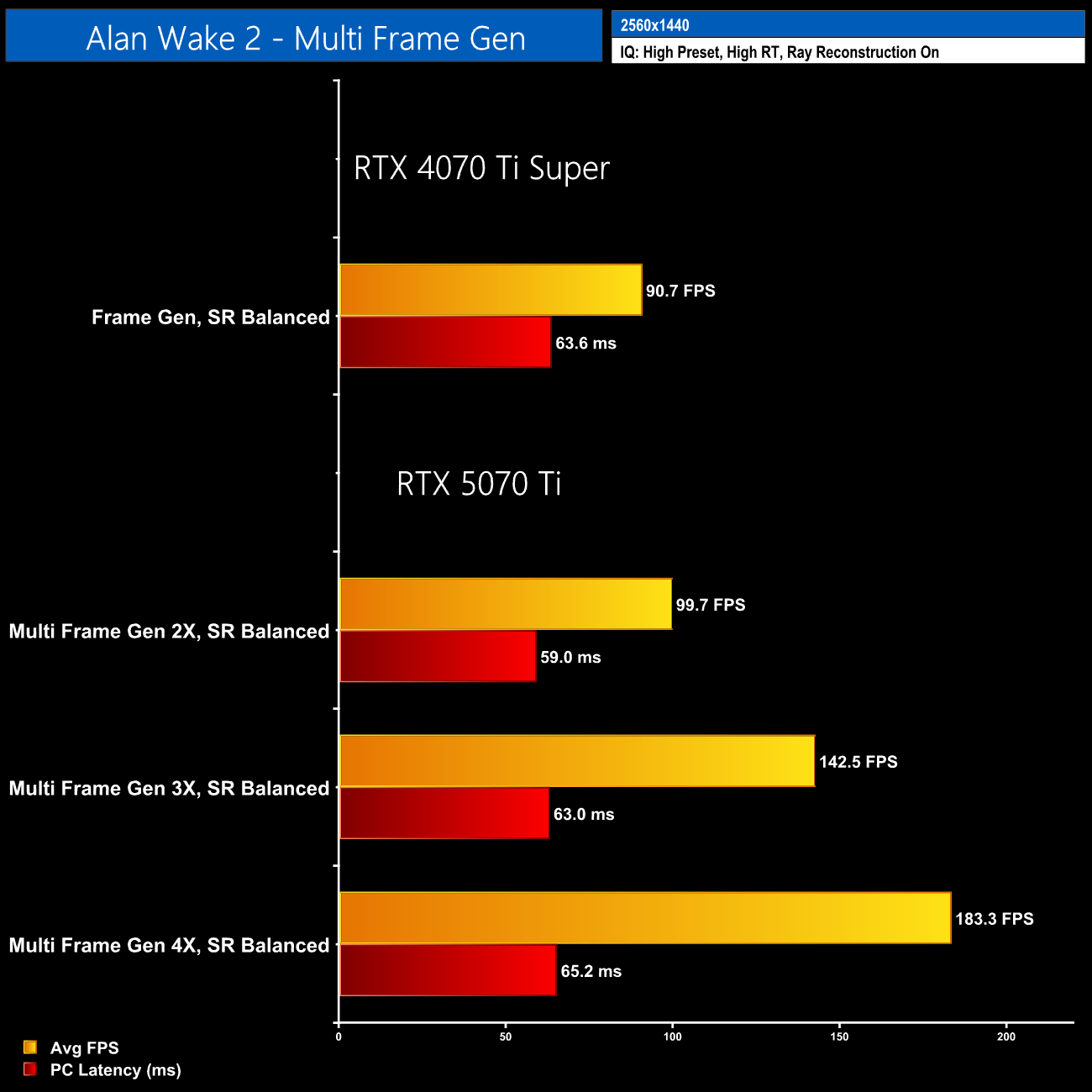

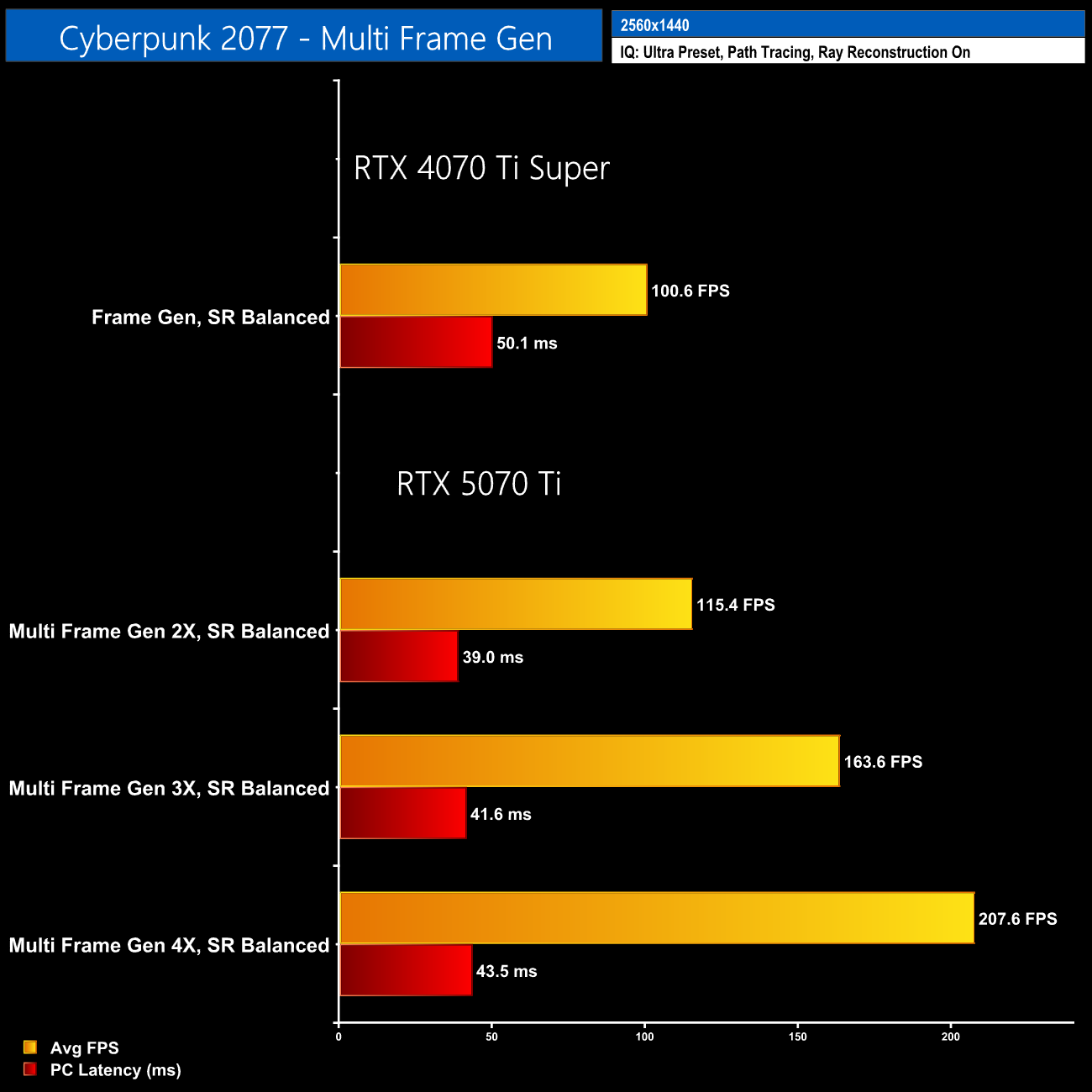

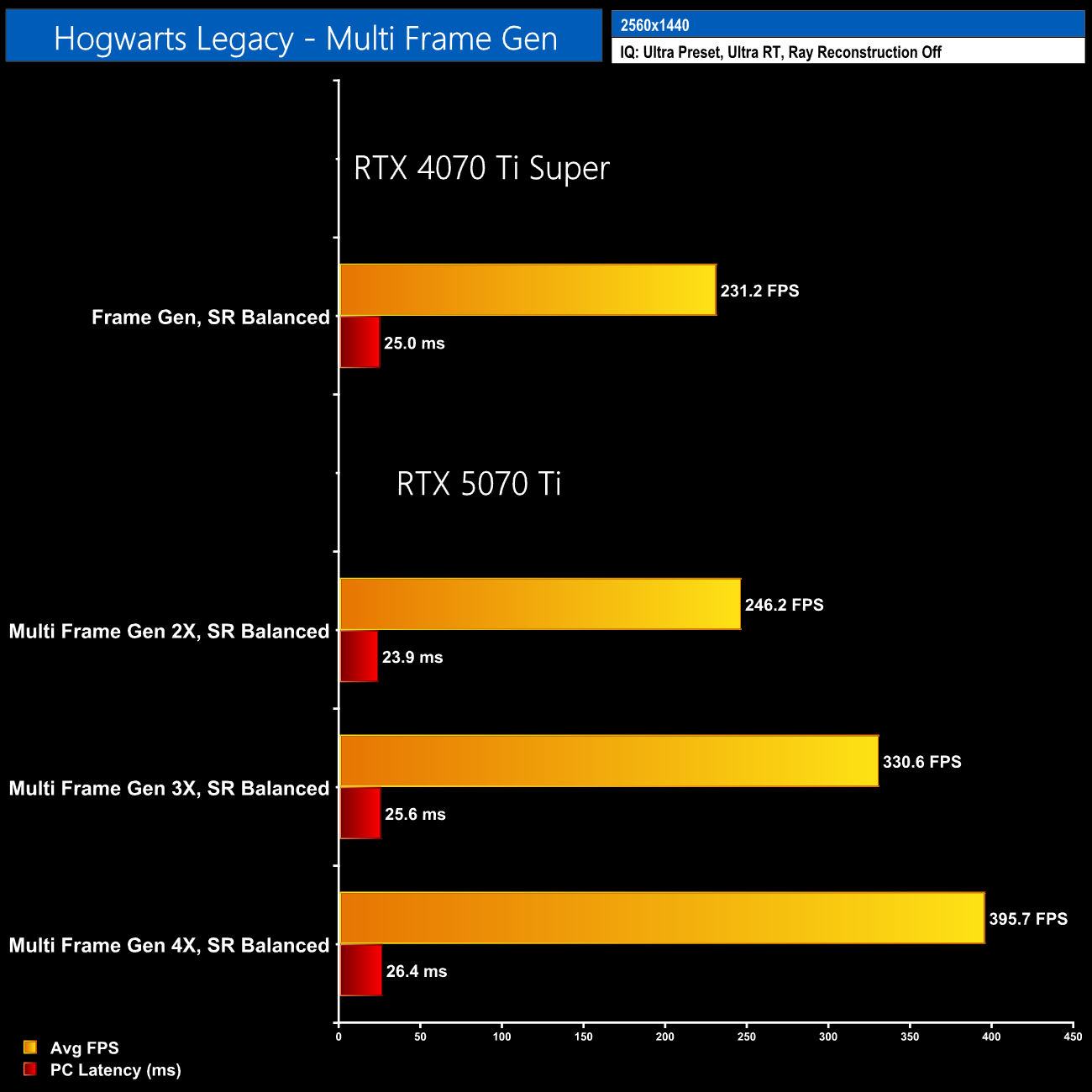
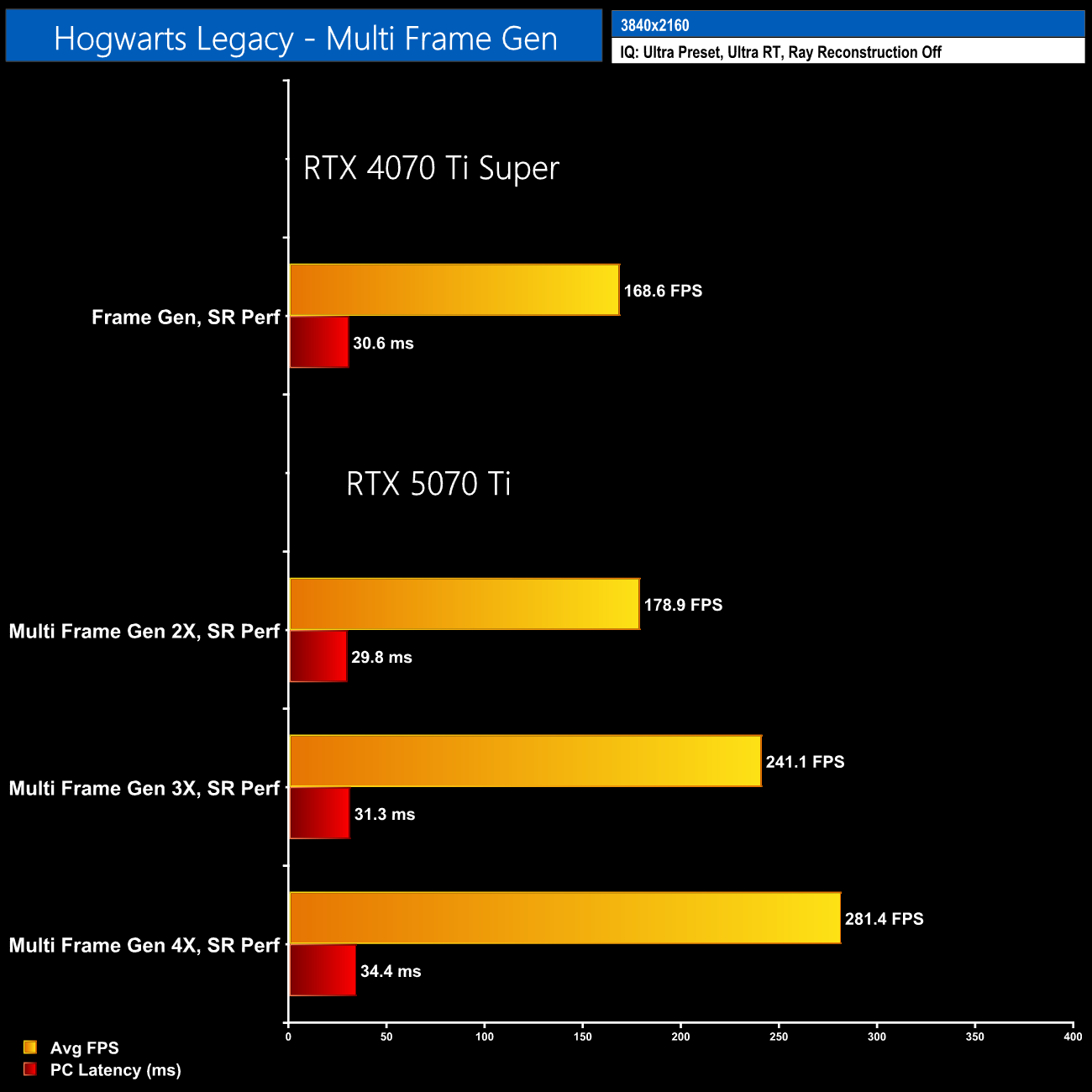
We also re-tested the RTX 4070 Ti Super in these games, being an Ada GPU, it is limited to using ‘Frame Generation' instead of ‘Multi Frame Generation', i.e. the insertion of one AI-generated frame rather than up to three on the RTX 50 series. As such, that means you can get significantly higher frame rates with the 5070 Ti Super – roughly twice the frame rate. Obviously this is dependent on the game supporting Frame Gen, and these aren’t the raw performance increases we saw earlier in the review, but it’s worth pointing out if MFG is a feature you might value.