KitGuru KitGuru.net – Tech News | Hardware News | Hardware Reviews | IOS | Mobile | Gaming | Graphics Cards


For our manual overclocking tests, we used MSI Afterburner. Our best results are as below.

Considering the RTX 5080 proved very fruitful in terms of overclocking, I was keen to see how the 5070 Ti would compare – after all, both GPUs are built on the same GB203 die.
While the Ventus 3X model does not allow for increased power limit, I was still able to maximise the memory slider, while I added 420MHz to the GPU core, resulting in a real-world frequency of around 3150MHz.
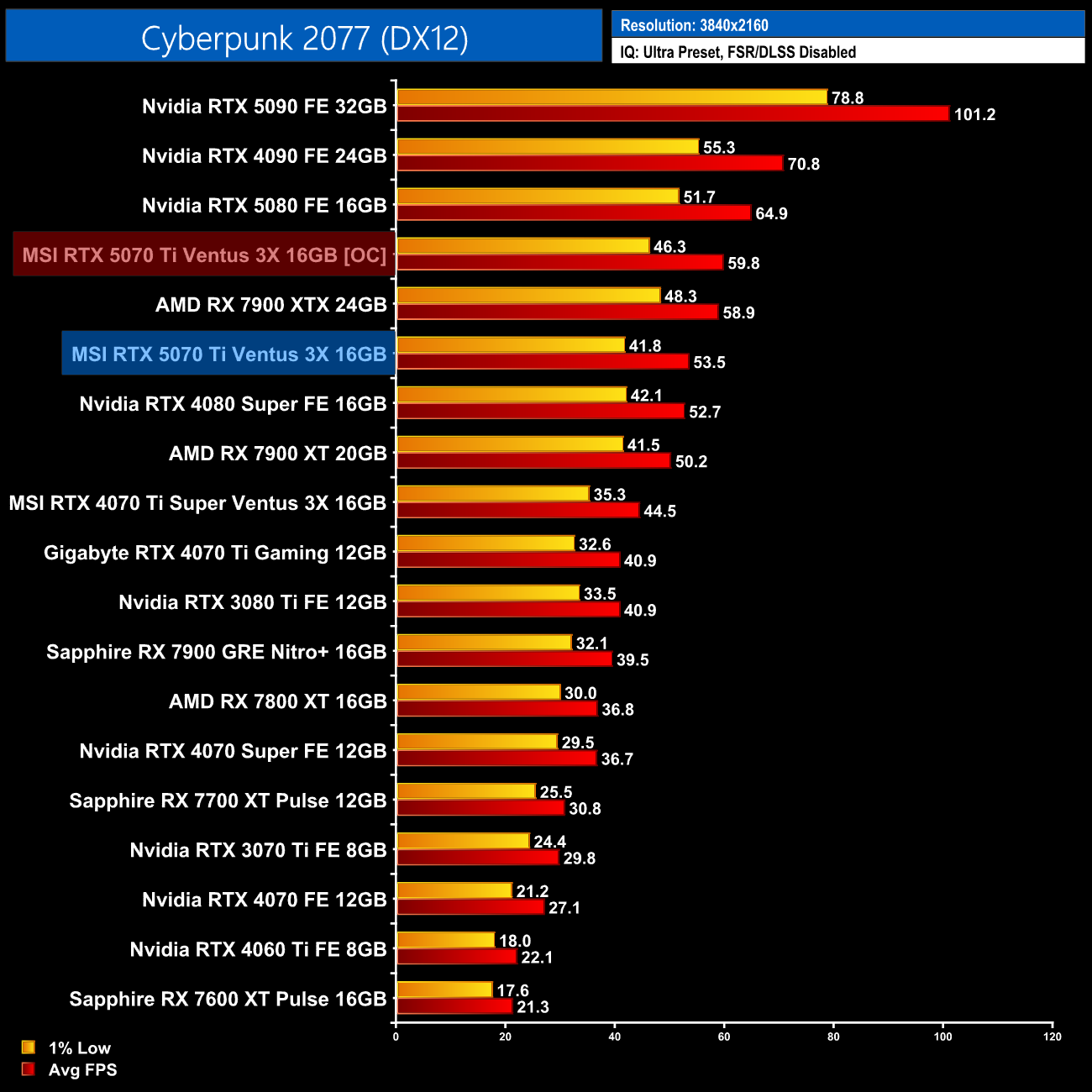

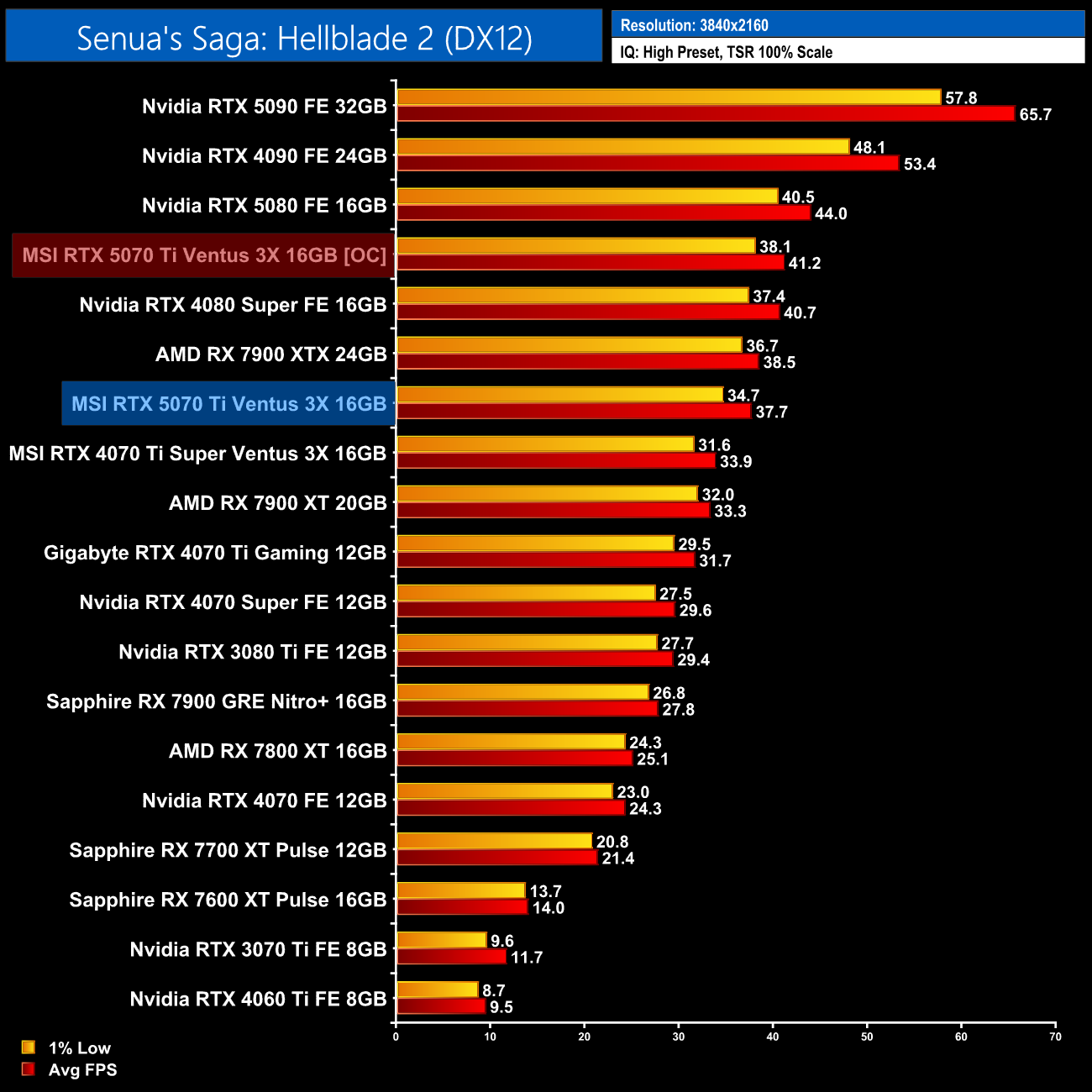
This resulted in big gains in Cyberpunk, with a 12% uplift, though the difference was 7% in A Plague Tale: Requiem, but that's still respectable. In Hellblade 2, we're looking at a 9% performance uplift, so I'd say that is well worth doing if you pick up an RTX 5070 Ti.
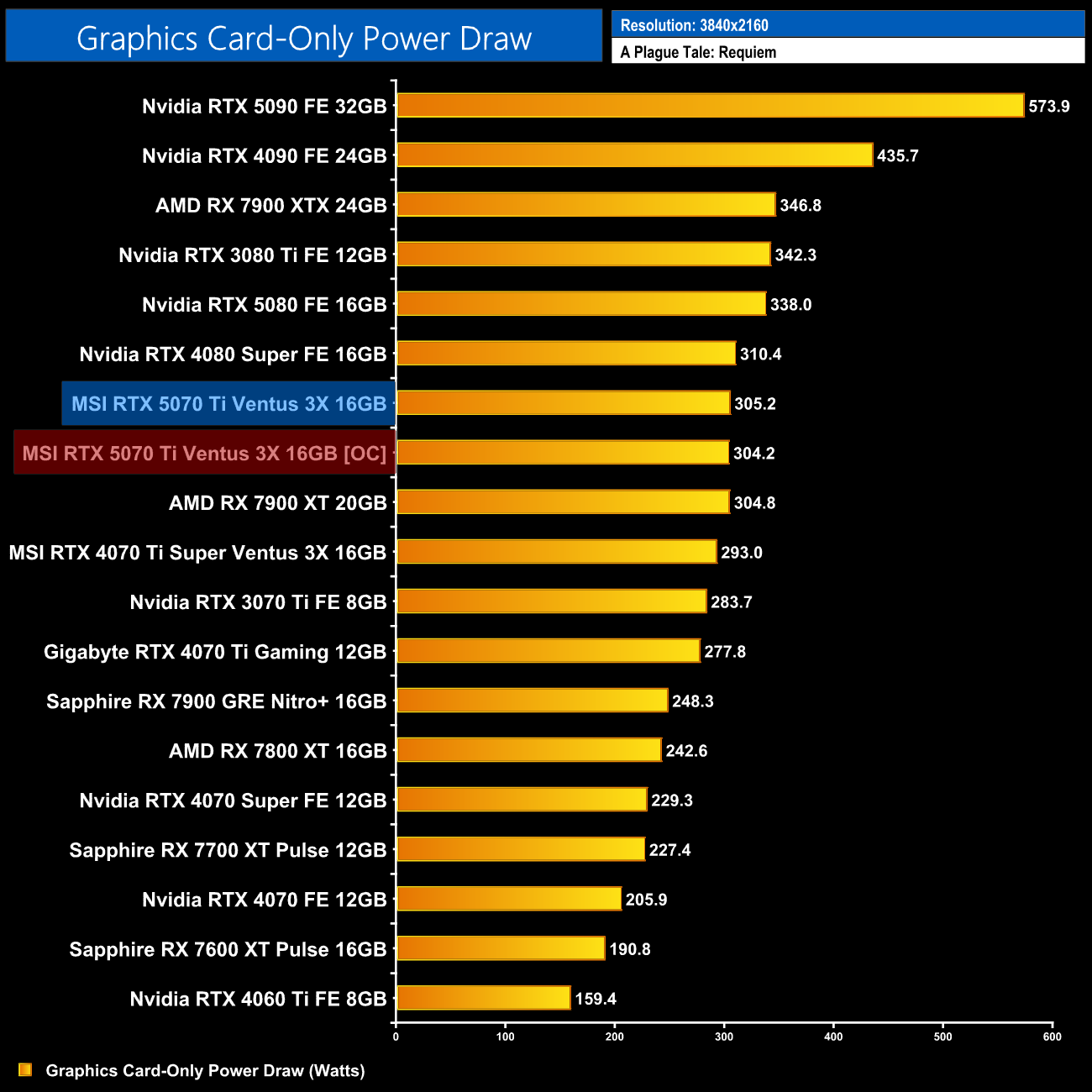
Since we made no power adjustments, real-world power draw remained the same as stock, resulting in a net efficiency gain.