 KitGuru KitGuru.net – Tech News | Hardware News | Hardware Reviews | IOS | Mobile | Gaming | Graphics Cards


We first measure system-wide power draw from the wall while the card is sat idling at the Windows 10 desktop for 5 minutes. Gaming power draw is recorded by running the Deus Ex benchmark at 4K. As a maximum stress test, Fire Strike Ultra Stress Test is run 5 consecutive times and the cards’ power draws are recorded.
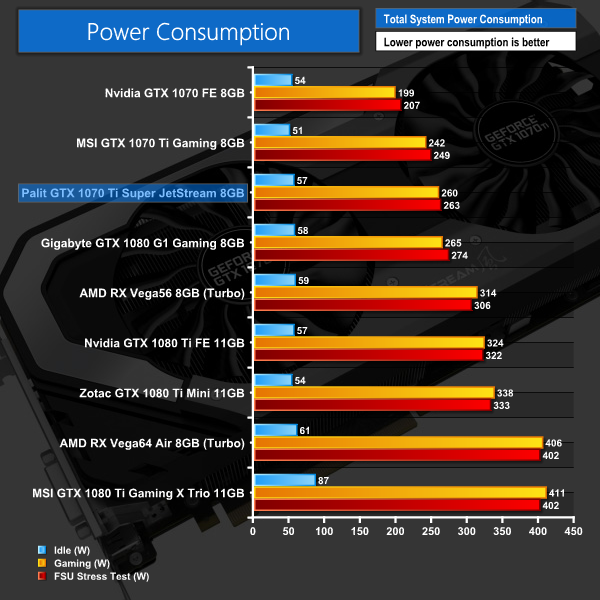
The Palit Super JetStream does draw slightly more power than its MSI 1070 Ti rival, but that is likely because the Palit can sustain higher clock speeds than the MSI card. In any case, it is no surprise to see the Palit 1070 Ti drawing more than a reference 1070 but less than an aftermarket 1080.

With the shortage of GDDR5X, I’m wondering if the GTX 1080 is being phased out, because this is (95% of) a GTX 1080 GDDR5. Maybe the endgame is for the 1080 to be discontinued, the GP104s going into 1070 Ti instead, and the GDDR5X to be saved for the 1080 Ti and possibly mid-range Volta cards if the early flagships use GDDR6?