 KitGuru KitGuru.net – Tech News | Hardware News | Hardware Reviews | IOS | Mobile | Gaming | Graphics Cards


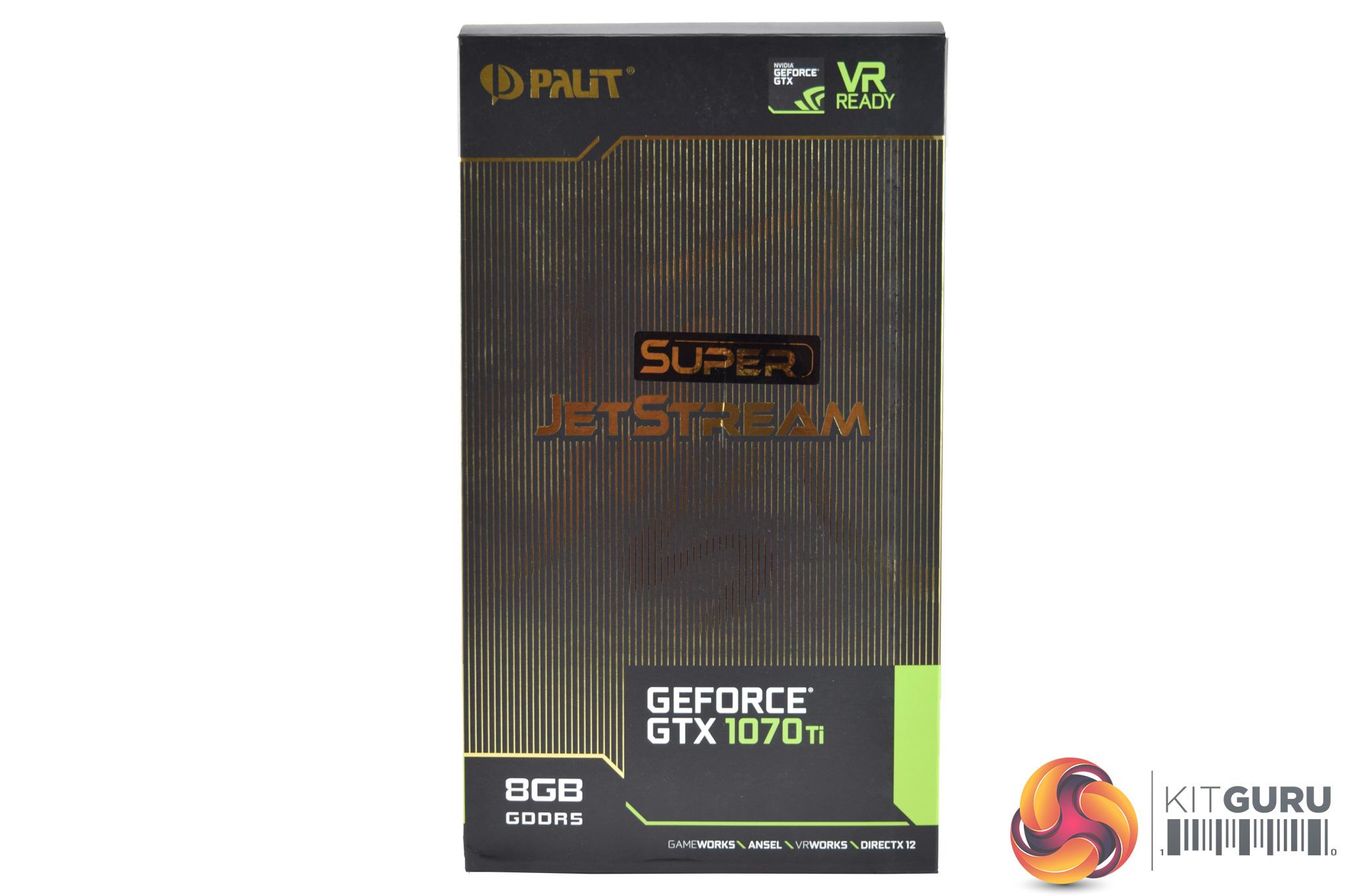
The Palit GTX 1070 Ti Super JetStream ships in a reflective gold box, with both the Palit branding and Super JetStream text written in gold lettering.
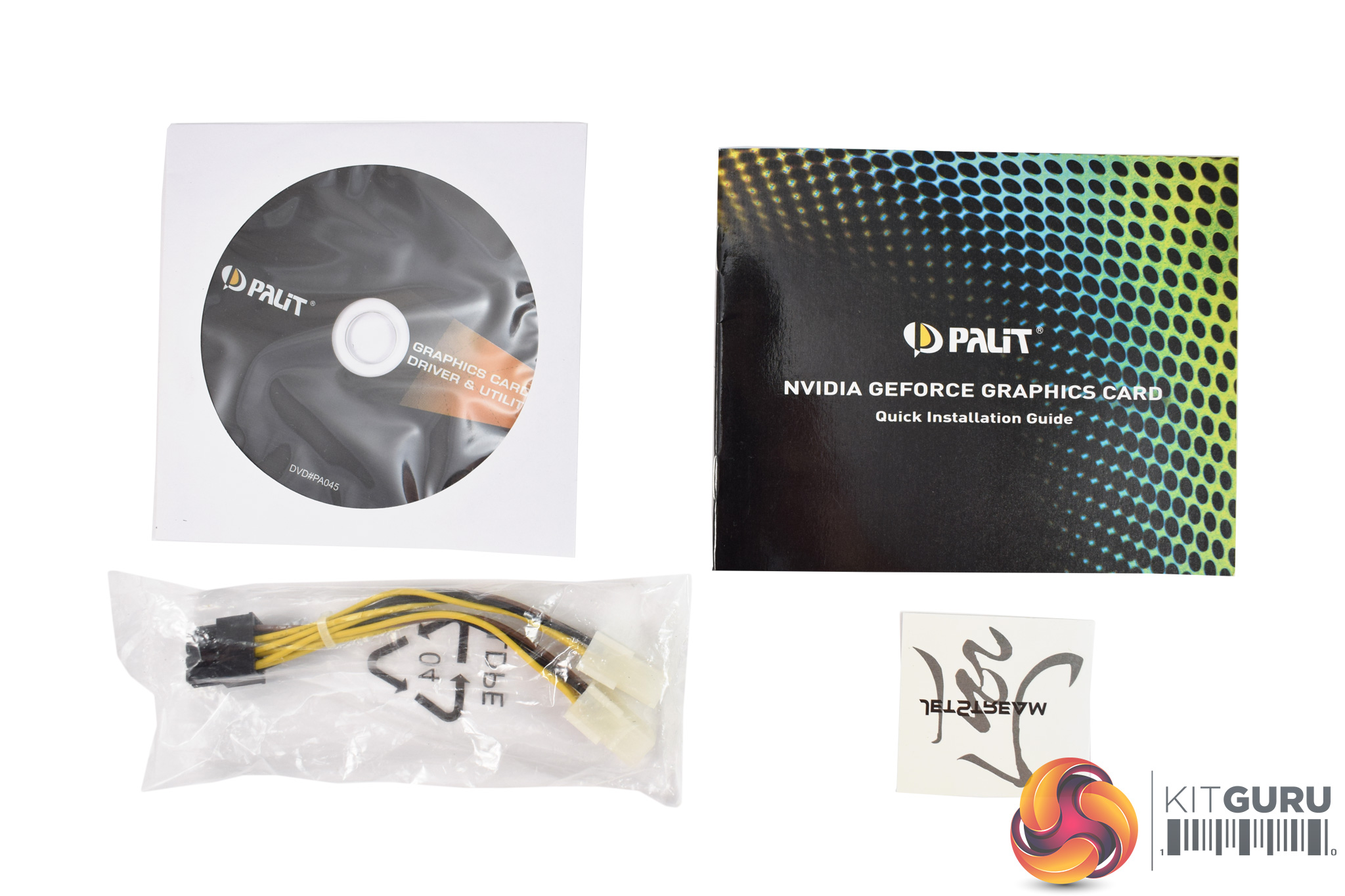
Inside, there is a pretty standard selection of accessories including 1x driver disc, 1x quick start guide, 1x PCIe power adaptor and 1x sticker.
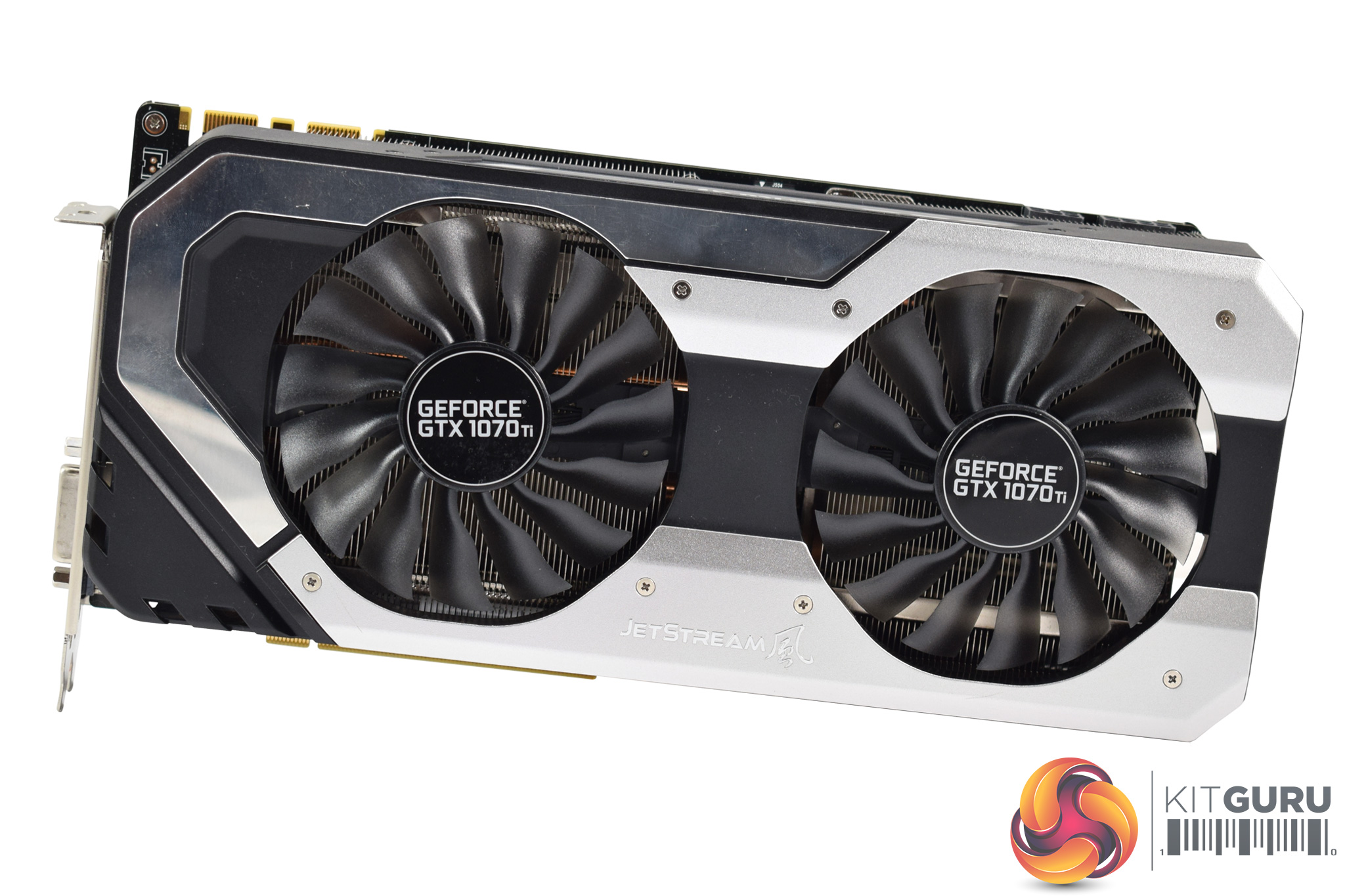
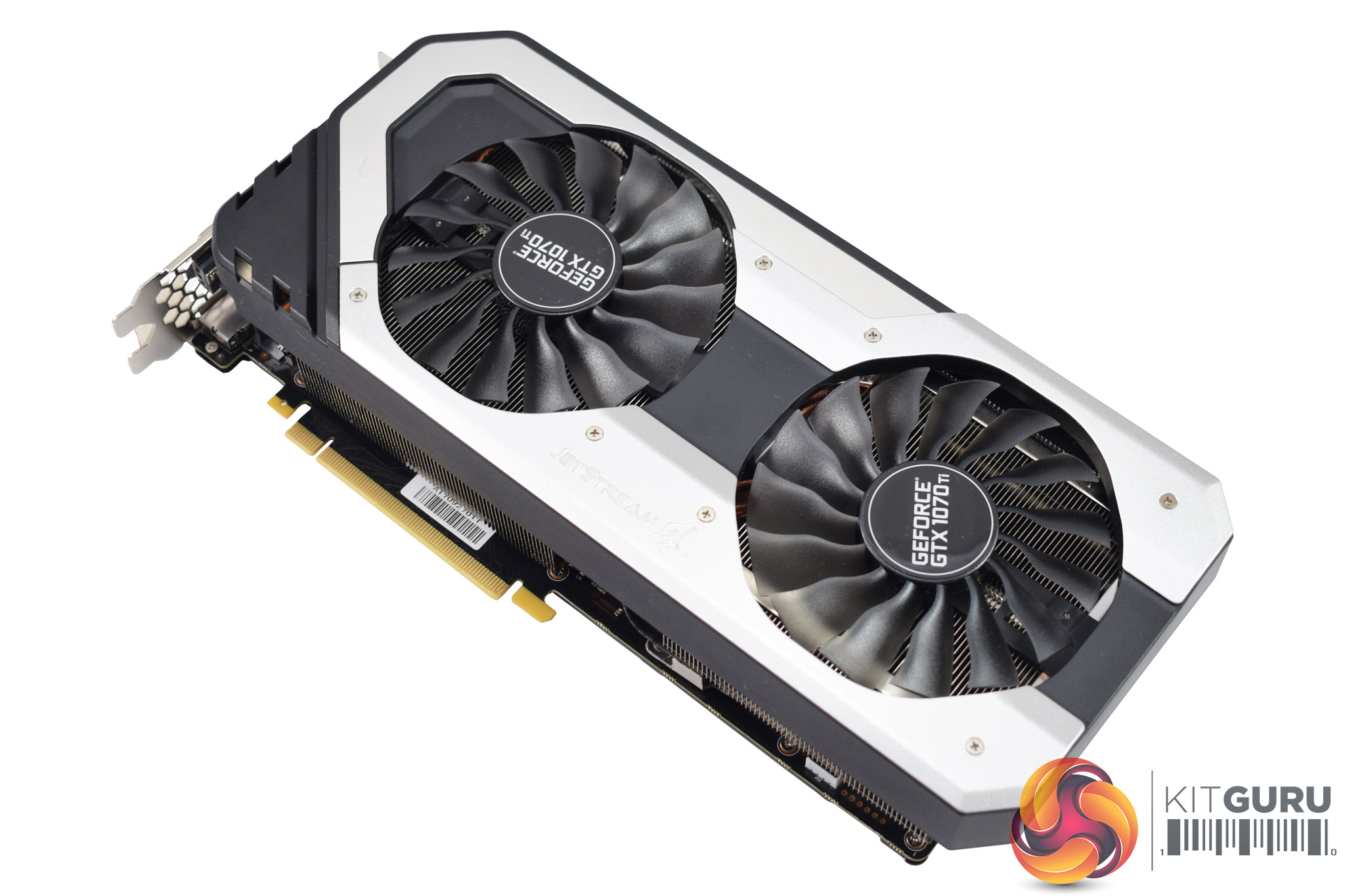
The card itself is very attractive, with a monochrome silver and black colour scheme. It is very colour neutral and should look good in any rig.
As for the cooling solution, the Super JetStream utilises two 100mm fans which blow directly onto a dense fin array. As mentioned previously, this is a 2.5-slot card, so it just has that extra bit of space to accommodate a larger heatsink.
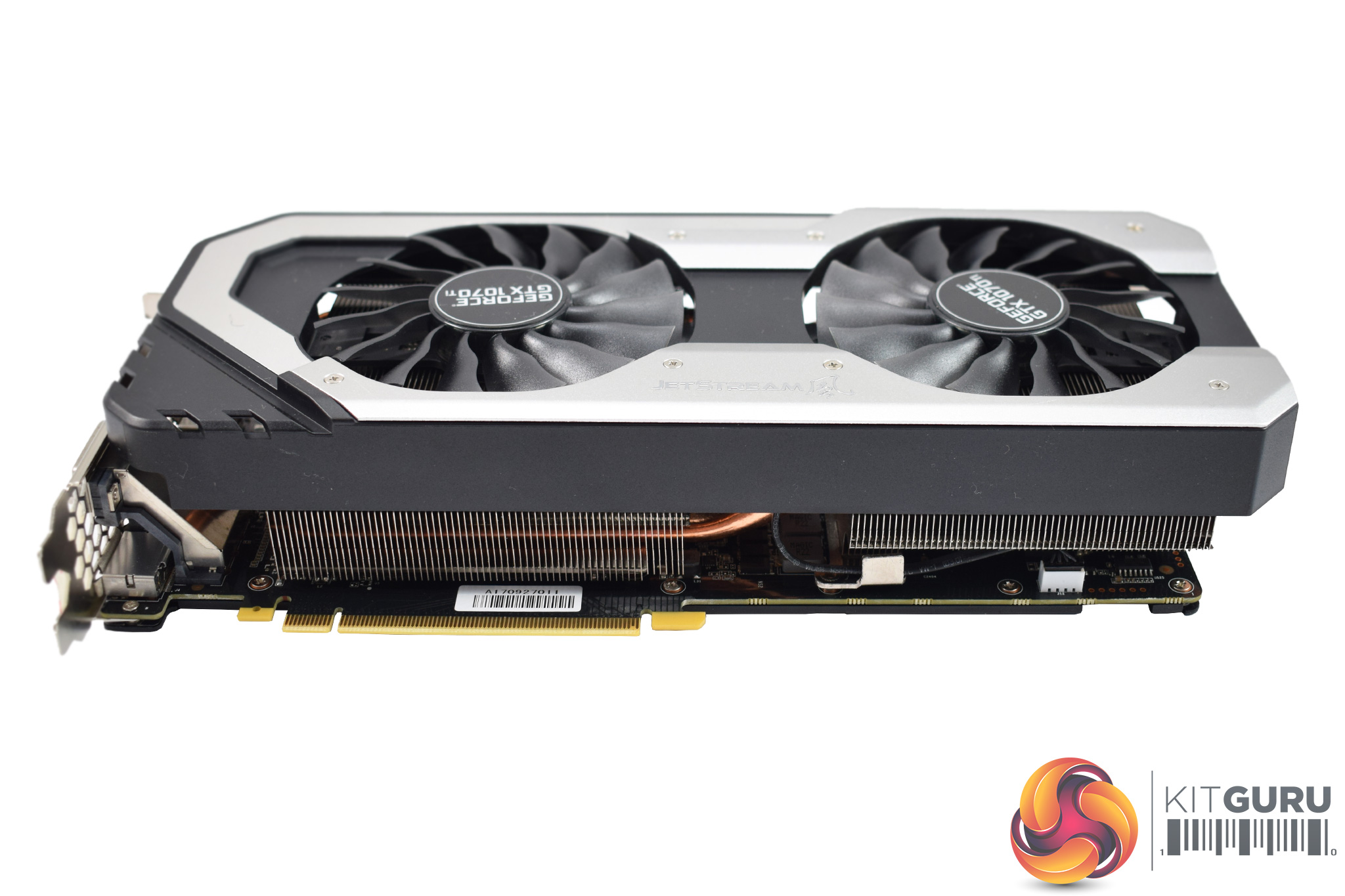
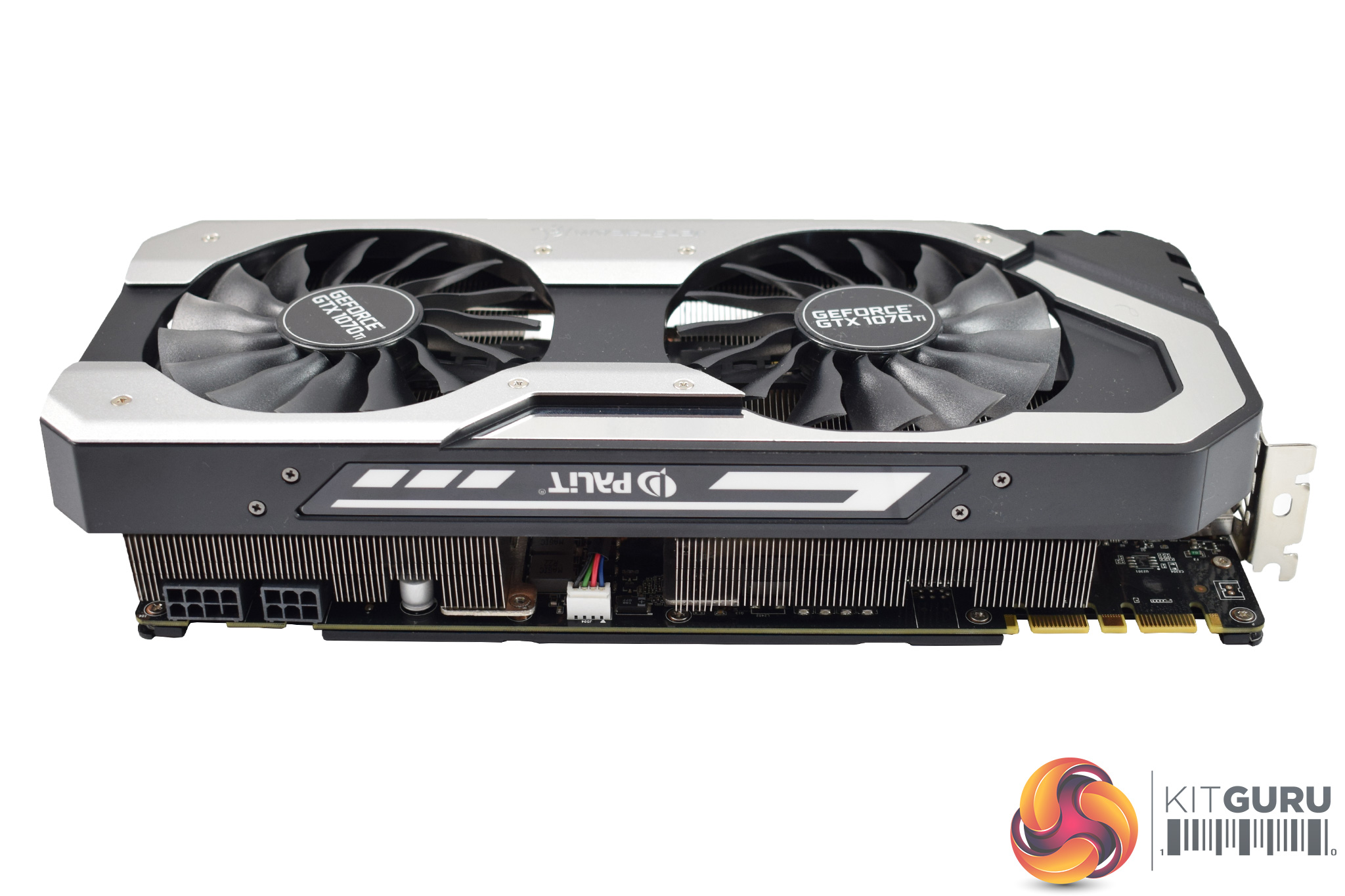
Looking at either side of the card, you actually get a good idea of how thick the heatsink is – the fin array is very densely stacked and spans most of the length of the PCB.
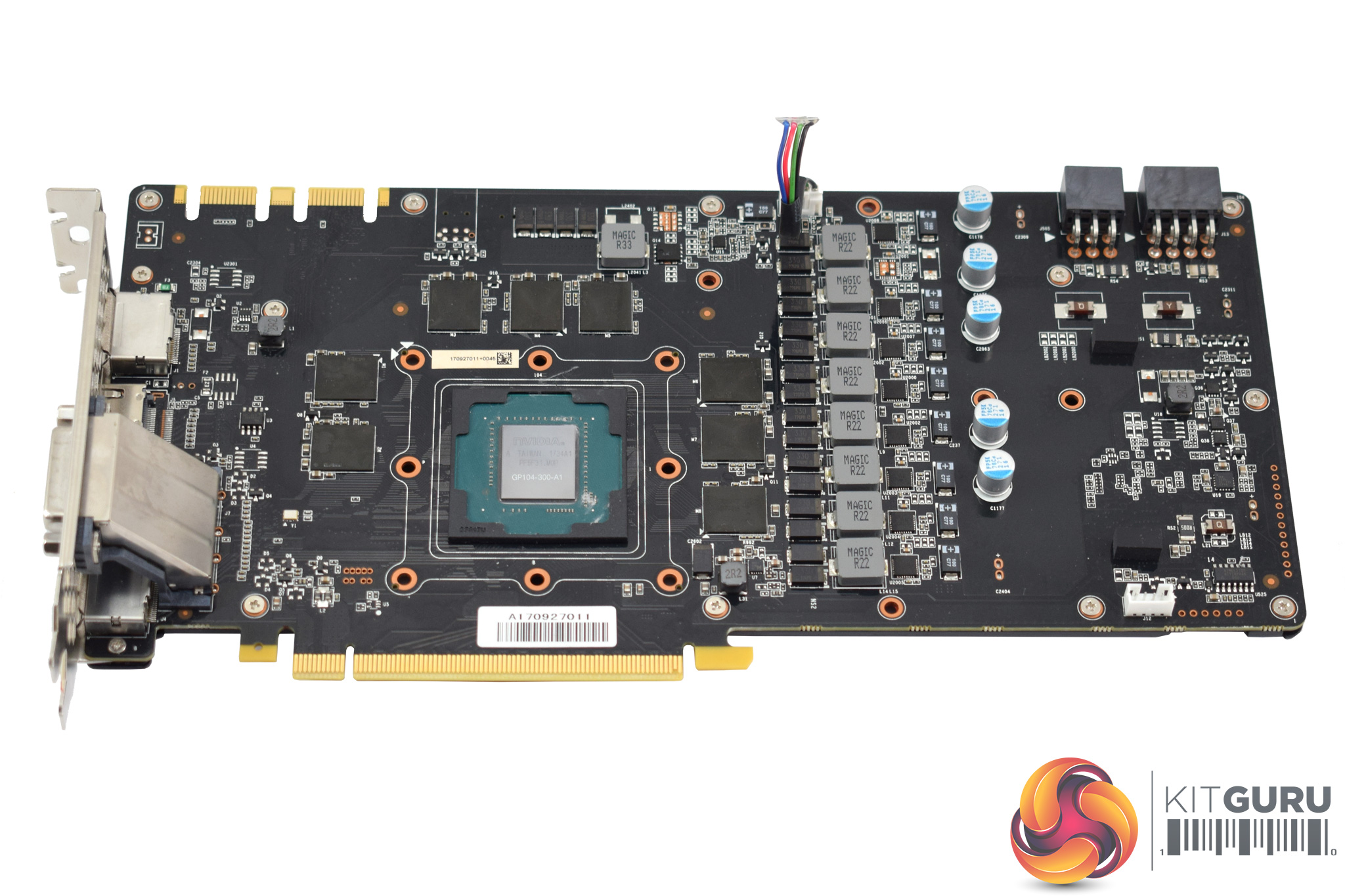
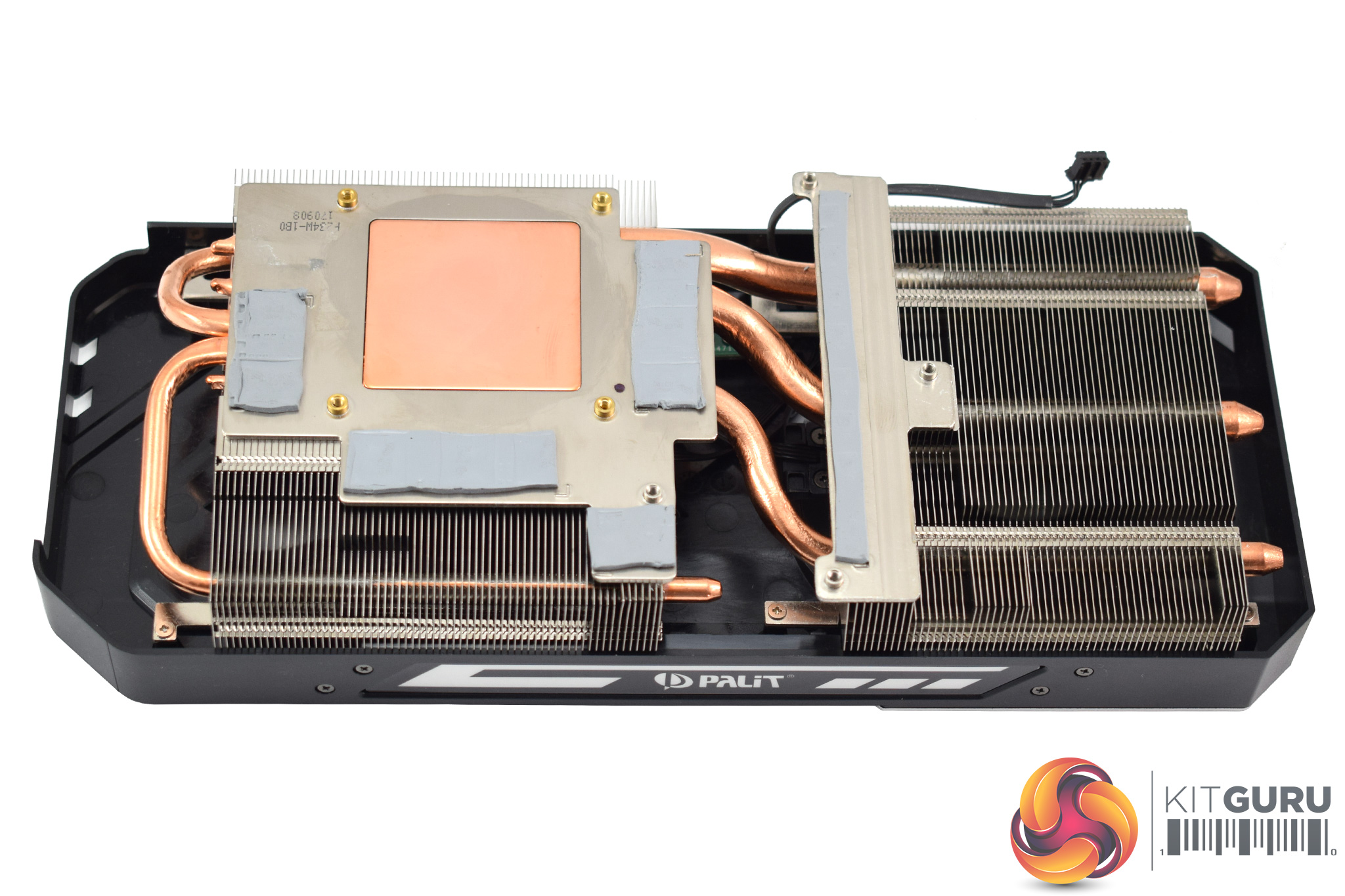
Taking the card apart reveals a relatively plain-looking PCB – no extra contact plates on the VRAM or VRMs here.
The cooler is very beefy, though, with its 5 copper heatpipes and copper contact area. There are also thermals pads in-place for the VRAM and chokes.
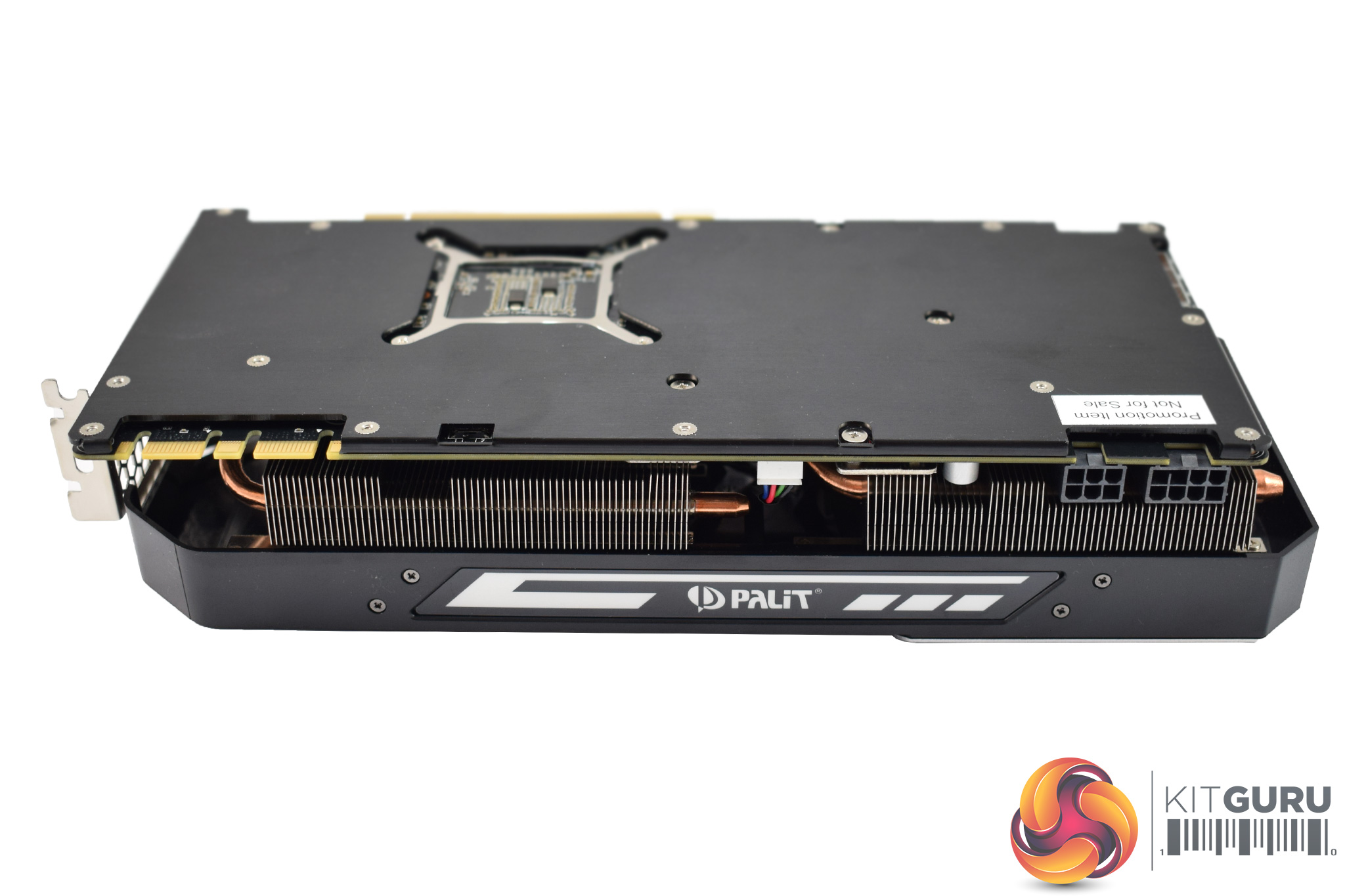
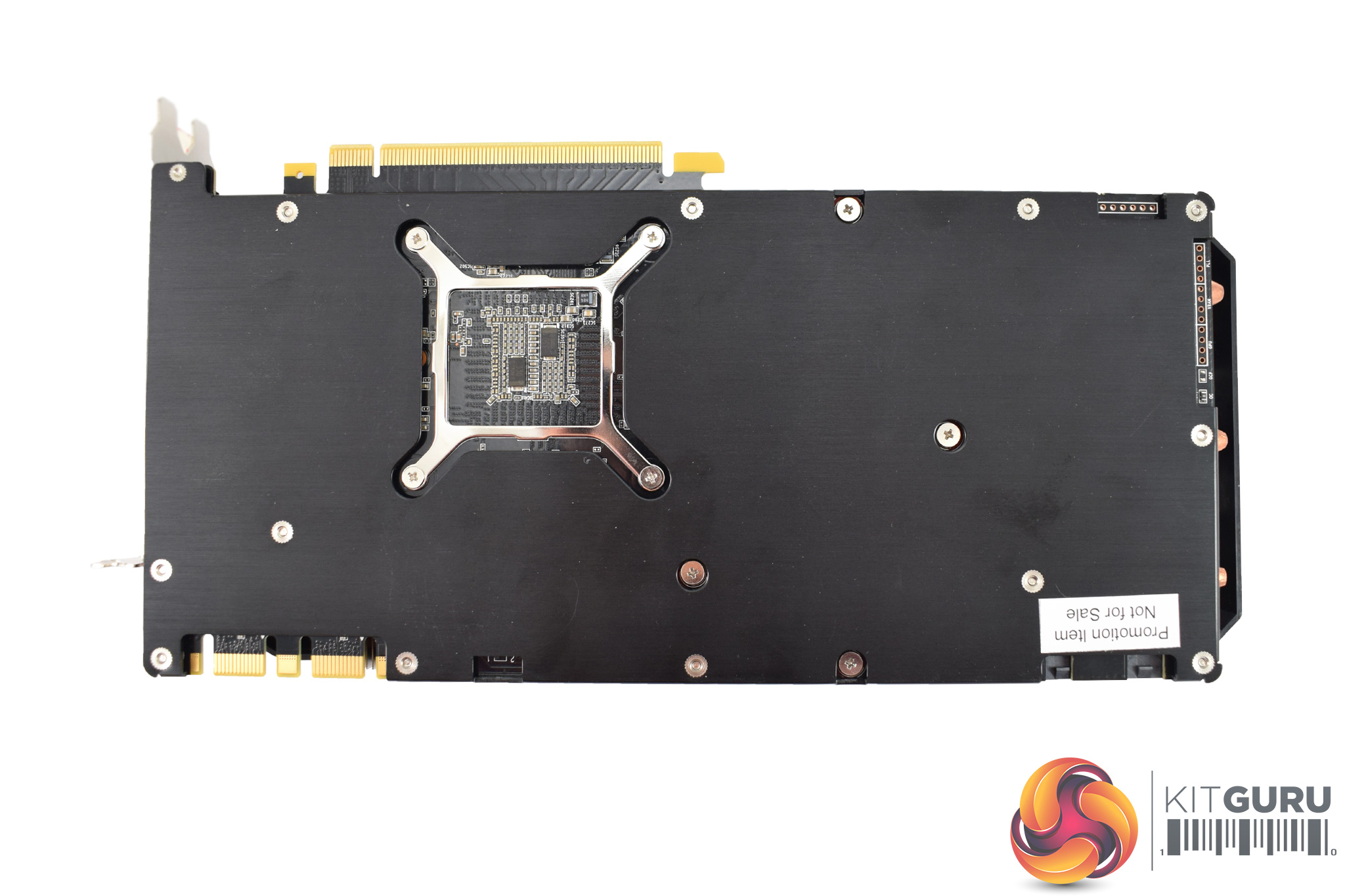
Turning to the top of the card, we can see Palit has fitted a very plain metal backplate. This should provide some rigidity, but I do wonder why they added in a cut-out directly behind the GPU core – we will have a look at thermals later in the review, but I would've thought having a full-cover backplate would help heat dissipate better.
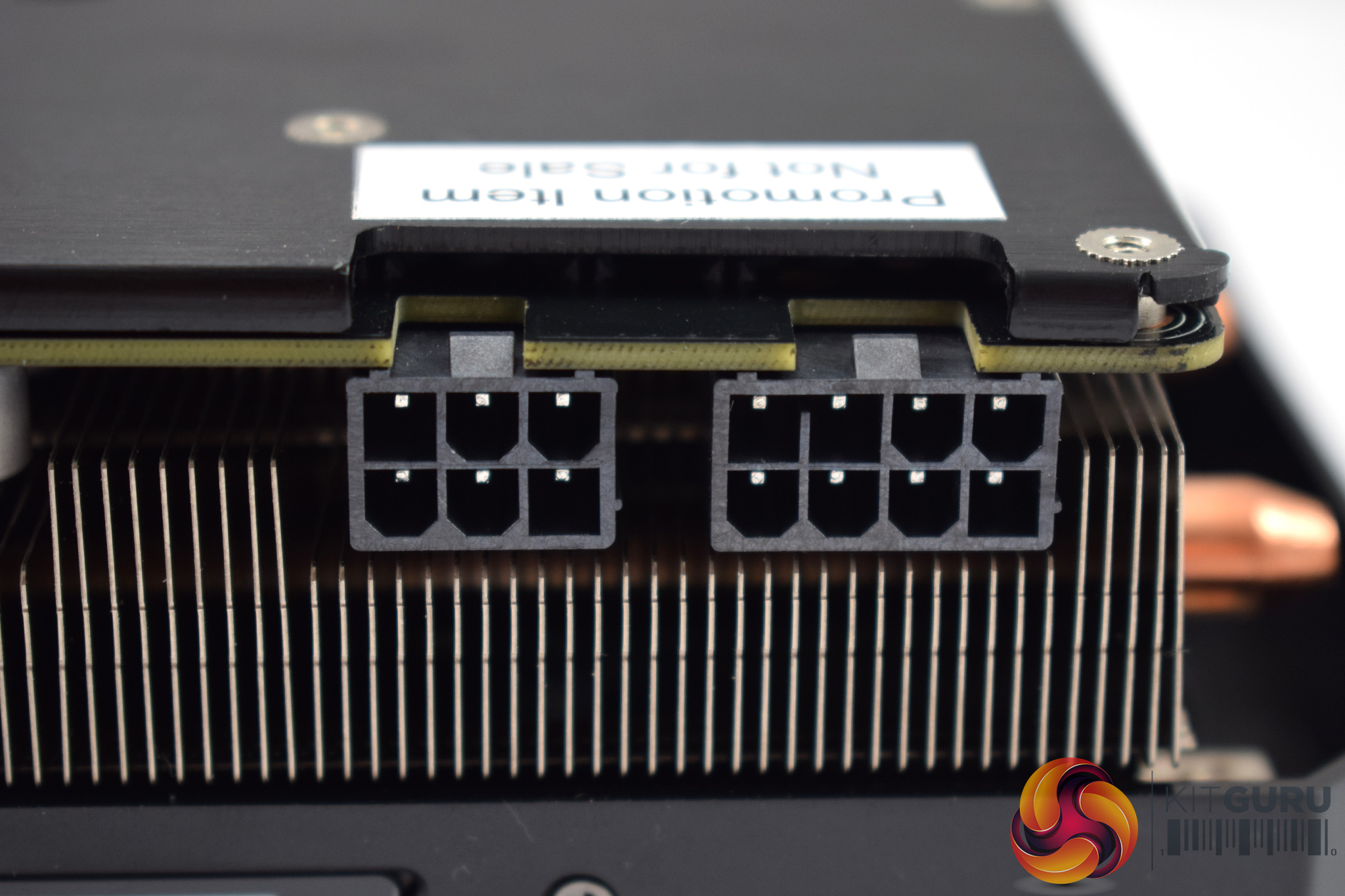

Elsewhere, this Super JetStream card uses 1x 6-pin and 1x 8-pin PCIe power connectors, with its TDP rated at 180W.
Lastly, the display outputs are left as standard: 3x DisplayPort 1.4, 1x HMDI 2.0b, 1x DVI-D.

With the shortage of GDDR5X, I’m wondering if the GTX 1080 is being phased out, because this is (95% of) a GTX 1080 GDDR5. Maybe the endgame is for the 1080 to be discontinued, the GP104s going into 1070 Ti instead, and the GDDR5X to be saved for the 1080 Ti and possibly mid-range Volta cards if the early flagships use GDDR6?