 KitGuru KitGuru.net – Tech News | Hardware News | Hardware Reviews | IOS | Mobile | Gaming | Graphics Cards


The tests were performed in a controlled air conditioned room with temperatures maintained at a constant 24c – a comfortable environment for the majority of people reading this.Idle temperatures were measured after sitting at the desktop for 30 minutes. Load measurements were acquired by playing Crysis Warhead for 30 minutes and measuring the peak temperature. We also have included Furmark results, recording maximum temperatures throughout a 30 minute stress test. All fan settings were left on automatic.
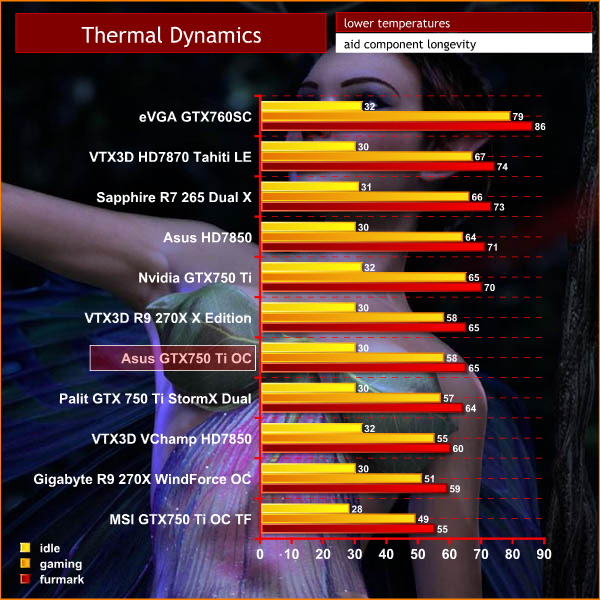
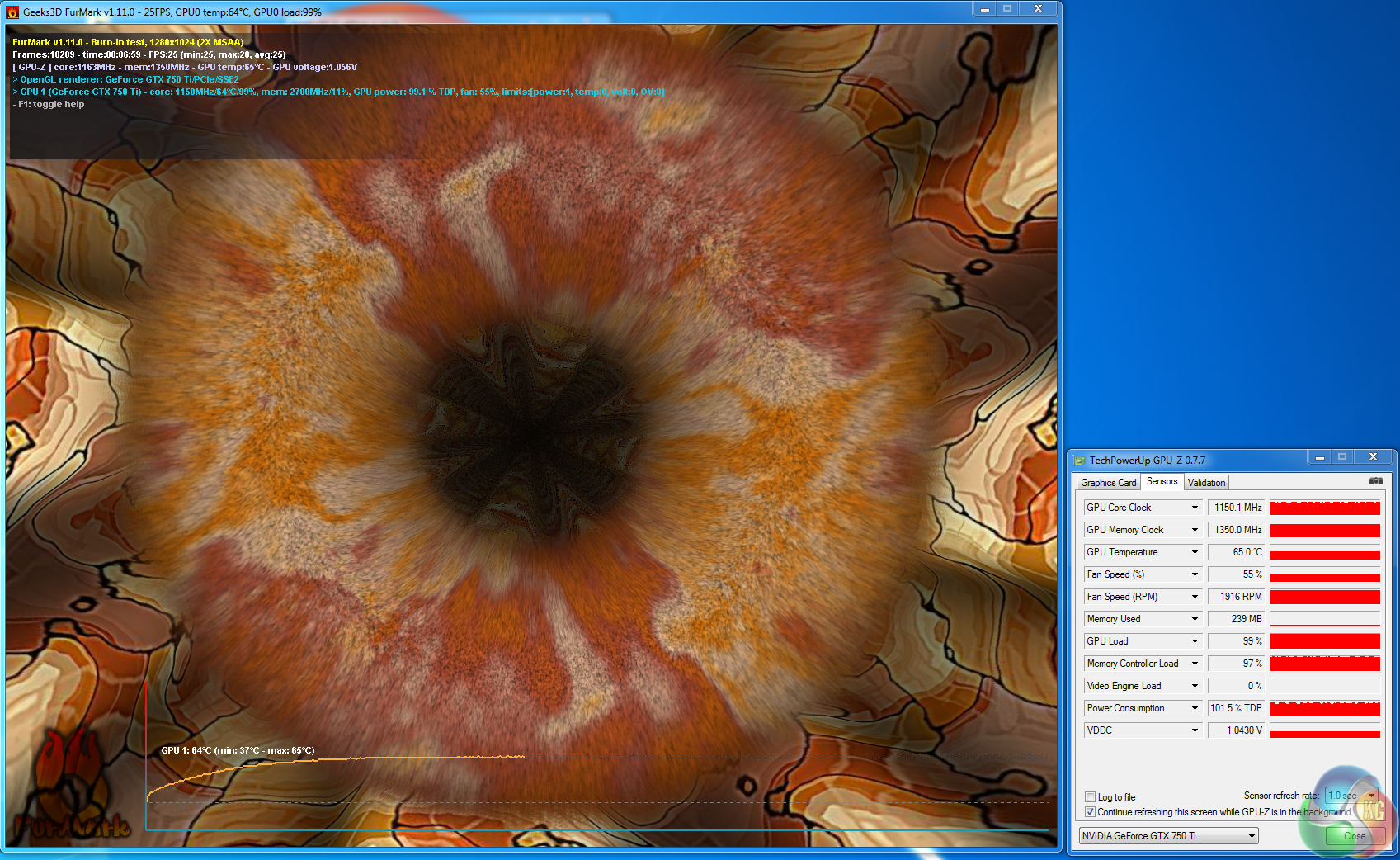
The cooler performs almost identically to the one installed on the Palit GTX 750 Ti StormX – peaking at 58c under gaming load. The Twin Frozr on the MSI GTX750Ti is in a different league, but it is considerably over engineered for a budget gaming card.

Good card, but yeah no need for a 6 pin power connector. my own MSI card sits at 1,200mhz and doesn’t need it.
ull need it if gets unlocked or u get a bios mod
Sure would have like to have a R7 260X represented, while the extra Higher end 270X up taken out just to not complicate things. Your B-M don’t paint that great of picture, largely due to the higher setting. It just isn’t realistic for that grouping of cards to expect advanced setting on 1920x. Would rather see adjusted settings that keep the 1980x average more in the 35-45Fps “playable” range. I mean to drop £131.99 [$180 USD] and only get entry level seem unimpressive, sure the power is low but IDK.
Here’s my thinking it’s nothing more than an “entry gaming” card that’s basically the reincarnation of the HD 5670 from 4 years ago. Same basic “plug-n-play” card that permits “medium” settings on (what was at that time) the mainstream 1680x resolution. Today that resolution is clearly 1080p, but now the price has jumped like 110%… that’s not progress, it’s just a 5670 for today… and today entry gaming has an exorbitant price!