KitGuru KitGuru.net – Tech News | Hardware News | Hardware Reviews | IOS | Mobile | Gaming | Graphics Cards


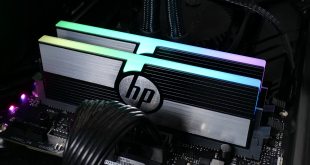
HP probably isn’t the first name that comes to mind when thinking of system memory – and that’s perfectly fine given the company’s relative presence within the market. There is an aim to change that point, though. And what better way to do that than to bring out a 3600MHz kit of RGB-lit DDR4 memory with Samsung’s legendary B-Die ICs?
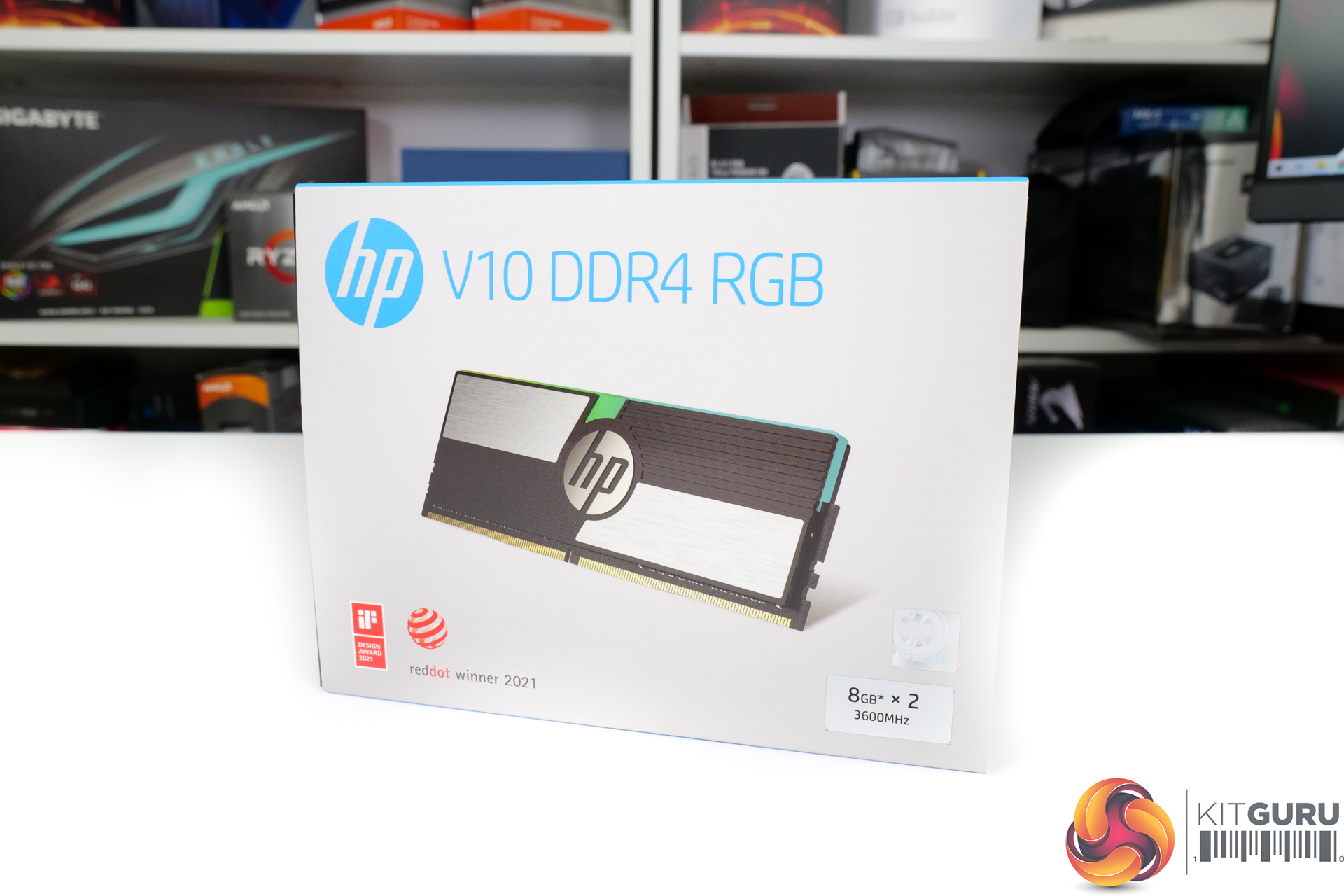
So yes, HP is a relative newcomer to the DIY, enthusiast memory market. And perhaps that point is emphasised nicely with the naming system – HP V10 DDR4 RGB. Simple, concise, and no ‘super-gamer-uber-turbo’ nomenclature whatsoever.
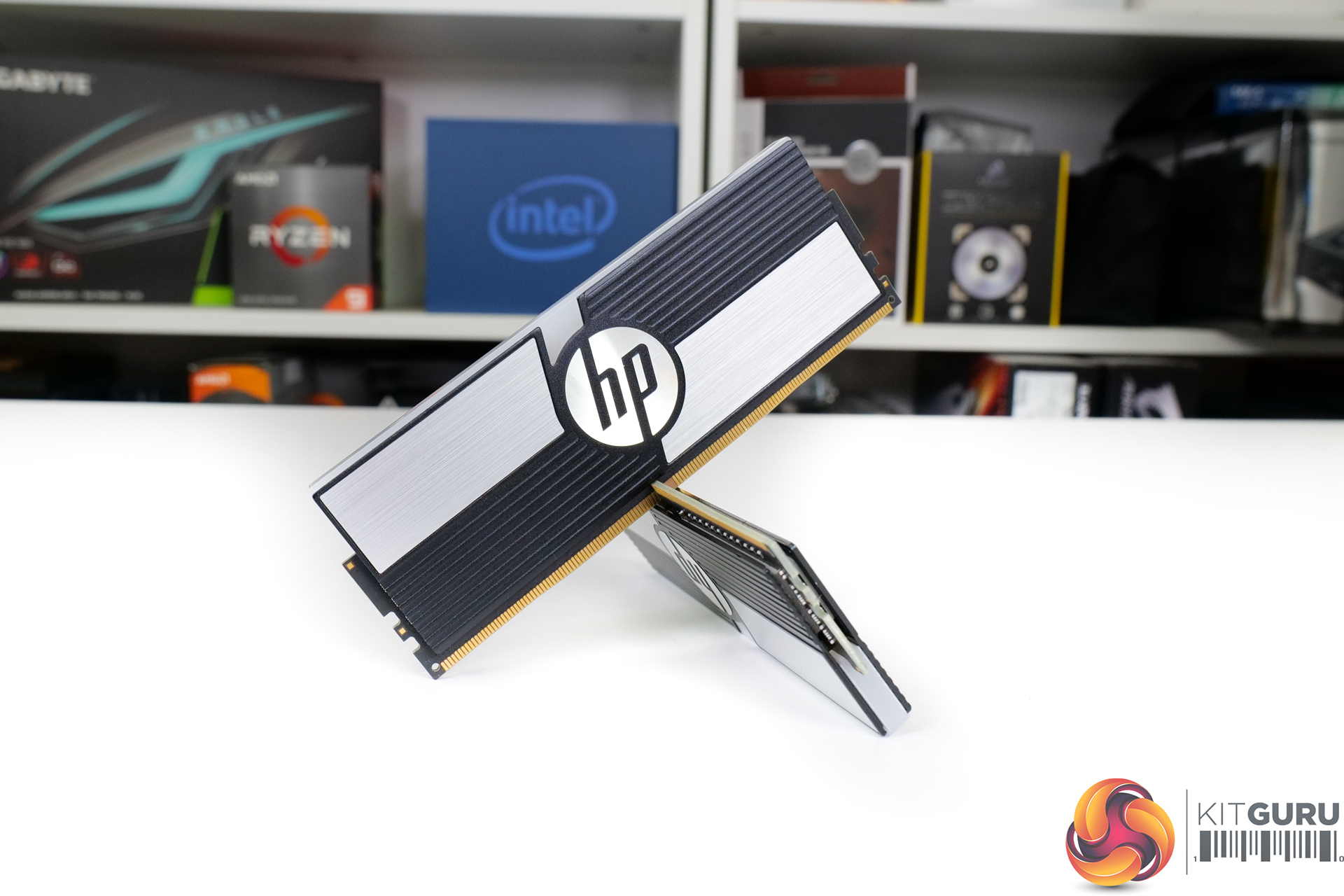
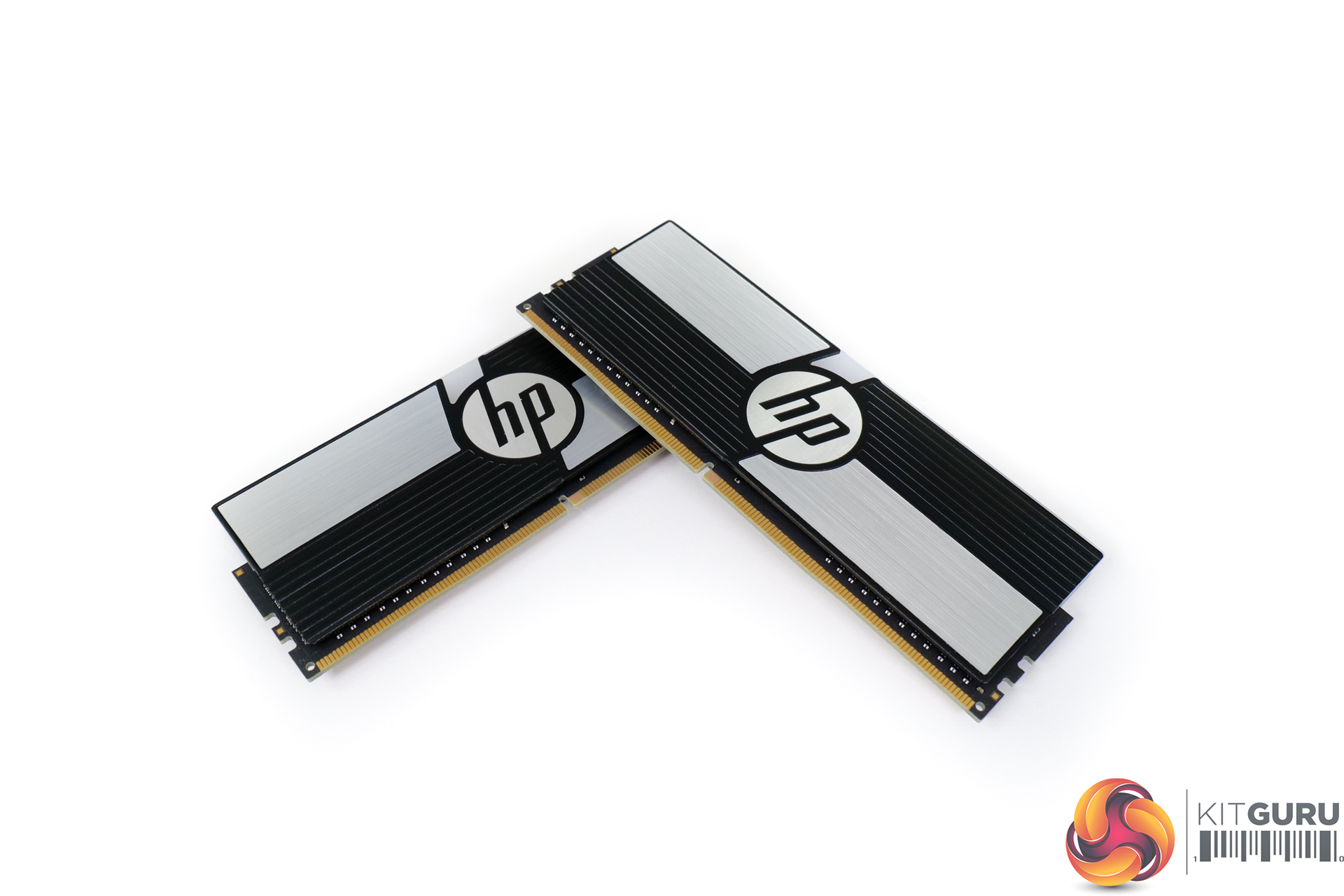
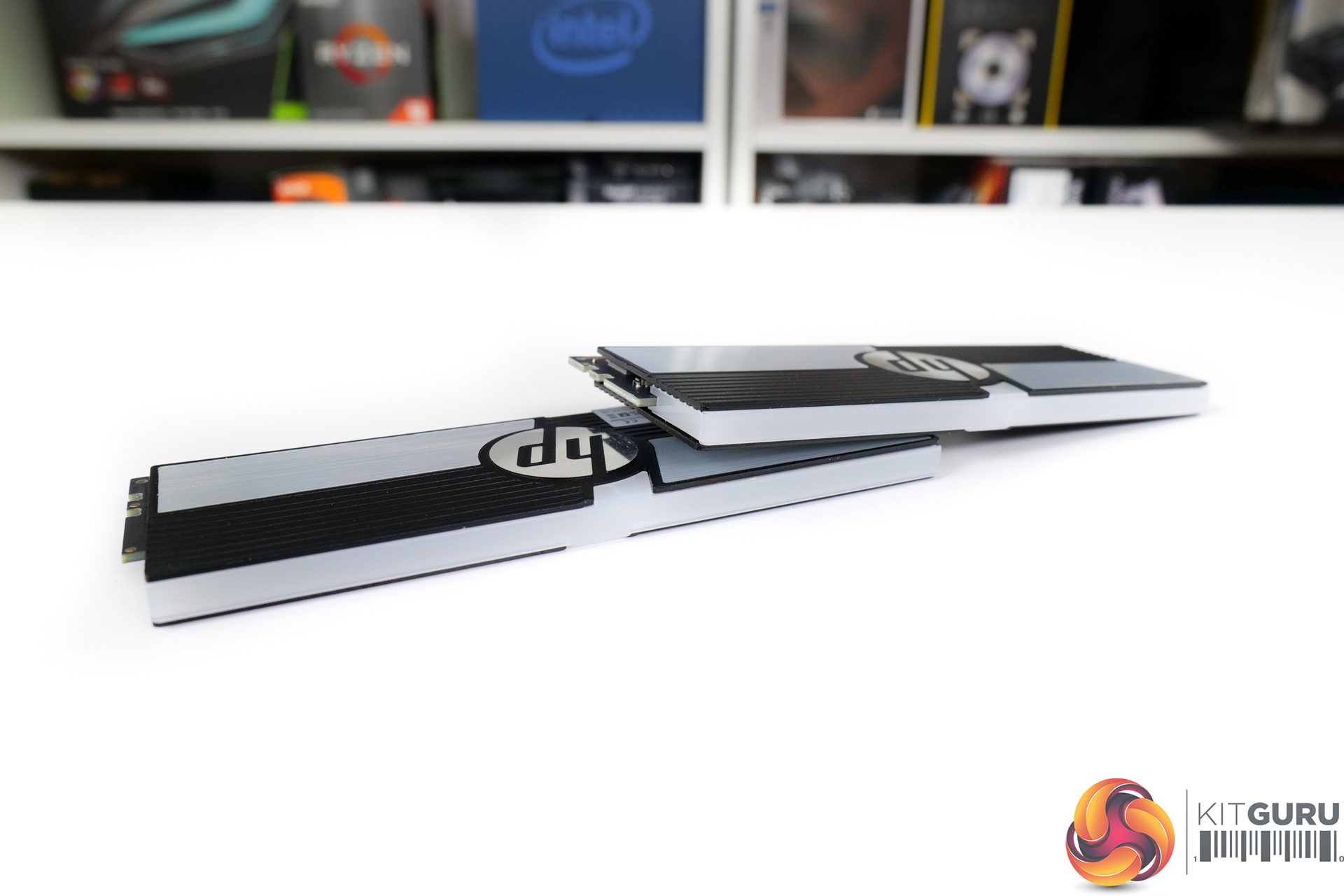
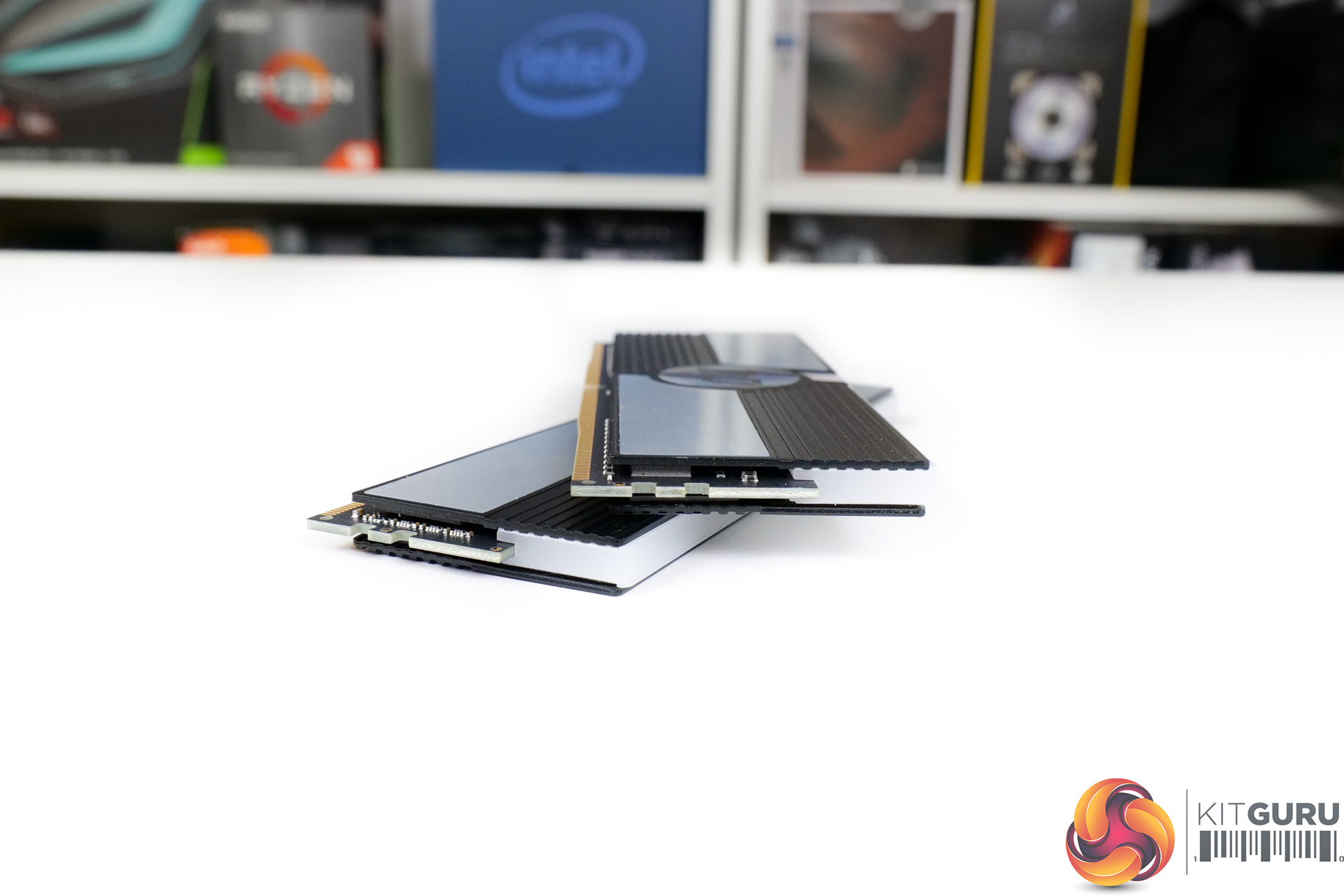
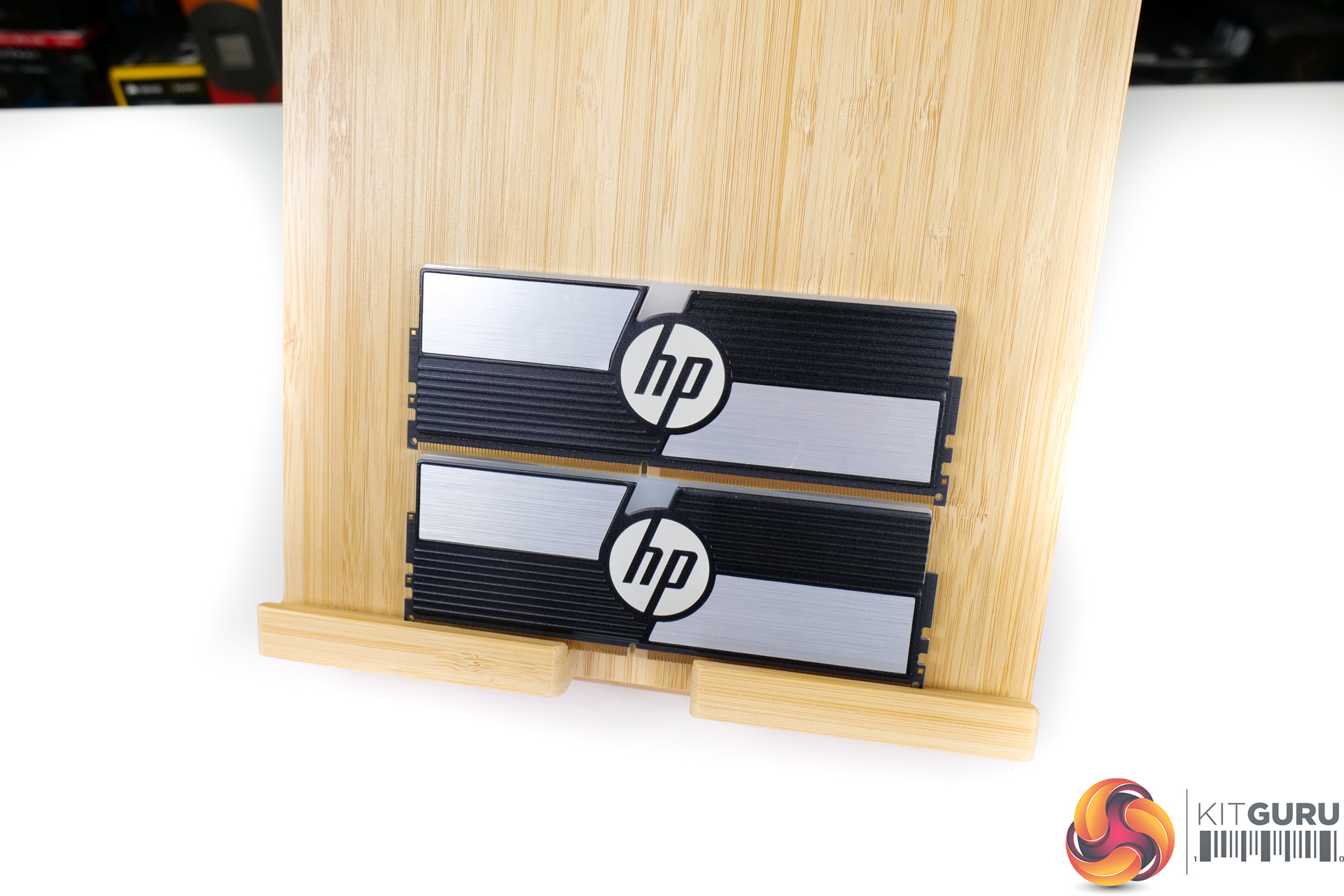
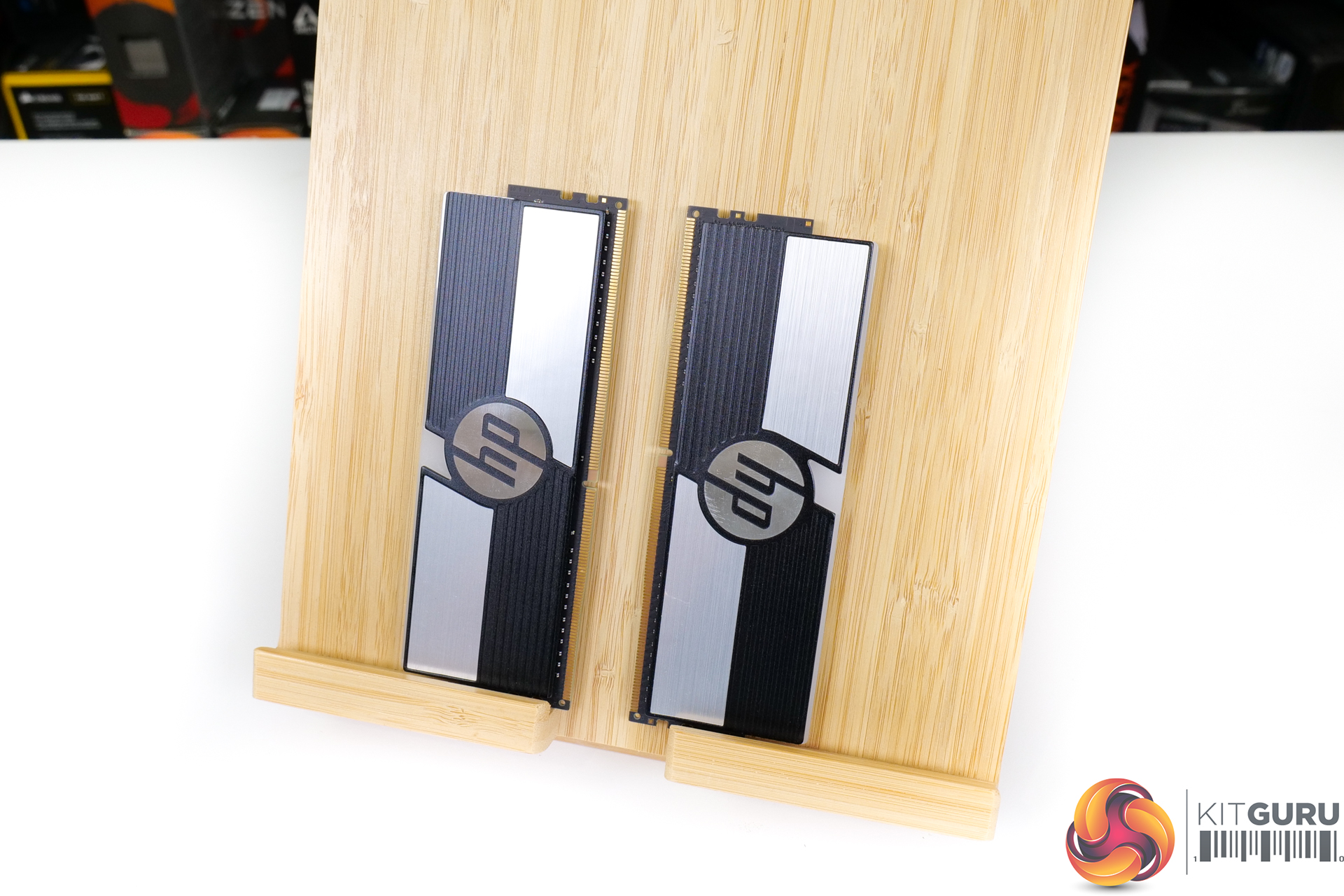
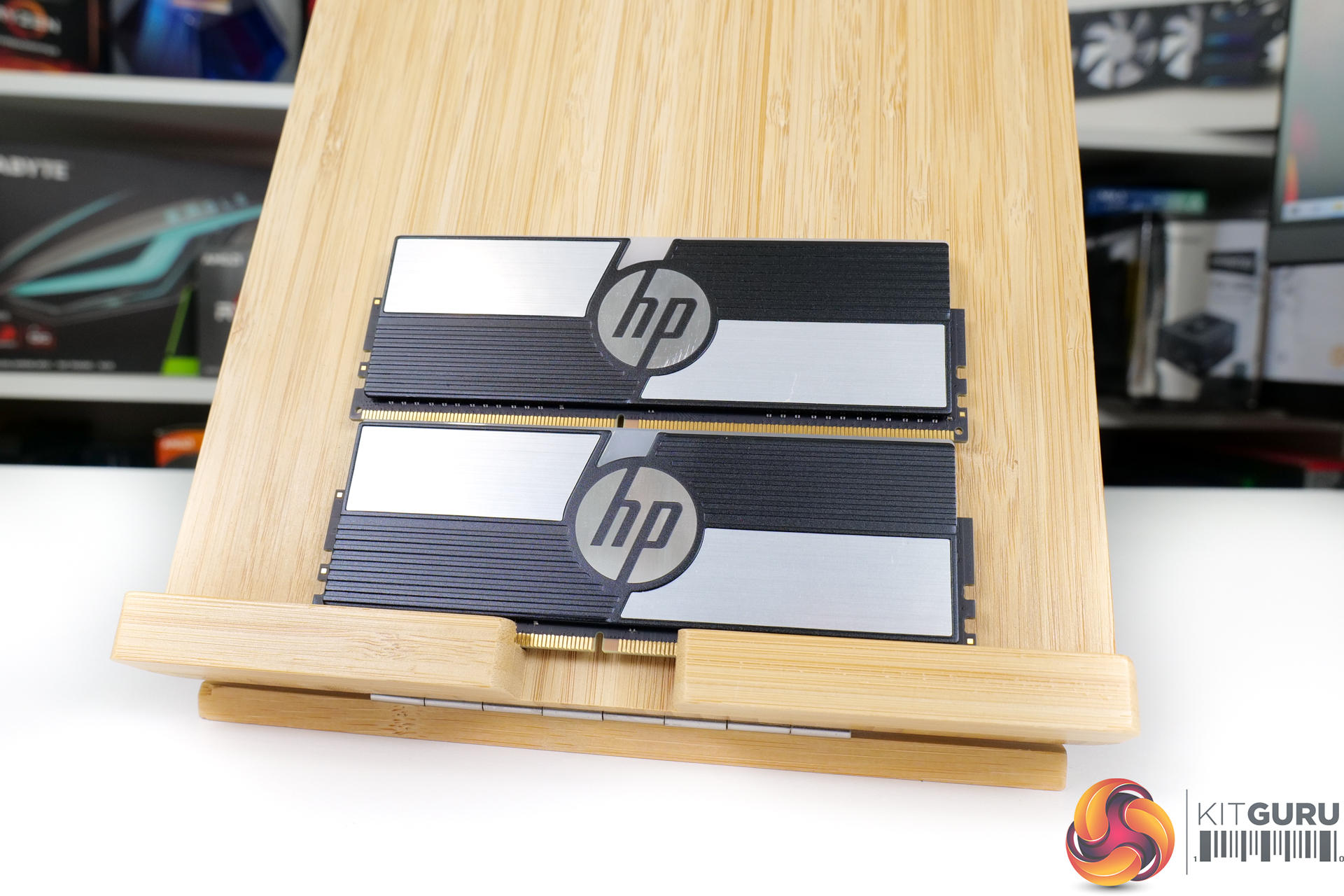
The sticks are clearly designed for an enthusiast audience. Biwin – the manufacturer that operates the HP license – goes with a sizable and heavy metal heatspreader that measure in at around 47-48mm tall. Black and shiny silver form the basis of the colour scheme and there’s a centralised ‘hp’ logo splitting the colour quadrants.
I actually think that this is a pretty sleek looking set of memory. And the heft of the heatspreaders in undeniable, so that’s positive from a build quality perspective. As always, though, a little under 50mm height for a set of RAM is largely excessive and will undoubtedly cause interference with CPU coolers, VRM heatsinks, or roof chassis fans inside a variety of builds. There’s always a trade-off.
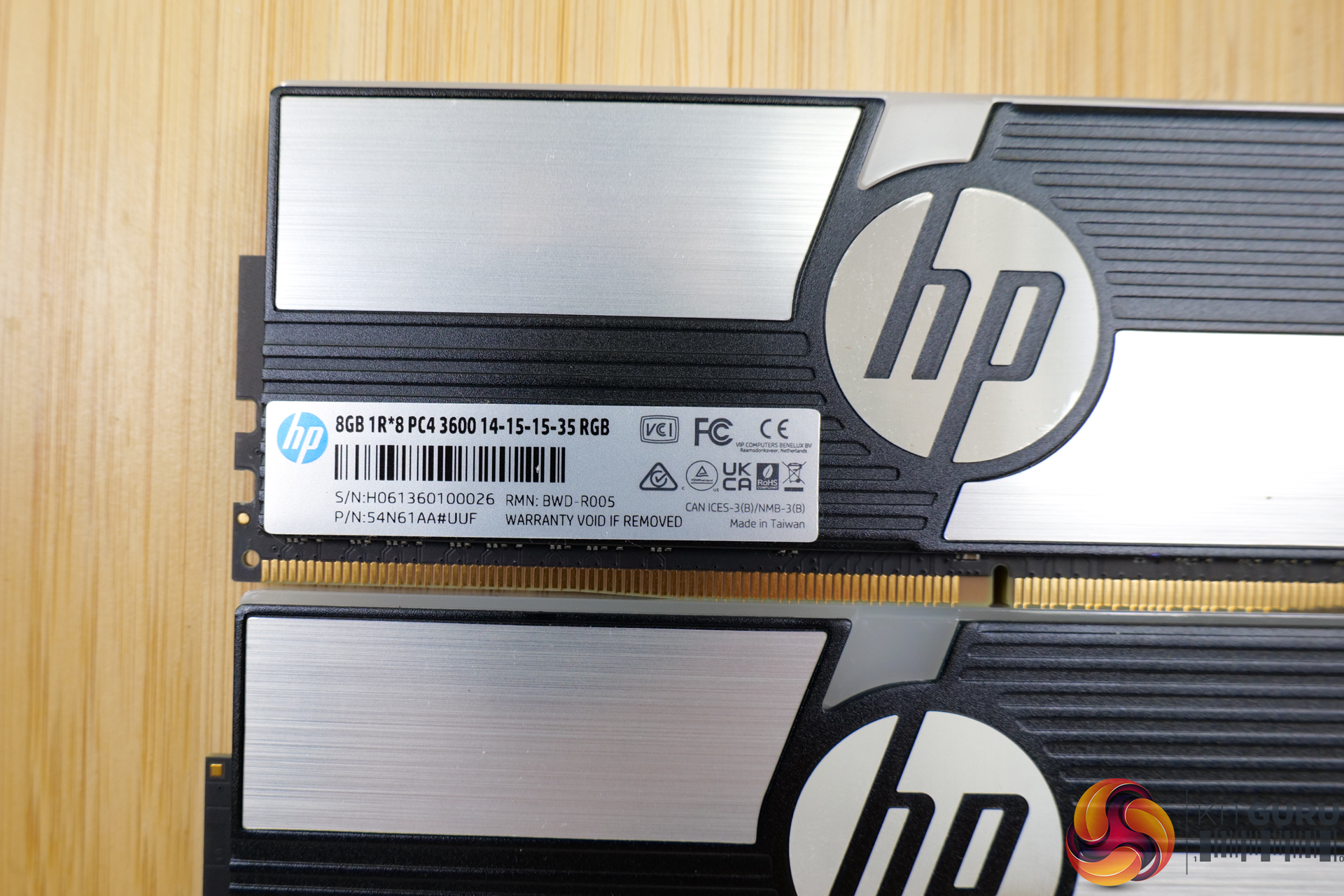
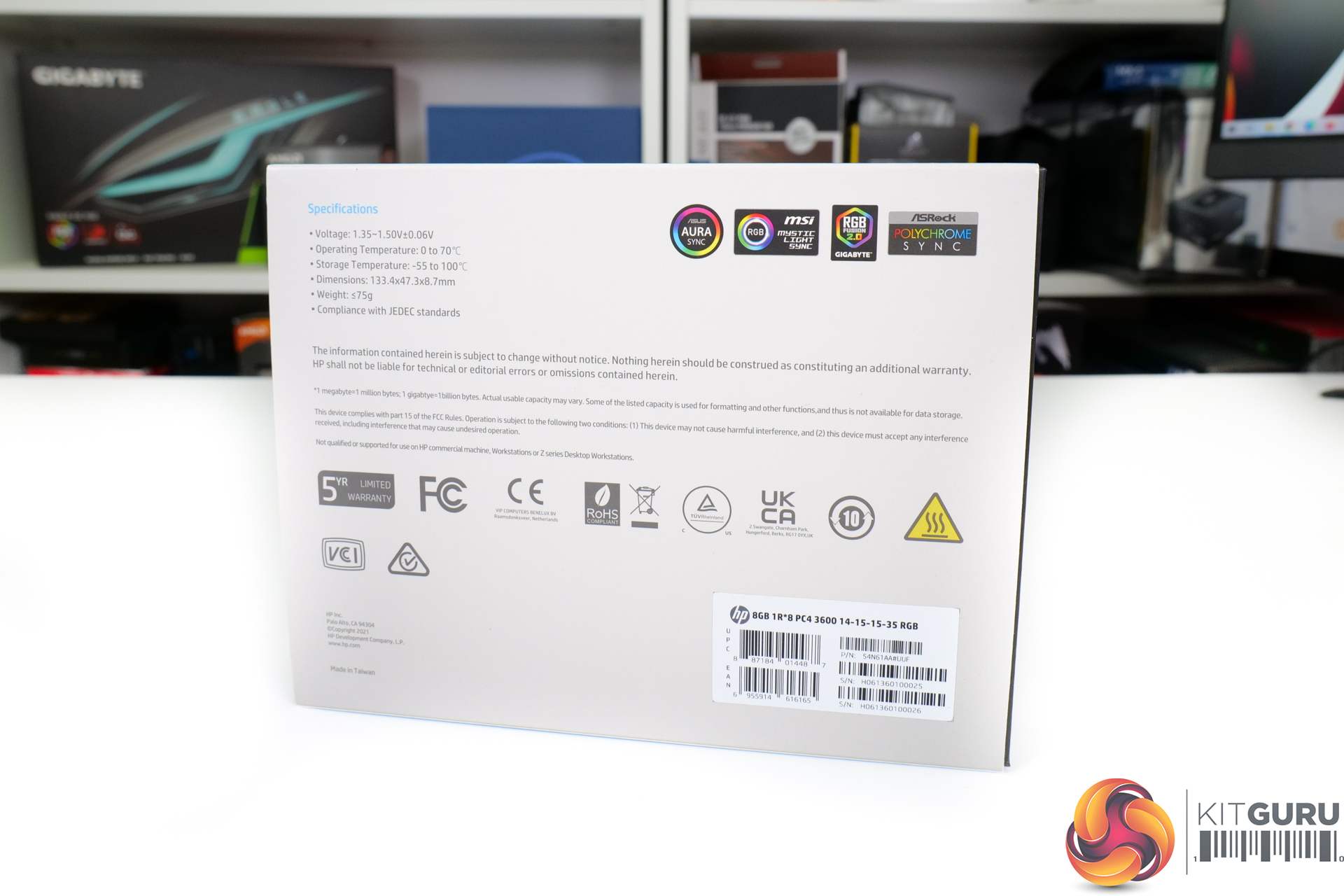
The rated speed of this 2x8GB DDR4 kit is 3600MHz with timings of 14-15-15-35. Operating voltage is quoted as 1.35-1.50V on the packaging which is just bizarre – there should be a specific voltage for the XMP configuration. Our sample set ran at 1.45V on our Intel Alder Lake 12900K DDR4 test platform.
There’s no temperature sensor on the PCB which is perhaps slightly disappointing for a memory kit geared towards being premium. And a pair of 8GB modules means that we get a single-rank setup.
Usage of Samsung’s legendary B-Die DDR4 ICs is likely to have enthusiasts more excited. As we have now come to expect, B-Die excels when it comes to tight timings at sensible frequencies such as 3600MHz, and with strong voltage scalability.
UK availability is still non-existent. However, our contact does tell us that this is being worked on. The 2x8GB 3600MHz C14 kit that we have sampled is $150 MSRP in the US. But we can see the kit currently available for $129.99 on Amazon US.
That's steep and it is clear that HP is charging a significant premium for Samsung B-Die ICs. By comparison, a generic 3600MHz kit of Corsair Vengeance RGB Pro can be had for around this price in 32GB form! Or if you are happy with 16GB, a 4GHz kit of similar Corsair memory is about the same cost, and 3600MHz from G.SKILL and the likes is notably cheaper.
And one point that I have to really complain about is the 5-year warranty. Almost every modern set of RAM comes with a lifetime warranty – that has been the case for many years. If you're a small player trying to compete in the market, only mustering up a 5-year warranty – when competitors offer lifetime coverage – is not an effective way to project confidence to potential buyers.
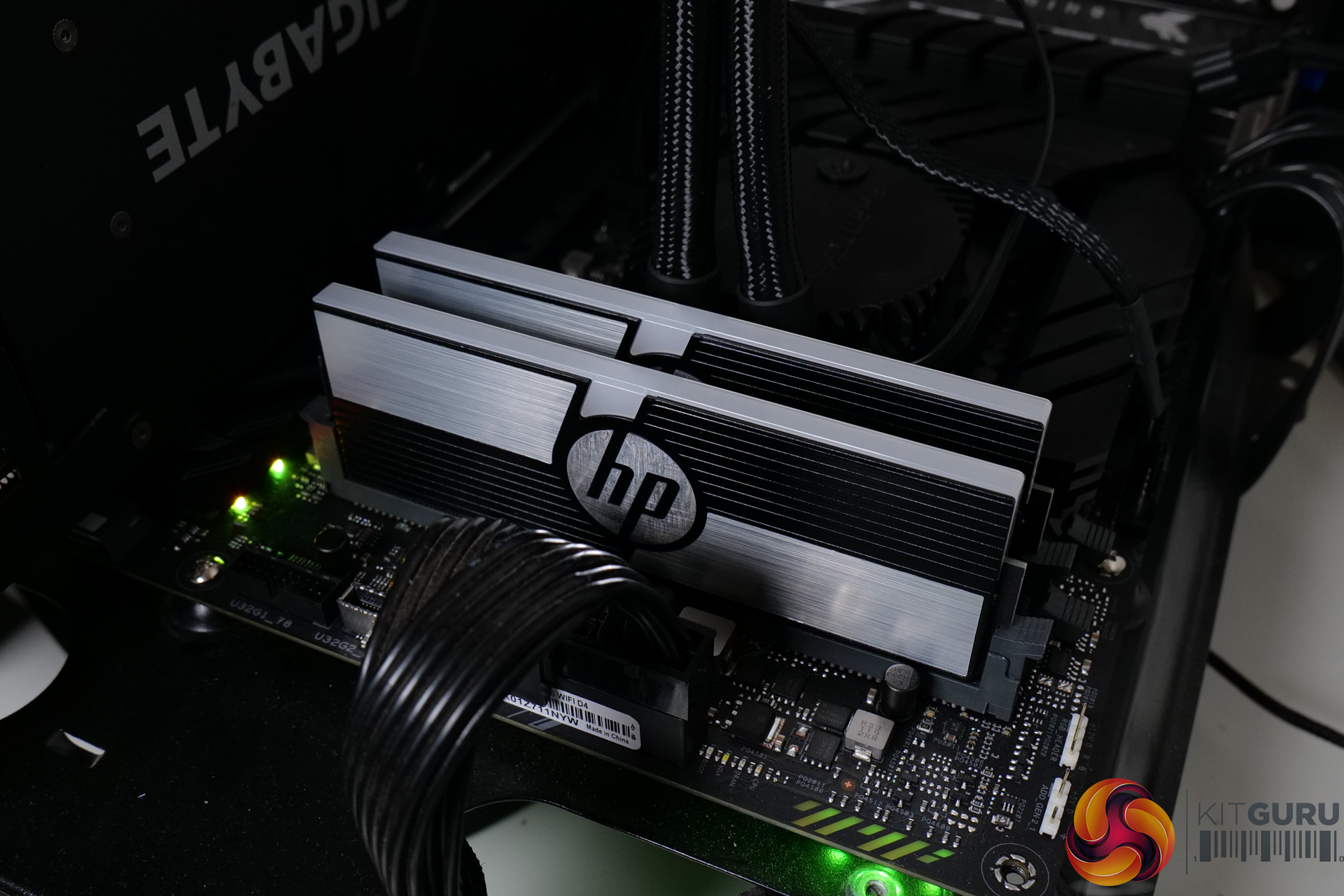
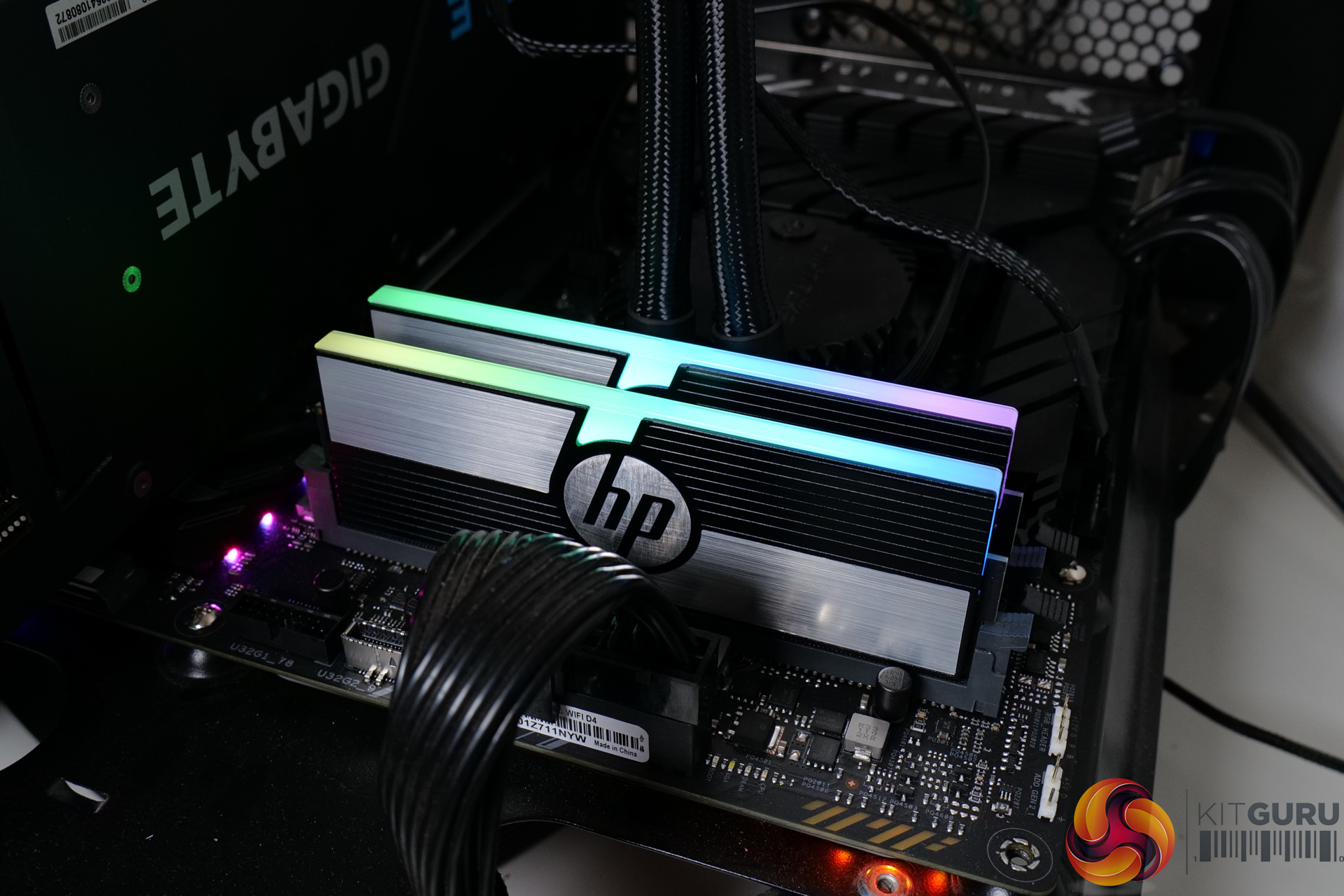
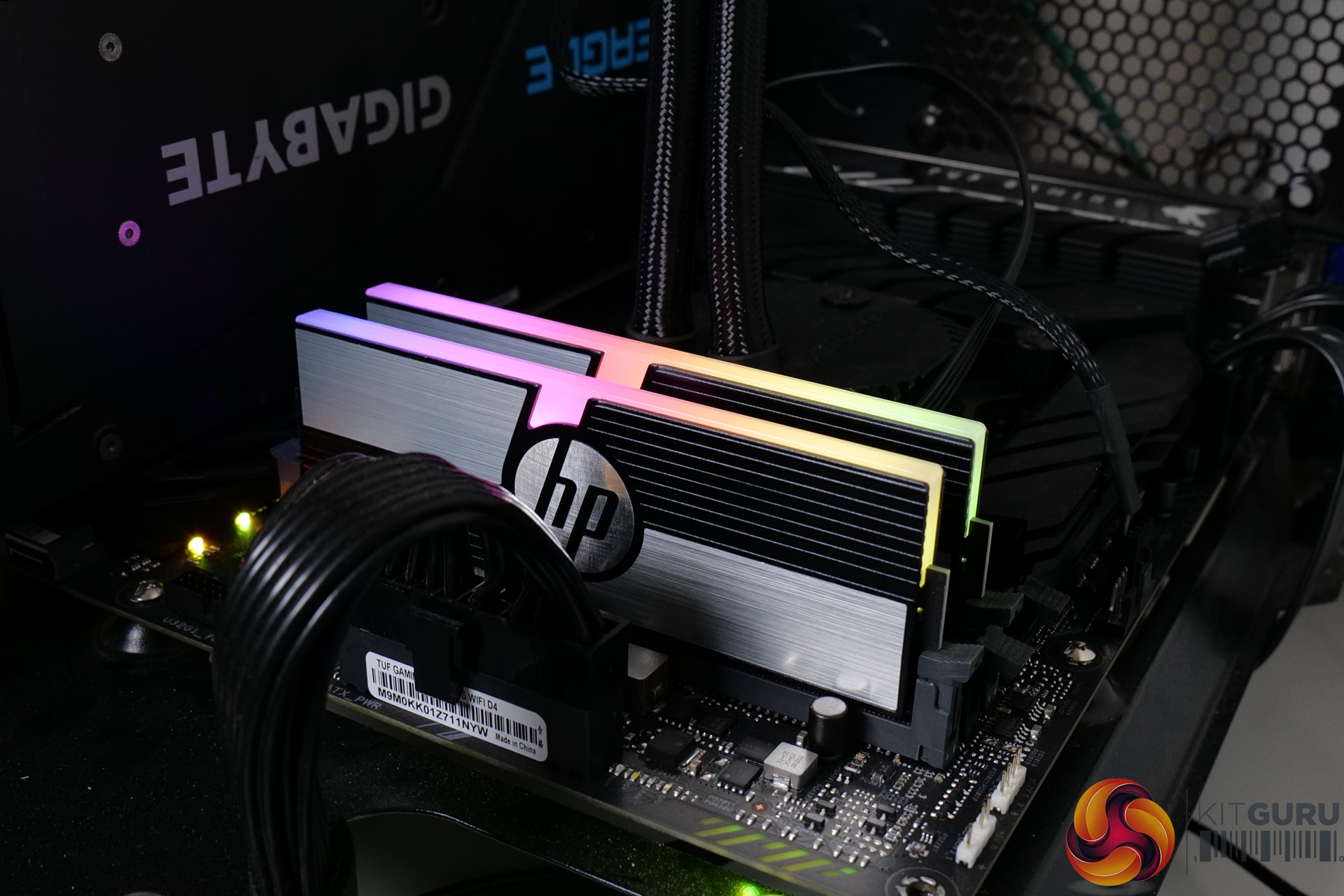
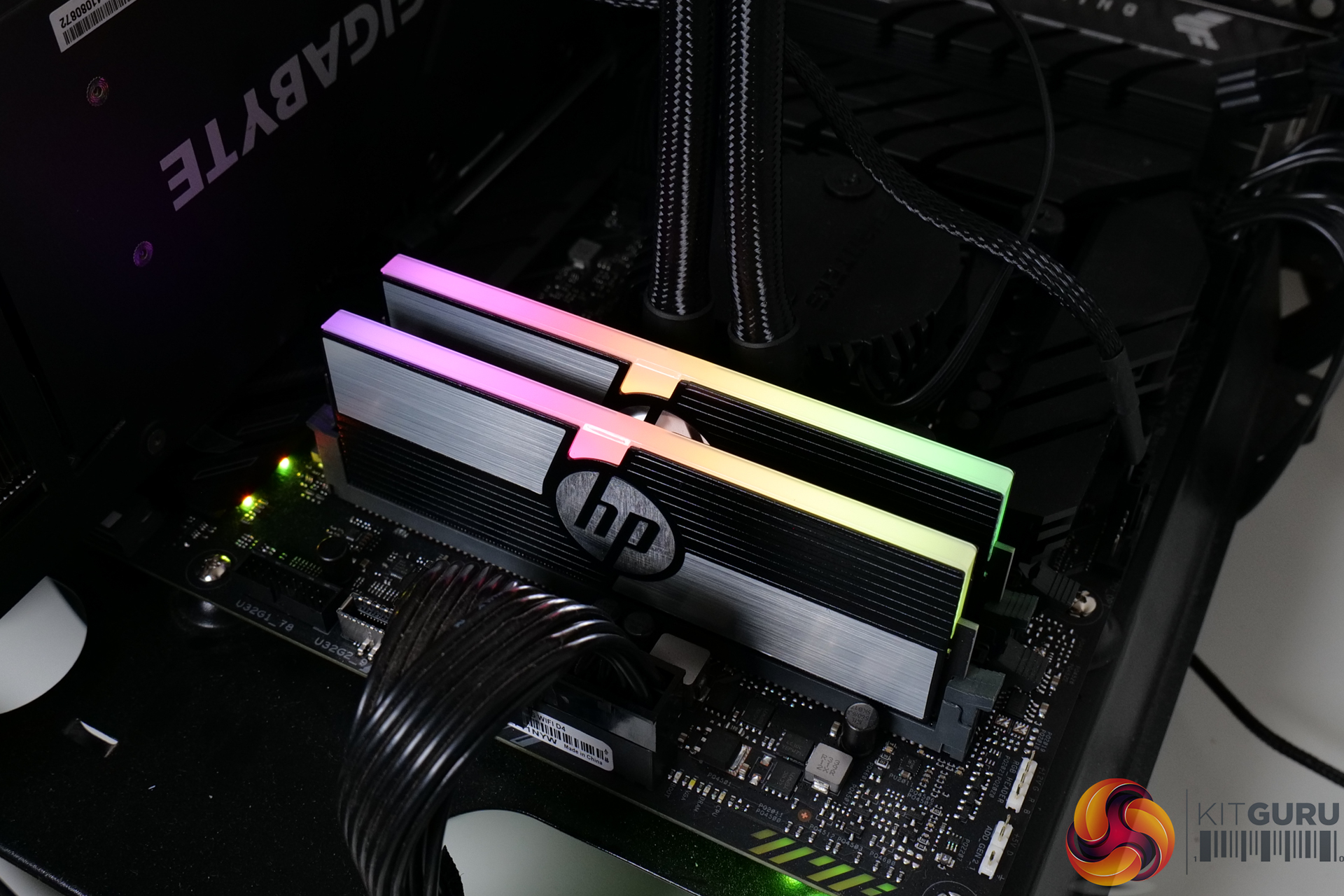
HP goes with what I would deem to be the conventional RGB lighting approach.
A plastic light diffuser bar sits atop the metal heatspreaders. This design is reasonably seamless, and the light diffusion is good in my opinion. I actually quite like how the light diffuser bar extends down to the central HP logo. I don’t have any major complaints for the lighting granularity or smoothness, either.
RGB control is handled via motherboard vendor software. This is ideal for synchronisation with other components, particularly if you’re not already invested in the Corsair or Thermaltake ecosystems, for example.
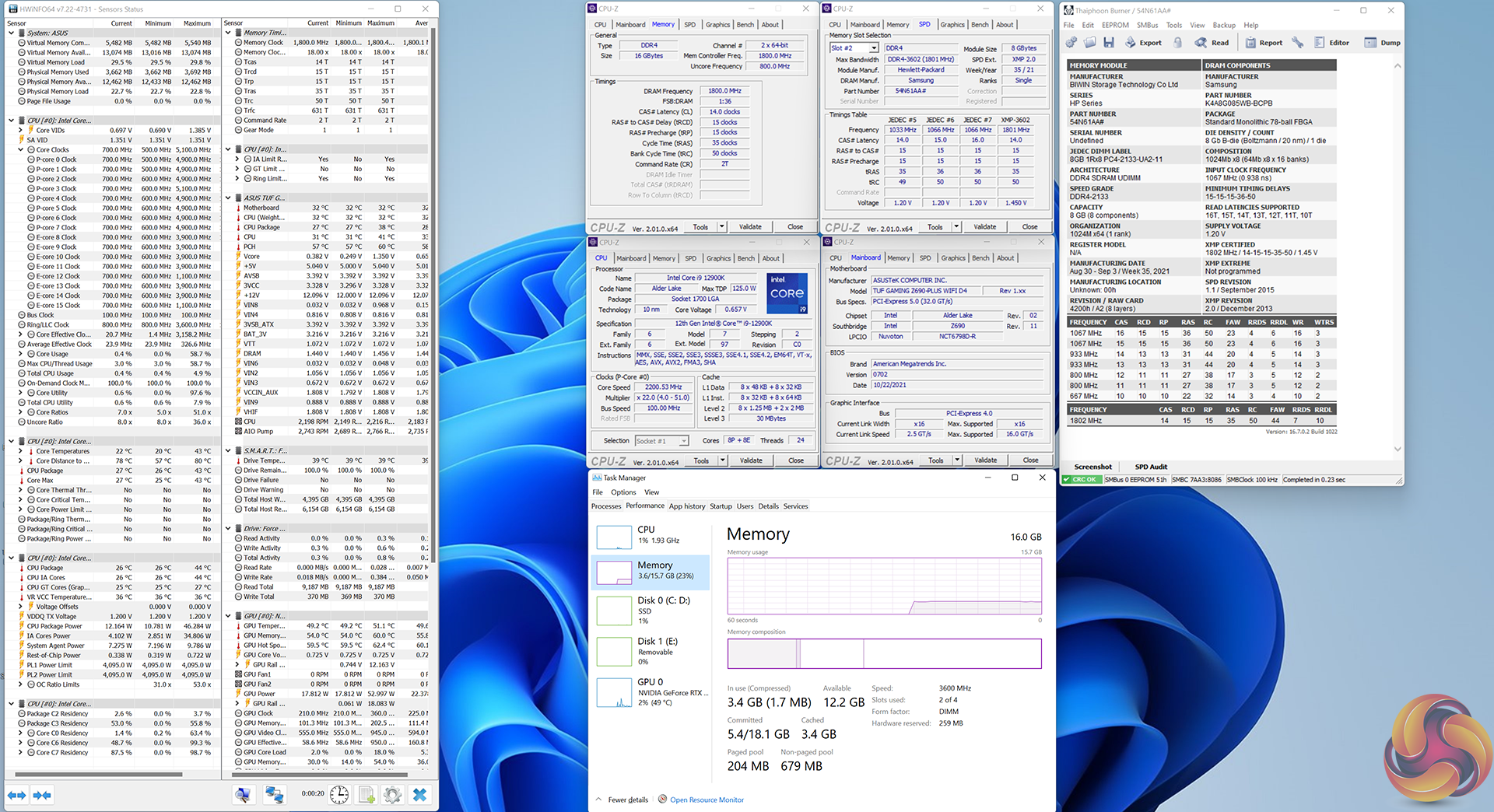
Looking at Thaiphoon Burner, we see that Samsung B-Die are used. B-Die is legendary for DDR4, so there's really not much more that I need to say.
- Model Number: HP V10 DDR4 RGB
- Capacity: 16GB (2x 8GB)
- Rated Frequency: DDR4-3600MHz
- Rated Timings: 14-15-15-35
- Voltage: 1.45V XMP
- Format: 288-pin DIMM
- Warranty: 5-Year Limited Warranty
We will be outlining the memory kit's performance with the Intel Core i9-12900K CPU, ASUS TUF Gaming Z690-Plus WiFi D4 motherboard, and a Gigabyte RTX 3080 Eagle OC graphics card. The processor is maintained at its stock frequency.
For comparison, we have some single-rank 32GB memory from Corsair, a 16GB set from Thermaltake, and a 3200MHz kit from PNY.
For more details on the test procedures and comparison kits, check out our recent testing piece looking at DDR4 versus DDR5 on the Intel 12th Gen Alder Lake platform HERE.
Test Memory Kits:
For our DDR4 comparison kits, we have a reasonable variety of frequencies, single-rank, dual-rank, and 4-DIMM single-rank kits.
- HP V10 DDR4 RGB: 3600MHz 14-15-15-35 16GB (2x8GB Single-Rank), 1800MHz Intel CPU Memory Controller Clock, around $149.99 in the US
- Thermaltake Toughram RGB Racing Green: 3600MHz 18-19-19-39 16GB (2x8GB Single-Rank), RG28D408GX2-3600C18A, 1800MHz Intel CPU Memory Controller Clock, around £135 in the UK or $149.99 in the US
- Corsair Vengeance RGB Pro SL: 3600MHz 18-22-22-42 32GB (2x16GB Single-Rank), CMH32GX4M2Z3600C18, 1800MHz Intel CPU Memory Controller Clock, around £135-140 in the UK
- PNY XLR8 Gaming EPIC-X RGB: 3200MHz 16-18-18-38 16GB (2x8GB Single-Rank), MD16GK2D4320016XWRGB, 1600MHz Intel CPU Memory Controller Clock, around £75-85 in the UK (for the black version)
Test System:
- Processor: Intel Core i9-12900K at XMP settings
- DDR4 Motherboard: ASUS TUF Gaming Z690-Plus WiFi D4 (DDR4)
- Graphics Card: Gigabyte RTX 3080 Eagle OC
- System Drive: Corsair MP600 1TB PCIe Gen 4 SSD
- CPU Cooler: Fractal Celsius+ S28 Prisma 280mm AIO
- Power Supply: Seasonic Prime TX-1000 1000W
- Case: Lian Li Open-air Test Bench
- Operating System: Windows 11 Pro
Tests:
- 7-Zip v19.00 – Built-in 7-Zip benchmark test (CPU & Memory)
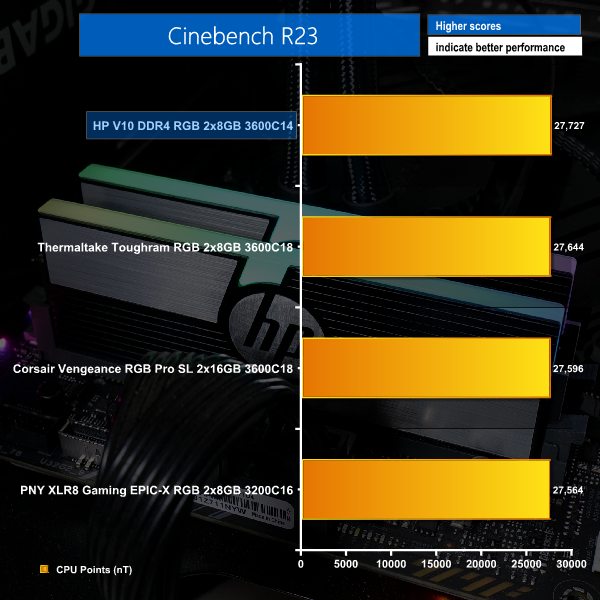
- Cinebench R23 – All-core CPU benchmark (CPU & Memory)
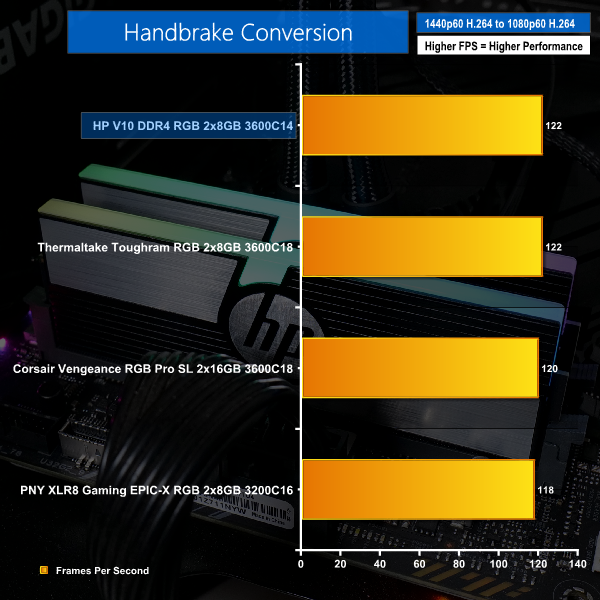
- HandBrake H264 – Convert 1440p60 H264 video to 1080p60 H264 using the YouTube HQ 1080p60 preset (CPU & Memory)
- AIDA64 – Memory bandwidth, memory latency (Memory)
- 3DMark TimeSpy – Time Spy (1440p) test (Gaming)
- 3DMark CPU Profile – CPU Profile test, Max Threads (Gaming)
- F1 2020 – 1920 x 1080, Ultra High quality preset, DX12 version (Gaming)
- Shadow of the Tomb Raider – 1920 x 1080, Highest quality preset, no AA, DX12 version (Gaming)
Memory Benchmarks
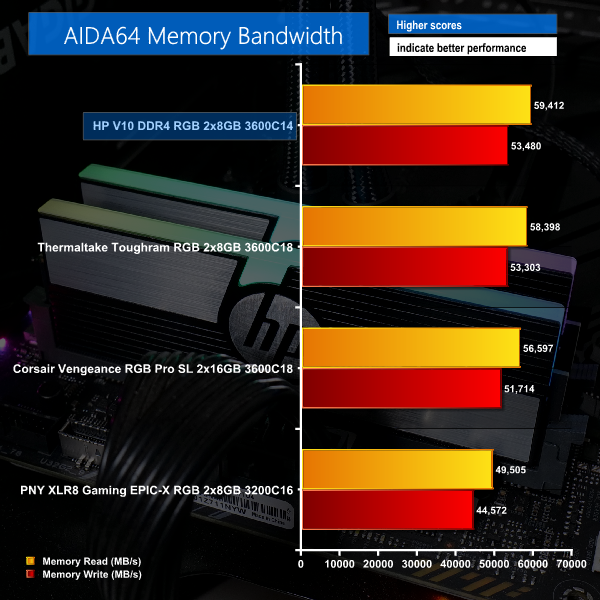
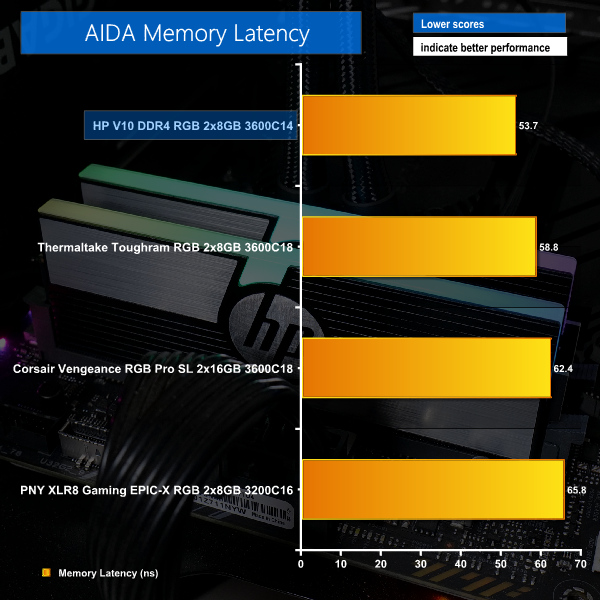
Starting out with memory bandwidth performance, we see a chart-topping result which is unsurprising when factoring in the specifications of the competing single-rank DDR4 kits.
Tight timings at 3600MHz give HP’s Samsung B-Die-powered a healthy bandwidth improvement over the competitors. The Hynix-powered Thermaltake 3600C18 isn’t too far behind, though.
Latency performance is particularly strong for HP. This is thanks to the blend of 3.6GHz RAM frequency alongside tight 14-15-15-35 timings.
Compute and Productivity Tests – 7-Zip and Handbrake
Compute and Productivity Tests – Cinebench
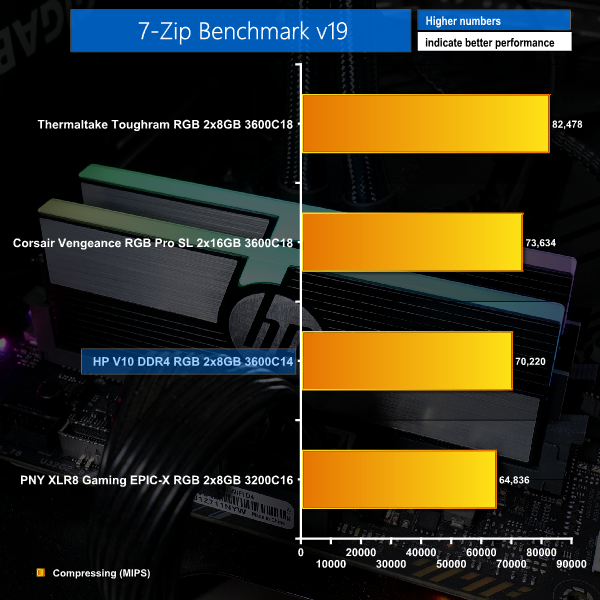
7-Zip compressing performance is odd. HP’s kit is quicker or tighter than the competitors, but this doesn’t translate into a chart-topping result. The performance score is consistent and repeatable, so we have to mark this result as an oddity. HP doesn’t win here in our test system, though.
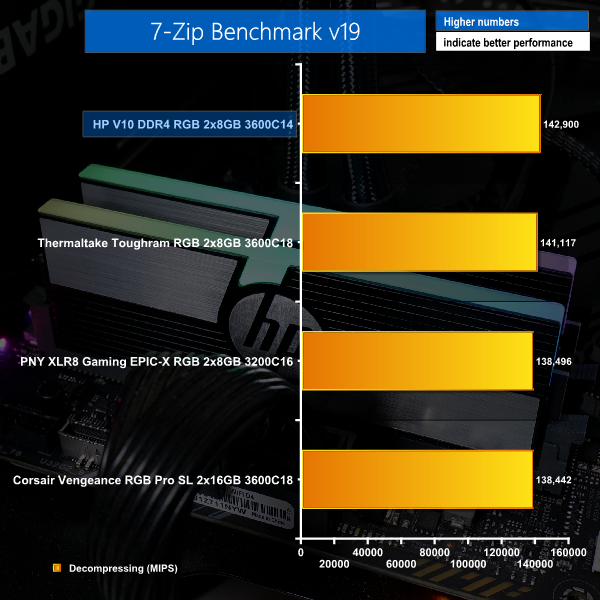
Decompressing performance is where normal order is resumed. The Samsung B-Die-powered HP set takes top spot by a slim margin over Thermaltake’s competitor.
And the set is joint quickest in Handbrake, too. Both the HP V10 DDR4 RGB and Thermaltake Toughram 3600MHz sets run at 122 FPS. HP’s tighter timings are not proving beneficial here.
Cinebench is technically a win for the V10 DDR4 RGB. Realistically, though, all kits are as quick as each other in Cinebench’s CPU-biased test.
3DMark Tests
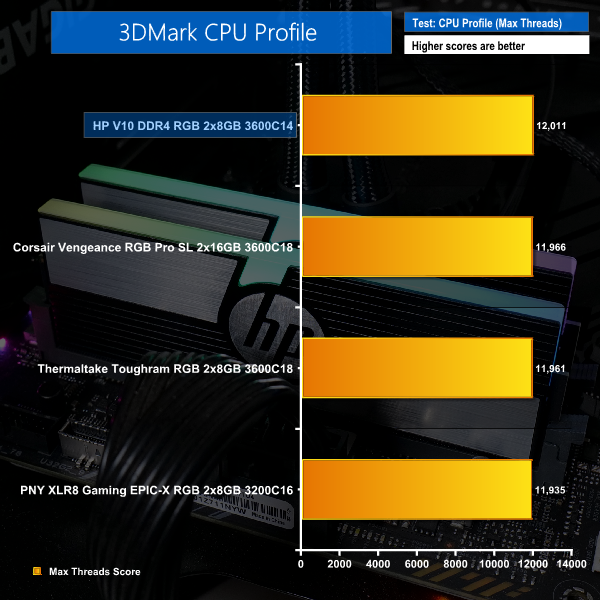
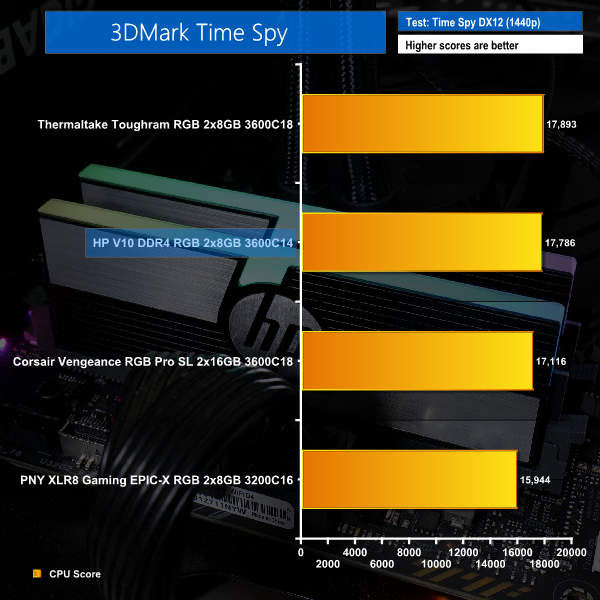
3DMark’s CPU Profile test has the HP set at the top of our chart by a small margin. But Time Spy isn’t quite as favourable, with the V10 DDR4 RGB dropping to rank two in our hierarchy.
Gaming Tests
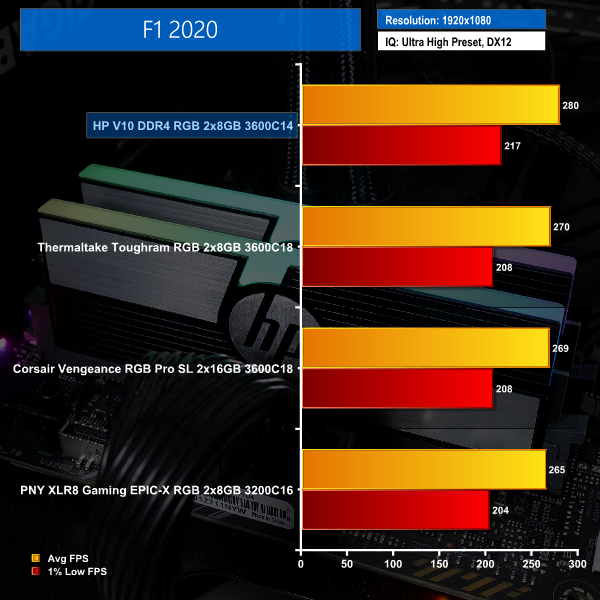
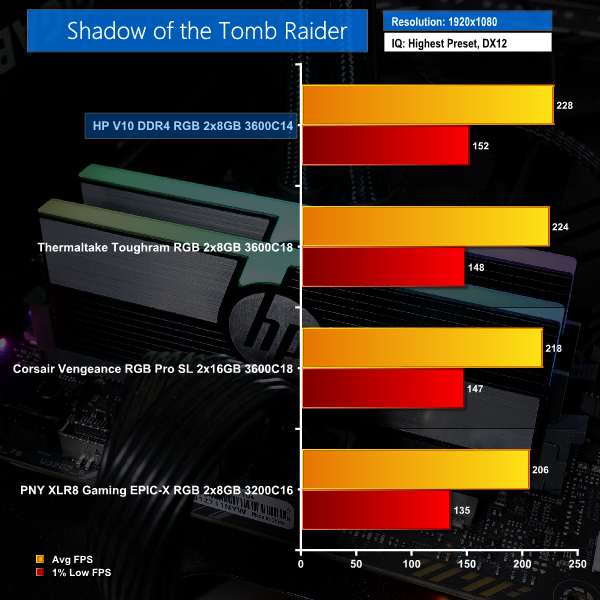
Once again, we see HP’s slick set putting in chart-topping results in F1 2020. The Samsung B-Die set is a small percentage quicker than Thermaltake’s Hynix set here. That may be important to some people.
The results are very close in Shadow of the Tomb Raider, but the trend is the same; HP’s set flexes its tight latencies and leads the pack by a small margin.
Overclocking will understandably be very much dependent upon luck of the draw with your individual kit. As such, we don’t assign too much weight to the overclocking results that we see with a sample size of one. There’s no harm in a quick tinker though.
Given that our set was already running at 1.45V on the Intel Z690 test platform, we didn’t fancy pushing voltages higher. As such, we stuck with 1.45V and the tight default timings and checked how far we could bump the frequency up.
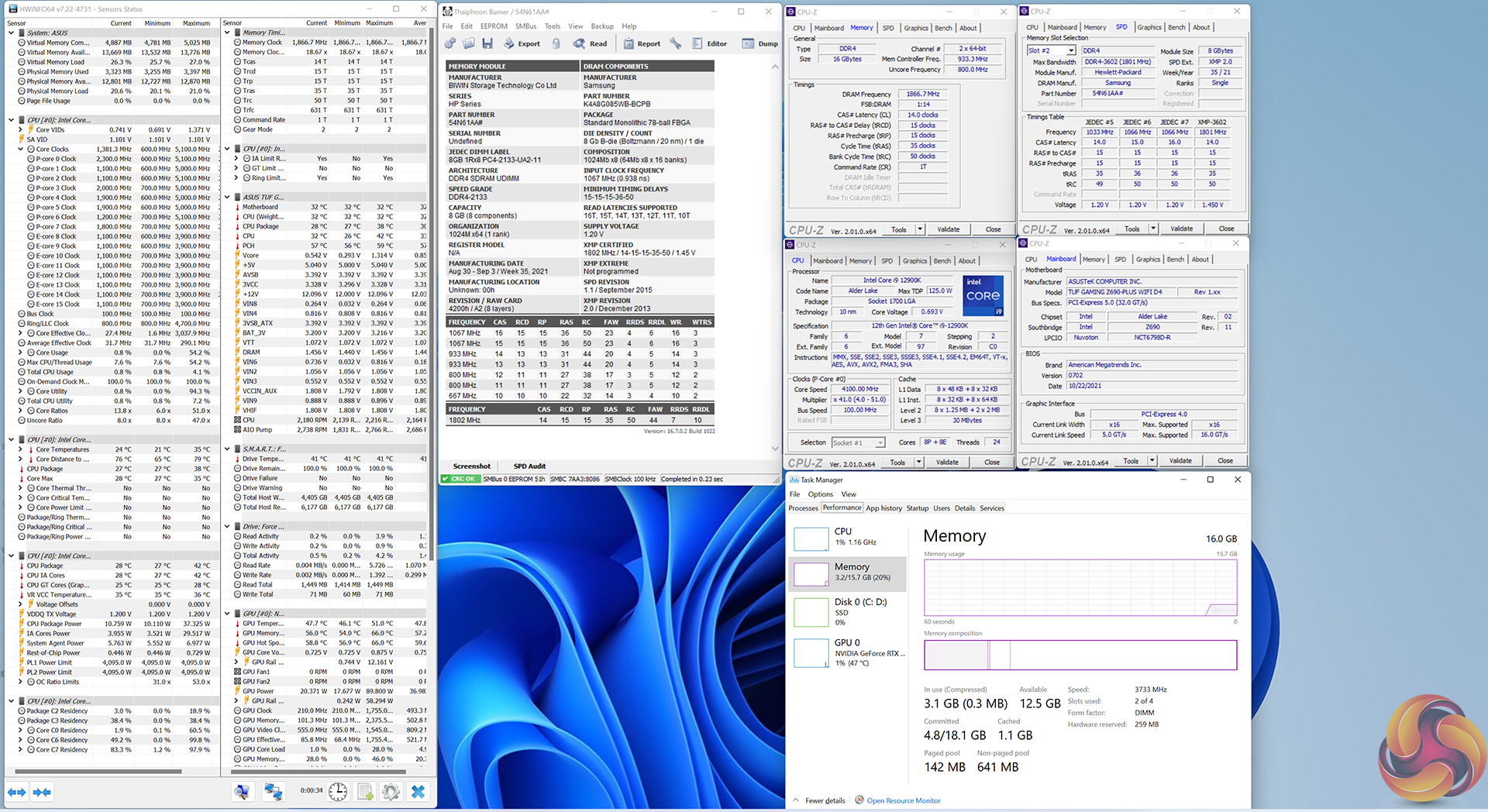
Our best result was 3733MHz using the standard 1.45V and 14-15-15-35 timings. Given the out-of-the-box specifications are already slick, an extra 133MHz via overclocking is perfectly reasonable.
No, this isn’t a particularly large speed bump, but it’ an extra few MHz for no change in timings or voltage.
The HP V10 DDR4 RGB is a solid effort by the vendor to create a set of memory that will appeal to more enthusiastic buyers. Samsung B-Die with tight out-of-the-box timings is generally a good formula for any set of DDR4 memory.
Performance in our testing was good. We generally saw greater performance than competing single-rank DDR4 sets, including 3600MHz kits from Corsair and Thermaltake.
The 3600MHz speed with 14-15-15-35 timings is a good combination. With that said, the operating voltage of 1.45V in our test system is undeniably high for a 2x8GB set.
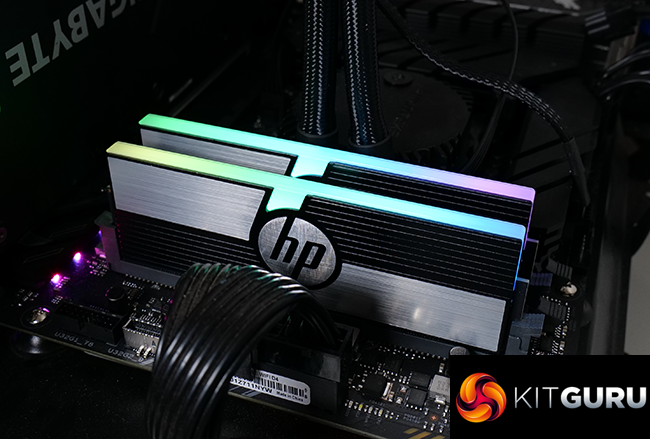
I think HP does a good job with styling. The modules look good with a silver and black heatspreader that also features the ‘hp’ logo. Height is ludicrous – as we often see from modern DDR4 memory. But the build quality of the sticks is undeniable.
The RGB lighting implementation is solid, too. Lighting brightness was good to my eyes. I like the fact that there’s no need for additional, third-party software. And the colour accuracy and smoothness were absolutely fine.
Pricing is a clear problematic area for this set of memory. With an MSRP of $150 in the US, and current availability of $129.99, Biwin/HP are clearly banking on people paying a massive premium for Samsung B-Die ICs.
By comparison, a similar spend of up to $130 buys double the capacity of 3600MHz Corsair Vengeance RGB Pro. Or higher-clocked sticks in 16GB form. Or there's a roughly $50 saving by opting for 3600MHz G.SKILL Trident Z RGB 16GB instead.
There are several positive factors with the HP V10 DDR4 RGB memory set and its Samsung B-Die ICs. We appreciate that HP/Biwin are coming to market as a new contender – more competition suits the consumer. However, the current pricing structure makes the set's market position uncompetitive, unless you're happy to pay a significant premium for Samsung B-Die ICs. The 5-year warranty is silly, too.
Pros:
- Attractive heatspreader design
- Good-looking RGB lighting system
- No proprietary software required
- Excellent build quality
Cons:
- No temp sensor
- Ludicrously tall
- Very high default voltage for 2x8GB 3600C14
- 5-Year warranty is silly – RAM is always lifetime warranty
KitGuru says: Samsung B-Die ICs deliver excellent performance, and we like what HP/Biwin have done with the modules. But the pricing is currently uncompetitive, and a measly 5-year warranty leaves a question in our mind.