 KitGuru KitGuru.net – Tech News | Hardware News | Hardware Reviews | IOS | Mobile | Gaming | Graphics Cards


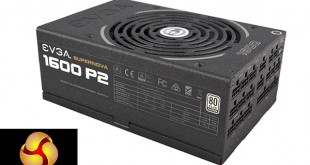
We aren't messing around today. Up for analysis is the latest flagship power supply from enthusiast favourite EVGA. Their new SuperNova 1600 P2 Power supply is a monster product designed for power crazy SLI and Crossfire systems. It is 80 Plus Platinum certified, fully modular, and incorporates the highest grade Japanese capacitors inside. The EVGA SuperNOVA 1600 P2 is designed to deliver a staggering 1600 watts – which for 90% of our audience, will be completely overkill. This is not for the faint of heart, as the £275.99 inc vat asking price will testify.
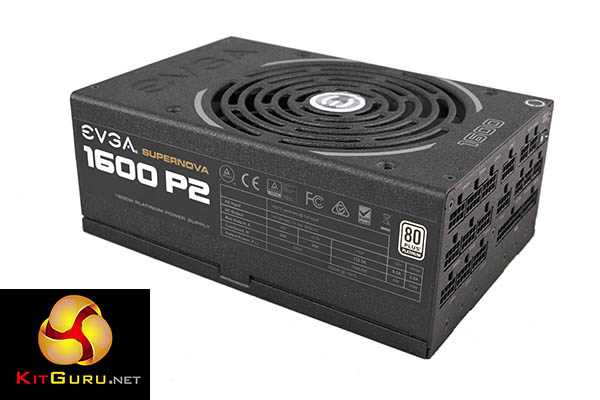
The EVGA SuperNOVA P2 1600 Supply is a high amp single rail design (133A) and it incorporates a vertical, double layer main transformer to increase power output. EVGA claim this beast operates in ‘near silence' most of the time so we want to put that to the test later in the review.
Features:
- Unbeatable 10 Year Warranty and unparalleled EVGA Customer Support
- 80 PLUS Platinum certified, with 92% (115VAC) / 94% (220VAC~240VAC) efficiency or higher under typical loads
- Highest quality Japanese brand capacitors ensure long-term reliability
- Fully Modular to reduce clutter and improve airflow
- NVIDIA SLI & AMD Crossfire Ready
- Double Ball Bearing fan for exceptional reliability and quiet operation
- Heavy-duty protections, including OVP (Over Voltage Protection), UVP (Under Voltage Protection), OCP (Over Current Protection), OPP (Over Power Protection), and SCP (Short Circuit Protection)
- ECO Intelligent Thermal Control Fan system (Zero Fan Noise < 45°C)
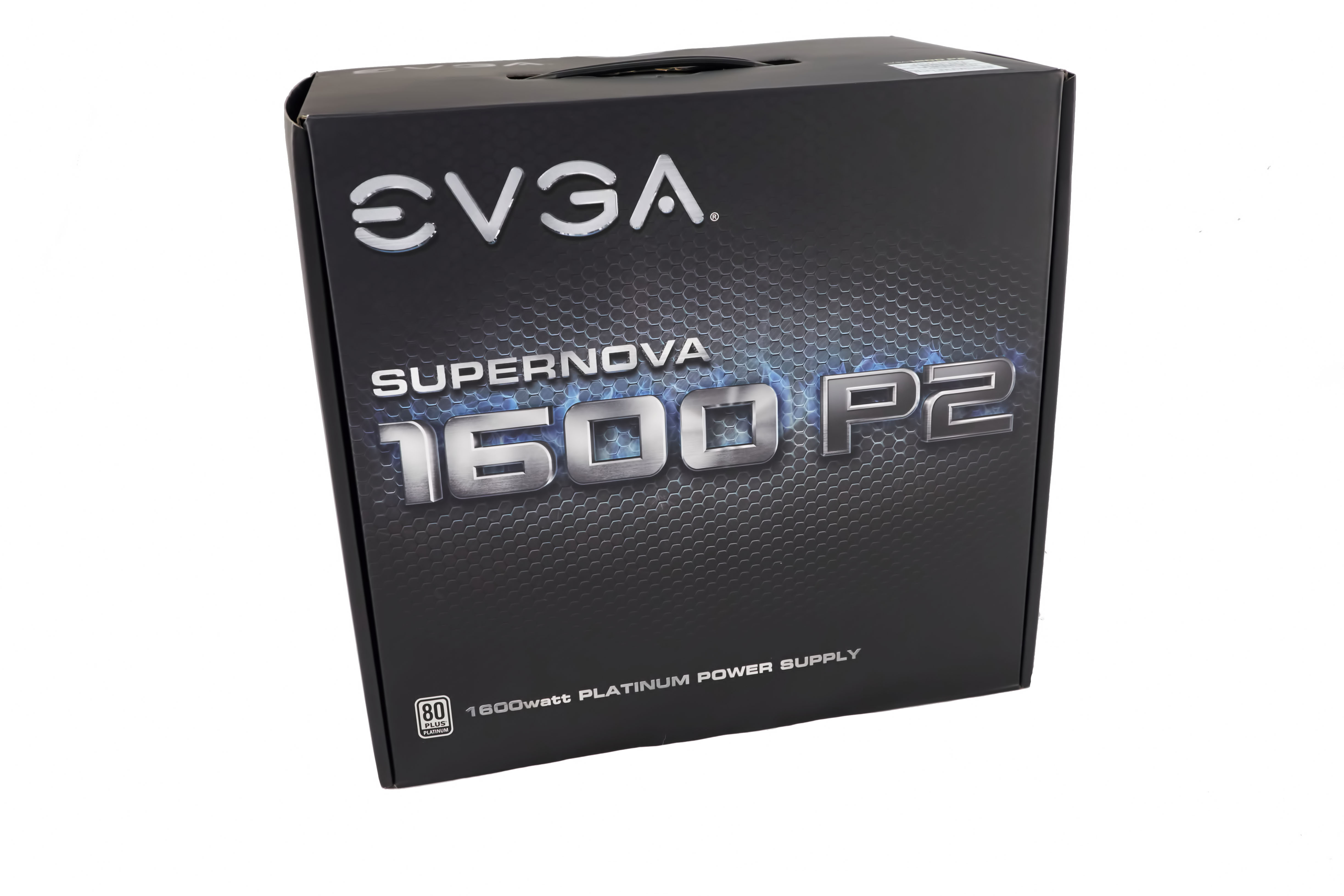
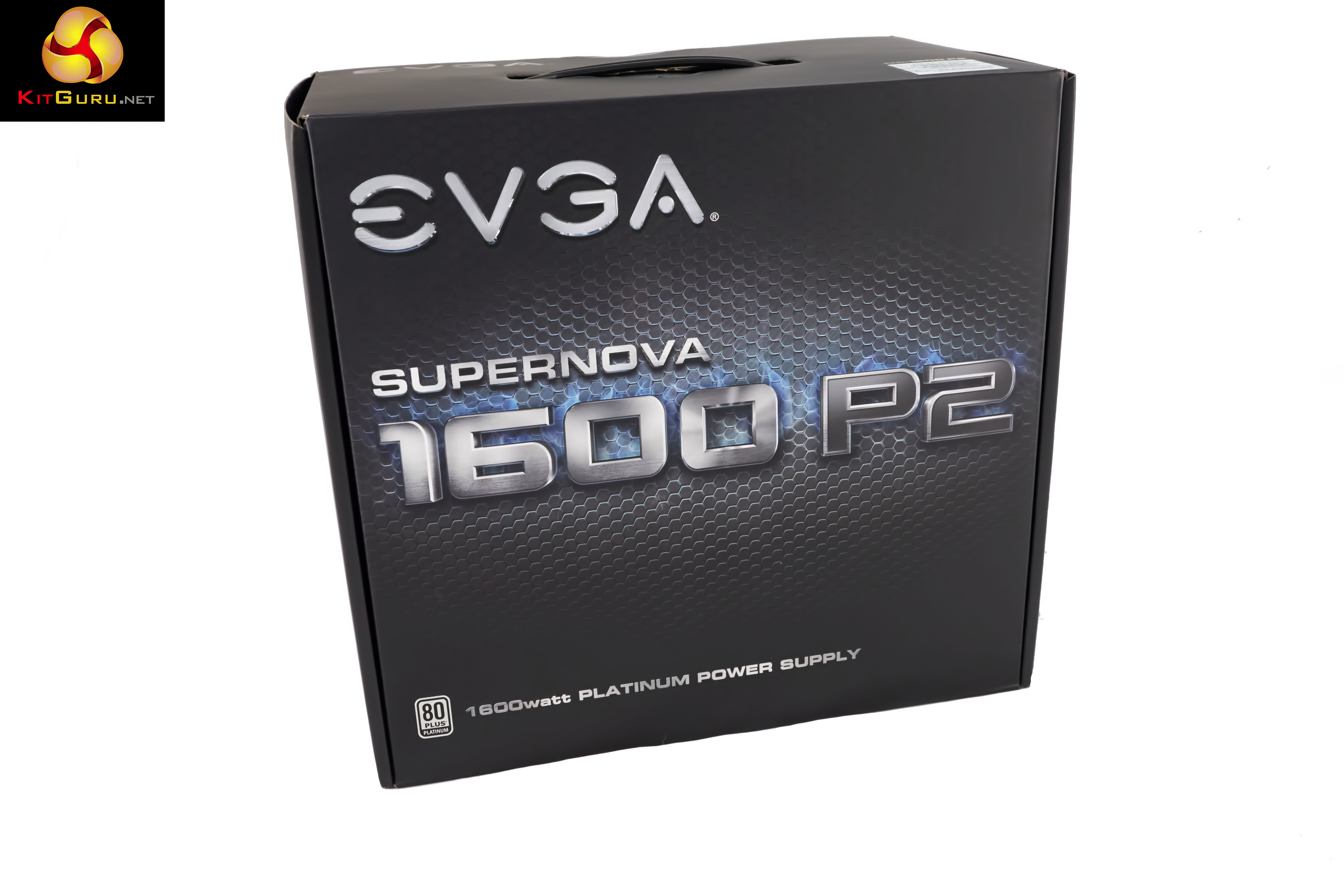
The EVGA SuperNova 1600 P2 ships in a dark box with no images of the product visible.
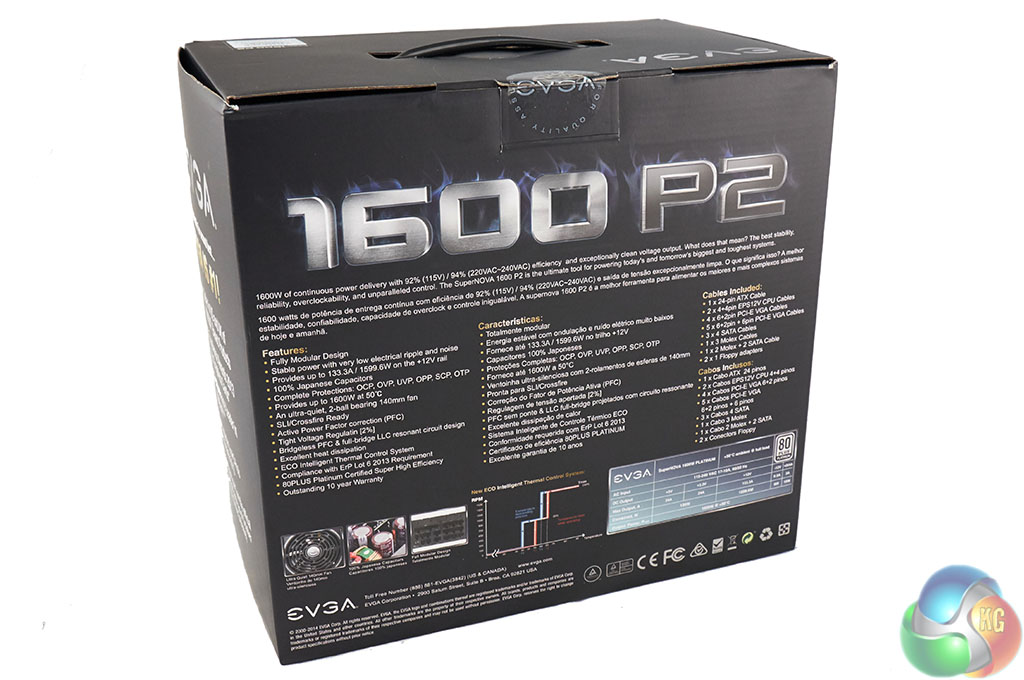
No shortage of information on the back of the box.
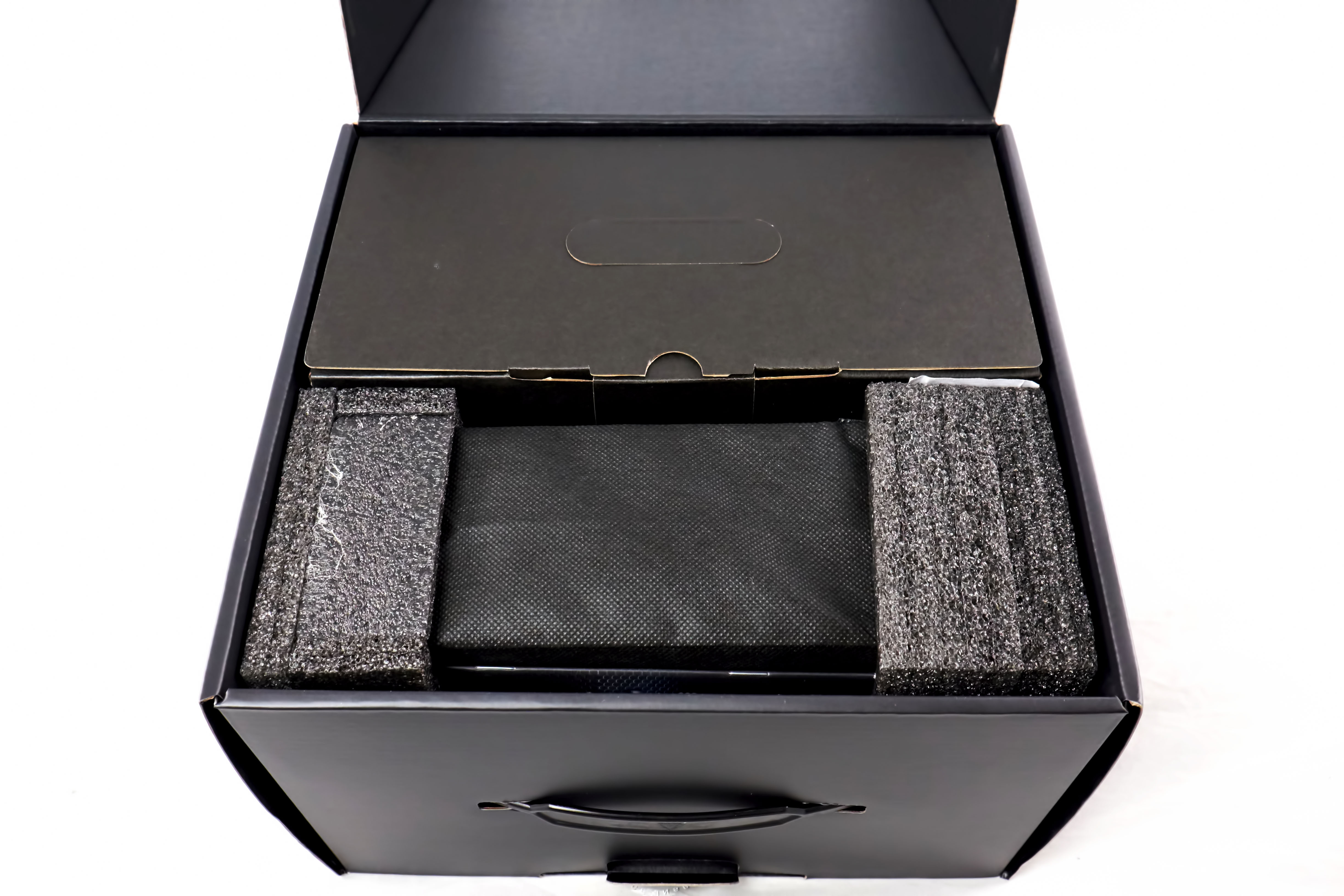
Inside the box, the power supply is encased between thick slabs of foam and is wrapped inside a bag.
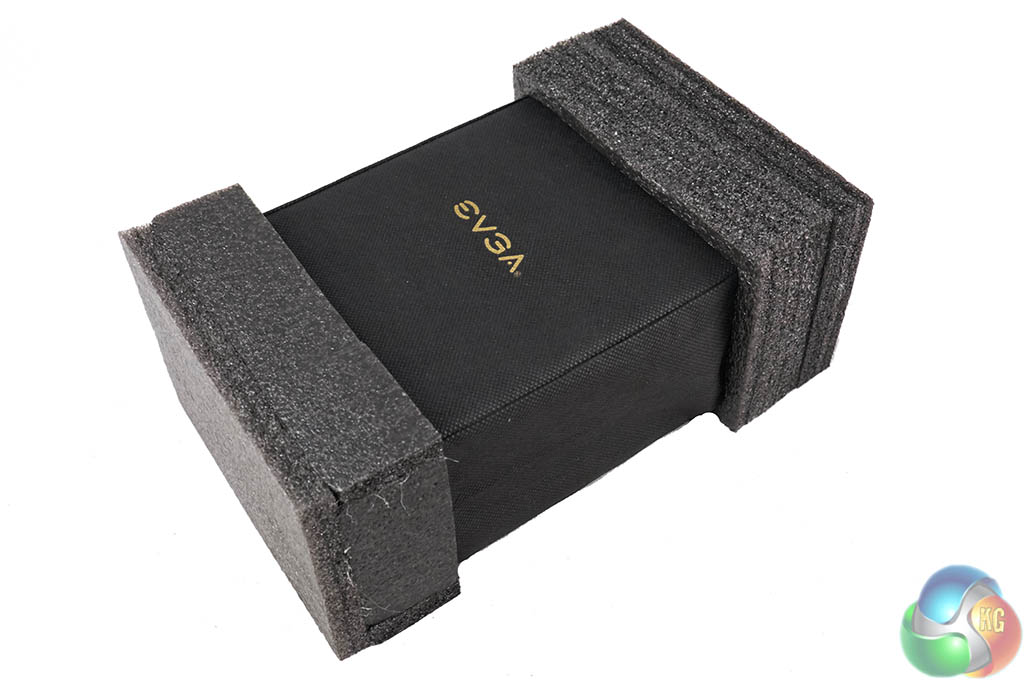
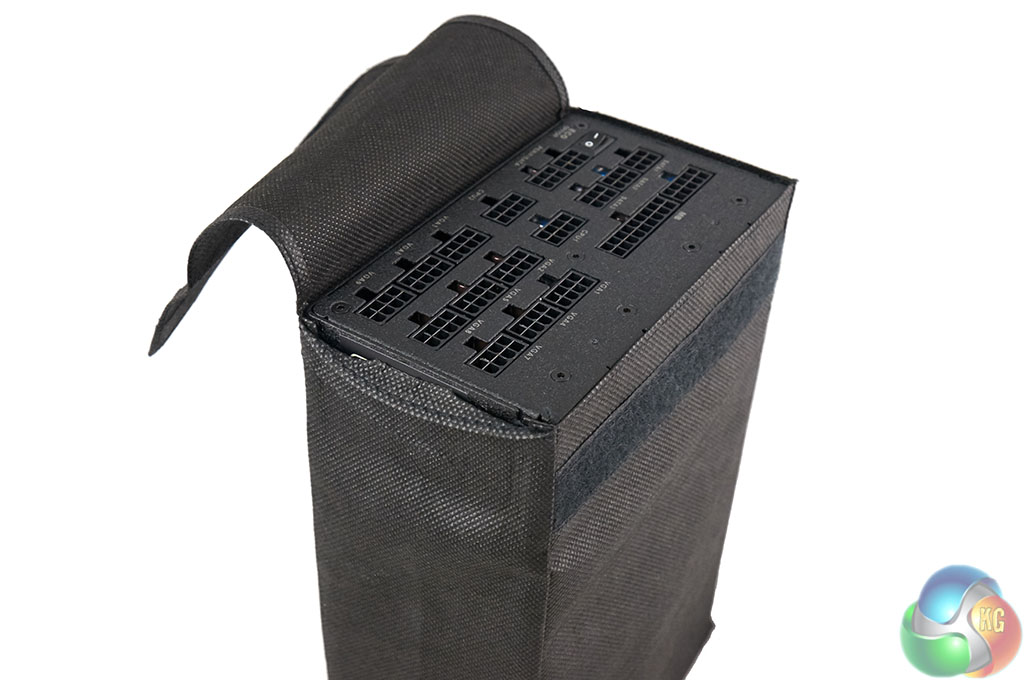
Interesting to see the little storage bag is resealable.
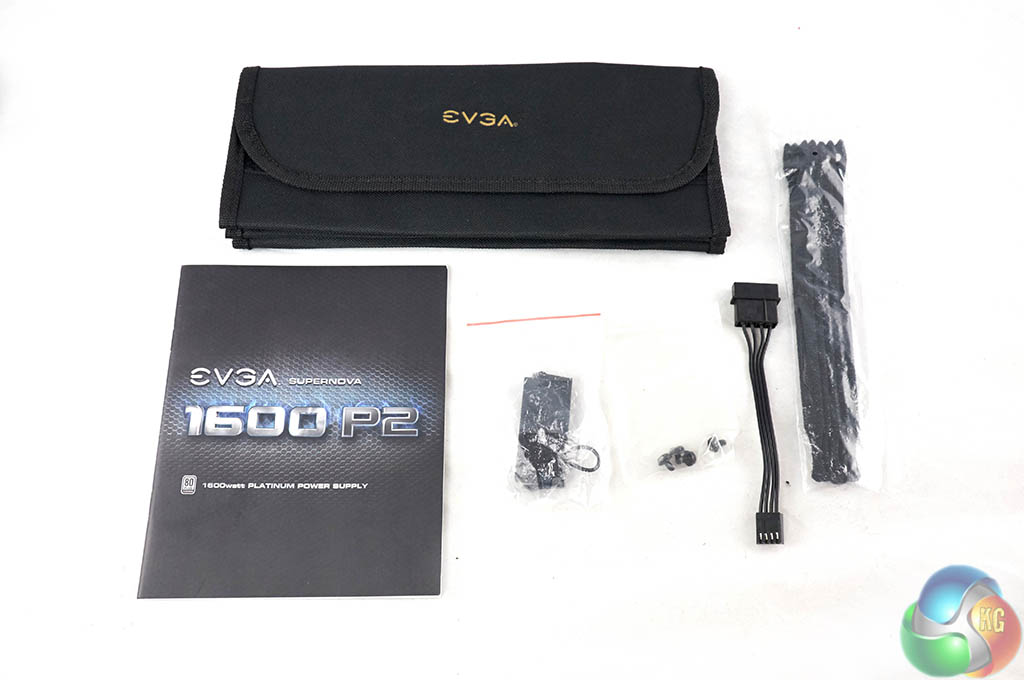
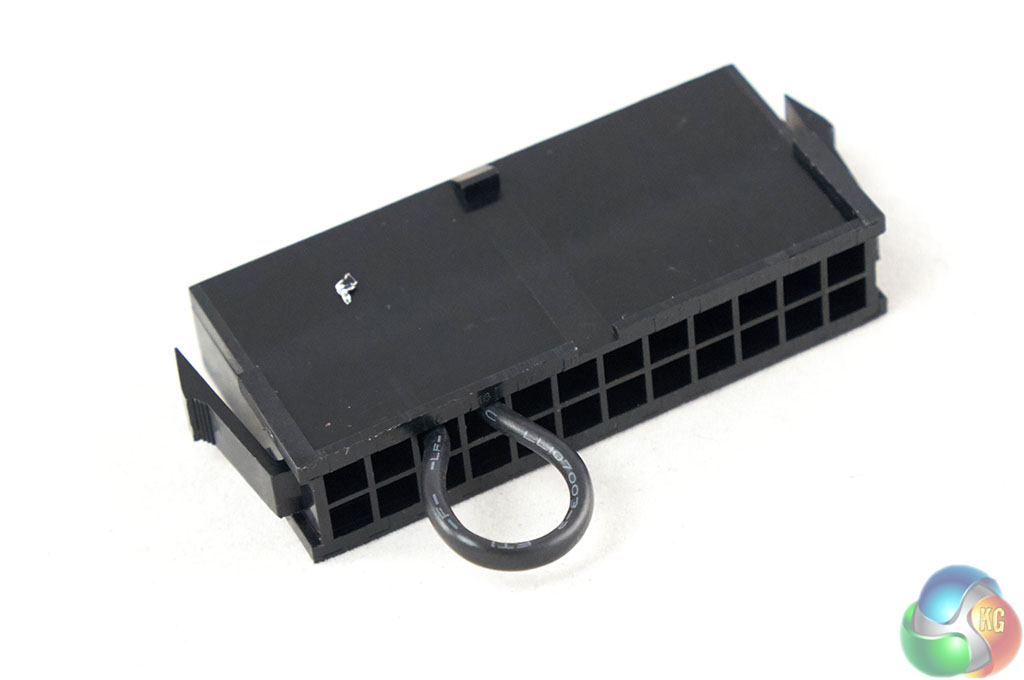
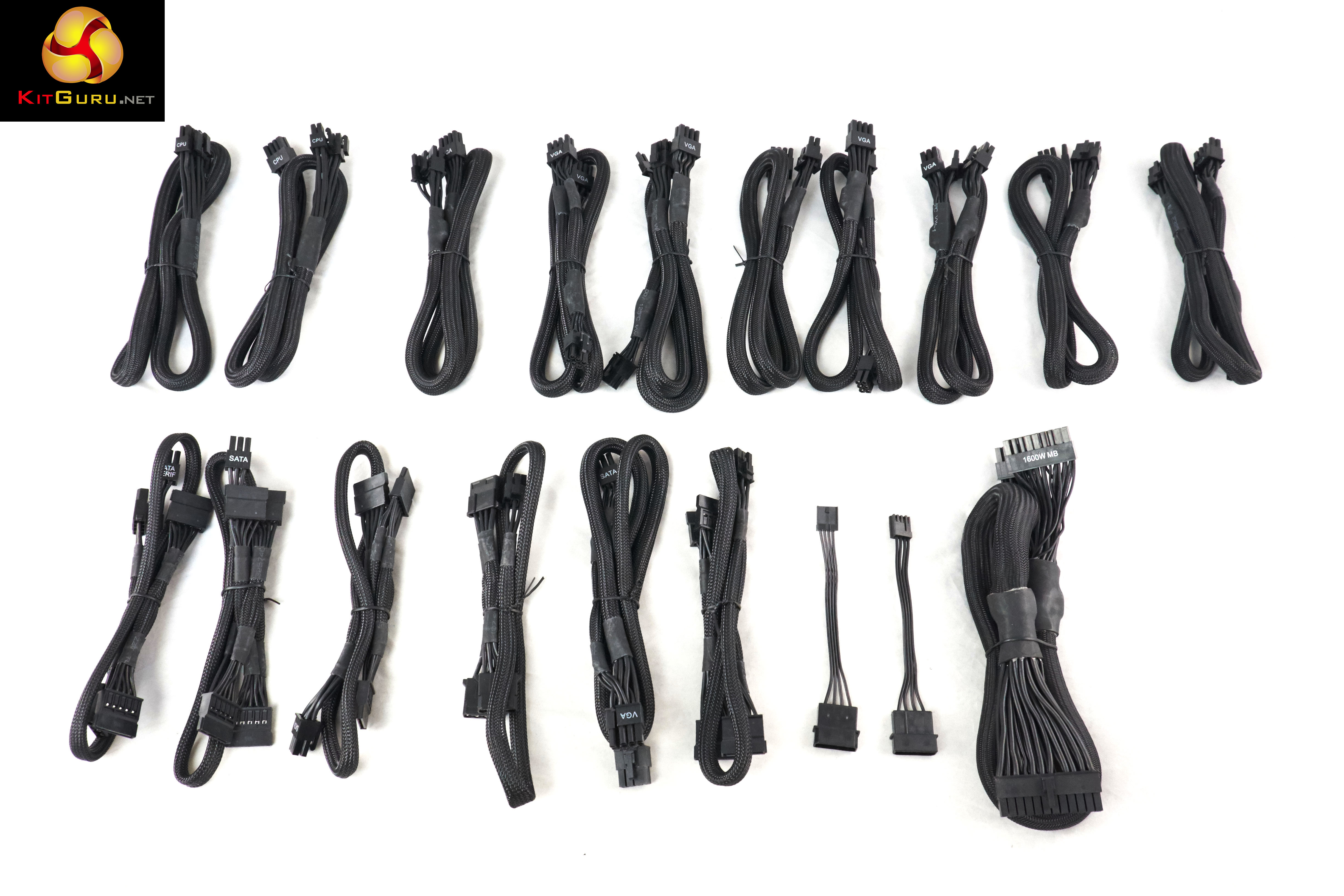
Inside the box, a felt cable bag to store the modular cables, along with a user manual, mounting screws, felt ties, and an ATX bridging adapter. This allows the power supply to be used without load.
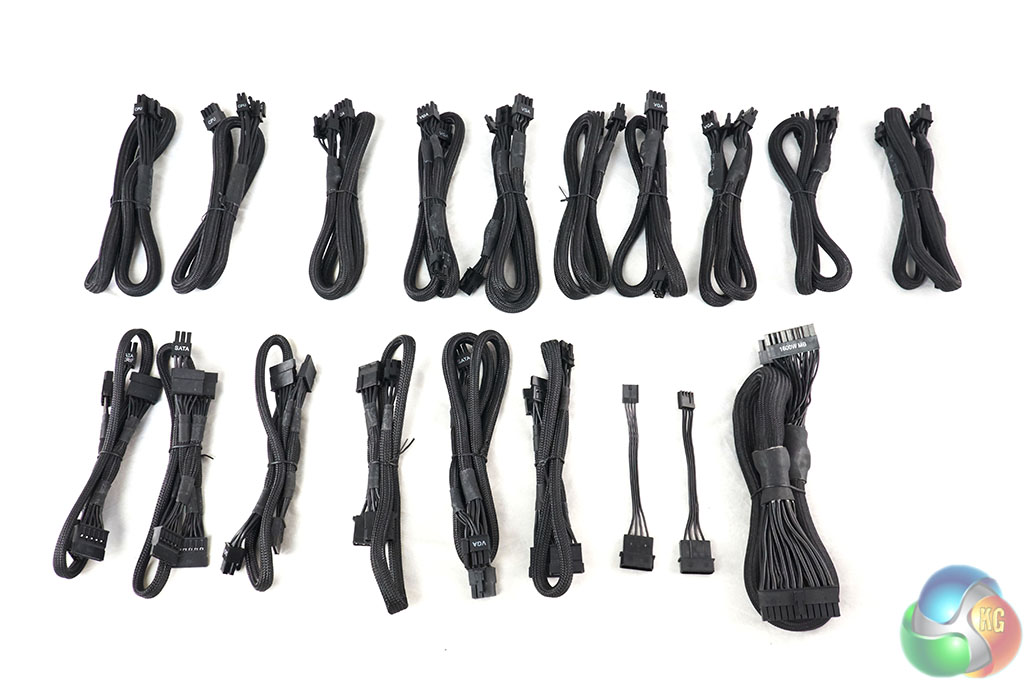
The modular cabling is all black sleeved, which is very sexy indeed.
| Cable | Connectors |
| MB 20+4 pin | x1 (600mm) |
| CPU 4+4 pin | x2 (750mm) |
| PCI E 8 pin (6 pin +2) | x9 (750mm. 900mm) |
| PCI E 8 pin (6 pin) | x5 (750mm) |
| SATA | x16 x (550mm, 650mm, 750mm, 850mm) |
| MOLEX | x6 (550mm, 650mm, 750mm) |
| FDD | x2 |
Certainly no shortage of cables with the EVGA SuperNOVA 1600 P2 power supply – it has been designed with monster multi card SLI and Crossfire systems in mind.
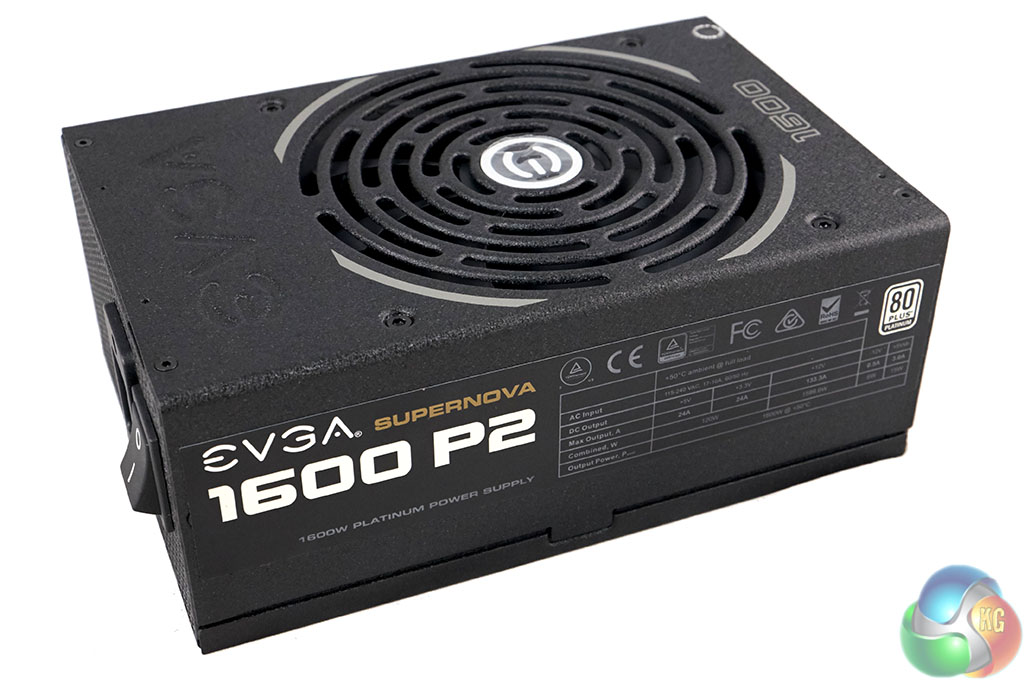
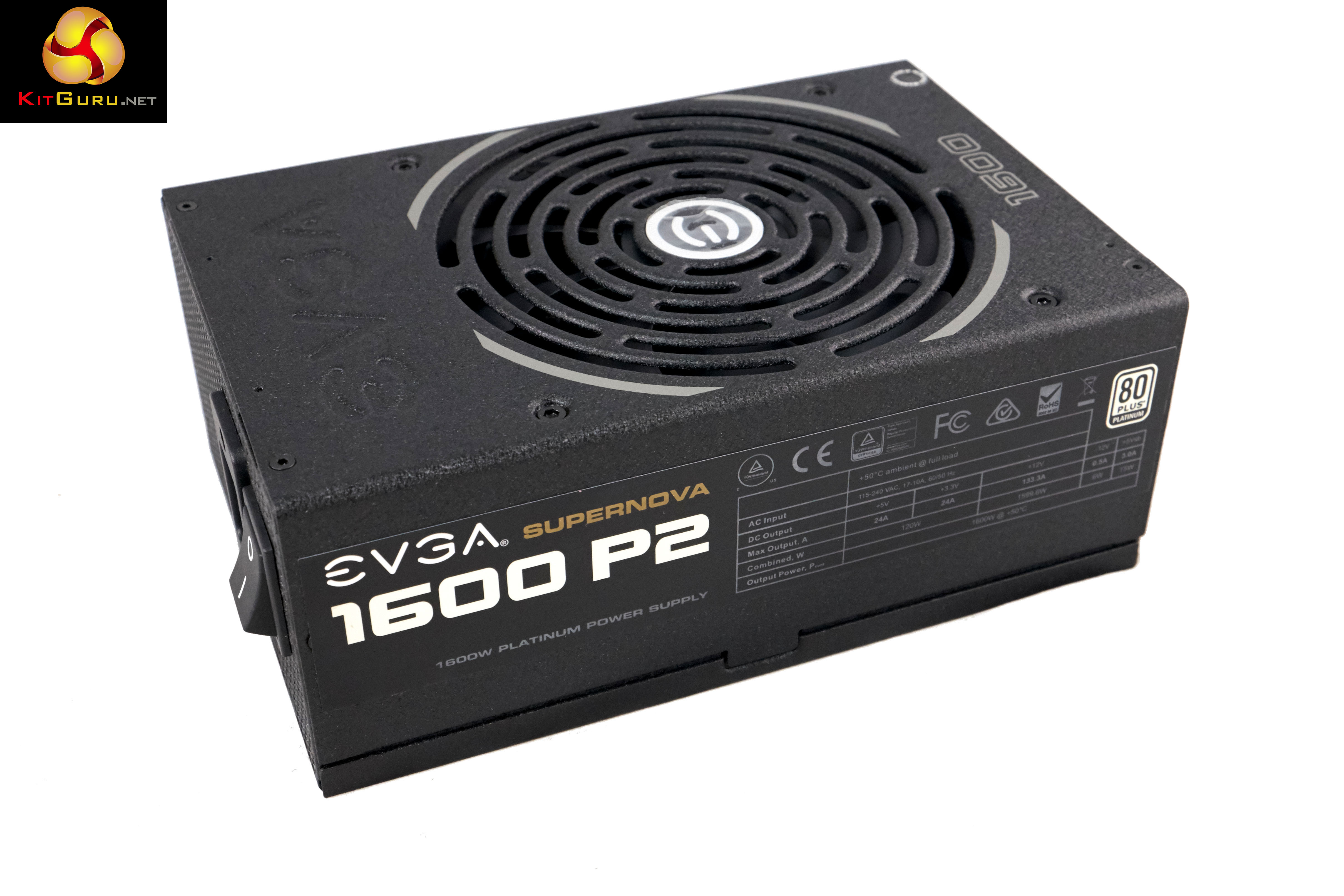
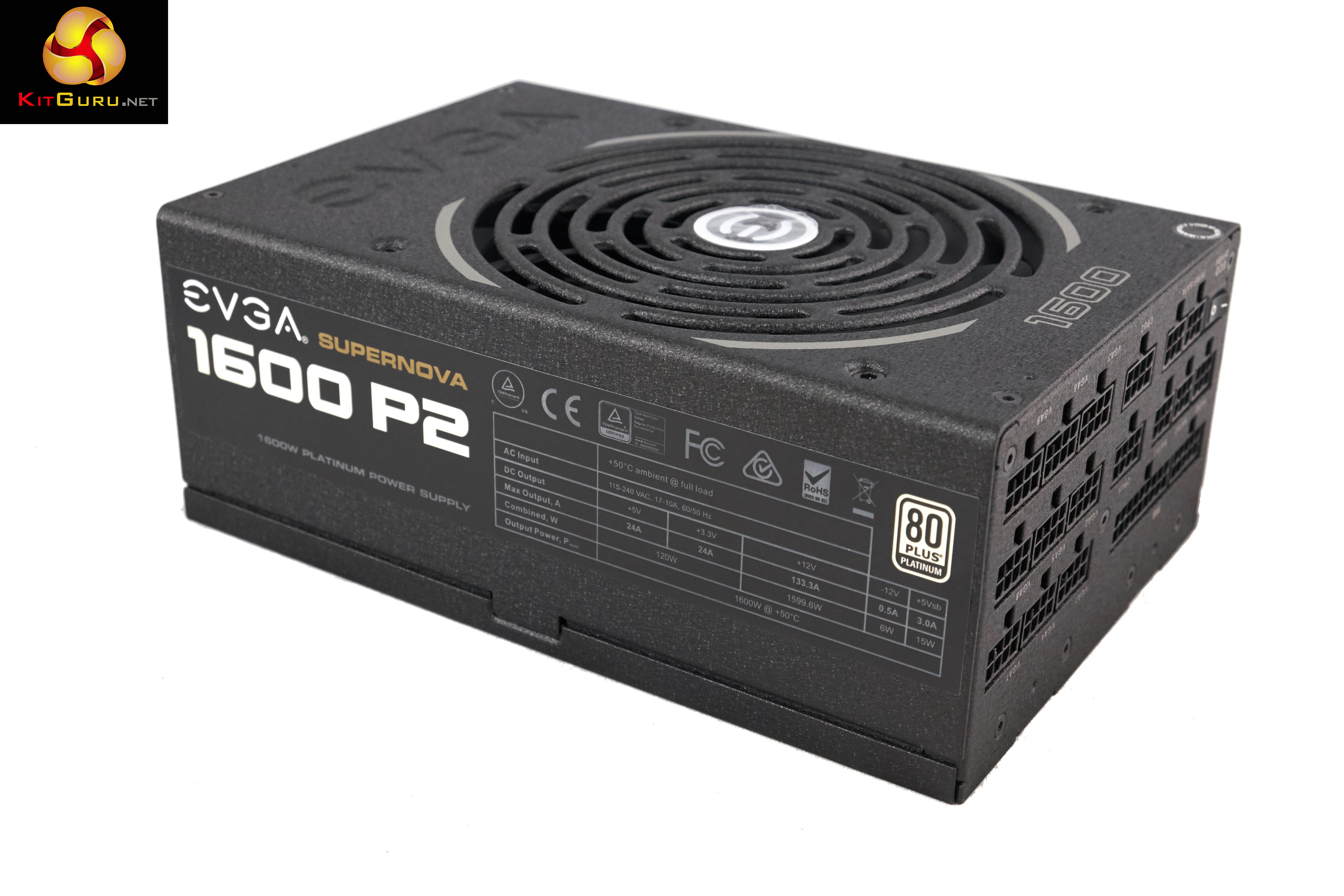
The SuperNOVA 1600 P2 is another serious and mean looking EVGA powersupply. The matt paint work is rough to the touch and as such won't attract fingerprints easily. Labels on the side detail the specifications and capacity. We will look at this shortly.
This is a very large power supply measuring 85mm (H) x 150 mm (W) x 200 mm (L). Careful case selection is a must.
Like the 1200 P2 which we reviewed last week, the finish of the chassis is superb. It passed our ‘screwdriver’ test without a problem. This involves running the head of a Philips head driver down the side of the chassis with light to medium force. After all, how many times have you accidentally connected with a power supply during a system build?
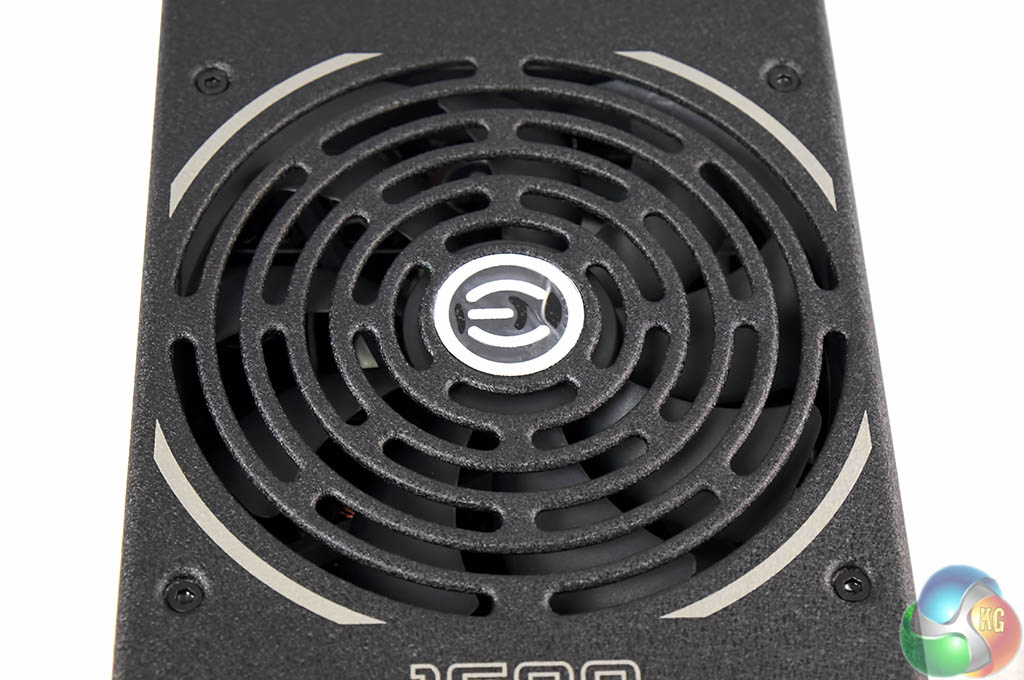
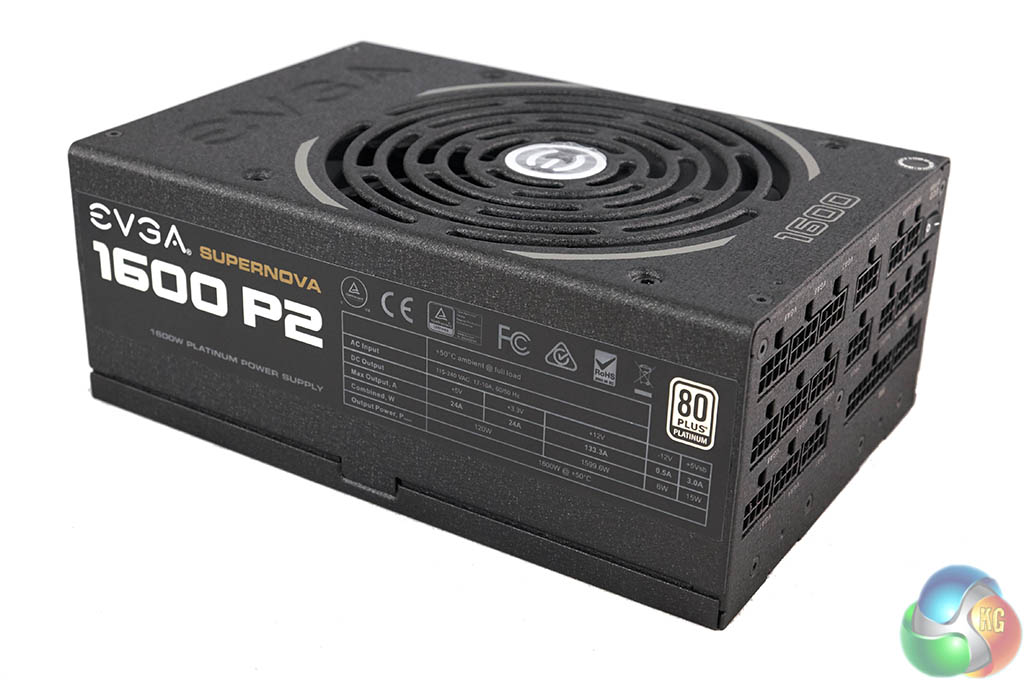
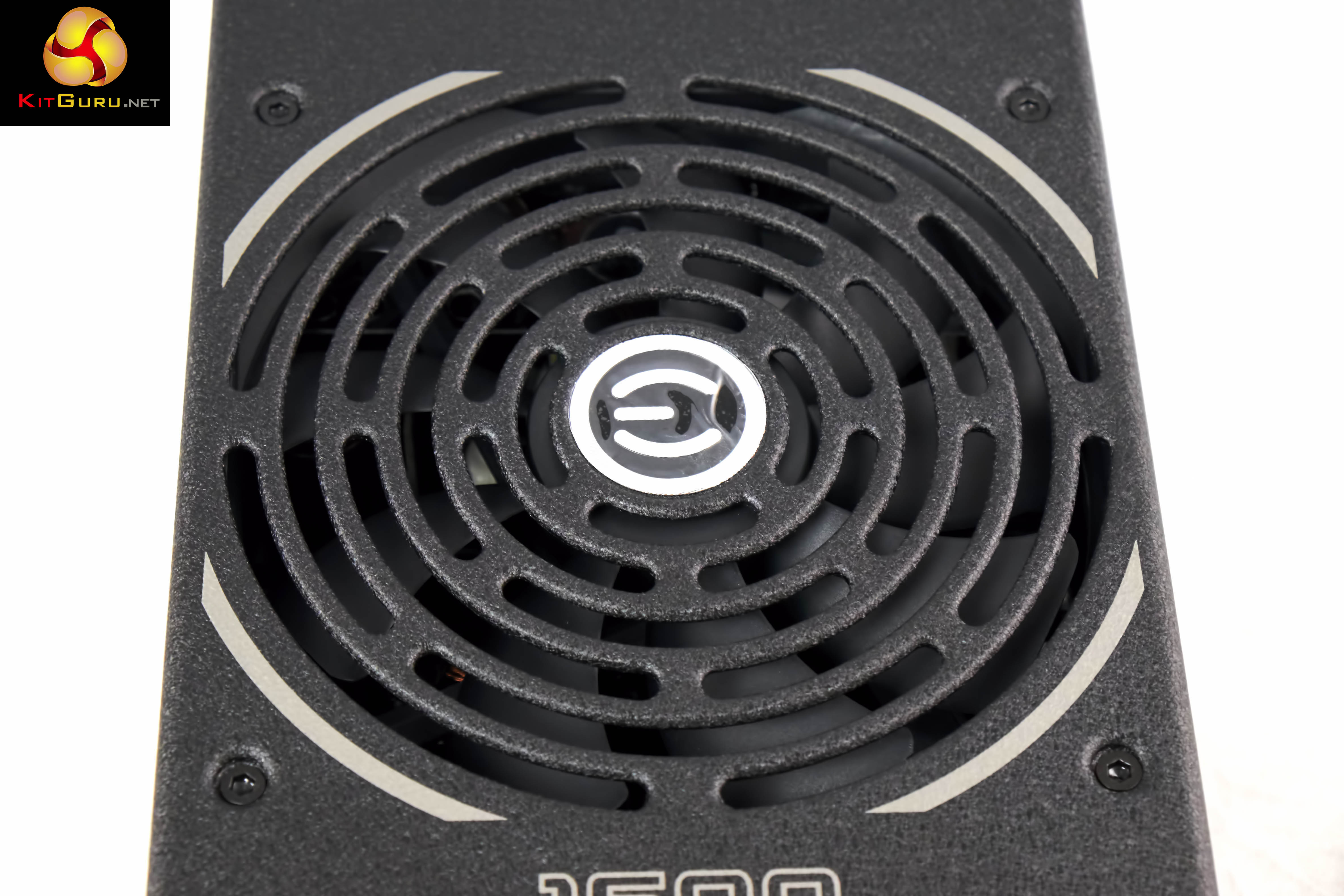
The large fan is hidden behind the thick grill system which is cut into the chassis itself. The EVGA ‘E' logo is visible in the center of the chassis. The fan underneath is 140mm, and we will take a closer look at the model when we open it up shortly.
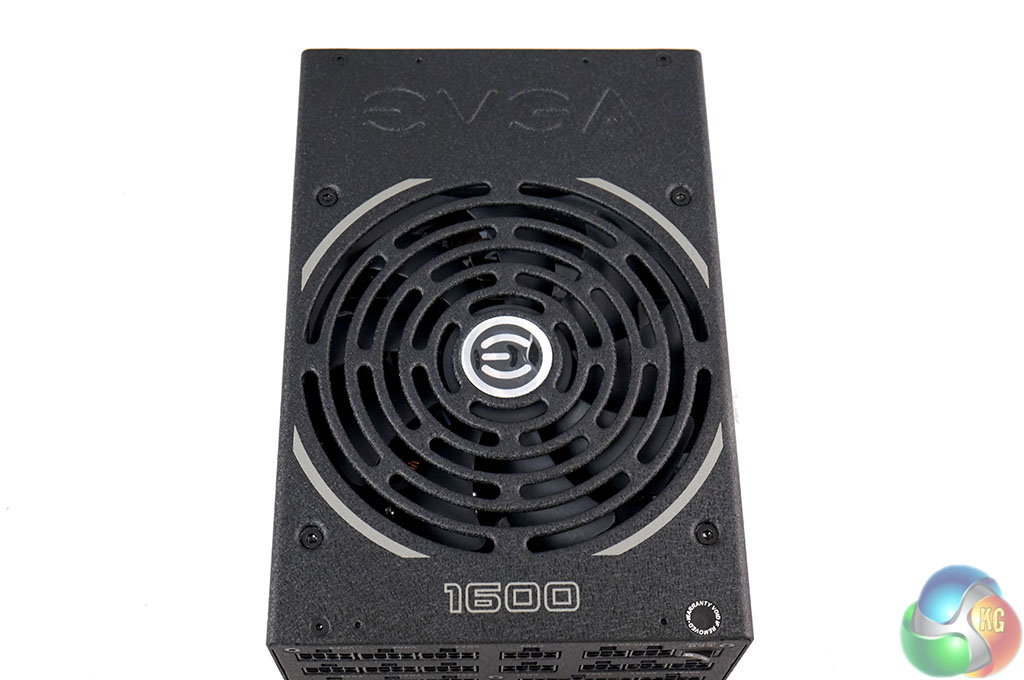
It may be difficult to see in the photos, but we like the small attention to details, such as having the ‘EVGA' text cut into the chassis.

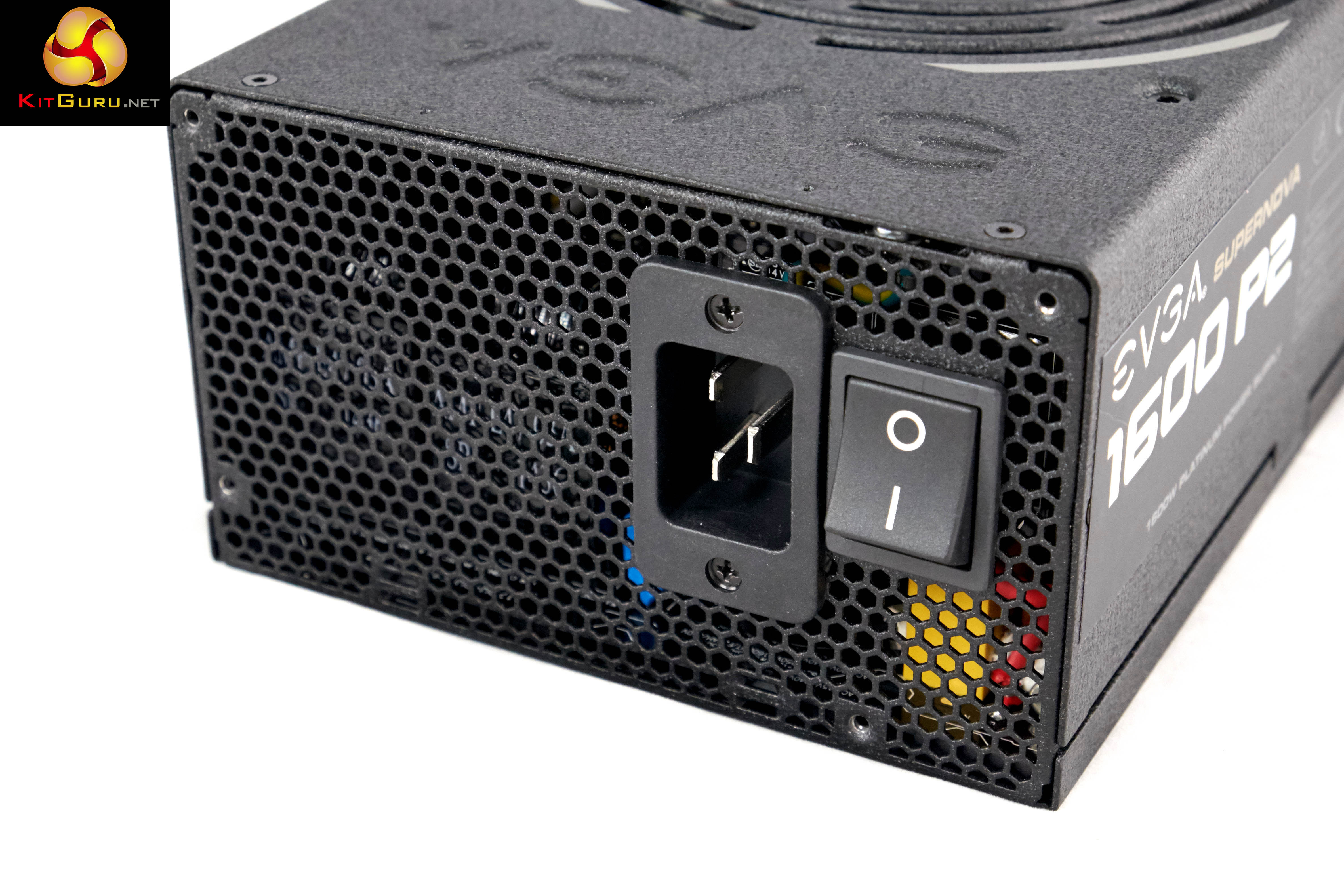
At one end of the power supply is the power connector and switch. A large vented surface is cut into the case to help ensure plenty of air flow.
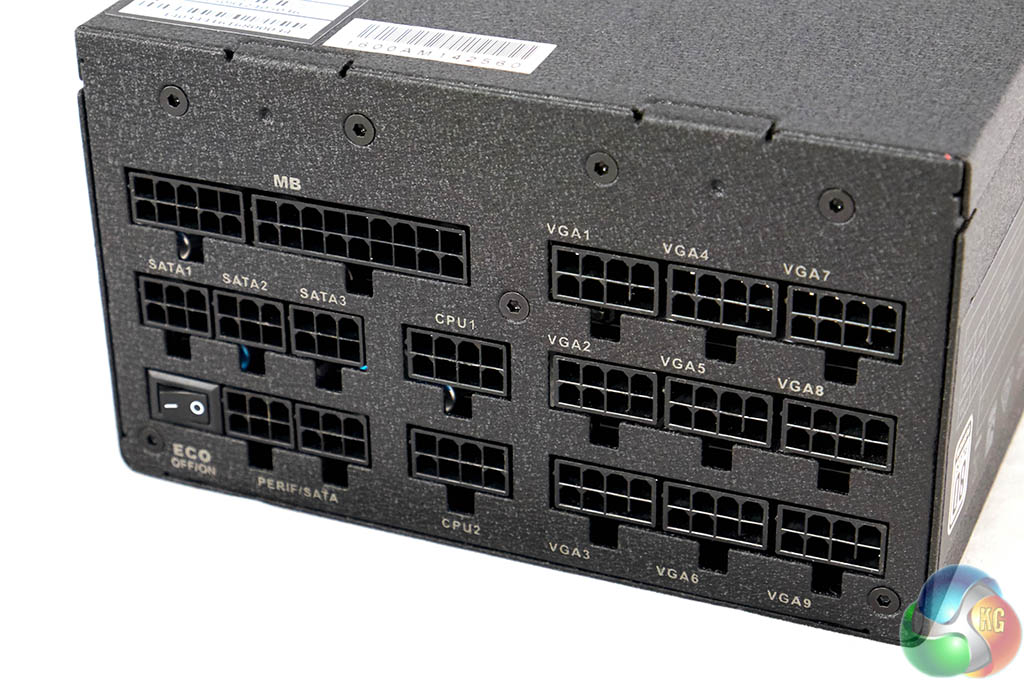
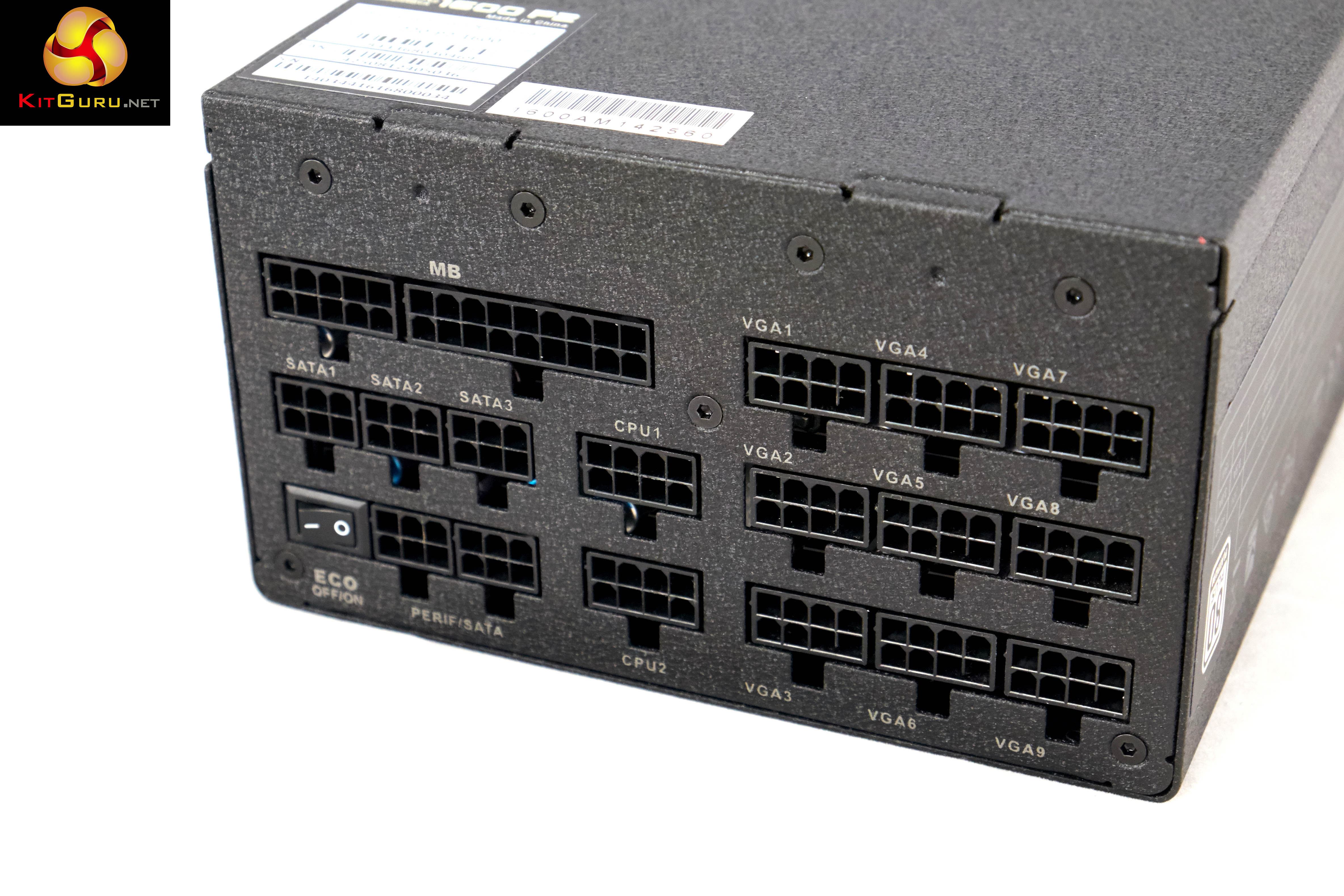
As you would expect there are no shortage of connectors on the modular bay section. All of these are clearly labelled and easy to follow, even for a relatively inexperienced builder. An ‘ECO' switch is also positioned in the bottom corner. This allows the user to toggle the ‘semi passive' option on and off. Regular readers may remember that the 1200W P2 had the ECO switch positioned above the power connector on the other side of the supply.
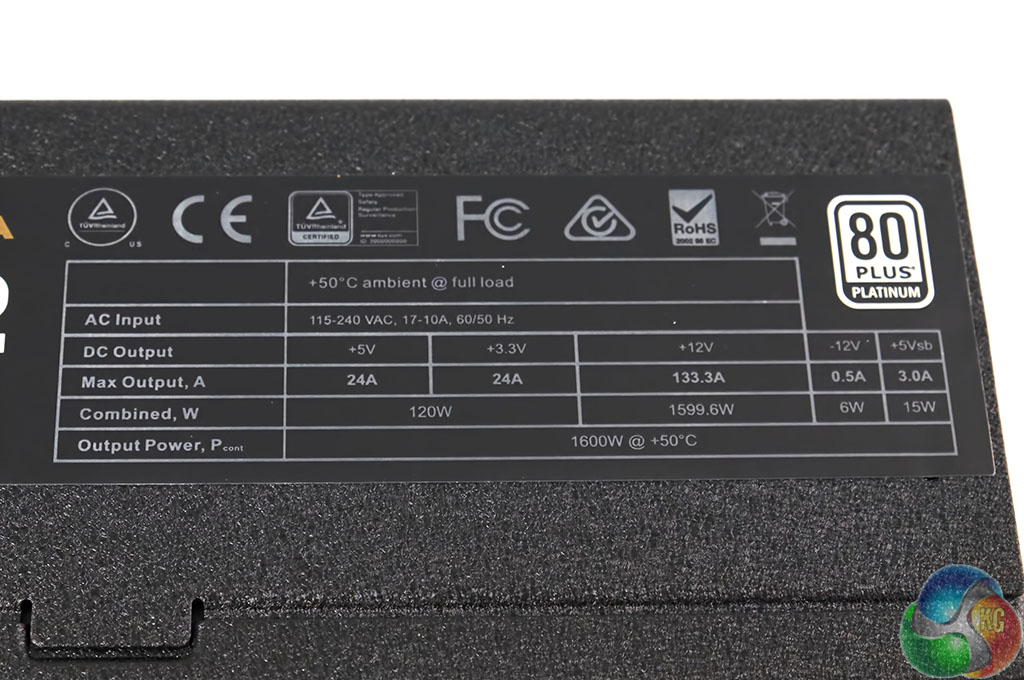
| EVGA SuperNova P2 1600 Power Supply | |||||
|
DC Output
|
+3.3V
|
+5V
|
+12V |
-12V
|
+5Vsb
|
|
Max Output
|
24A
|
24A
|
133.3A |
0.5A
|
3.0A
|
| Total Power | 120W | 1599.6W | 6W | 15W | |
| 1600W @ +50C | |||||
The single +12V rail can deliver 133.3A which is a crazy amount of power! With this kind of juice on tap there would be no problems powering even two overclocked AMD R9 295X2. Our previous review of the OverclockersUK Infinity Vesuvius system highlighted that two R9 295X2 cards could demand close to 1,200 watts under load.
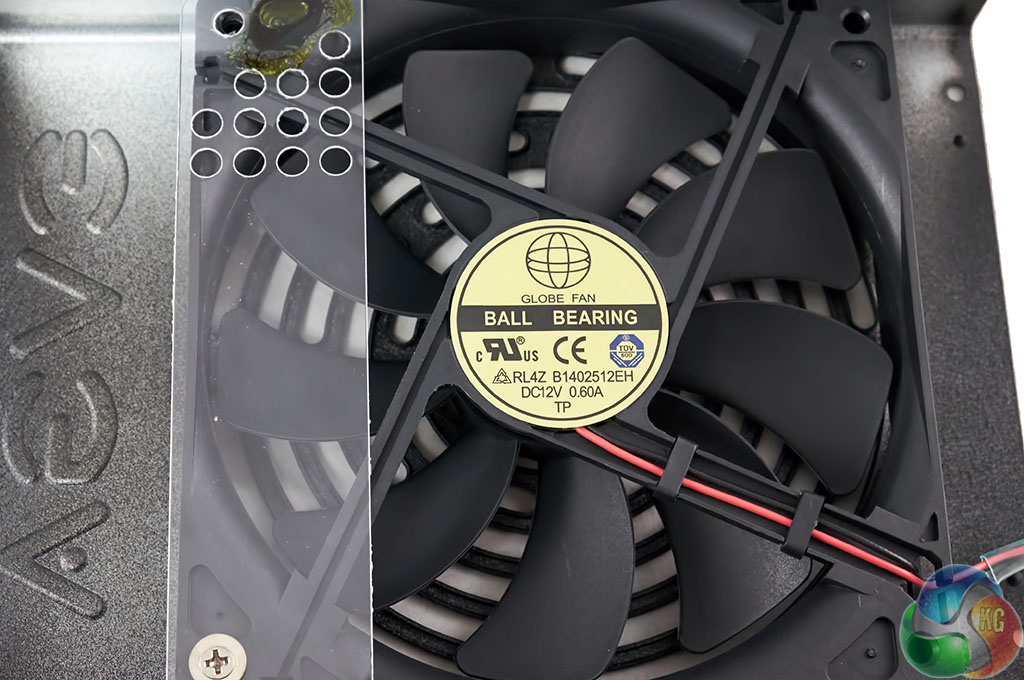
The fan is a ‘Globe’ double ball bearing model, number RL4Z-B1402512EH. This is rated 12V, 0.6A with a maximum speed of 2,000 rpm, airflow 153.47cfm. Maximum noise rating is officially 39.5dBa. We will measure noise later in the review. This is the same model that features in the P2 1200 supply.
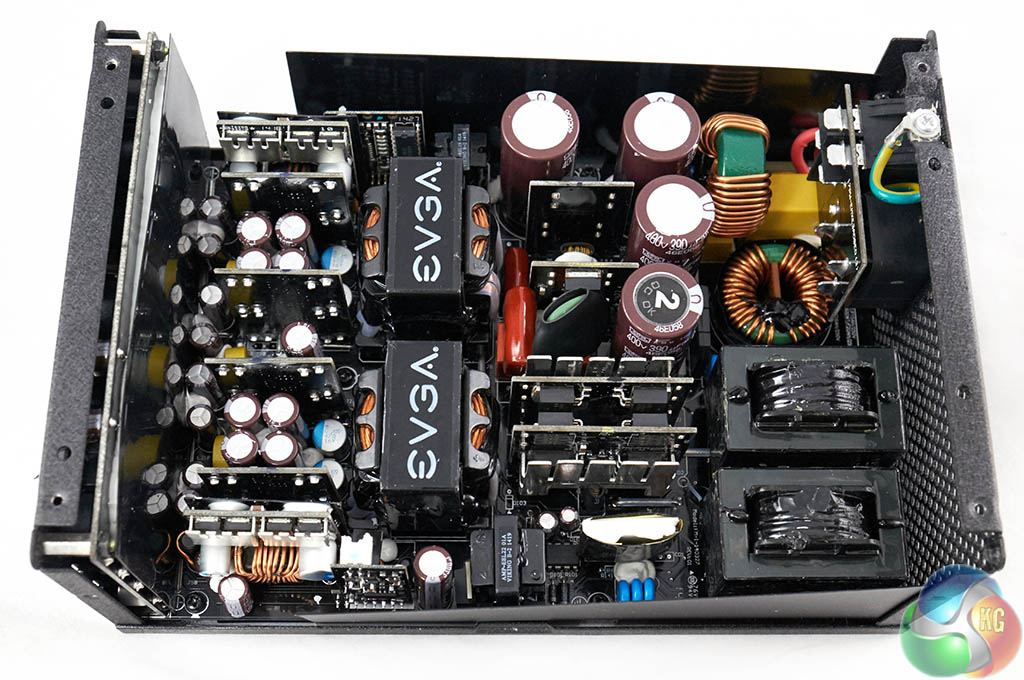
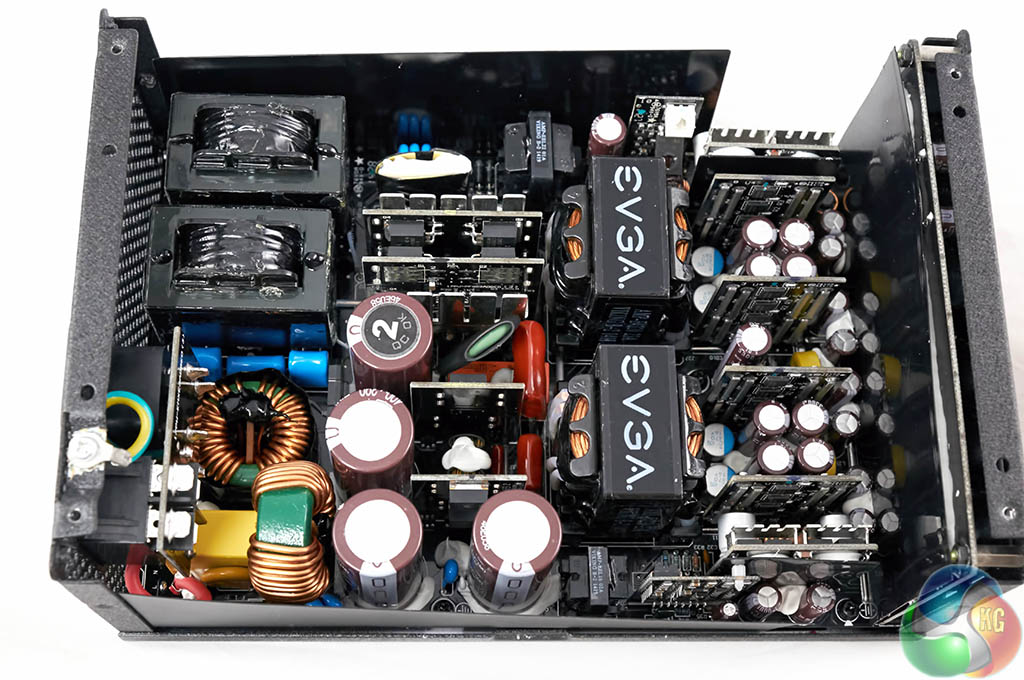
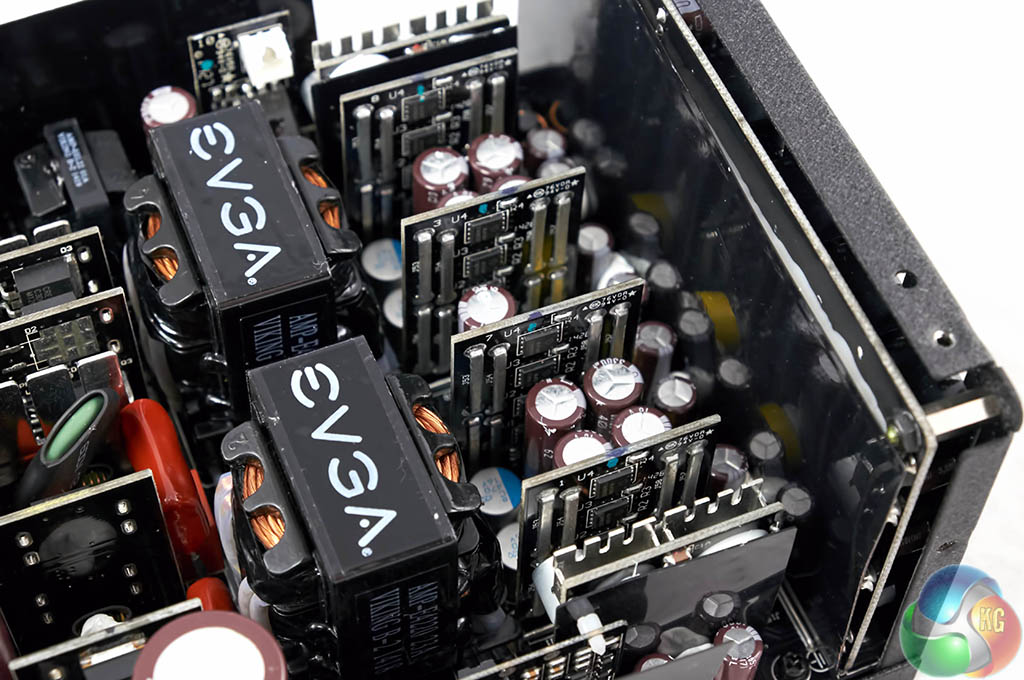
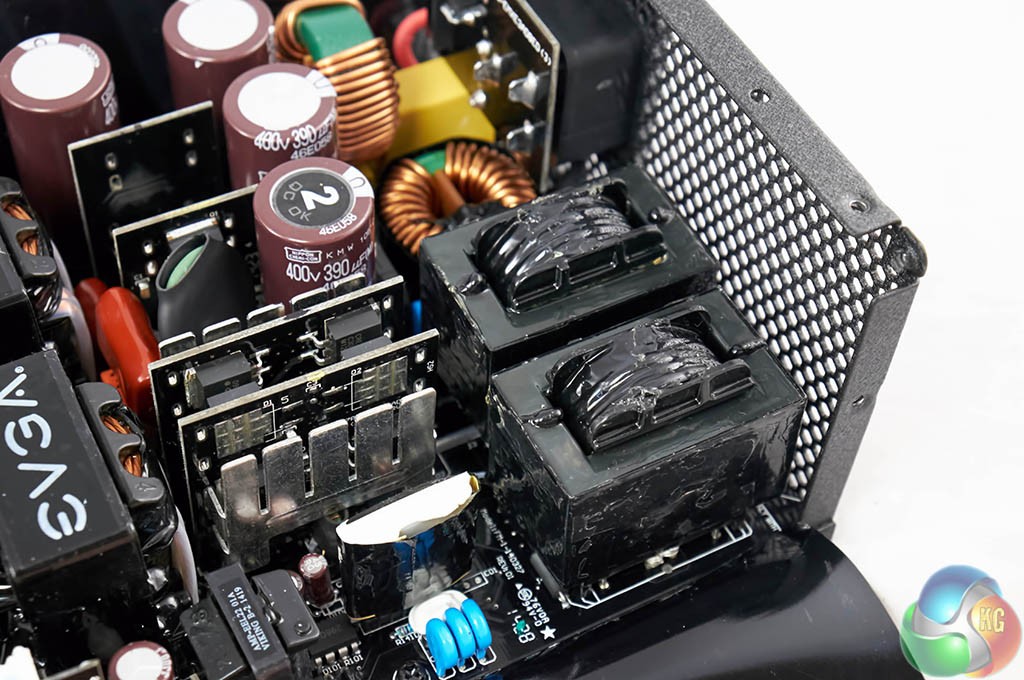
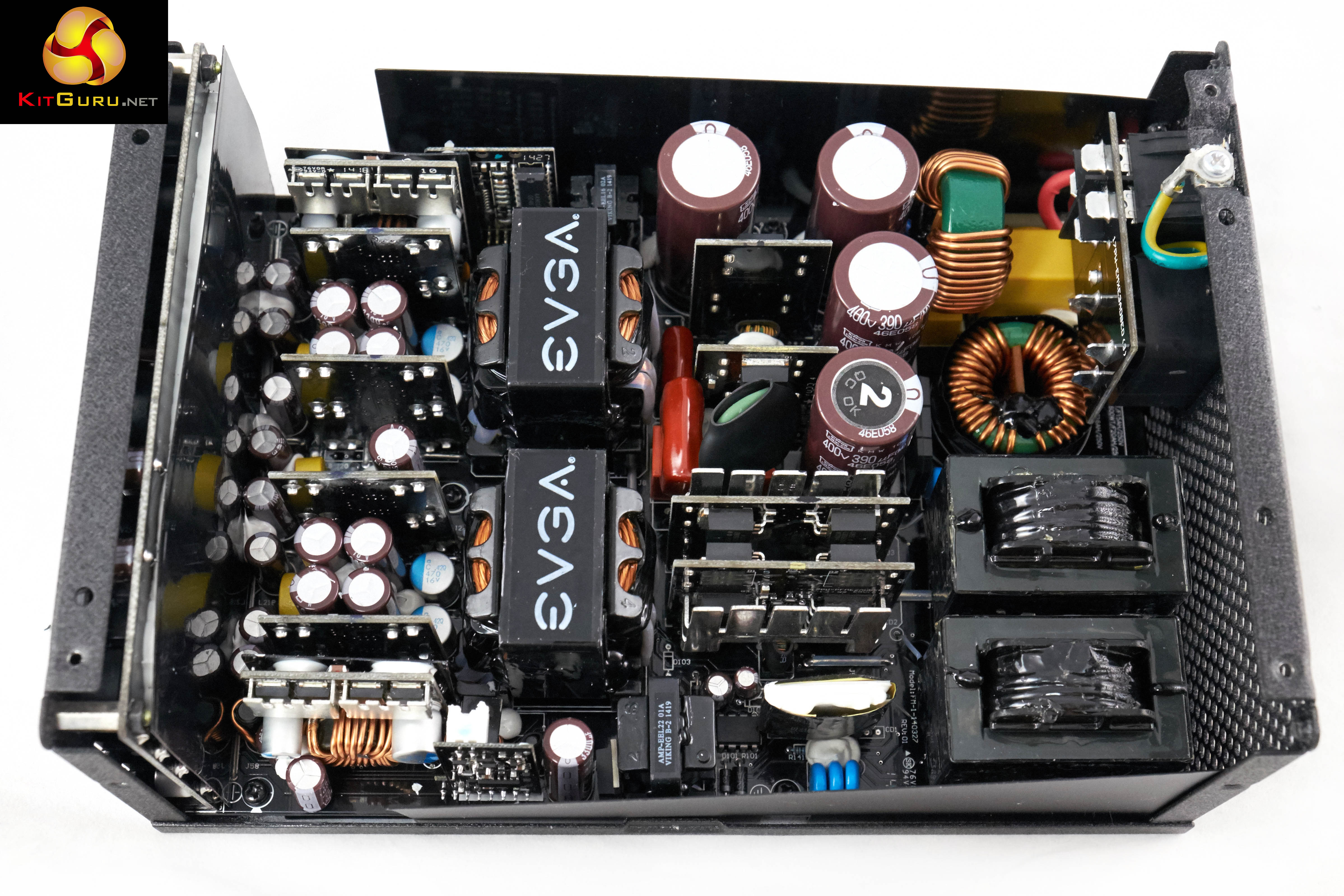
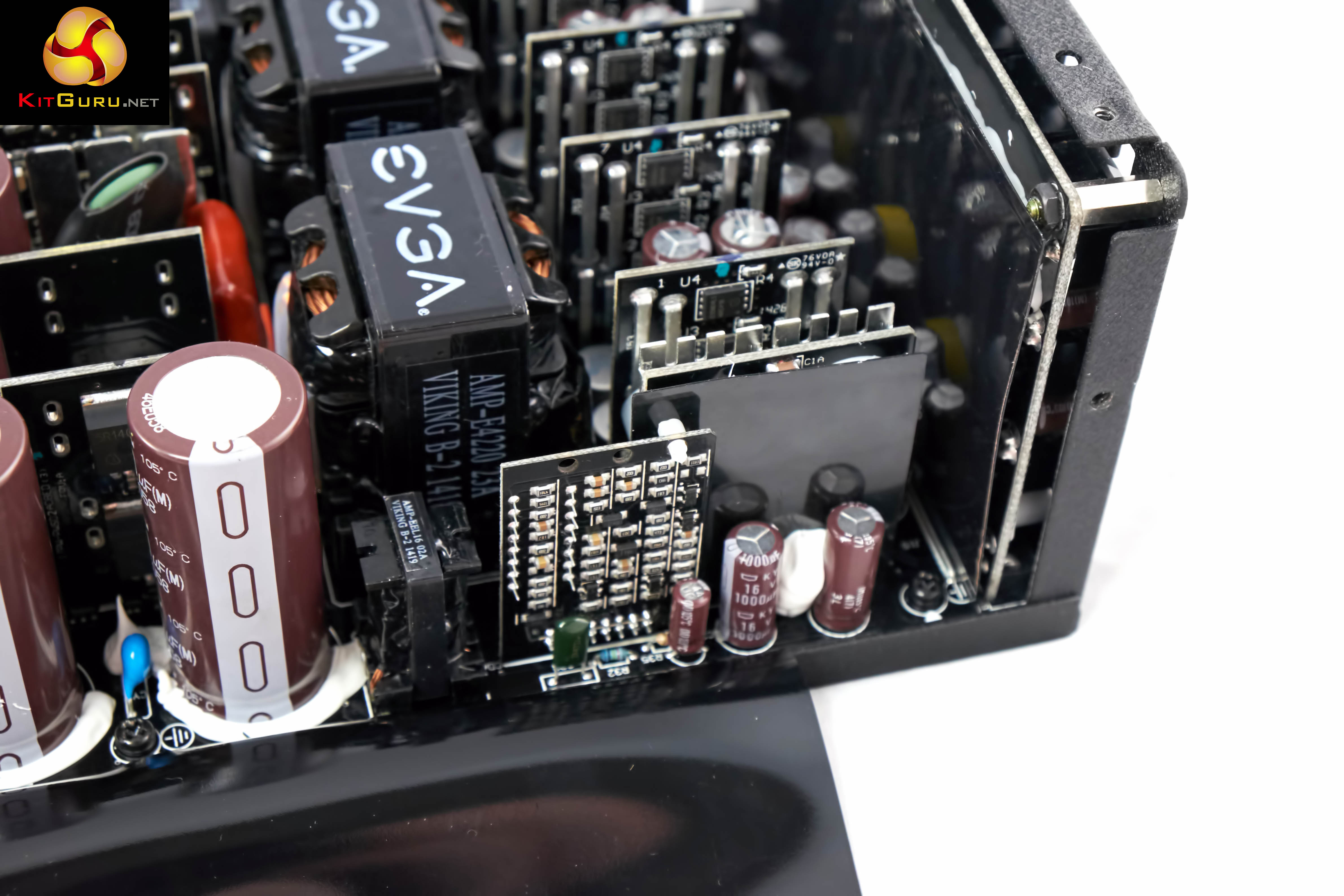
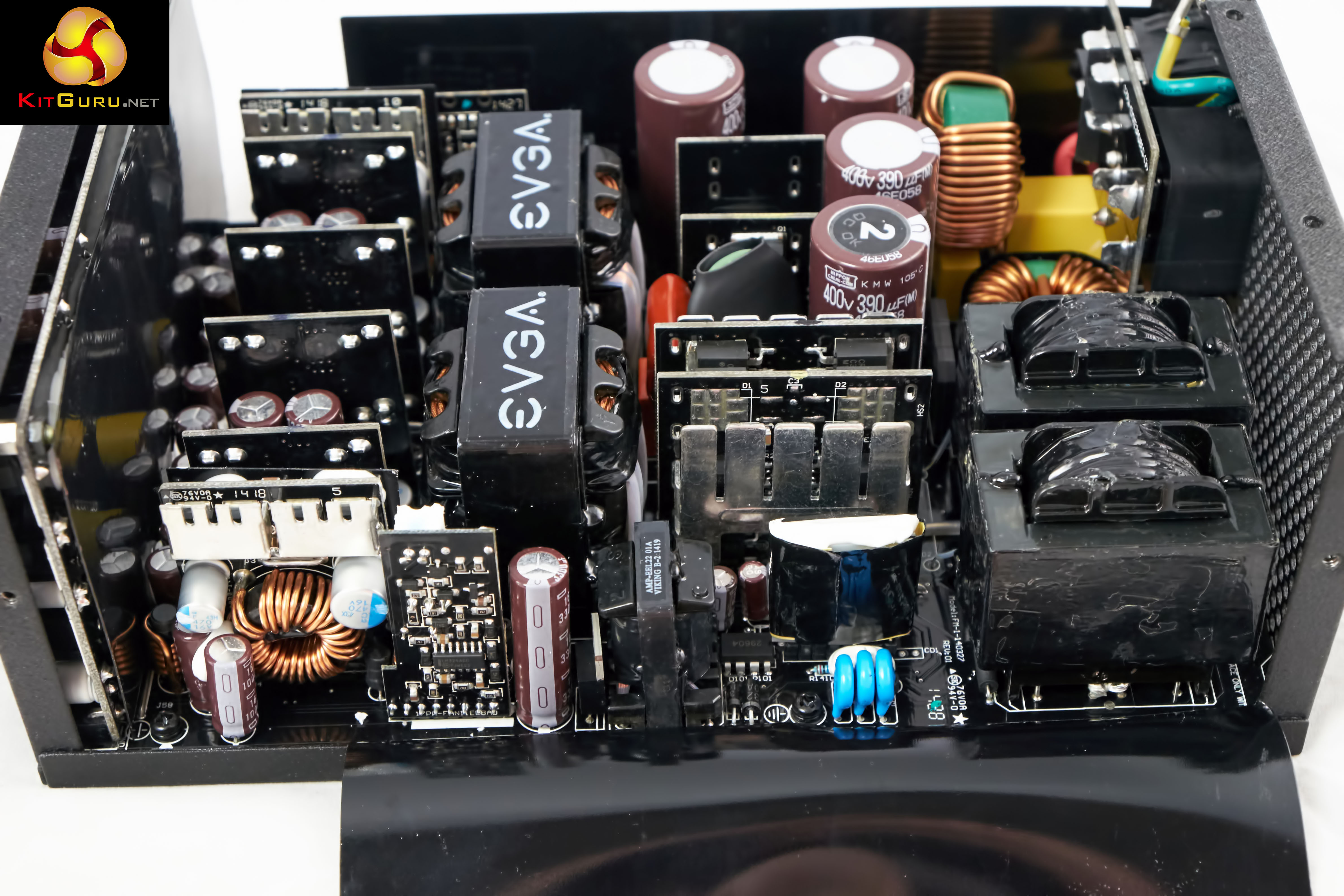
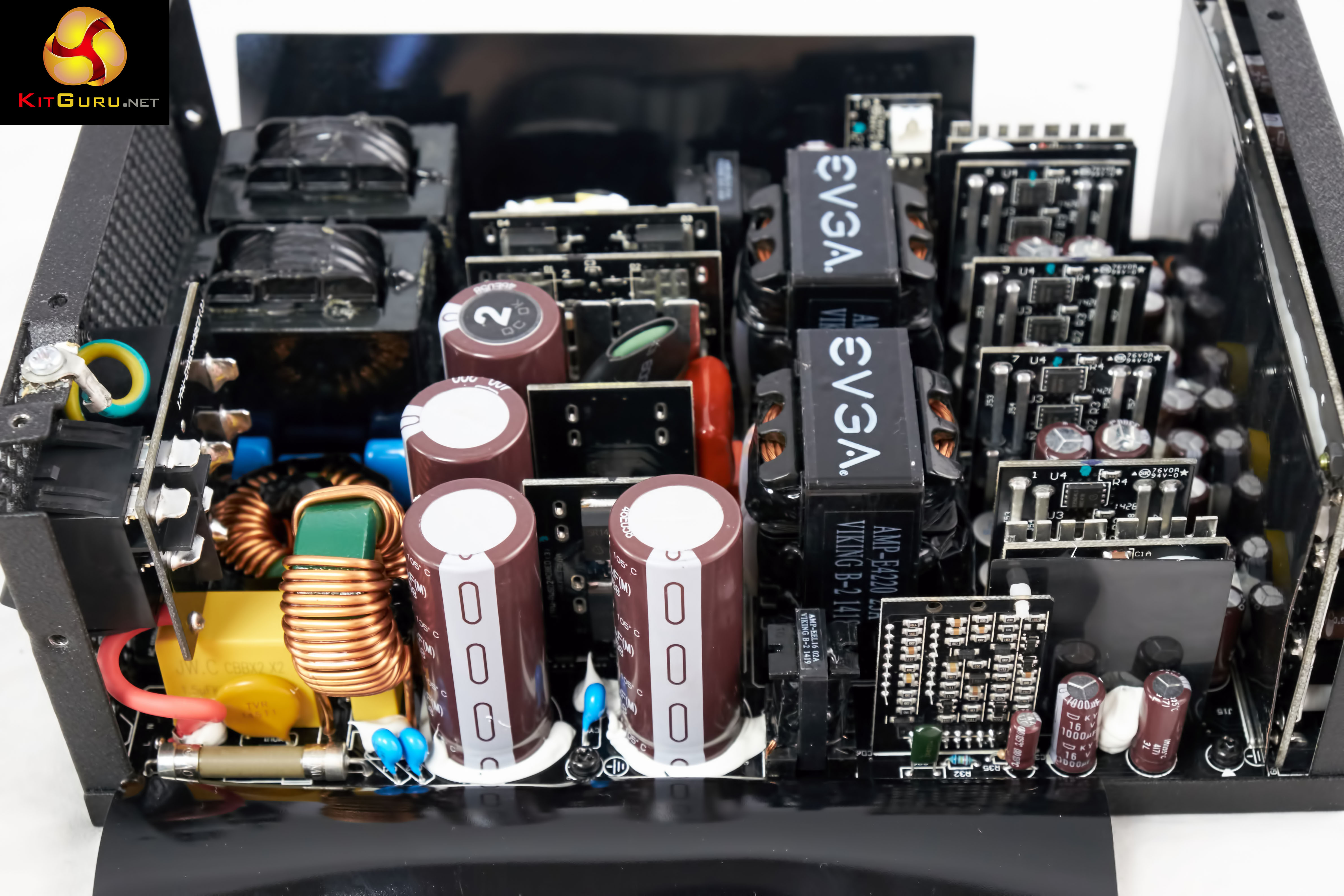
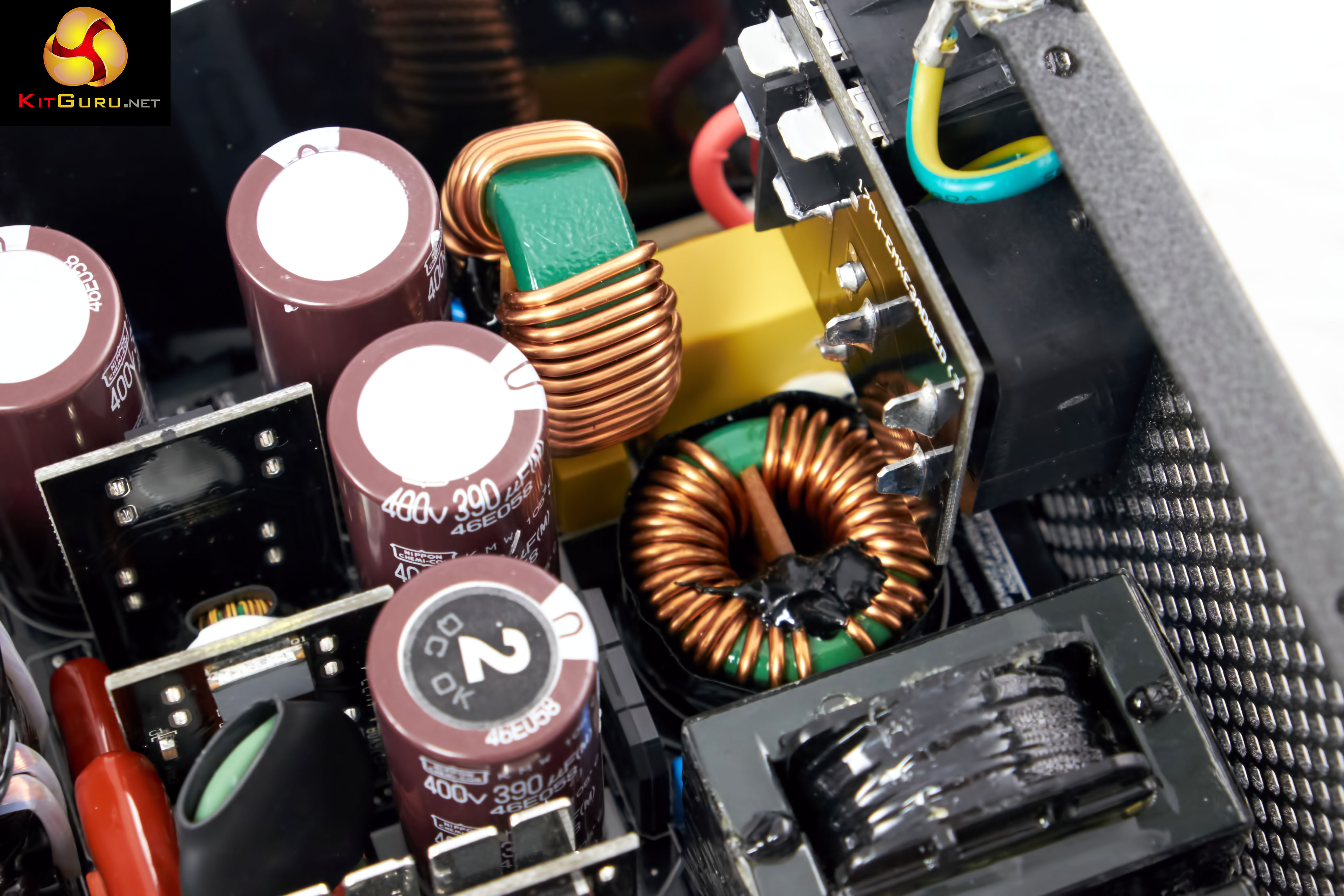
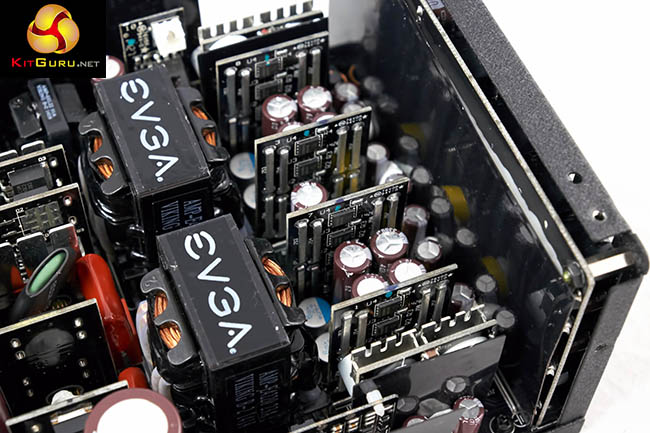
The EVGA SuperNova P2 1600 is created by OEM partner Super Flower (based on their Leadex Platform). The primary side is using a full bridge topology with a LLC converter to help improve efficiency. The secondary side of the design incorporates a synchronous design for the rectification of the +12V rail with DC-DC converters for minor rail generation. Soldering quality of the main PCB is good.
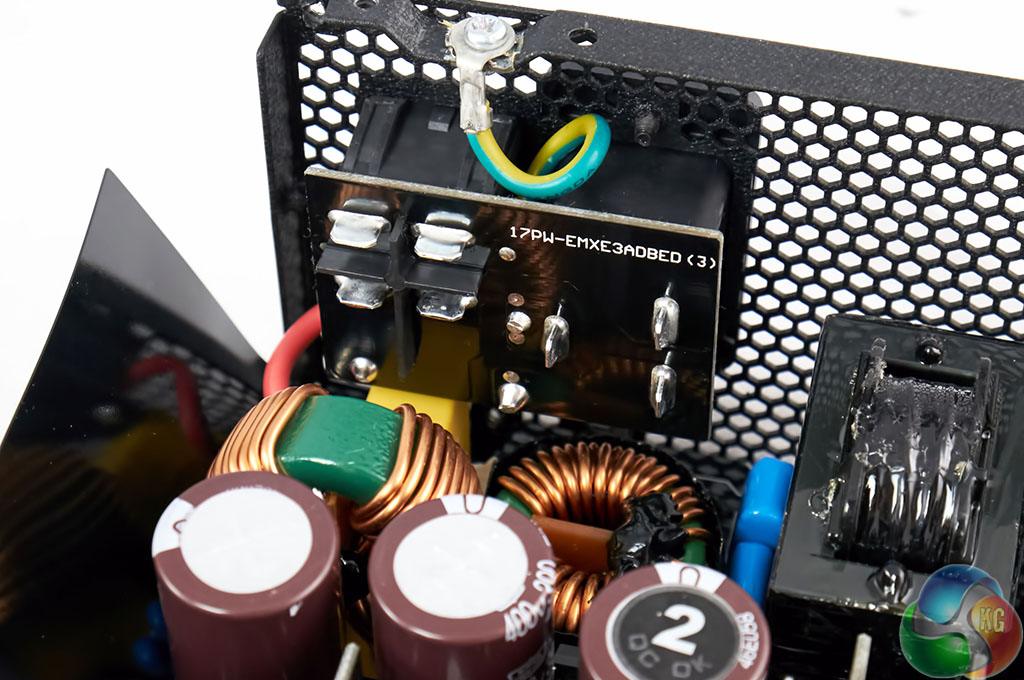
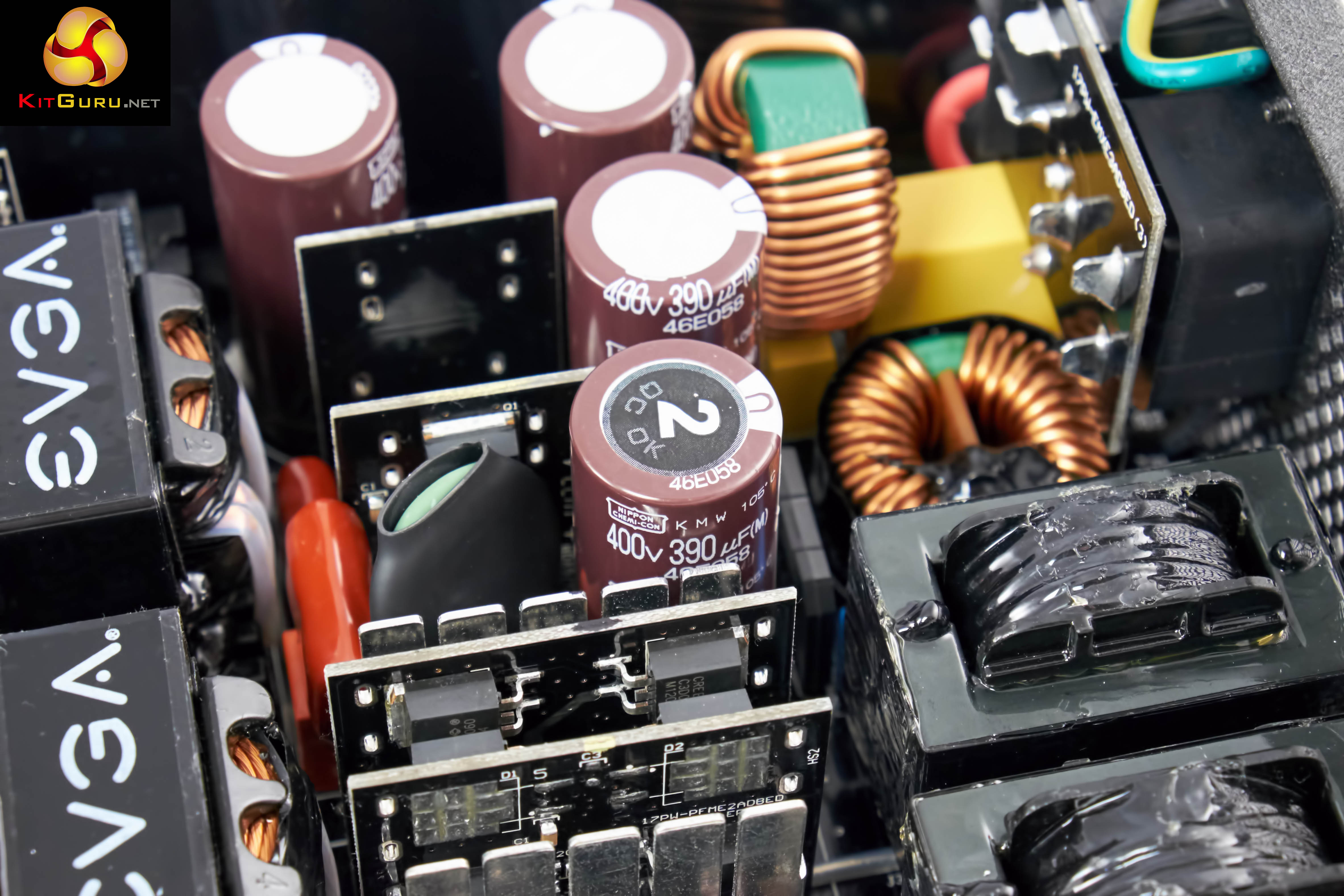
Transient filtering starts at the AC Receptacle. The main PCB houses the second stage and features CM chokes, two pairs of Y caps, two X caps and an MOV. Super Flower have built in a Transient Voltage Suppression diode to help protect against spiking.
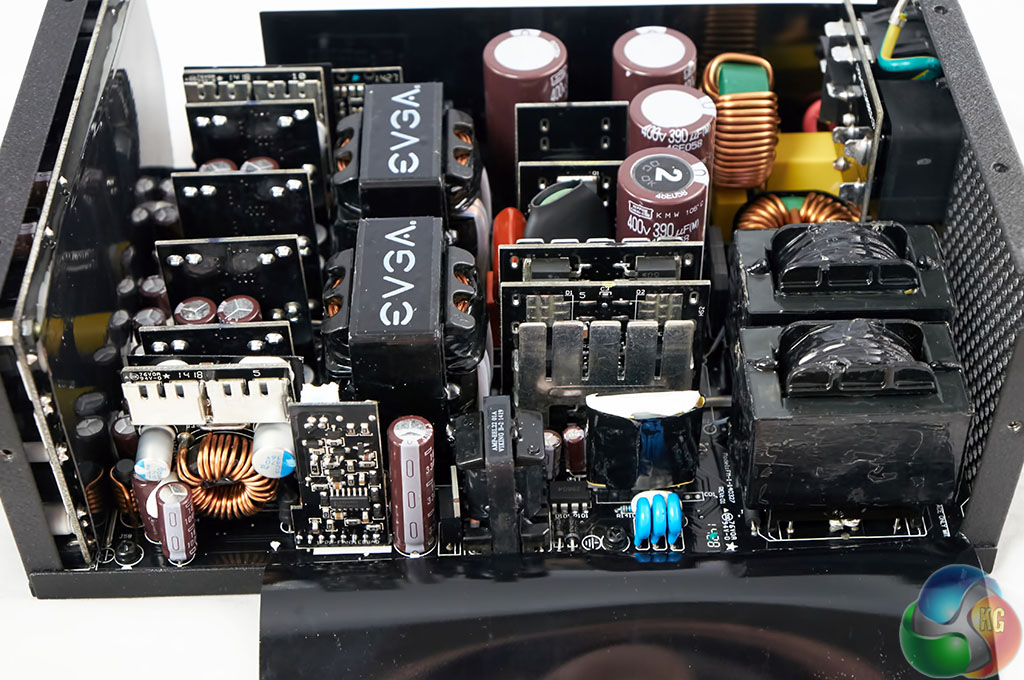
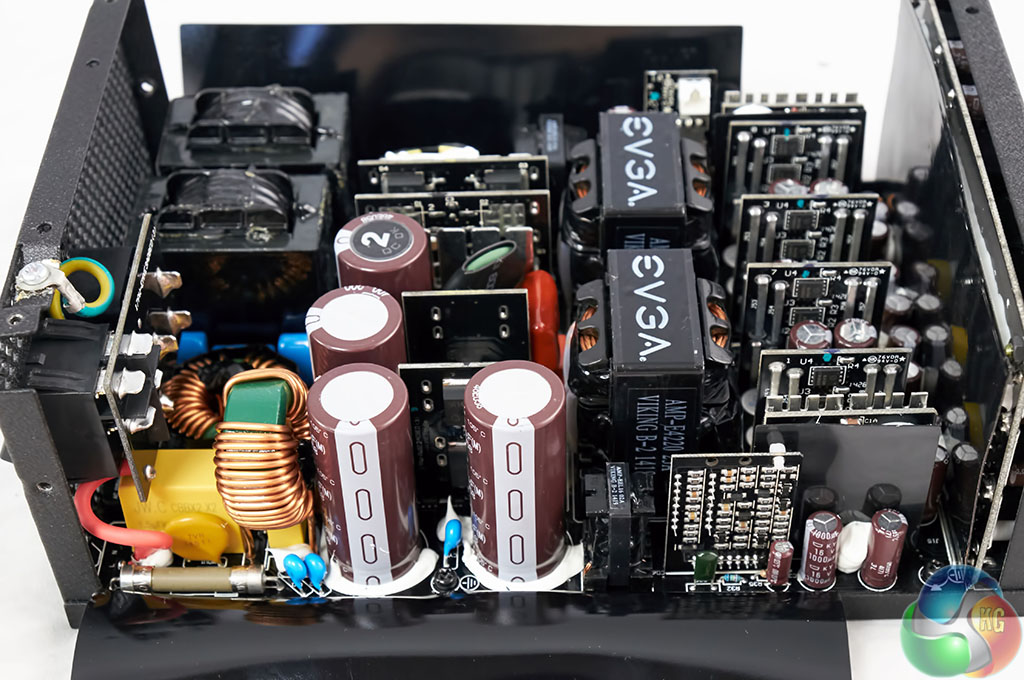
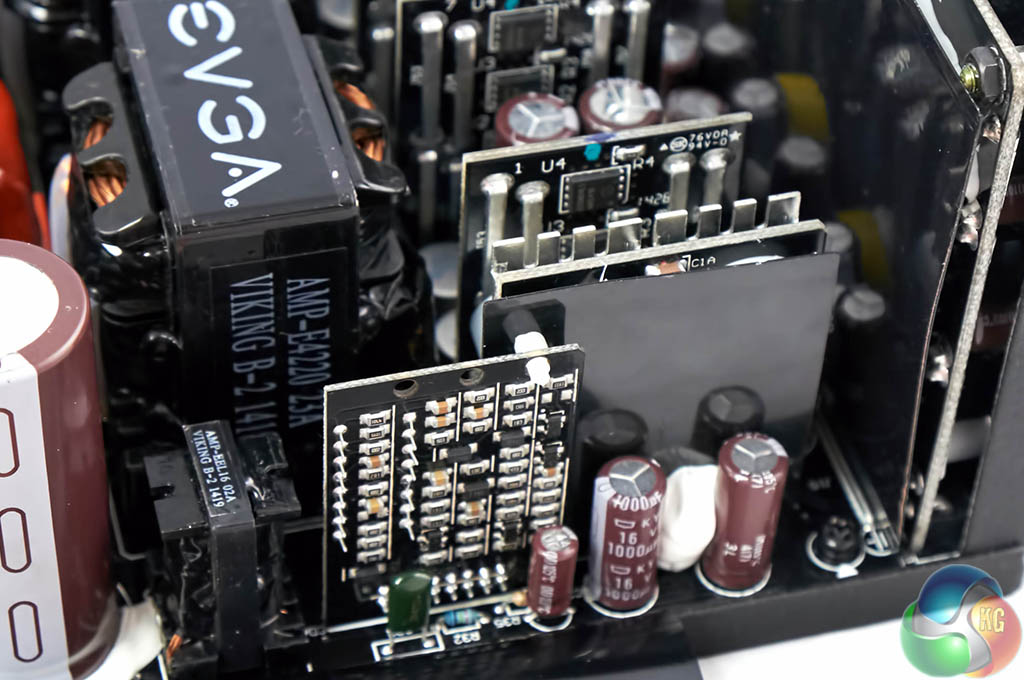
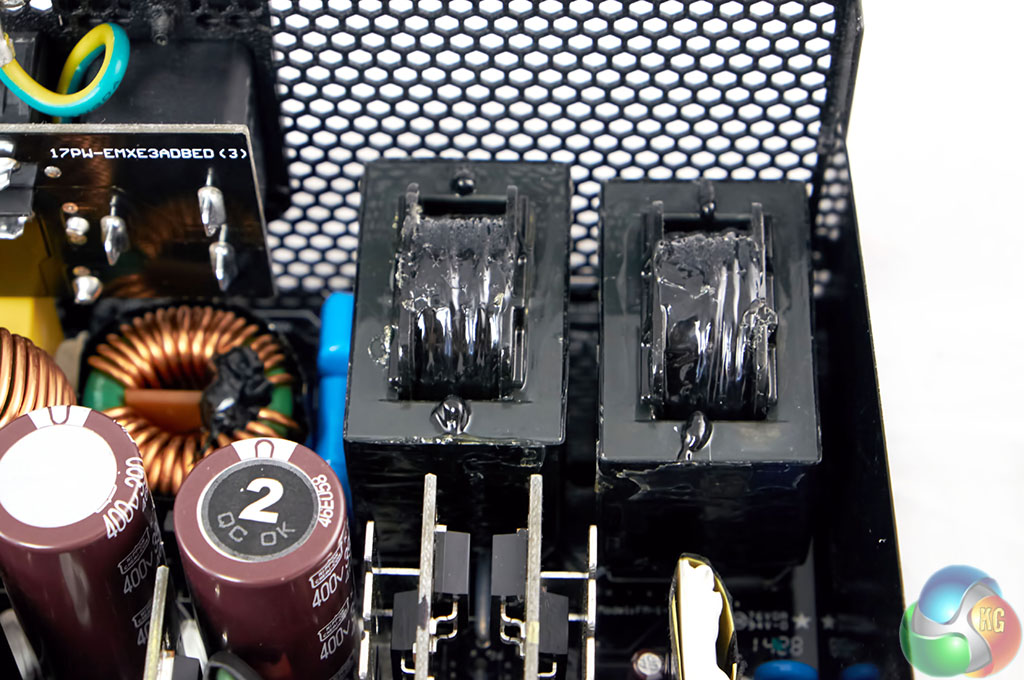
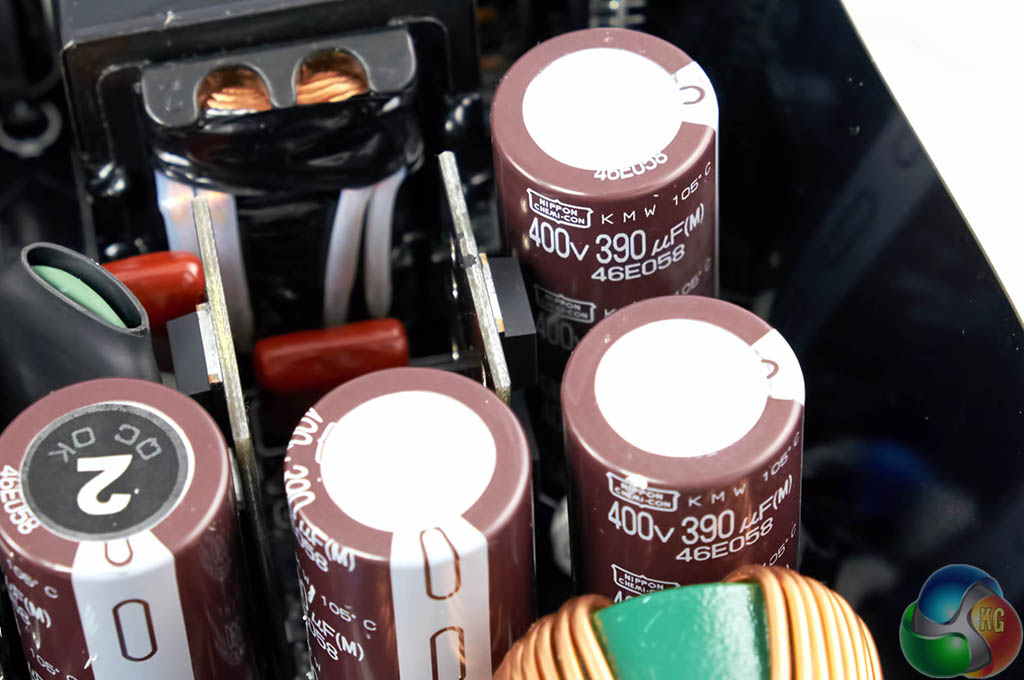
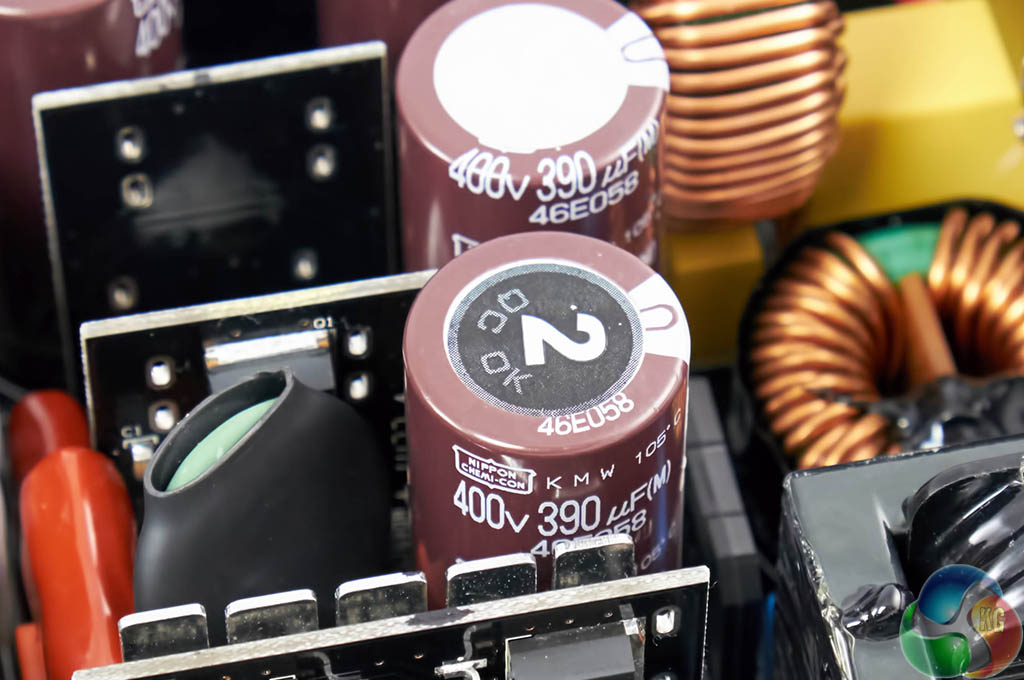
The primary stage uses four high grade 105c rated Japanese Nippon Chemi-Con capacitors (1200 P2 uses KMQ series caps, 1600 P2 uses KMW series). These are rated 400V 390uF – combining for a total of 1560uF. By comparison the P2 1200 combined total is 1120uF. Secondary stage capacitors are all Japanese 105c rated Nippon Chemi Con. Top marks to the Super Flower engineers for not making any compromises with the design.On this page we present some high resolution images of the product taken with the Fuji XT1 camera. These will take much longer to open due to the dimensions, especially on slower connections. If you use these pictures on another site or publication, please credit Kitguru.net as the owner/source.
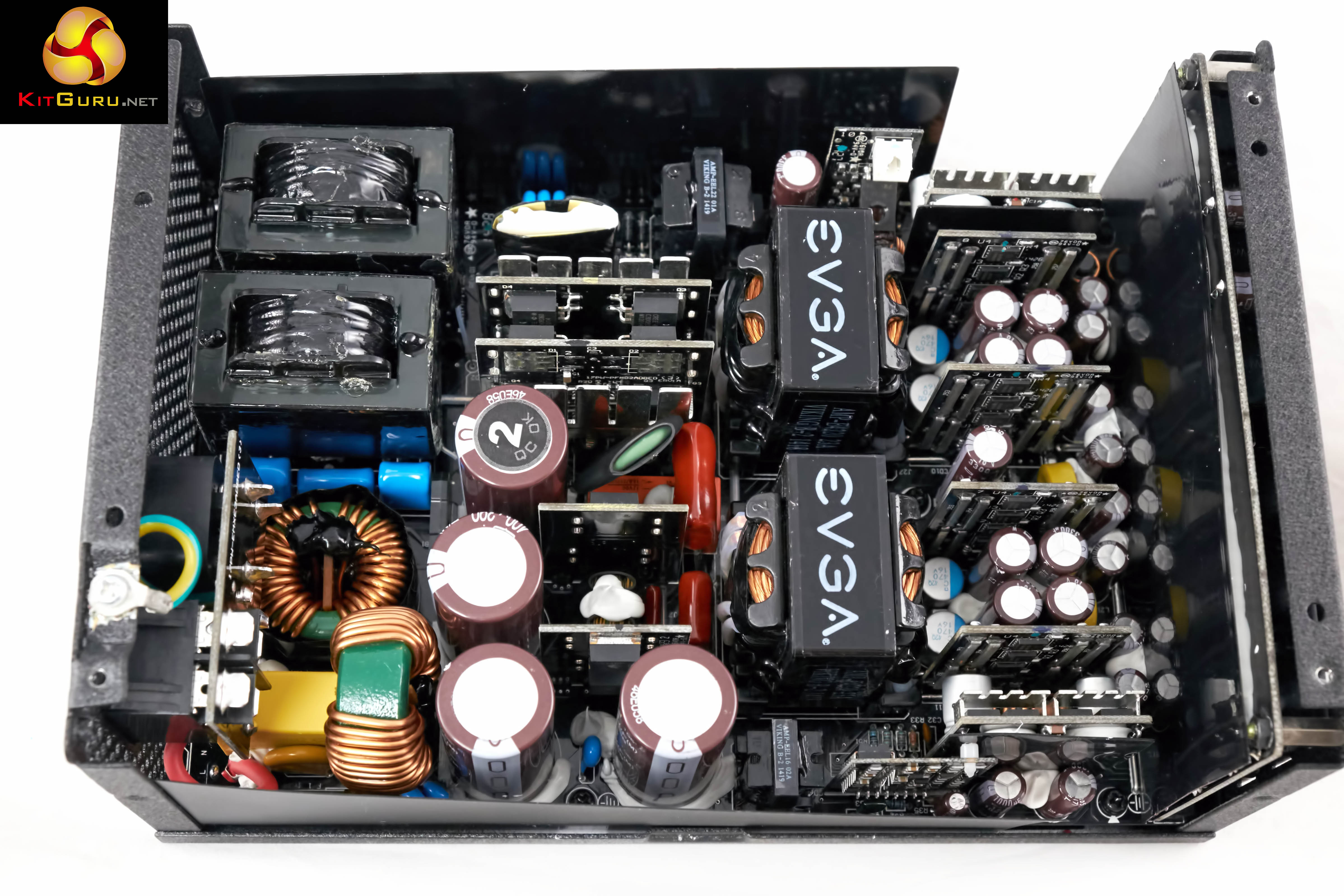
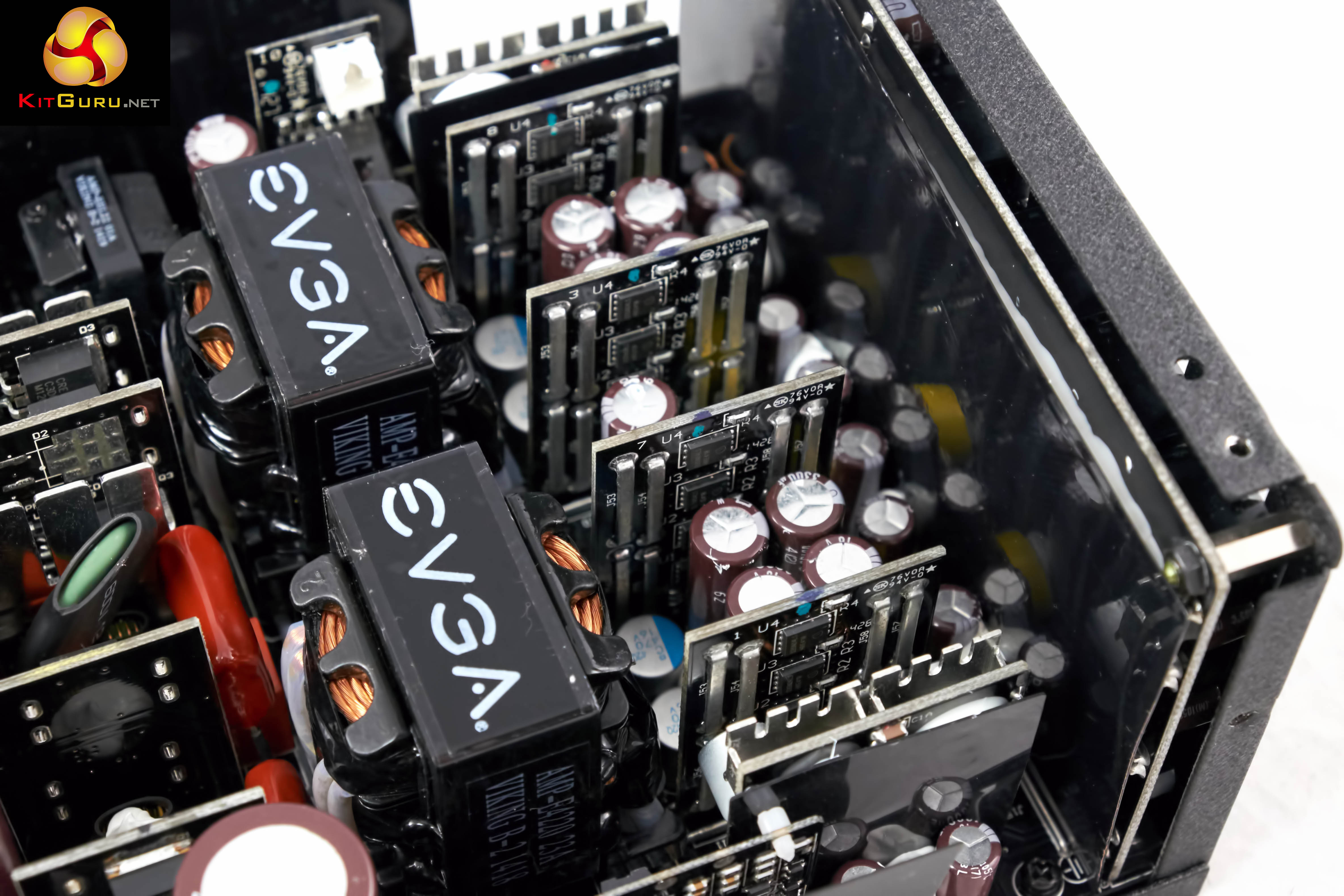
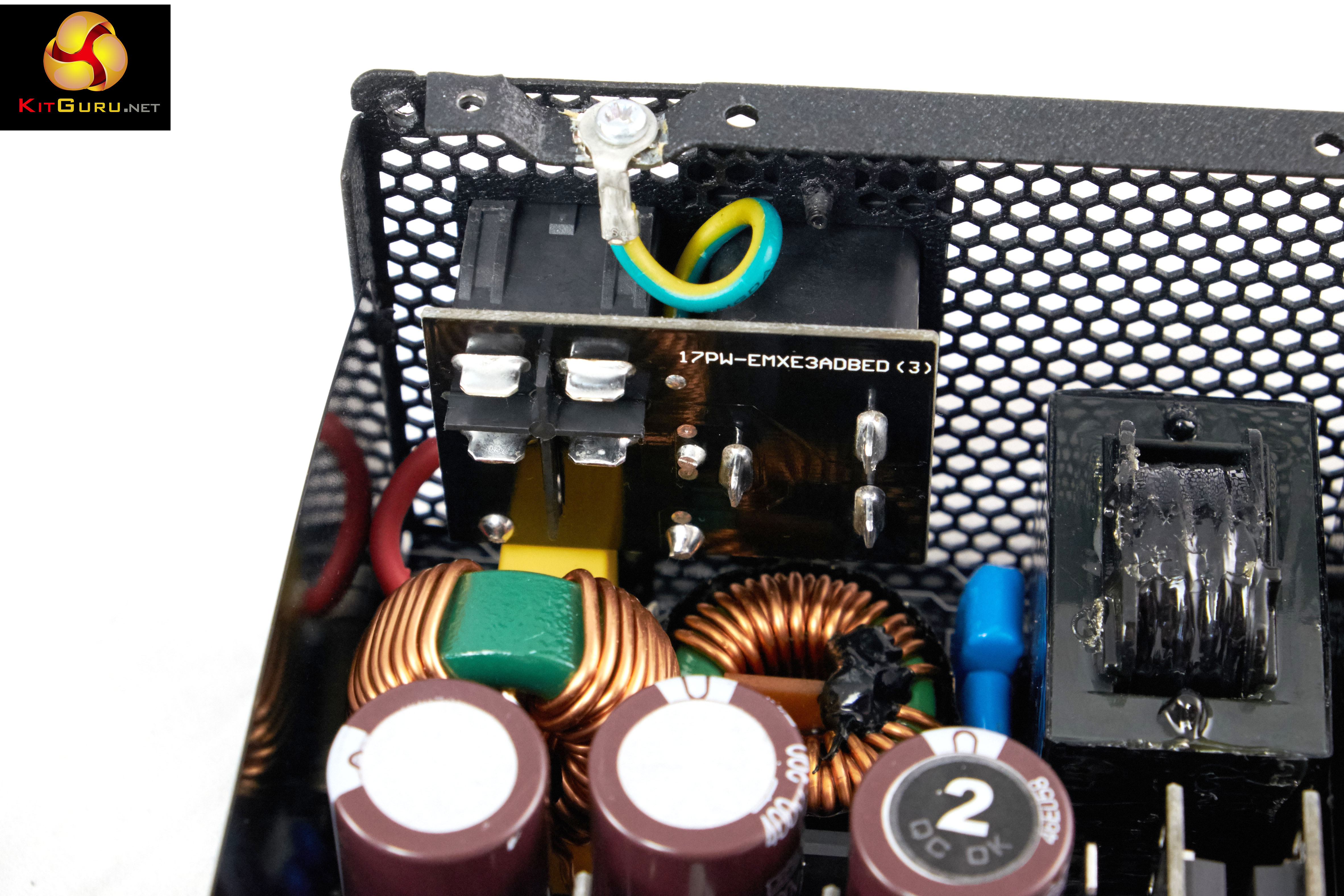
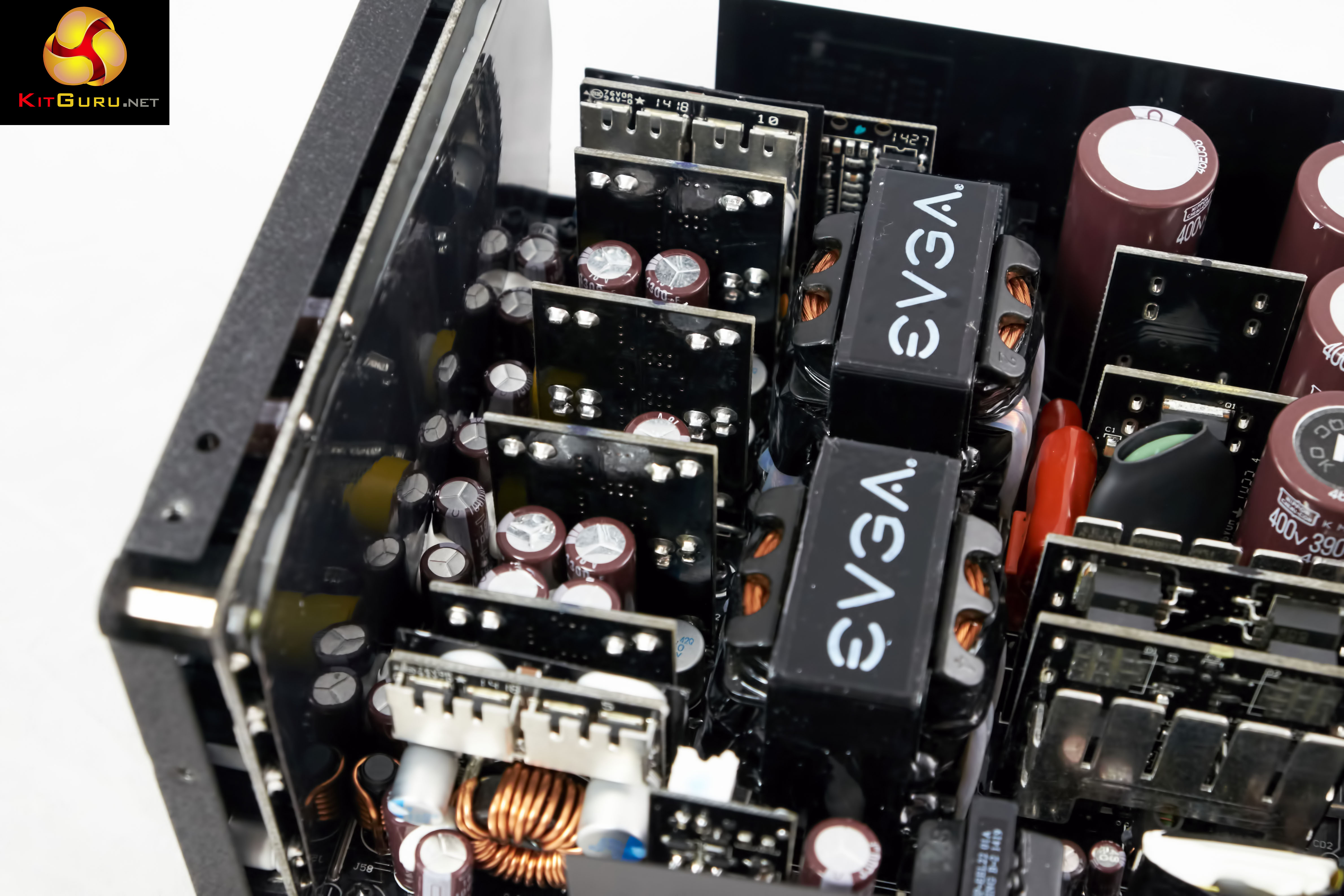
 Additional technical assistance: Peter McFarland and Jeremy Price.
Correctly testing power supplies is a complex procedure and KitGuru have configured a test bench which can deliver up to a 2,000 watt DC load. Due to public requests we have changed our temperature settings recently – previously we rated with ambient temperatures at 25C, we have increased ambient temperatures by 10c (to 35c) in our environment to greater reflect warmer internal chassis conditions.
We use combinations of the following hardware:
• SunMoon SM-268
• CSI3710A Programmable DC load (+3.3V and +5V outputs)
• CSI3711A Programmable DC load (+12V1, +12V2, +12V3, and +12V4)
• Extech Power Analyzer
• Extech MultiMaster MM570 digital multimeter
• Extech digital sound level meter
• Digital oscilloscope (20M S/s with 12 Bit ADC)
• Variable Autotransformer, 1.4 KVA
We test the EVGA SuperNova P2 1600 power supply with the fan in the ‘normal’ state.
|
DC Output Load Regulation
|
||||||||||
|
Combined DC Load |
+3.3V
|
+5V
|
+12V
|
+5VSB
|
-12V | |||||
|
A
|
V
|
A
|
V
|
A
|
V
|
A
|
V
|
A | V | |
|
500W
|
7.63
|
3.33
|
8.82
|
5.06
|
36.05
|
12.12
|
1.5
|
5.02
|
0.30 | -12.07 |
|
750W
|
12.63
|
3.33
|
14.12
|
5.05
|
52.06
|
12.09
|
2.0
|
5.02
|
0.30 | -12.07 |
|
1000W
|
17.75
|
3.33
|
20.00
|
5.05
|
72.25
|
12.06
|
2.5
|
5.01
|
0.50 | -12.08 |
| 1250W | 18.84 | 3.32 | 24.03 | 5.04 | 90.15 | 12.02 | 3.0 | 5.00 | 0.60 | -12.09 |
|
1500W
|
18.87
|
3.31
|
22.64
|
5.03
|
115.90
|
12.00
|
3.5
|
5.00
|
0.80 | -12.10 |
| 1600W | 10.00 | 3.30 | 10.00 | 5.02 | 125.00 | 11.96 | 3.5 | 5.00 | 0.80 | -12.12 |
Load regulation is stellar, even when delivering the full 1600 watts of power.
| EVGA SuperNOVA P2 1600 Power Supply | Maximum Load |
| 1788W |
We managed to get the PSU to achieve 1788W before it would shut down, delivering around 188W more than the rated specifications.
Next we want to try Cross Loading. This basically means loads which are not balanced. If a PC for instance needs 500W on the +12V outputs but something like 30W via the combined 3.3V and +5V outputs then the voltage regulation can fluctuate badly.
| Cross Load Testing | +3.3V | +5V | +12V | -12V | +5VSB | |||||
| A | V | A | V | A | V | A | V | A | V | |
| 1150W | 3.0 | 3.33 | 2.0 | 5.05 | 92.0 | 12.02 | 0.2 | -12.03 | 0.50 | 5.01 |
| 250W | 20.0 | 3.30 | 24.0 | 5.02 | 5.0 | 12.08 | 0.2 | -12.02 | 0.50 | 5.00 |
The EVGA SuperNova P2 1600 produced some killer results in the cross loading test. No discernible weaknesses.
We then used an oscilloscope to measure AC ripple and noise present on the DC outputs. We set the oscilloscope time base to check for AC ripple at both high and low ends of the spectrum.
ATX12V V2.2 specification for DC output ripple and noise is defined in the ATX 12V power supply design guide.
|
ATX12V Ver 2.2 Noise/Ripple Tolerance
|
|
|
Output
|
Ripple (mV p-p)
|
|
+3.3V
|
50
|
|
+5V
|
50
|
|
+12V1
|
120
|
|
+12V2
|
120
|
|
-12V
|
120
|
|
+5VSB
|
50
|
Obviously when measuring AC noise and ripple on the DC outputs the cleaner (less recorded) means we have a better end result. We measured this AC signal amplitude to see how closely the unit complied with the ATX standard.
| AC Ripple (mV p-p) | ||||
| DC Load | +3.3V | +5V | +12V | 5VSB |
| 500W | 10 | 5 | 5 | 5 |
| 750W | 10 | 5 | 5 | 5 |
| 1000W | 10 | 5 | 10 | 5 |
| 1250W | 15 | 5 | 15 | 5 |
| 1500W | 15 | 10 | 15 | 10 |
| 1600W | 15 | 10 | 15 | 10 |
Fantastic ripple suppression, and yet again figures that any manufacturer would be pleased to produce. As good as we have seen in a high power unit such as this.
|
Efficiency (%)
|
|
|
500W
|
92.14
|
|
750W
|
94.21
|
|
1000W
|
94.01
|
|
1250W
|
93.17
|
| 1500W | 92.83 |
| 1600W | 92.12 |
Overall efficiency is class leading, peaking at 94.3% when delivering between 750 and 850 watts.
We take the issue of noise very seriously at KitGuru and this is why we have built a special home brew system as a reference point when we test noise levels of various components. Why do this? Well this means we can eliminate secondary noise pollution in the test room and concentrate on components we are testing. It also brings us slightly closer to industry standards, such as DIN 45635.
Today to test the power supply we have taken it into our acoustics room environment and have set our Digital Sound Level Noise Decibel Meter Style 2 one meter away from the unit. We have no other fans running so we can effectively measure just the noise from the unit itself.
As this can be a little confusing for people, here are various dBa ratings in with real world situations to help describe the various levels.
KitGuru noise guide
10dBA – Normal Breathing/Rustling Leaves
20-25dBA – Whisper
30dBA – High Quality Computer fan
40dBA – A Bubbling Brook, or a Refrigerator
50dBA – Normal Conversation
60dBA – Laughter
70dBA – Vacuum Cleaner or Hairdryer
80dBA – City Traffic or a Garbage Disposal
90dBA – Motorcycle or Lawnmower
100dBA – MP3 Player at maximum output
110dBA – Orchestra
120dBA – Front row rock concert/Jet Engine
130dBA – Threshold of Pain
140dBA – Military Jet takeoff/Gunshot (close range)
160dBA – Instant Perforation of eardrum
|
Noise (dBA)
|
|
|
500W
|
28.0
|
|
750W
|
28.6
|
|
1000W
|
32.9
|
|
1250W
|
33.7
|
| 1500W | 34.2 |
| 1600W | 35.8 |
Due to the extreme efficiency of the power supply, the fan is never tasked particularly hard. Noise levels at or below 1000Watts are exceptionally good. At 1300 watts, the fan ramps up and it becomes audible, although never too intrusive.
|
Temperature (c)
|
||
|
Intake
|
Exhaust
|
|
|
500W
|
36
|
39
|
|
750W
|
37
|
41
|
|
1000W
|
42
|
48
|
|
1250W
|
46
|
53
|
|
1500W
|
48
|
55
|
| 1600W | 51 | 62 |
The large fan copes with the heat inside the chassis, spinning more actively as the load increases above 1,000 watts.
|
Maximum load
|
Efficiency
|
|
1788W
|
90.8
|
At 1788W, the efficiency level is still good, measuring 90.8%. Not a practical situation to be running 24/7, but worth noting.The EVGA SuperNova P2 1600 is a class leading power supply created to target the wealthy power hungry audience running expensive SLi and Crossfire systems. If you are building a new Ultra HD 4k system with two AMD R9 295X2's then the P2 1600 copes admirably with the 1,200 watt power demand often required, when gaming.
Build quality is very high and Super Flower are using the highest grade Japanese 105c rated capacitors. Nippon Chemi Con are one of finest capacitor makes for this market and you can't really get much better than the flagship KMW series used in the P2 1600.
As with the P2 1200 model, load regulation is superb and ripple suppression is just as impressive. The unit passed our intensive cross loading tests without a hitch. The quality of the cabling will appeal to the most discerning of enthusiast user and system builders will appreciate the sexy black sleeving.
Internally, the unit is very hard to fault, Super Flower have not cut corners with the design and the noise levels are very low even when the unit is delivering a steady 1200 watts at the socket.

You can buy the EVGA SuperNOVA P2 1600 from Overclockers UK for £275.99 inc vat. It is one of the most expensive power supplies on the market, but if you are building a QUAD SLI or Crossfire system then it seems rather ludicrous to be skimping on the power delivery. The EVGA SuperNova P2 1600 will power anything you can throw at it.
Discuss on our Facebook page, over HERE.
Pros:
- tight regulation.
- quality cables.
- delivered almost 1,800 watts before shutting down
- ATX bridging connector is a handy gadget to include.
- Nippon Chemi Con capacitors throughout.
- semi passive mode.
- excellent build quality.
- >94% efficiency at 800 watts load.
Cons:
- will cause a serious dent in the bank balance.
Kitguru says: If you are building a crazy new multi GPU rig and need nuclear reactor levels of stable power, the EVGA SuperNova P2 1600 should really be on the final shortlist.


Who the fuck needs a 1600 watts PSU nowadays with Intel Haswell mere 88 W TDP and Nvidia GM204 low 165 W TDP???
Even with a workstation running 2 X Haswell Xeon and 4 X GM204 GPU, that’s still only 836 W! Add on top a “worse case scenario” 100 W for the motherboard, 3 more PCI-e expansion card, 64GB of RAM, 2 X SSD, 4 X hard drives and a dual water cooling loop for CPU/GPU, and you don’t even break the 1000 W barrier!
For a regular single air cooled i7-4790K, 32GB RAM and 2 X GTX 980, 2 X SSD in RAID0 and 2 X hard drives in RAID1 + a few accessories and motherboard, you are looking at WELL below 600 watts, even overcloked! 800 W PSU are already overkill now, imagine 1600 W…