KitGuru KitGuru.net – Tech News | Hardware News | Hardware Reviews | IOS | Mobile | Gaming | Graphics Cards


We don't often need a 1500 watt power supply – actually most of our systems are probably consuming less than 300 watts under load. What if you are building a new mini or media system into a tiny, space restricted chassis and need some quality juice to power it? Today we look at something totally different from be quiet! – the TFX Power 2 300W power supply, designed for systems with low installation depth.
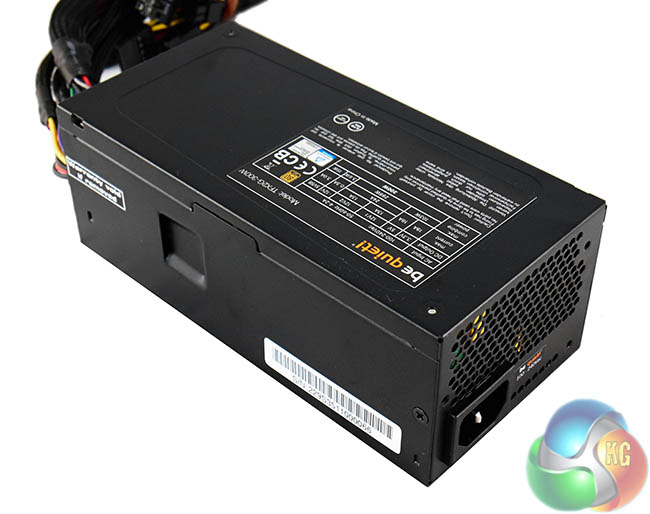
The be quiet! TFX Power 2 300W Gold power supply is a compact space saving design featuring strong dual 12V rails. The company include sleeved cables and offer the unit in two efficiencies – 80 Plus Gold and 80 Plus Bronze. We are looking at the higher grade, more expensive 80 Plus Gold unit today.
The TFX PSU form factor is much smaller than traditional ATX. A TFX power supply has to measure 85mm (W), 175 mm (D) and 65mm (H) – (compared to 150mm x 140 mm x 86 mm for standard ATX).
Highlights
- Certified 80PLUS® Bronze and Gold efficiency (up to 87 / 91%).
- Strong dual 12V-rails for high stability and PCIe graphics support.
- High-quality temperature-controlled 80mm fan reduces system noise.
- Sleeved cables up to 65cm long, with 6-pin PCIe connector.
- Meets Intel C6/C7, ErP 2014 and Energy Star 5.2 requirements; standby draw less than 0.25 Watts
- Full suite of essential safety features.
- 2-year warranty.
- Product conception, design and quality control in Germany.
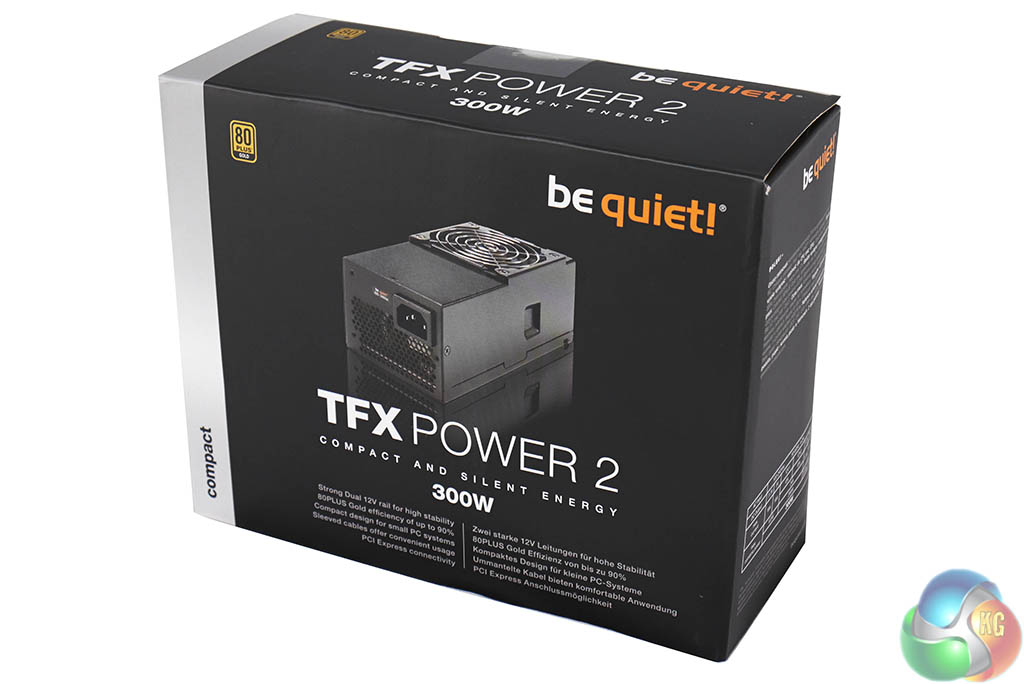
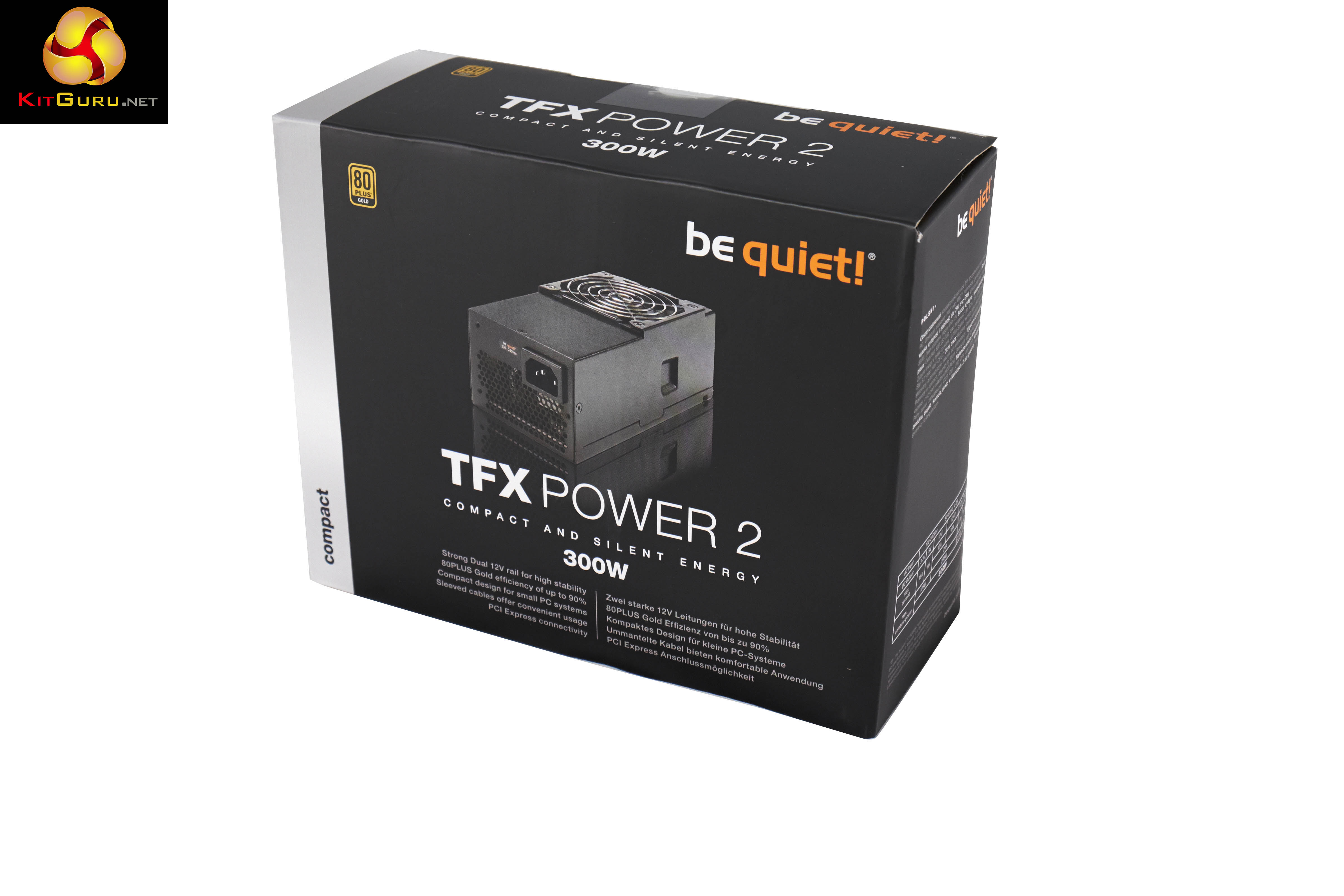
Traditional be quiet! box artwork – simple and dark, with a high resolution image of the product on the front.
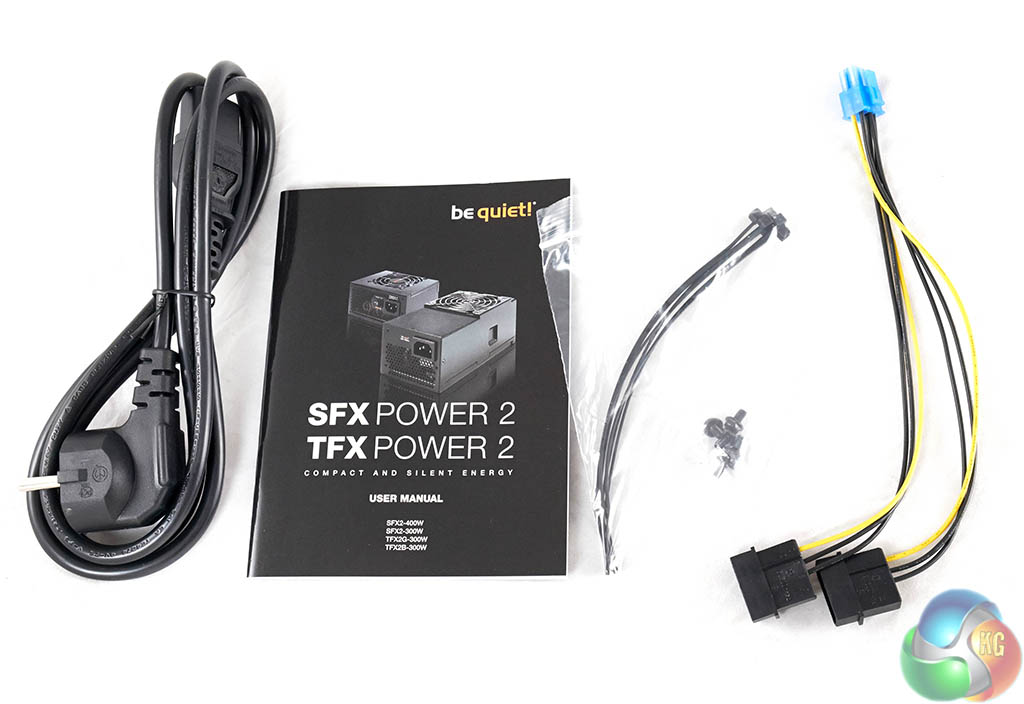
be quiet! include a regional specific power cable, a user manual, cable ties, mounting screws and a PCIe power converter cable.
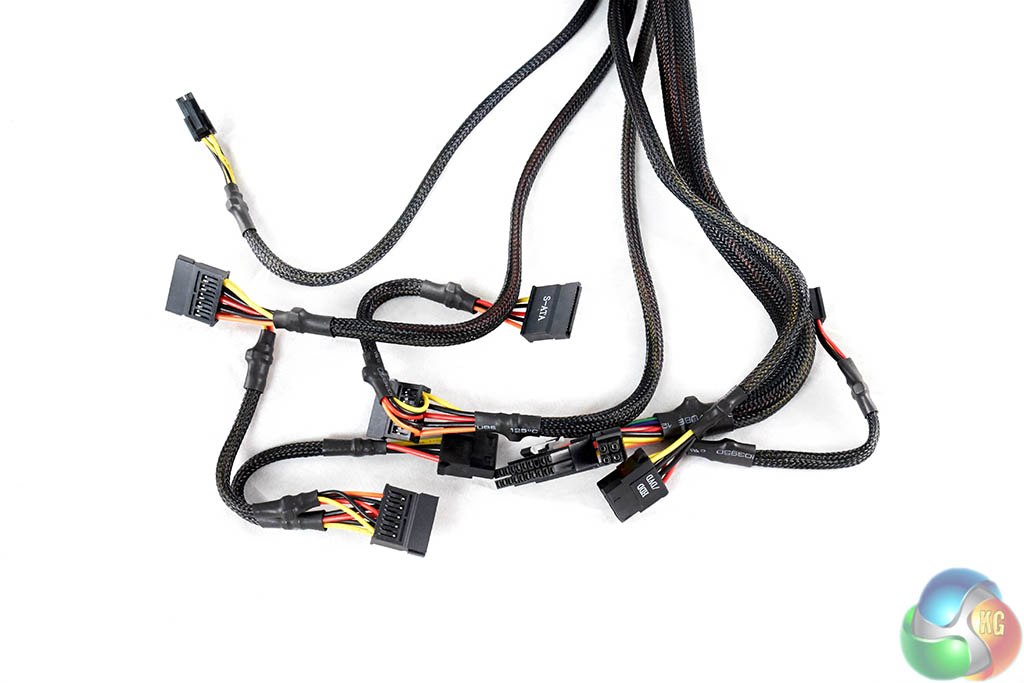
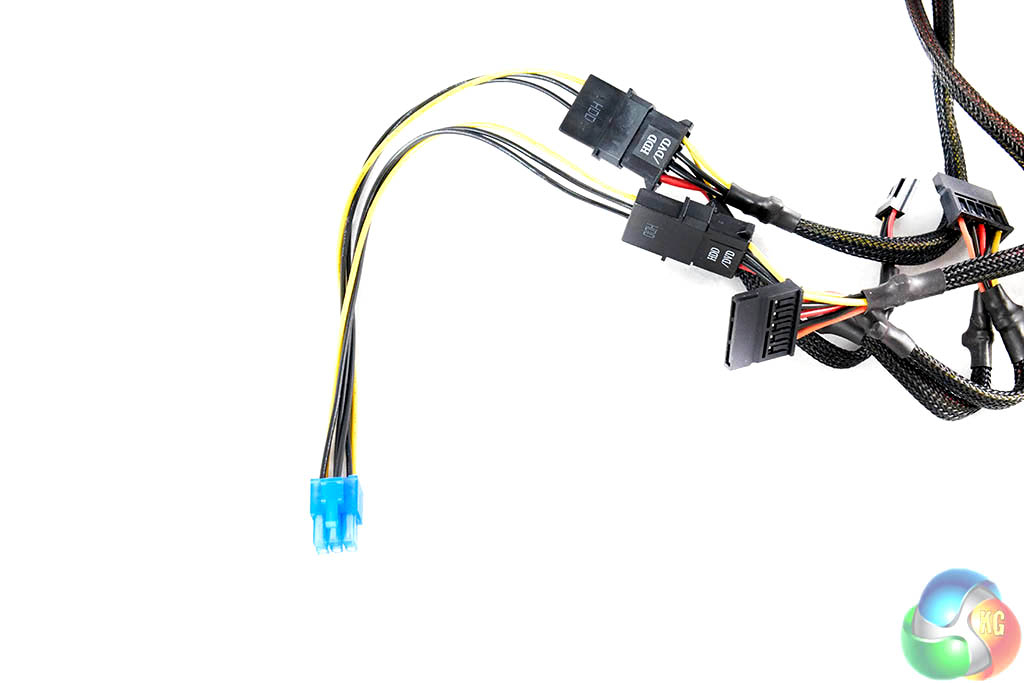
All of the cables are hardwired, although there aren't that many due to the nature of this particular design. The PCI-E cable connects to two of the standard Molex connectors for power.
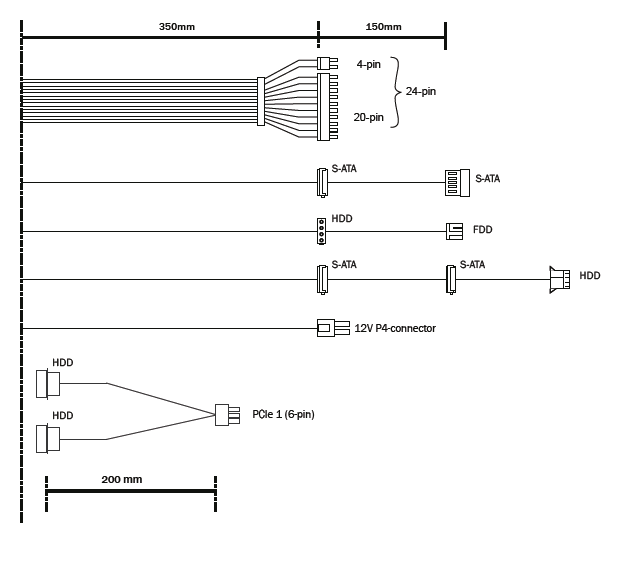
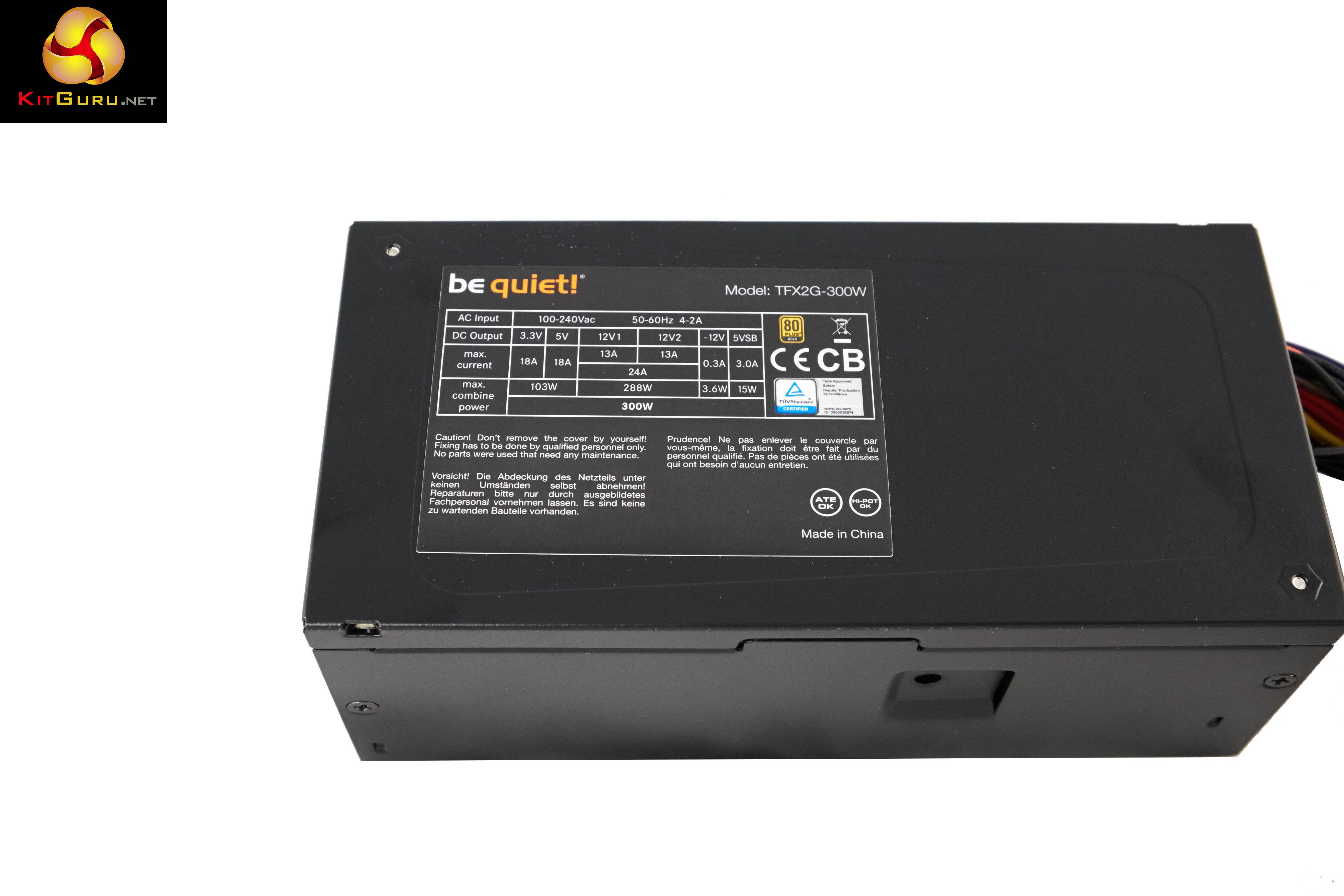
A breakdown of the cables including their length.
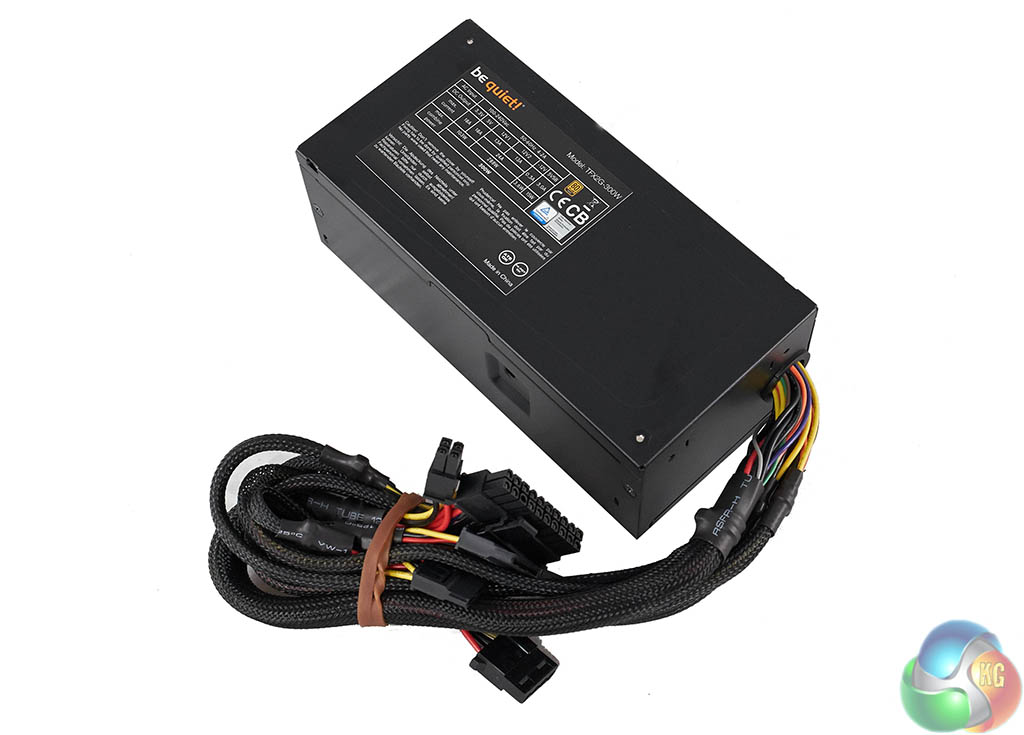
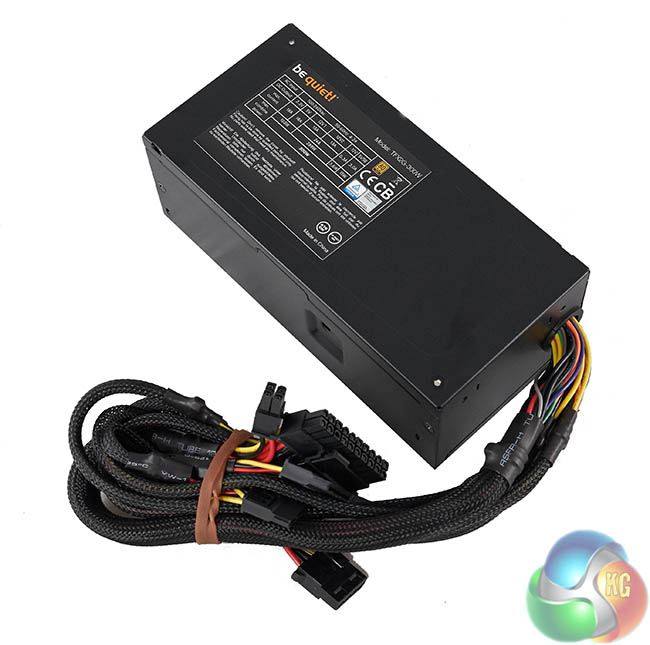
The be quiet! TFX Power 2 is a tiny, small form factor power supply. The unit is very nicely finished as we would expect from the German company, nothing gives under pressure and it feels sturdy in the hand. The unit passed our screwdriver test which involves running a Philips head screwdriver down the side of the chassis with weak to modest pressure. This is to try and replicate a real world situation when building a new system and accidentally connecting against the side of the chassis.
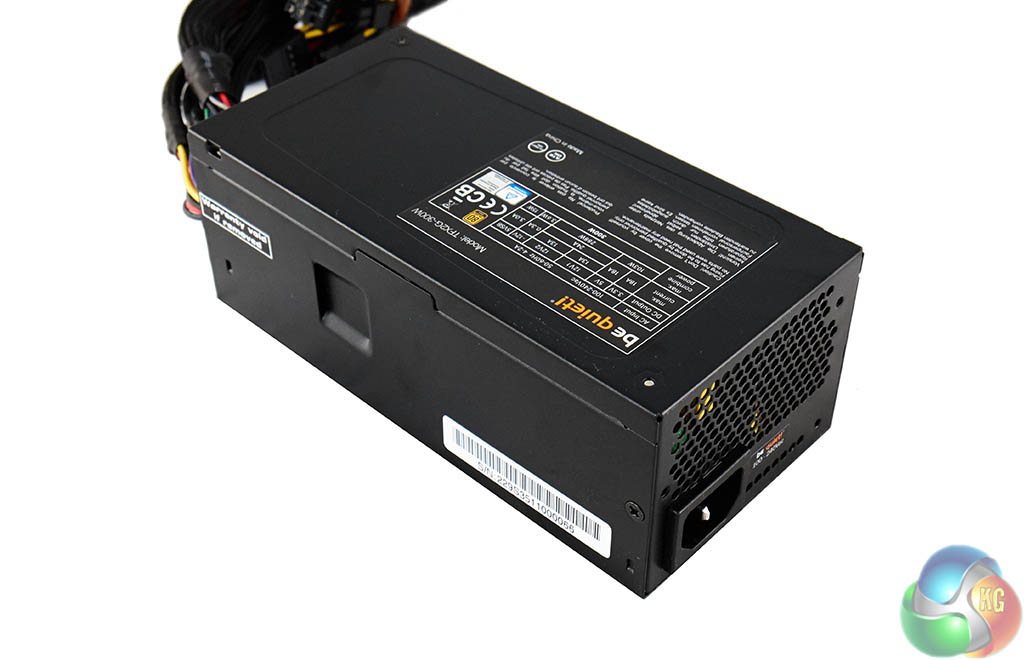
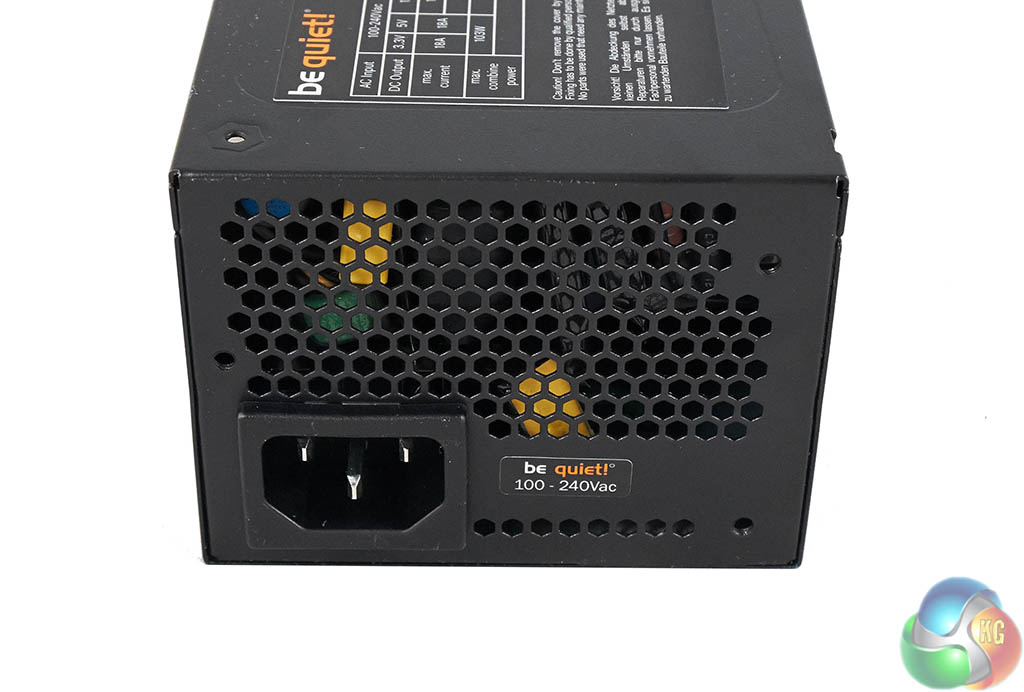
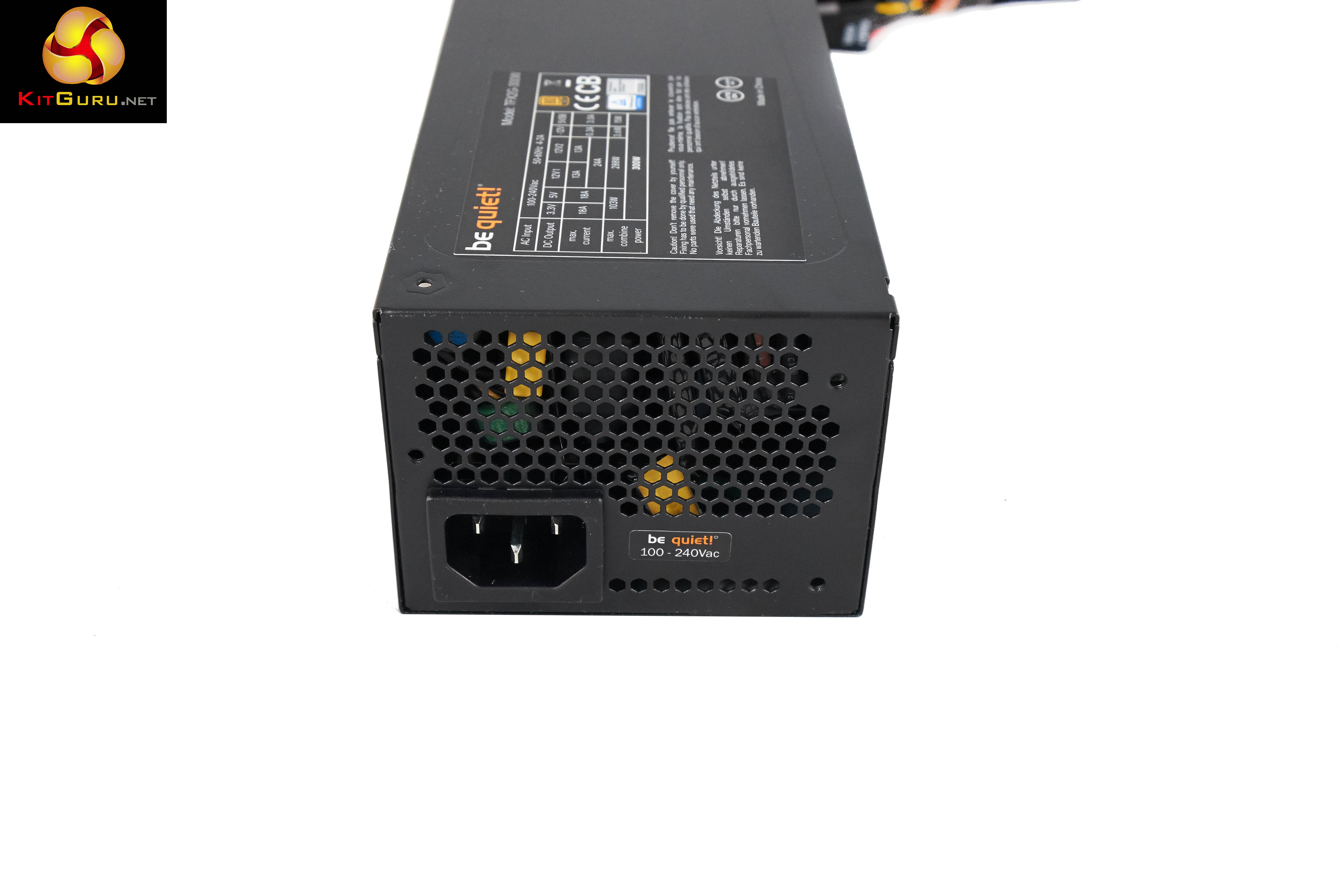
A small 80mm fan takes up position on one side of the chassis. At the end of one side is the power connector, along with vents which aid with airflow.
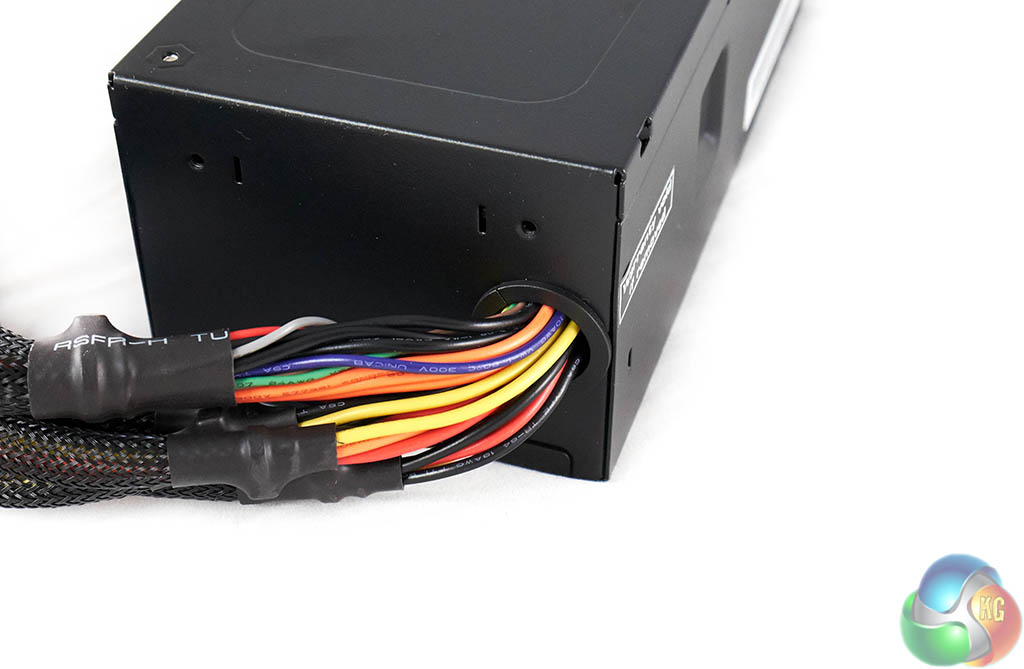
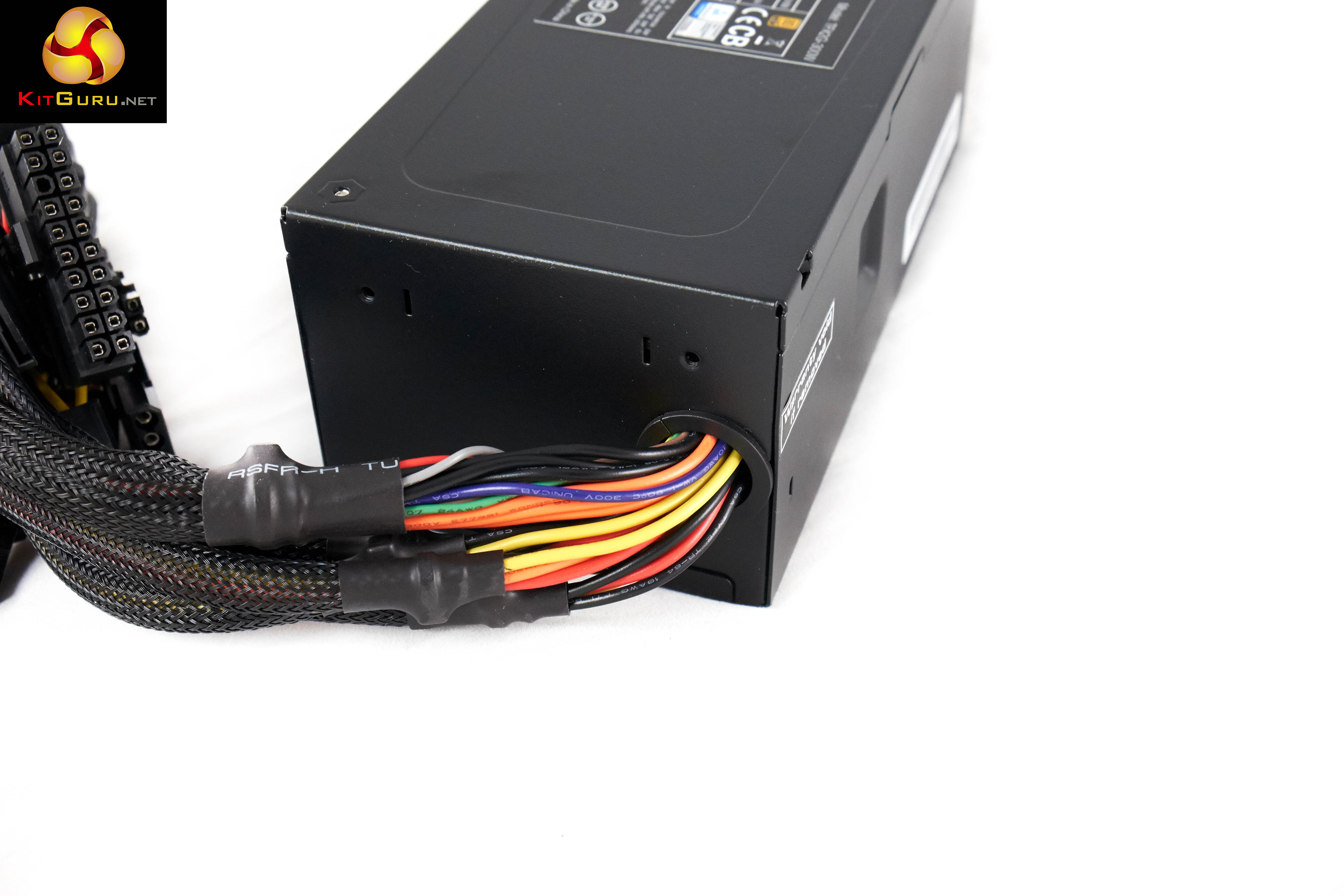
All of the cables run into the other end of the power supply although surprisingly they don't look to be sleeved into the metal chassis.

| be quiet! TFX Power 2 300W Gold | ||||||
|
DC Output
|
+3.3V
|
+5V
|
+12V1 | +12V2 |
-12V
|
+5Vsb
|
|
Max Output
|
18A
|
18A
|
13A | 13A |
0.3A
|
3.0A
|
| Total Power | 103W | (24A) 288W | 3.6W | 15W | ||
| 300W | ||||||
It has been a common trend in recent years to design a power supply with a single +12V rail, however be quiet! have split this design into two that handle 13A each, for a combined 24A. It seems obvious, but this is not the kind of power supply you want to pair with a particularly demanding graphics card.
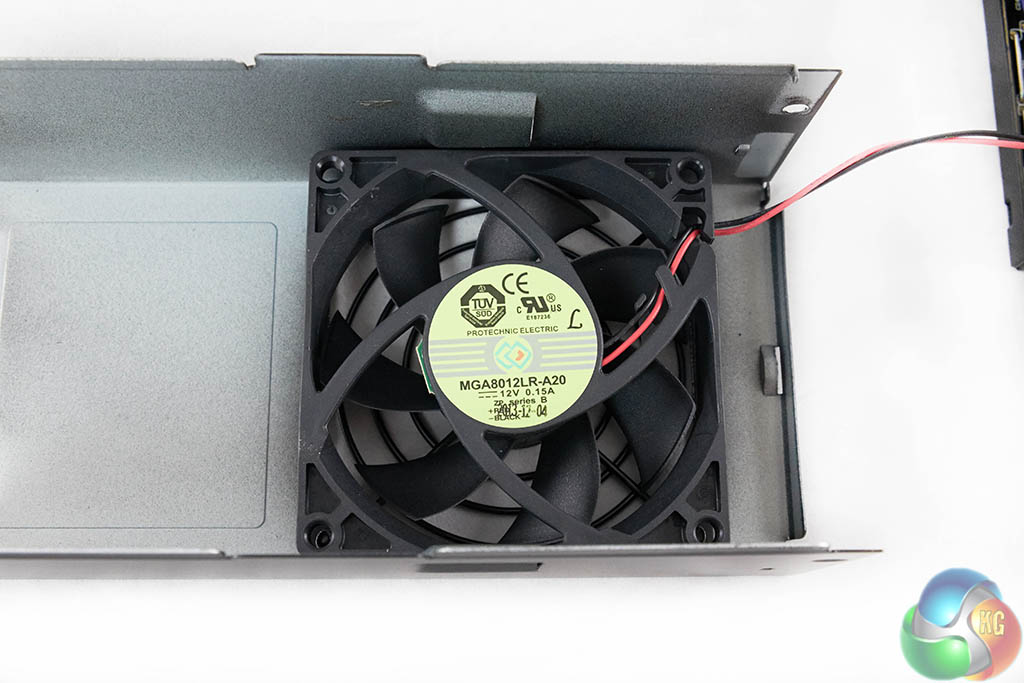
be quiet! are using an 80mm Protechnic Electric fan – model number MGA8012LR-A20 rated at 12V 0.15A. This fan measures 80mm x 80mm x 20mm and is classed as a server ‘square fan'. It is a sleeve bearing fan.
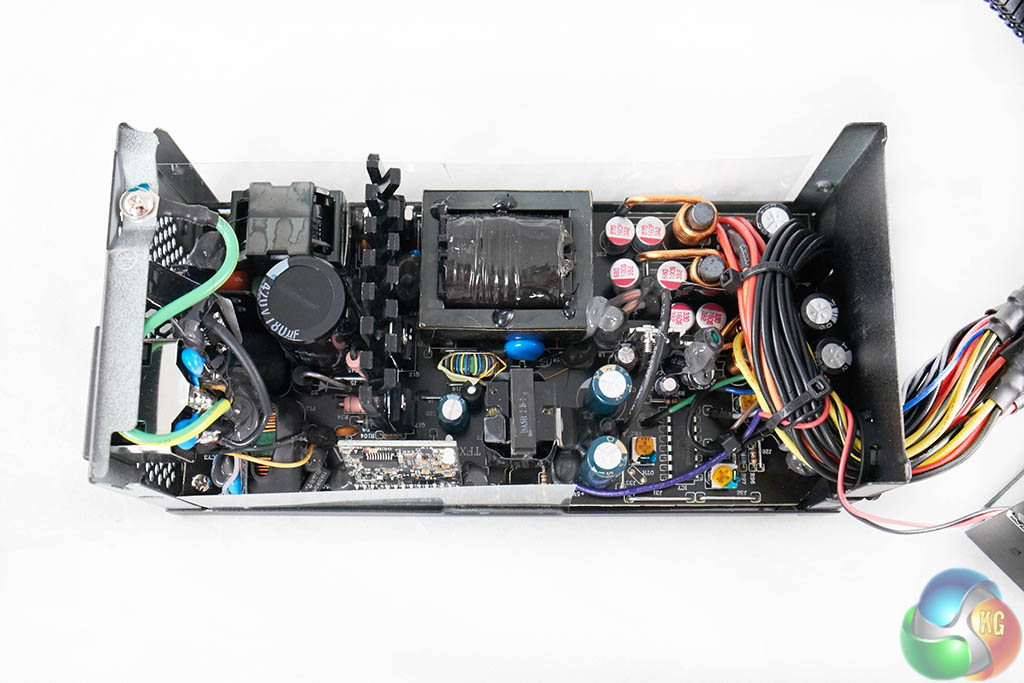
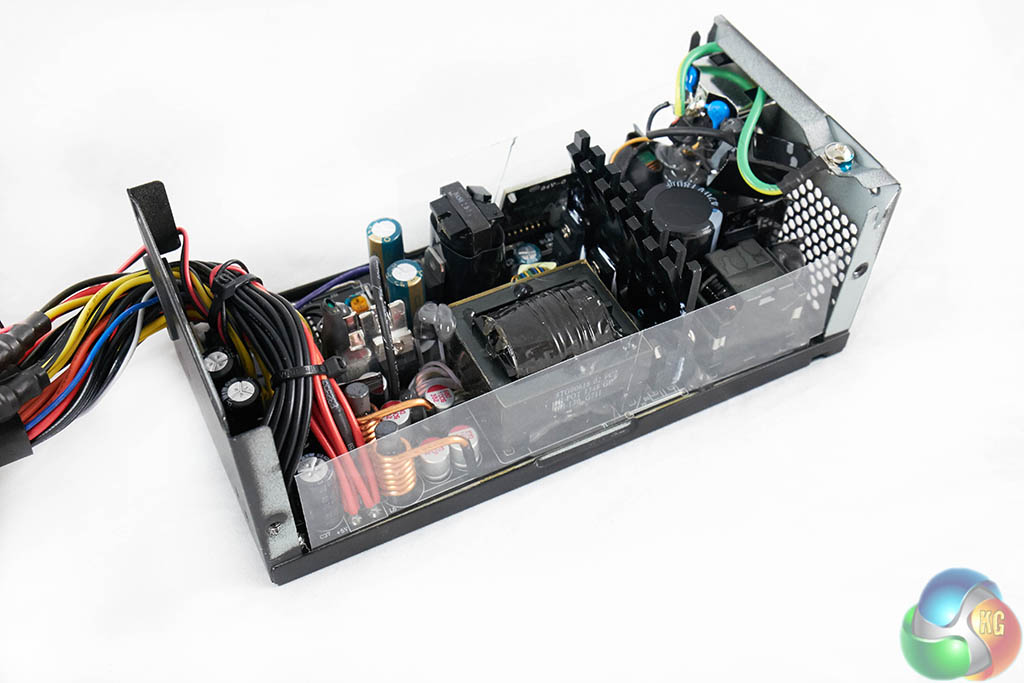


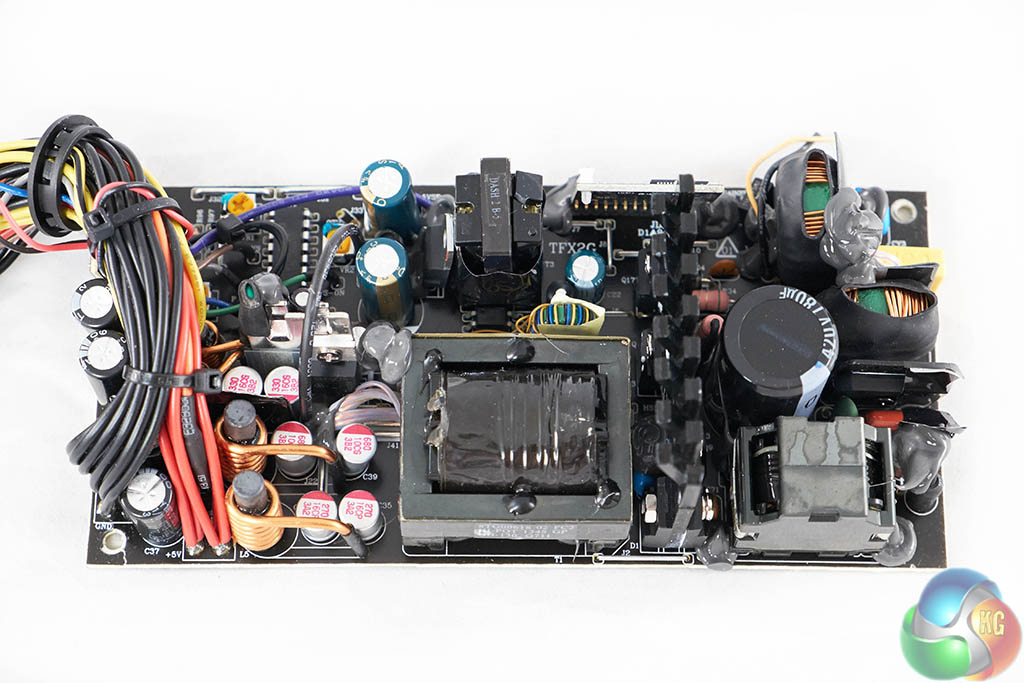
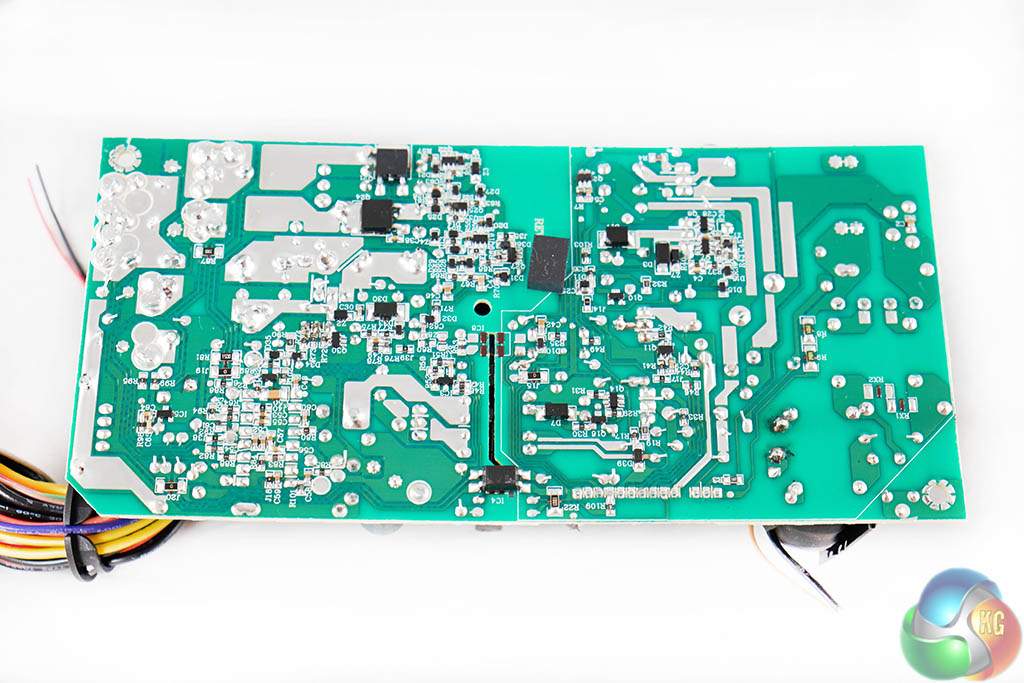
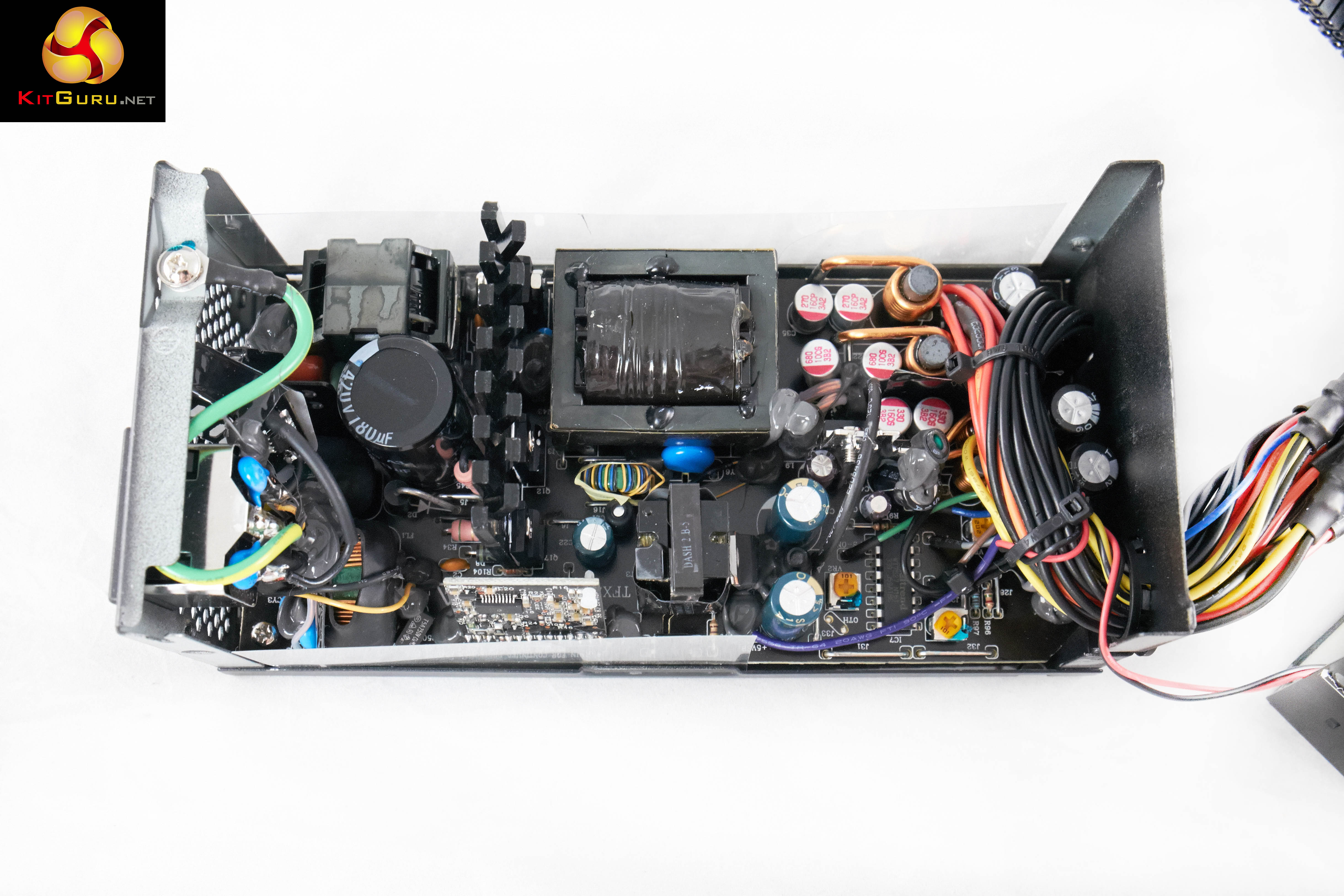
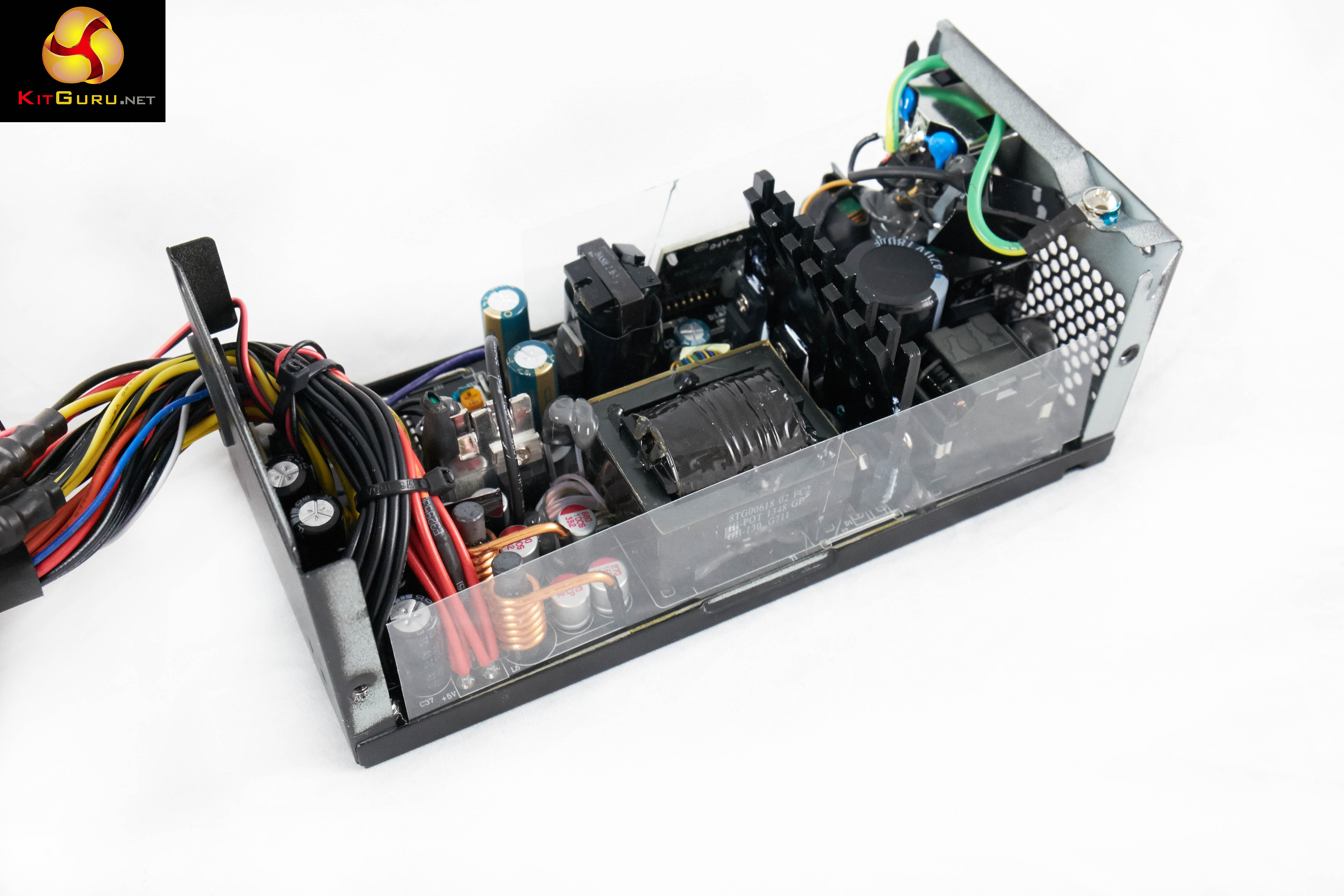
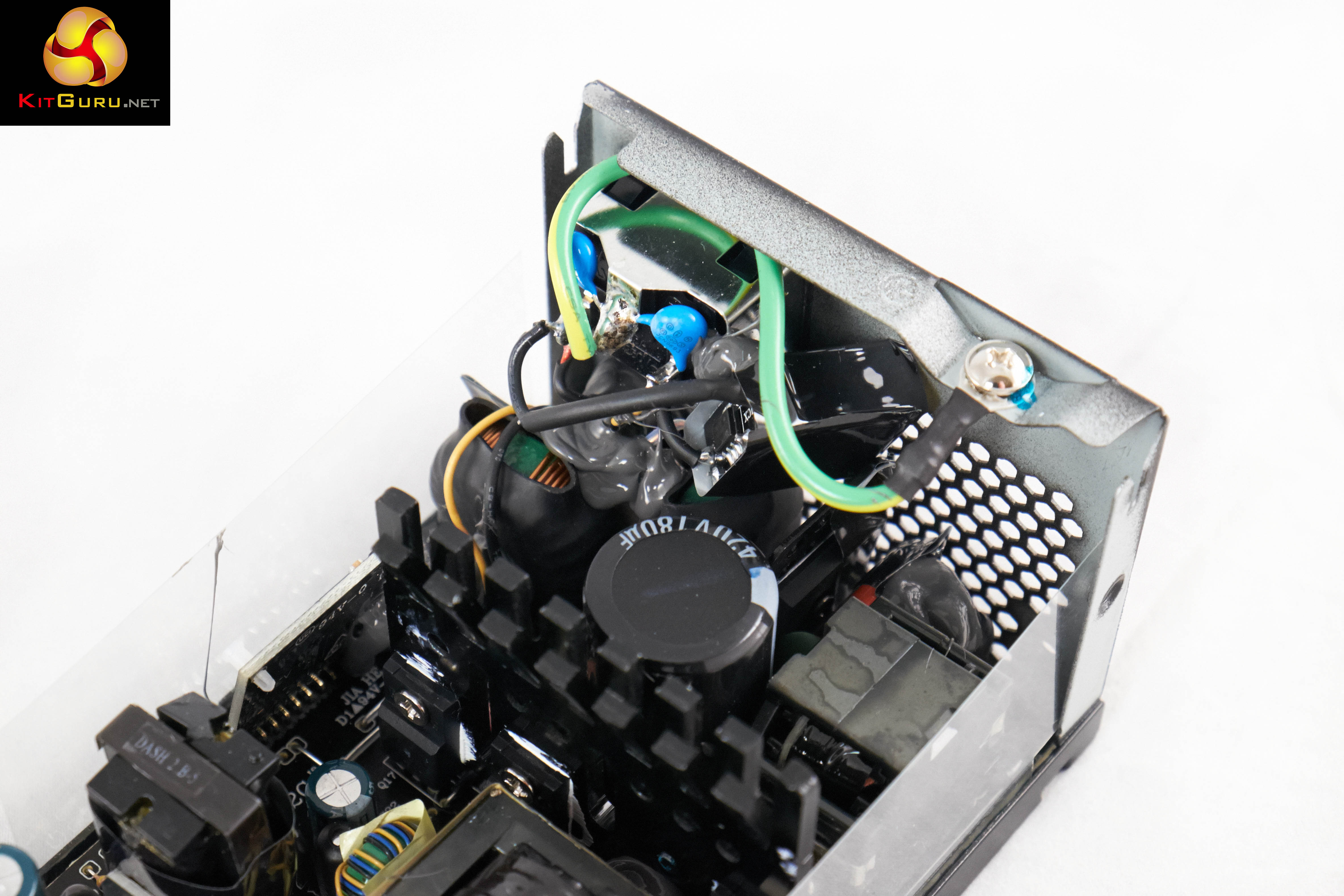
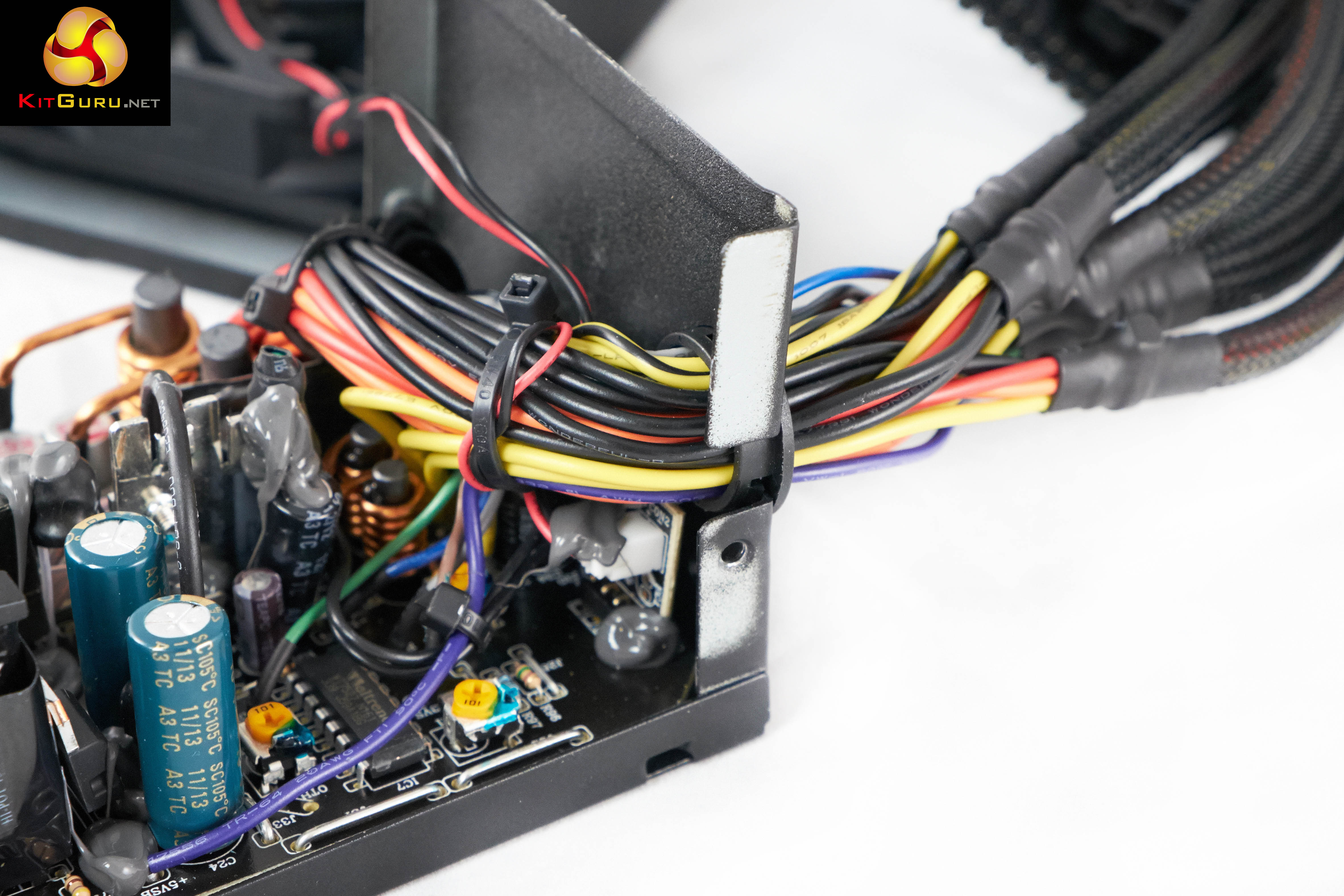
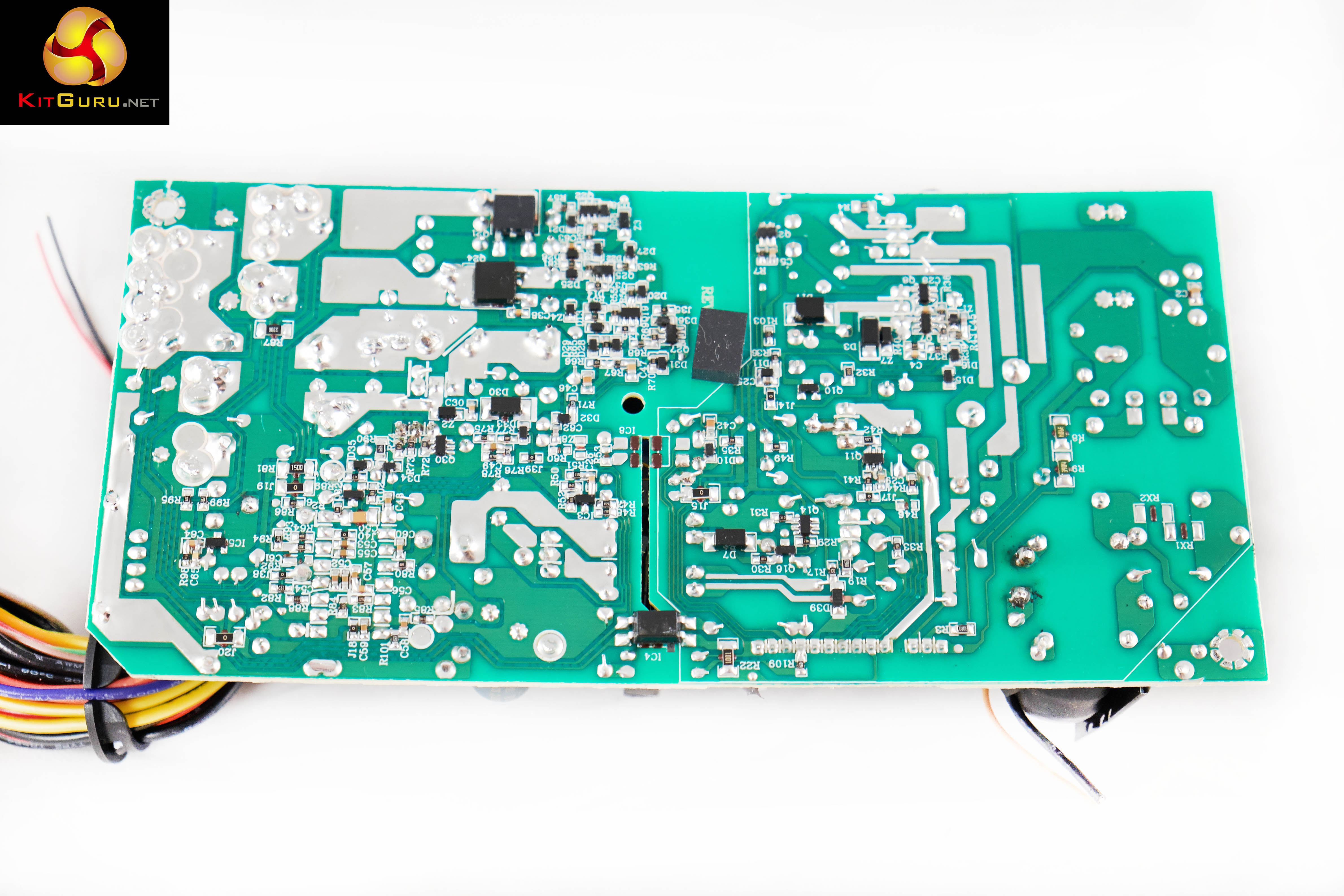
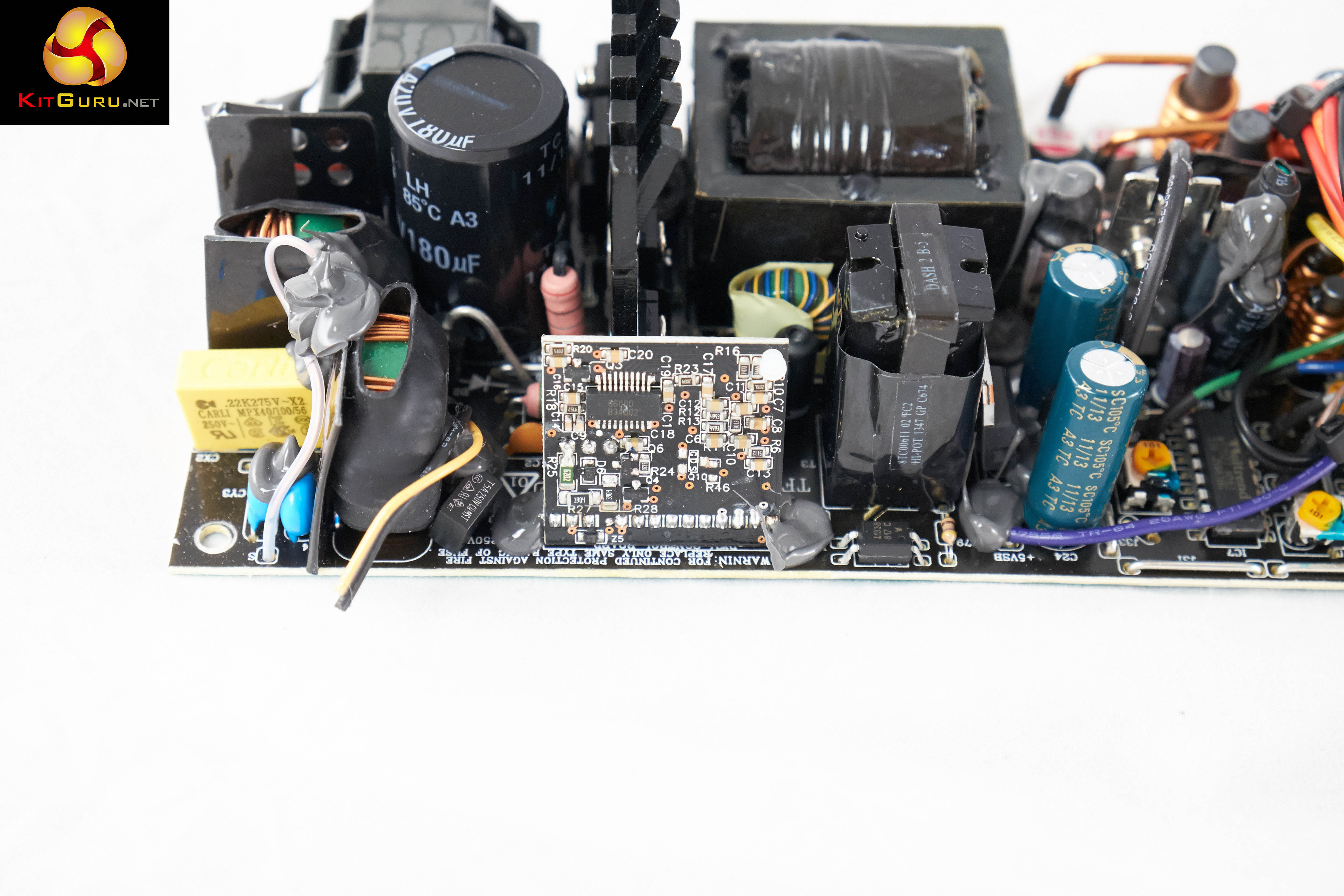
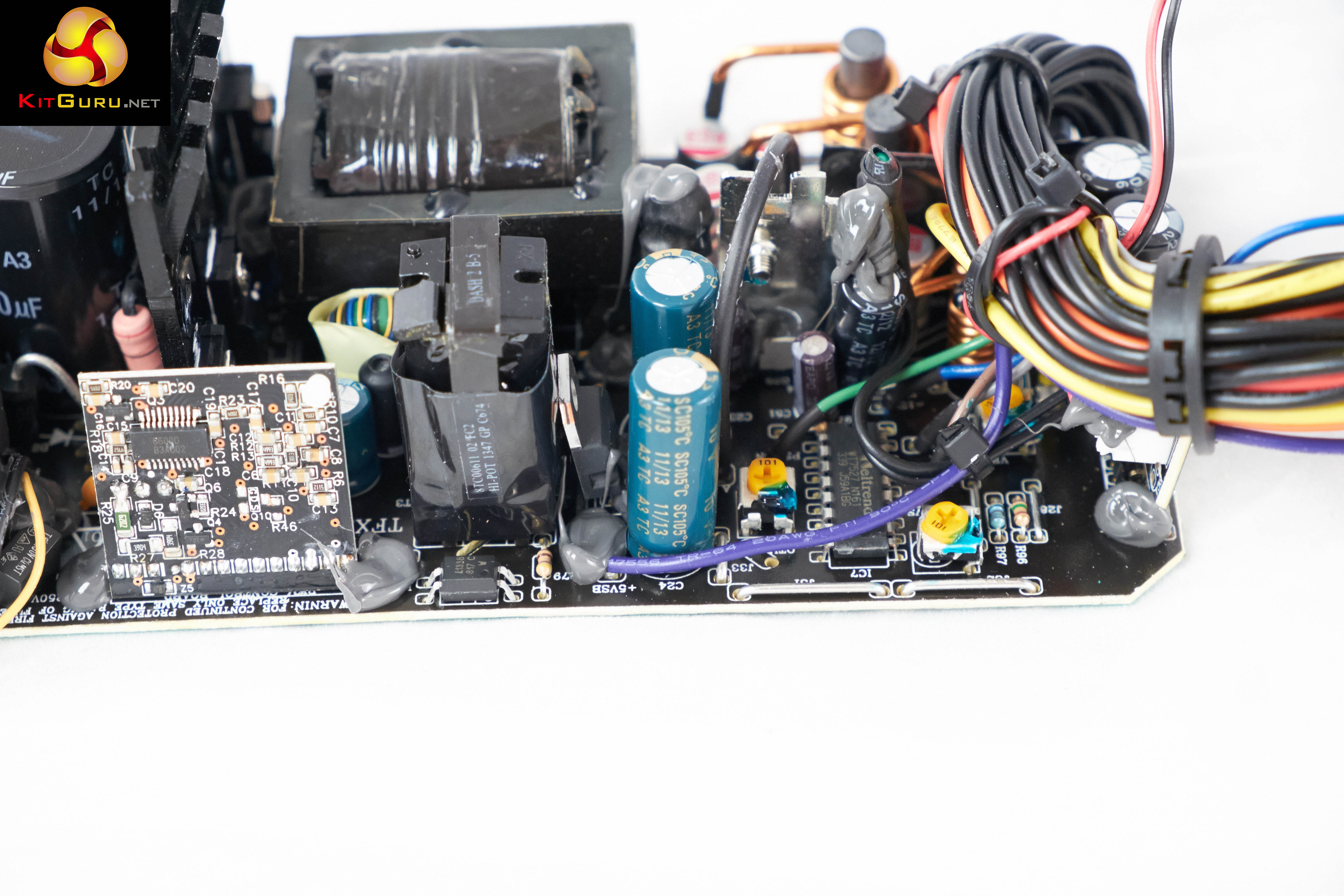
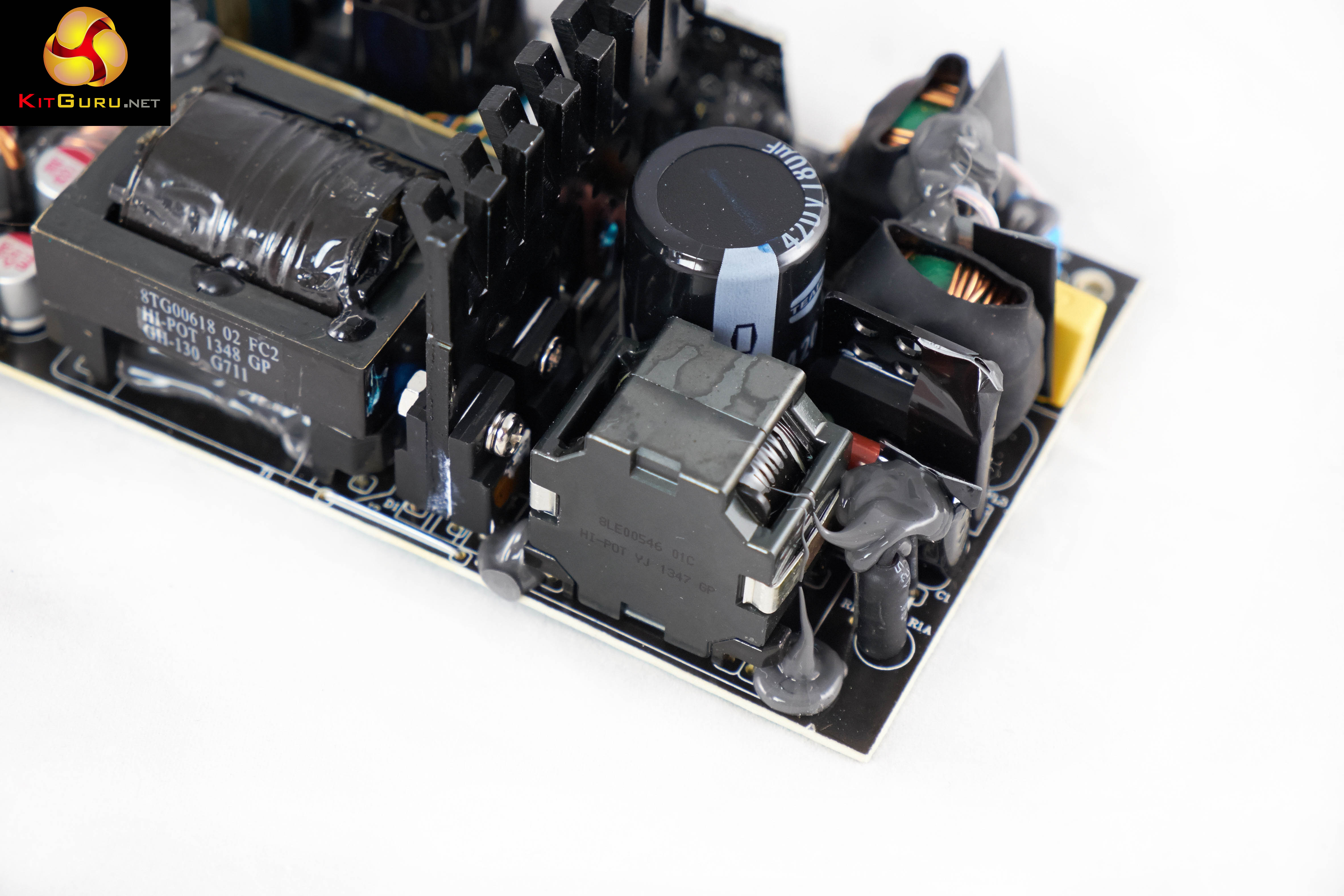
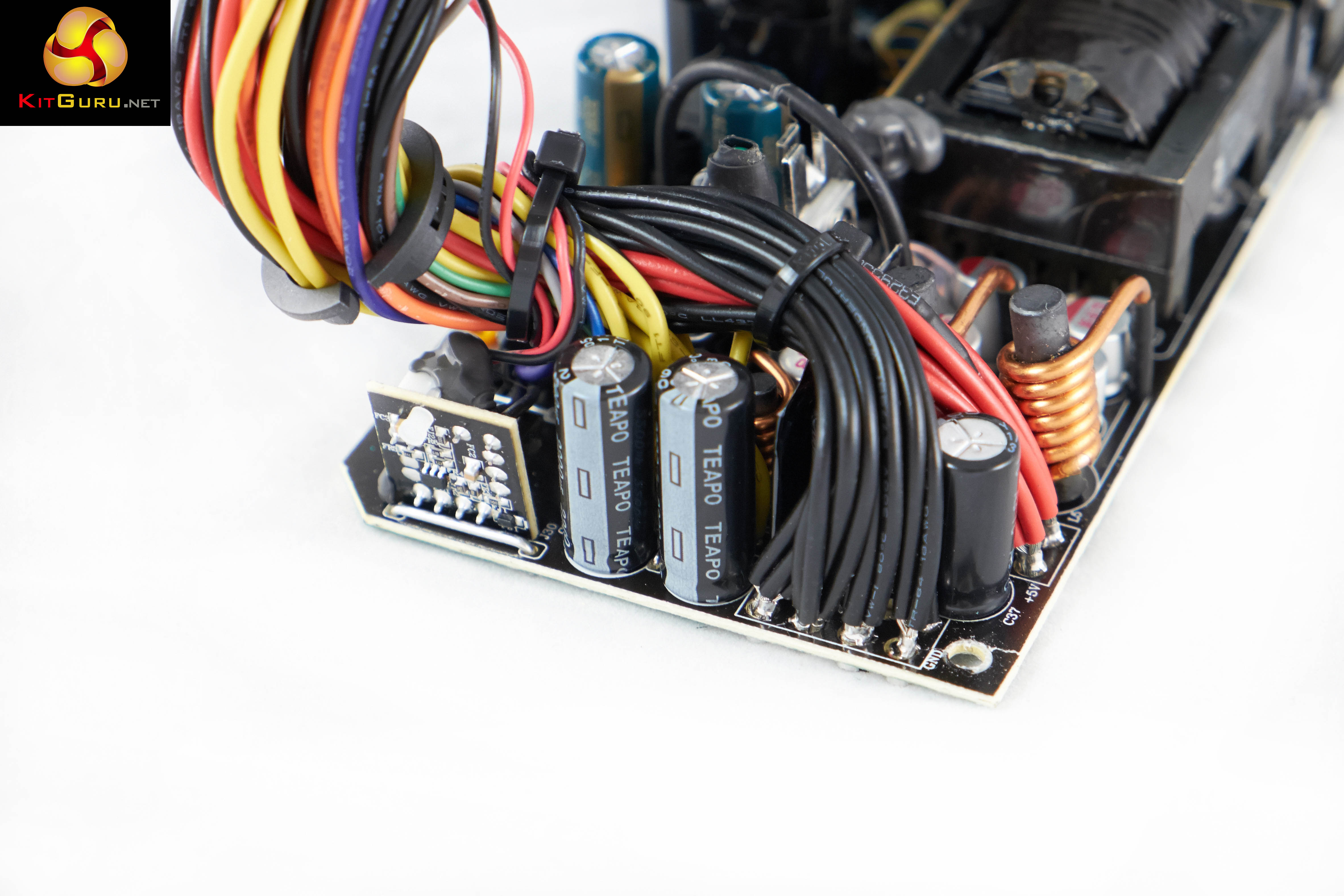
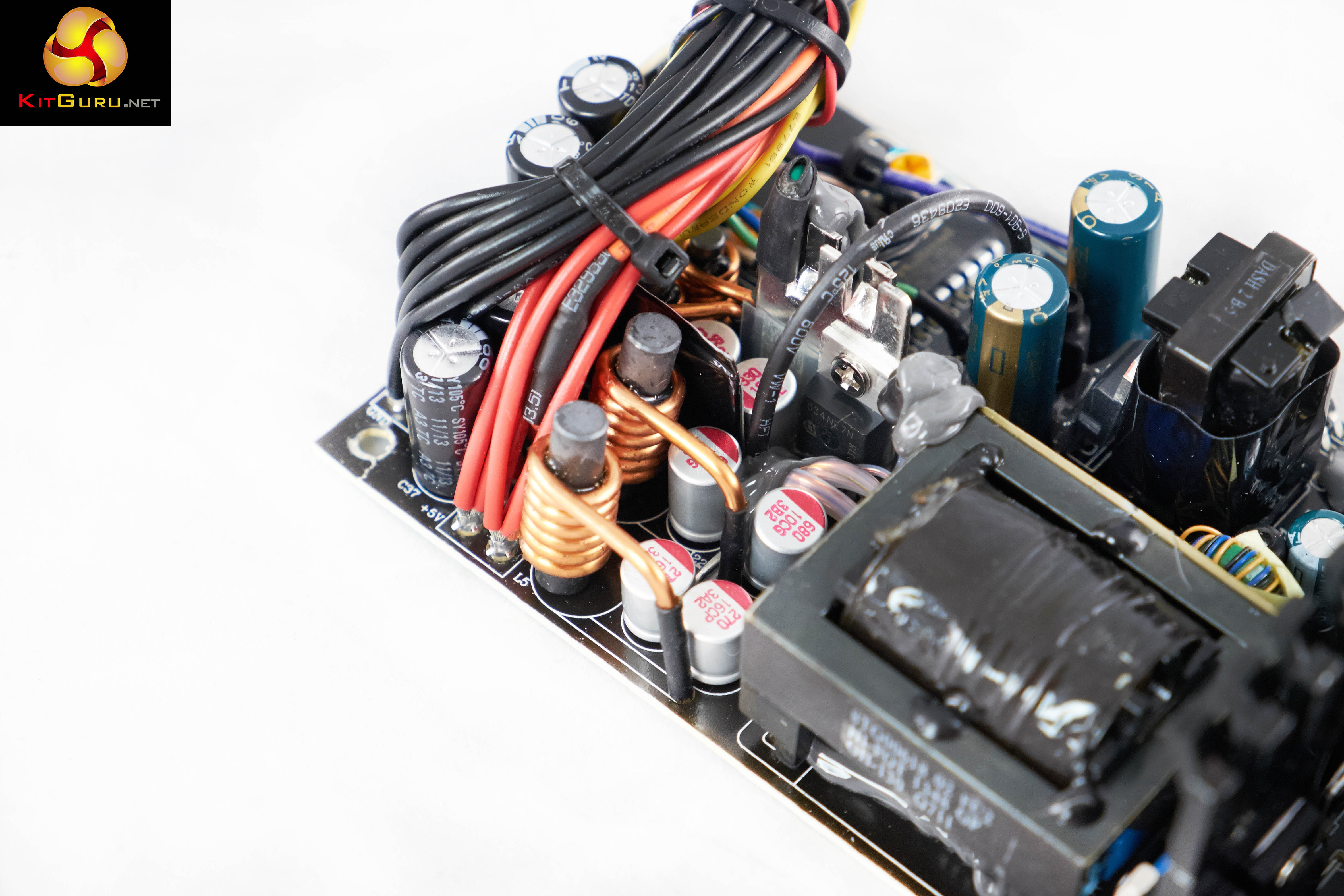
The design is clean inside and due to the efficiency be quiet! have only installed a single heatsink to help with cooling directly under the small fan. Soldering on the PCB seems fine.

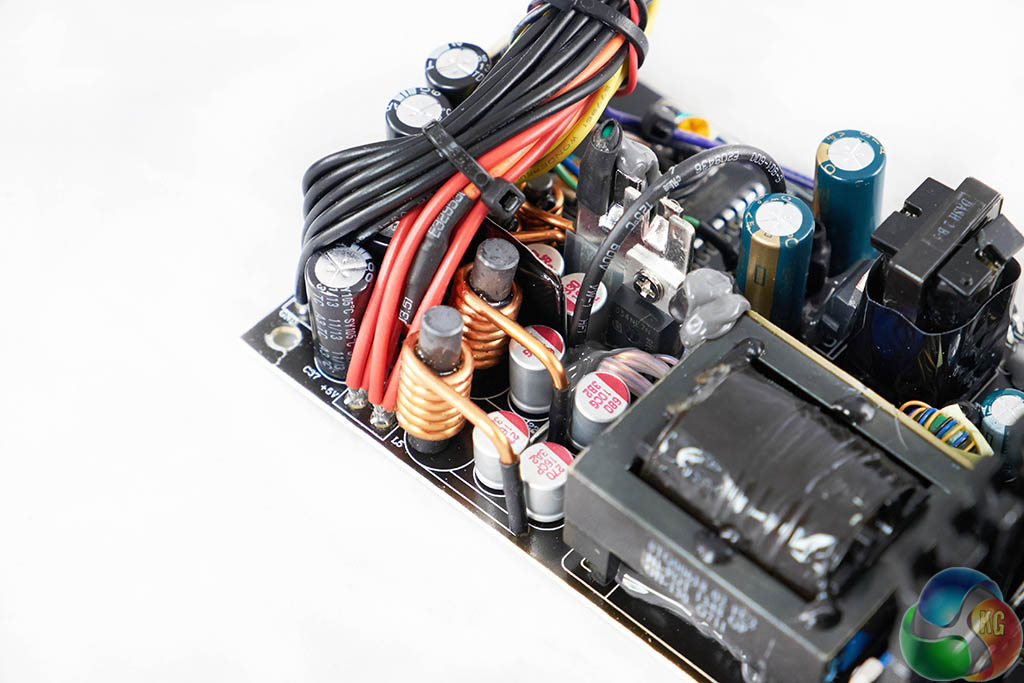
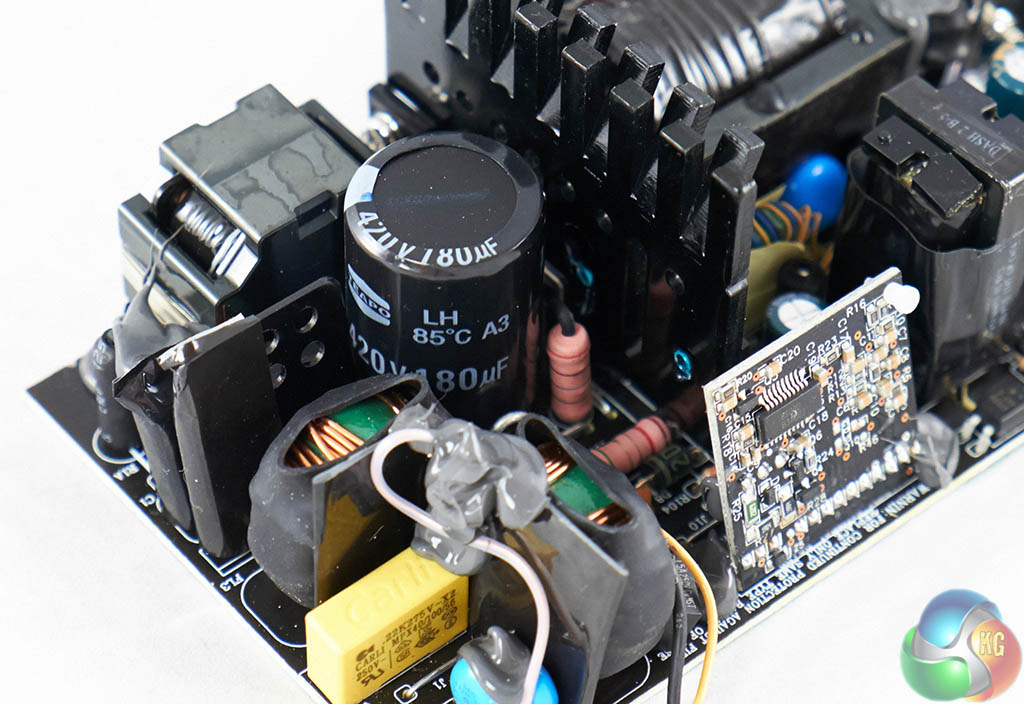
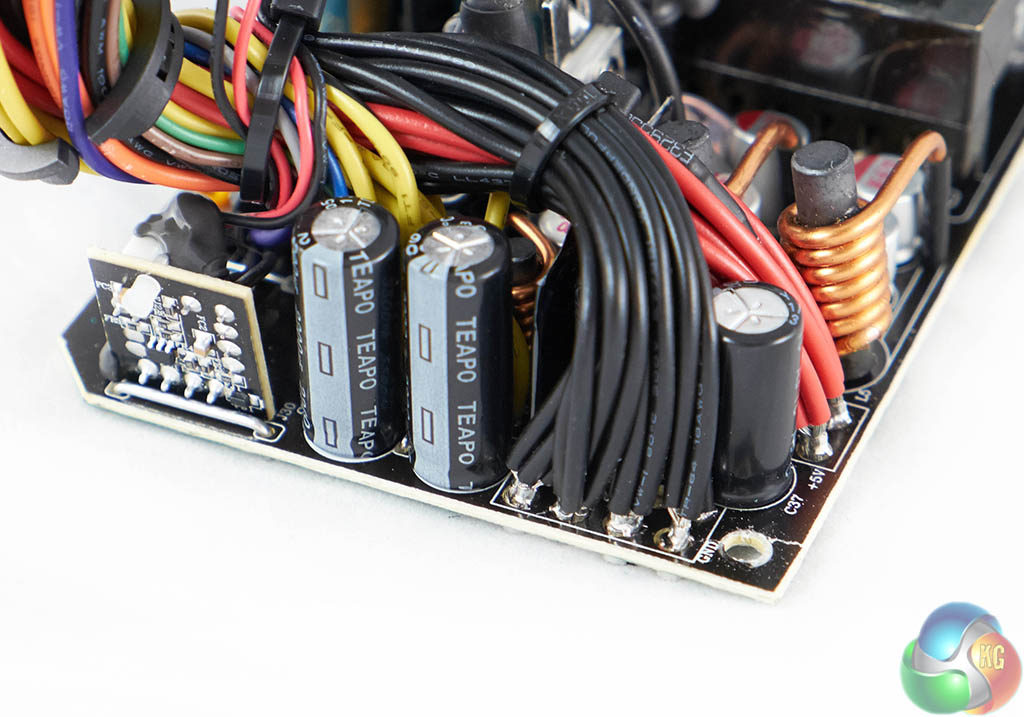
be quiet! are using a Chinese TEAPO 85c rated capacitor in the primary stage. This is rated 420V and 180uF. TEAPO wouldn't be our first choice, but it looks as if be quiet! are working to a very specific budget. Secondary stage capacitors are a mixture of Chinese brands … mainly TEAPO.
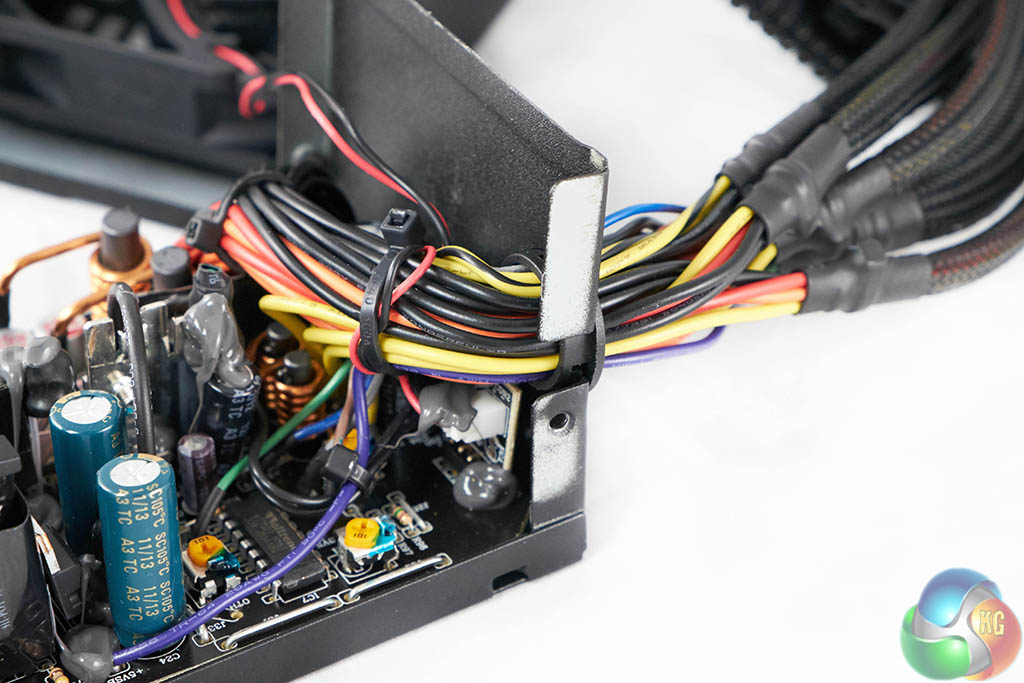
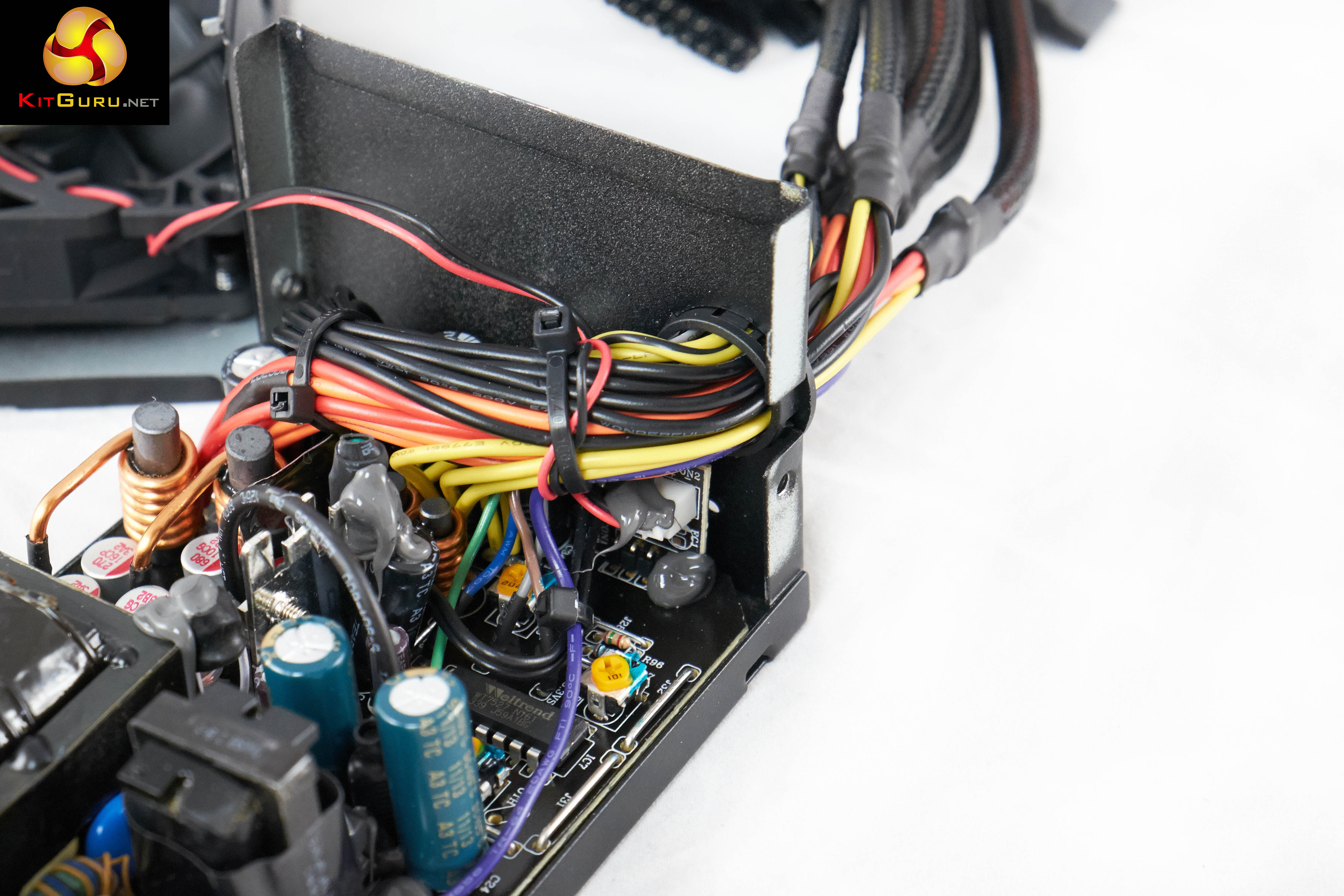
The cables are not sleeved into the chassis, but be quiet! are using a plastic ring around the bare cables to offer protection against the raw metal.
On this page we present some high resolution images of the product taken with a Fuji XT1 and a Sigma SD1 camera. These will take much longer to open due to the dimensions, especially on slower connections. If you use these pictures on another site or publication, please credit Kitguru.net as the owner/source.





Additional technical assistance: Peter McFarland and Jeremy Price.
Correctly testing power supplies is a complex procedure and KitGuru have configured a test bench which can deliver up to a 2,000 watt DC load. Due to public requests we have changed our temperature settings recently – previously we rated with ambient temperatures at 25C, we have increased ambient temperatures by 10c (to 35c) in our environment to greater reflect warmer internal chassis conditions.
We use combinations of the following hardware:
• SunMoon SM-268
• CSI3710A Programmable DC load (+3.3V and +5V outputs)
• CSI3711A Programmable DC load (+12V1, +12V2, +12V3, and +12V4)
• Extech Power Analyzer
• Extech MultiMaster MM570 digital multimeter
• SkyTronic DSL 2 Digital Sound Level Meter (6-130dBa)
• Digital oscilloscope (20M S/s with 12 Bit ADC)• Variable Autotransformer, 1.4 KVA
|
DC Output Load Regulation
|
||||||||
|
Combined DC Load |
+3.3V
|
+5V
|
+12V
|
+5VSB
|
||||
|
A
|
V
|
A
|
V
|
A
|
V
|
A
|
V
|
|
|
75W
|
1.02
|
3.36
|
1.46
|
5.00
|
4.89
|
12.07
|
0.50
|
5.02
|
|
150W
|
2.44
|
3.35
|
3.16
|
5.00
|
9.71
|
12.03
|
1.00
|
5.02
|
|
250W
|
3.66
|
3.33
|
5.18
|
4.98
|
16.54
|
12.01
|
1.50
|
5.00
|
| 300W |
4.95
|
3.31
|
5.70
|
4.97
|
20.50
|
11.94
|
1.50
|
5.01 |
Load regulation is really quite impressive and all output maintain close to reference results.
| be quiet! TFX Power 2 300W Gold | Maximum Load |
| 333 watts |
We managed to push the supply to 333 watts before it would shut down safely.
Next we want to try Cross Loading. This basically means loads which are not balanced. If a PC for instance needs 500W on the +12V outputs but something like 30W via the combined 3.3V and +5V outputs then the voltage regulation can fluctuate badly.
| Cross Load Testing | +3.3V | +5V | +12V | -12V | +5VSB | |||||
| A | V | A | V | A | V | A | V | A | V | |
| 285W | 2.0 | 3.35 | 2.0 | 5.00 | 19.5 | 11.93 | 0.2 | -12.06 | 0.50 | 5.01 |
| 141W | 13.0 | 3.30 | 10.0 | 4.92 | 4.0 | 12.07 | 0.2 | -12.04 | 0.50 | 5.01 |
Our first test placed a 19.5A load on the +12 V output with a light load on the remaining voltages. The supply delivered excellent results across the output range.
We then used an oscilloscope to measure AC ripple and noise present on the DC outputs. We set the oscilloscope time base to check for AC ripple at both high and low ends of the spectrum.
ATX12V V2.2 specification for DC output ripple and noise is defined in the ATX 12V power supply design guide.
|
ATX12V Ver 2.2 Noise/Ripple Tolerance
|
|
|
Output
|
Ripple (mV p-p)
|
|
+3.3V
|
50
|
|
+5V
|
50
|
|
+12V1
|
120
|
|
+12V2
|
120
|
|
-12V
|
120
|
|
+5VSB
|
50
|
Obviously when measuring AC noise and ripple on the DC outputs the cleaner (less recorded) means we have a better end result. We measured this AC signal amplitude to see how closely the unit complied with the ATX standard.
| AC Ripple (mV p-p) | ||||
| DC Load | +3.3V | +5V | +12V | 5VSB |
| 75W | 10 | 15 | 15 | 10 |
| 150W | 25 | 20 | 25 | 15 |
| 250W | 25 | 25 | 35 | 15 |
| 300W | 35 | 30 | 50 | 25 |
A decent set of results, +3.3V, and +5V both peak at 35 mV and 30 mV respectively. +12V peaks at 50mV at full load.
|
Efficiency (%)
|
|
|
75W
|
87.34
|
|
150W
|
92.12
|
|
250W
|
88.34
|
|
300W
|
87.42
|
Again, very good results from the 80 Plus Gold rated Power supply, peaking just over 92% efficiency at 50 percent load.
We take the issue of noise very seriously at KitGuru and this is why we have built a special home brew system as a reference point when we test noise levels of various components. Why do this? Well this means we can eliminate secondary noise pollution in the test room and concentrate on components we are testing. It also brings us slightly closer to industry standards, such as DIN 45635.
Today to test the Power Supply we have taken it into our acoustics room environment and have set our SkyTronic DSL 2 Digital Sound Level Meter (6-130dBa) one meter away from the unit. We have no other fans running so we can effectively measure just the noise from the unit itself.
As this can be a little confusing for people, here are various dBa ratings in with real world situations to help describe the various levels.
KitGuru noise guide
10dBA – Normal Breathing/Rustling Leaves
20-25dBA – Whisper
30dBA – High Quality Computer fan
40dBA – A Bubbling Brook, or a Refrigerator
50dBA – Normal Conversation
60dBA – Laughter
70dBA – Vacuum Cleaner or Hairdryer
80dBA – City Traffic or a Garbage Disposal
90dBA – Motorcycle or Lawnmower
100dBA – MP3 Player at maximum output
110dBA – Orchestra
120dBA – Front row rock concert/Jet Engine
130dBA – Threshold of Pain
140dBA – Military Jet takeoff/Gunshot (close range)
160dBA – Instant Perforation of eardrum
|
Noise (dBA)
|
|
|
75W
|
32.1
|
|
150W
|
33.2
|
|
250W
|
35.5
|
|
300W
|
36.9
|
The small fan doesn't spin that hard but the noise levels are noticeable due to the small size. It is quiet until about 200 watts are demanded. At 300 watts the fan spins up quite a bit and it becomes clearly audible. I actually found it a little intrusive.
|
Temperature (c)
|
||
|
Intake
|
Exhaust
|
|
|
75W
|
36
|
41
|
|
150W
|
38
|
45
|
|
250W
|
40
|
49
|
|
300W
|
43
|
53
|
The small fans copes admirably under load, with the exhaust temperature rising to a maximum of 53c at 100 percent load.
|
Maximum load
|
Efficiency
|
|
333W
|
86.67
|
Pushing the power supply above its rated limits generates an efficiency level of around 86.7%. This is not a viable ‘real world’ situation, but its interesting nonetheless.
The be quiet! TFX Power 2 300W Gold power supply delivers great all round performance and is an ideal shortlist product for a new system build specifically requiring a TFX unit.
Right now there are very few instances when an enthusiast user will actually require a TFX power supply and until more case manufacturers expand their portfolio this power supply will service a limited audience.
German company be quiet! have earned a solid reputation for delivering quality products at various price points and this power supply will certainly help cement their track record. Build quality, as we would expect, is stellar.
Technically, the unit delivers solid load regulation and it coped with our intensive cross load testing without a hiccup. Efficiency levels are high and it was able to handle just over 330 watts before shutting down safely. Ripple suppression falls within industry tolerances, although they are a little higher than many of the best units we have tested in recent months.
The only downside is really the fact that the small fan can get a little intrusive under extended load, although this is going to be a problem with most TFX power supplies, as they have to adopt small fans to fit inside the tiny cases.
It was also a little disappointing to see inside that the design is using lower grade Chinese TEAPO capacitors, including a 85c rated TEAPO capacitor in the primary stage.
Right now you can buy the be quiet! TFX Power 2 300W from Scan in the United Kingdom. It is worth pointing out that there are two versions of this unit, a 80 Plus Bronze certified unit, and a 80 Plus Gold certified unit. Bronze is £42.36 inc vat, and the Gold unit, which we reviewed today is slightly more expensive, at £50.76 inc vat.
Discuss on our Facebook page, over HERE.
Pros:
- well built.
- performs very well.
- fan is quiet under low load situations.
- good efficiency
Cons:
- Chinese 85c capacitors.
- fan spins up quickly at 250W+
- more expensive than ATX designs.
KitGuru says: If you need a TFX power supply, the be quiet! TFX Power 2 300W Gold should make your final shortlist.