KitGuru KitGuru.net – Tech News | Hardware News | Hardware Reviews | IOS | Mobile | Gaming | Graphics Cards


It has been some time since I last looked at a Cooler Master power supply so I am interested to see what their latest GX III 850W unit brings to the table. This current model is a fully modular power supply with an 80 Plus Gold rating, with the 850W version on sale for £130 in the UK.
In their literature for the product, Cooler Master claim that this product offers a new structural design, improved airflow, and a ‘cleaner' overall look. In their words it is the ‘epitome of strength in elegance'. Interestingly their guides also claim that the heatsinks inside are anodic coated to reduce temperatures by 5c compared to a traditional heatsink. I don't think I have ever heard that before.
Cooler Master GX III Overview:
- ATX Version ATX 12V Ver. 3.0
- PFC Active PFC
- Input Voltage 100 – 240V
- Input Current 10 – 5A
- Input Frequency 50 – 60Hz
- Dimensions (L x W x H) 160 x 150 x 86mm
- Fan Size 135 mm
- Fan Bearing HDB
- Fan Speed 1900rpm
- Efficiency ≥ 90% @ Typical Load
- 80 PLUS Rating 80 PLUS Gold
- ErP 2014 Lot 3 Yes
- Operating Temperature 0 ~ 50℃
- Power Good Signal 100 – 150 ms
- Hold Up Time ≥ 16ms
- MTBF >100,000 hours
- Warranty 10 years
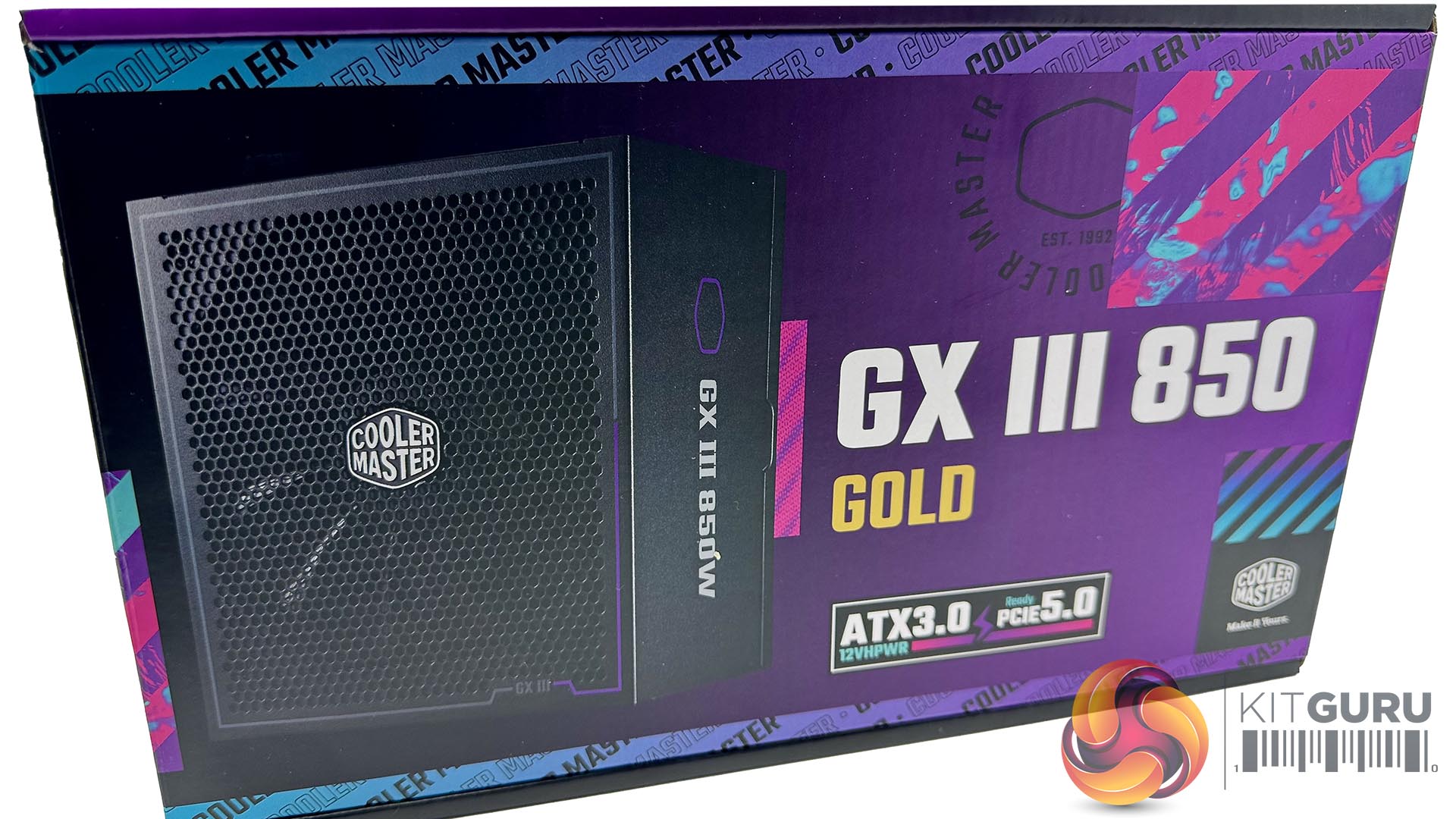
The front of the box showcases a photo of the GX III along with some specifications on the right side.
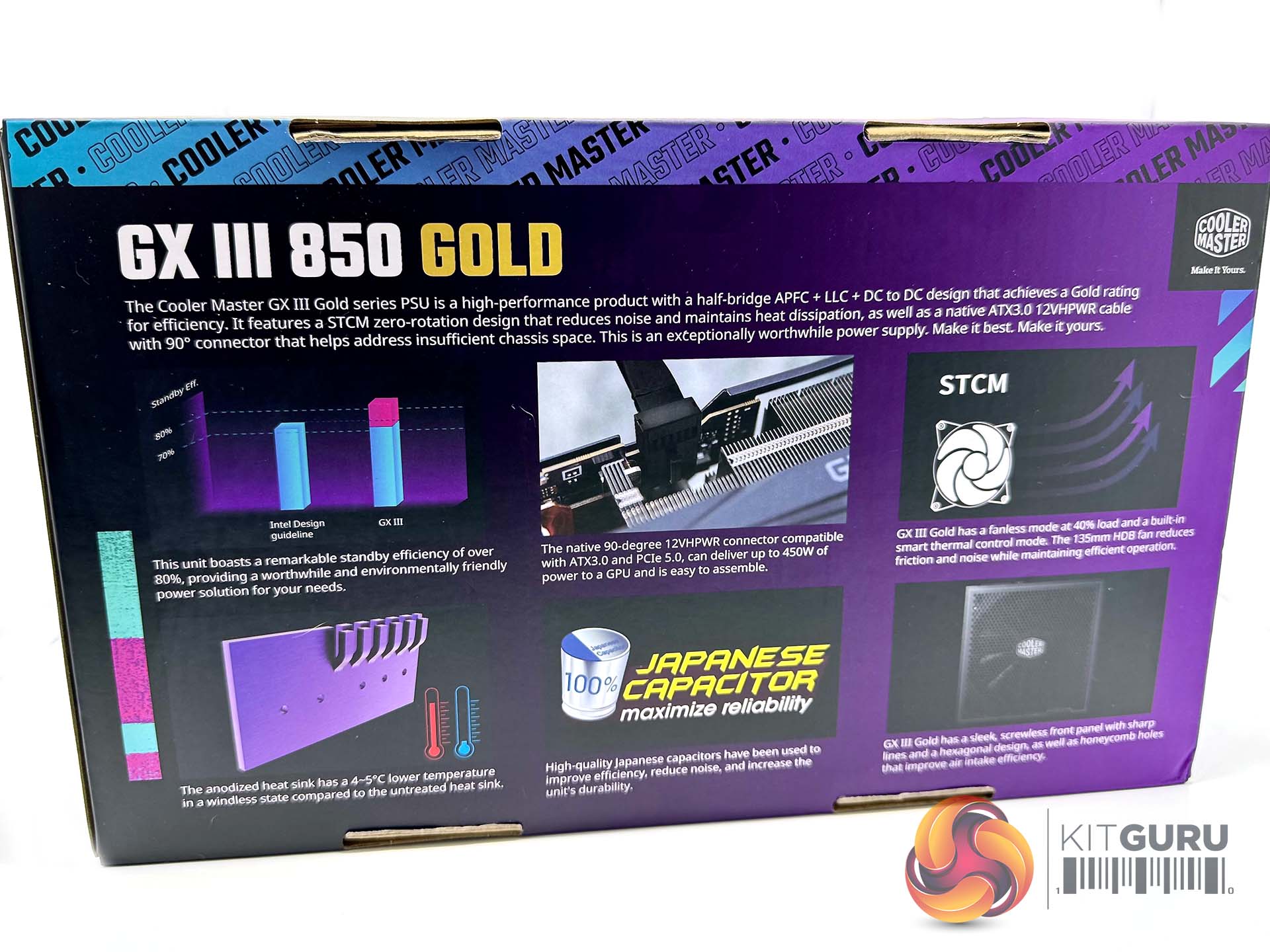
The rear of the box highlights some of the key features of the product including the 90 degree 12VHPWR connector and the adoption of high grade Japanese capacitors throughout. Again we see mention of the anodised heat sink which apparently offers 4-5c lower temperatures over an ‘untreated' version.
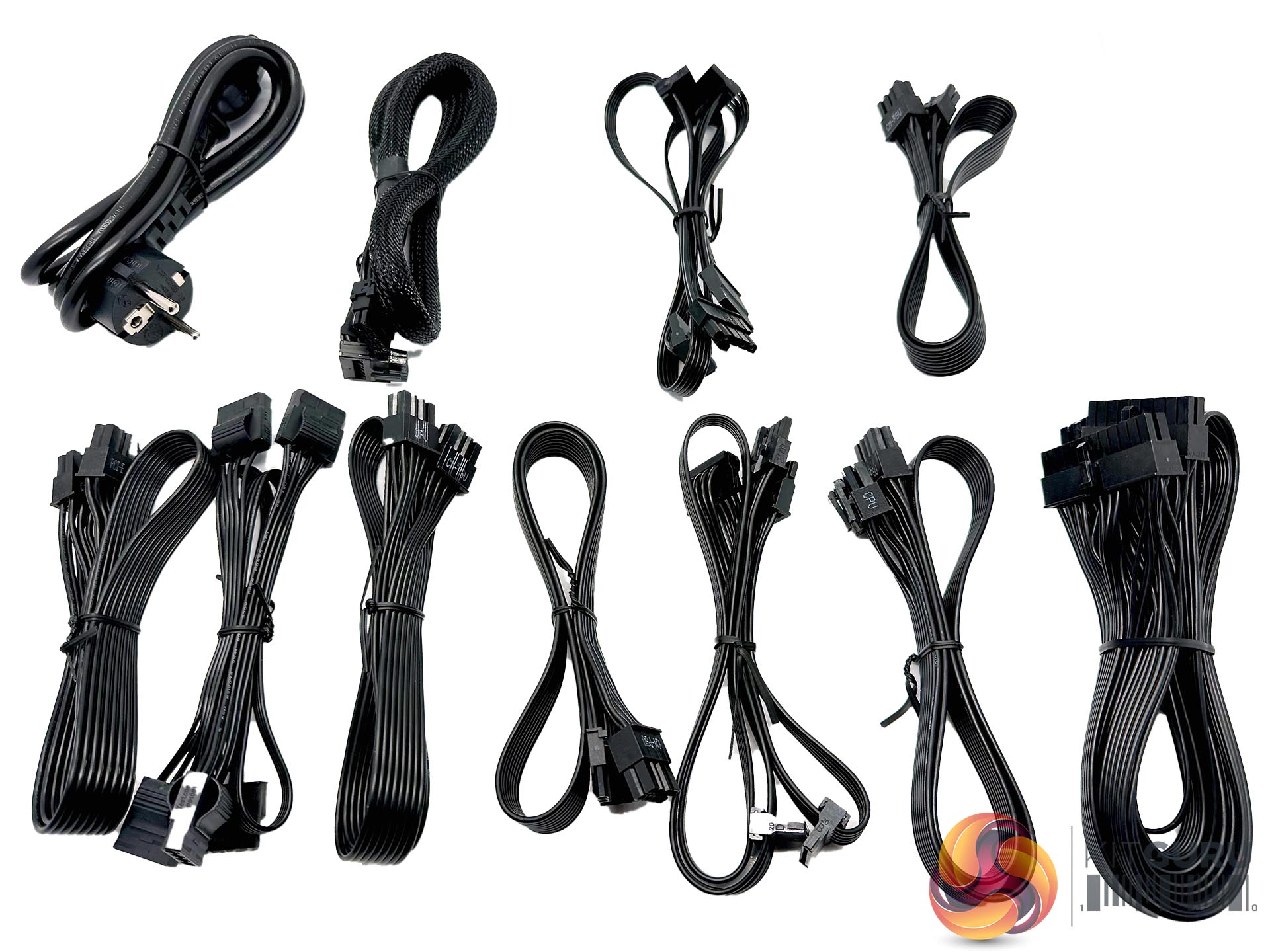

The quality of the cables are fine, falling short of the highest grade we have seen with other products, albeit at higher cost. The EPS cables are a little shorter than expected but under most conditions it should not be a problem.
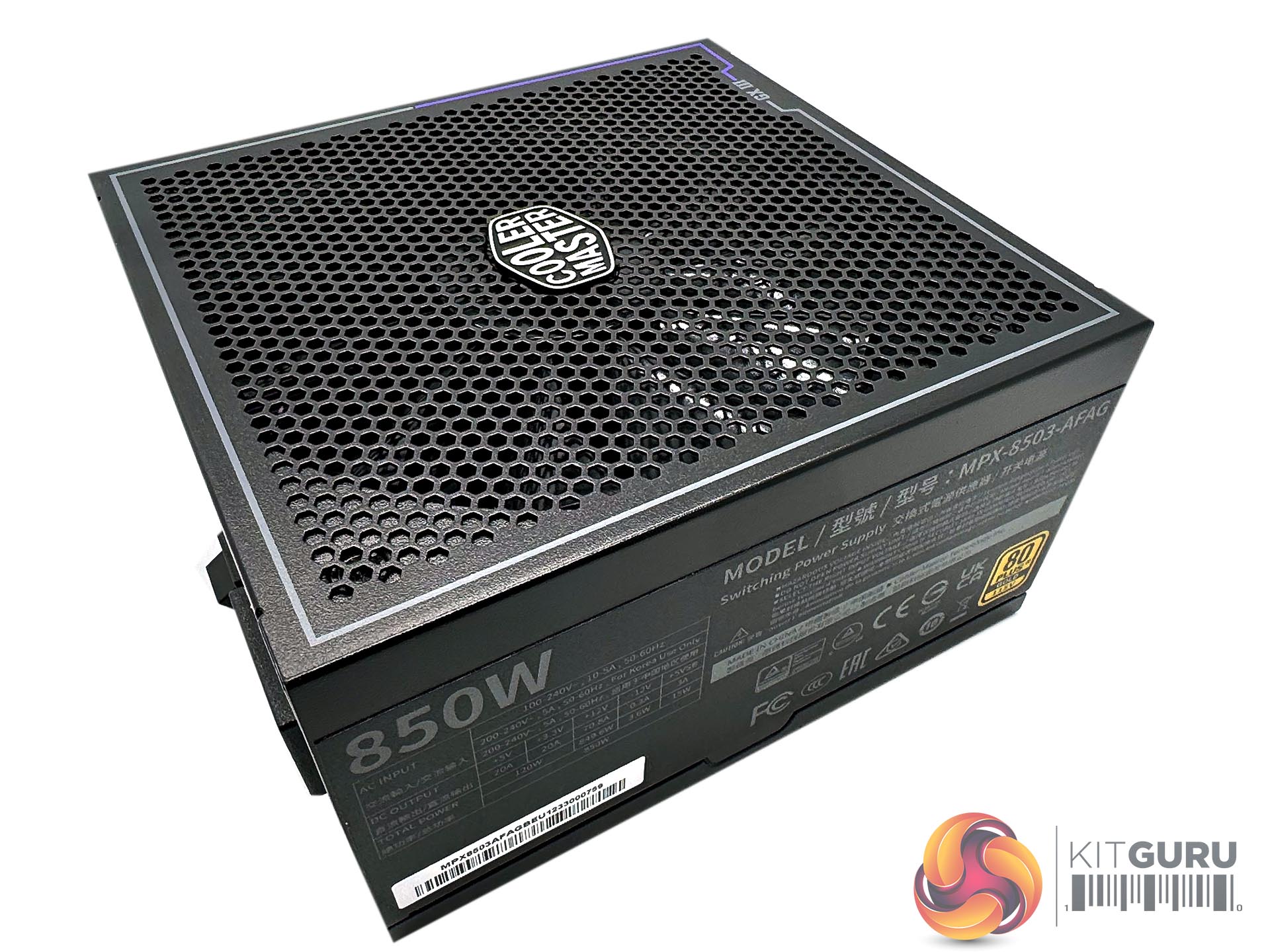
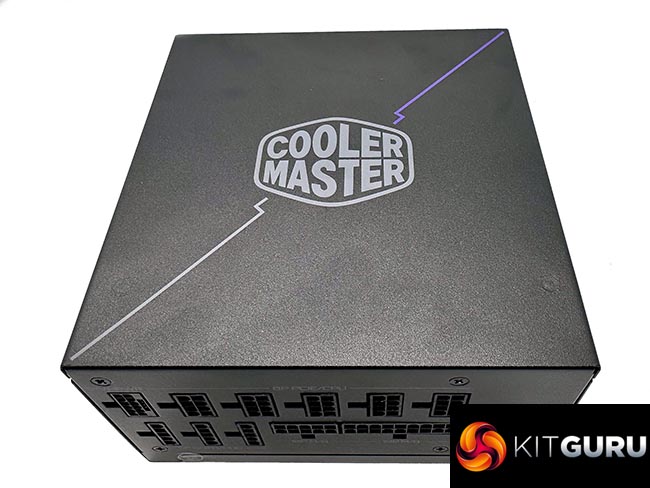
The top of the Cooler Master GX III 850W is home to a massive fan grille which seems quite a close cut design. Hopefully it won't restrict air flow too much when we get to testing.
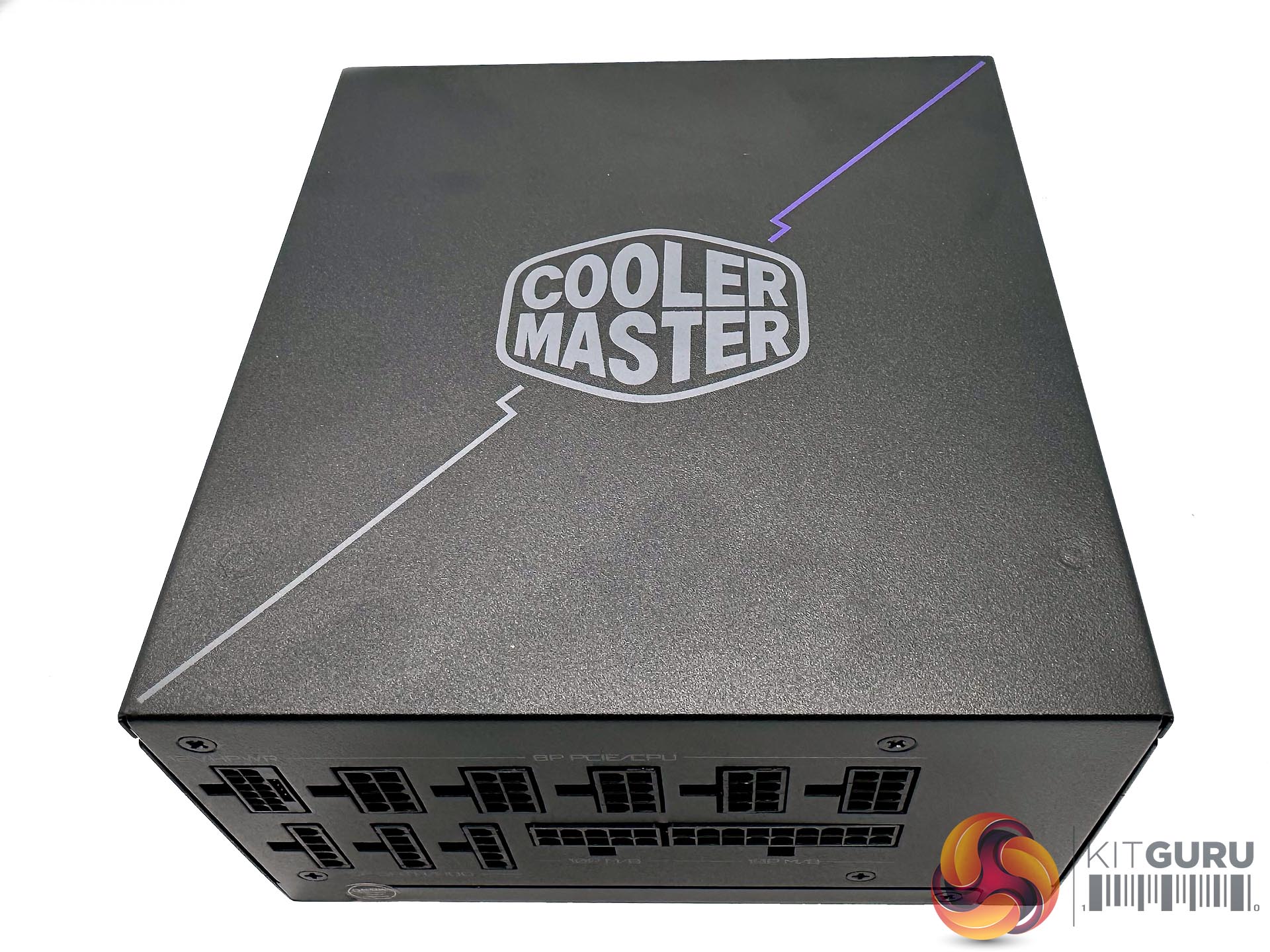
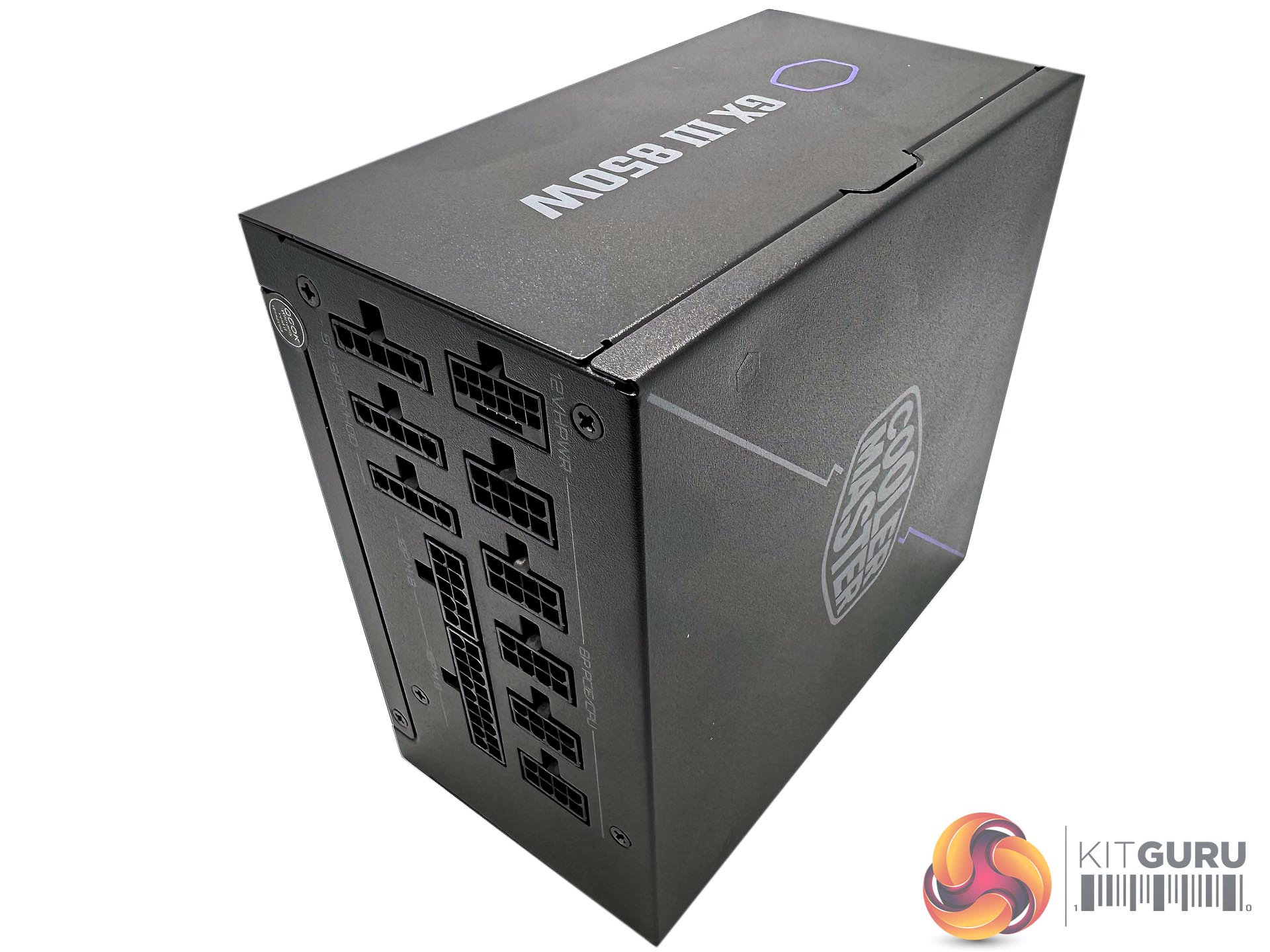
The unit is quite nicely finished with a little purple ‘flash' along the top, to match the box artwork. It is however quite prone to highlighting finger prints and marks.
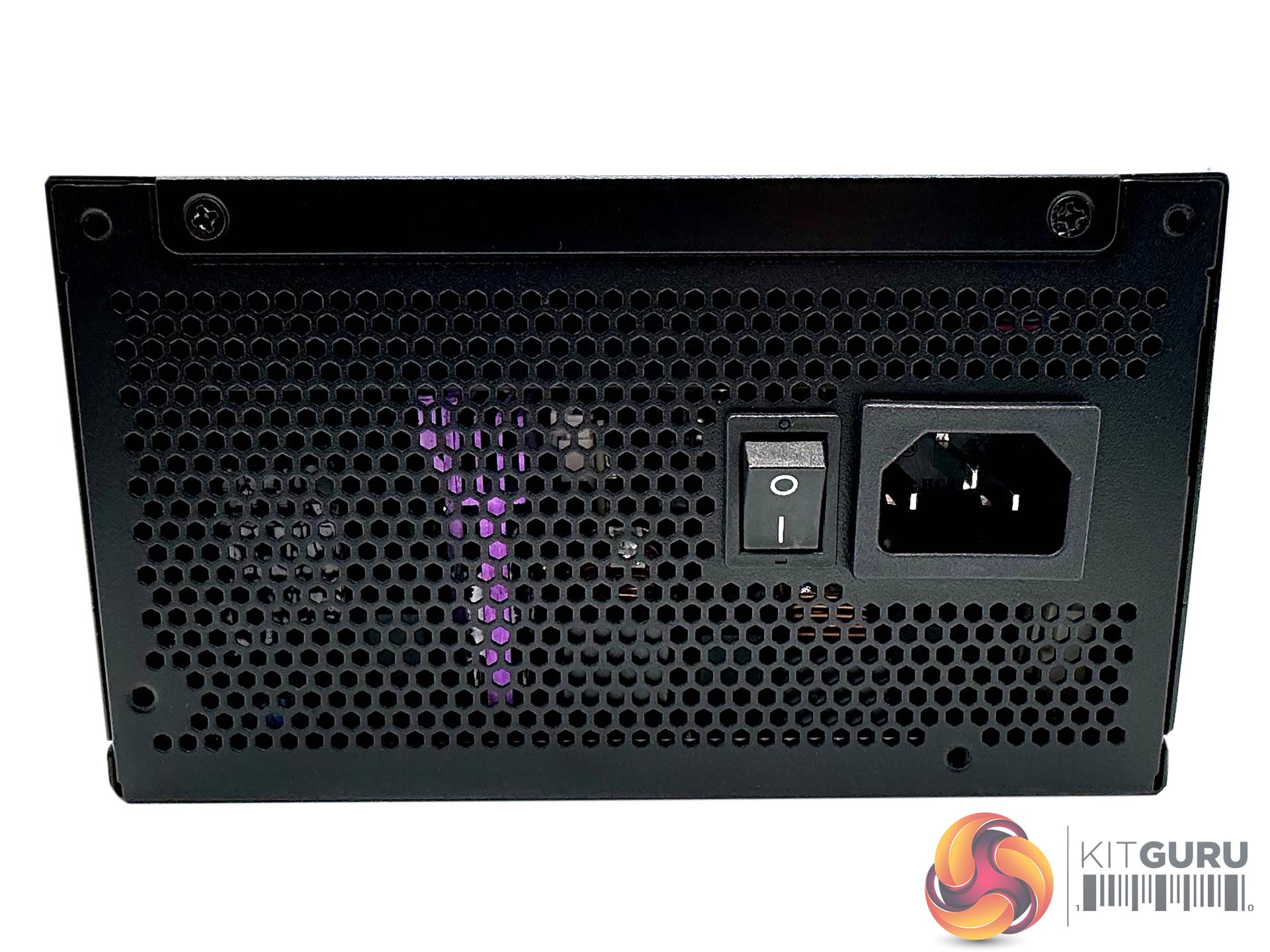
One side of the PSU is home to a power switch and connector with a vented panel to aid with airflow. We can vaguely see a purple heatsink inside, although we will get a closer look at this soon when we open it up.
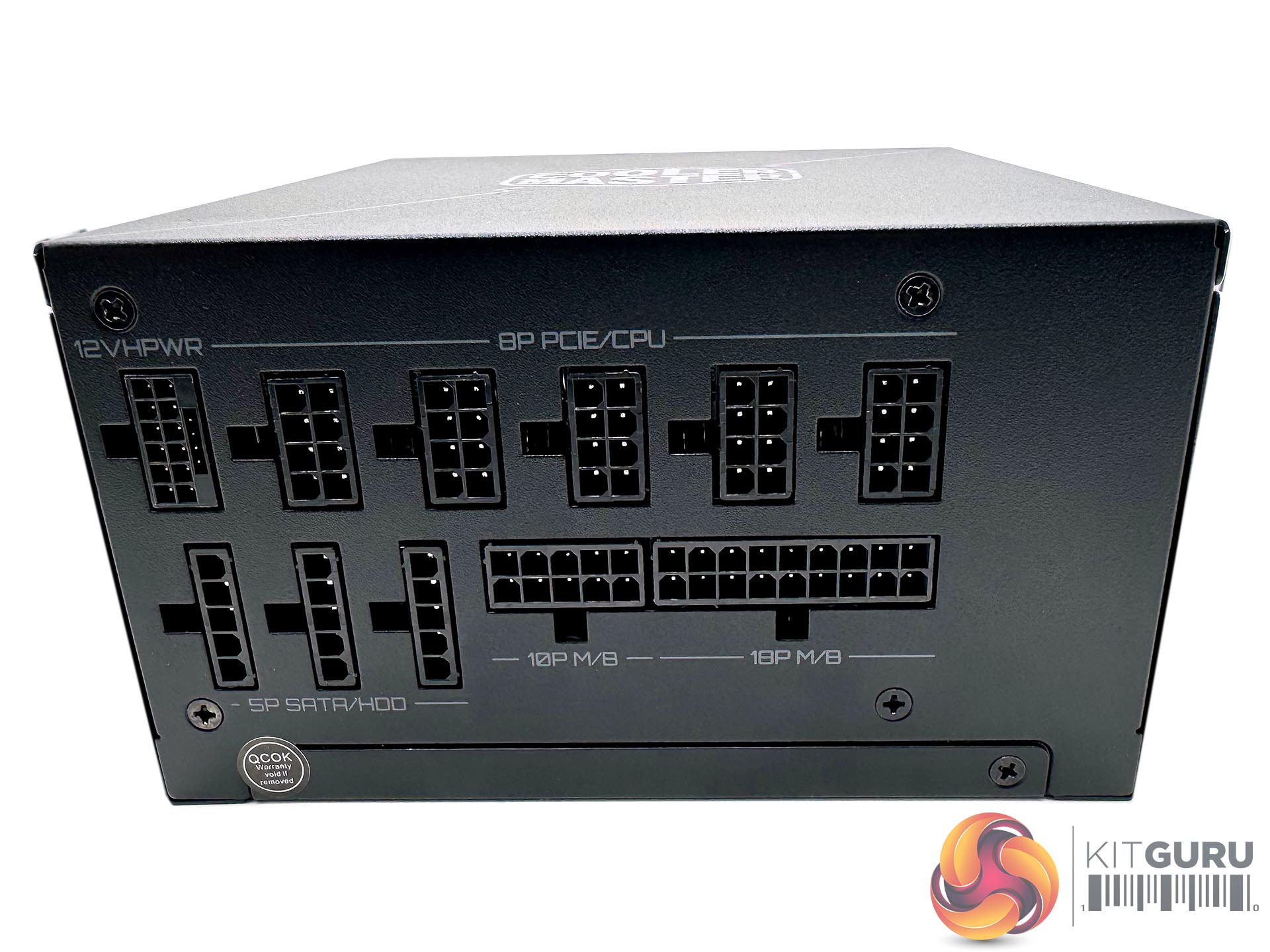
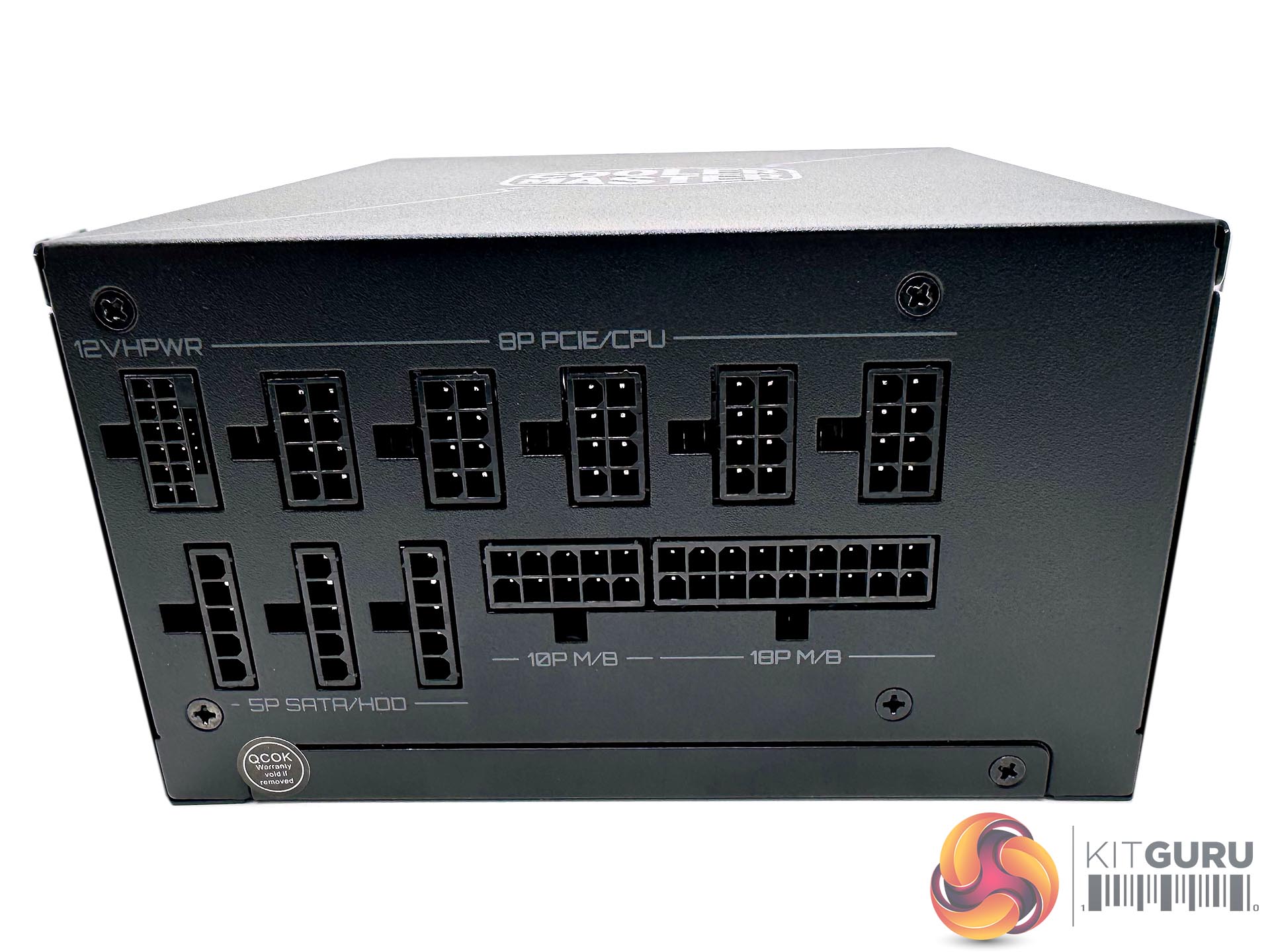
The other side of the unit is home to the modular bay, which is labelled across two banks for ease of use during the install phase of the system build.
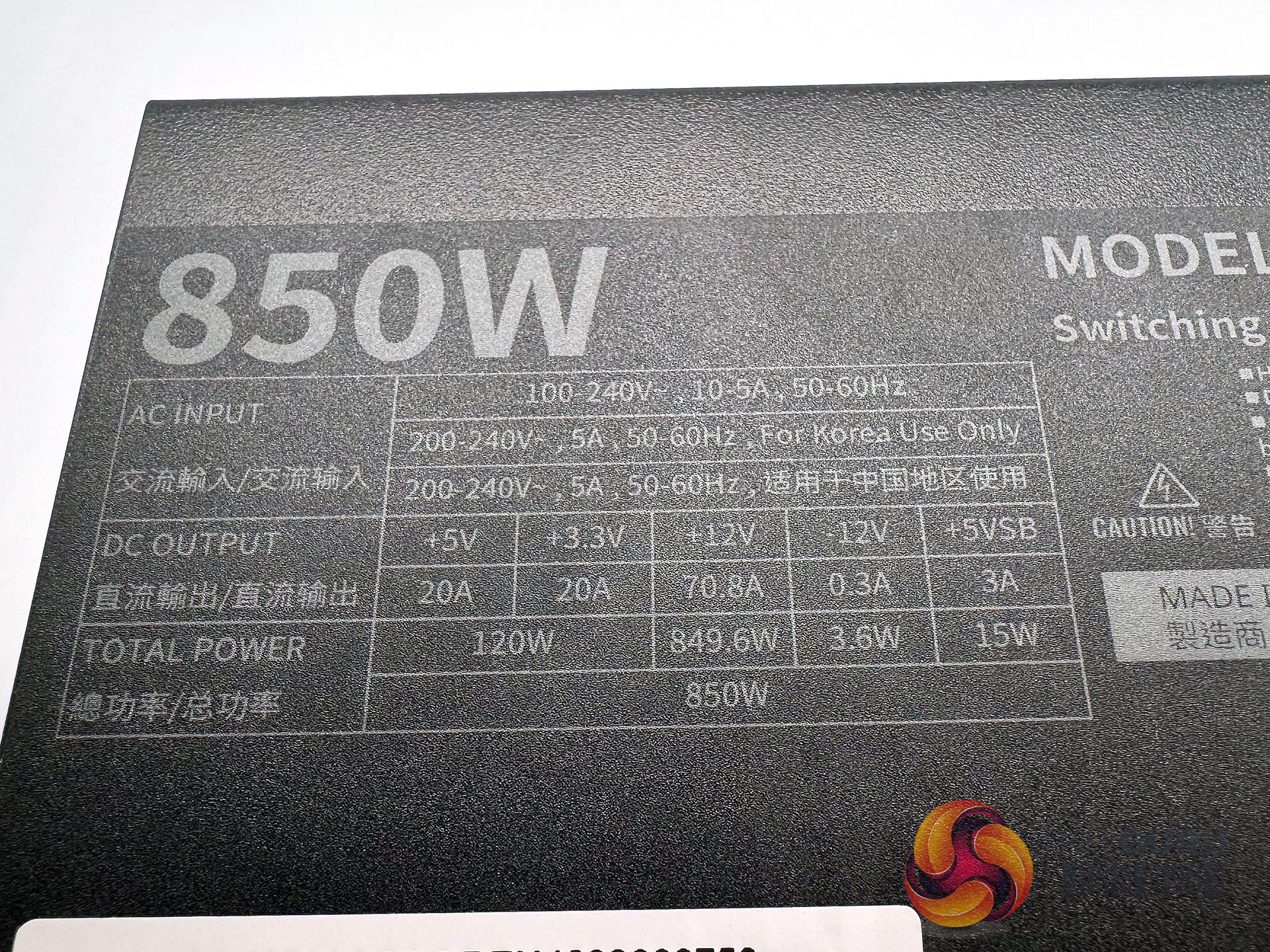
One side of the power supply highlights the power delivery.

The unit can deliver 20A on both the +3.3V and +5V rails. and 70.8A via the +12V output.
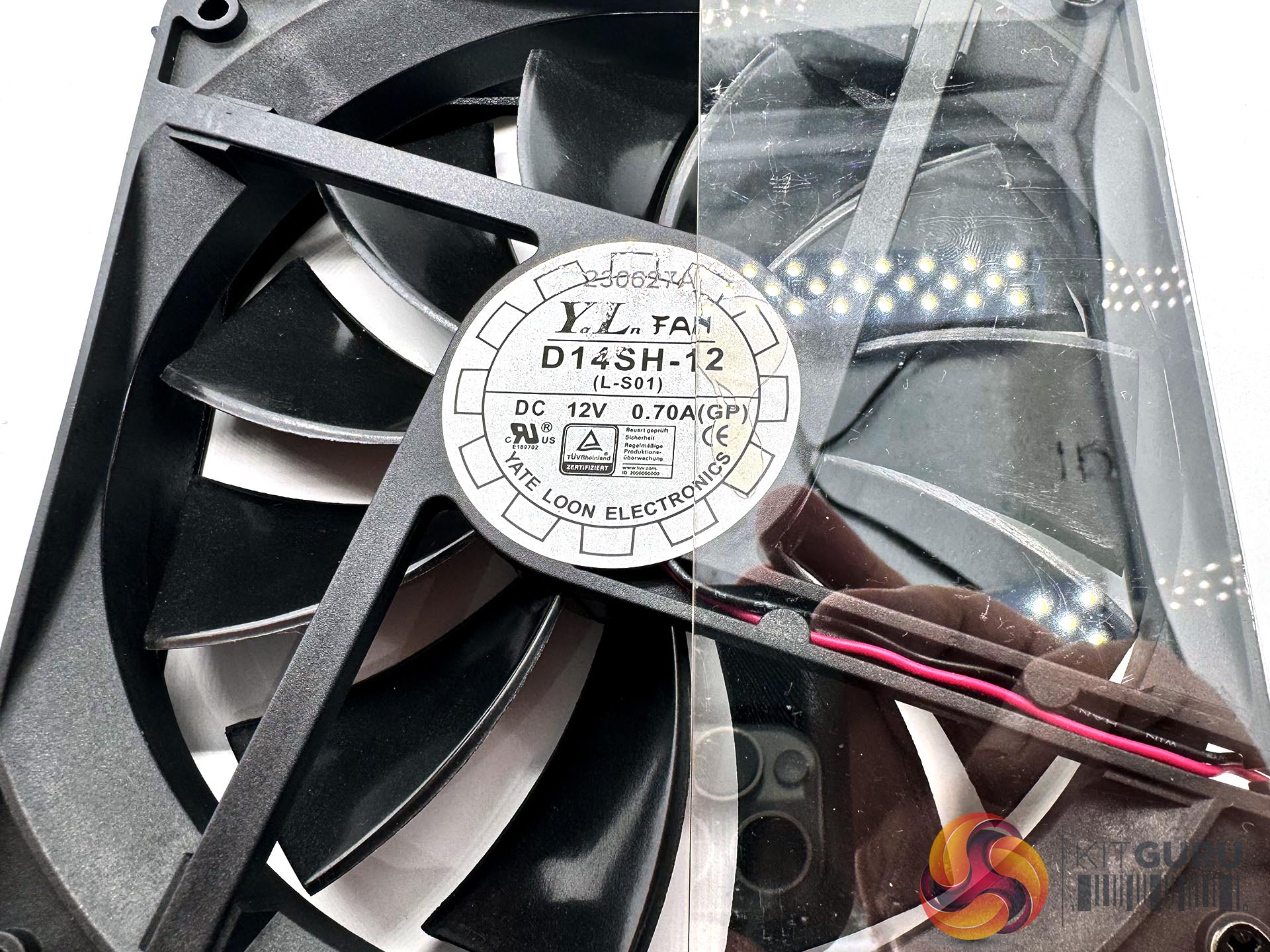
Cooler Master are using a fluid dynamic bearing Yate Loon D14SH-12 Fan, 140mm rated at 12V 0.7A. This is not a high end fan and is clearly selected to save some costs overall.
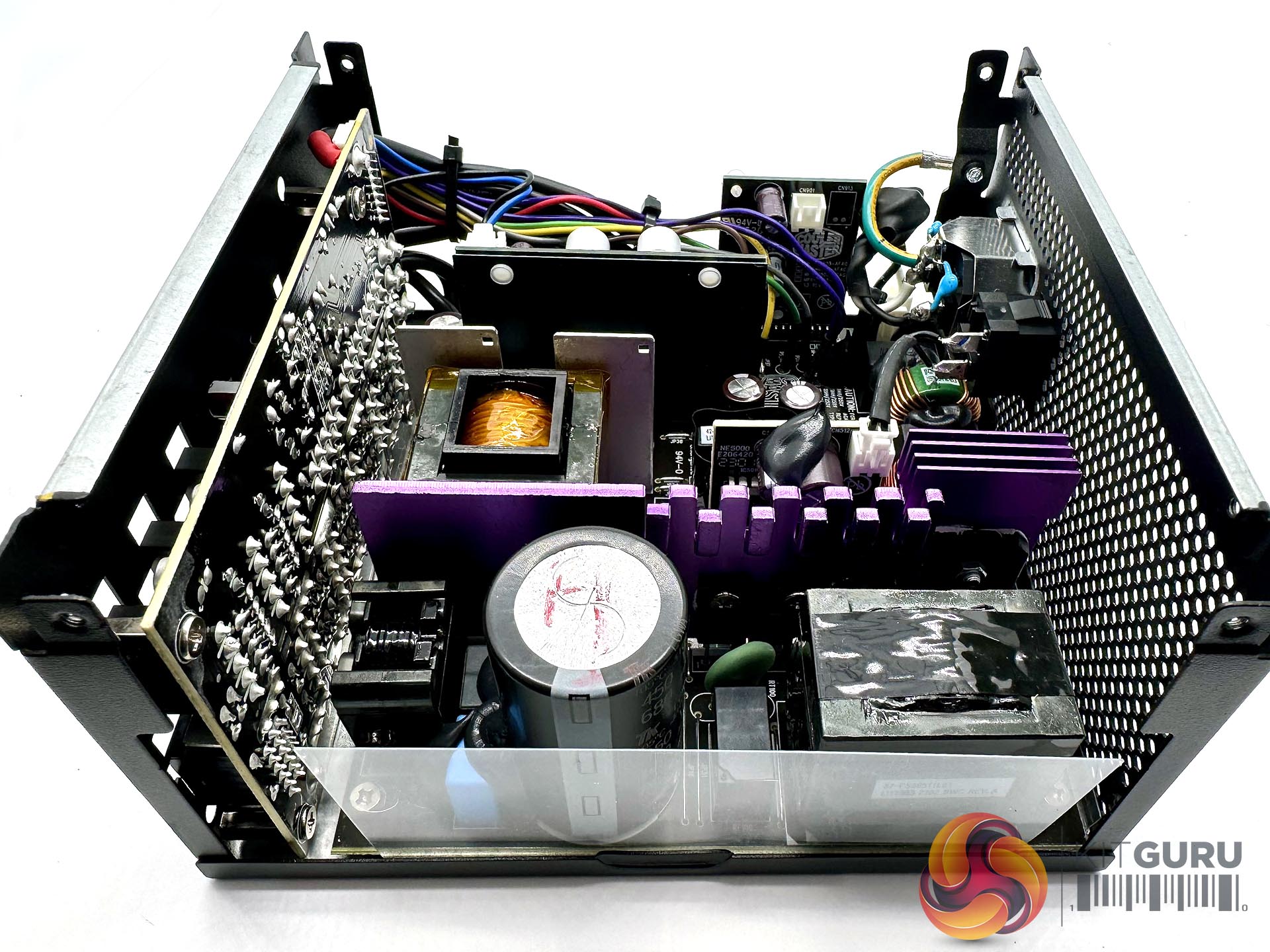
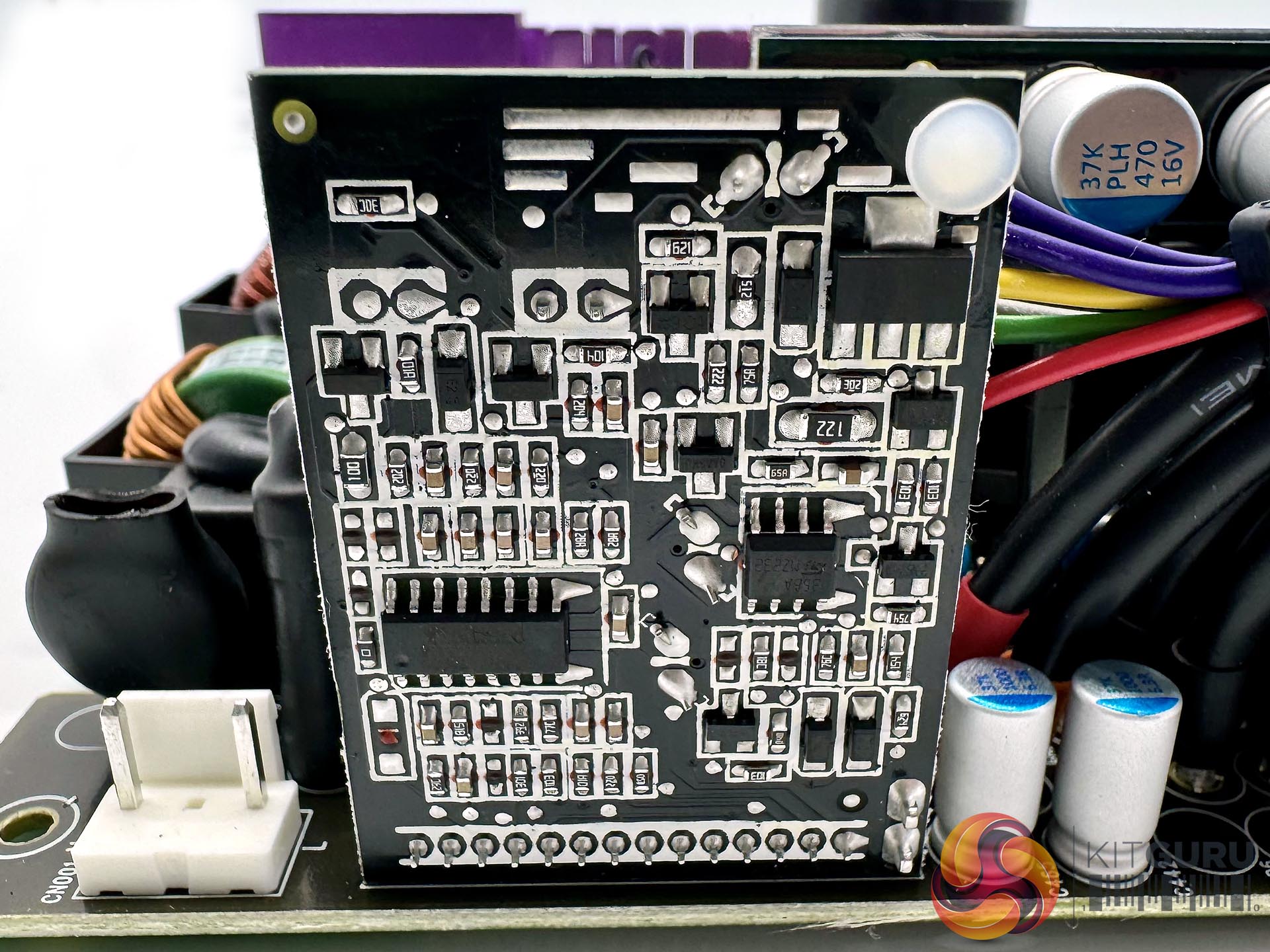
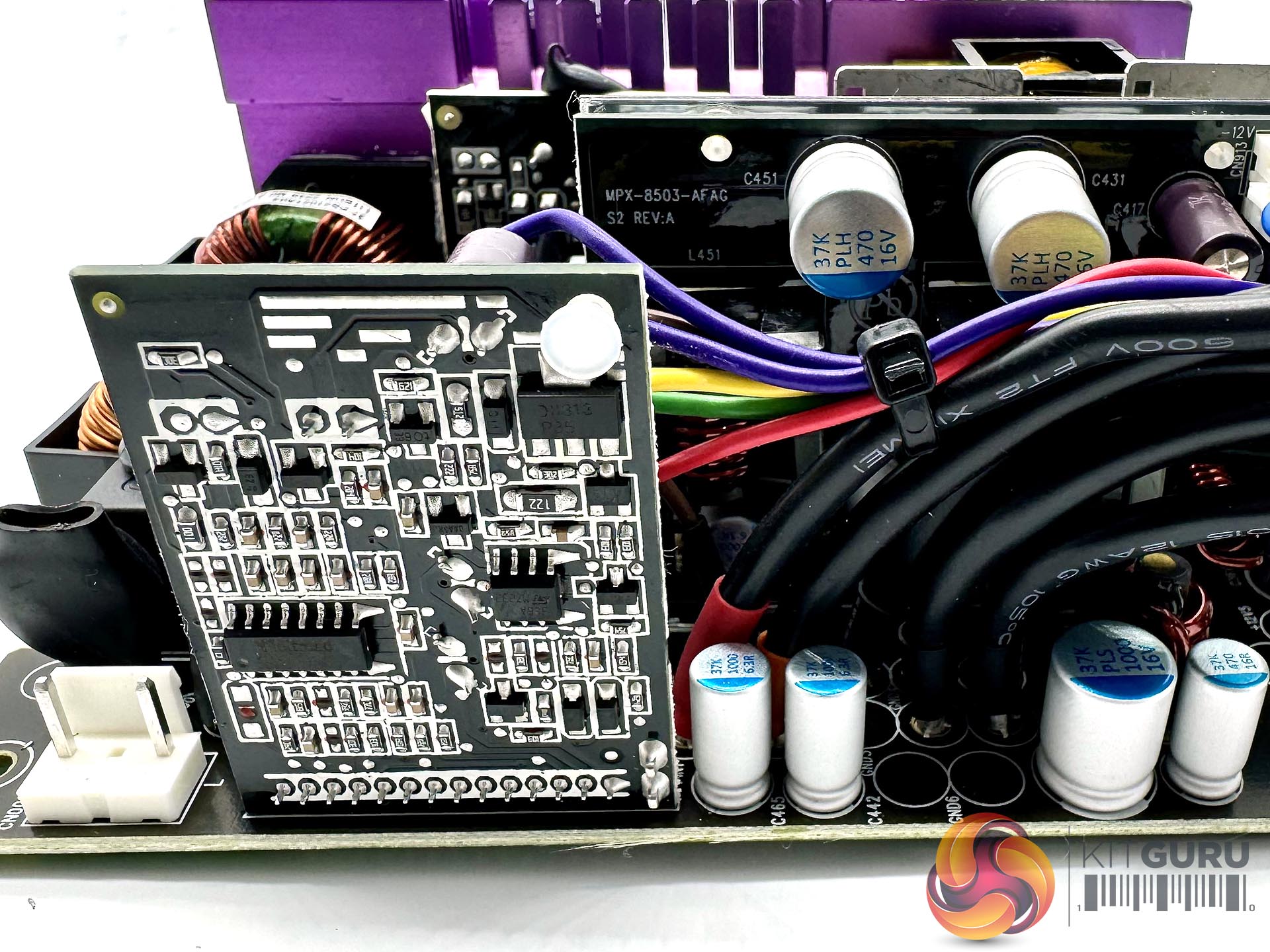
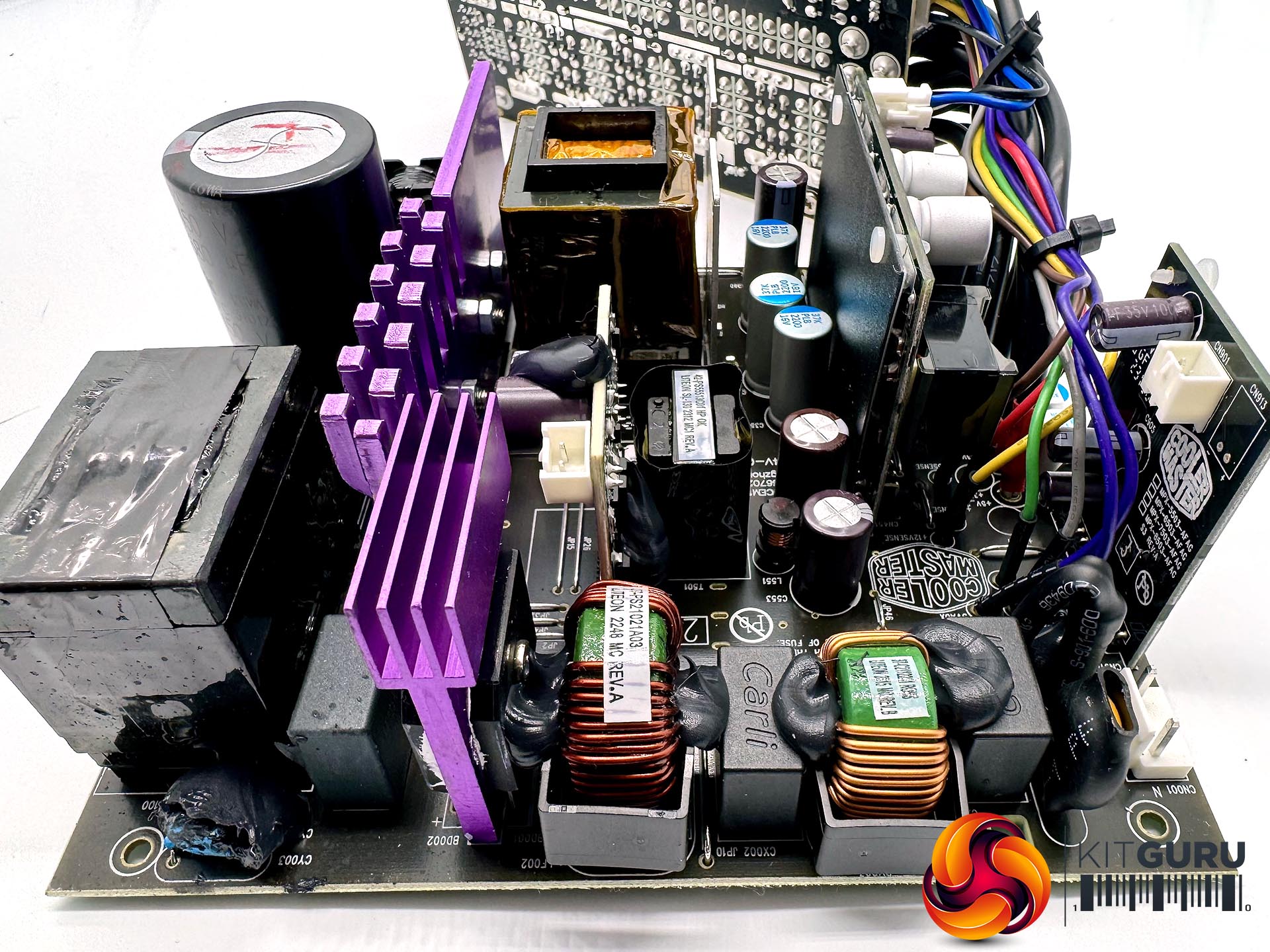
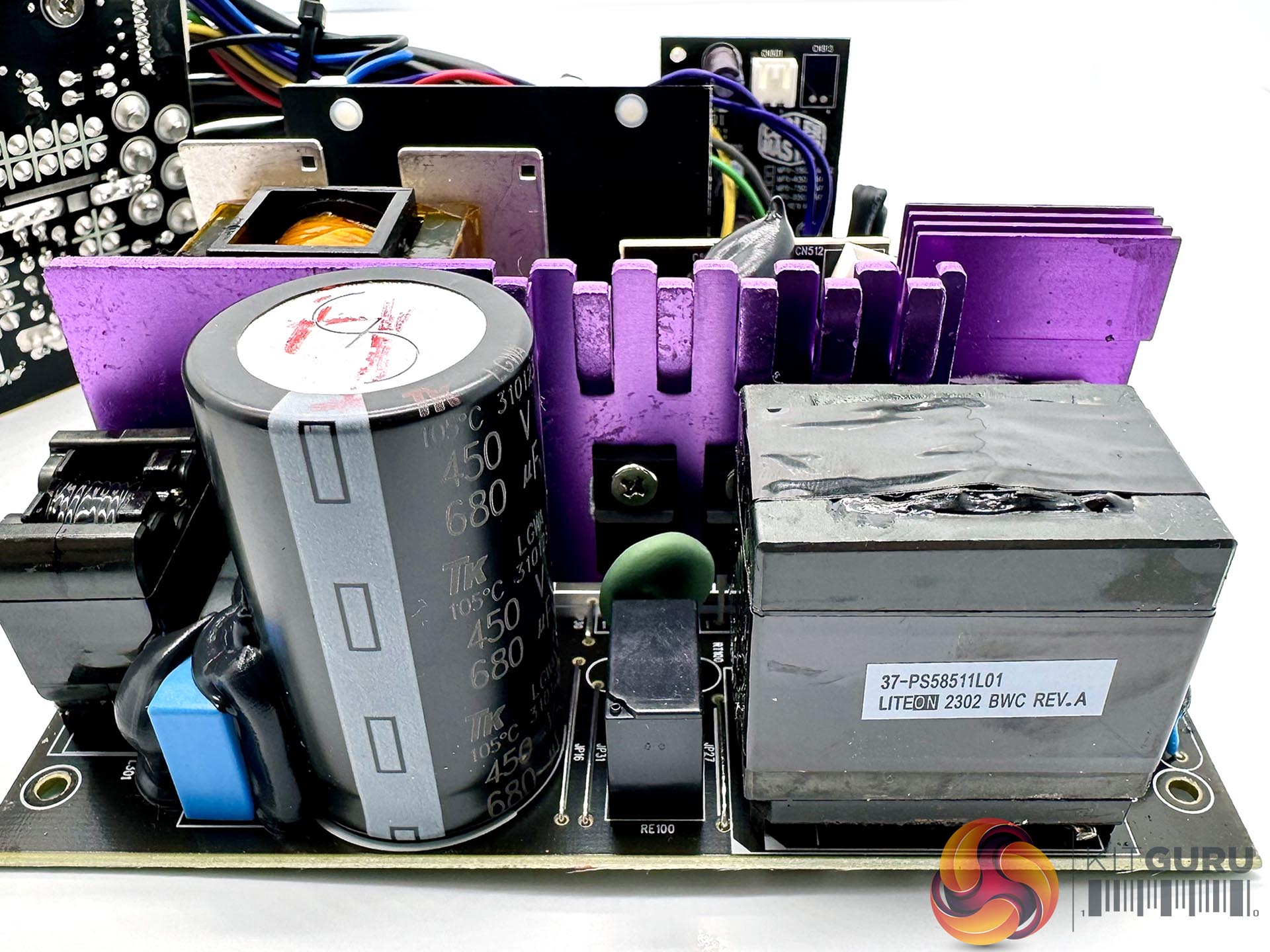
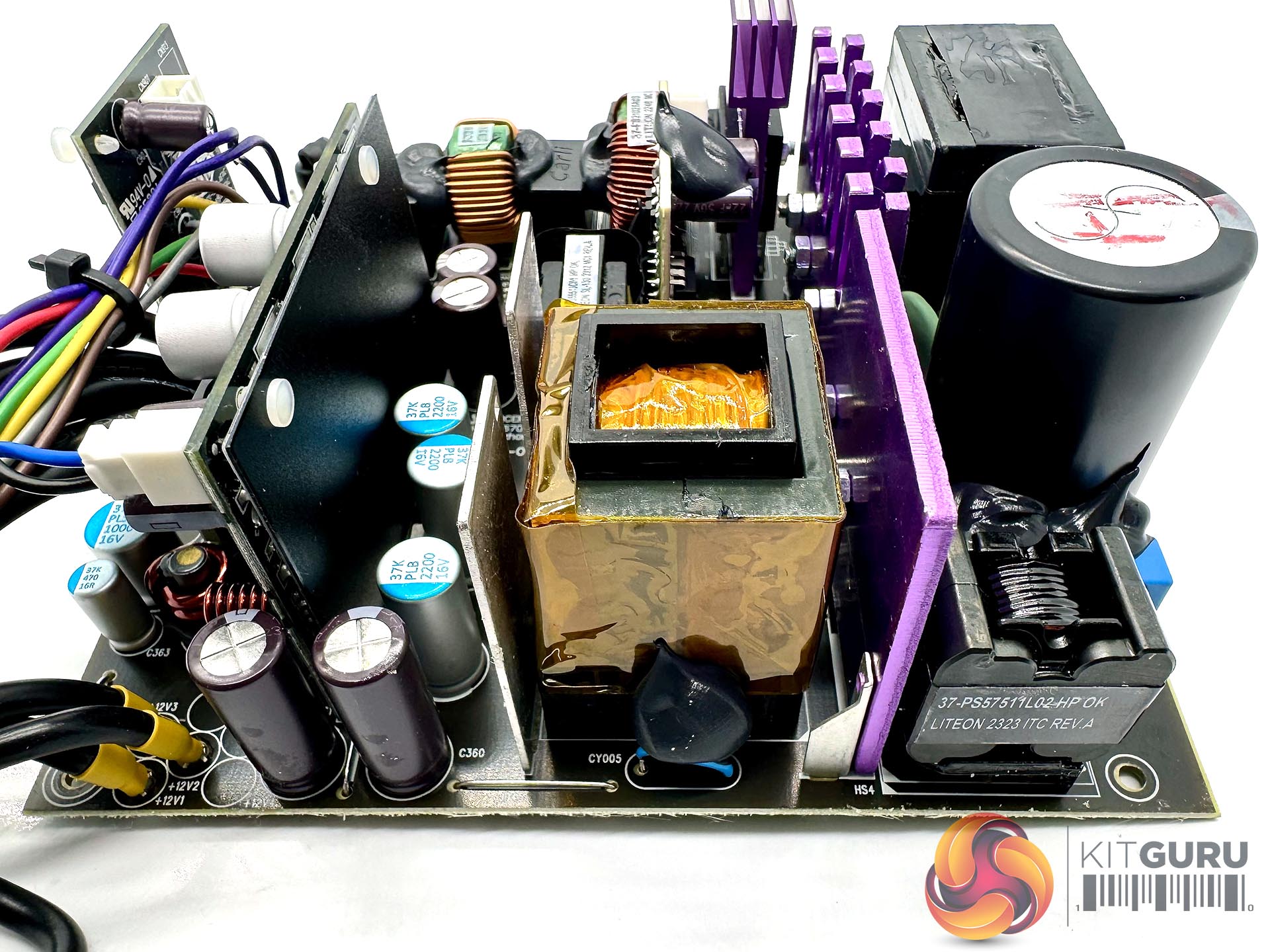
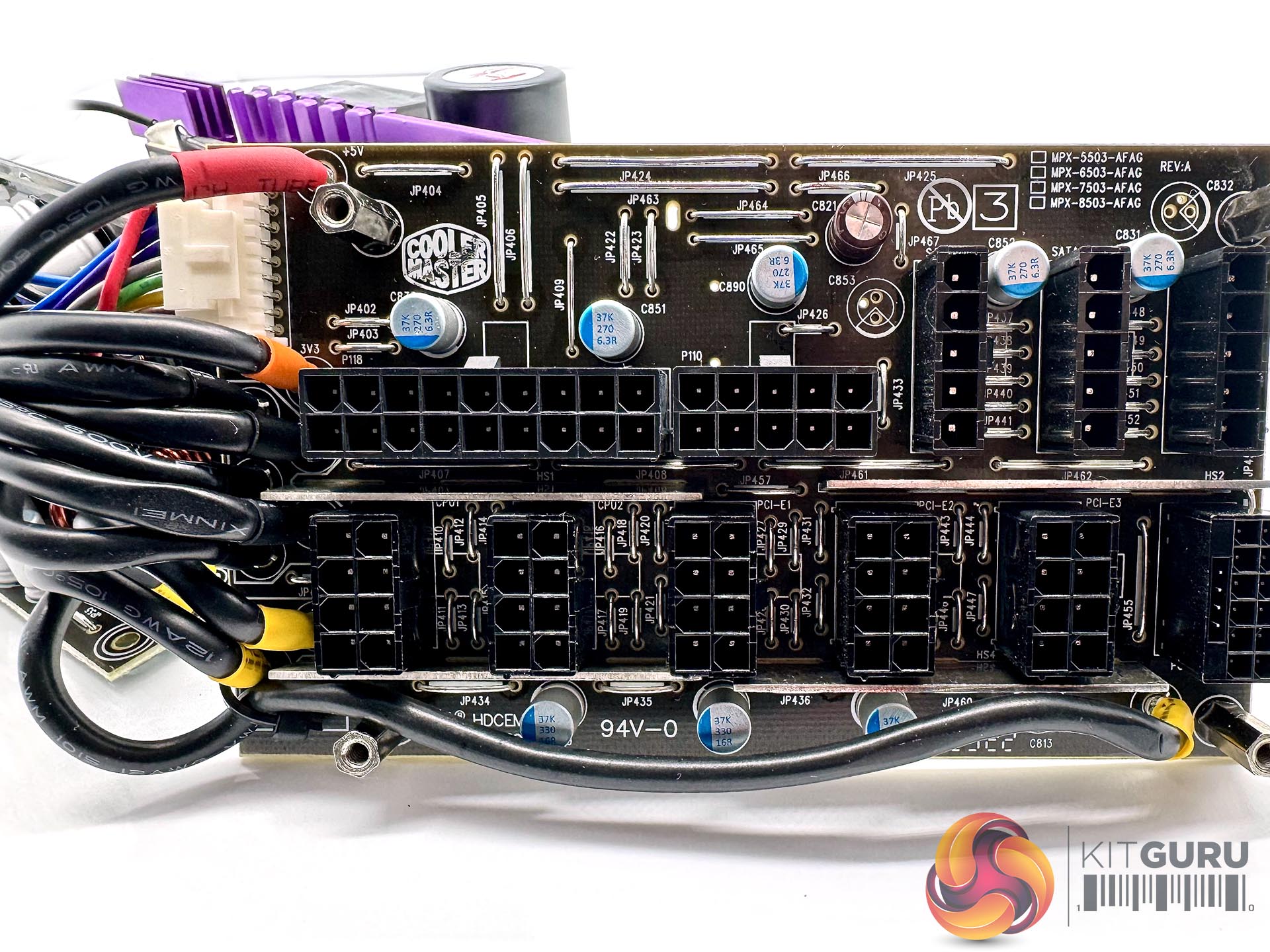
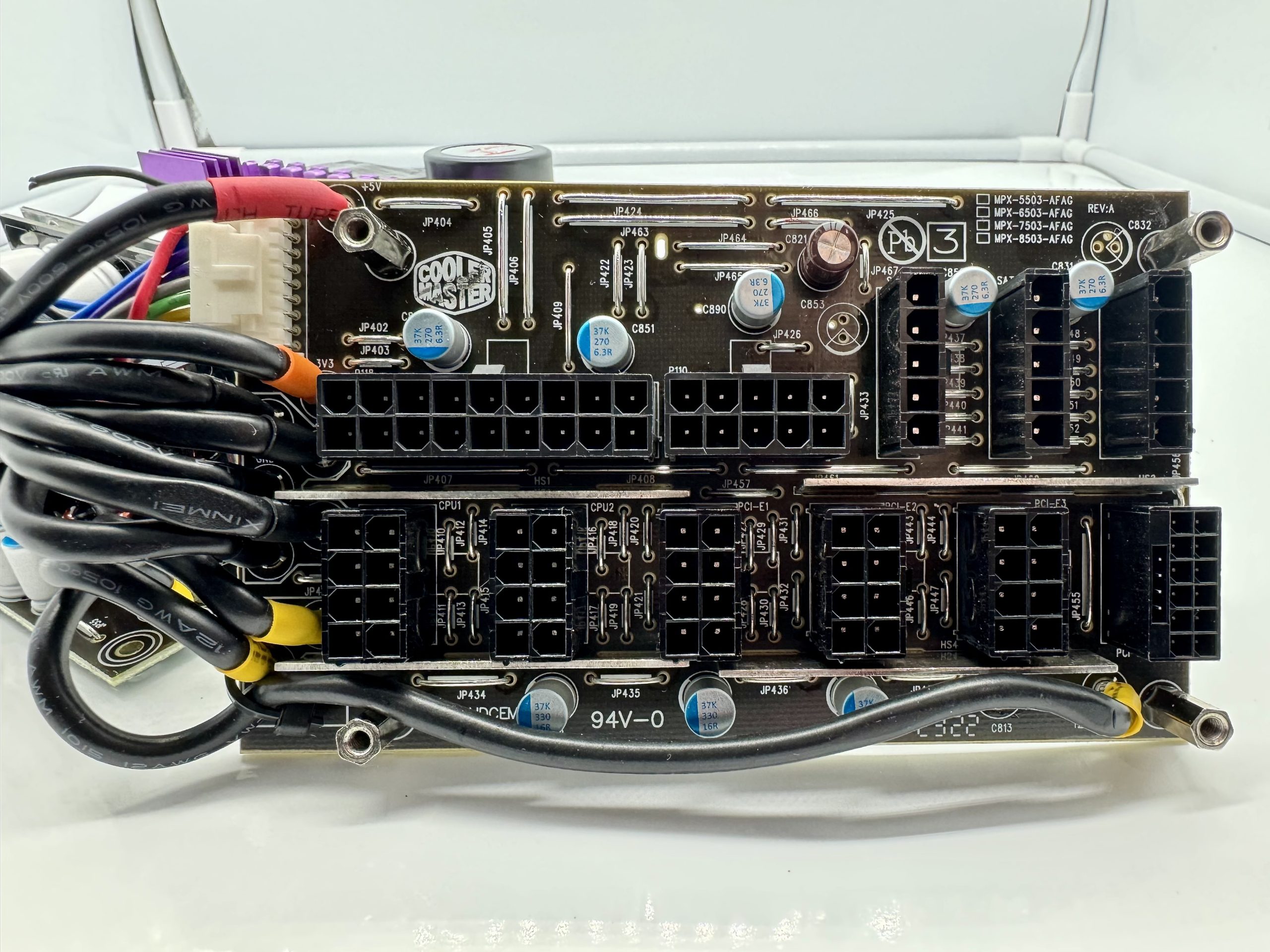
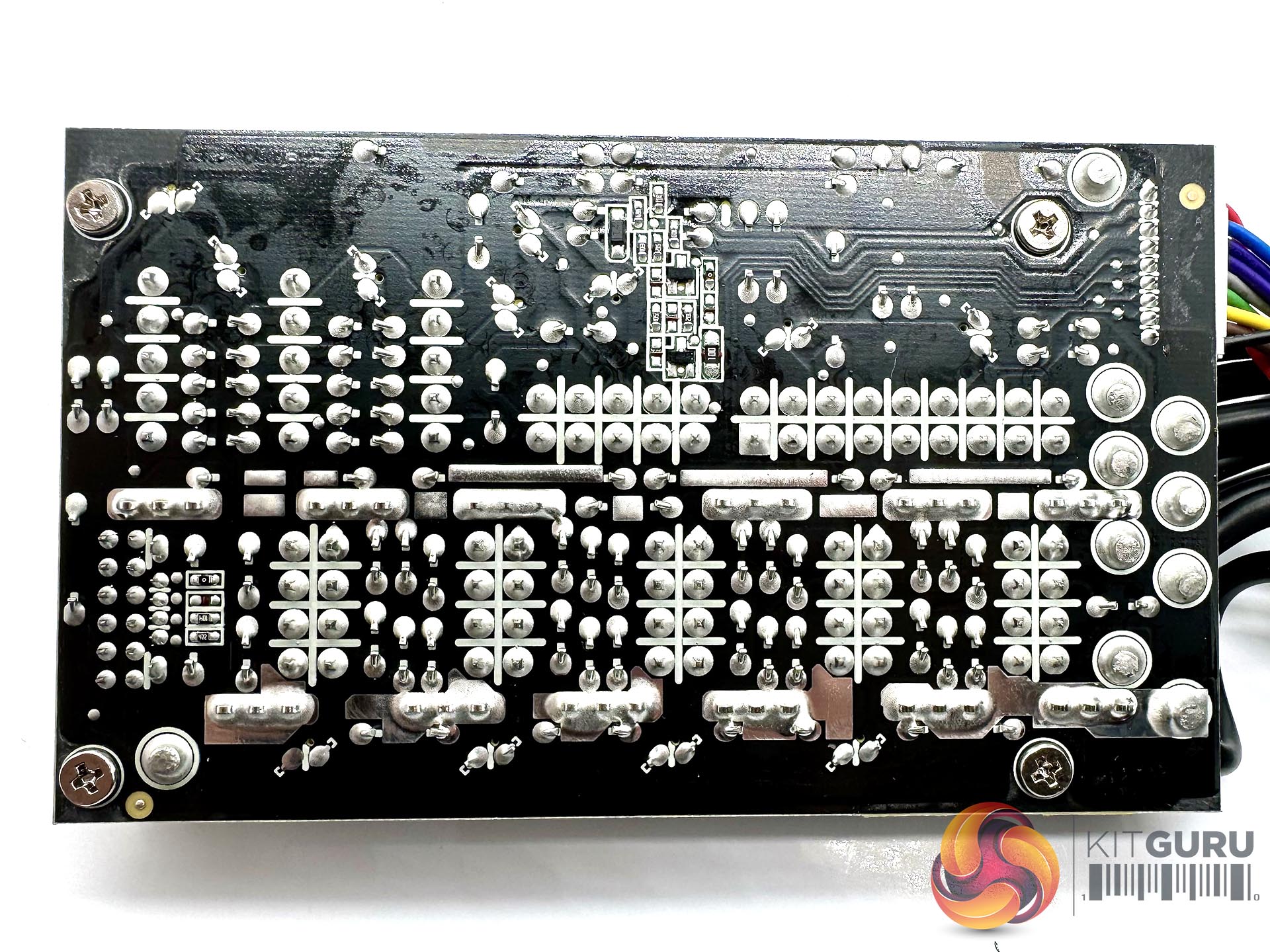
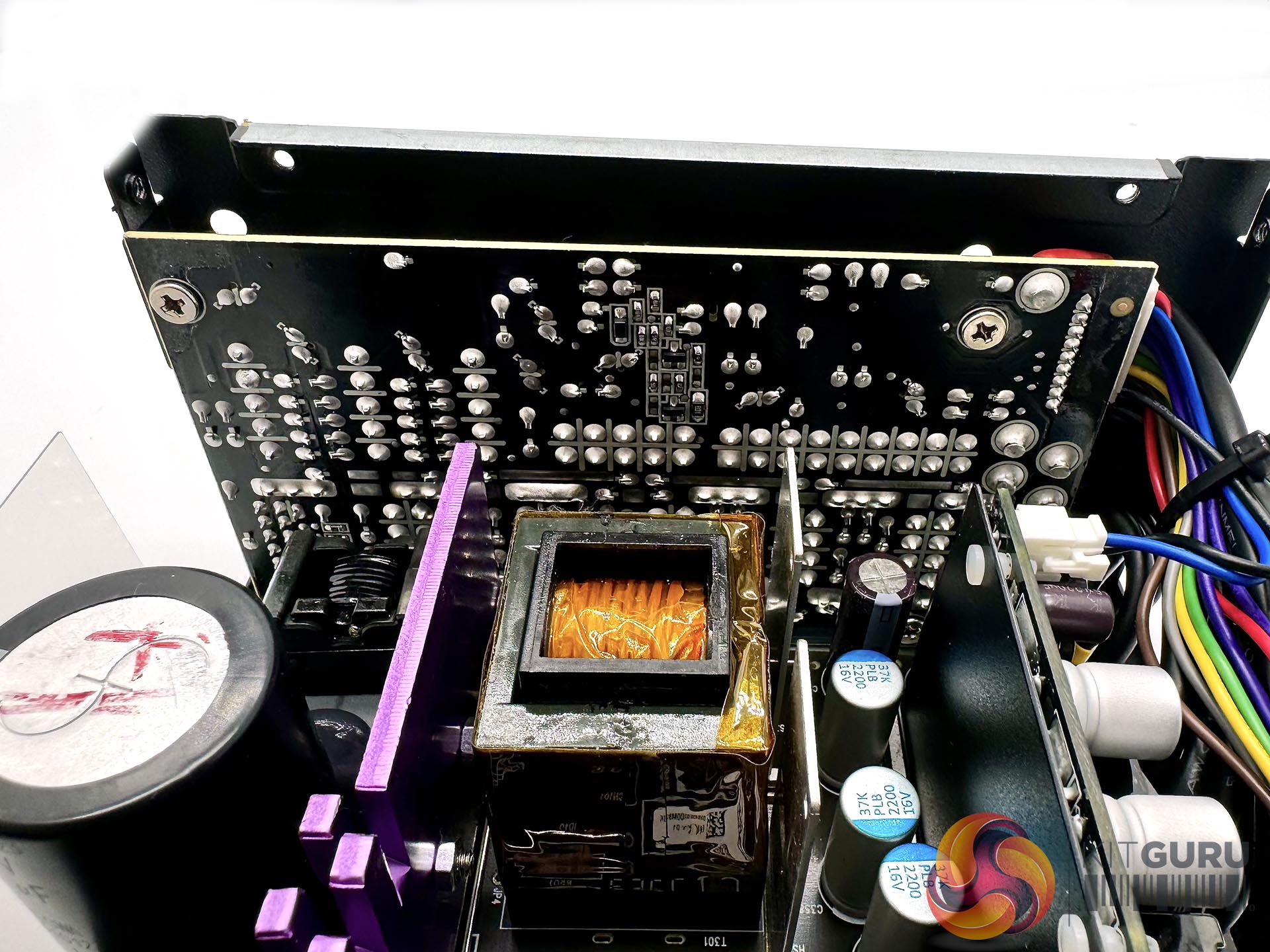
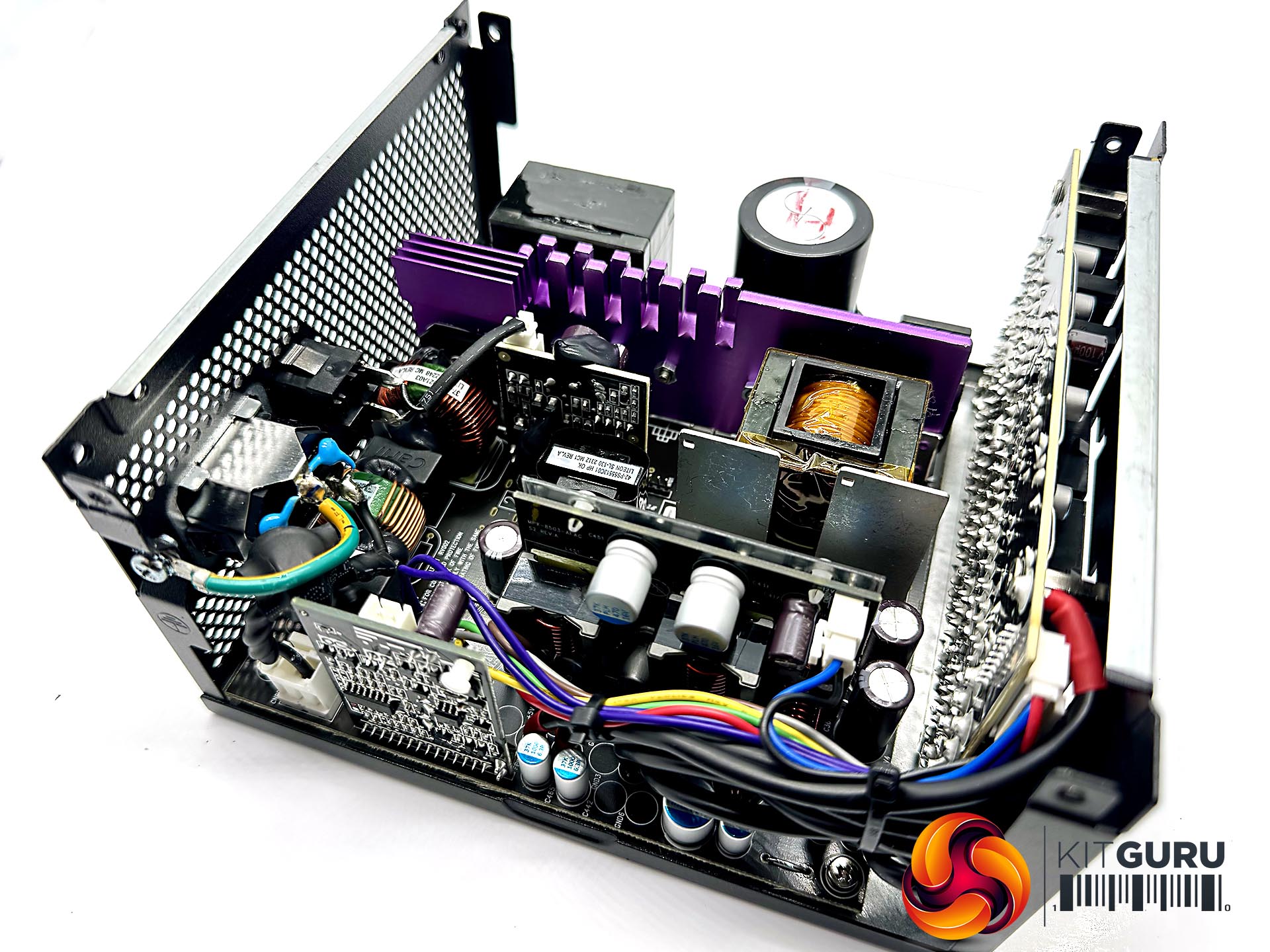
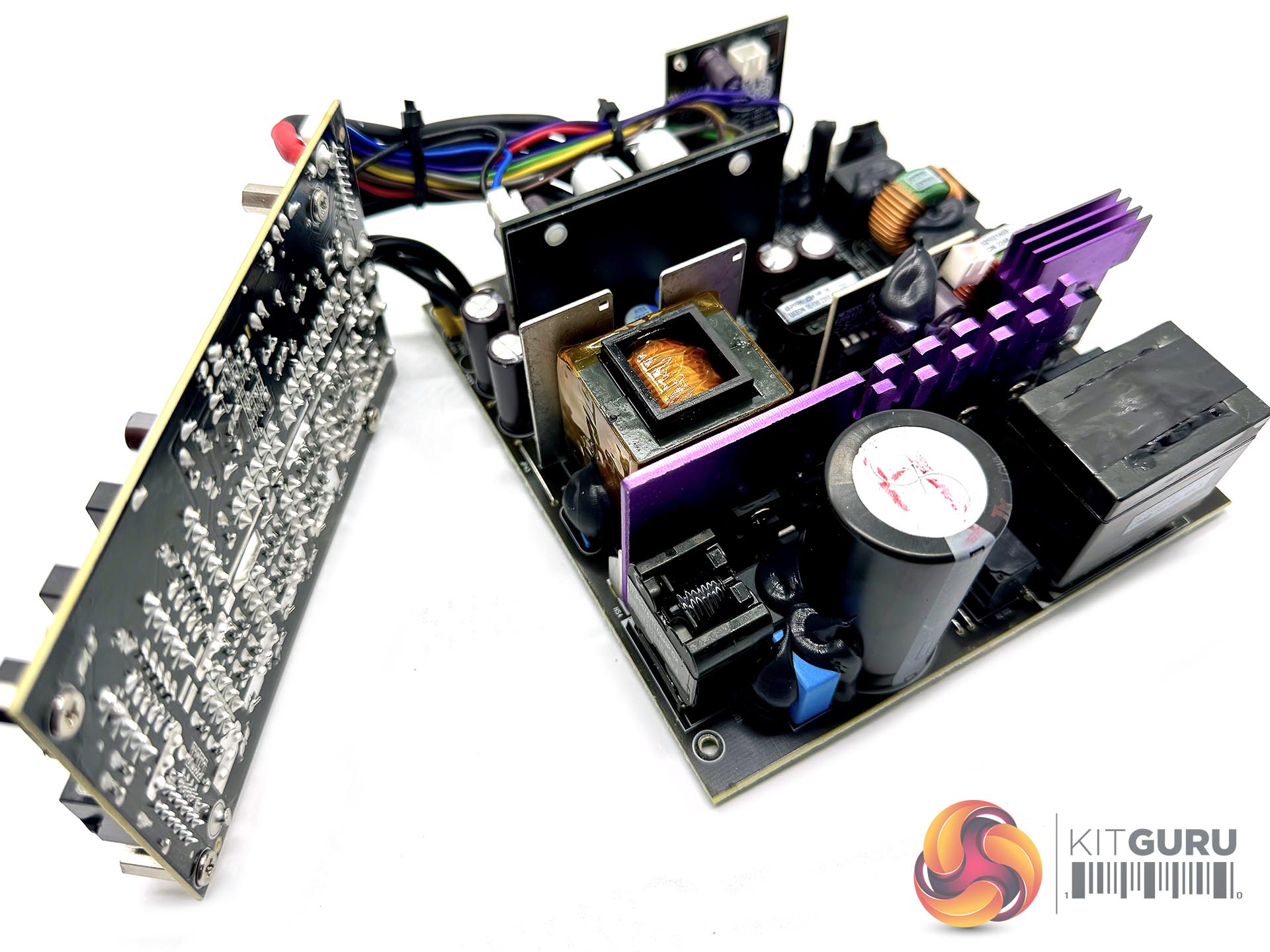
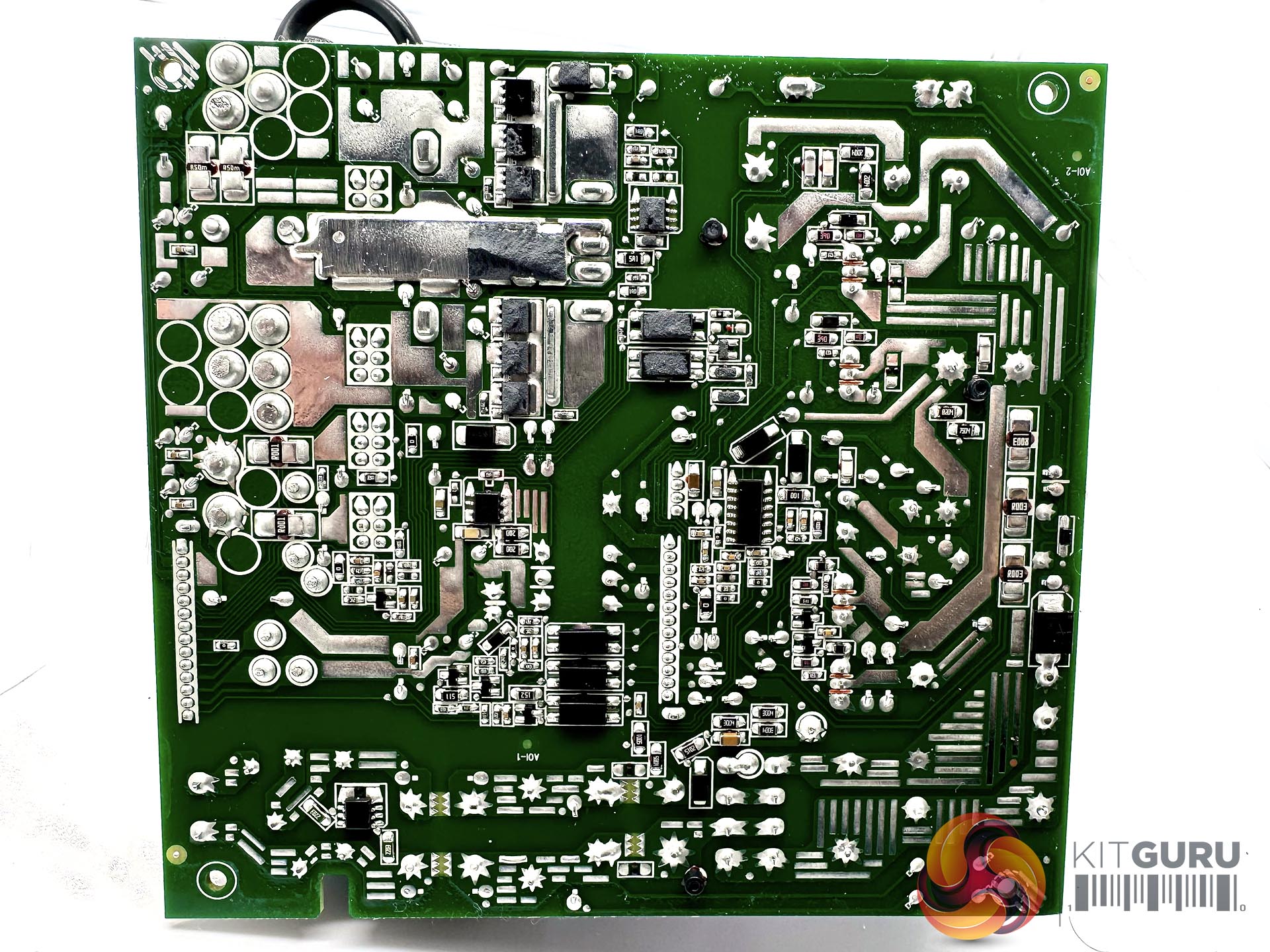
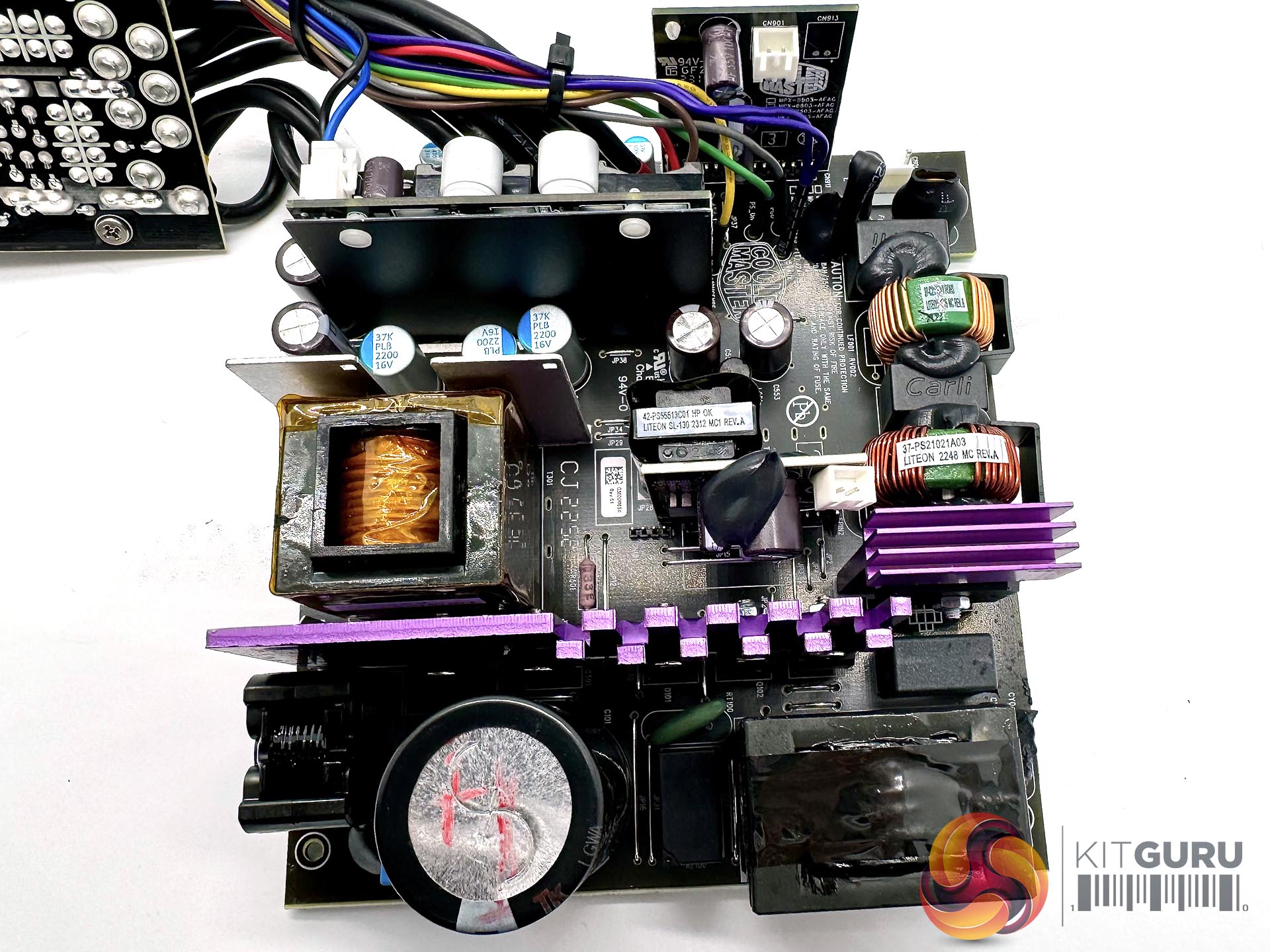
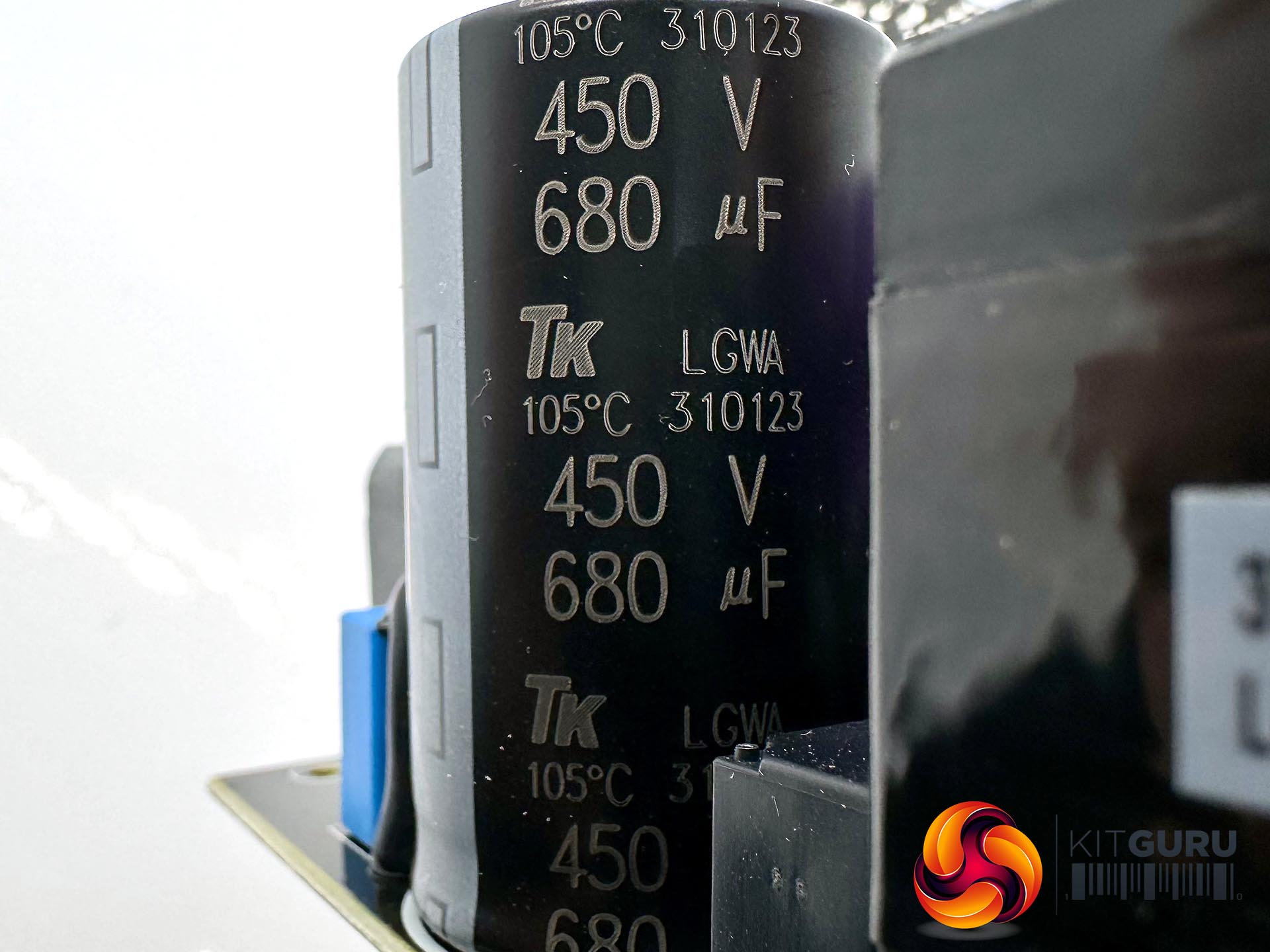
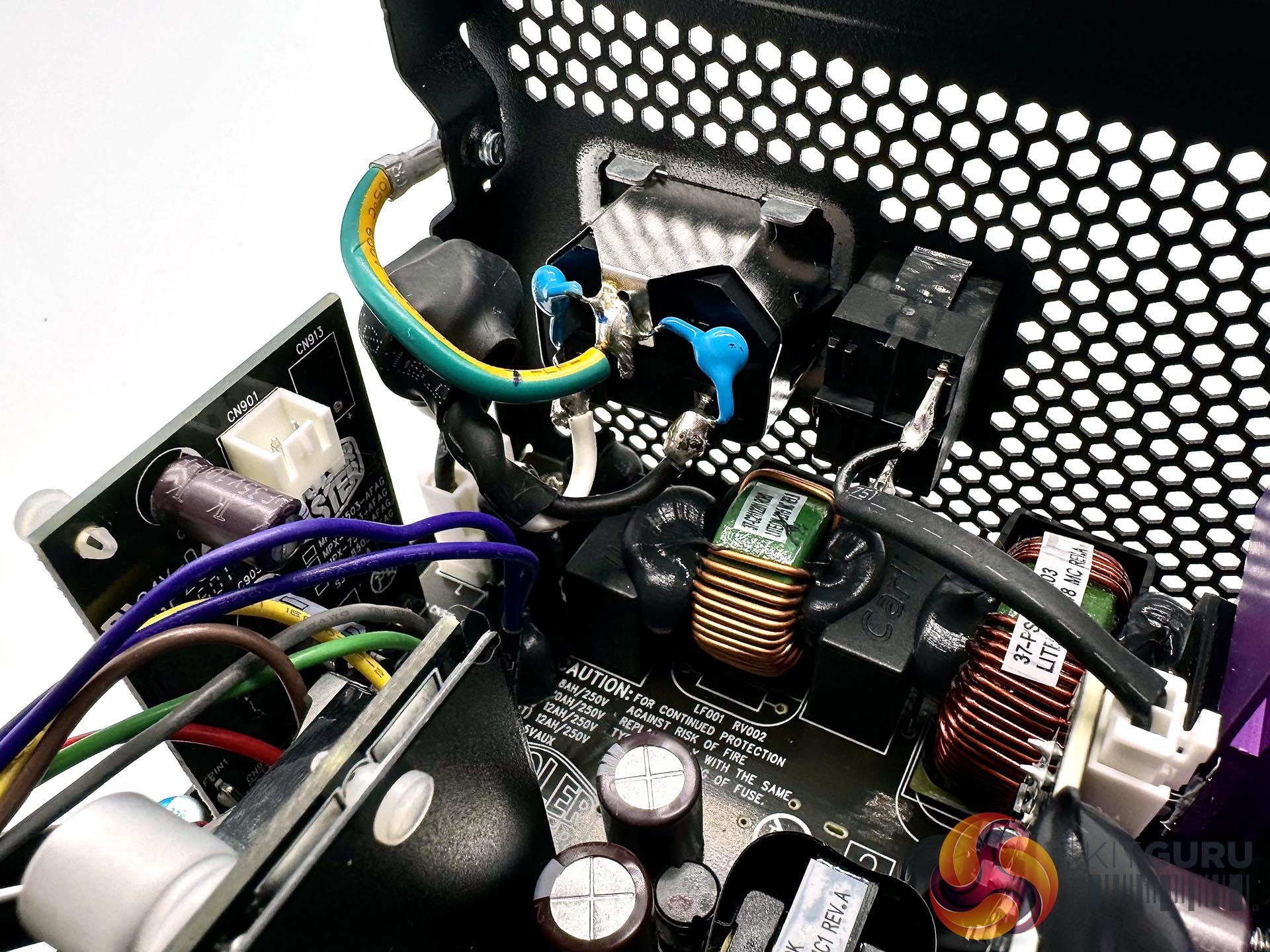
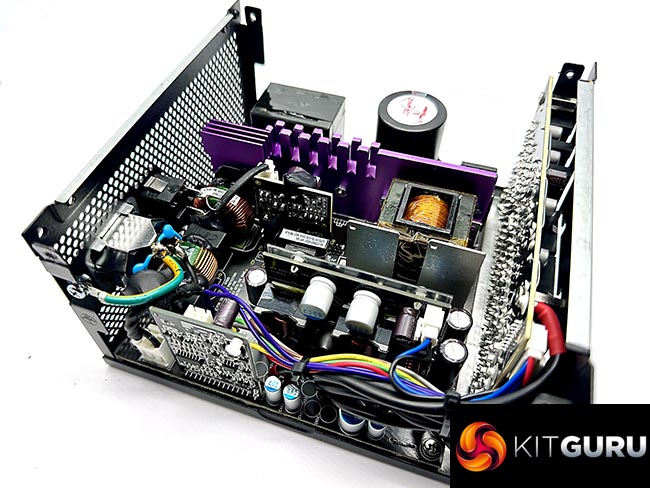
Cooler Master are using Lite On as their OEM partner for this unit, a brand many of you will know for making optical drives and power adapters. The soldering quality on the PCB is first class, and the overall design is pretty good. This is a half topology design with an APFC converter and two FETs. An LLC resonant converter is adopted to help reduce switching losses. Six FETs control the 12V rail on the secondary side, with two DC-DC converters to generate the minor rails.
As we can see from the images above the design incorporates purple ‘anodised' heatsinks which certainly stand out – if the end user would ever have the unit apart in the real world that is. The main capacitor is rated 450 V 680uF at 105c. The TK stands for Toshin Kogyo Co. Ltd, and from what I know they are Japanese capacitors from quality sources.
The unit offers OPP/ OVP/ OTP / OCP / SCP and UVP Surge and Inrush protection.
Correctly testing power supplies is a complex procedure and KitGuru have configured a test bench which can deliver up to a 2,000 watt DC load. We run at 35c in our environment to greater reflect warmer internal chassis conditions.
We use combinations of the following hardware:
• SunMoon SM-268
• CSI3710A Programmable DC load (+3.3V and +5V outputs)
• CSI3711A Programmable DC load (+12V1, +12V2, +12V3, and +12V4)
• Extech Power Analyzer
• Extech MultiMaster MM570 digital multimeter
• Extech digital sound level meter
• Digital oscilloscope (20M S/s with 12 Bit ADC)
• Variable Autotransformer, 1.4 KVA
We test in a single +12V configuration.
|
DC Output Load Regulation
|
||||||||||
|
Combined DC Load |
+3.3V
|
+5V
|
+12V
|
+5VSB
|
-12V | |||||
|
A
|
V
|
A
|
V
|
A
|
V
|
A
|
V
|
A | V | |
|
85W
|
0.95
|
3.34
|
0.92
|
5.05
|
6.00
|
12.00
|
0.50
|
5.02
|
0.20 | -12.01 |
|
170W
|
1.70
|
3.34
|
1.67
|
5.02
|
12.35
|
12.00
|
1.00
|
5.02
|
0.20 | -12.01 |
|
425W
|
3.00
|
3.34
|
3.05
|
5.00
|
32.20
|
12.00
|
1.50
|
5.01
|
0.30 | -12.01 |
| 640W | 4.05 | 3.33 | 4.05 | 4.97 | 49.00 | 11.98 | 2.00 | 5.02 | 0.30 | -12.02 |
|
850W
|
5.00
|
3.33
|
5.23
|
4.93
|
65.52
|
11.95
|
2.50
|
5.00
|
0.50 | -12.02 |
Load regulation is tight on 12V but worse on the minor rails.
| Cooler Master GX III 850W ATX V3.0 | Maximum Load |
| 902W |
We managed to get the power supply to deliver 902W before it would shut down, delivering around 83W more than rated specifications.
Next we want to try Cross Loading. This basically means loads which are not balanced. If a PC for instance needs 500W on the +12V outputs but something like 30W via the combined 3.3V and +5V outputs then the voltage regulation can fluctuate badly.
| Cross Load Testing | +3.3V | +5V | +12V | -12V | +5VSB | |||||
| A | V | A | V | A | V | A | V | A | V | |
| 760W | 1.0 | 3.34 | 1.0 | 5.04 | 60.0 | 11.95 | 0.2 | -12.02 | 0.50 | 5.02 |
| 165W | 15.0 | 3.32 | 18.0 | 4.90 | 2.0 | 12.01 | 0.2 | -12.02 | 0.50 | 5.02 |
The power supply dealt with the demanding cross load test without any major concerns. Not the best results we have seen mind you.
We then used an oscilloscope to measure AC ripple and noise present on the DC outputs. We set the oscilloscope time base to check for AC ripple at both high and low ends of the spectrum.
ATX12V V2.2 specification for DC output ripple and noise is defined in the ATX 12V power supply design guide.
|
ATX12V Ver 2.2 Noise/Ripple Tolerance
|
|
|
Output
|
Ripple (mV p-p)
|
|
+3.3V
|
50
|
|
+5V
|
50
|
|
+12V1
|
120
|
|
+12V2
|
120
|
|
-12V
|
120
|
|
+5VSB
|
50
|
Obviously when measuring AC noise and ripple on the DC outputs the cleaner (less recorded) means we have a better end result. We measured this AC signal amplitude to see how closely the unit complied with the ATX standard.
| AC Ripple (mV p-p) | ||||
| DC Load | +3.3V | +5V | +12V | 5VSB |
| 100W | 10 | 5 | 20 | 5 |
| 225W | 10 | 5 | 20 | 5 |
| 450W | 10 | 10 | 35 | 10 |
| 675W | 15 | 10 | 40 | 10 |
| 850W | 15 | 15 | 50 | 15 |
Noise suppression via the major rail is a little disappointing but well with industry rated tolerances. The minor rails show better results.
|
Efficiency (%) 240V
|
|
|
100W
|
89.9
|
|
225W
|
90.9
|
|
450W
|
92.2
|
|
675W
|
91.8
|
| 850W | 91.0 |
The efficiency results from this unit are much higher than we would expect to see from a 80 Plus Gold rated unit, peaking at just over 92% in the maximum efficiency zone between 40-60% load.
We take the issue of noise very seriously at KitGuru and this is why we have built a special home brew system as a reference point when we test noise levels of various components. Why do this? Well this means we can eliminate secondary noise pollution in the test room and concentrate on components we are testing. It also brings us slightly closer to industry standards, such as DIN 45635.
Today to test the power supply we have taken it into our acoustics room environment and have set our Digital Sound Level Noise Decibel Meter Style 2 one meter away from the unit. We have no other fans running so we can effectively measure just the noise from the unit itself.
As this can be a little confusing for people, here are various dBa ratings in with real world situations to help describe the various levels.
KitGuru noise guide
10dBA – Normal Breathing/Rustling Leaves
20-25dBA – Whisper
30dBA – High Quality Computer fan
40dBA – A Bubbling Brook, or a Refrigerator
50dBA – Normal Conversation
60dBA – Laughter
70dBA – Vacuum Cleaner or Hairdryer
80dBA – City Traffic or a Garbage Disposal
90dBA – Motorcycle or Lawnmower
100dBA – MP3 Player at maximum output
110dBA – Orchestra
120dBA – Front row rock concert/Jet Engine
130dBA – Threshold of Pain
140dBA – Military Jet takeoff/Gunshot (close range)
160dBA – Instant Perforation of eardrum
|
Noise (dBA)
|
|
|
100W
|
<28.0
|
|
225W
|
<28.0
|
|
450W
|
32.6
|
|
675W
|
36.1
|
| 850W | 37.2 |
The fan in this unit is clearly audible when the temperatures start to rise. It is not the loudest power supply we have heard in operation, but it is far from the quietest. I can't help but feel the combination of lower grade fan with such tight holes cut into the top vent restricting airflow isn't helping matters either.
|
Temperature (c)
|
||
|
Intake
|
Exhaust
|
|
|
100W
|
37
|
44
|
|
225W
|
38
|
46
|
|
450W
|
39
|
48
|
|
675W
|
43
|
53
|
|
850W
|
45
|
58
|
The unit runs a little hotter than many we have reviewed lately, which is a little disappointing, but still within safe parameters in our specific environment.
|
Maximum load
|
Efficiency
|
|
902 watts
|
90.7
|
At 902 watts, this unit managed to deliver efficiency at 90.7%.
The Cooler Master GX III 850W is a decent all round power supply that exhibits no major glaring concerns. It is far from being a market leader in regards to performance, but if picked up at the right price, would still make for a decent option.
In terms of its appearance, I quite like the looks of the GX III. It is nicely styled and the touch of purple on the case adds a subtle bit of colour. While in everyday use, you won't see the anodised heatsinks inside but it gives an overall aesthetic that is quite appealing. The modular bay is cleanly laid out and labelled, and the paint finish is pretty good. The cabling is also of decent quality, even if a few of the cables are a little shorter than I would have liked to see.
Technically while not class leading, it did not exhibit any major problems during our testing. Load regulation is acceptable on the +12V rail but somewhat looser on the minor +3.3v and +5v rails. In a reverse scenario, ripple suppression is stronger on the minor rails and a little weaker on the primary +12V rail. They all fall well within industry tolerances however so there is nothing to be concerned about.
While the adoption of TK capacitors is something I don't often see in many units I test, they have a good enough reputation in the industry and with a 10 year Cooler Master warranty, it is reassuring to see the company have faith in the product long term.
While it is hard for us to test the long term life of power supplies we see in the labs, I was a little surprised to see Cooler Master adopting a lower grade Yate Loon fan for this supply. It isn't a bad fluid dynamic bearing fan, but there are much better units available for a few dollars more, rated to have longer life spans from the likes of Hong Hua – which we often see in Seasonic units.
Right now you can buy this from SCAN for £129.98 inc. VAT HERE. At this price I feel there is a lot of competition on the market today. If Cooler Master could drop the price by £15-£20 it would be a much more tempting proposition.
Discuss on our Facebook page HERE.
Pros:
- Fully modular.
- Ten year warranty.
- High levels of efficiency.
- Soldering quality is excellent.
- Looks great (subjective).
- Cabling quality is good.
- ATX 3.0 and PCIe 5.0.
Cons:
- It's not a bargain price point.
- Fan could be better.
- A few cables could be longer.
- It gets a little noisy at higher loads.
KitGuru says: The GX III 850W power supply is a solid offering from Cooler Master targeting a large audience of enthusiast user. The high levels of efficiency stand out, well in excess of the 80 Plus Gold rating.