KitGuru KitGuru.net – Tech News | Hardware News | Hardware Reviews | IOS | Mobile | Gaming | Graphics Cards


We have something a little special in our labs today, a new limited edition power supply from Seasonic, called ‘SAKURA'. For those of you who don't know, Sakura means ‘cherry blossom' – the national flower of Japan. This supply won't be released globally, just in Japan, parts of Asia and to the US audience via Micro Center. As of today there are no plans to release it in Europe. This power supply is fully modular, 80 Plus Gold certified and comes with a 12 year warranty.
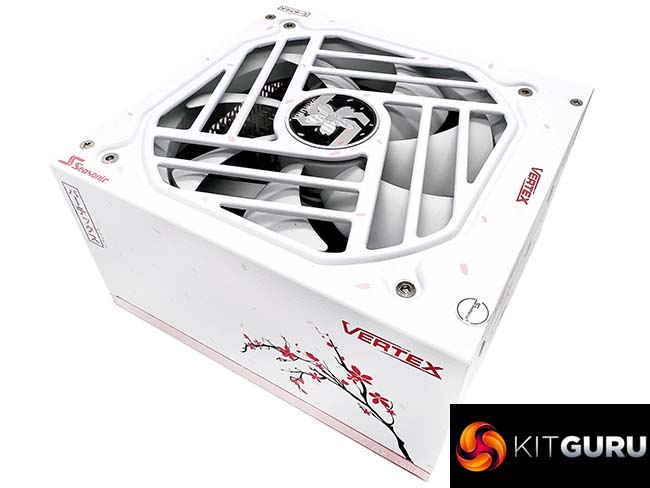
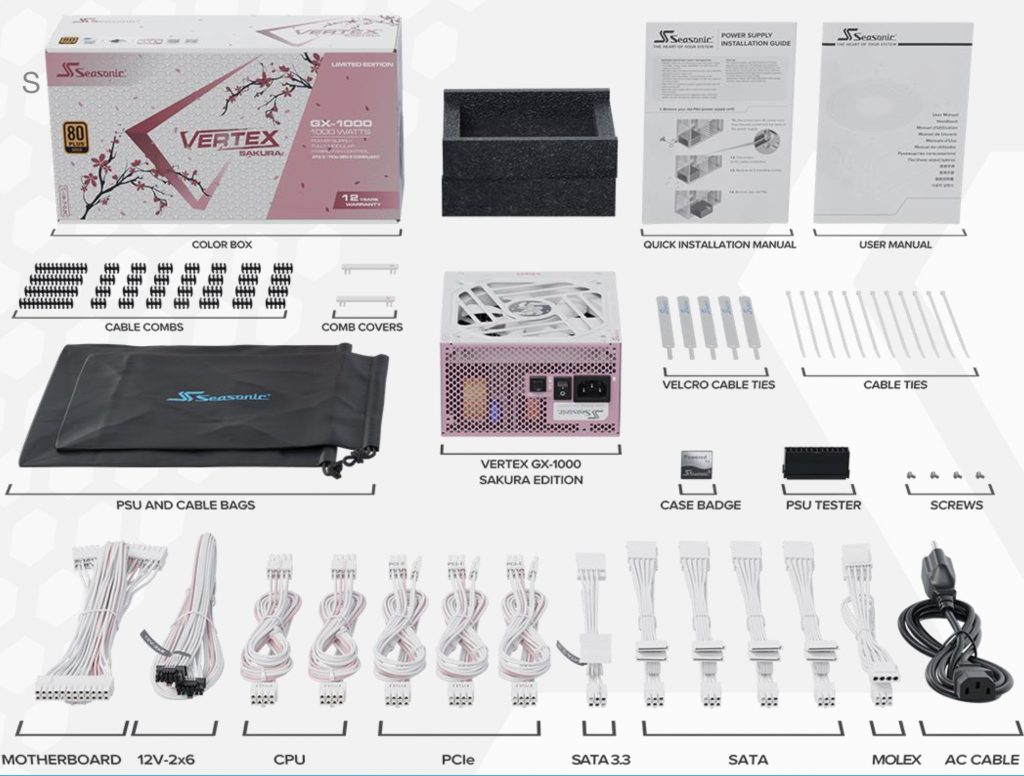
As we can see by the image above, Seasonic have opted for a gentle pink accenting to the white unit, with a cherry blossom on display on certain sides of the case design. This unit is basically an updated Vertex GX-1000 with 12V-2×6 support.
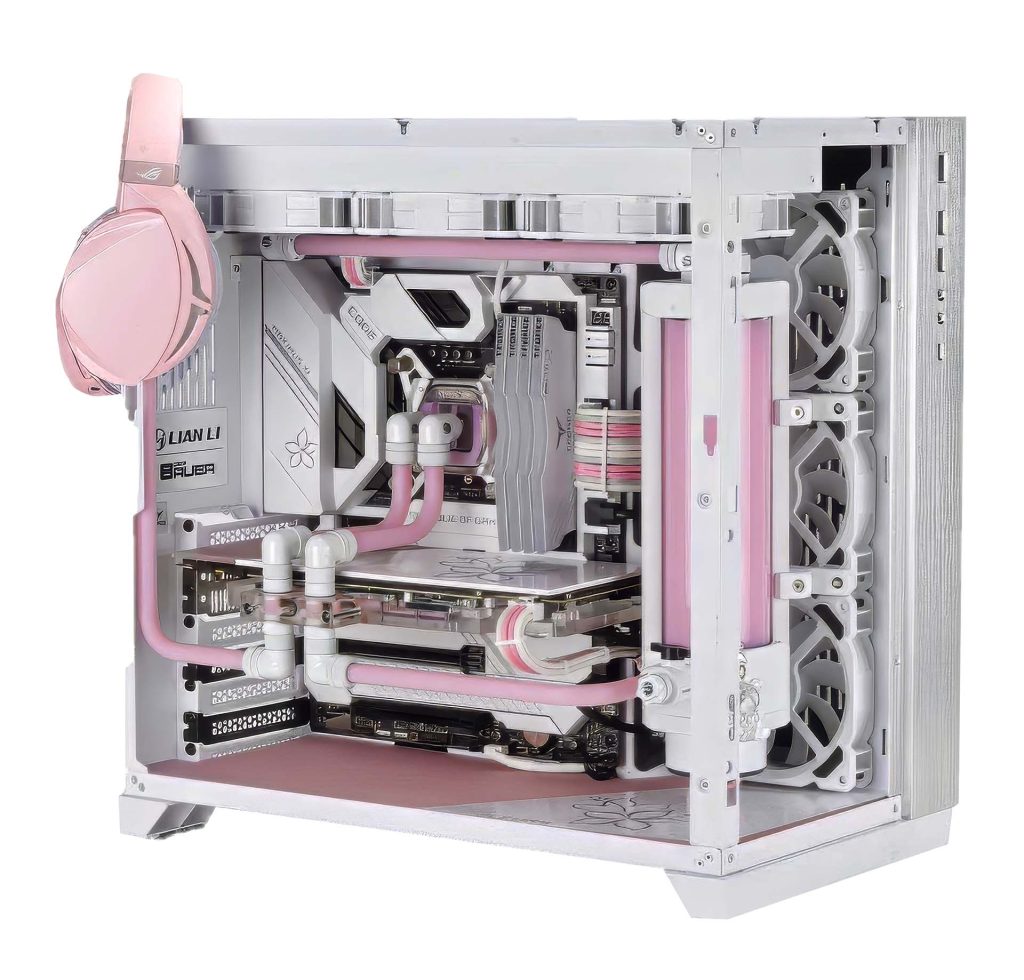
(image above – courtesy Seasonic)
In the words of Seasonic themselves, this unit is ‘carefully curated for a nurturing and spring-like ambiance, we've chosen a warm pink color palette. This hue, combined with a wave-patterned base, evokes a sense of renewal. The rear side of both the PSU and the PC is intricately designed with pink cutouts, enhancing the overall aesthetic and creating a harmonious visual experience.'
- Super-High Efficiency, 80 PLUS® Gold Certified
- Fully Modular
- ATX 3 and 16-Pin PCIe Gen 5 Cable (12V-2×6)
- Top-Quality 135 mm Fluid Dynamic Bearing Fan
- Premium Hybrid Fan Control
- Tight Voltage Regulation (12 V, 5 V and 3.3 V) [± 3 %]
- Gold Plated High Current Terminal (MB, CPU and PCIe)
- 12 Years Warranty
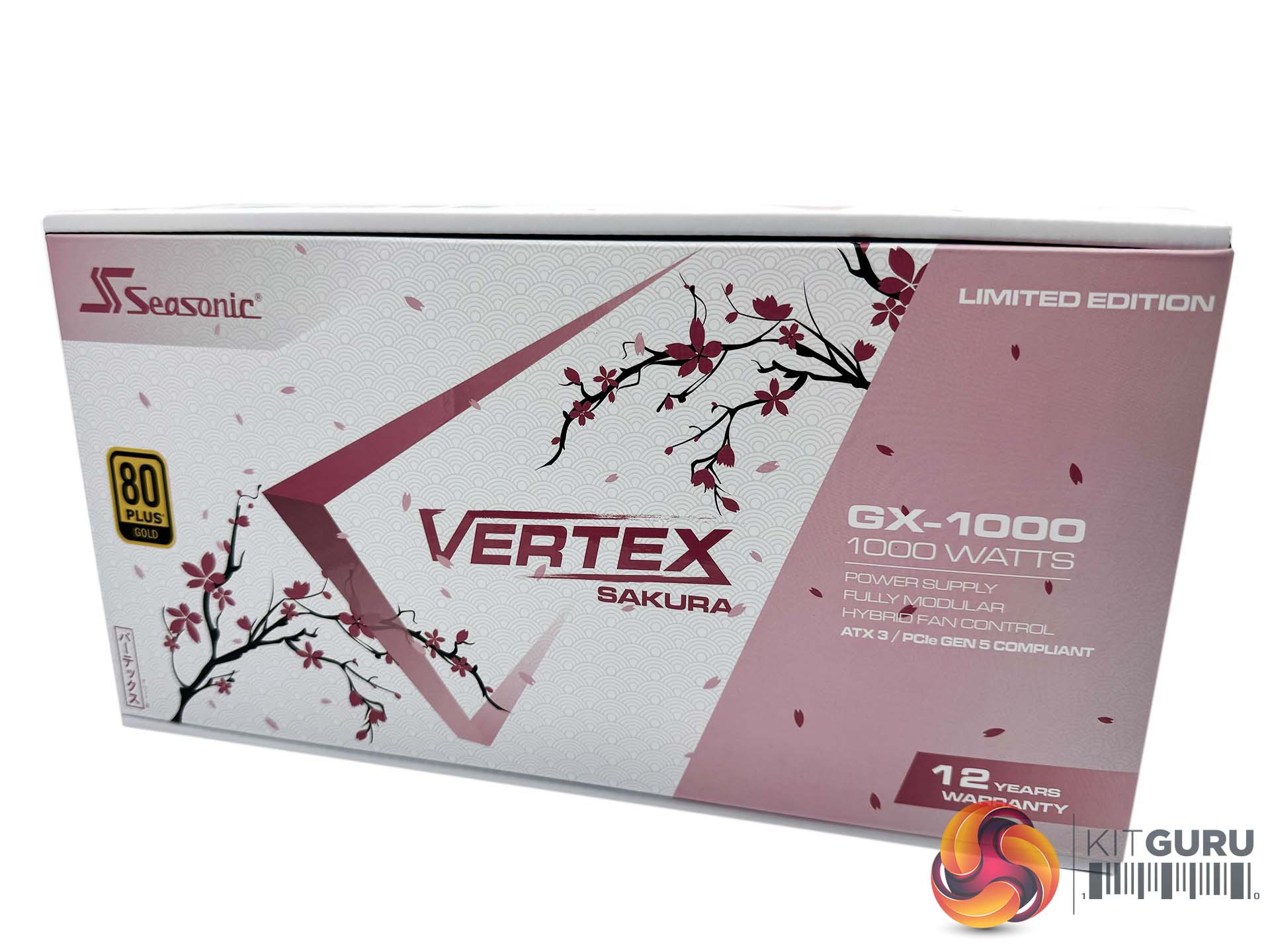
The Sakura power supply ships in a limited edition box, with a very strong Japanese vibe across the front and back – it's covered in cherry blossoms. Details of the 80 Plus Gold Certification is shown on the front with some other details.
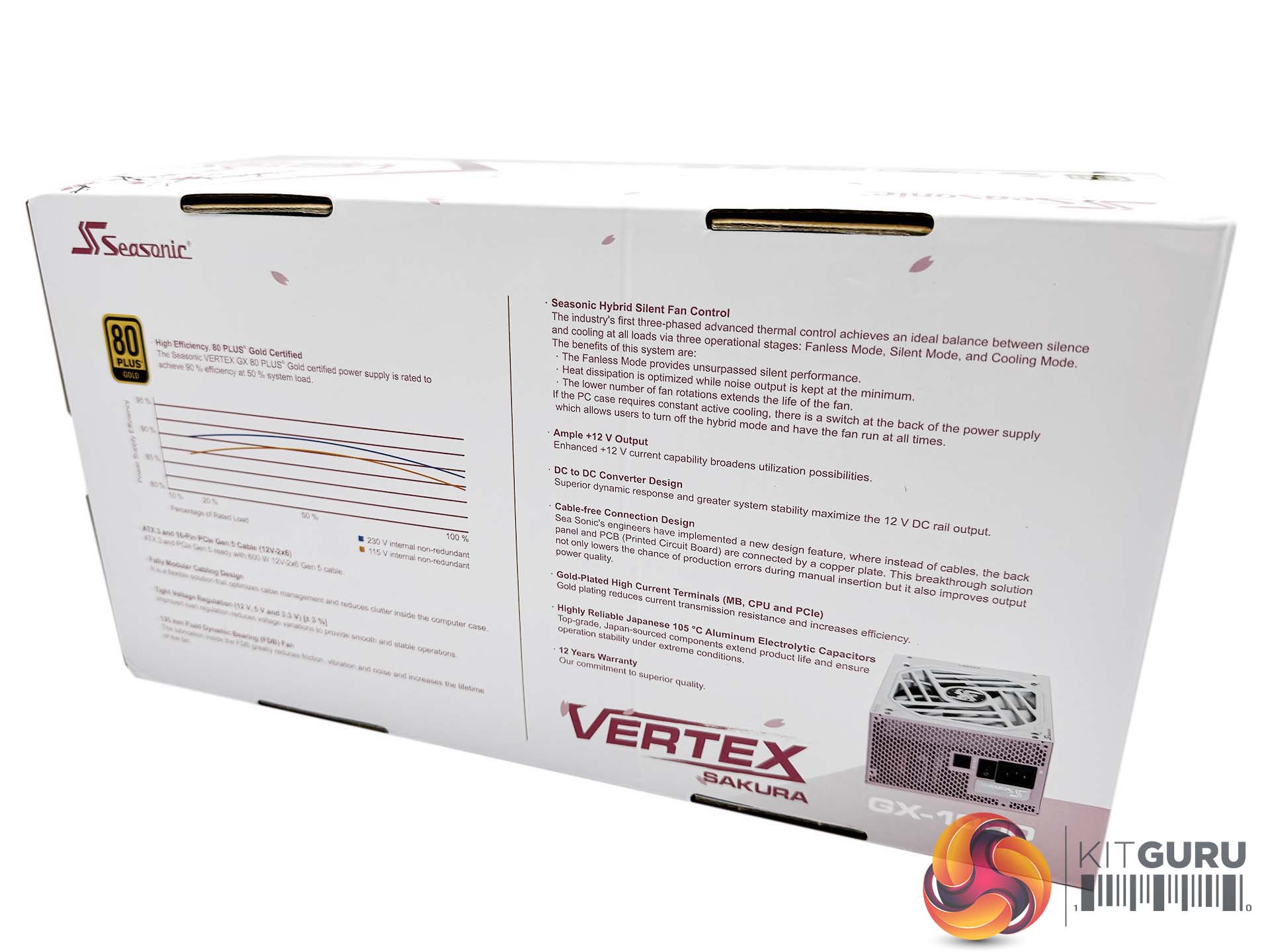
The rear of the box goes into more details on the Hybrid Silent Fan along with other technical details on the Japanese capacitors and gold plated high current terminals.
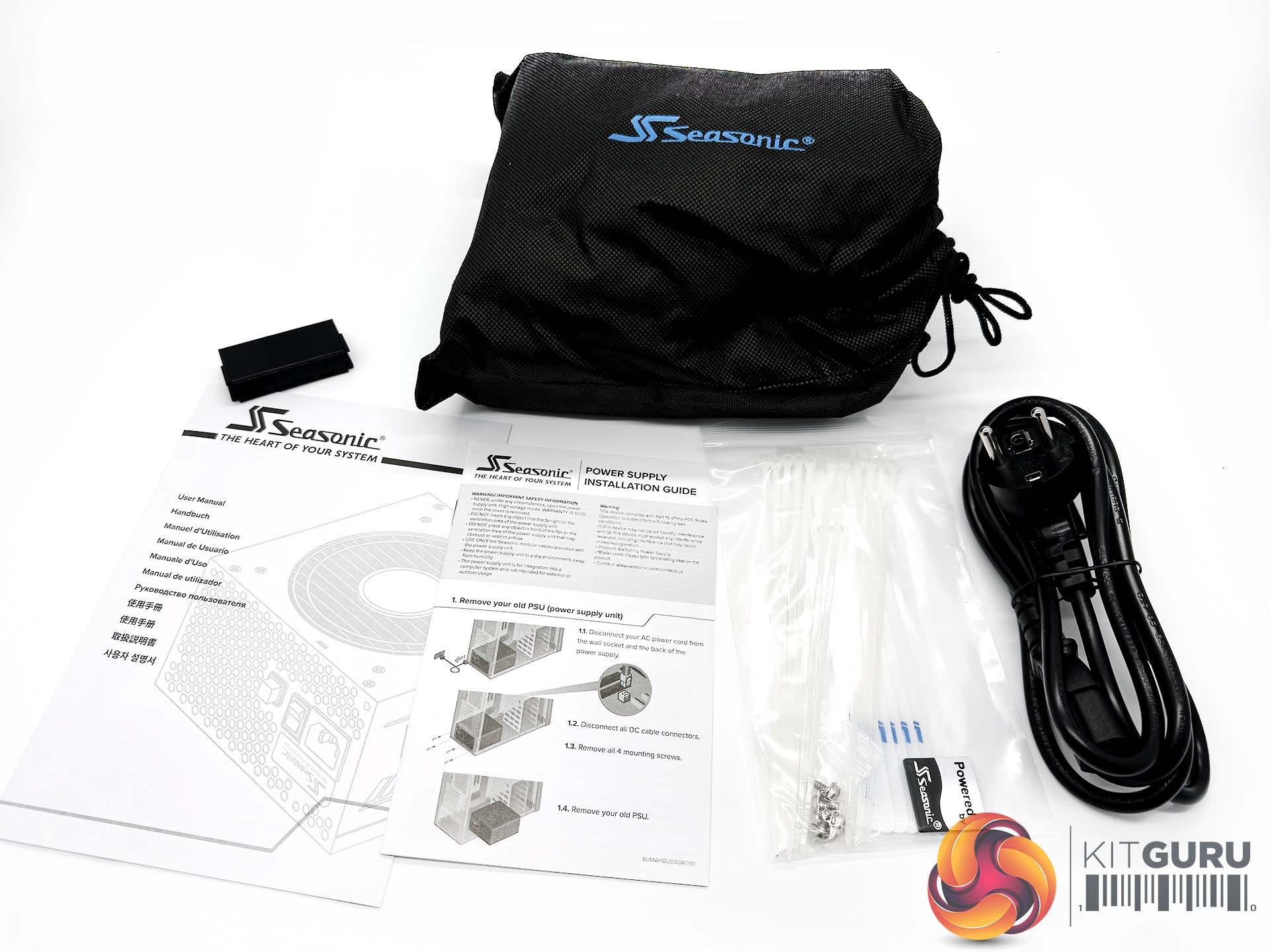
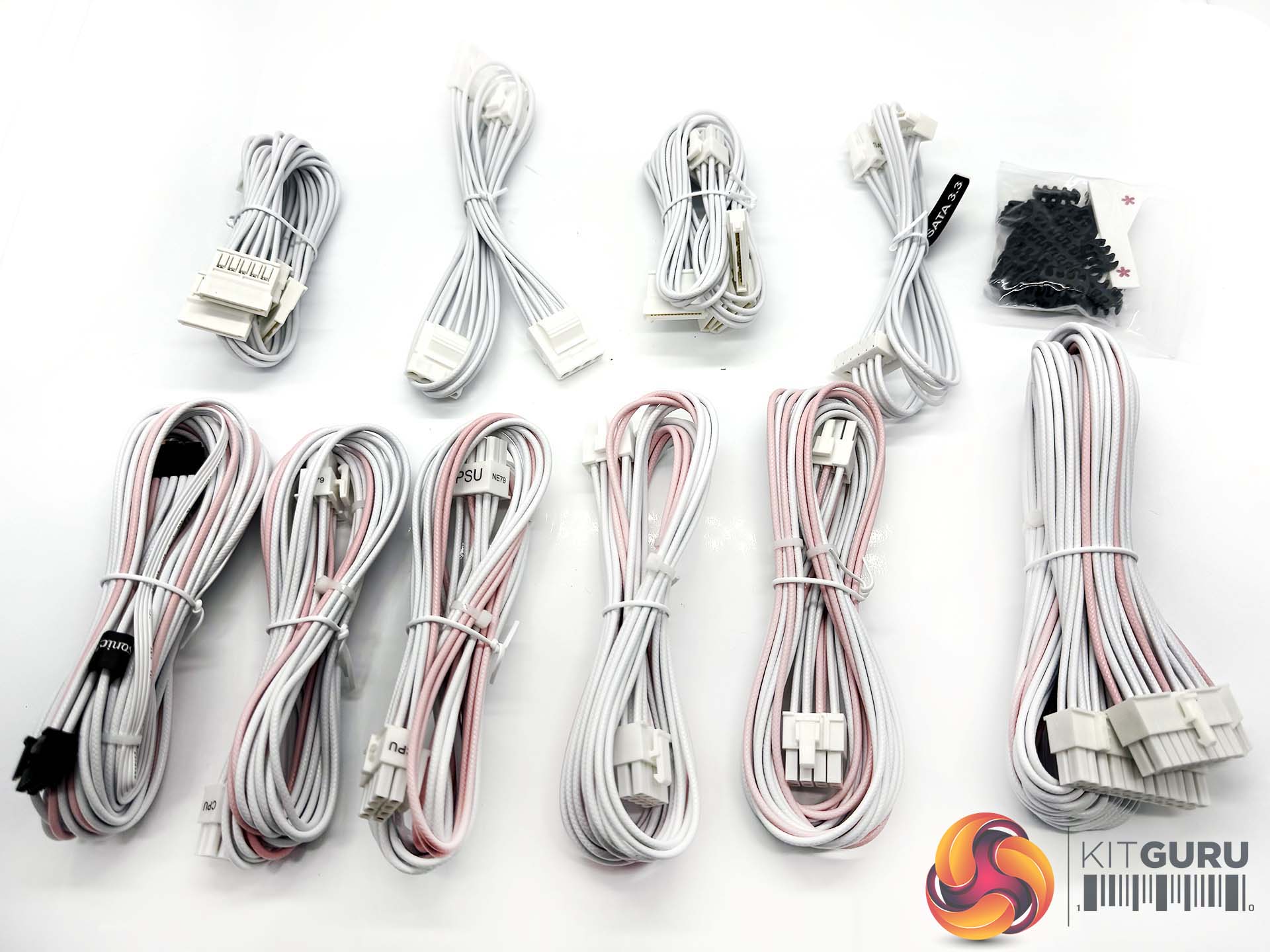
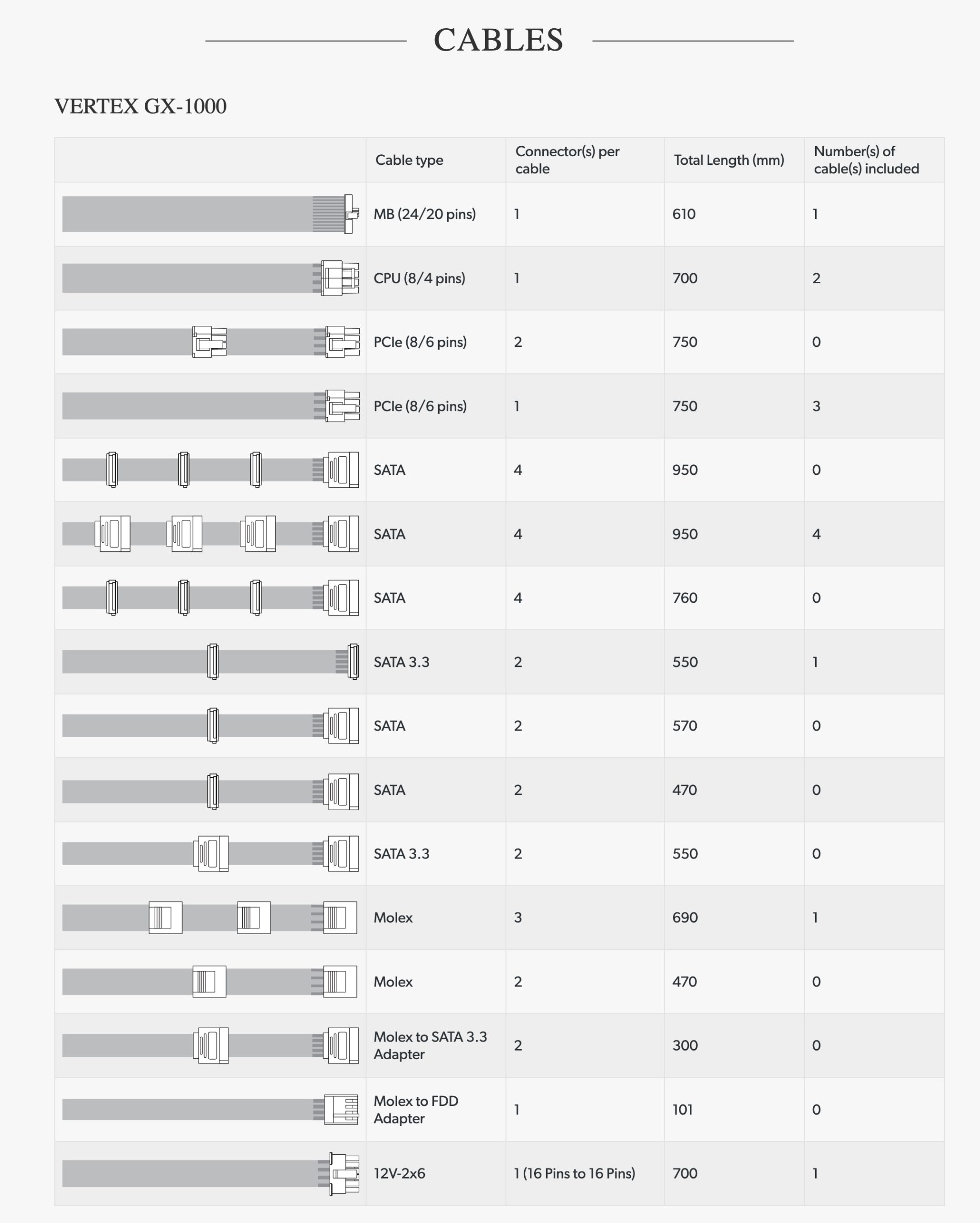
We like the individually sleeved cables that Seasonic supply with the unit, along with the cable combs in the bag to neaten up the appearance. The cable quality is excellent.
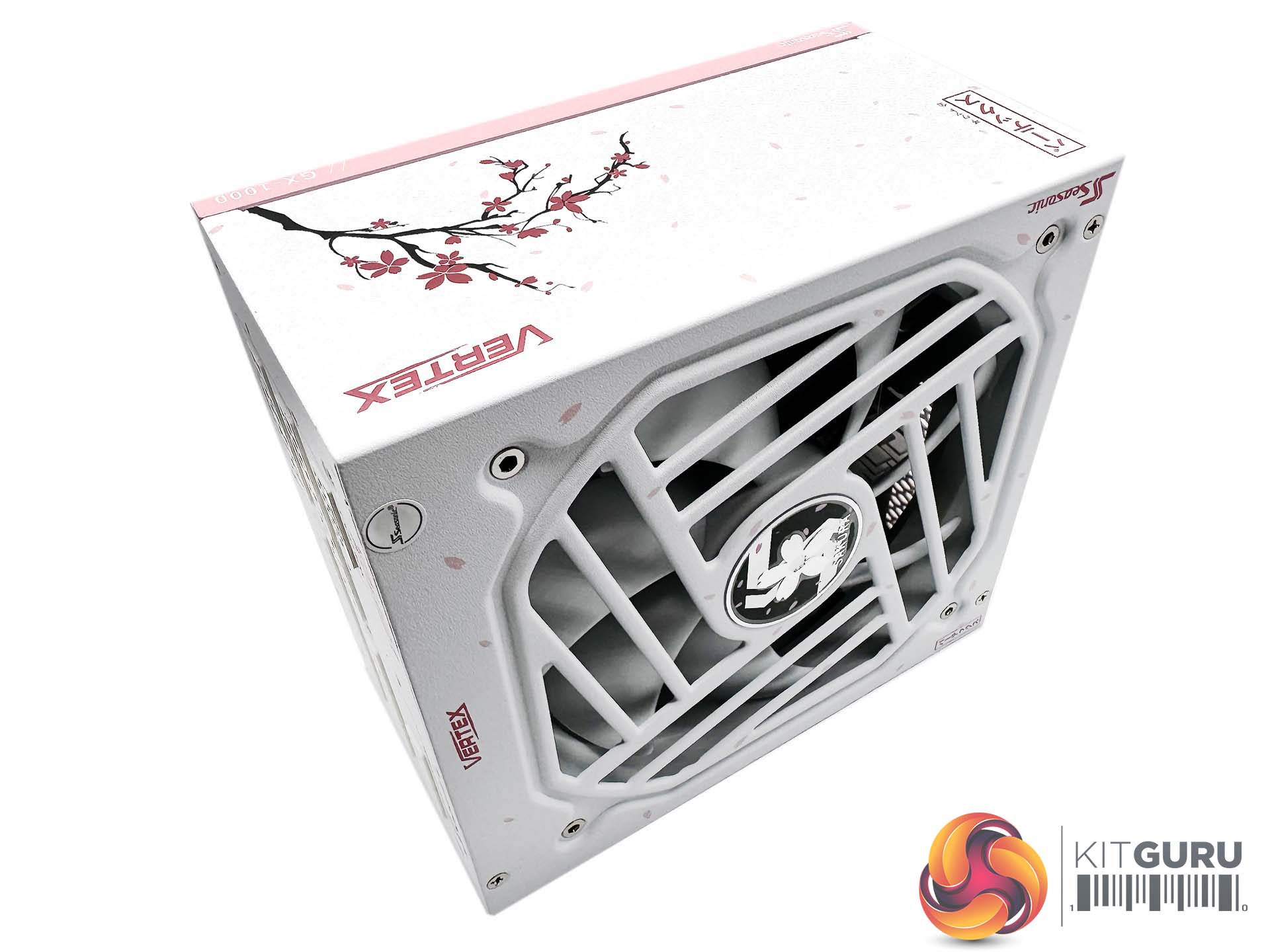
The Seasonic ‘Sakura' is quite an attractive looking power supply – personally I have always loved the romance of Asian culture so this immediately appealed to me when I saw it. The finishing of the logos and overall quality of the build is top drawer. We can imagine the pinks and whites might alienate a certain percentage of the European market however.
The power supply measures 160 mm x 150 mm x 86 mm (LxWxH). It's fairly compact and will fit into a wide range of chassis designs across the board.
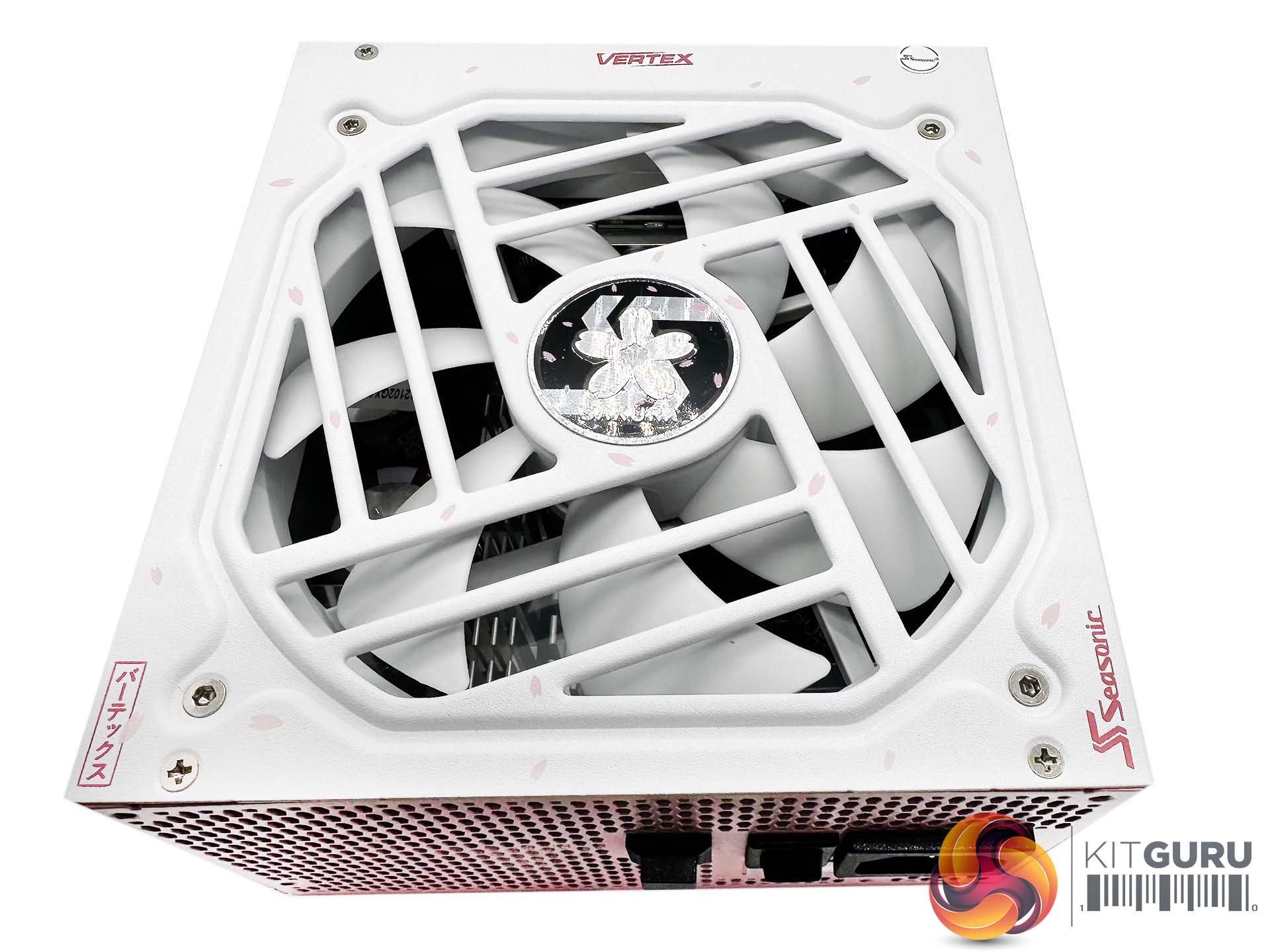
At the top of the unit, we see a large fan, behind a grille. We will take a closer look at the fan when we open the PSU shortly – but we know it is a fluid dynamic bearing model.
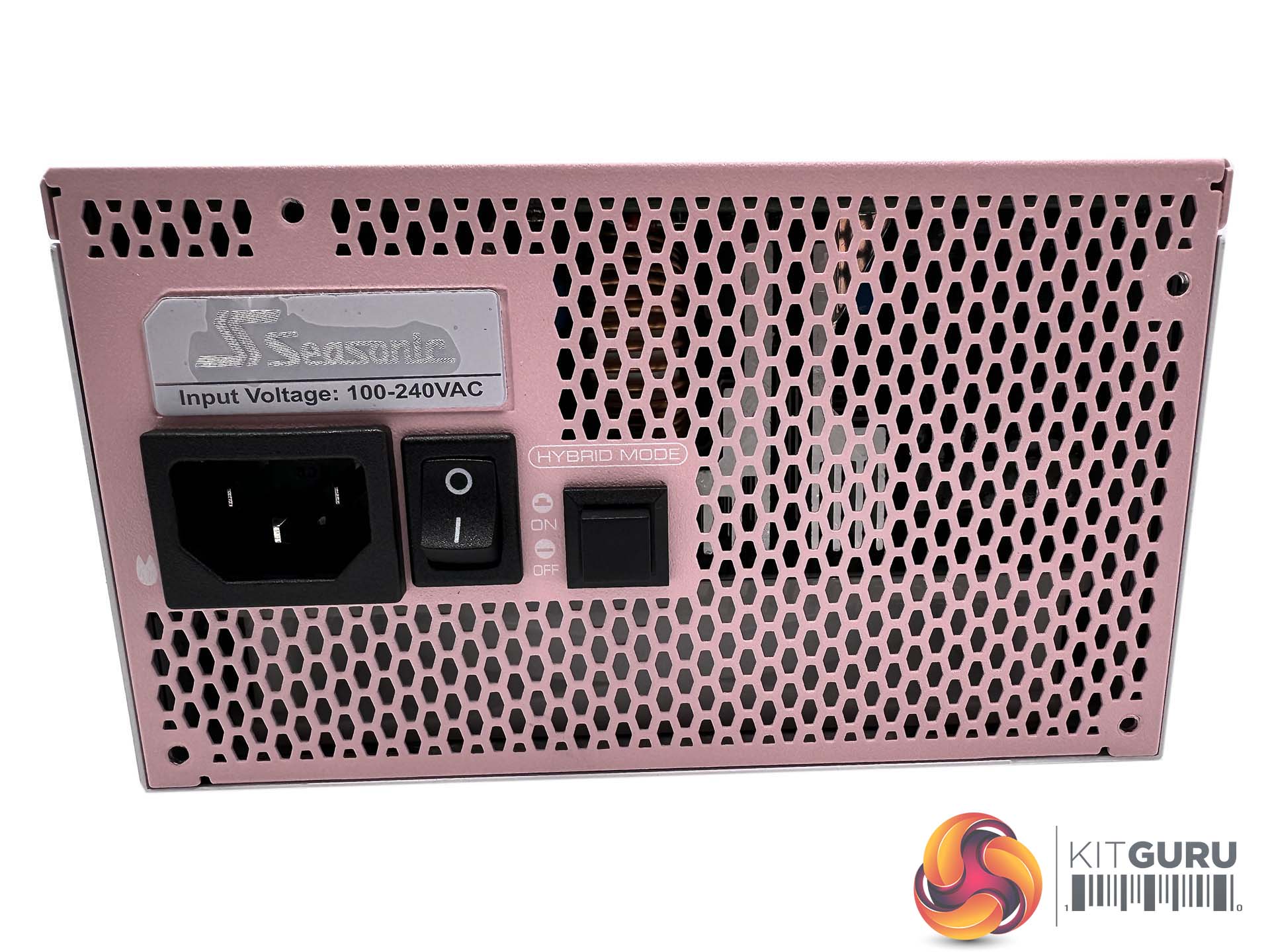
One side of the PSU is home to the power connector and switch along with the hybrid fan control button. This has been around now for many years, but for those new to the technology – this is a system which basically keeps the fan silent and inactive until the internal unit reaches a specific heat point. Then it will automatically enable. You can ignore this and just leave the fan spinning all the time, if you wish.
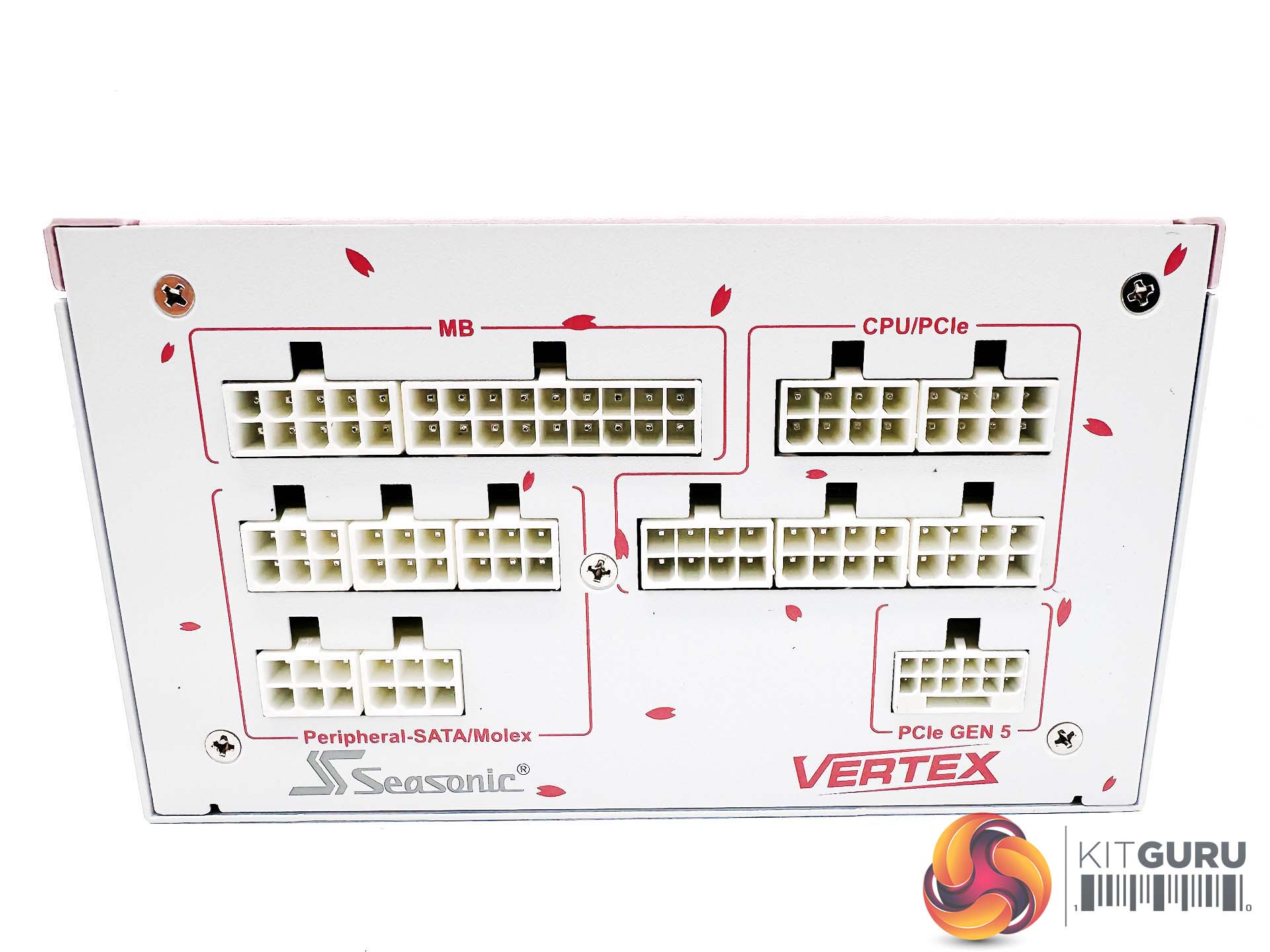
The modular bay is on the other side, split across three rows. The sections are all nicely separated with more of the cherry blossom leaves and labelled for ease of install.
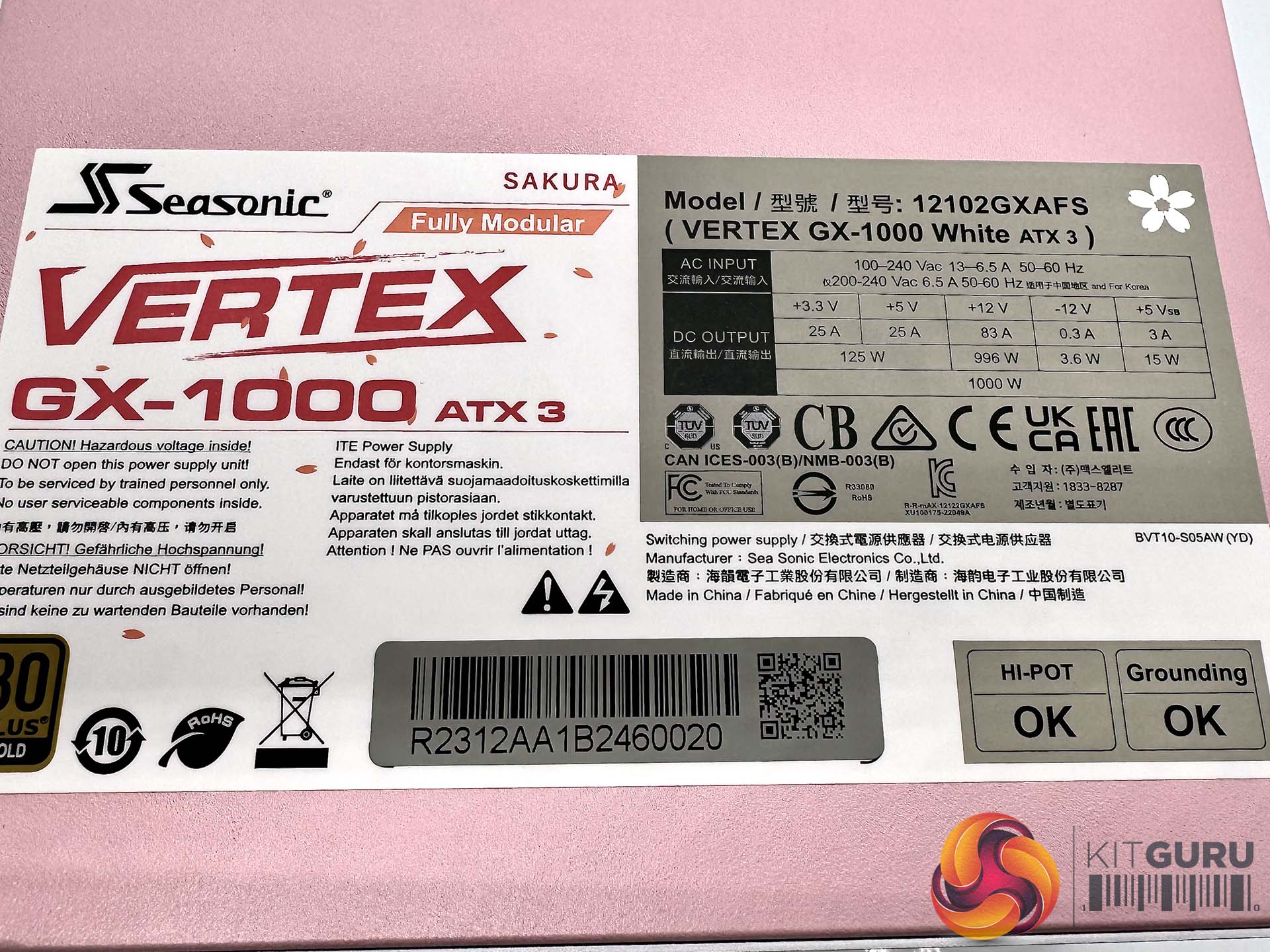
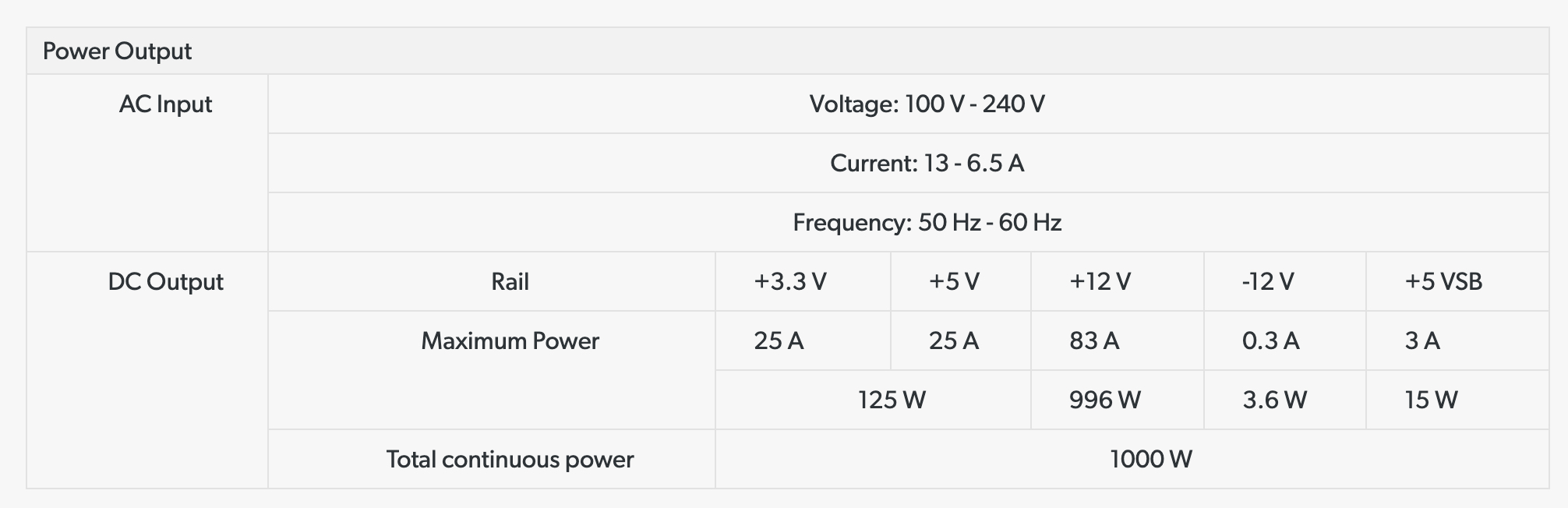
The unit can deliver 25A to the +3.3V and +5V rails. The +12V rail is rated to 83A at full load.
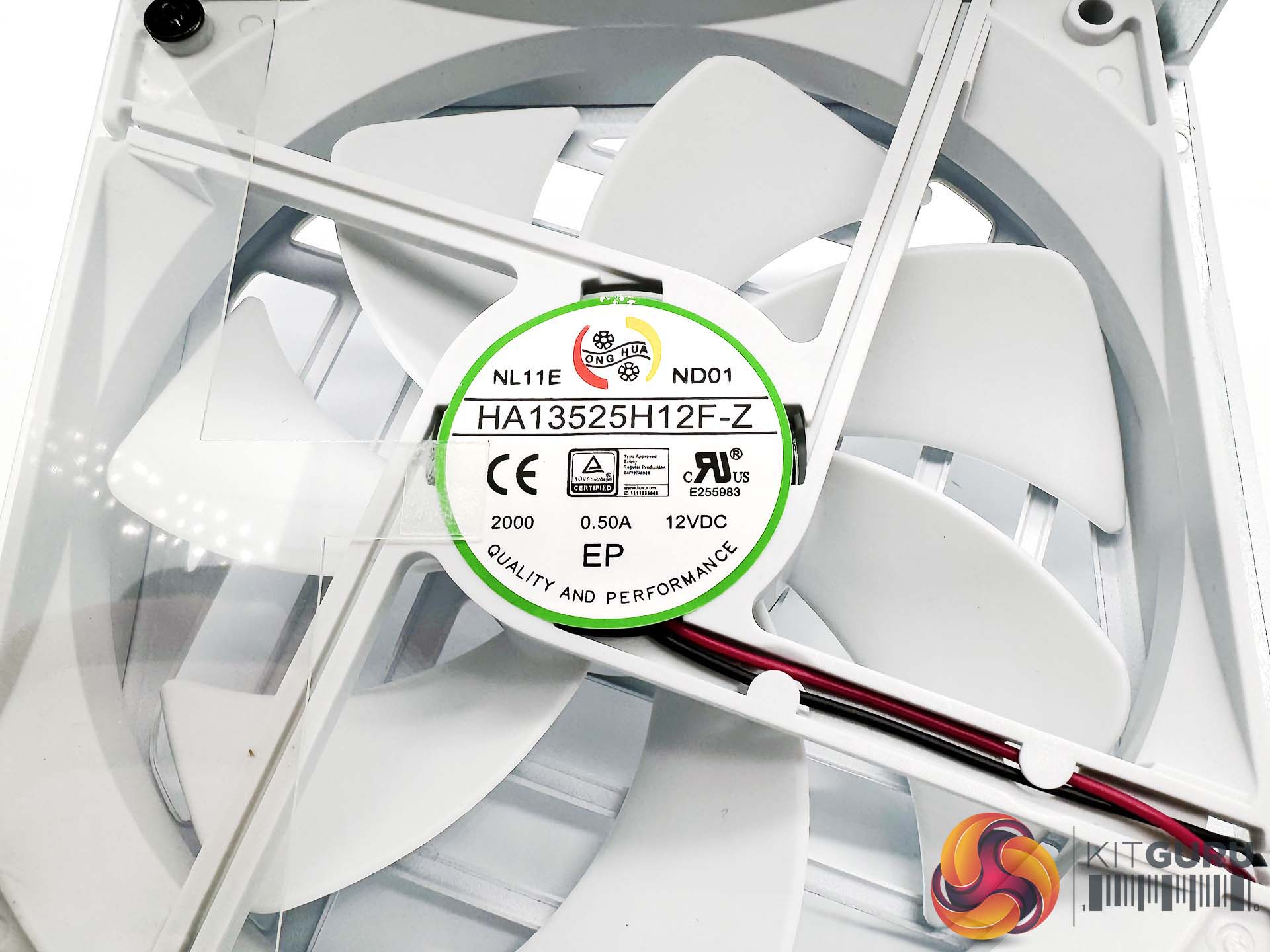
Seasonic are using a Hong Hua Fluid dynamic bearing fan in this unit, they make a quality fan – this one is a HA13525H12F-Z rated at 0.50A, 12V. The 135mm fan is rated at 50,000 hours at 40c.
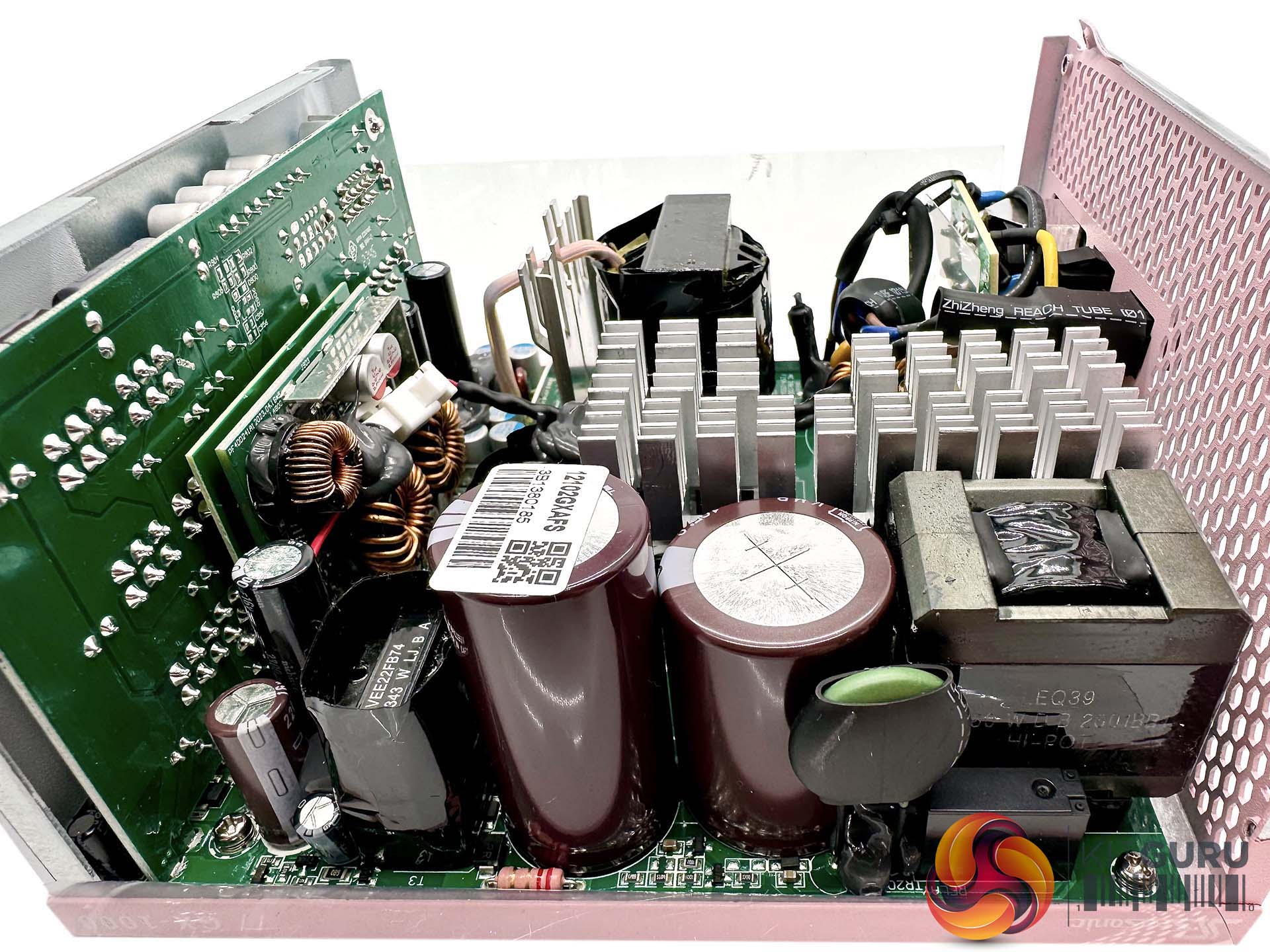
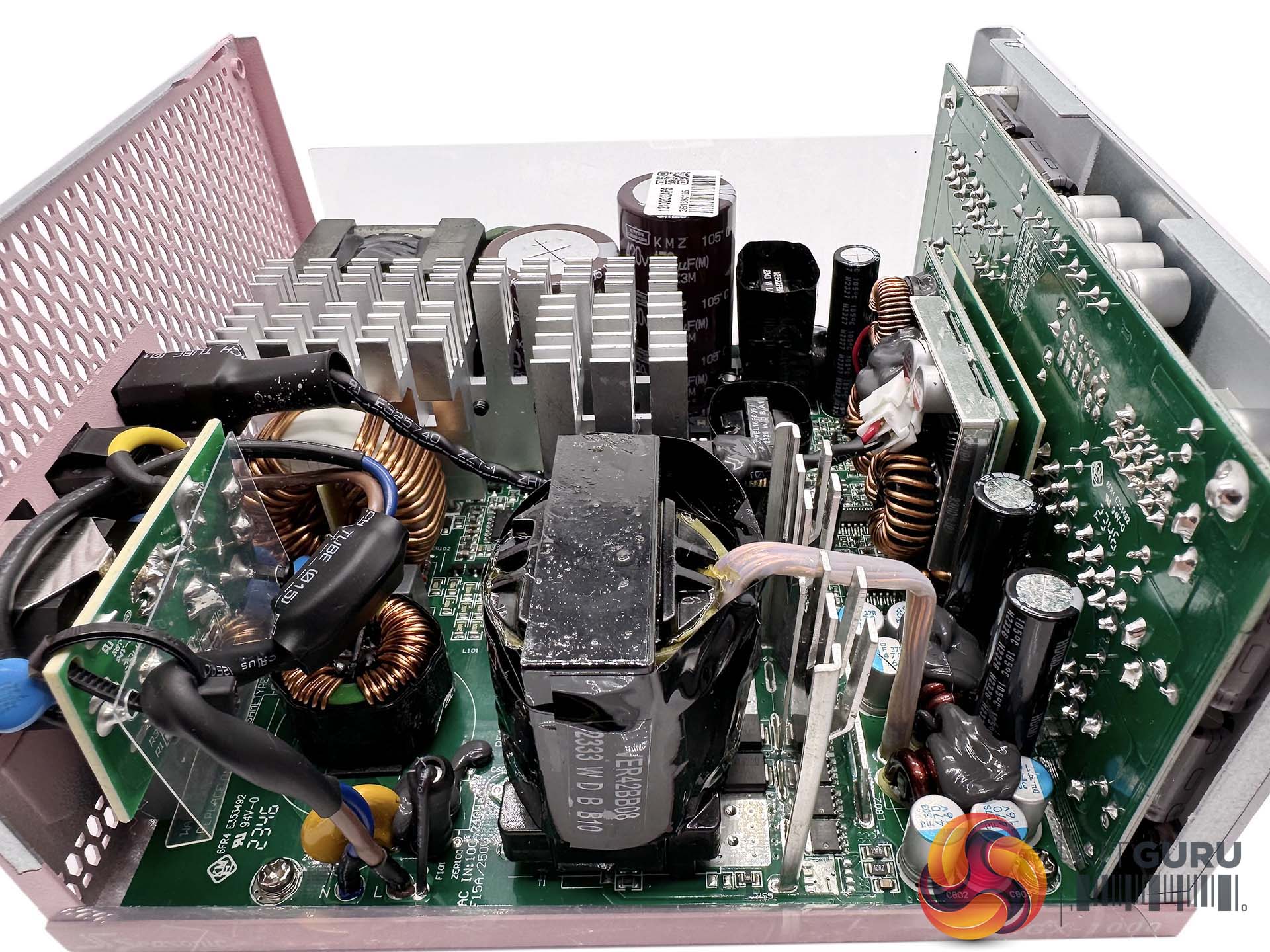
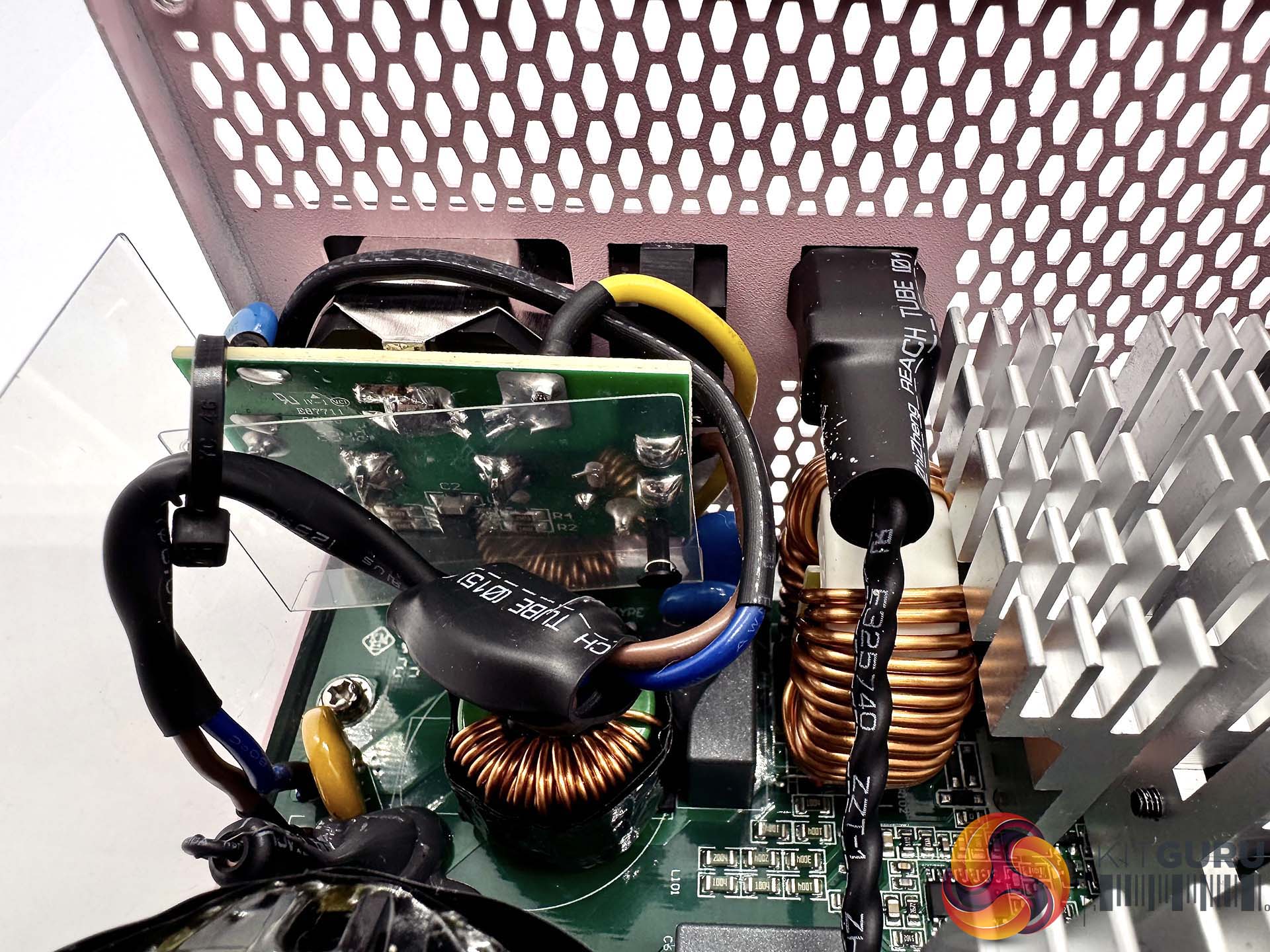
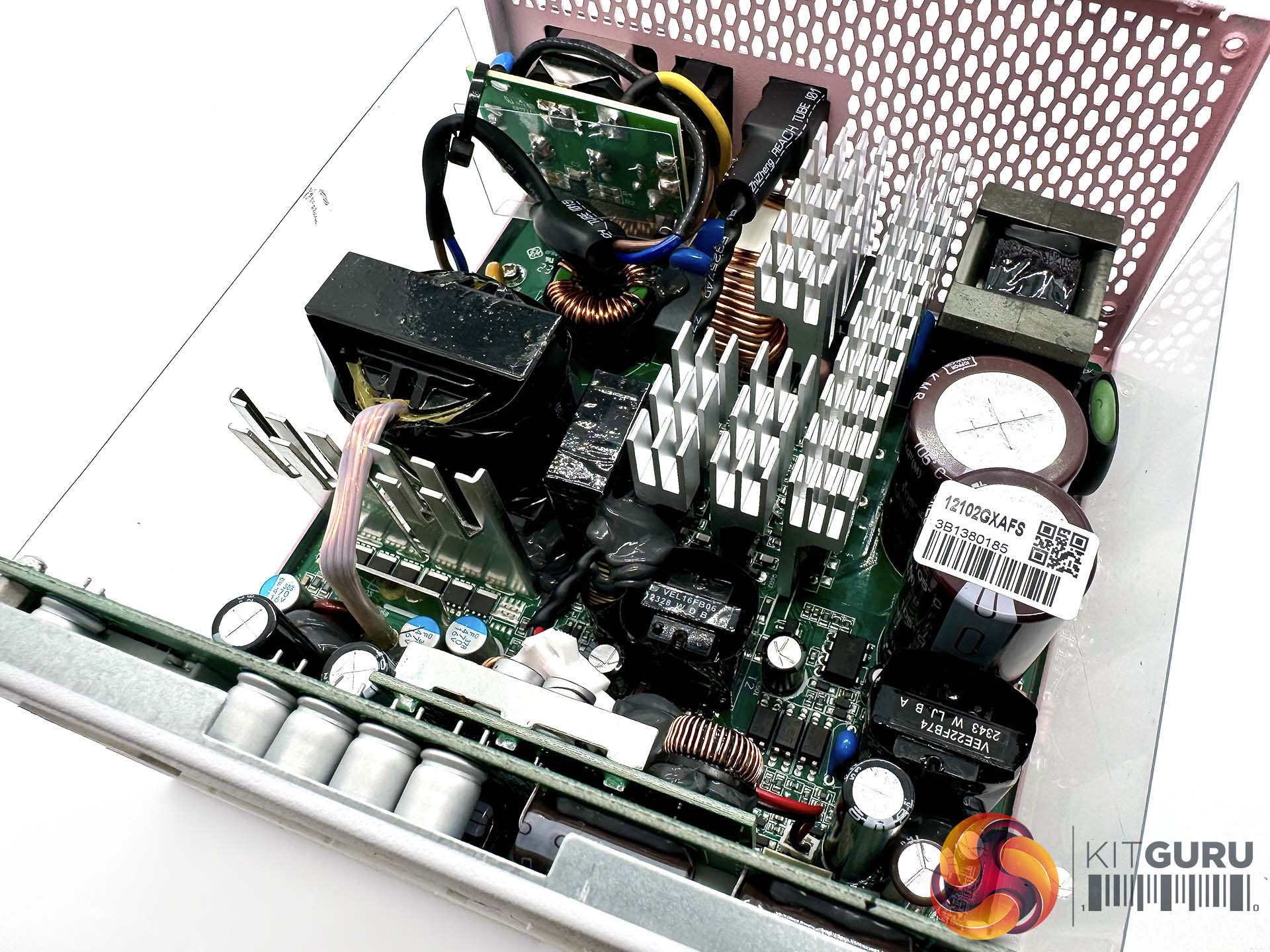
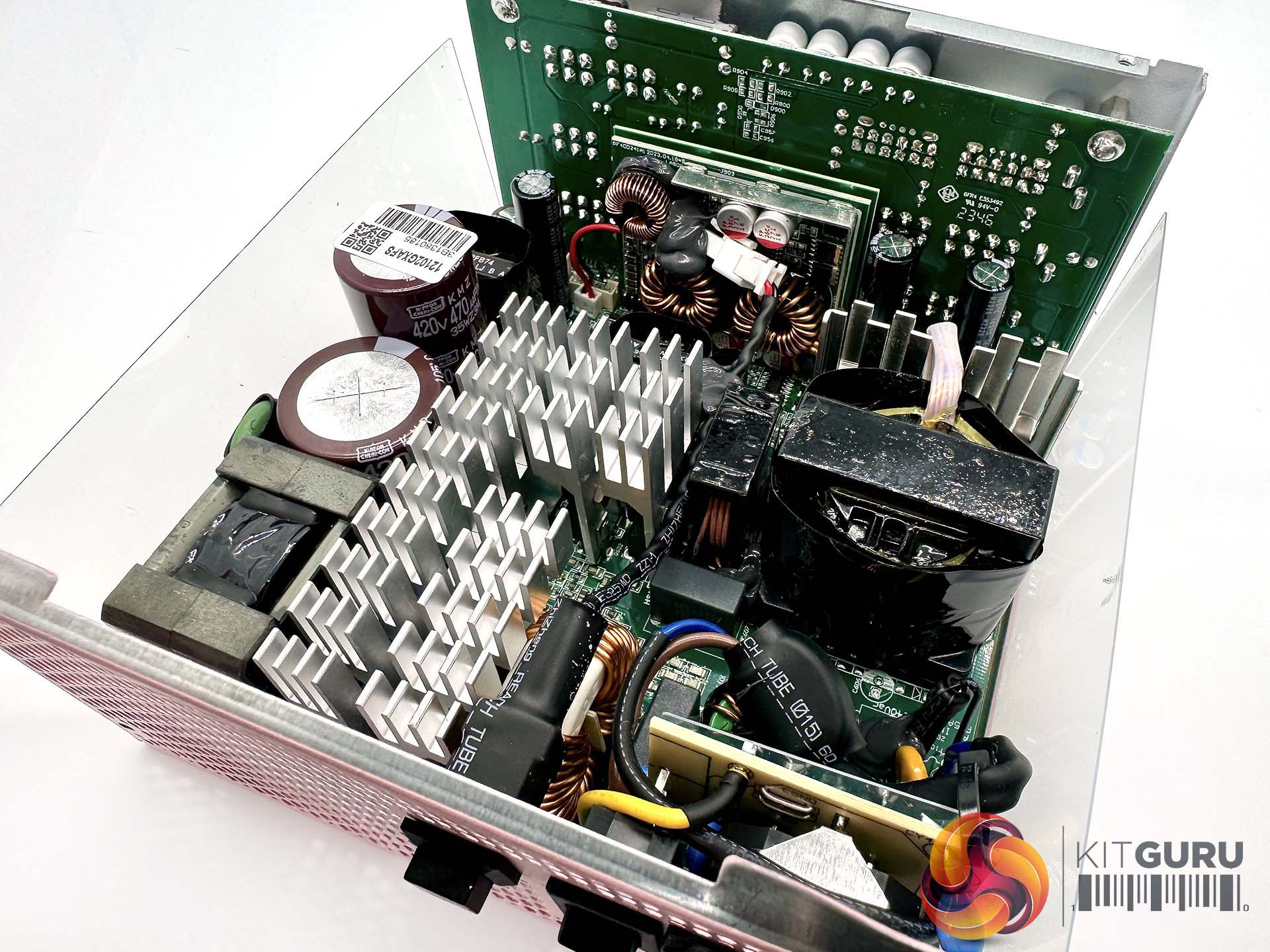
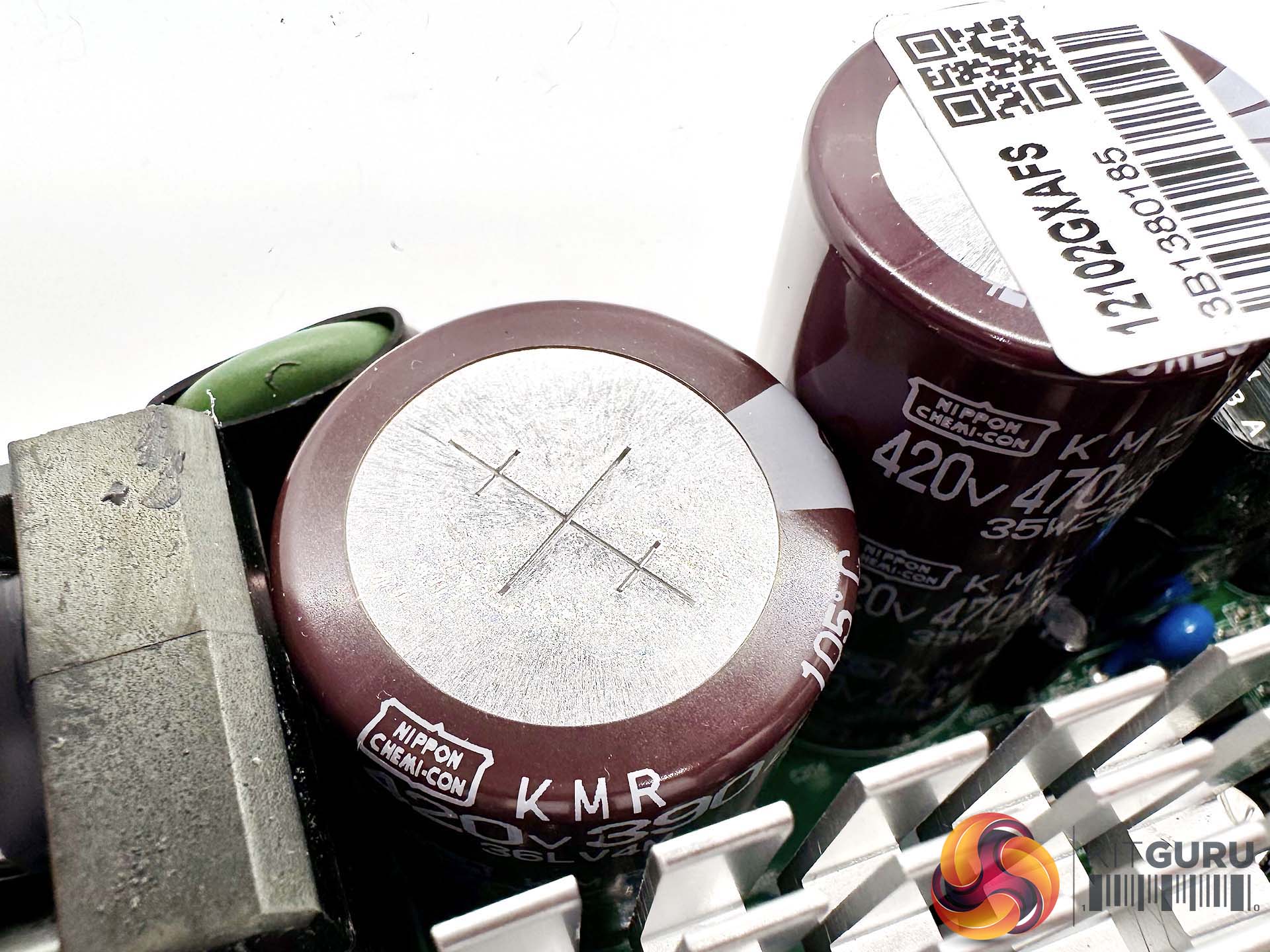
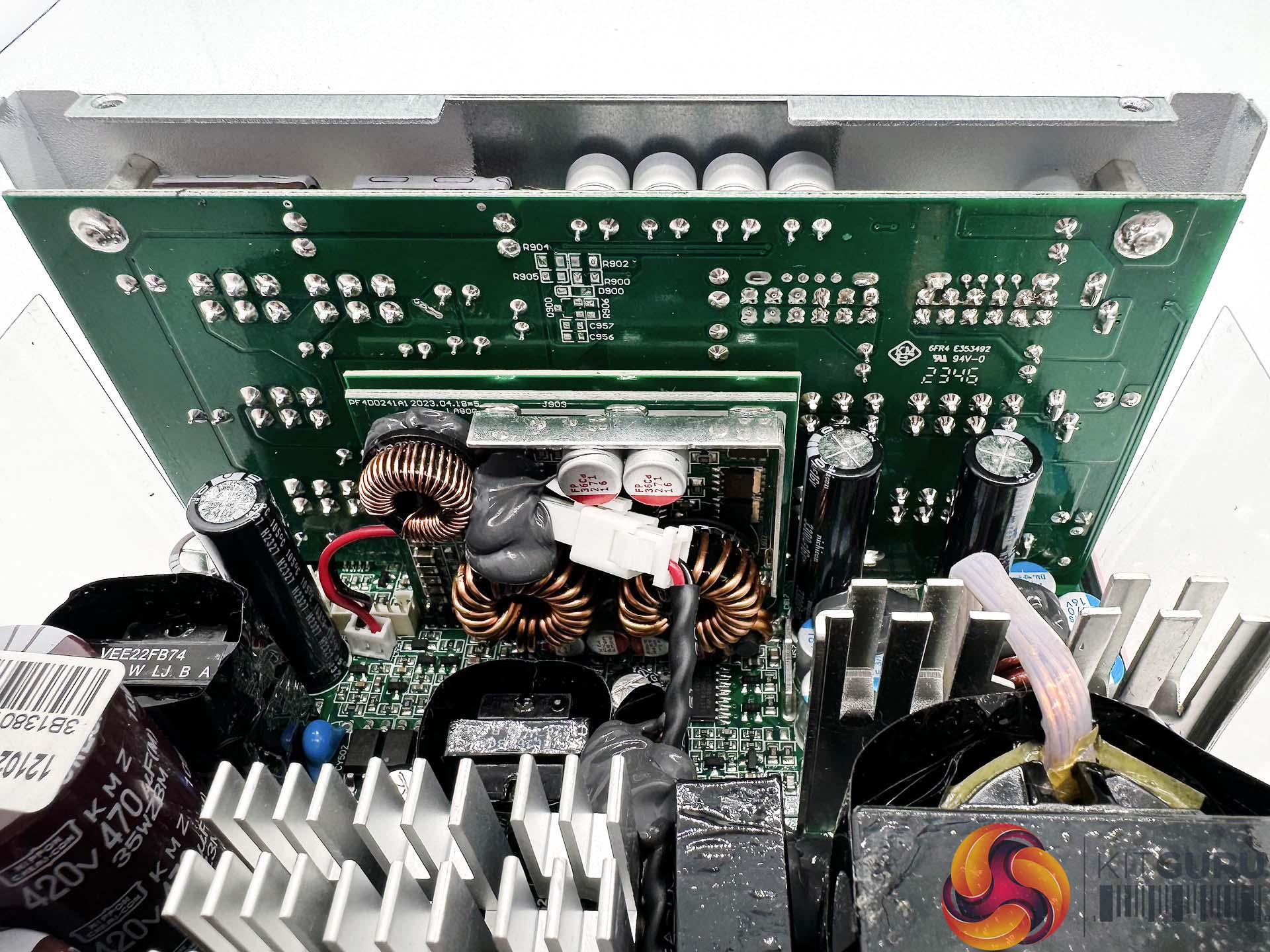
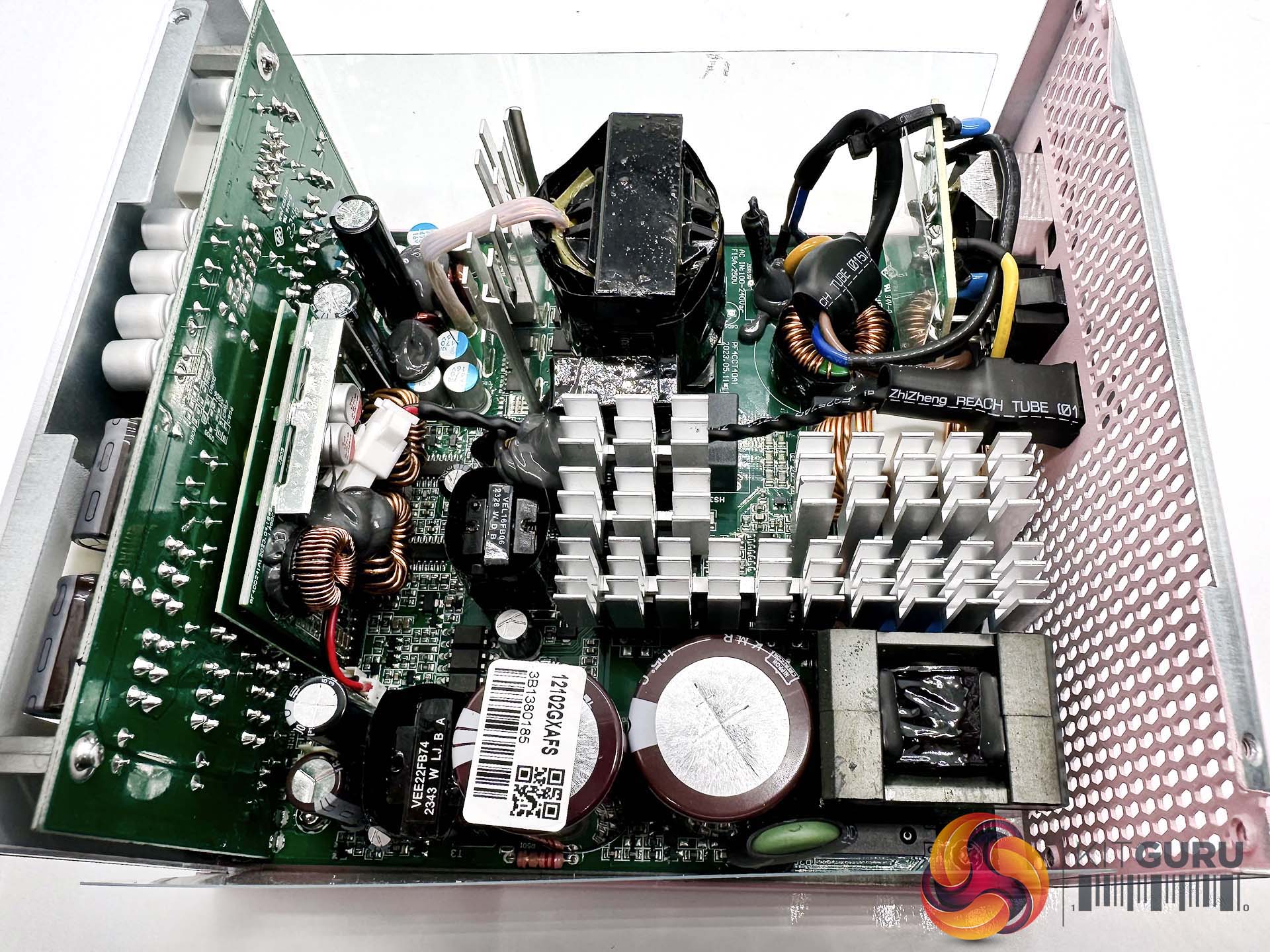
This is a fairly compact platform and as we would expect from Seasonic, its very well put together. There are a handful of large heatsinks and there appears to be adequate cooling for the 12V FETs. A full bridge topology is adopted for this design, along with an LLC resonant converter. A pair of VRMs generate the minor rails with eight FETs. The primary capacitors are high grade Japanese 105C rated KMR from Nippon Chemi Con – one is rated 420V 470uF and the other is 420V 390uF, for a total of 860uF.
This supply has OPP, OVP, UVP, OCP, OTP and SCP protections.
Correctly testing power supplies is a complex procedure and KitGuru have configured a test bench which can deliver up to a 2,000 Watt DC load.
We test ambient temperatures at 35c in our environment to greater reflect warmer internal chassis conditions.
We use combinations of the following hardware:
• SunMoon SM-268
• CSI3710A Programmable DC load (+3.3V and +5V outputs)
• CSI3711A Programmable DC load (+12V1, +12V2, +12V3, and +12V4)
• Extech Power Analyzer
• Extech MultiMaster MM570 digital multimeter
• SkyTronic DSL 2 Digital Sound Level Meter (6-130dBa)
• Digital oscilloscope (20M S/s with 12 Bit ADC)
• Variable Autotransformer, 1.4 KVA
We test in a single +12V configuration.
|
DC Output Load Regulation
|
||||||||||
|
Combined DC Load |
+3.3V
|
+5V
|
+12V
|
+5VSB
|
-12V | |||||
|
A
|
V
|
A
|
V
|
A
|
V
|
A
|
V
|
A | V | |
|
100W
|
0.90
|
3.32
|
0.90
|
5.01
|
7.35
|
12.21
|
0.50
|
5.01
|
0.20
|
-12.02
|
|
200W
|
1.60
|
3.32
|
1.64
|
5.00
|
15.13
|
12.20
|
1.00
|
5.01
|
0.20
|
-12.01
|
|
500W
|
3.21
|
3.32
|
3.24
|
5.00
|
38.60
|
12.18
|
1.50
|
5.01
|
0.20
|
-12.02
|
| 750W |
4.03
|
3.31
|
4.17
|
5.00
|
58.53
|
12.14
|
2.00
|
5.00
|
0.30
|
-12.02
|
|
1000W
|
5.45
|
3.31
|
5.51
|
5.00
|
78.13
|
12.11
|
2.50
|
5.00
|
0.30
|
-12.02
|
The load regulation of this power supply is good.
| Seasonic Vertex SAKURA | Maximum Load |
| 1166W |
The power supply managed to deliver 1166W before shutting down safely.
Next we want to try Cross Loading. This basically means loads which are not balanced. If a PC for instance needs 500W on the +12V outputs but something like 30W via the combined 3.3V and +5V outputs then the voltage regulation can fluctuate badly.
| Cross Load Testing | +3.3V | +5V | +12V | -12V | +5VSB | |||||
| A | V | A | V | A | V | A | V | A | V | |
| 885W | 2.0 | 3.34 | 2.0 | 5.01 | 72.0 | 12.11 | 0.2 | -12.02 | 0.50 | 5.01 |
| 240W | 20.0 | 3.32 | 23.0 | 5.00 | 2.0 | 12.20 | 0.2 | -12.00 | 0.50 | 5.02 |
The GX-1000 Sakura handled our cross load test very well, holding stable results across the range.
We then used an oscilloscope to measure AC ripple and noise present on the DC outputs. We set the oscilloscope time base to check for AC ripple at both high and low ends of the spectrum. ATX12V V2.2 specification for DC output ripple and noise is defined in the ATX 12V power supply design guide.
|
ATX12V Ver 2.2 Noise/Ripple Tolerance
|
|
|
Output
|
Ripple (mV p-p)
|
|
+3.3V
|
50
|
|
+5V
|
50
|
|
+12V1
|
120
|
|
+12V2
|
120
|
|
-12V
|
120
|
|
+5VSB
|
50
|
Obviously when measuring AC noise and ripple on the DC outputs, the cleaner (less recorded) means we have a better end result. We measured this AC signal amplitude to see how closely the unit complied with the ATX standard.
| AC Ripple (mV p-p) | ||||
| DC Load | +3.3V | +5V | +12V | 5VSB |
| 100W | 10 | 10 | 15 | 15 |
| 250W | 10 | 10 | 15 | 20 |
| 500W | 15 | 10 | 20 | 20 |
| 750W | 15 | 15 | 25 | 25 |
| 1000W | 15 | 15 | 25 | 25 |
Ripple noise suppression is pretty good across all the rails, falling well within industry rated parameters. It does fall a little short now of market leaders however.
|
Efficiency (%)
|
|
|
100W
|
89.1
|
|
250W
|
90.2
|
|
500W
|
92.1
|
|
750W
|
91.6
|
|
1000W
|
89.0
|
The efficiency results are excellent, peaking at 92% at around 50% load. This drops to around 89% efficiency at full load. These are really very positive results for an 80 Plus Gold rated unit.
We take the issue of noise very seriously at KitGuru and this is why we have built a special home brew system as a reference point when we test noise levels of various components. Why do this? Well this means we can eliminate secondary noise pollution in the test room and concentrate on components we are testing. It also brings us slightly closer to industry standards, such as DIN 45635.
Today to test the Power Supply we have taken it into our acoustics room environment and have set our SkyTronic DSL 2 Digital Sound Level Meter (6-130dBa) one meter away from the unit. We have no other fans running so we can effectively measure just the noise from the unit itself.
As this can be a little confusing for people, here are various dBa ratings in with real world situations to help describe the various levels.
KitGuru noise guide
10dBA – Normal Breathing/Rustling Leaves
20-25dBA – Whisper
30dBA – High Quality Computer fan
40dBA – A Bubbling Brook, or a Refrigerator
50dBA – Normal Conversation
60dBA – Laughter
70dBA – Vacuum Cleaner or Hairdryer
80dBA – City Traffic or a Garbage Disposal
90dBA – Motorcycle or Lawnmower
100dBA – MP3 Player at maximum output
110dBA – Orchestra
120dBA – Front row rock concert/Jet Engine
130dBA – Threshold of Pain
140dBA – Military Jet takeoff/Gunshot (close range)
160dBA – Instant Perforation of eardrum
|
Noise (dBA)
|
|
|
100W
|
<28.0
|
|
250W
|
<28.0
|
|
500W
|
31.9
|
|
750W
|
35.2
|
| 1000W | 36.6 |
At lower loads the fan remains idle, but when it spins up it is easily heard over other system fans. When the load hits around 700 Watts the fan ramps up significantly to compensate for rising heat in the chassis. At full load the fan is quite loud.
|
Temperature (c)
|
||
|
Intake
|
Exhaust
|
|
|
100W
|
37
|
41
|
|
250W
|
38
|
45
|
|
500W
|
40
|
53
|
|
750W
|
45
|
54
|
|
1000W
|
46
|
61
|
The fan ramps up in the last 300 Watt of load output, ensuring good airflow across the components. The fan profile is balanced, combining reasonable acoustics with good internal airflow.
|
Maximum load
|
Efficiency
|
|
1166W
|
88.6
|
Pushing the PSU above its rated limits generates an efficiency of around 88.6.
The Seasonic Vertex SAKURA is a well designed power supply that targets mainly the Asian market. The adoption of cherry blossom tree graphics will be sure to divide opinion, but personally I think it's actually a really nice looking chassis design.

If you have a system that uses around 500-600 Watts of power under load, this makes a great choice, especially if you want low noise operation. In our UK climate, the fan didn't spin up very often under 550w ‘real world' loads, ensuring a pleasant gaming experience. It also helps that the unit is at its most efficient in this area too. If you need more that 750 Watts of constant load, then the noise levels will rise significantly.
Technically, while not a class leading unit in any area, it also does not exhibit any glaring technical problems to cause concern. Ripple suppression is decent, load regulation is good, and it is able to deliver a sustained 1100 Watts of power without any issues. In our testing it achieved around 92% maximum efficiency levels at around 50 percent load.
Seasonic have released this unit as a limited edition – and it is only available in Japan, part of Asia and to the US, exclusively via Micro Center HERE. Seasonic have confirmed with me that this is not planned to be released in Europe. The recommended retail price is $289.99. Thankfully Micro Center seem to be maintaining that MSRP without adding extra at time of publication.
If you live in one of the regions you can actually buy this unit and you fancy building a pink and white PC as shown on the first page of this review, then this would certainly fit the aesthetic. I have a strong affinity with Asian culture myself so I find it all very appealing, but like everything in this market, it's all down to personal taste. If you do manage to find one of these, we would love to see a system build with it on show – please email myself allan(at)kitguru.net.
Pros:
- Fully modular.
- Lovely white cabling.
- Silent operation for most PC builds.
- Nicely finished.
- Relatively compact design.
- Visually appealing.
- 12 year warranty.
- Limited edition.
Cons:
- Only sold in selected countries.
- Expensive.
KitGuru says: Technically the Vertex Sakura is proficient and I feel that the release of limited edition versions with custom colour schemes is both fascinating and brings something fresh and exciting to the market. This Sakura edition is elegant and will look stunning inside a white and pink PC following an Asian ‘cherry blossom' theme. We are looking forward to see what ‘Limited Edition' Seasonic create next.