KitGuru KitGuru.net – Tech News | Hardware News | Hardware Reviews | IOS | Mobile | Gaming | Graphics Cards


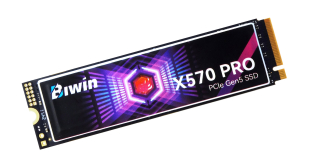
Biwin has entered the Gen5 SSD arena with the X570 PRO, a drive which sits in the company's Black Opal premium gaming product line. Rated at up to 14,000MB/s for Sequential reads, it is the current flagship of the company's SSD range.
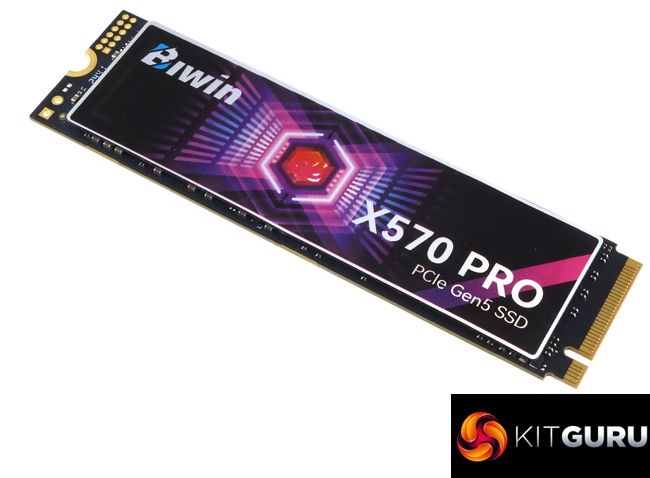
Powered by a Silicon Motion SM2508 8-channel controller, the X570 PRO uses 232-layer 3D TLC NAND together with an LPDDR4 DRAM cache chip (the size of which is based on drive capacity at the ratio of 1GB per 1TB). At launch, the X570 PRO range consists of three capacities; 1TB, 2TB and a flagship 4TB (the drive we are reviewing here) model.
Biwin rates the Sequential read performance of all three capacities as up to 14,000MB/s. As for Sequential writes, the 1TB and 2TB drives are rated up to 13,000MB/s and the 1TB drive, 10,500MB/s.
Random reads are quoted as up to 2000K IOPS for the 4TB and 2TB drives with the 1TB drive getting a rating of up to 1600K IOPS. Random writes are quoted as up to 1600K IOPS for all three drives.
The endurance figures quoted for the range are impressive with the 4TB drive getting a 3,000 TBW rating, 1,500 TBW for the 1TB drive and 750 TBW for the 1TB model. The drives are backed by a 5-year warranty.
Physical Specifications:
- Usable Capacities: 4TB.
- NAND Components: 232-layer TLC NAND.
- NAND Controller: Silicon Motion SM2508.
- Cache: 4GB LPDDR4.
- Interface: PCIe Gen 5 x4, NVMe 2.0.
- Form Factor: M.2 2280.
- Dimensions: 80 x 22 x 2.5 mm.
- Drive Weight: 9g.
Firmware Version: FWX1221A