KitGuru KitGuru.net – Tech News | Hardware News | Hardware Reviews | IOS | Mobile | Gaming | Graphics Cards


VRMark is a benchmark designed specifically with virtual reality gaming in mind. Futuremark say: ‘the performance requirements for VR games are much higher than for typical PC games. So if you’re thinking about buying an HTC Vive or an Oculus Rift, wouldn’t it be good to know that your PC is ready for VR? VRMark includes two VR benchmark tests that run on your monitor, no headset required, or on a connected HMD. At the end of each test, you’ll see whether your PC is VR ready, and if not, how far it falls short.’
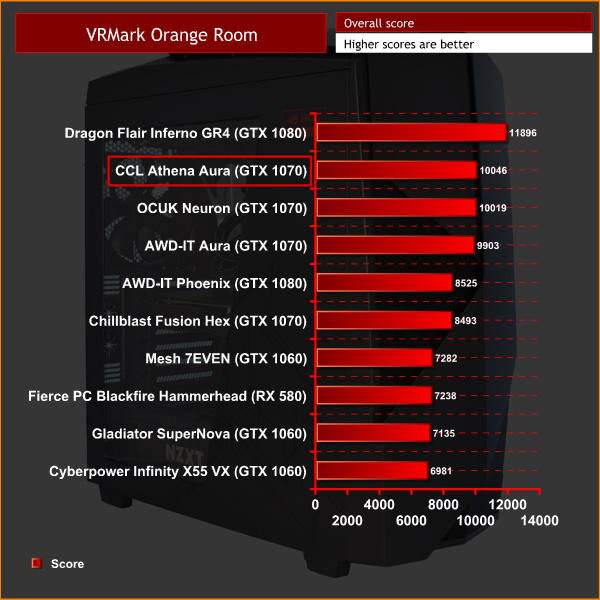
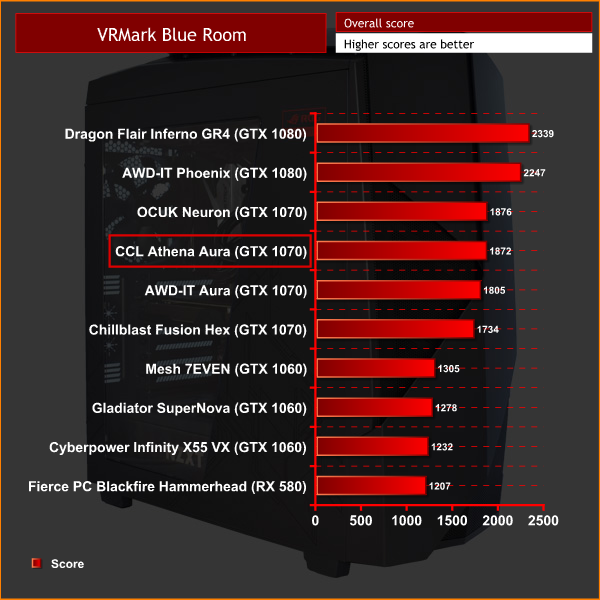
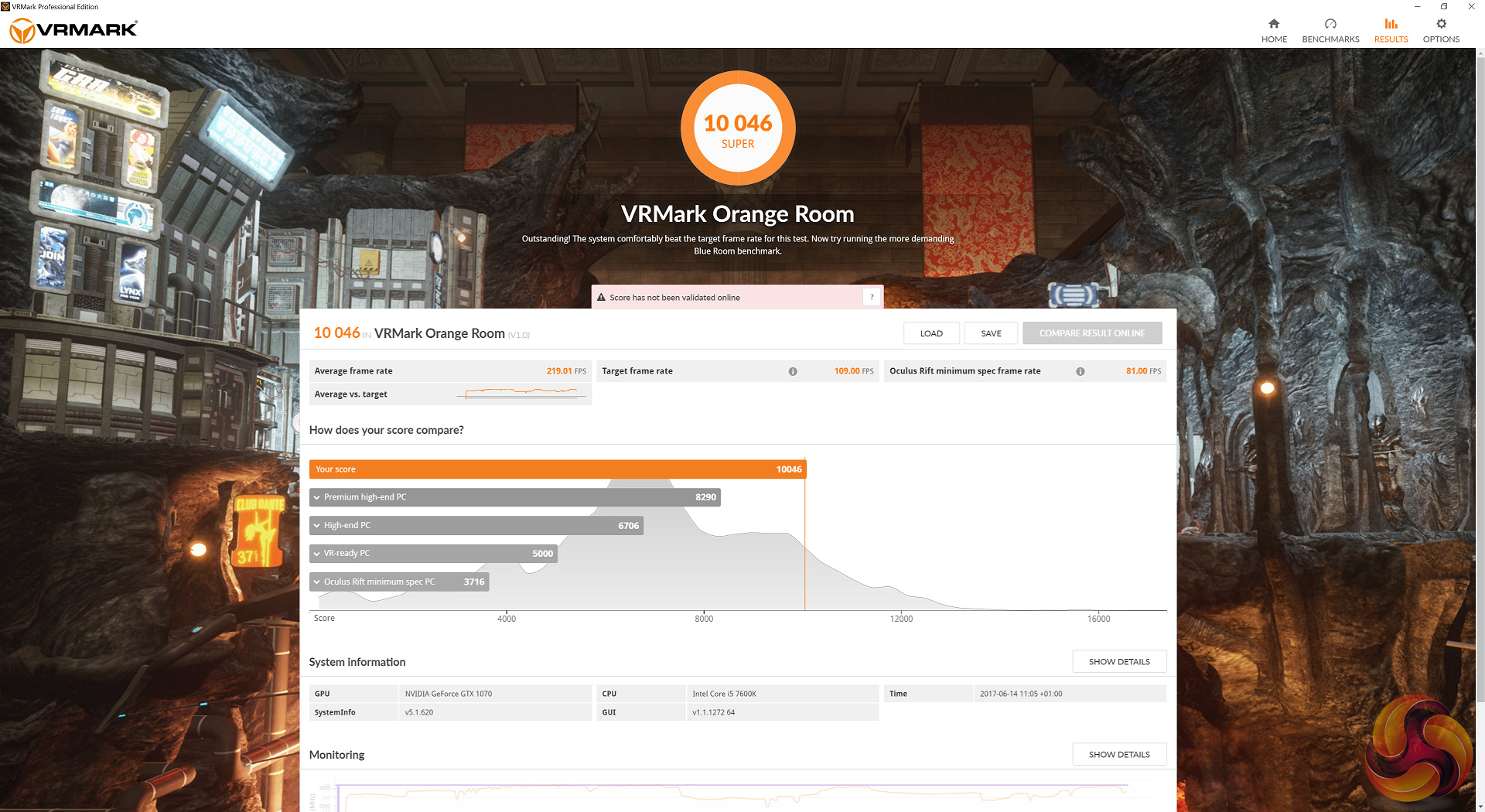
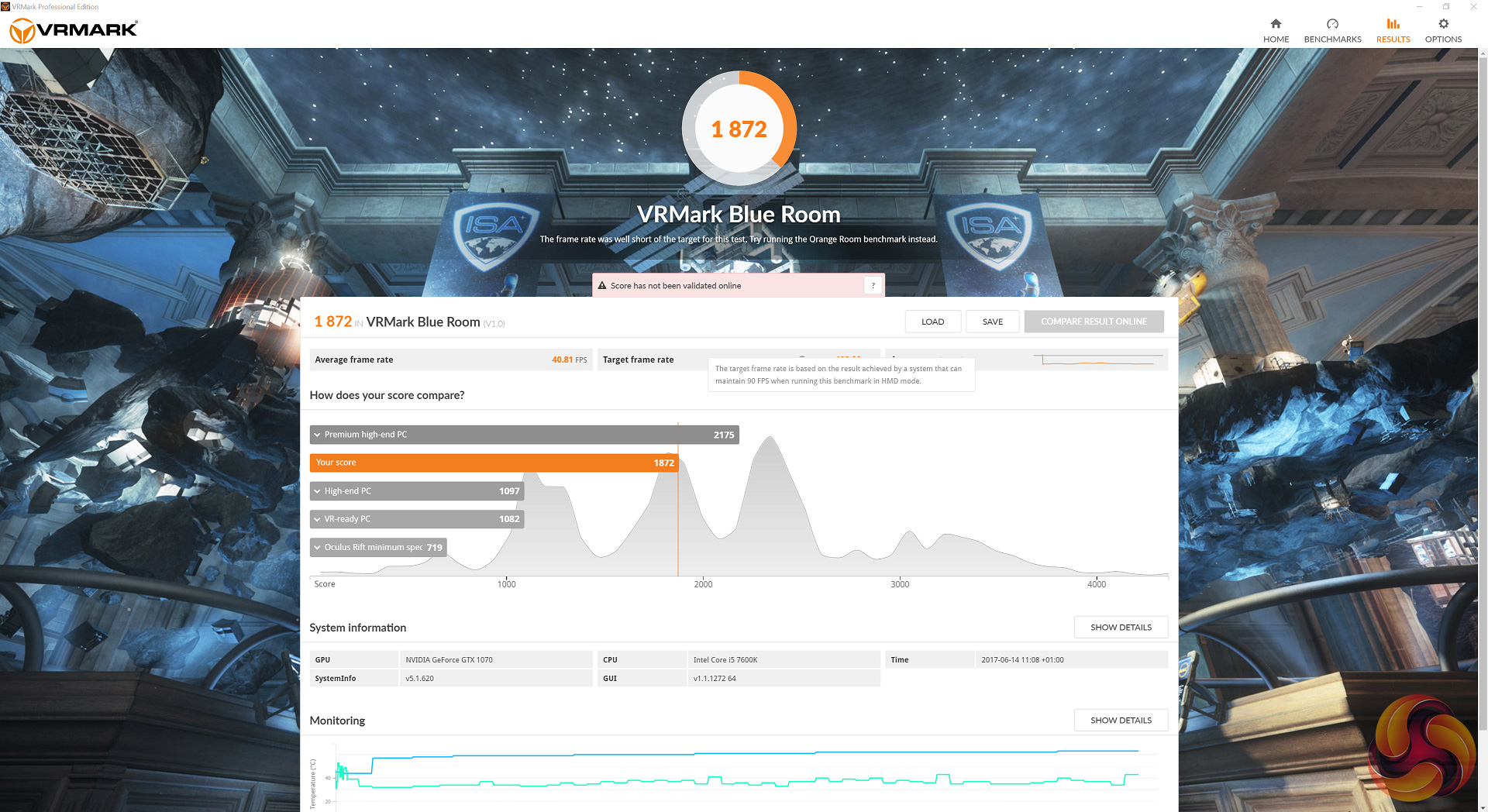
A new addition to our benchmarking suite, VRMark looks like one of the few valid ways of testing the VR capabilities of a PC. Consisting of two ‘rooms’, or benchmark tests, the Orange Room is the standard test, while the Blue Room is much more demanding.
Across both tests the Athena Aura is there or thereabouts, and it is of course fully VR ready.