KitGuru KitGuru.net – Tech News | Hardware News | Hardware Reviews | IOS | Mobile | Gaming | Graphics Cards



Starting with Blender 3.1.0, this is an intensive all-core CPU load, so as expected the Corsair One using the 165W BIOS is slower than when we tested with a 180W power limit, though only by a couple of percent. The i9 in our GPU test system however, is comfortably faster as it can maintain its all-core turbo at a higher clock than the Corsair One.
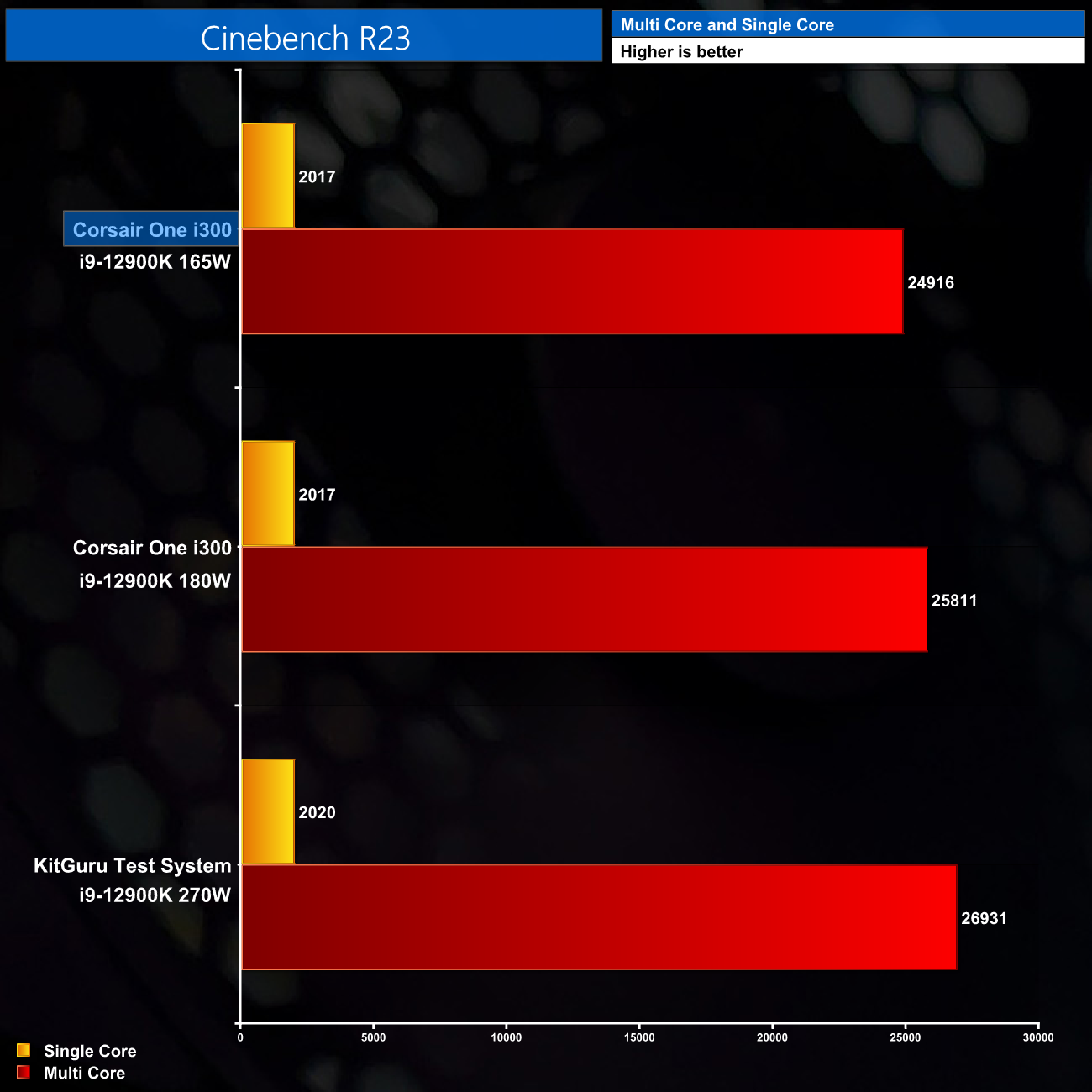
The same trend can be observed in Cinebench R23. The Corsair One limited to 165W is about 900 points behind the same system but with the 180W power limit, a difference of 3% this time. As expected, our own test system is faster still.
Interestingly however, the single-core results are basically the same for all three configurations tested, and that's because the i9 is not power-limited at 165W when only utilising a single thread, and we observed all three systems hitting 5.1GHz on the thread in question.
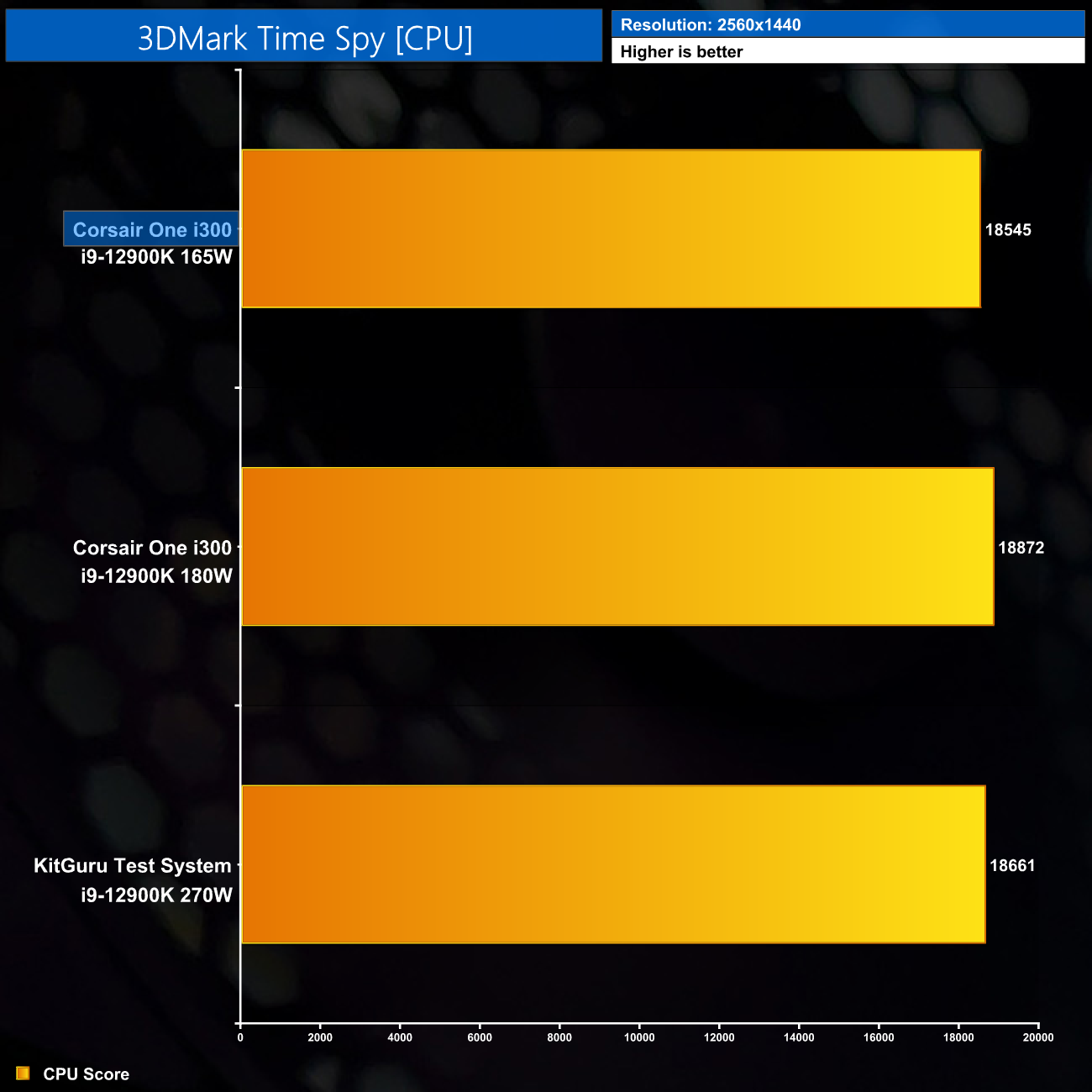
That may partly explain the strange results we see in the 3DMark Time Spy CPU benchmark. For reasons I cannot fathom, the Corsair One with the power limit at 180W is actually out-performing our GPU test system by a couple hundred points. I even spoke to Leo about this, our resident Intel expert, and he told me he has also seem some questionable behaviour when testing CPUs in Time Spy, with no real explanation, so perhaps it is not the best CPU benchmark to use. In any case, the results are all fairly close together.
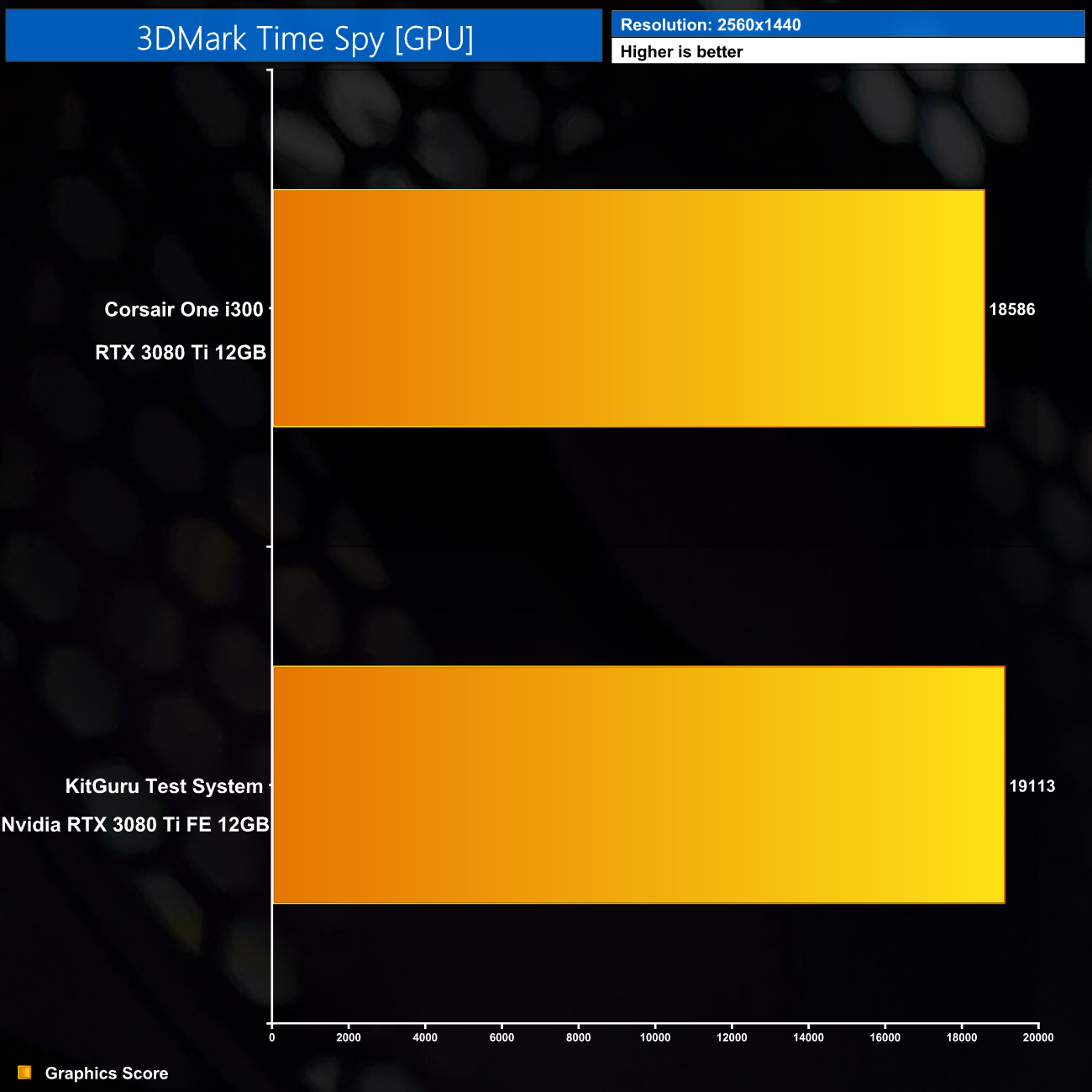
Time Spy as a GPU test, however, has never given me any problems, and we can see the RTX 3080 Ti Founders Edition out-performing Corsair's liquid cooled GPU by about 3%.