KitGuru KitGuru.net – Tech News | Hardware News | Hardware Reviews | IOS | Mobile | Gaming | Graphics Cards


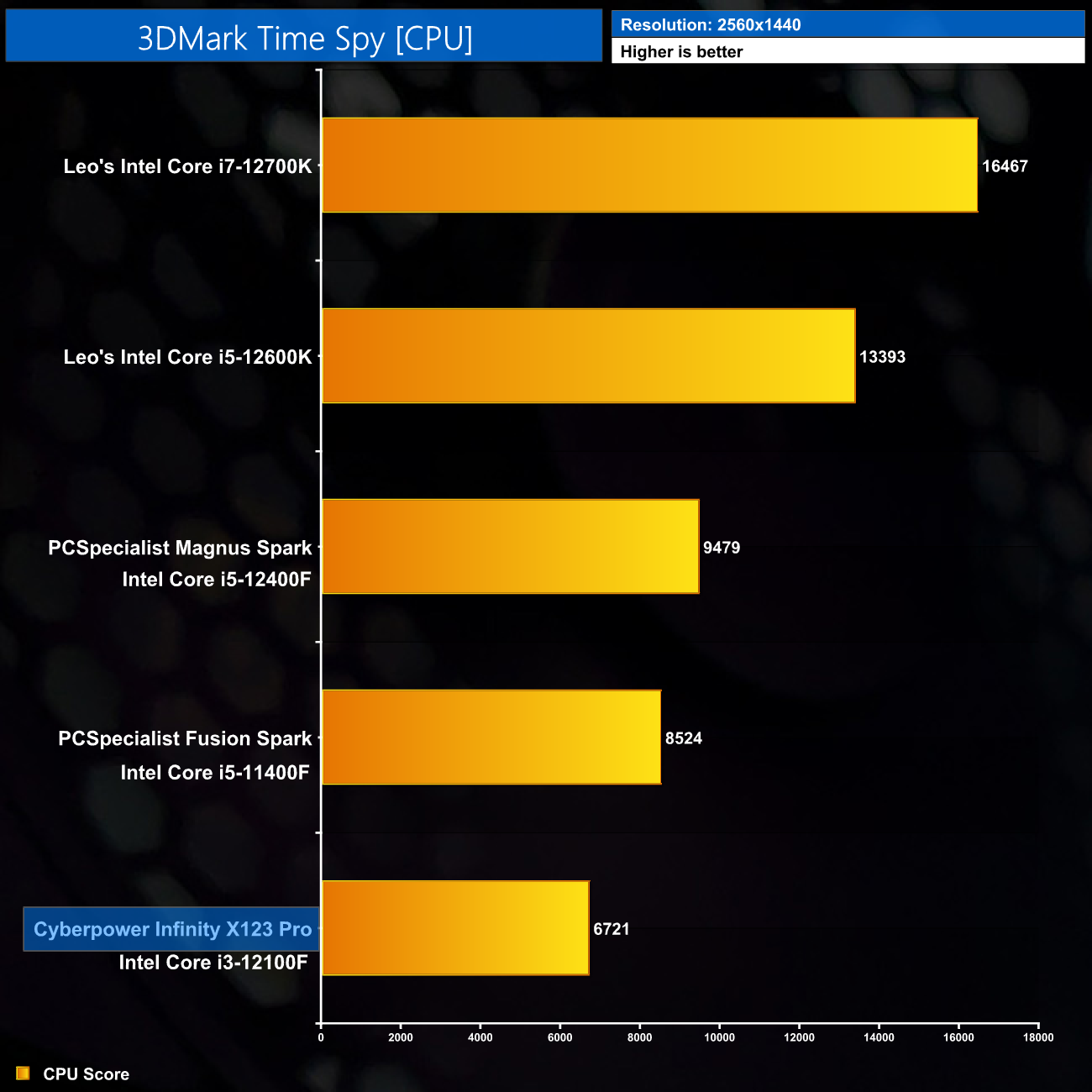
Kicking off with 3DMark Time Spy, looking at the CPU score. The i3-12100F is only a quad-core unit but still scores relatively well, though compared to the i5-12400F, it is obviously slower. Still, against the last generation i5-11400F, it is only 21% slower despite having 33% fewer cores, which is impressive.
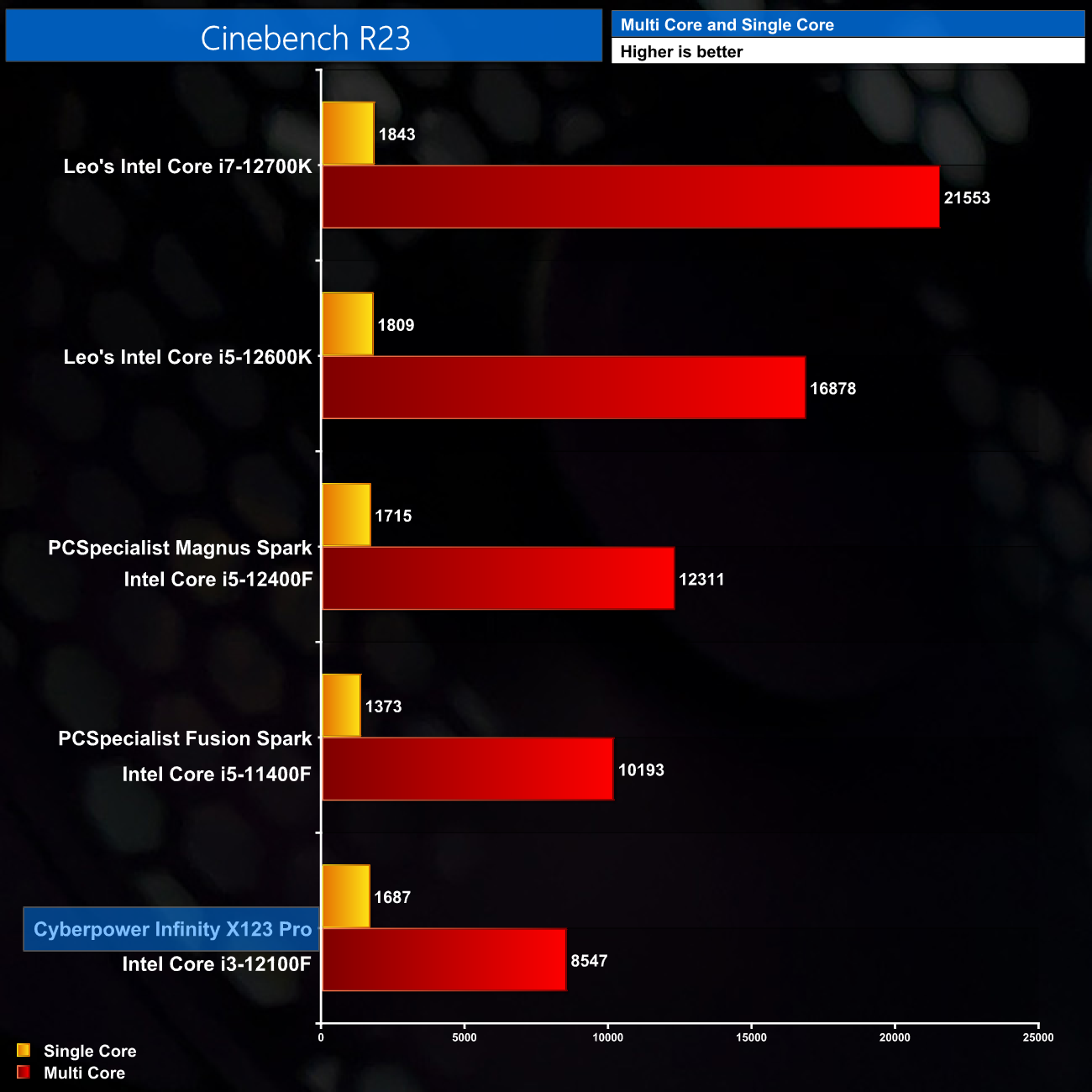
Relatively speaking, the i3-12100F does even better in Cinebench R23, where it is only 16% slower than the 11400F in the multi-threaded test, which is really pretty impressive considering the i5 has two extra cores. The single-core result is only marginally behind the i5-12400F as well, while it is miles clear of the 11400F thanks to the newer Alder Lake architecture.
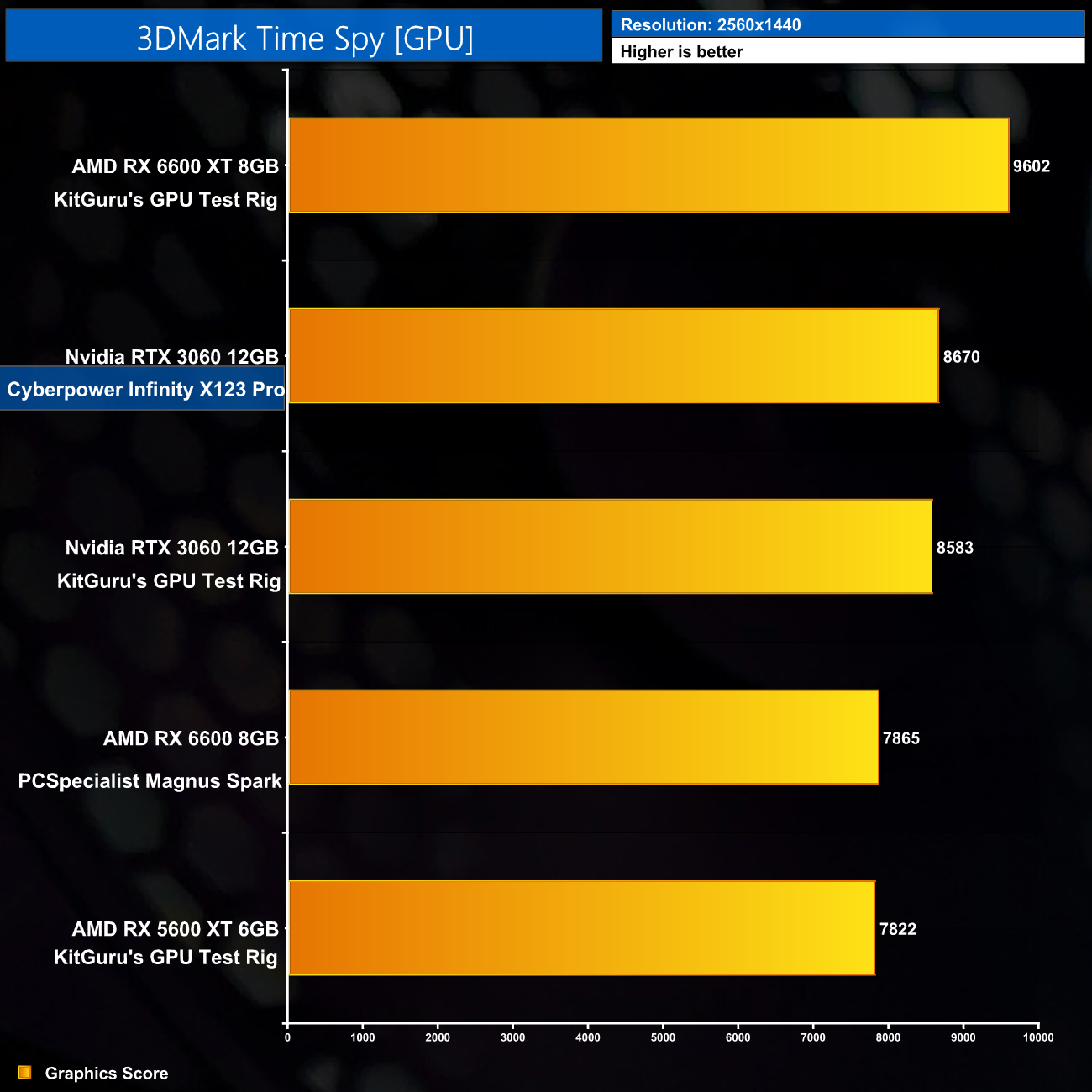
As for the GPU score in 3DMark Time Spy, the MSI Ventus 2X RTX 3060 proved exactly as fast as we’d expect, closely matching the RTX 3060 that I use in my GPU reviews, and easily outscoring the RX 6600, so that bodes well for our game benchmarks.