KitGuru KitGuru.net – Tech News | Hardware News | Hardware Reviews | IOS | Mobile | Gaming | Graphics Cards


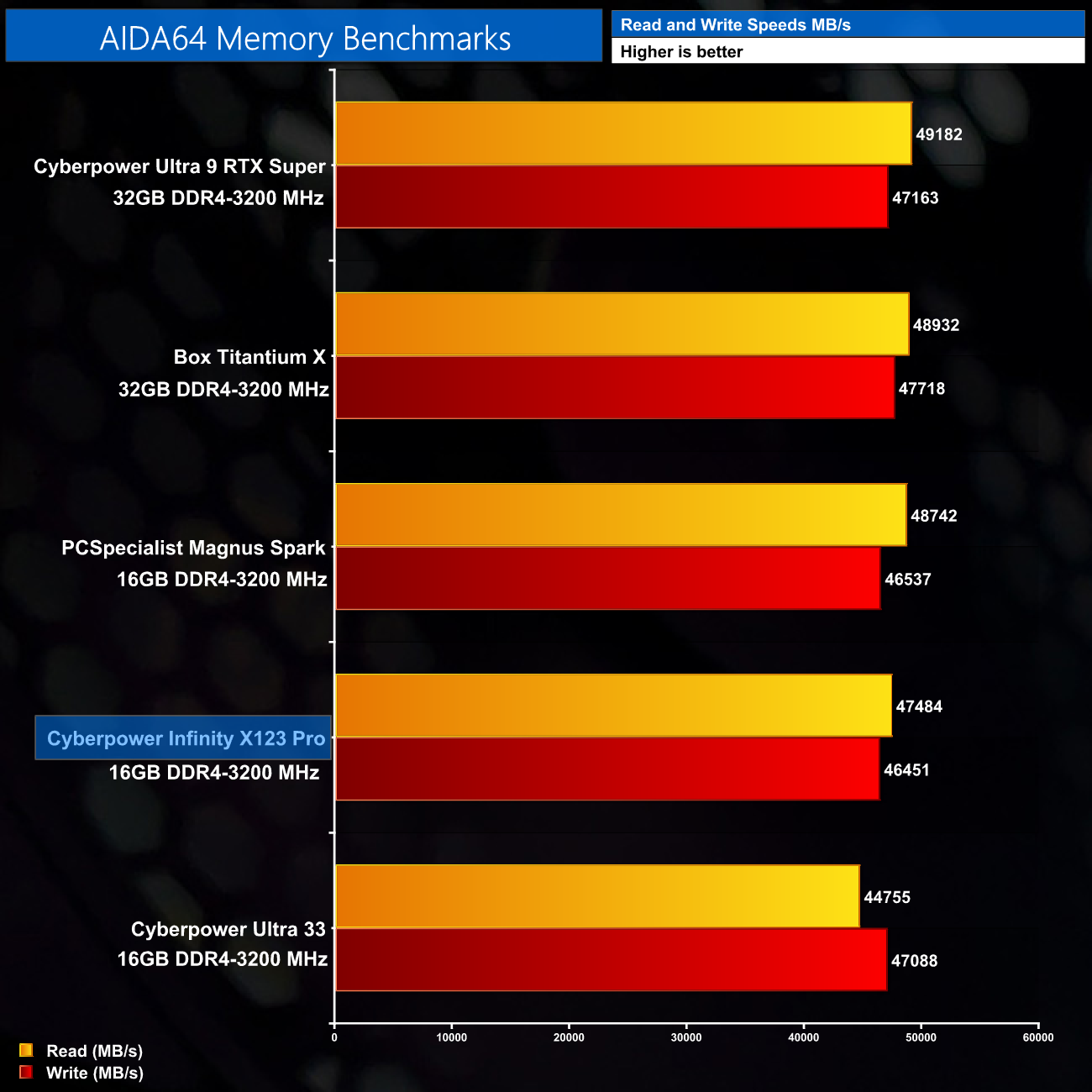
AIDA64's memory benchmark also shows the results exactly we'd expect, with speeds of 47000MB/s read and 46000MB/s writes. Other DDR4 kits can run a touch faster at the same frequency thanks to their tighter timings, but this kit is fine for a system of this spec.
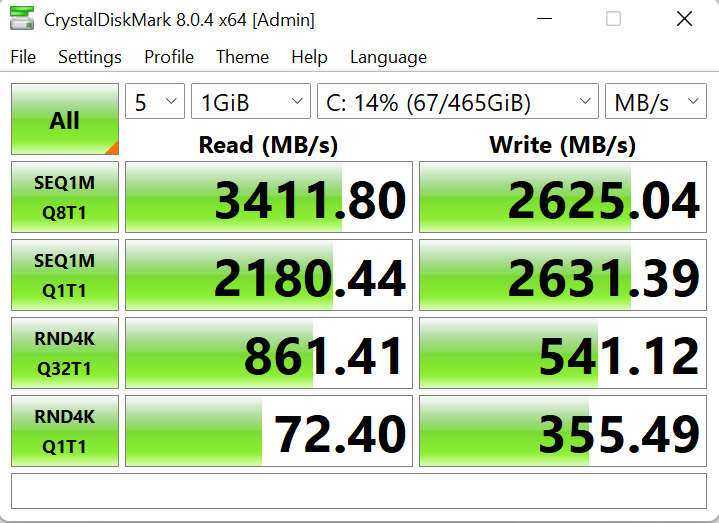
We also ran CrystalDiskMark on the Spatium M390 SSD and confirmed the quoted speeds, as we hit 3411MB/s reads and 2625MB/s writes. It’s more than enough for this system in terms of its speed, but it really is the capacity of the SSD which, for me, is a bigger problem.
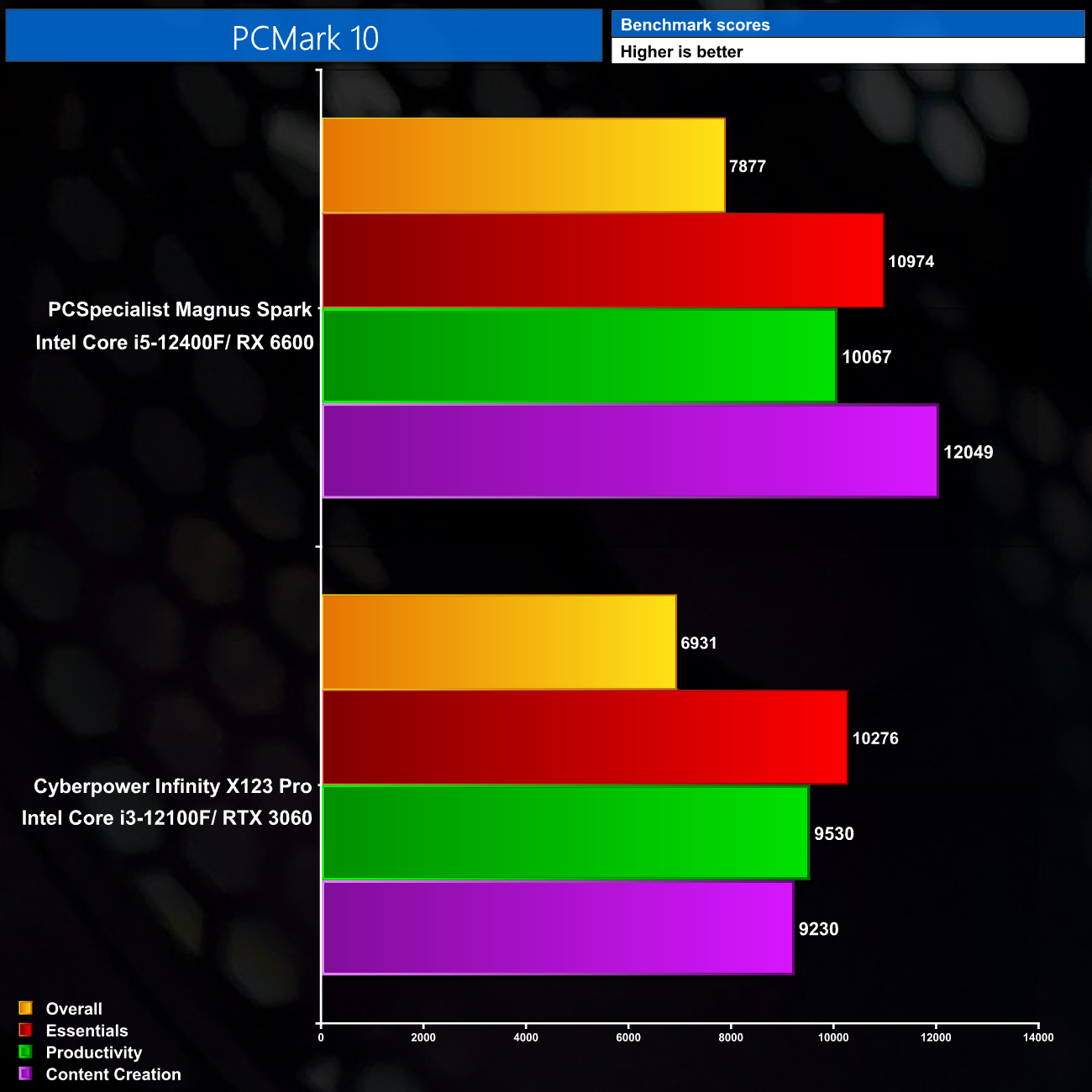
Lastly, here we compare the Cyberpower system to the PCSpecialist Magnus Spark in PCMark 10. The Infinity Pro is not quite as fast, mainly due to the fact the PCSpecialist system has an extra two cores, but it comes close, particularly in the Essentials and Productivity benchmarks.