KitGuru KitGuru.net – Tech News | Hardware News | Hardware Reviews | IOS | Mobile | Gaming | Graphics Cards


Testing and Performance
A few months back we reviewed a Gigabyte Z370 Aorus Gaming motherboard with a Core i7-8700K and GTX 1080 Ti graphics and retested the board for our launch review of Ryzen 7 2700X which made it an ideal point of comparison with the Infinite X. We tested the Gigabyte with the CPU at both stock and overclocked speeds, however in this review we are only looking at stock CPU speeds.
It is worth noting the Gigabyte was used with G.Skill Sniper X memory at 3600MHz while the MSI has 2400MHz so there is a point of difference there. If you check the specification of pretty much any PC with Core i7-8700K and GTX graphics, however, the starting point is DDR4-3000MHz RAM – the MSI is just not up to scratch in that regard.
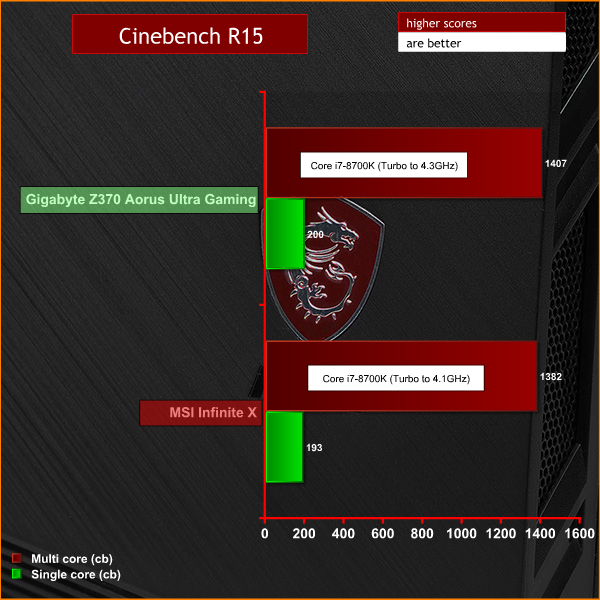
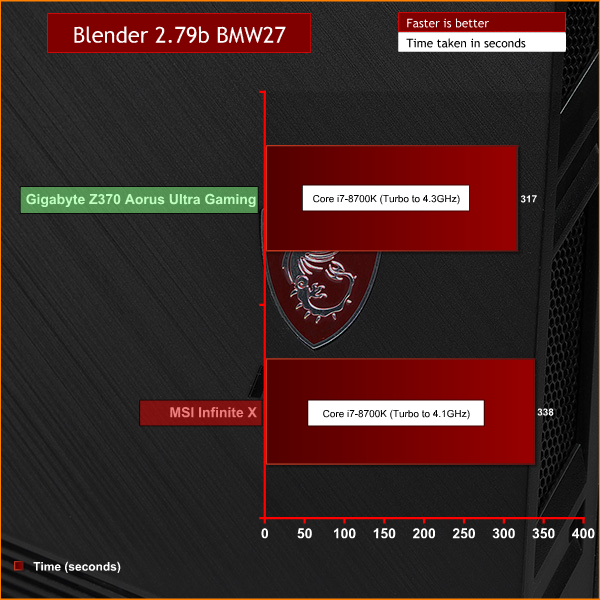
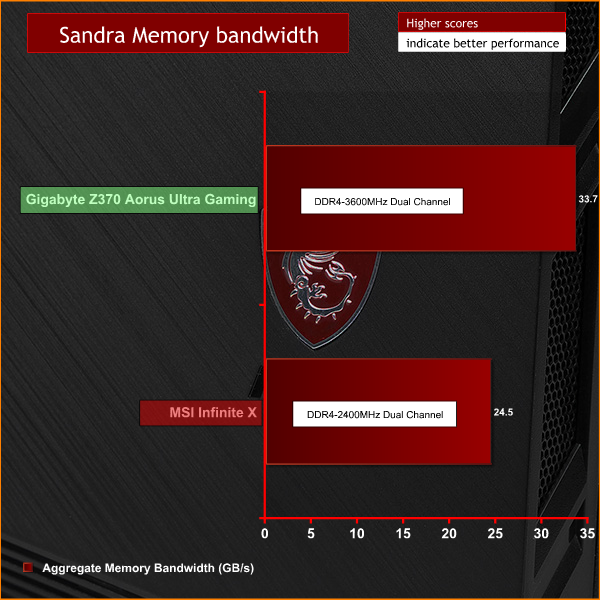
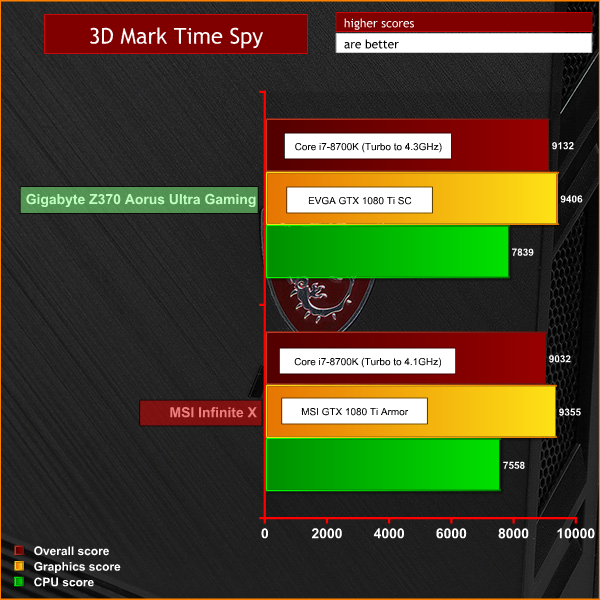
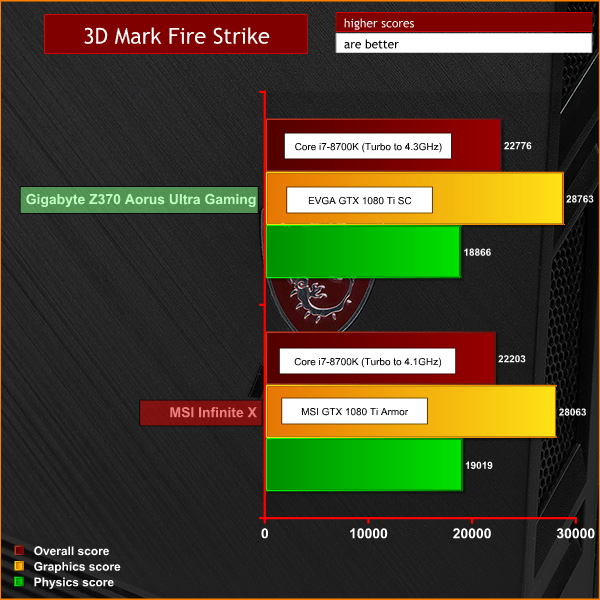
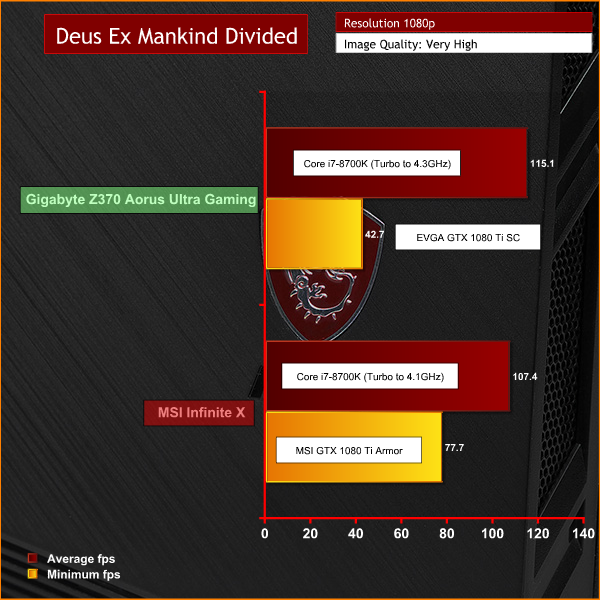
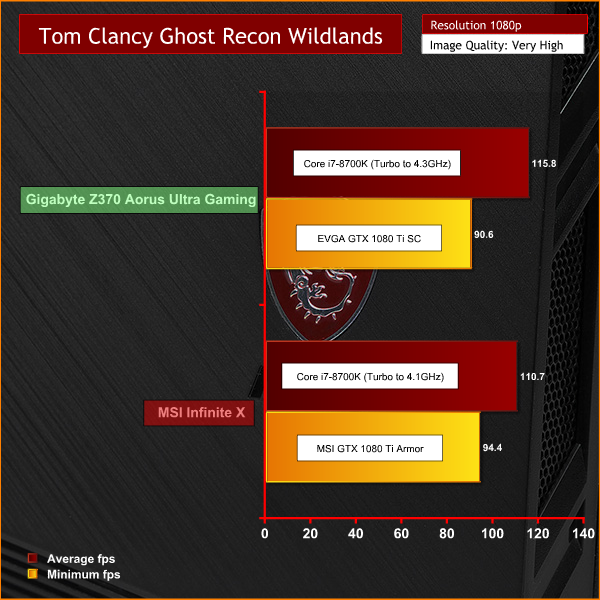
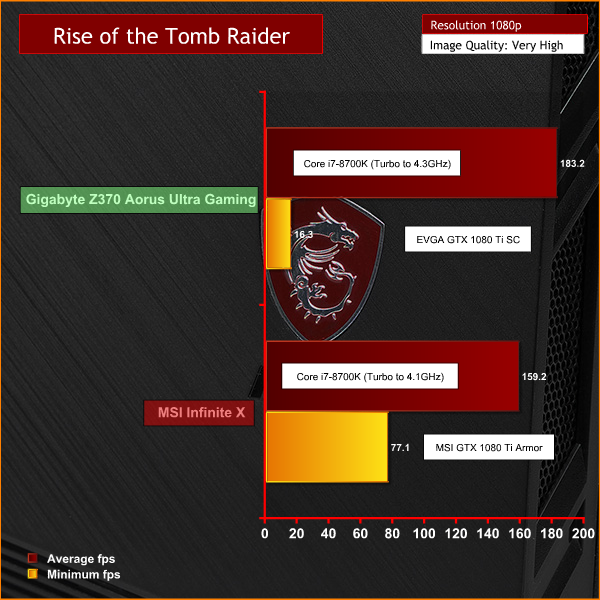
Testing and Performance Overview
In every test the Infinite X trailed behind our Gigabyte test set-up by a small but significant margin in the region of five percent. If we had paid £2500 this would have been disappointing however if you don’t have a point of reference, such as the Gigabyte, you would probably not be aware of the missing performance. Six cores of Coffee Lake plus a GTX 1080 Ti gives you solid gaming performance. Full stop.