KitGuru KitGuru.net – Tech News | Hardware News | Hardware Reviews | IOS | Mobile | Gaming | Graphics Cards



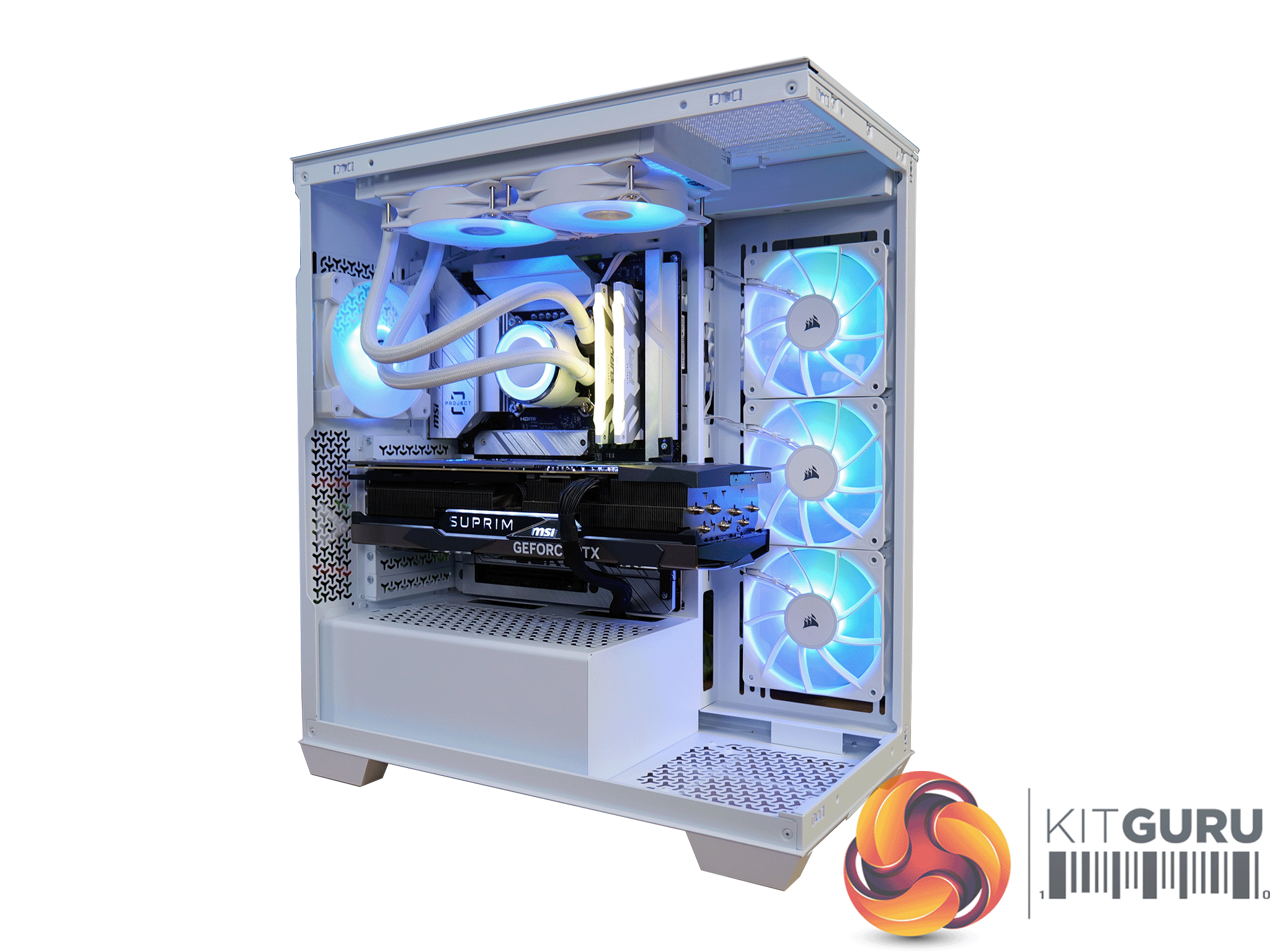
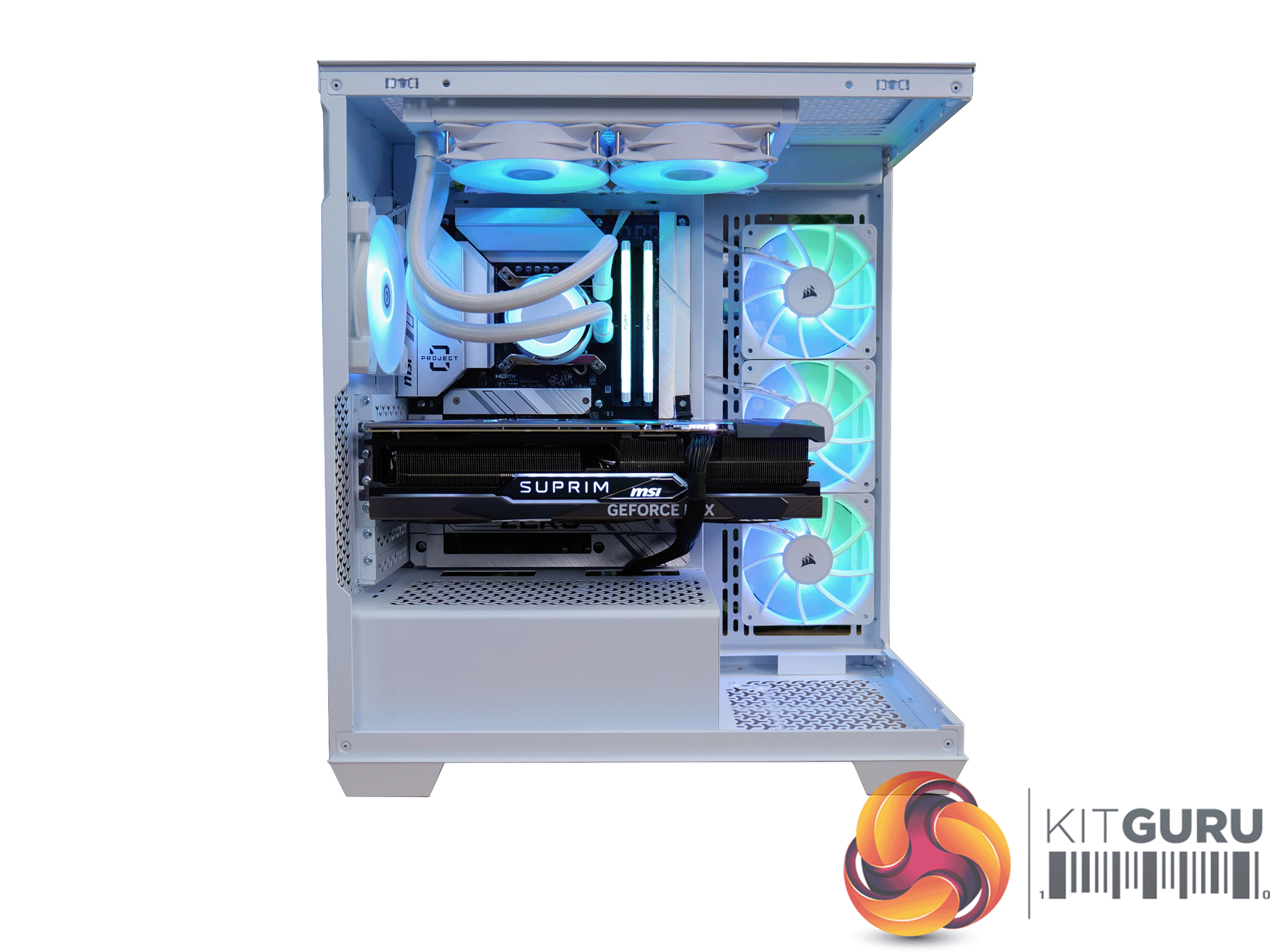
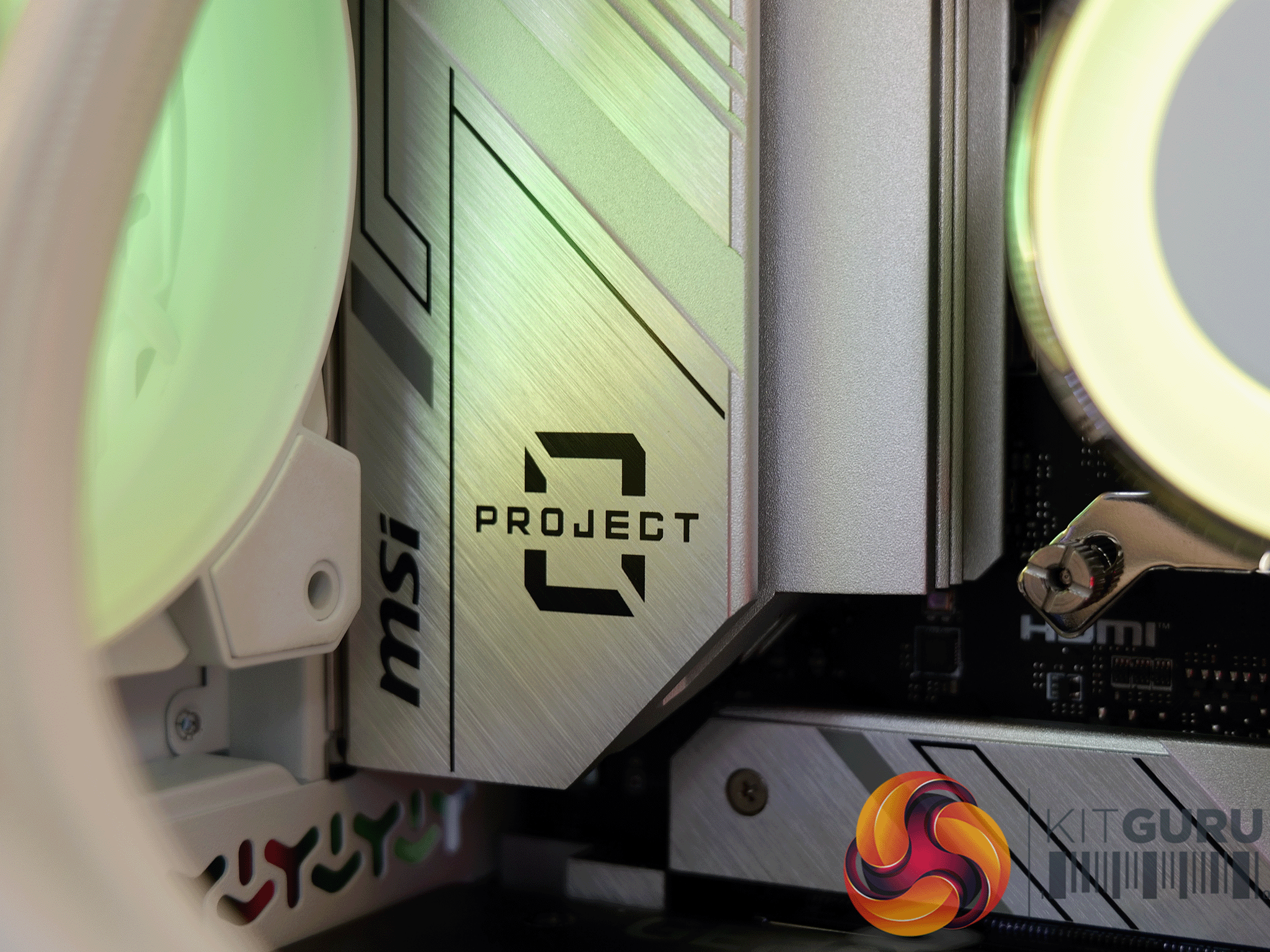
Today we get hands on with the first MSI Project Zero prebuilt desktop we’ve reviewed here at KitGuru. The Project Zero Infinity from CyberPowerPC features an MSI Z790 Project Zero motherboard, an Intel Core i9-14900KF CPU alongside 32GB of Kingston Fury Renegade RGB DDR5 memory running at 6400MT/s, and an MSI RTX 4080 Super. As well as looking the part due a distinct lack of visible cables, the specs should lead to some stellar gaming performance, and we’re putting both to the test today.
Timestamps
00:00 Overview
00:47 Pricing and warranty
01:53 Hardware specification
08:15 Front I/O
08:30 Extra fan?
08:46 Thoughts on the looks
10:14 Updating Windows
10:32 Cinebench R23 Multi Core / Clocks/ Power
11:11 Cinebench R23 Single Core
11:23 3DMark Time Spy
12:13 AIDA 64 Memory Bandwidth
12:59 Gaming
13:14 Modern Warfare 3
13:37 Cyberpunk 2077
14:09 F1 2024
14:50 Assassins Creed Mirage
15:17 Red Dead Redemption 2
15:42 Forza Horizon 5
16:05 Mat's thoughts on gaming
16:28 Thermals, Noise and Power
19:14 Closing Thoughts

Specification
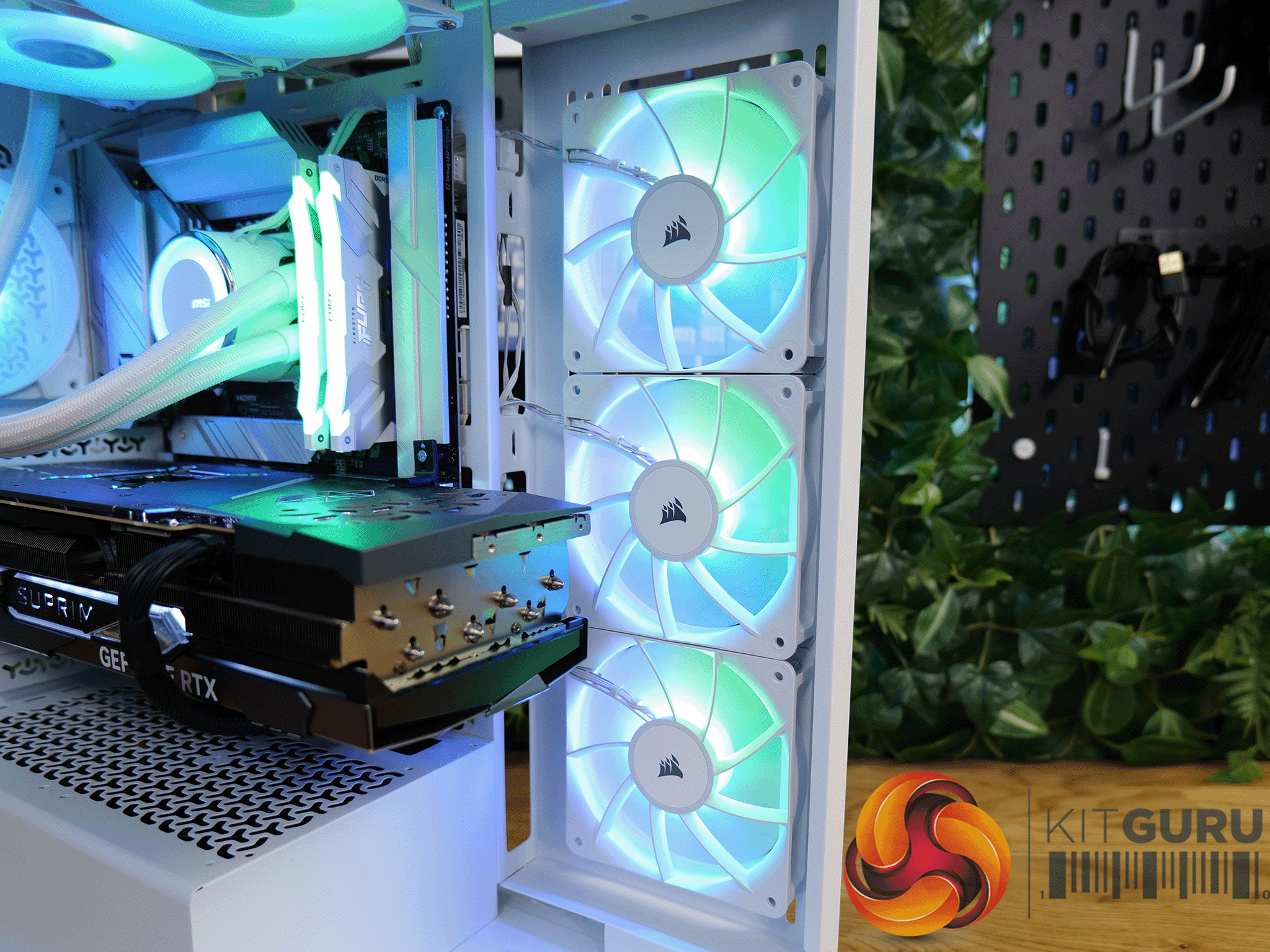
- Case: Corsair 3500X ARGB TG Case – White – (features x3 RS120 ARGB fans)
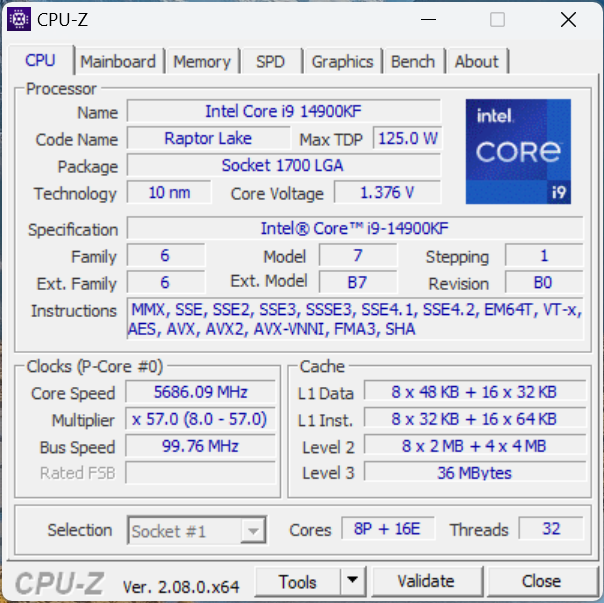
- CPU (Processor): Intel® Core™ i9-14900KF – 24-Core [8P @ 3.00GHz-5.60GHz / 16E @ 2.20GHz-4.40GHz] – 36MB Cache
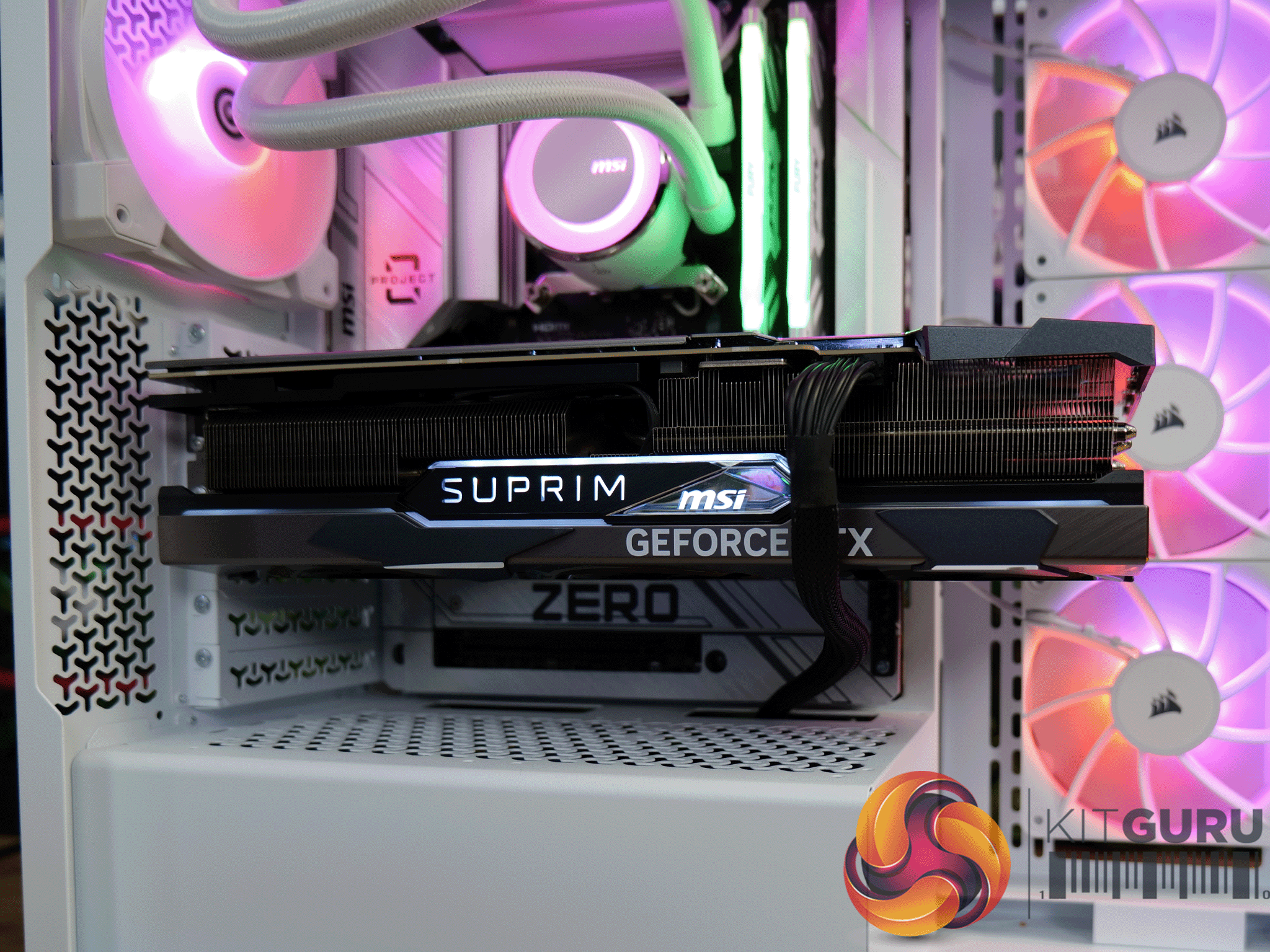
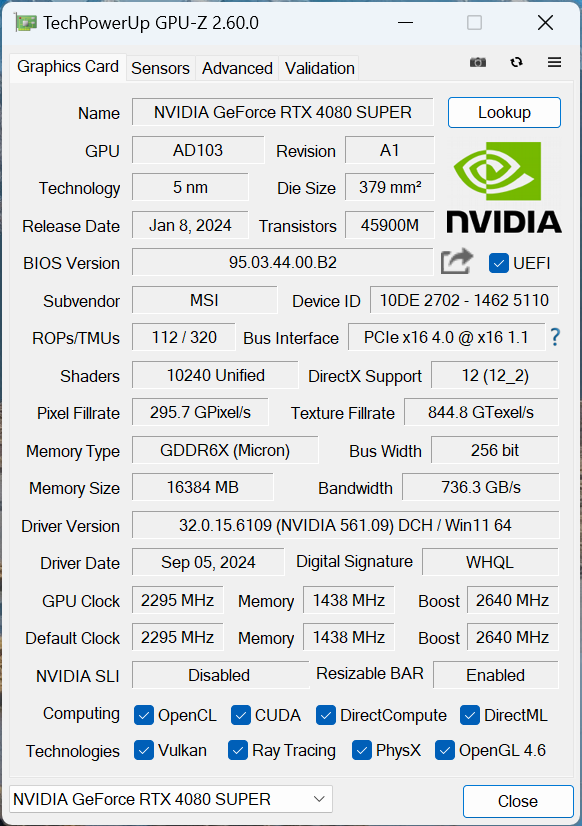
- Graphics Card (GPU): MSI GeForce RTX™ 4080 SUPER Gaming X Slim – 16GB GDDR6X – HDMI, DP – Real-Time Ray Tracing, NVIDIA DLSS 3
- (Please note, the system featured in this article and in our video review features an MSI RTX 4080 Super Suprim X – this has since been changed to the above graphics card model due to stock issues)
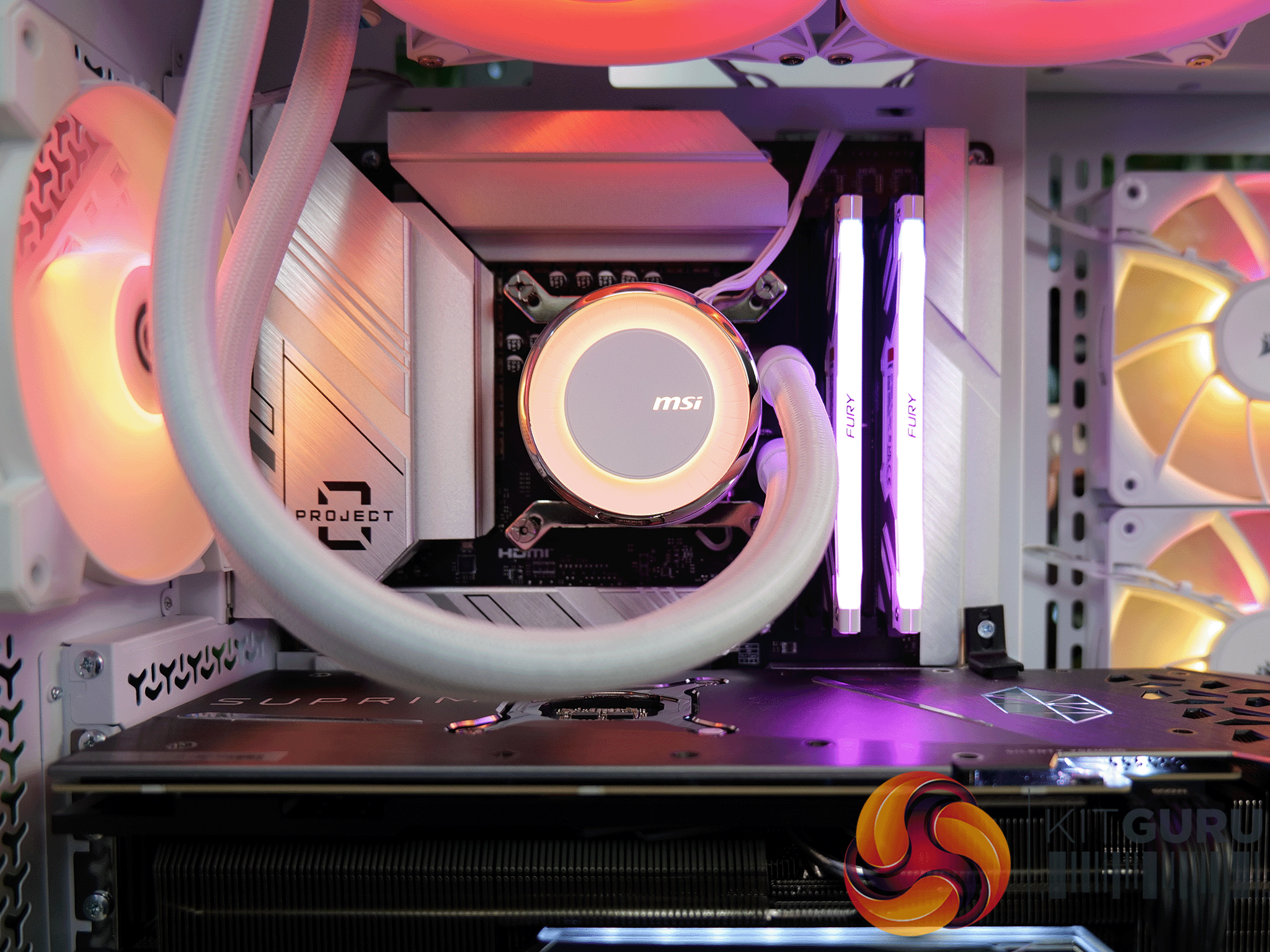
- CPU Cooling: MSI Coreliquid E240 ARGB AIO Liquid Cooler, Ultimate OC Compatible – White
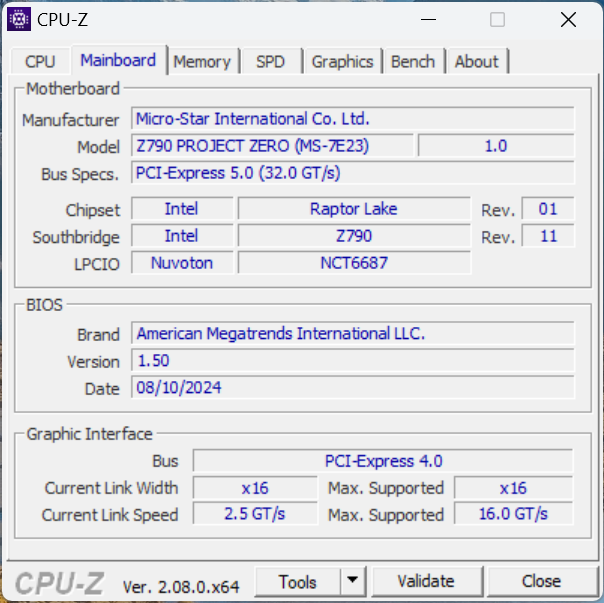
- Motherboard: MSI Z790 PROJECT ZERO: ATX w/ PCIe 5.0, USB 3.2, 4x M.2
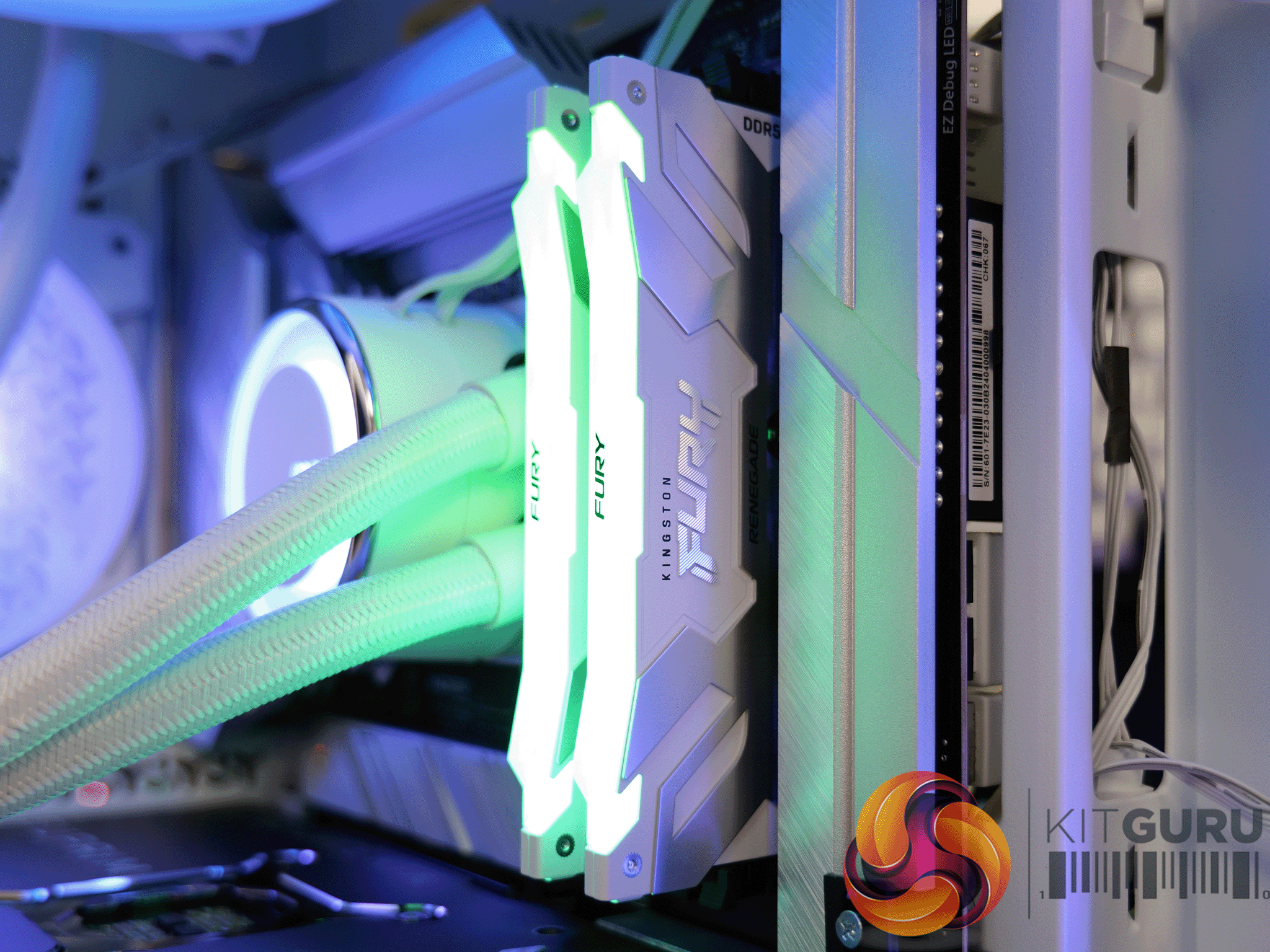
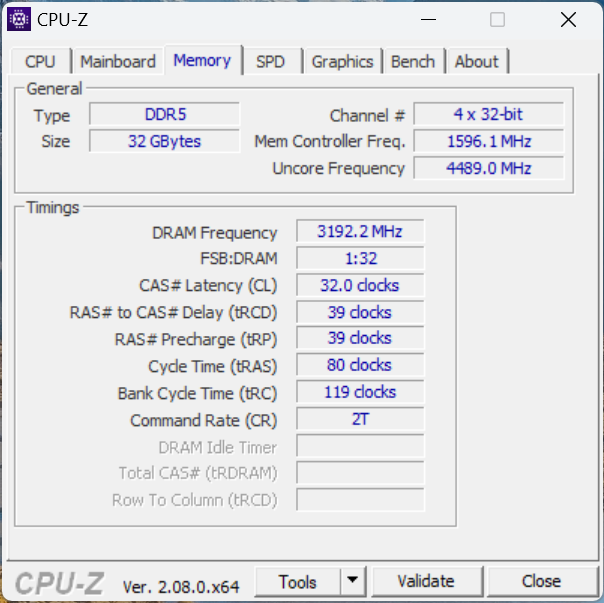
- Memory (RAM): 32GB (2x16GB) DDR5/6400 Kingston Fury Renegade RGB White/Silver
- PSU (Power Supply): MSI MAG A1250GL PCIE5 1250W 80+ Gold ATX 3.0 Fully Modular Gaming Power Supply
- Storage (NVMe Drives): 1TB MSI M450 M.2 PCIe 4.0 NVMe SSD – 3600MB/s Read & 3000MB/s Write
The core specs are confirmed in the following CPU-Z and GPU-Z screenshots:
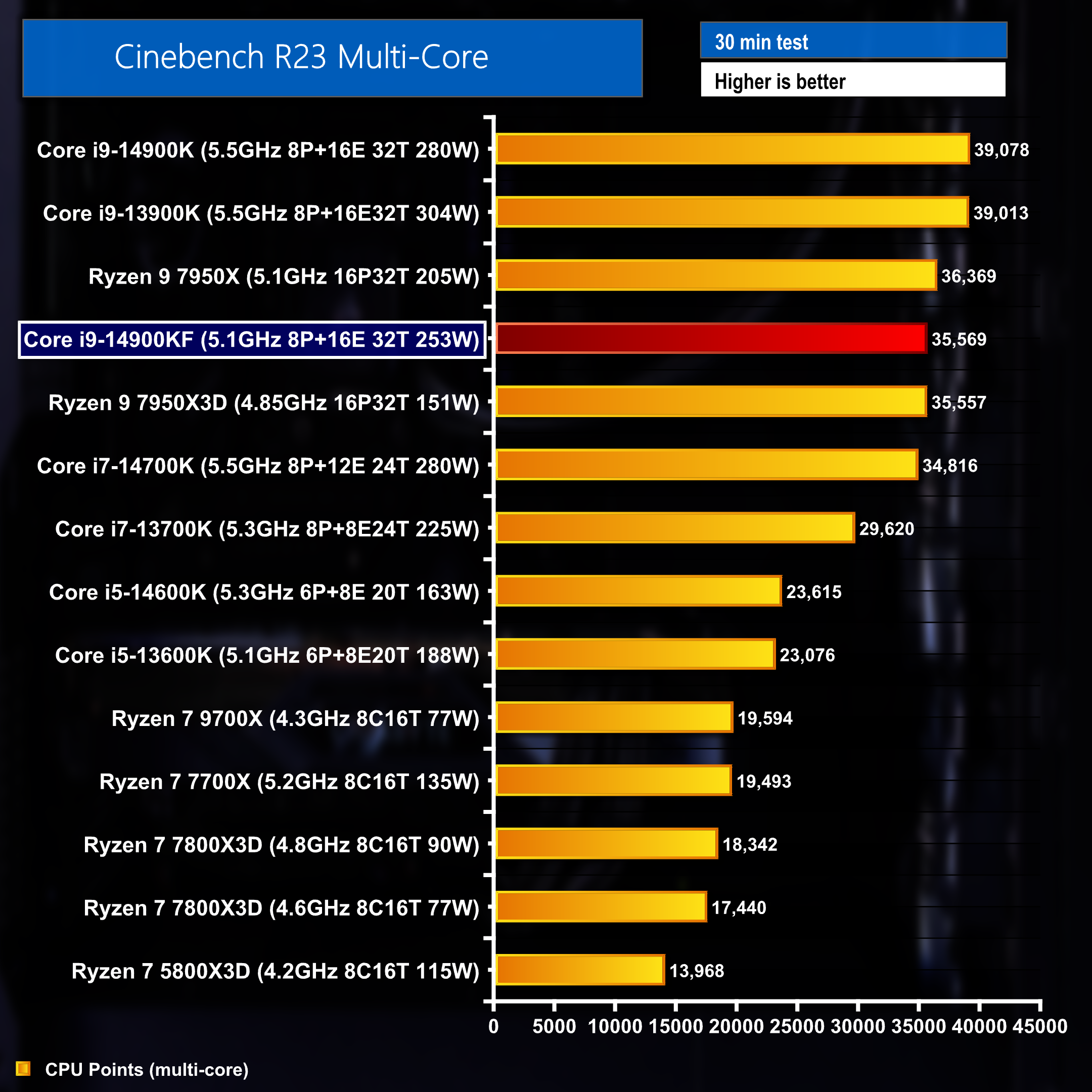
Multicore performance when measured with Cinebench R23 over a sustained 10 minute test saw the Core i9-14900KF land a score of 35,569 points, putting it very close to the AMD Ryzen 9 7950X3D from our comparison data. While this performance is impressive, it fell some way short of the previously tested Intel Core i9-14900K, due to the 14900KF's lower power limit.
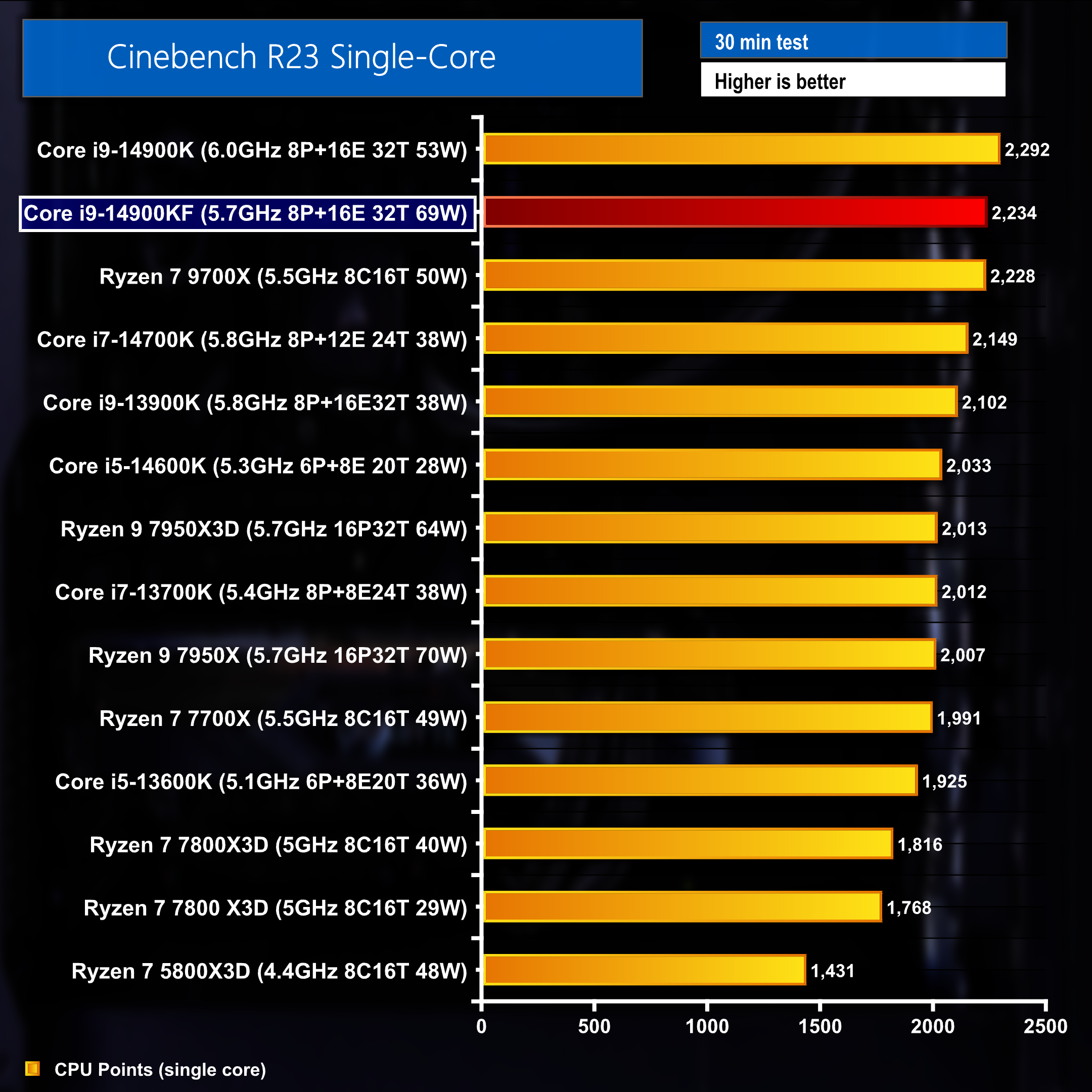
Switching things up to test single core performance saw that gap between the two 14th Intel processors narrow significantly. The 14900KF found in the Project Zero Infinity desktop recorded a score of 2,234 points, putting it within touching distance of the both the AMD Ryzen 7 9700X and the Intel Core i9-14900K.
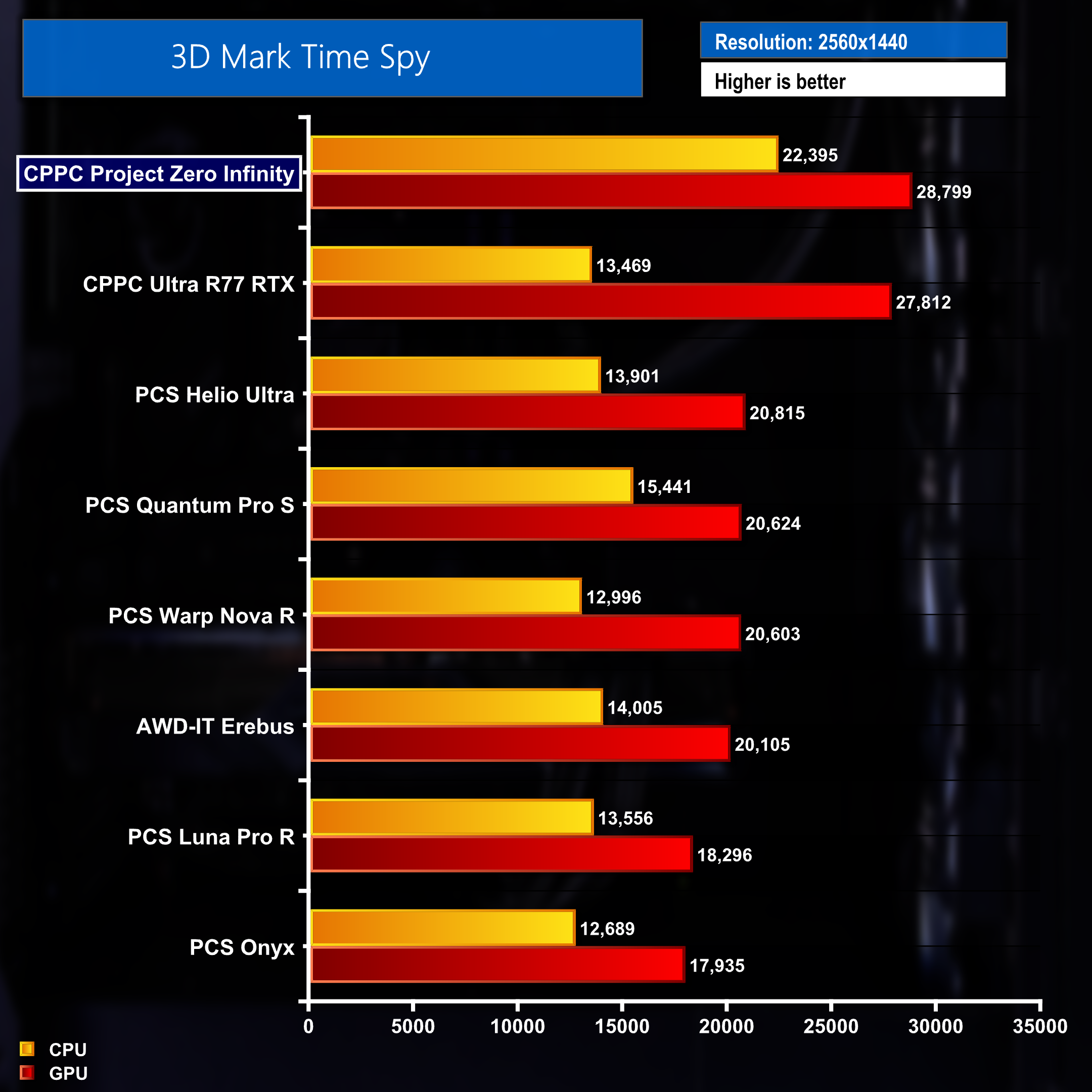
Pitting this CyberPowerPC system against a range of previously reviewed prebuilt desktop PCs in 3DMark Time Spy saw it take a substantial lead and top the chart. CPU scores were recorded at 22,395 points, which obliterates anything I have tested in the past. GPU performance tells a similar story, with the MSI RTX 4080 Super Suprim X scoring 28,799 points.
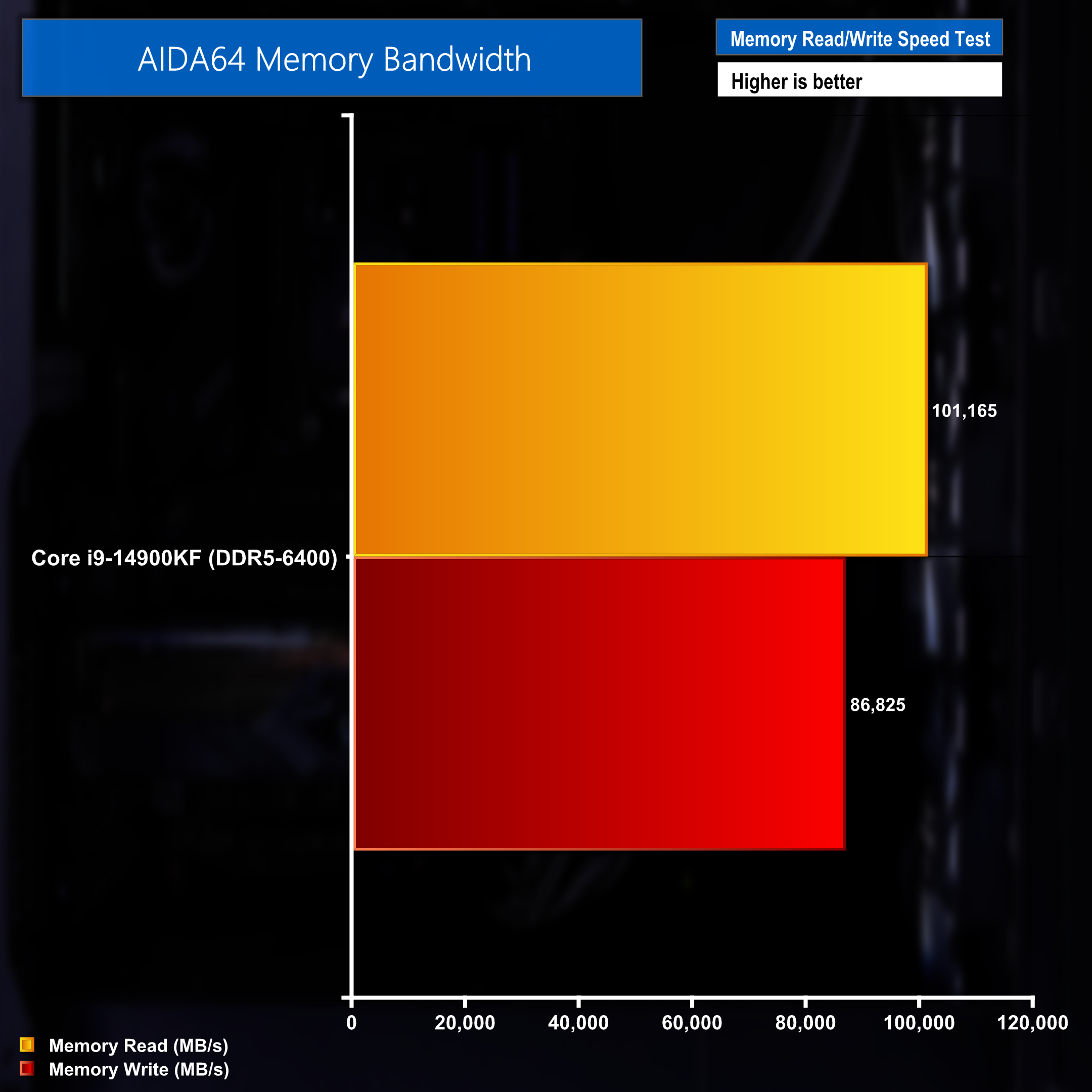
The Kingston Renegade RGB DDR5 6400MT/s memory found in the system recorded some very fast read and write speeds when testing with AIDA64. While not as beneficial to Intel as it would be to an AMD based system, this result still highlights the benefits to be found in running faster system memory.
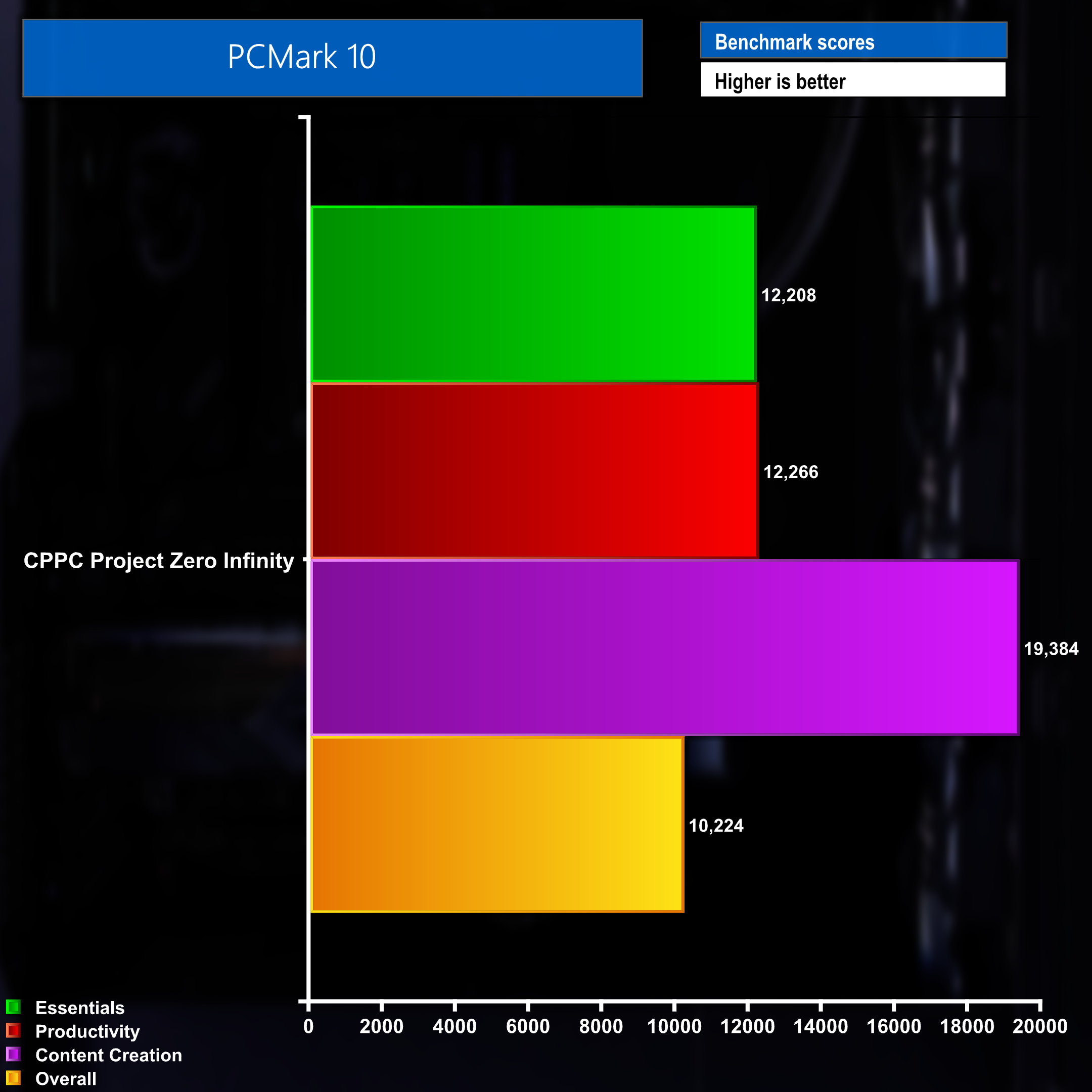
Finally, the PCMark 10 scores highlight the systems overall performance across a variety of differing scenarios. As is the usual with this test, the content creation category is a particular highlight at 19,384 points, thanks to the RTX 4080 Super graphics card found inside the system.
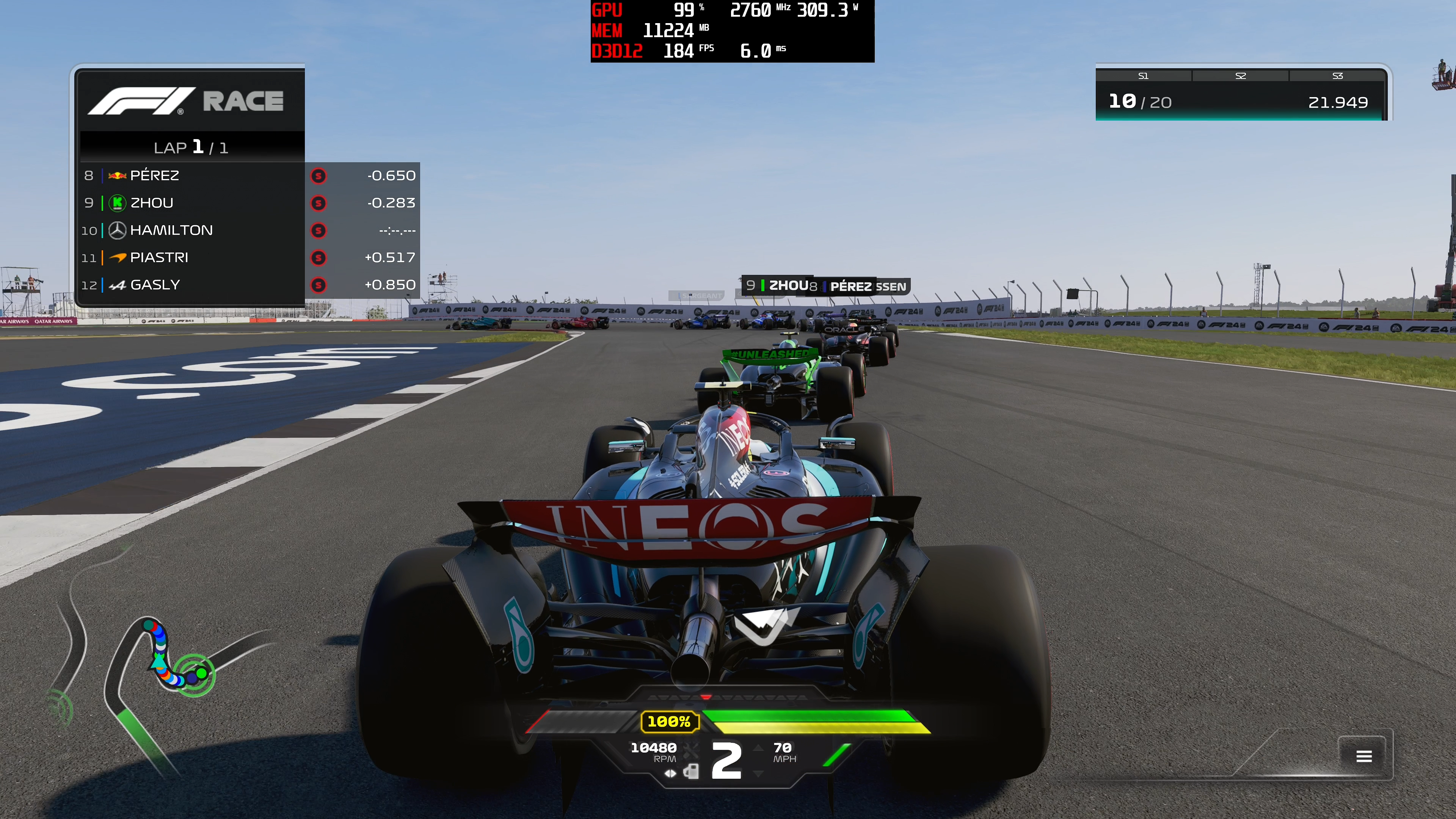
4K performance in F1 24 was very impressive and showcased the power of the Core i9-14900KF and RTX 4080 Super. Running through the built-in benchmark in this title at 3840×2160 resolution with maximum graphics settings saw typical performance around 180 fps.
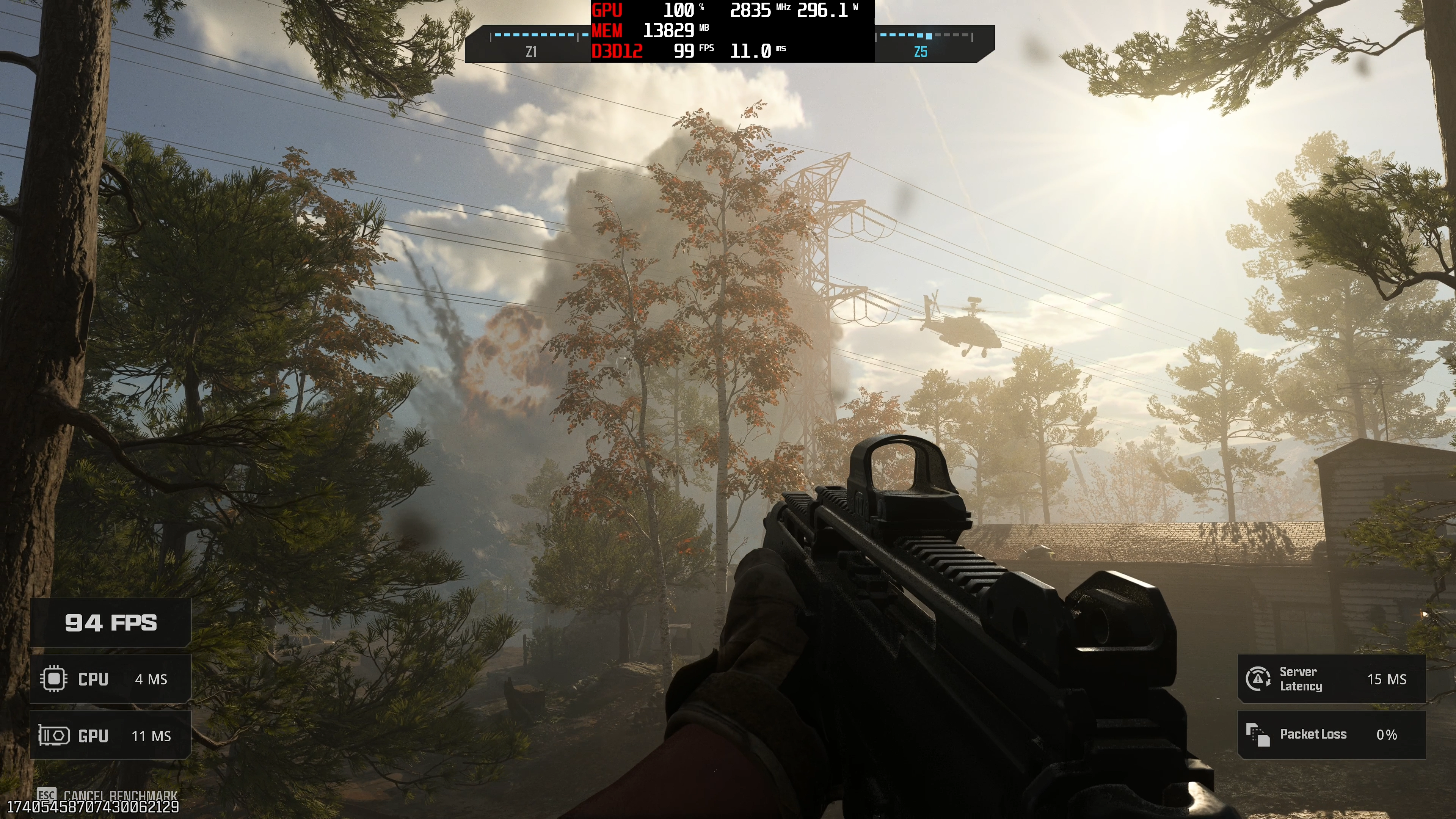
Sticking at 3840×2160 but moving in to Call of Duty: Modern Warfare 3 (2023) resulted in lower frame rates than we saw in F1 24. However, the frame rate remained close to 100 fps throughout the benchmark
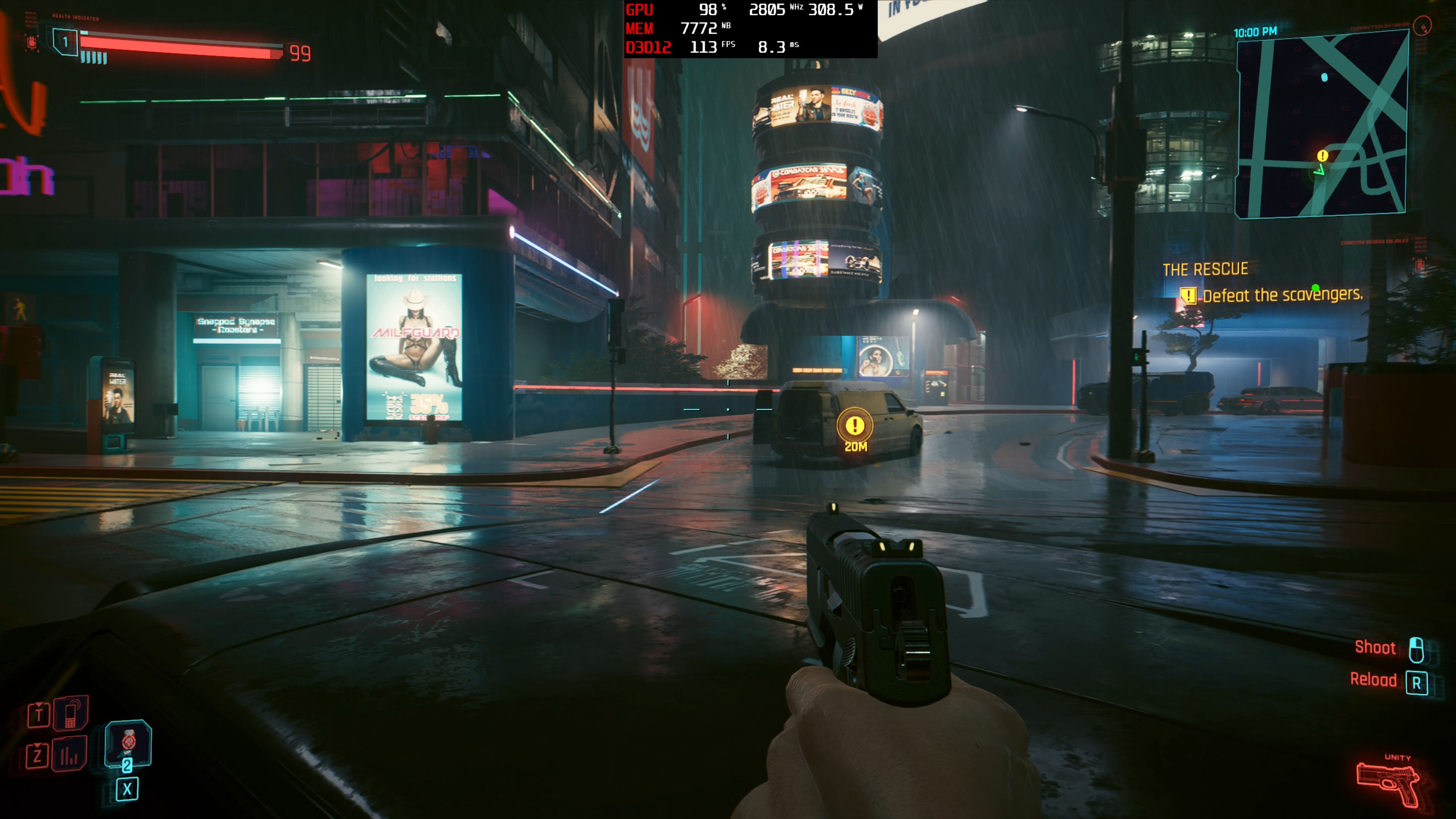
Turning the resolution down to 2560×1440 in a more demanding titles such as Cyberpunk 2077 helped maintain performance north of 100 fps.
For full performance details of all titles tested at both 3840×650 and 2560×1440 please watch our full video review over on YouTube.
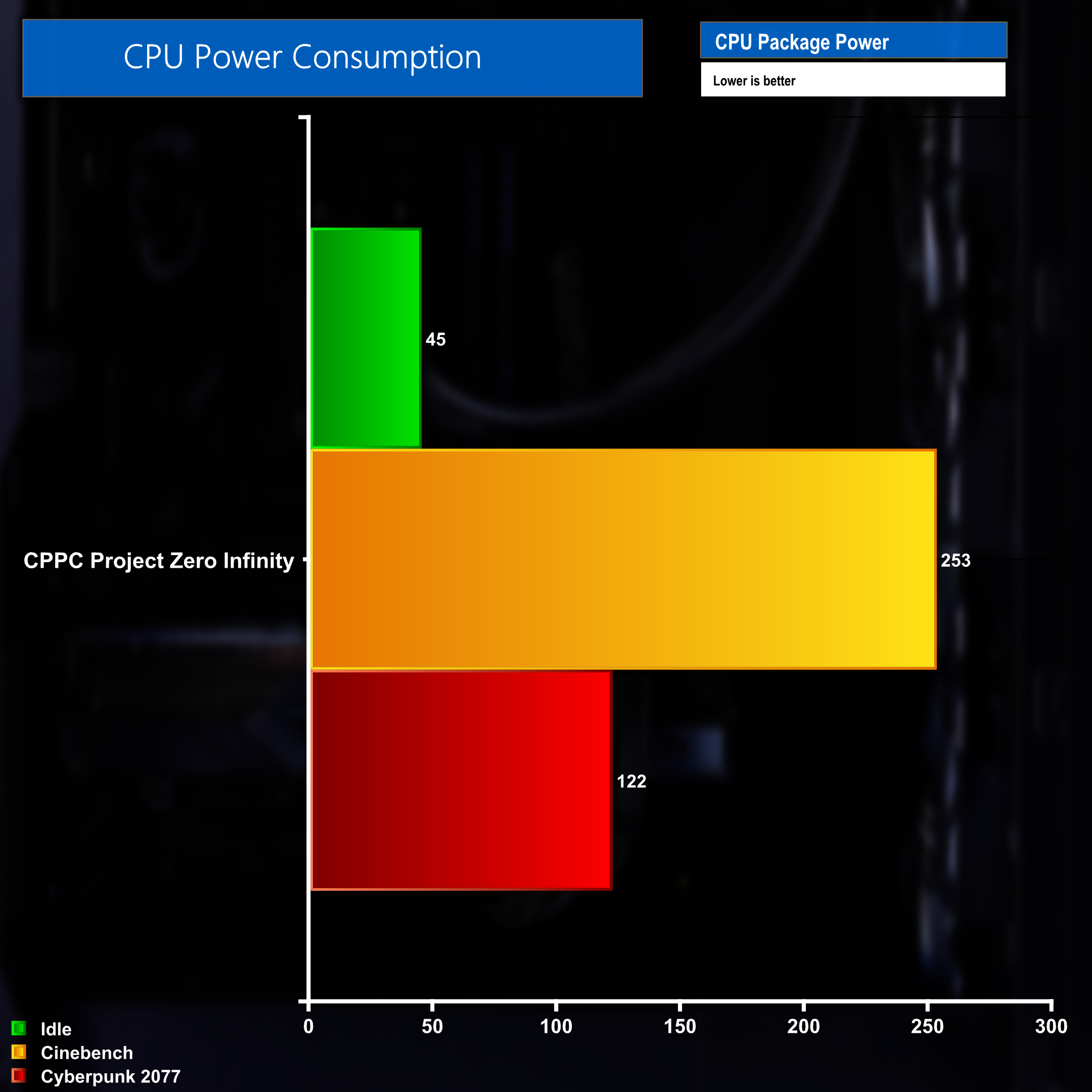
The 14900KF processor found inside the Project Zero Infinity desktop is definitely on the ‘hungrier' side of the processors released in recent times. At idle the CPU package power usage sat around the 45 Watt mark. However, when carrying out a CPU based test like Cinebench, that usage soared to the processor's maximum turbo power limit of 253 Watts. When gaming in Cyberpunk 2077, the 14900KF used just under half of that Cinebench figure, sitting at roughly 122 Watts.
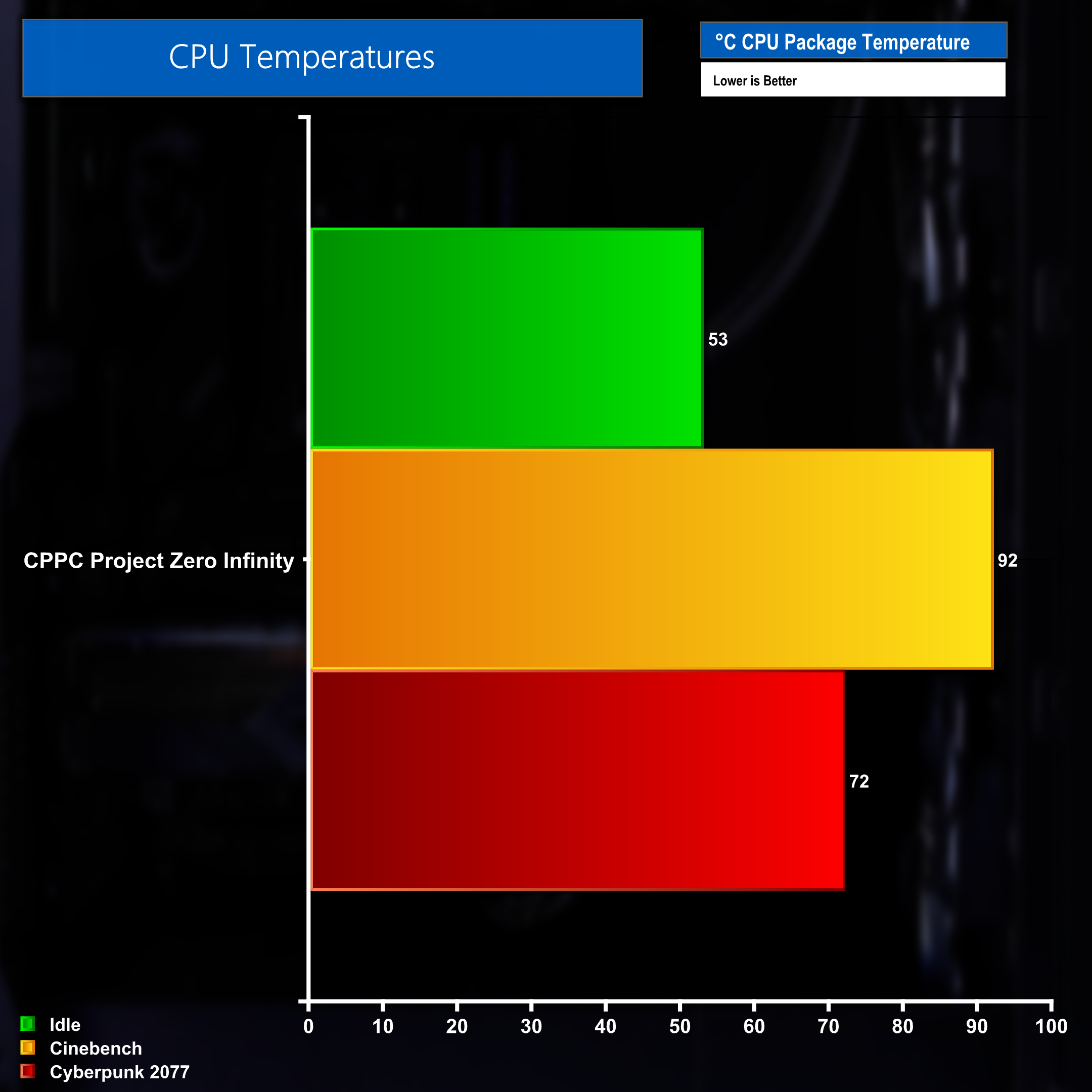
CPU package temperature mirrors the power usage figures from the previous chart, with the 14900K peaking at 92 degrees when running through a 10 minute Cinebench multicore benchmark. Things proved a little cooler when gaming, with the CPU hitting 72 degrees when playing Cyberpunk 2077. Finally, with the system idle, the Intel chip hovered around the 53 degree mark.
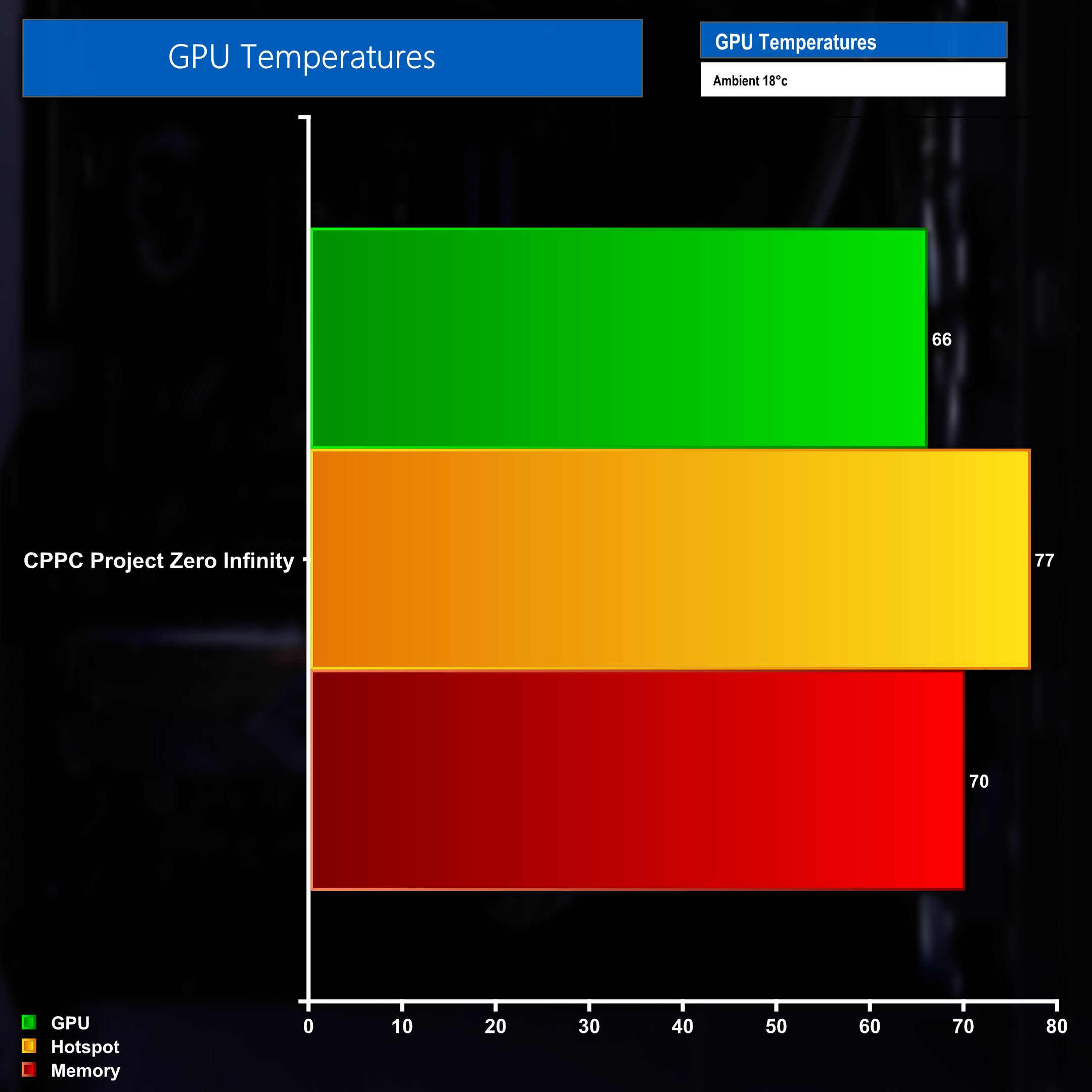
GPU temperatures, when measured after a 30 minute sustained gaming test in Cyberpunk 2077, were all fairly cool. The GPU sensor peaked at just 66 degrees, while the hotspot and memory sensors recorded 77 and 70 degrees, respectively.
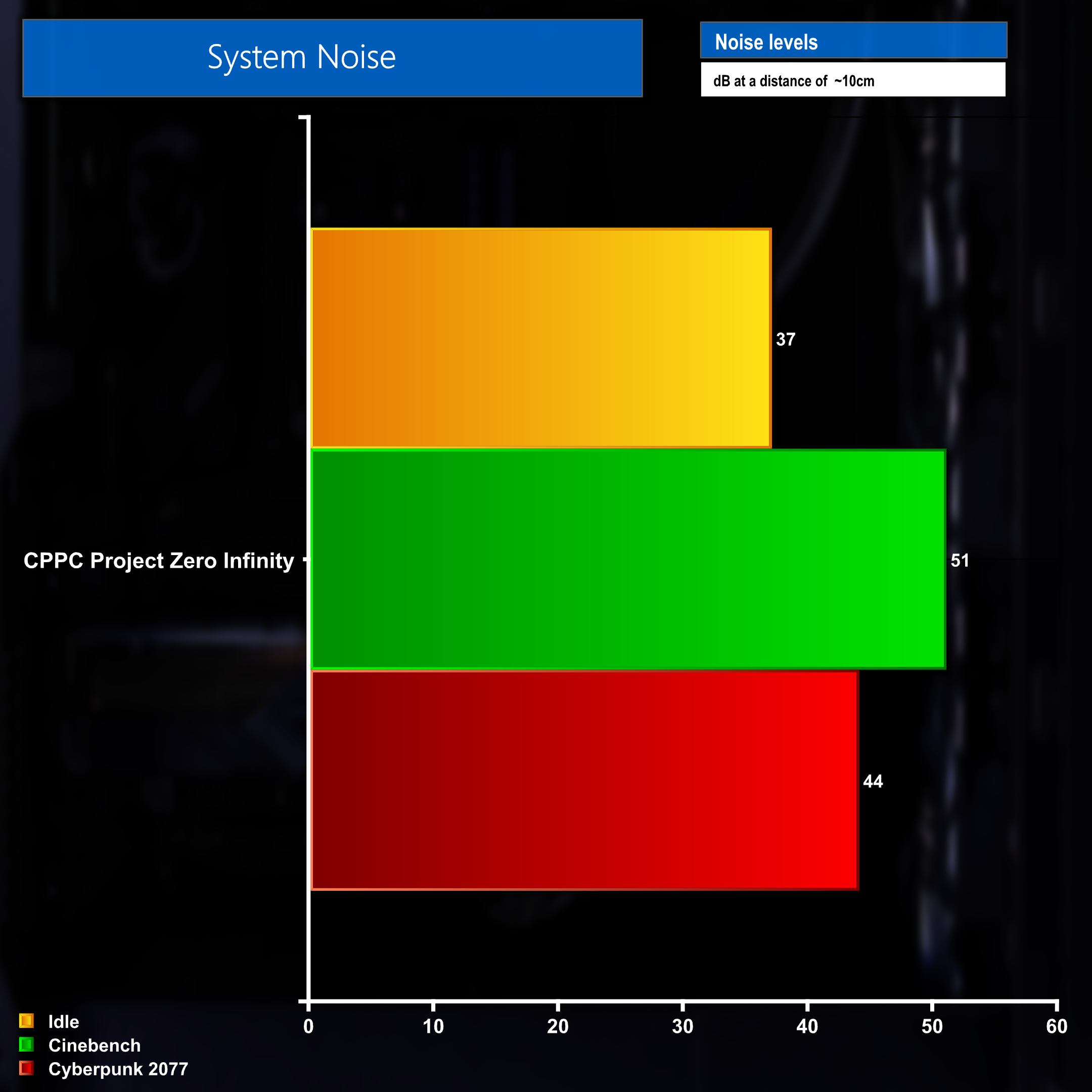
The Project Zero Infinity uses fan curves set in the BIOS to manage thermals. These are fairly aggressive and do lead to some substantial fan noise, especially when running a Cinebench multicore benchmark.
For full details and sound samples, watch our full video review on YouTube.
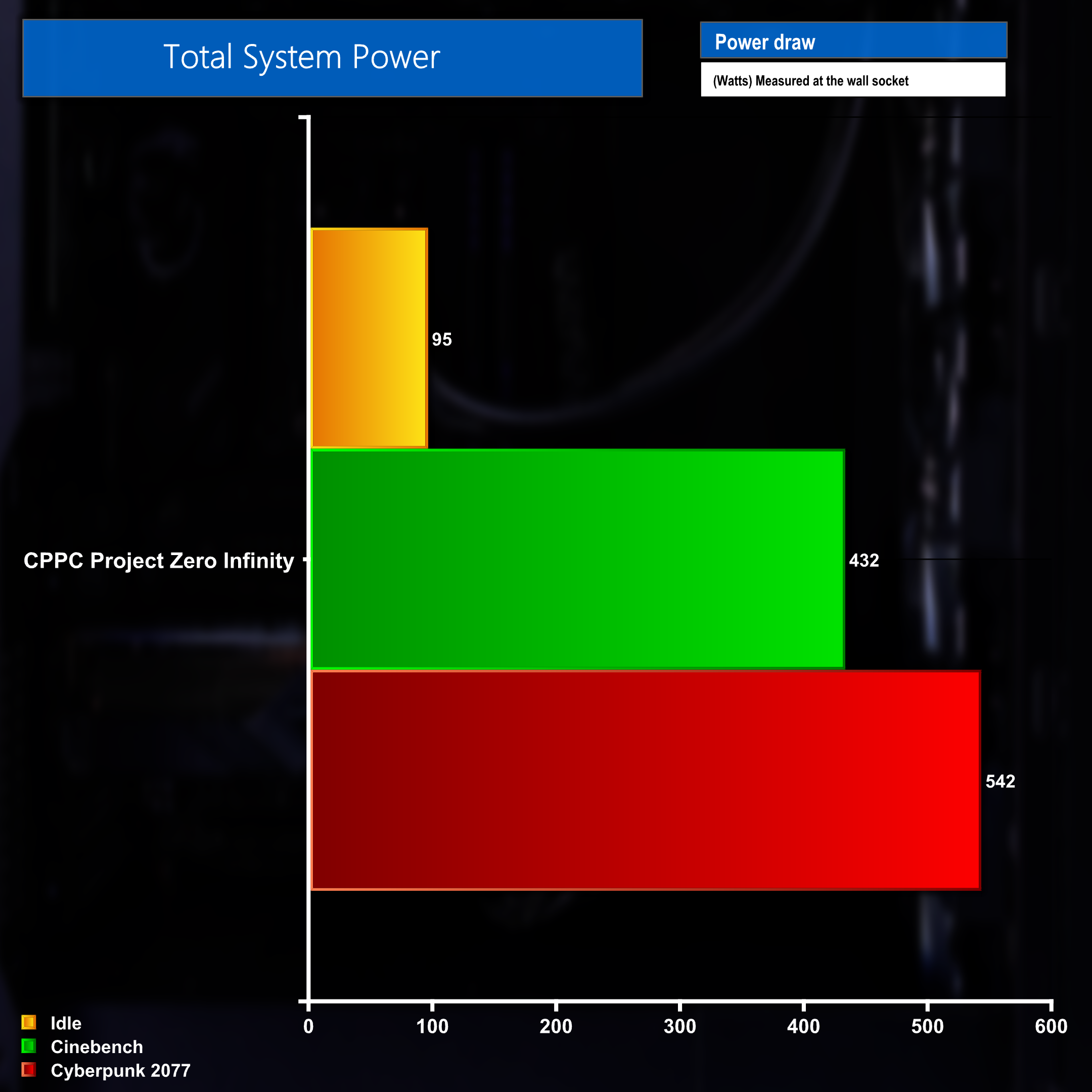
Finally, overall system power usage, when measured at the wall socket, reveals just how power hungry the system is – topping out at a very lofty 542 Watts during a gaming test. Removing a lot of the GPU load from the scenario and running a Cinebench multicore benchmark sees this figure drop to 432 Watts, while the system draws just under 100W at idle.
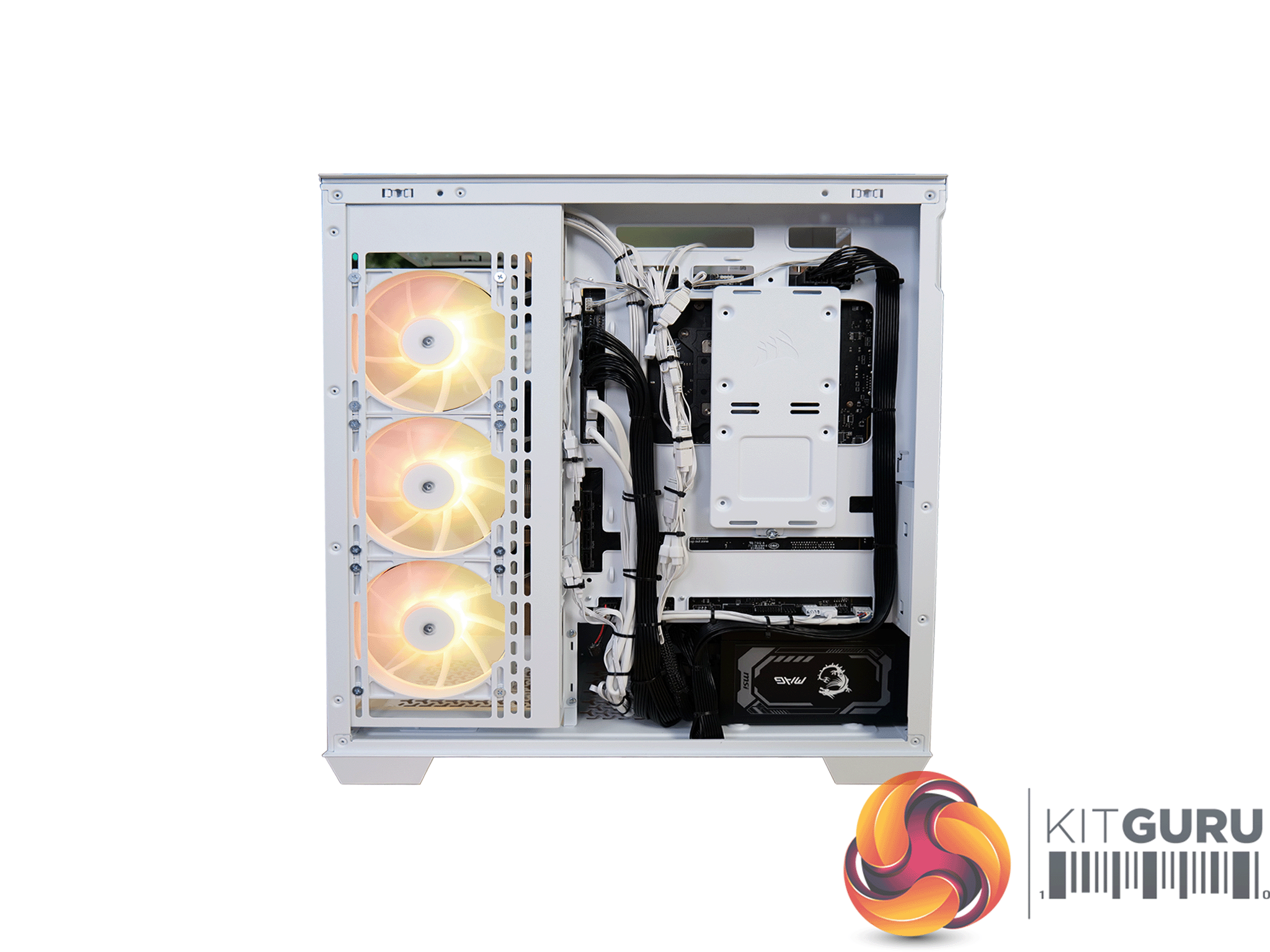
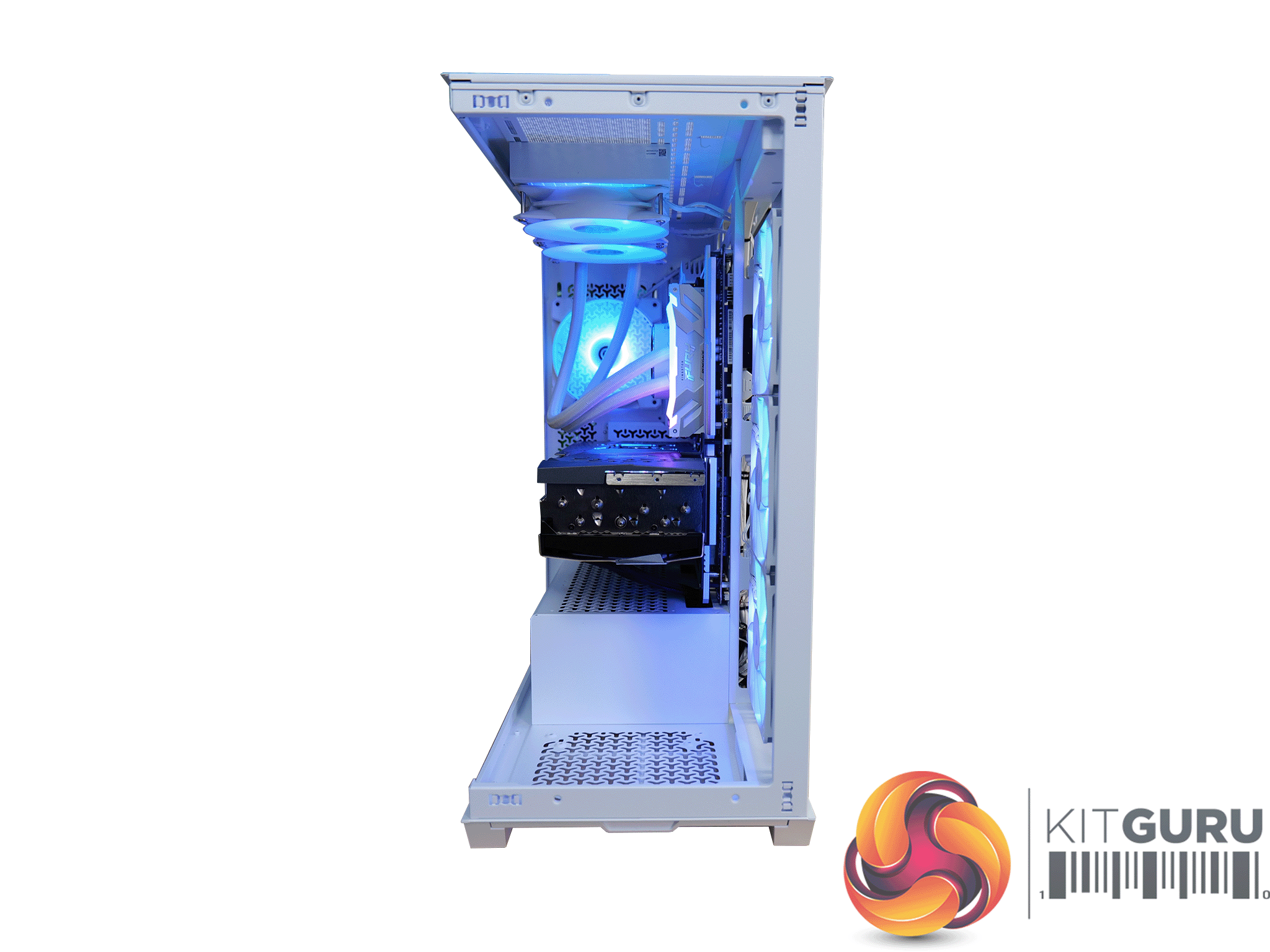
The Project Zero Infinity prebuilt desktop is a stunning PC when focusing on the aesthetics and design. The use of MSI's Project Zero motherboard and the compatible Corsair 3500X RGB case deliver a very clean look overall, thanks to most of the board's connection cables being hidden away in the rear of the case.
Performance was great, as we'd expect from the pairing of an Intel Core i9-14900KF and MSI RTX 4080 Super Suprim X graphics card, and the frame rates in F1 24 at 4K were a particular highlight. For full details and to see all of the titles we tested, be sure to watch our video review on YouTube.
The inclusion of fast memory no doubt helps the system perform well, too; the 32GB (2x16GB) Kingston Fury Renegade DDR5 RGB running at 6400MT/s returned impressive read and write speeds when tested.
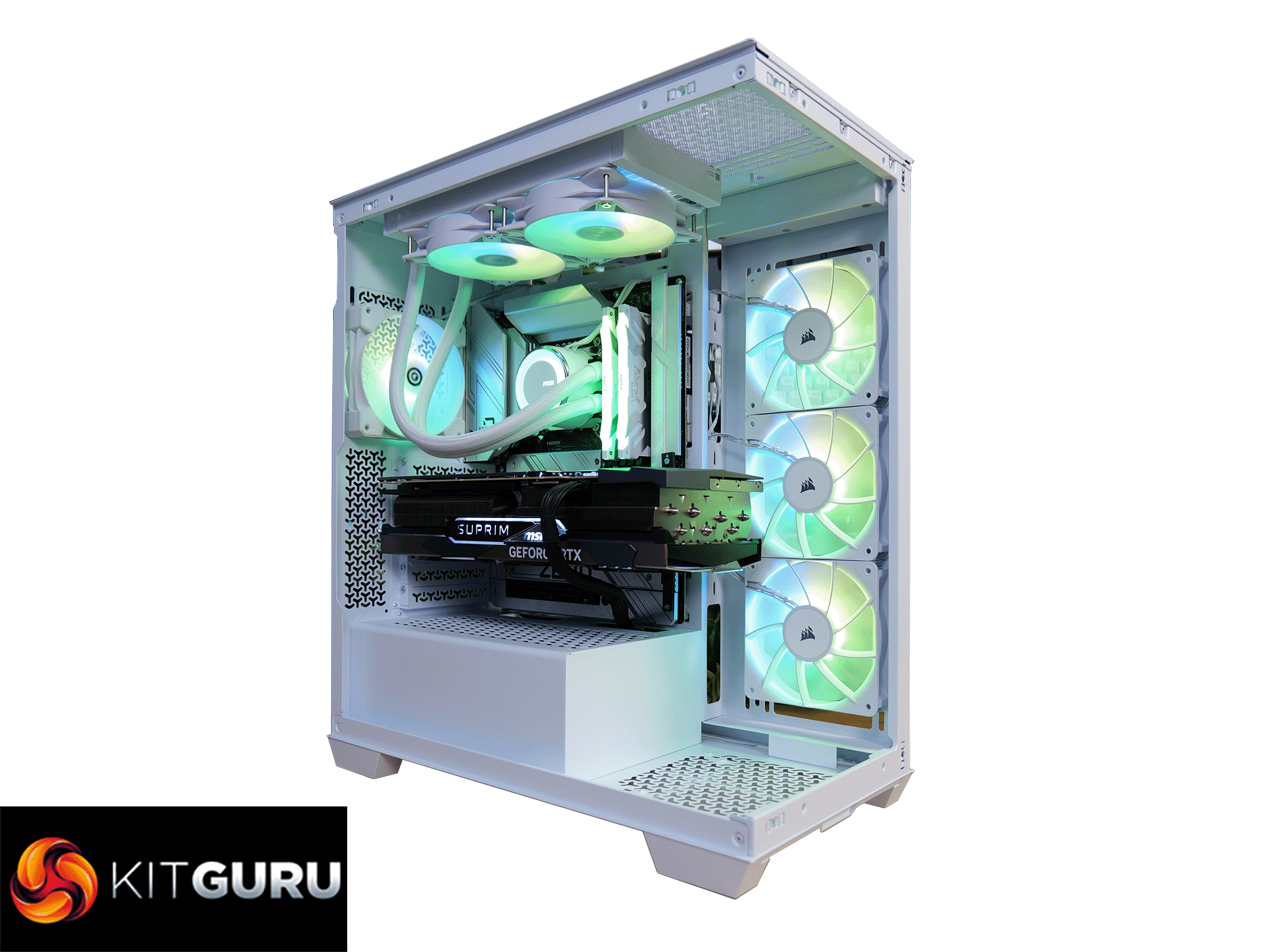
It's not a perfect prebuilt, though. While the case is compatible with the Project Zero motherboard, it does leave a little to be desired, as we found in our review of the chassis. This includes the lack iCUE Link support and Timewarp lighting – the latter being something that could really help push the aesthetics of the system up a notch.
The cooler also disappoints slightly. While it did just about manage to handle the task of the keeping the power hungry Core i9-14900KF CPU cool, a 360mm variant would no doubt do a better job, alongside simply looking better as it would populate the entire roof of the case.
Storage being limited to just 1TB in capacity is something that has disappointed in previous system reviews and we have to say the same here. With game sizes ever increasing, I feel 2TB should be standard for a prebuilt at this price.
You can purchase the Project Zero Infinity from CyberPowerPC for £2469.60 HERE.
Pros:
- Project Zero components lead to a very tidy and neat build.
- Very good gaming performance.
- Fast memory.
- Stunning overall aesthetics and design.
Cons:
- We expect more storage space at this price.
- Default fan curve runs on the louder side.
- Would run cooler and look better with a 360mm AIO.
- There are better cases than the Corsair 3500X.
KitGuru says: The Project Zero Infinity is a gorgeous system which is capable of great gaming performance, but is slightly let down by a small SSD and cooler inside an average case.