KitGuru KitGuru.net – Tech News | Hardware News | Hardware Reviews | IOS | Mobile | Gaming | Graphics Cards


Escape From Tarkov is an interesting title. While the game has received its fair share of criticism over the years, no other title has managed to directly compete with the hardcore extraction shooter. Almost a decade on from its closed beta launch, Escape From Tarkov will finally enter 1.0 later this year.
As part of a livestream detailing the future of Escape From Tarkov (collated by ResetEra user Saucycarpdog), the team at Battlestate Games released their 2025 roadmap – revealing some exciting news.
Between now and August, Tarkov is set to receive monthly patches, bringing new events; optimisations; balance changes; AI tweaks and more. By far the biggest news however is the fact that at some point after August – but before the end of 2025 – Tarkov will finally leave its closed beta, officially reaching 1.0 status.
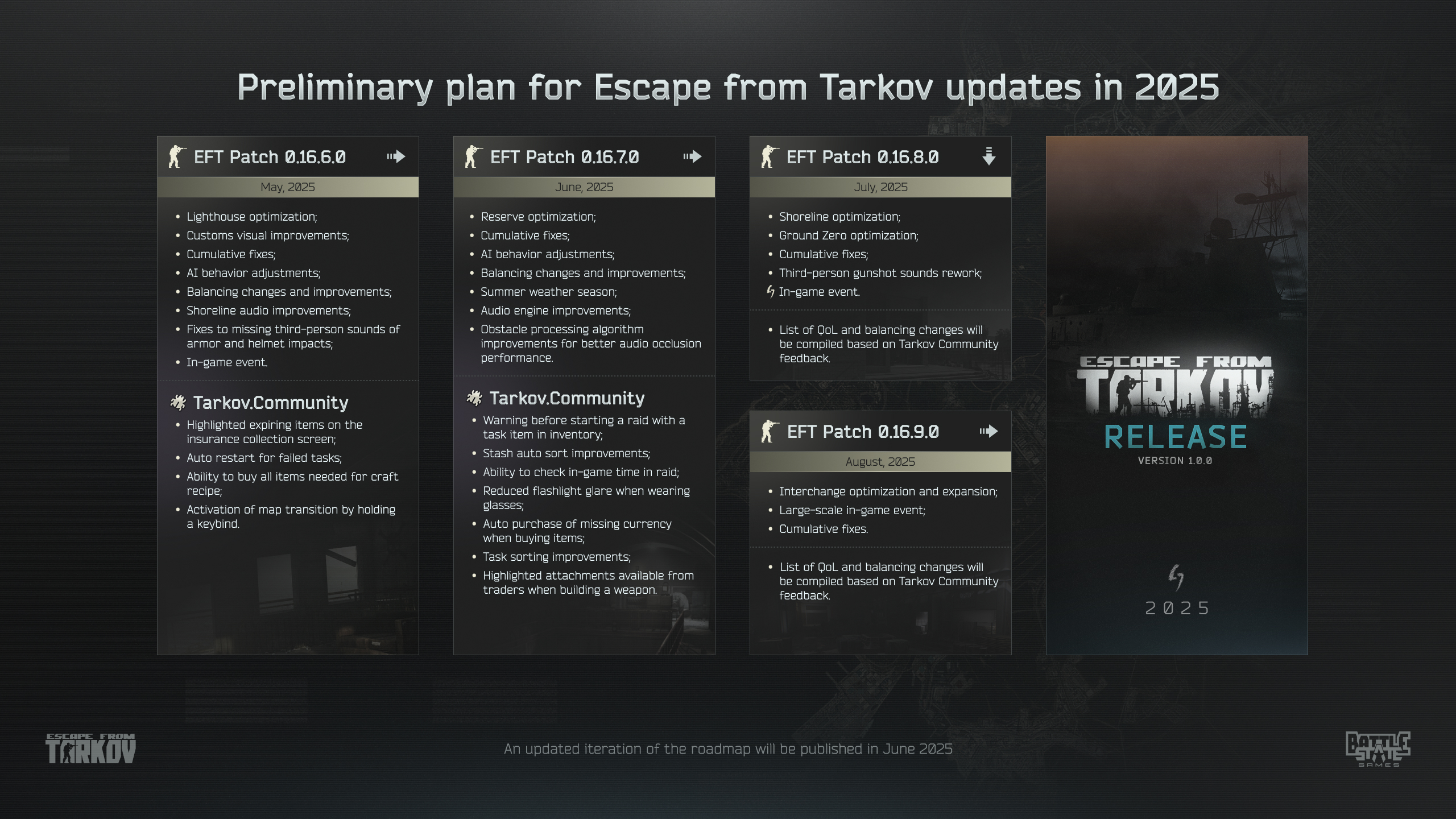
Offering more details on the rollout, the team confirmed that their side project ‘Escape from Tarkov Arena’ will come to Steam ahead of the main game’s 1.0 release. That said, the full Tarkov experience won’t come to the platform until after the 1.0 update has launched.
Finally, when the PvE mode does eventually leave beta it will be met with its first and only inventory wipe in order to facilitate a fair day-one experience for everyone.
With the game first being made available back in 2017, it seemed as though Escape From Tarkov would never see a full release. That said, assuming things continue as planned, Tarkov’s 1.0 launch could eat into other upcoming extraction shooters such as Bungie’s Marathon. We will have to wait and see.
Discuss on our Facebook page HERE.
KitGuru says: What do you think of the roadmap? Will the team manage to hit 1.0 this year? Will Tarkov’s full release affect the hype for Marathon? Let us know your thoughts down below.