KitGuru KitGuru.net – Tech News | Hardware News | Hardware Reviews | IOS | Mobile | Gaming | Graphics Cards


While Ubisoft is just finding its feet in punishing hackers, Valve Anti-Cheat (VAC) is often celebrated among players, becoming a staple term for those that get banned both on and off Steam. VAC bans have reached an all-time high last week, with over 90,000 players being hit with the banhammer.
Thursday 19th July, 2018 alone marked a prolific day for the video game firm, as SteamDB‘s bans per day shows that over 61,000 players were offed by VAC. Not only is this a step up from Wednesday’s 28,000 bans, but it has beaten the company’s previous single-wave record of 40,000 in one day.
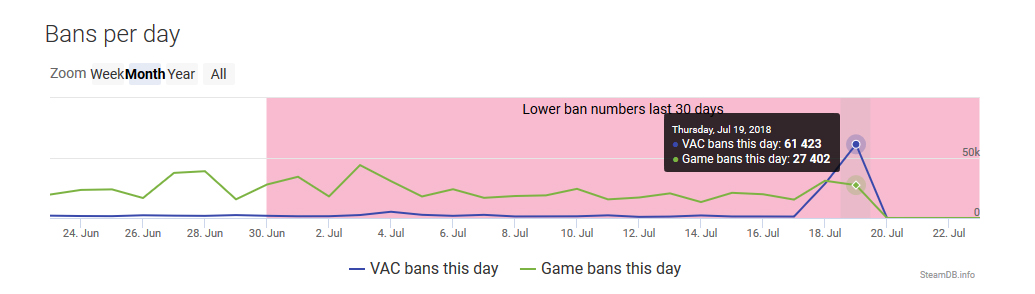
It is uncertain what prompted the sizeable ban wave, but as always with VAC bans, all accounts caught have been treated with a zero tolerance policy. When banned by VAC, players are not given the option to appeal, with their individual game accounts essentially being gone for good. It’s likely that Valve could have uncovered a new exploit in order to claim such numbers, however the company is unlikely to elaborate any time soon.
Valve launched its anti-cheat back in 2002, deployed against players of the original Counter-Strike. Since then, over 300 games have boasted the company’s “VAC Protected” label, continued by Valve’s current eSport hits Counter-Strike: Global Offensive and Dota 2 as well as third-party titles like Call of Duty and Ark: Survival Evolved.
KitGuru Says: Although Valve has done well for itself with its anti-cheat efforts, VAC is by no means perfect. Still, the solution beats most others on the market, offering players a relatively safe haven from exploits and hackers. Do you trust VAC to protect your gaming experience or do you prefer other services such as BattlEye?