KitGuru KitGuru.net – Tech News | Hardware News | Hardware Reviews | IOS | Mobile | Gaming | Graphics Cards


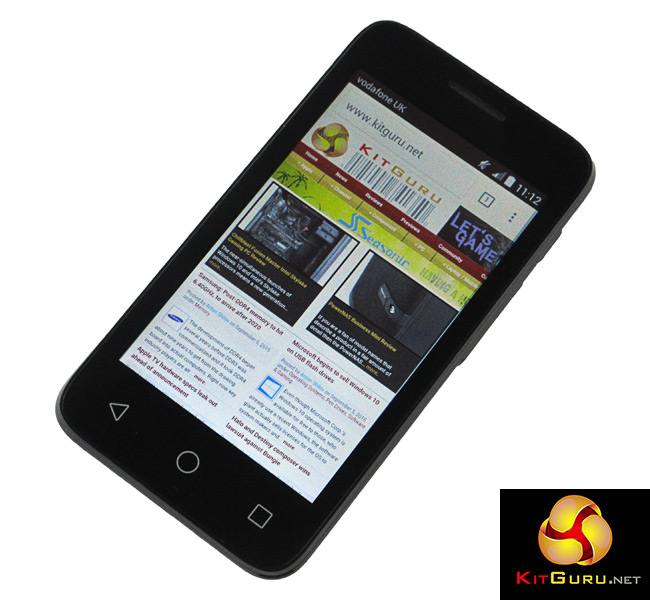
The Smart first 6 is Vodafone's cheapest handset, being part of the ‘Smart' product family which also includes the Smart prime 6, as well as the Smart ultra 6. Both of those handsets were favourably received – so how does the Smart first 6 stand up under examination? We shall find out.
The smallest Vodafone smartphone – with a 4-inch display – the Smart first 6 is also the cheapest, priced at a mere £30. With very little serious competition at this price point, it will be very interesting to see how a £30 device manages to run Android. After all, the first 6 does bring a complete Android experience, just at a very low cost.
Features:
- 4-inch WQHD (480×800) display.
- MediaTek MT6572M, dual-core CPU at 1GHz.
- 512MB RAM.
- 4GB internal storage, microSD cards up to 32GB supported.
- 2MP primary camera, no secondary camera.
- Android KitKat 4.4.2.
- 1400 mAh battery.
- 3G capable but no 4G connectivity.
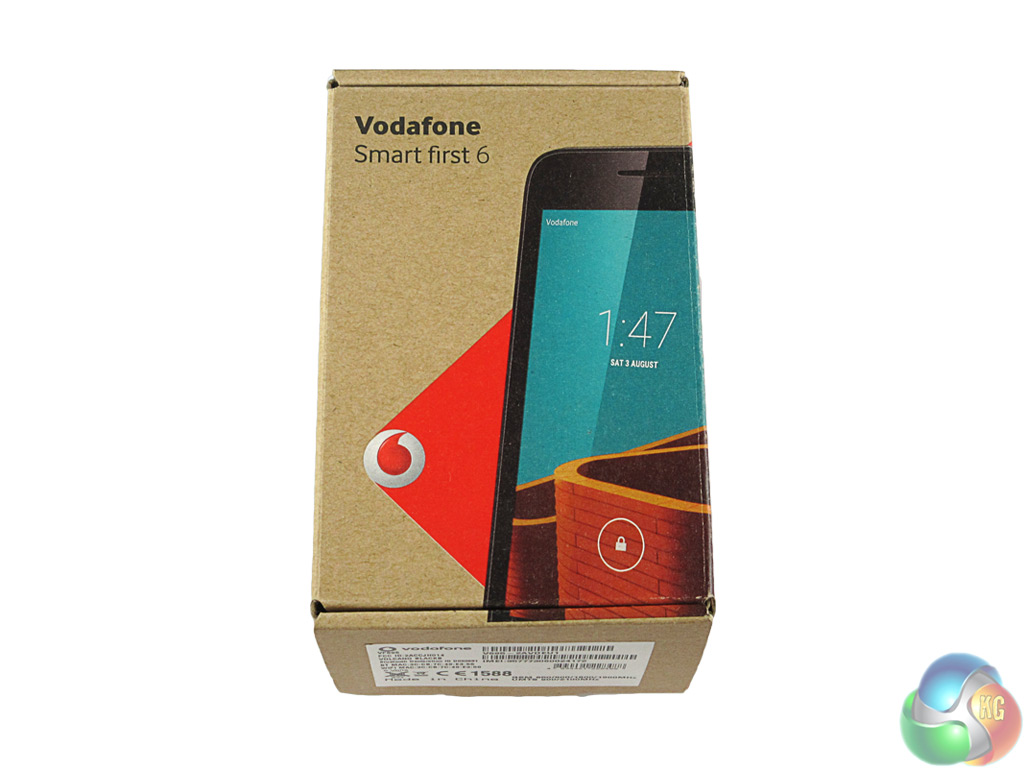
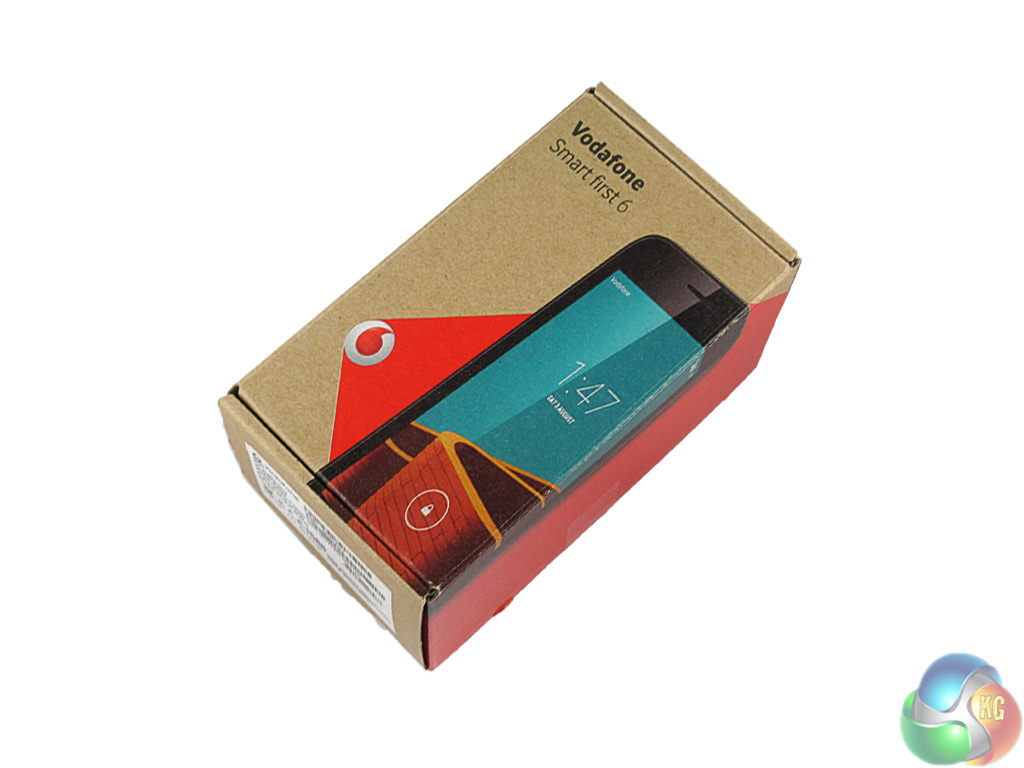
Just like its bigger brothers, the Smart first 6 comes in a brown and red box – made of simple cardboard. On top is a photo of the first 6 which overlaps on to the side of the box.
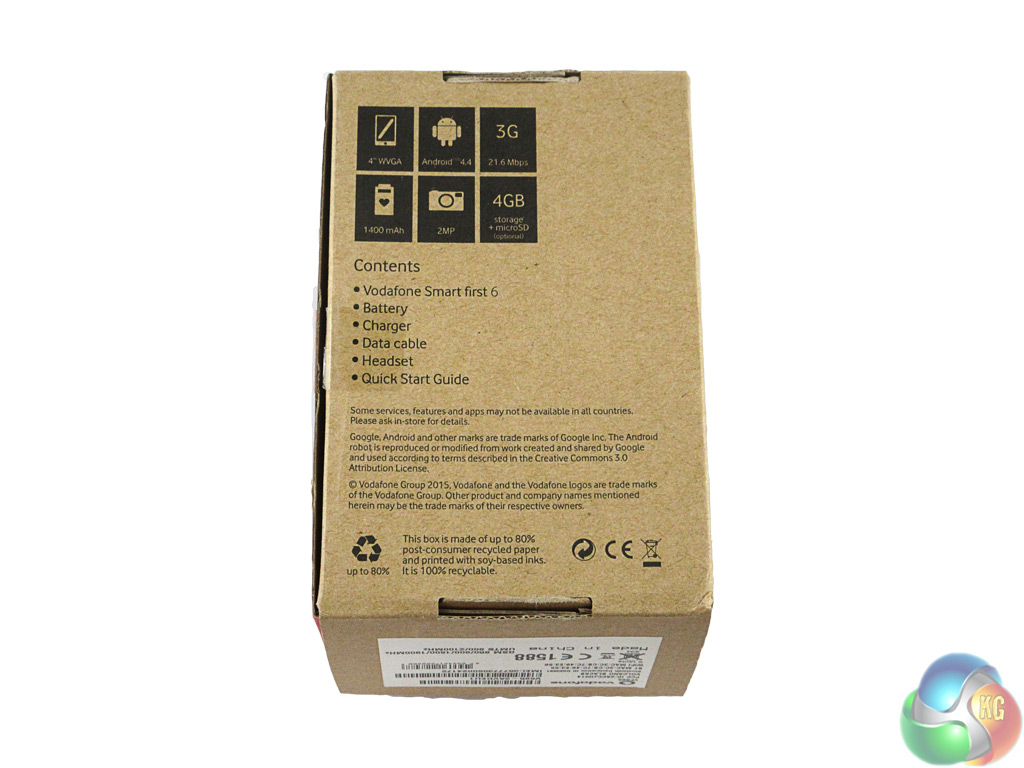
On the bottom, there are a few key specifications of the first 6 itself – including battery capacity and screen resolution.
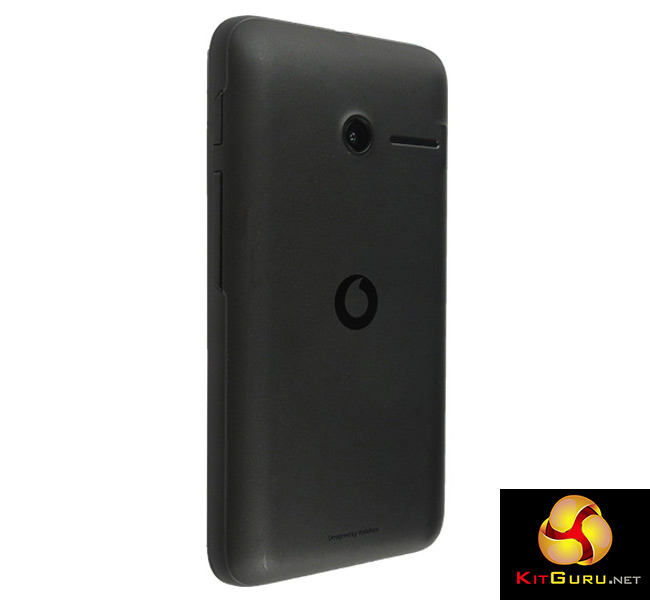
Inside, there are no surprises – the first 6 is accompanied by an AC adapter, earphones, a microUSB cable and a fairly irrelevant quick-start guide. There is also a replaceable white back for the first 6 – which is a nice touch, allowing users to change the default black phone casing should they choose.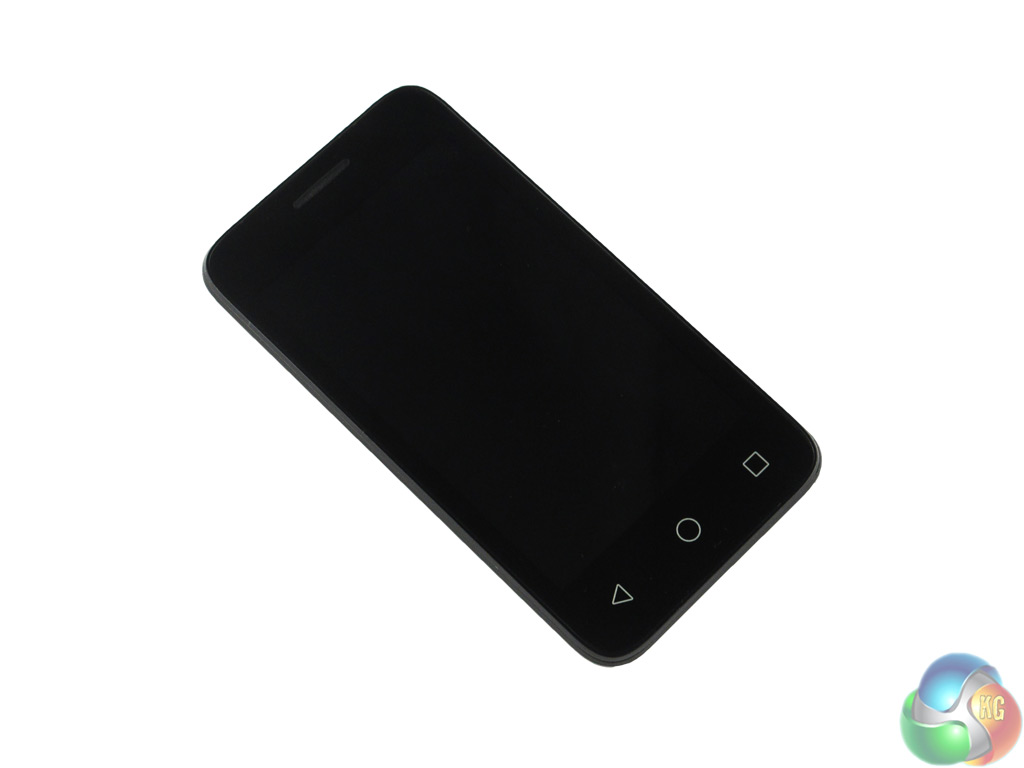
Throughout the ‘Smart' product family, Vodafone have kept phone designs simple – with no gimmicks or stand out features. The same can be said of the first 6. It has a predictable and uncomplicated design, but it is effective and gets the job done.
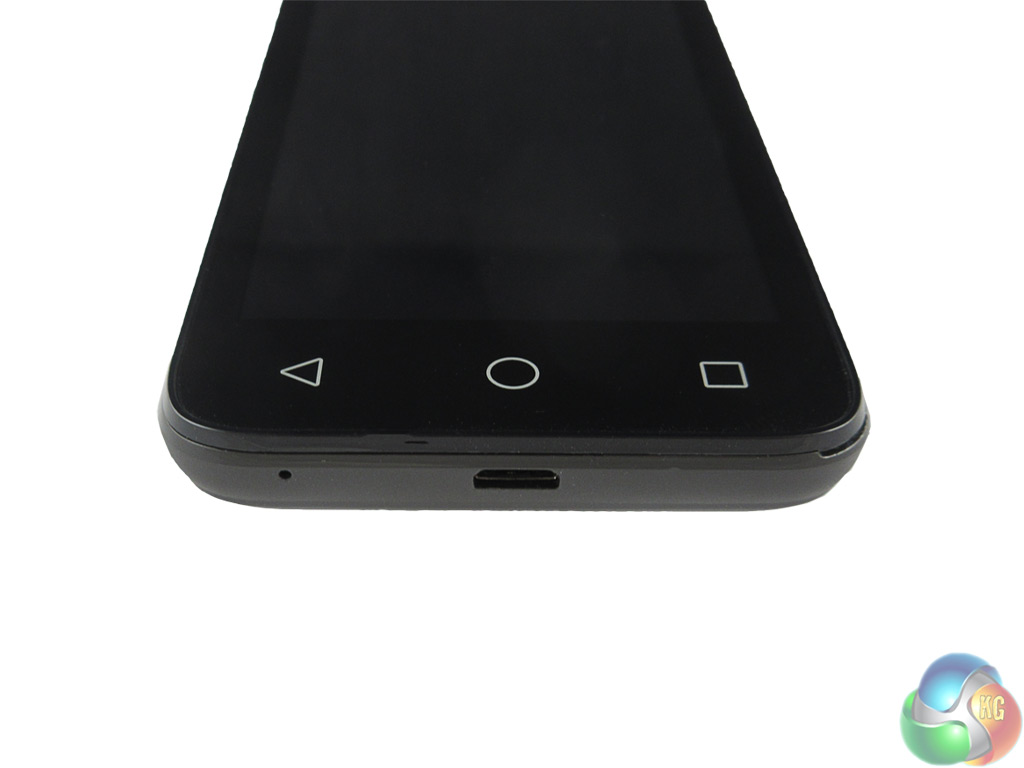
There are a few differences in the design of the first 6 compared to the prime 6 and the ultra 6, though. For one, the home buttons on the first 6 are permanently visible on the bezel. On the other two ‘Smart' devices, the home buttons are made visible by LED lights which pop up once the phone is being used.
With the First 6, the buttons are just there and do not go away. It does detract from the overall smartness of the first 6 – but in such a small way it is hardly worth quibbling about.
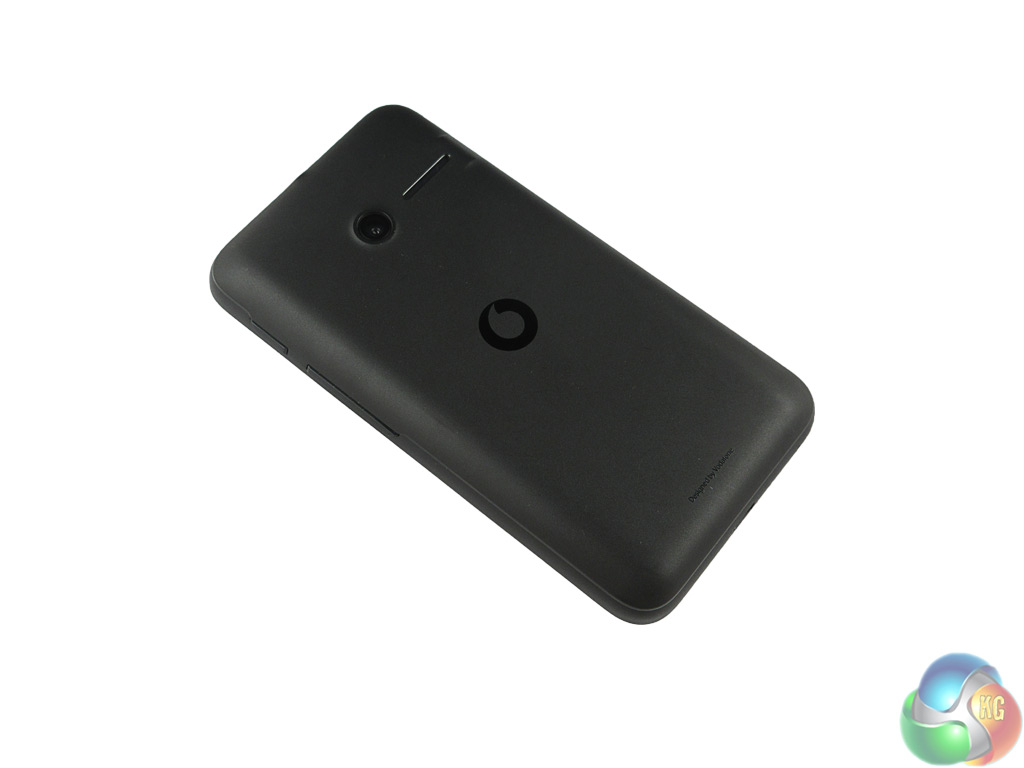
On the rear casing, a new plastic contour has been added in – despite not actually marking the outer edge of the case. By this I mean the contour is entirely for appearances sake, as it is not where the rear casing meets the chassis of the phone. Still, I think it actually looks quite sleek and helps to improve what would otherwise be a bland design.
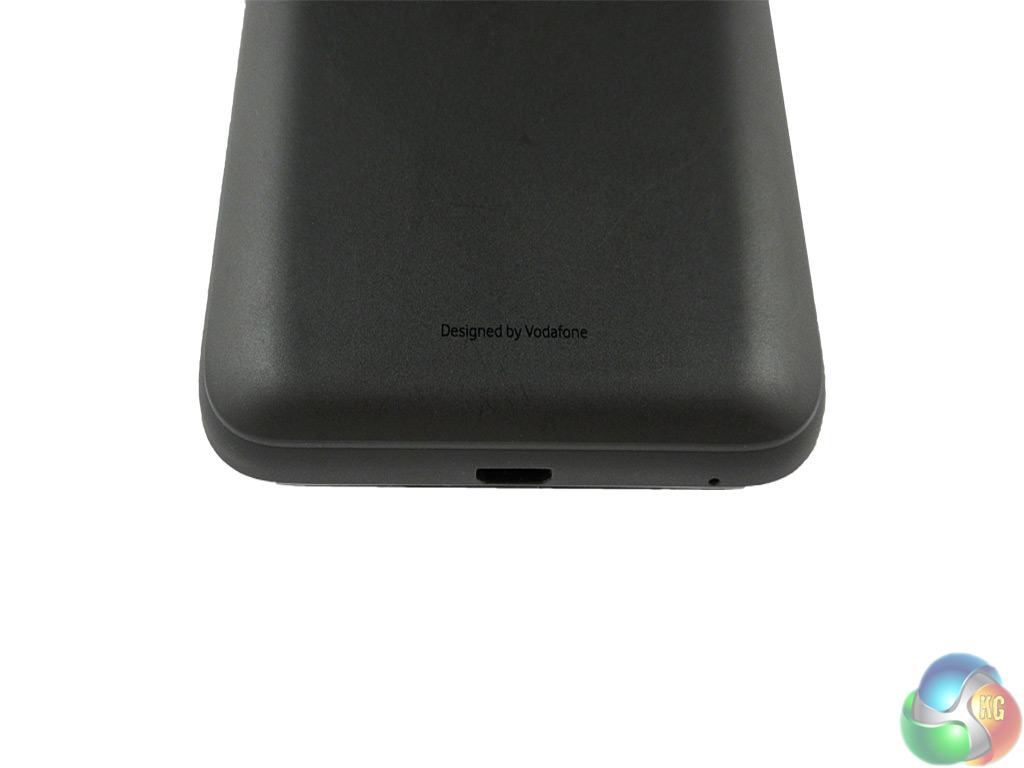
As for product dimensions, the first 6 measures 121.6 x 64.4 x 11.8mm (LxWxD), which gives a 58.2% screen-to-body ratio. This is not great, but it is easily forgiven considering the price tag of the phone itself. The first 6 weighs in at 112g, too, which actually redeems its chunky bezels as this is impressively light (the same weight as an iPhone 5s, for comparison).
At the top of the device, centrally located, is a headphone jack, while the microUSB port can be found on the bottom edge. A power button and a volume rocker are both located on the right edge.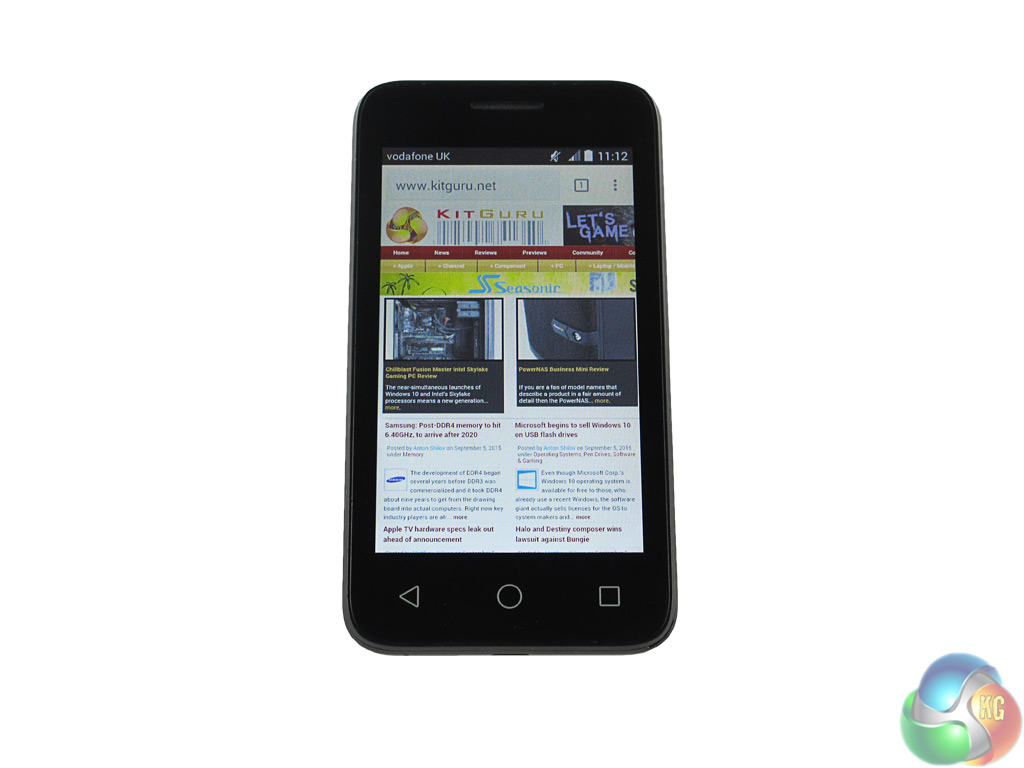
So far we have seen a fairly simple design to the first 6, but how good a display can you buy for £30? In this instance, you get a WQHD resolution display – which is 480×800.
Across 4 inches, this works out at 233 PPI. Obviously this is not especially sharp, but there can be no complaints for the money. If you are going to buy a smartphone for £30, the likelihood is you just want it to work – and work it does.
Brightness is not dazzling but it gets the job done. Using the device indoors poses no problems, and while using the first 6 outside becomes a bit more difficult, it is not unusable.
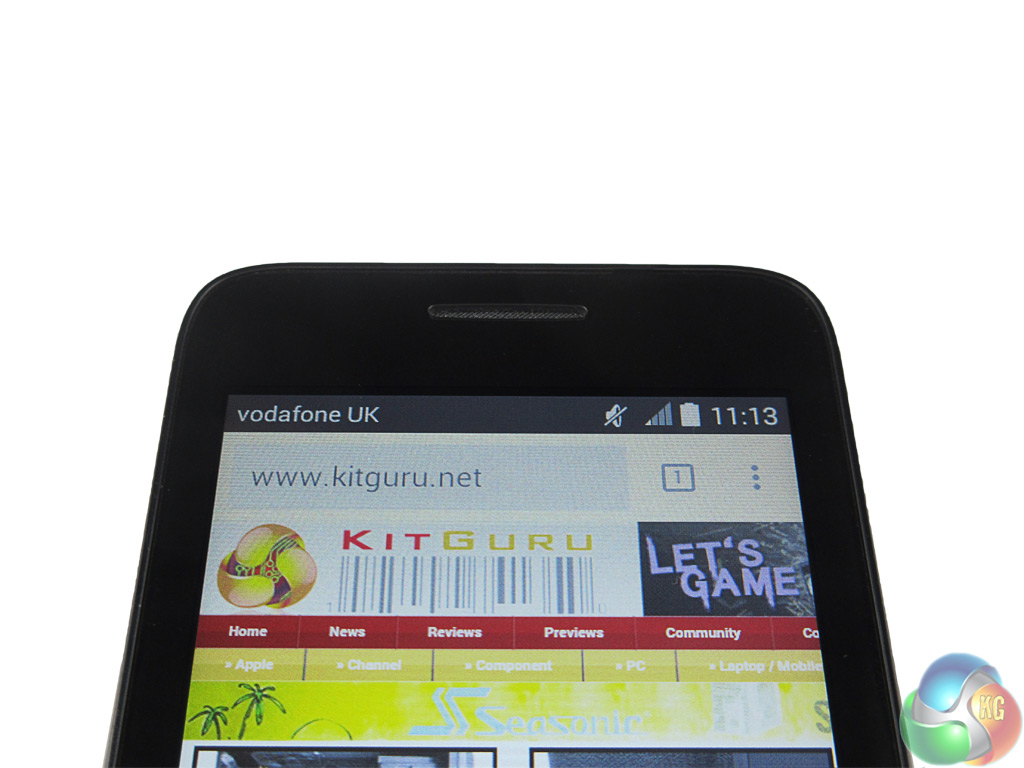
Viewing angles are the worst aspect of the first 6's display – as there is no IPS panel, presumably for cost reasons. This means, should you tilt the phone too far in any direction, the display becomes essentially unusable.
However, hold it as you would a usual smartphone and it is perfectly acceptable to look at – viewing angles are just clearly not ideal, but then again, for £30 you are not paying for an ‘ideal' phone.
So what we have is a display that works, it is not always pretty, but it does the job and I cannot ask more for the £30 price point.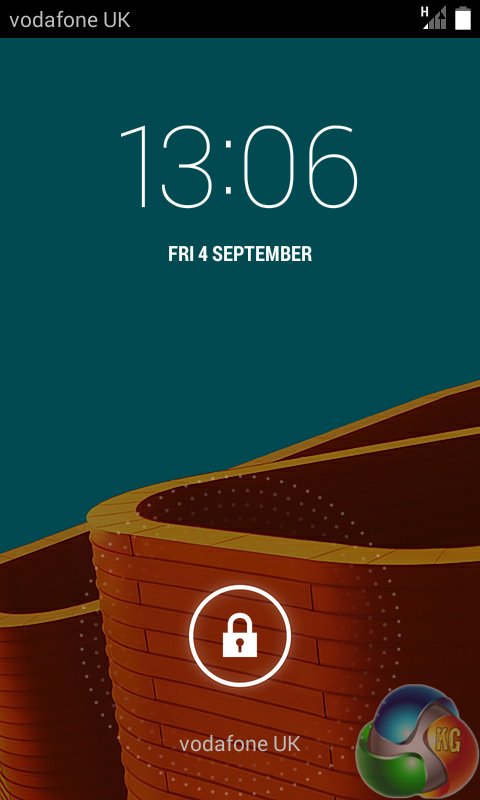
Previously, I have praised Vodafone for including what is essentially stock Android on their other smartphones. The same can be said here, only rather than Lollipop, we have Android KitKat. The reason for this seems to be that as the Smart first 6 is aimed at users buying their first smartphone (hence the name) KitKat appears a better option for Android newbies as it is just a little bit simpler than Lollipop.
Lollipop is a great OS, but its flash looks are probably not the ideal starting place if you have just picked up your first smartphone. Still, Android KitKat is a very solid mobile OS, and this version is no different.
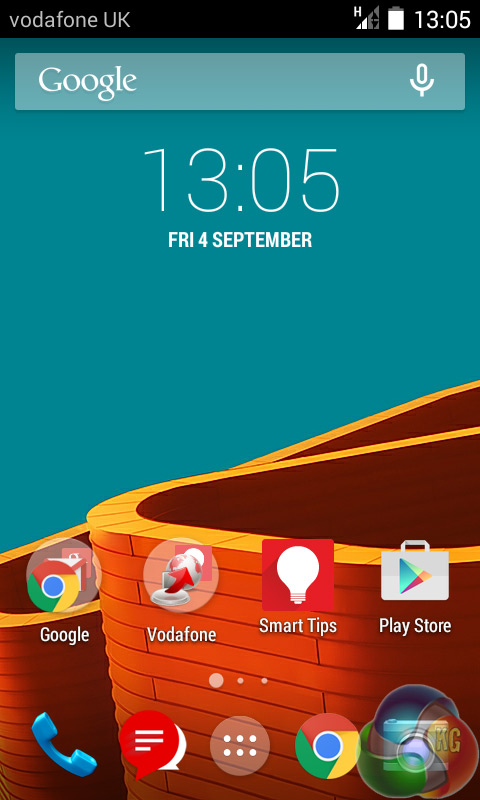
The home screen is a fairly standard affair – with the usual Google apps on show, as well as a few from Vodafone. What Vodafone have done is to make sure all the essentials – namely, the messaging app, Chrome, Play Store and the phone app itself – are all available on the home screen. Vodafone say, that this way, it means everything you need most is always just a tap away. Usually this might not seem noteworthy, but for someone who has just received their first smartphone, it is a nice touch.
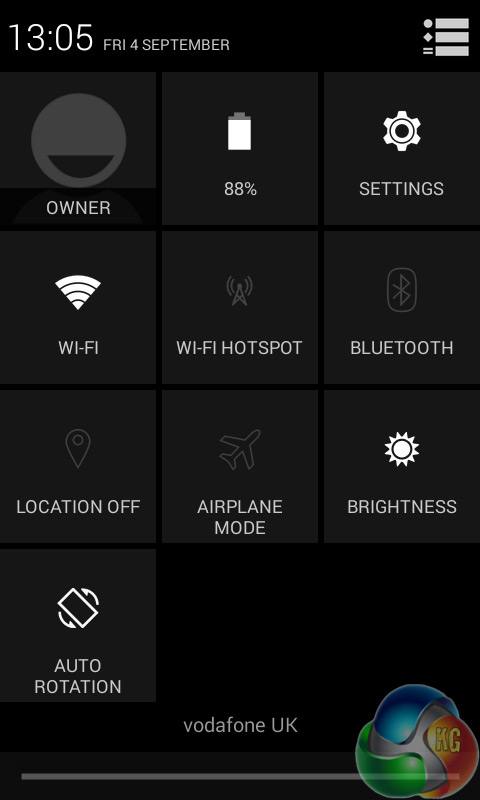
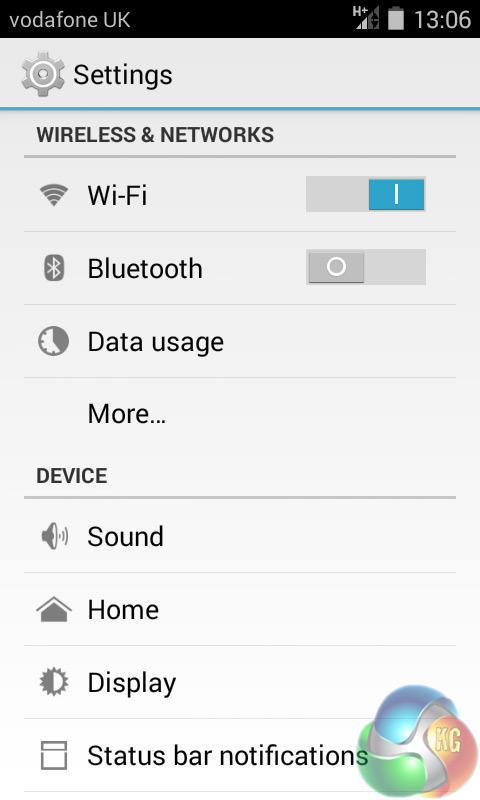
The quick-settings drop-down is just how I remember KitKat, with a tiled interface giving you access to your most used settings. The same can be said for the settings menu itself, with its clean black and white theme and simple layout.
One problem with the OS is just a few Vodafone bloatware apps which are not necessary. There are 4 of these – namely ‘Smart Tips', ‘My Web', ‘Discover', and ‘Updates'. This may not sound a lot, but when there is only 4GB of internal storage, every bit counts.
Still, stock KitKat is a good OS, particularly for newcomers to Android and smartphones in general. It does the job in a simple and intuitive way, so other than the few bits of bloatware, it gets the thumbs up from me.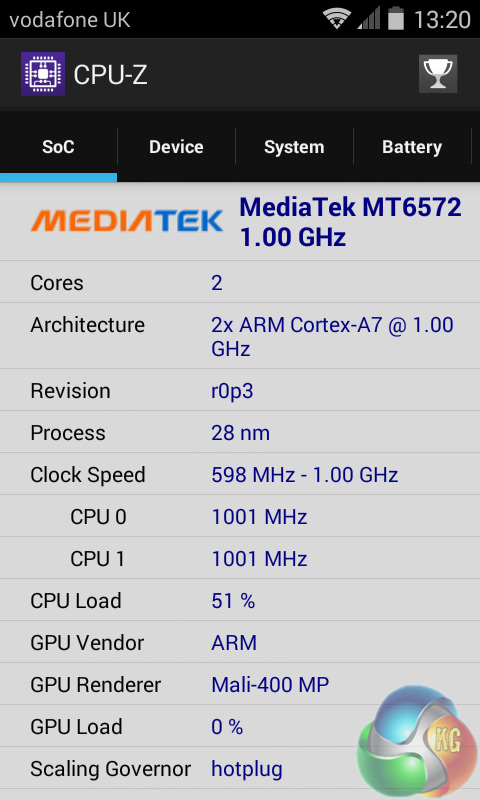
How the First 6 would perform was the biggest question I had in mind before receiving my sample. This is because the included processor is a 1GHz, MediaTek MT6572M CPU, while there is a paltry 512MB of RAM alongside it. Neither are particularly inspiring components, but nonetheless, I had to the give the First 6 a chance.
To start with real-world, everyday performance, one word that immediately springs to mind is ‘temperamental.' This is because, at times, the First 6 would zip around between a few open apps and the home pages with no problems at all. However, at other times, it would take a metaphorical age to open some apps or to compose a text message.
My theory is that most of the performance problems come from the limited amount of RAM. Have more than a few apps (5 or more, realistically) open in the background and suddenly all your RAM is being used. From here, performance seizes up as the system struggles to free up the necessary memory for new tasks. When I started closing every app manually after I had finished with it, performance stabilised. So as long as you remember to close apps running in the background, performance is fairly reasonable.

On to the benchmarks, then. In Geekbench 3, the First 6 scored 253 for single-core performance, and 462 for multi-core performance. This is pretty poor, and well behind the respective 460 and 1108 of the Smart prime 6.
Unfortunately, Ice Storm Unlimited refused to run without crashing on the first 6, so I cannot include a score. I can only conclude the First 6 could simply not handle the stress test at all.
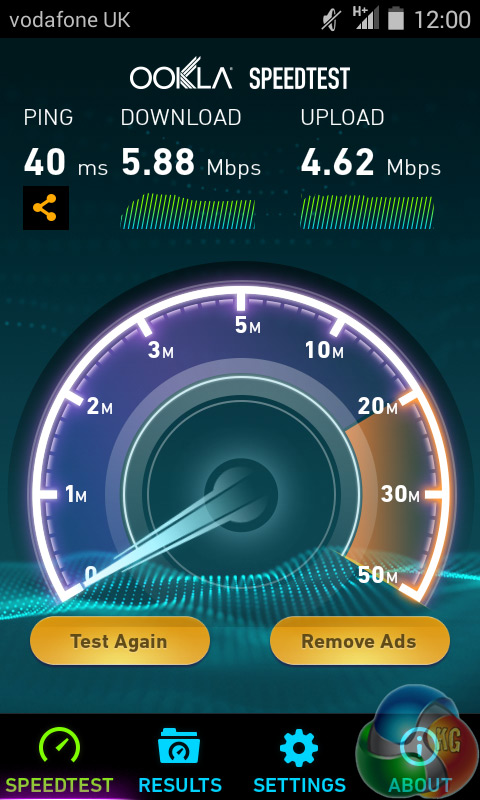
Finally, above you can see the peak download and upload speeds I managed using a Vodafone, 3G connection. 4G is not supported so top speeds are out of reach for the First 6.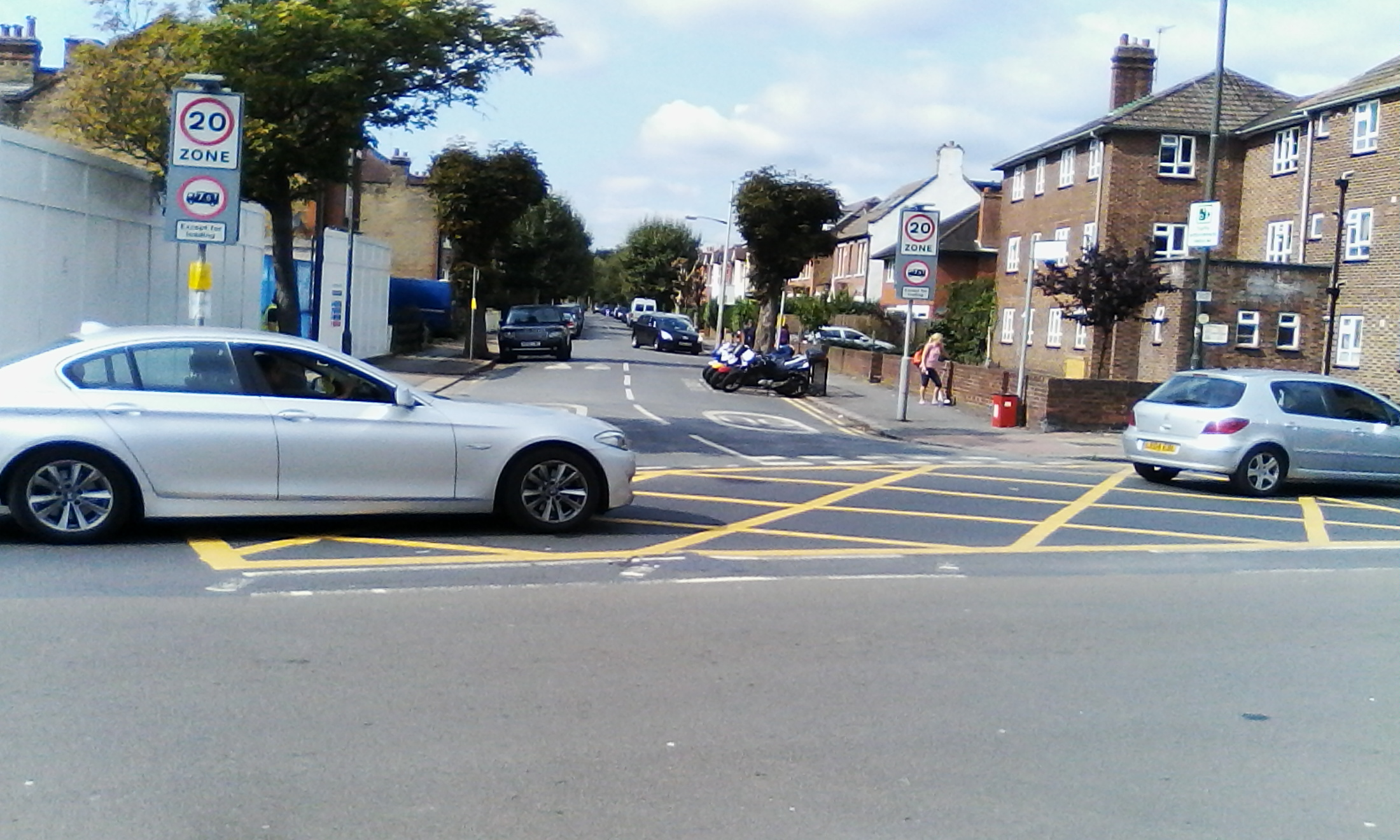
The 2MP camera on the first 6 takes images at a native resolution of 2200×1320. There is no secondary camera, however, so if you like a cheeky selfie now and then, you may want to look elsewhere.
Before we begin to look at the camera itself, I think it worth mentioning that it is impressive the First 6 has a camera at all – no matter how capable. You will be able to take photos on it, which is an achievement in itself for a £30 smartphone.
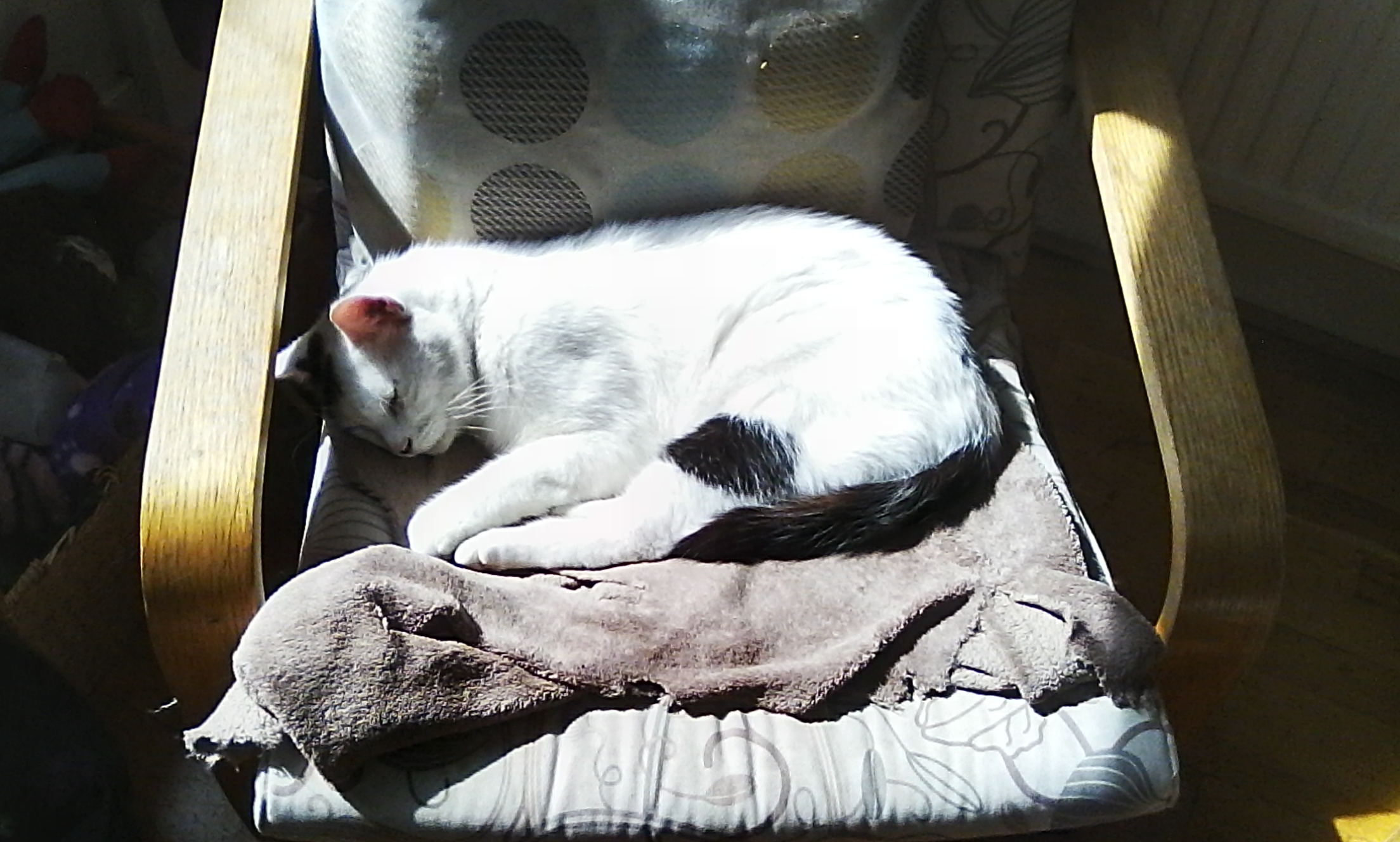
HDR on (left) compared with HDR off
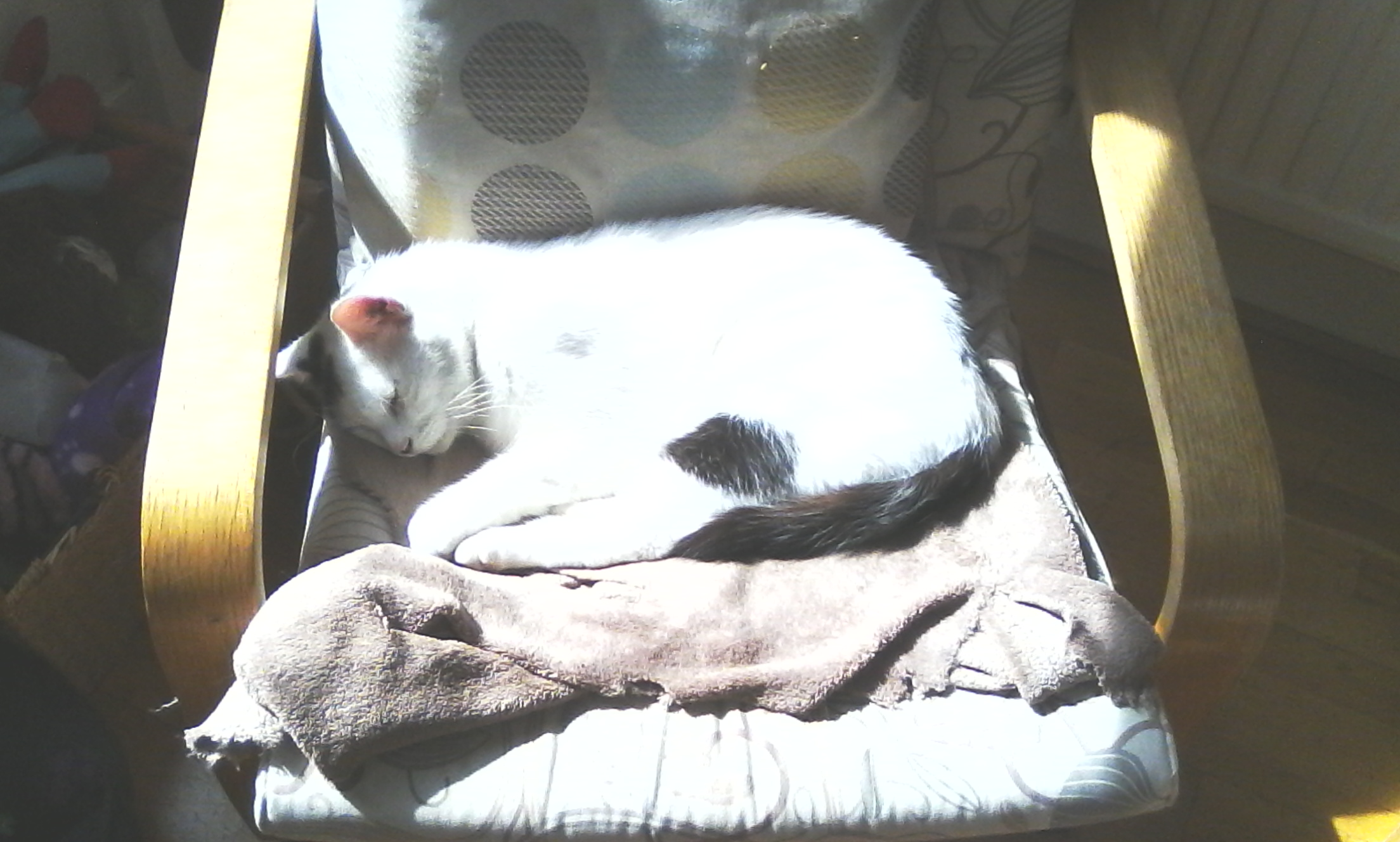
I was actually a little bit surprised with some of the images, as some are sharper than I expected. Contrast is a big issue in most photos, though HDR mode does a decent job of creating a more pleasing image – as you can see above.

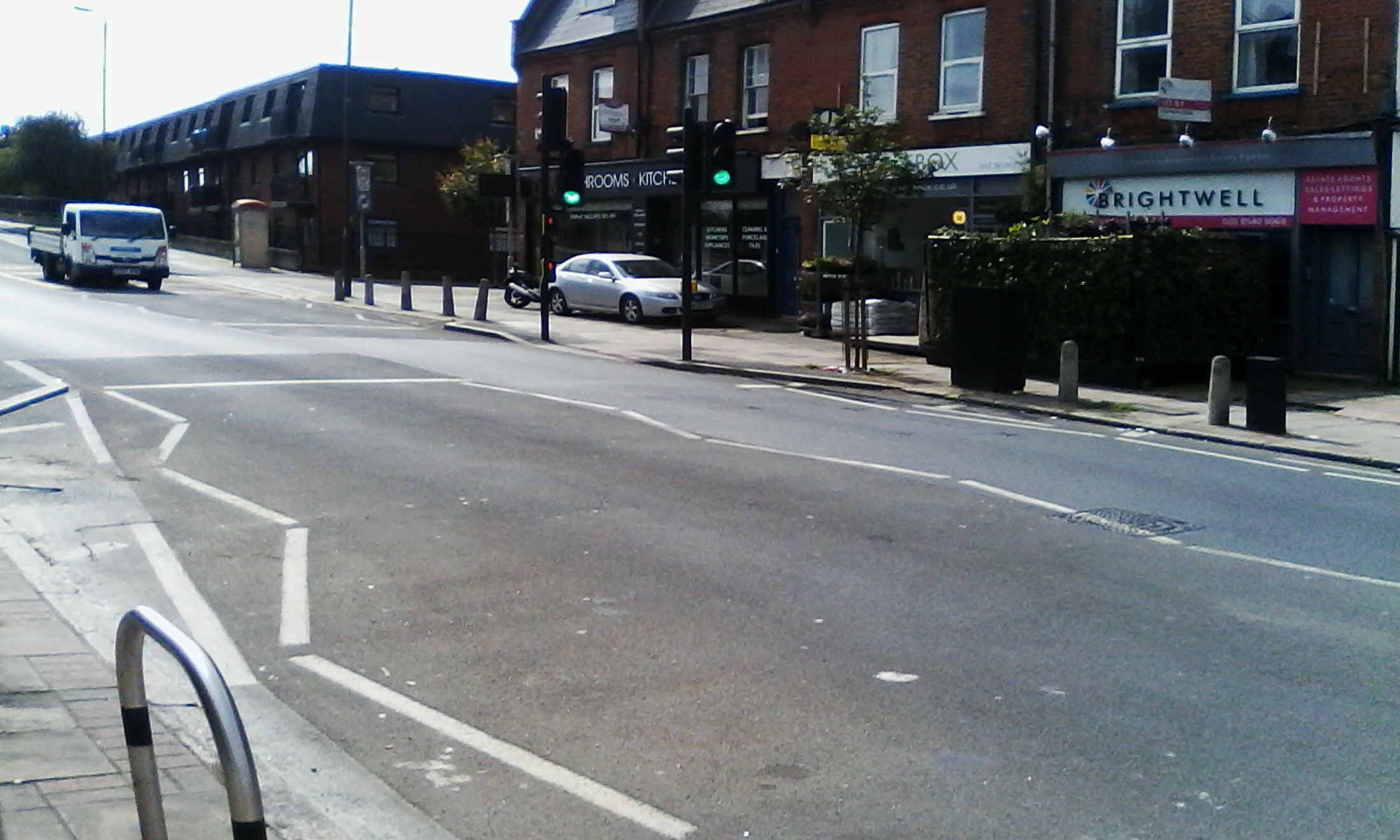
Occasionally the camera would struggle to focus, even with the tap-to-focus feature, resulting a blurry mess. On the whole, though, the camera is not awful and will capture your memories – just in a mostly low-contrast and low-resolution manner.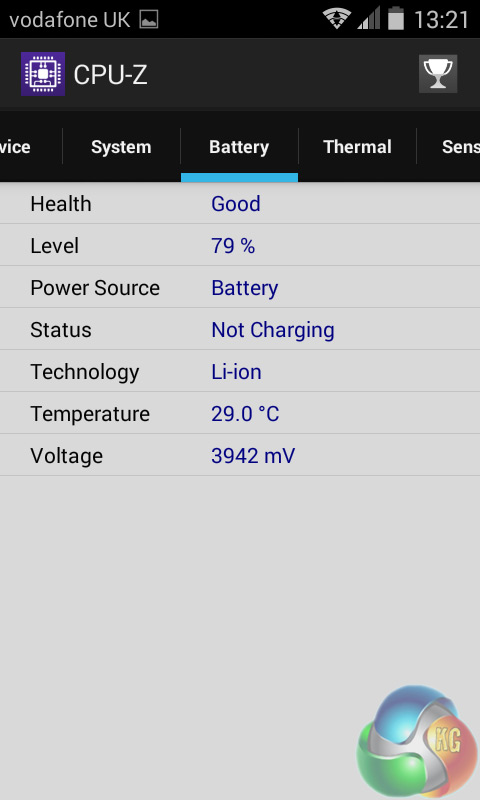
The battery life was an area where I was pleasantly surprised. A 1400 mAh unit is not big by modern standards, but then again the First 6's display is low-resolution so it requires less power than an HD panel, for example.
In real world terms, I found the battery life would comfortably last a day and a half, perhaps even two days with less regular use. This is with mobile data always enabled and auto-sync on. My reasoning for this impressive result is that neither the display or the CPU seem very power-hungry, so the first 6 can soldier on longer than some more expensive phones.
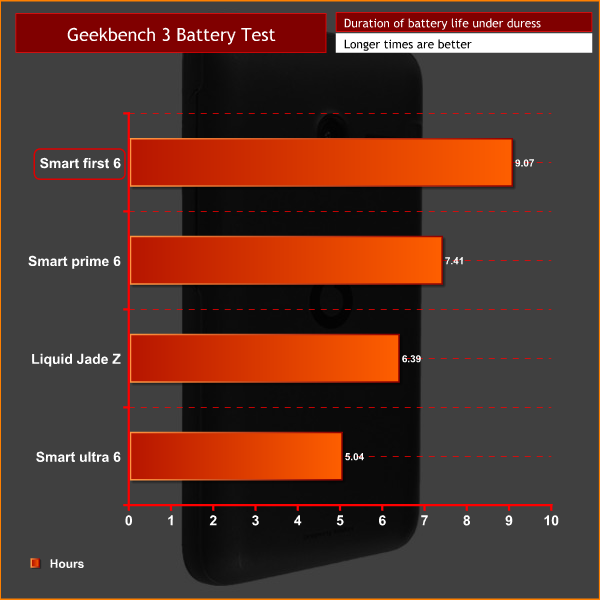
A benchmark time of 9:07 confirms this, with the first 6 becoming the longest-lasting phone yet in the Geekbench 3 battery benchmark. For £30, Vodafone seem to have done a decent job with the Smart First 6. The simple design is no bad thing, it just means the First 6 is easy to use and has no tacky gimmicks. The phone is even impressively light, weighing in at 112g – the same as an iPhone 5.
Similarly, the display is basic but functional. Brightness levels are not incredible, but the phone is still usable outside (as we would expect with any other smartphone). Viewing angles are a slight letdown, but as long as you hold the phone in a regular fashion everything looks fine.
It is also good to see Vodafone have left Android alone, bar a few bloatware apps. KitKat remains a solid mobile OS and it is perhaps more suitable to first-time Android users than Lollipop.
Performance of the First 6 is hindered by the lack of RAM, with 512MB proving too little in 2015. This is because, when too many apps are open in the background, phone performance simply grinds to a halt. However, if memory is frequently freed up, performance is not bad. It is just crucial to know what the operating constraints of the First 6 are, else it could to be difficult to get on with.
The camera is adequate, with a 2MP sensor taking half-decent photos. Low contrast is the biggest issue, but HDR mode seems to take better images.
Battery life, though, is surprisingly good, with a 9 hour time in the Geekbench 3 battery test proving the best time I have seen. It should last a day and a half comfortably in real-world terms.
In everything, it is key to remember the price. A £30 smartphone is an ultra-budget offering, so even expecting low to mid-range performance is unreasonable. Nothing is particularly good, but the first 6 does what it sets out to do – namely, it brings a complete smartphone experience for a paltry fee. And for that, it is commendable.
You can buy the Smart First 6 from Vodafone for £30 inc VAT here.
Pros:
- Proper smartphone for £30.
- Strong battery life.
- Light handset.
- A camera for £30 is impressive.
- Stock KitKat.
Cons:
- Bloatware apps use vital storage space.
- Viewing angles are poor.
- Lack of RAM hurts performance.
KitGuru says: This is a real smartphone for £30. It does everything another smartphone would – admittedly a bit slower. Still, for £30, that is mightily impressive.