KitGuru KitGuru.net – Tech News | Hardware News | Hardware Reviews | IOS | Mobile | Gaming | Graphics Cards


Asus has addressed the recent concerns surrounding its PCIe Q-Release Slim, a GPU release mechanism built into some motherboards to simplify graphics card removal. While acknowledging the potential for cosmetic wear and tear on the PCIe connector, Asus maintains that the mechanism does not cause functional damage to the graphics card or the motherboard.
The Asus Q-Release Slim graphics card release mechanism, featured on premium AMD and Intel 800-series motherboards, allows users to eject their graphics cards by tilting the card and tugging it upward (or sideways) while the PCIe push-latch automatically releases it. While this sounds simple, various reports claim that small bits of the PCIe connector can be damaged in certain circumstances. Based on the photos supplied, this does not affect actual PCIe connection pins, meaning functionality and performance should be unaffected. However, PCB abrasion is never a good thing.
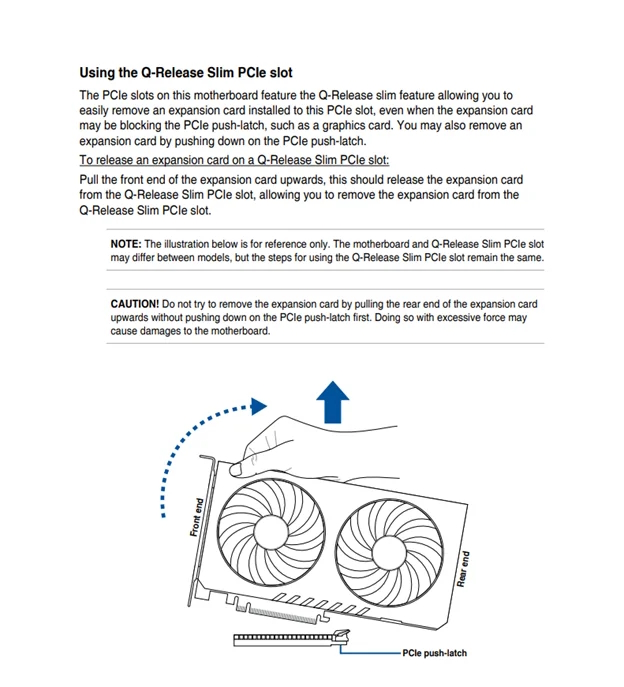
In response to these reports, Asus said that “In [its] internal testing and evaluation of the extremely small number of cases reported, [it] found no damage to the motherboard or graphics card that would affect functionality and/or performance. However, it is important to emphasise that any type of PCIe add-in card will exhibit signs of usage and wear marking after 60 continuous insertions and removals”.
Asus also stressed that following the proper removal procedure minimises the risk of damage. Still, reports of wear after only 60 insertions and removals raise questions about the long-term durability of the Q-Release Slim mechanism. PCIe slots and card-edge connectors are typically rated for a limited number of mating cycles. While the exact number varies depending on the manufacturer and design, the industry standard is around 50 cycles for regular slots.
It's possible that specific slot configurations or usage patterns might increase the risk of wear with the Q-Release Slim mechanism. However, Asus maintains that the wear observed in the reported cases is within the expected range for normal usage and does not pose a functional risk to the graphics card or the motherboard.
KitGuru says: Do you own a motherboard with this GPU release system? Have you ever noticed if it has caused damage or wear to your graphics card?