KitGuru KitGuru.net – Tech News | Hardware News | Hardware Reviews | IOS | Mobile | Gaming | Graphics Cards


AMD has two new technologies to improve your gaming experience when playing on Ryzen AI 300 series APUs. These two technologies are AMD Fluid Motion Frames 2 (AFMF 2), the successor to AMD's original frame generation technology, and Variable Graphics Memory (VGM), a new feature that allows users to convert RAM into VRAM.
These two technologies are currently only supported by AMD's latest Zen 5/RDNA 3.5-based APUs, which are available in select laptops and will soon be expanded to Mini-PCs and gaming handhelds. Starting with AFMF 2, the new iteration brings various optimisations and tuneable settings to improve frame generation.

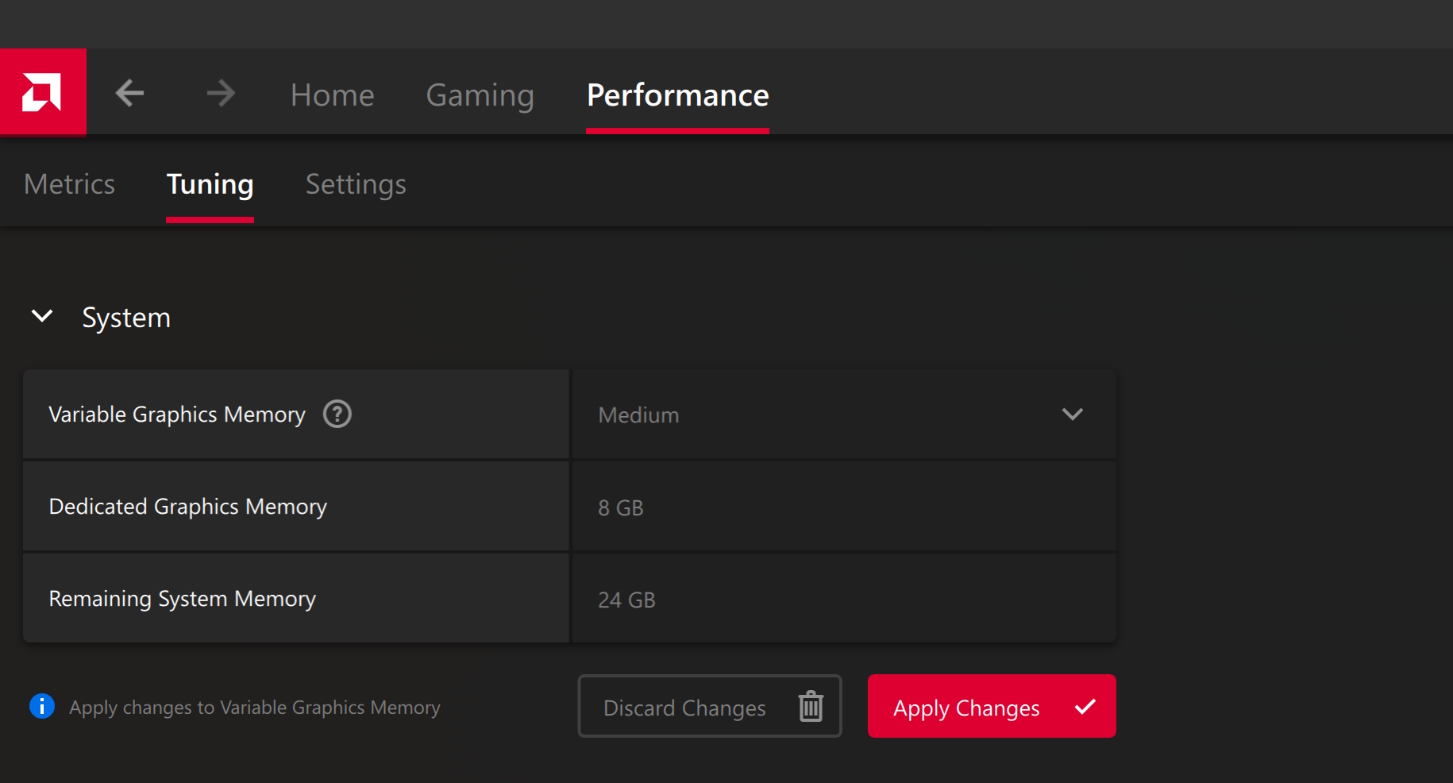
In addition to AFMF 2, AMD has also introduced VGM, a new technology that allows gamers to allocate up to 75% of their system RAM as dedicated video memory (VRAM). VGM is distinct from shared graphics memory and requires a reboot once activated. By default, VGM allocates 512MB, and AMD recommends reserving 16GB of RAM for the CPU. For example, on a system with 32GB of RAM, the VGM “medium” setting allocates around 8GB of the RAM as VRAM.
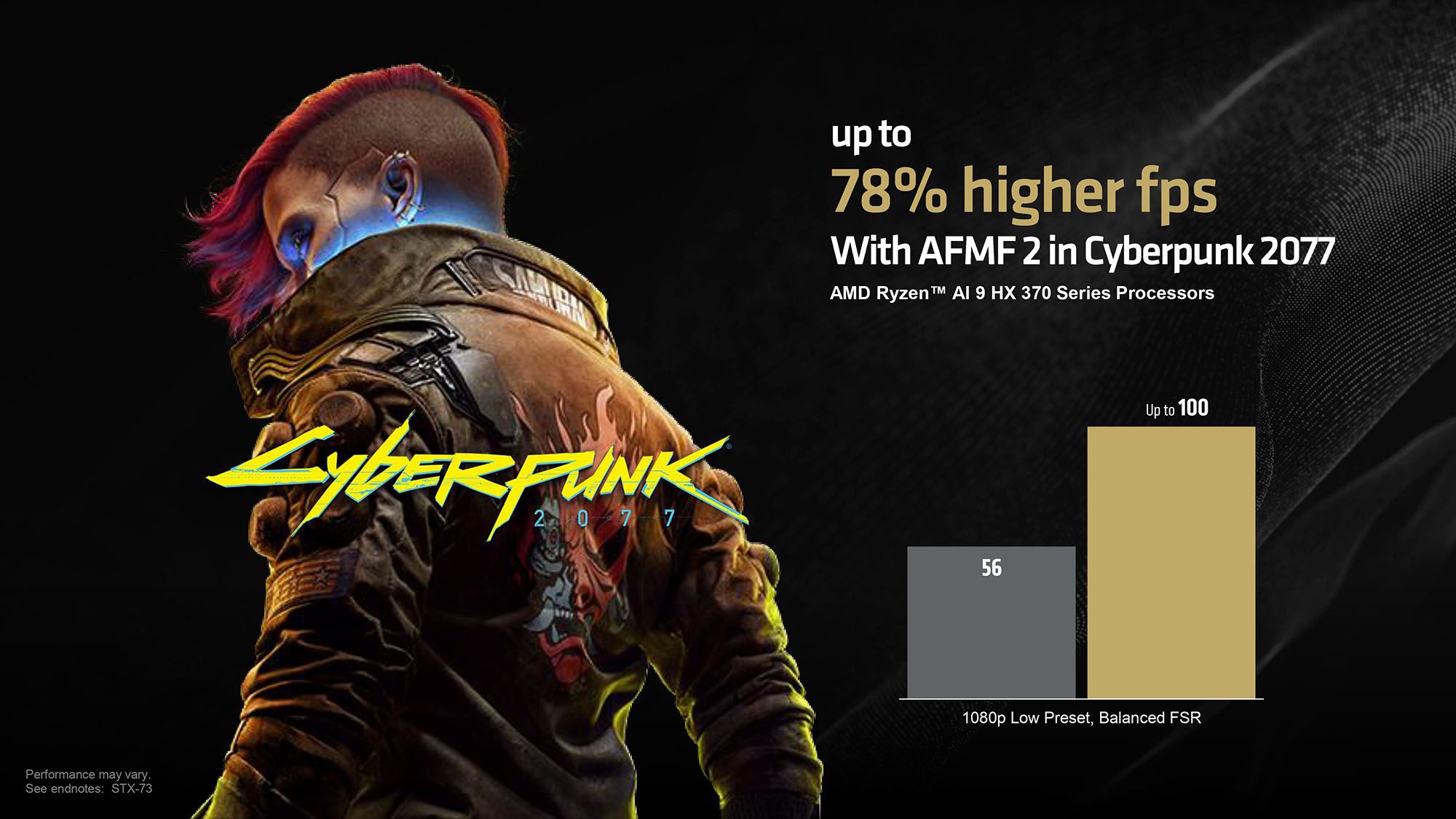
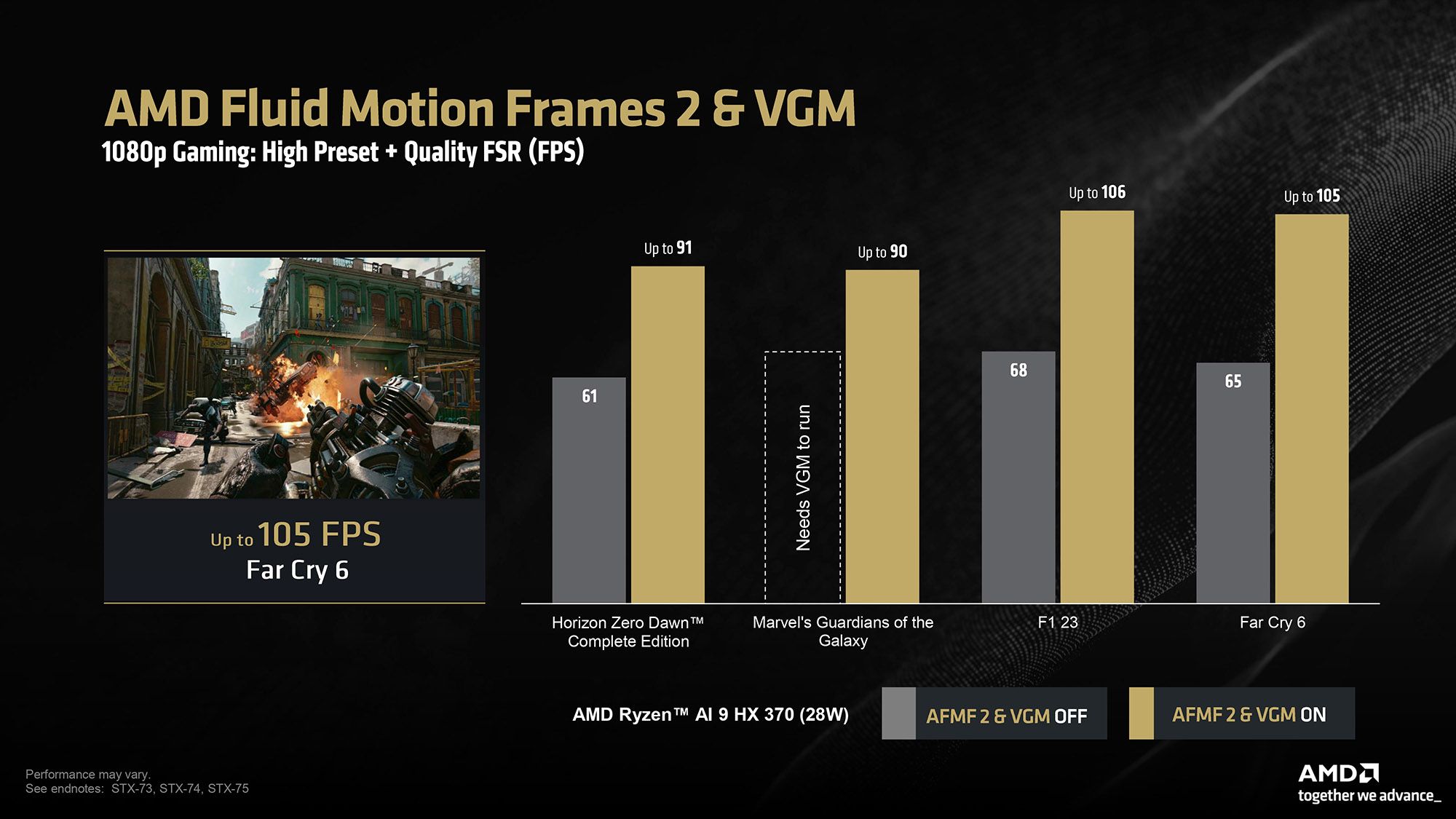
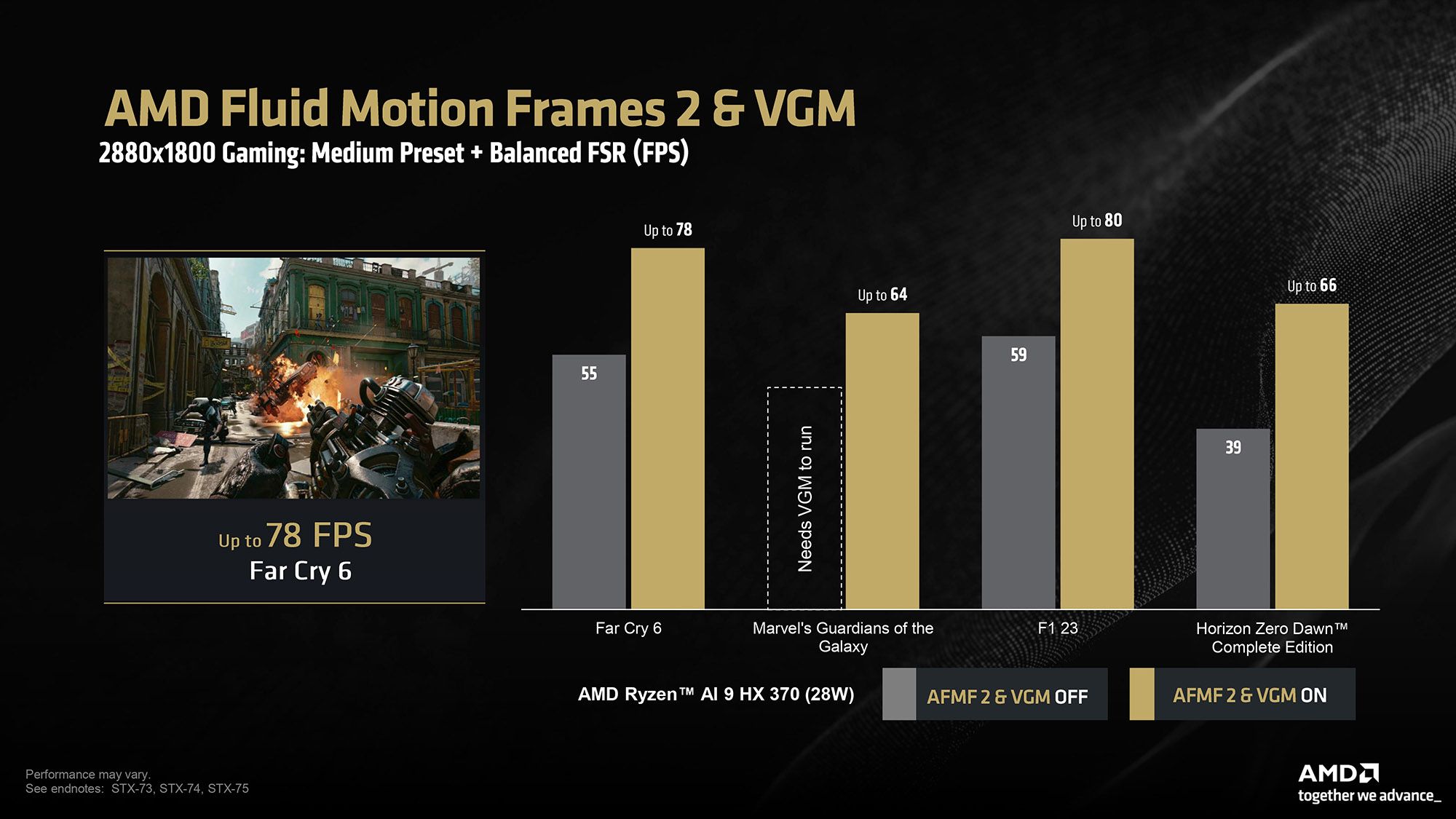
AMD has released benchmarks for AFMF 2 and VGM in combination with HYPR-RX, showing that performance can increase by up to 78% on an Asus Zenbook S 16 powered by an AMD Ryzen AI HX 370 (28W). Certain titles, like Guardians of the Galaxy, can now run on the system, whereas they would fail to boot without VGM previously.
Discuss on our Facebook page, HERE.
KitGuru says: It's a bummer that older APUs won't support these new technologies. However, at least everything coming after RDNA 3.5, like the new-gen RDNA 4 desktop GPUs, should support these new technologies.