KitGuru KitGuru.net – Tech News | Hardware News | Hardware Reviews | IOS | Mobile | Gaming | Graphics Cards


Lossless Scaling, a premium tool available on Steam for scaling windowed games to full screen using spatial scaling and sharpening algorithms, got a major update. From now on, the software also supports frame generation across a wide range of GPUs, including integrated graphics solutions.
Lossless Scaling is a tool that was first launched in 2018. Its primary goal is to improve games and software via spatial techniques and, if feasible, machine learning. The application supports a variety of upscaling methods, including AMD FSR, Nvidia NIS, and some more advanced algorithms standard in emulators. This utility applies upscaling techniques to compatible games and other applications. The developer guarantees compatibility with various graphics cards, including iGPUs.
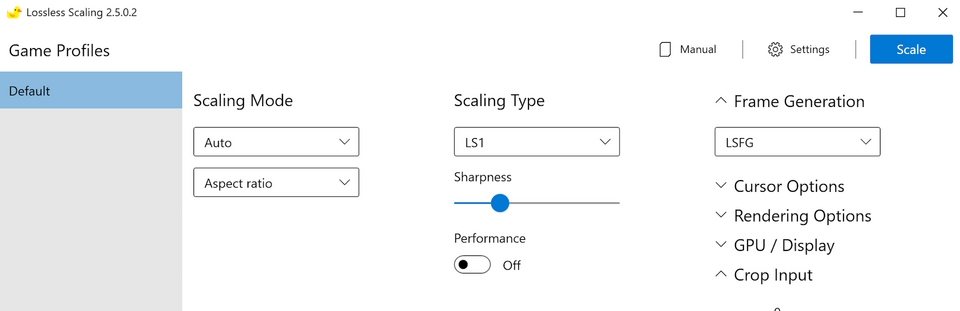
As it was, this piece of software was already very handy with its feature set. Still, the developer thought it could improve it by introducing support for frame generation techniques. The developer states the user must set the frame generation to half of the monitor's refresh rate to preserve ideal frame timing, recommending a minimum of 60FPS and a 120Hz display. Although it can run at 30FPS and 60Hz (up to 1080p), the output frames may have inferior visual quality, making artefacts more visible. Those already using the software for upscaling should reset their settings and reconfigure them.
Lossless Scaling is available on Steam for £5.89/€6.89, which may seem slightly pricy. Fortunately, it's common to see it available with an 80% sale, pushing its price down to £0.79/€0.79.
KitGuru says: Do you own Lossless Scaling? Do you think the new frame generation feature makes it worth getting?