KitGuru KitGuru.net – Tech News | Hardware News | Hardware Reviews | IOS | Mobile | Gaming | Graphics Cards


Another big competitive online shooter is adding support for NVIDIA Reflex. Last month, we saw Nvidia's latency-reducing tech implemented in Rainbow Six Siege and this month, it will be coming to Blizzard's Overwatch. In the case of Overwatch, Nvidia Reflex seems to deliver its best in-game results to date.
Running Overwatch with Nvidia Reflex on can bring a massive 50 percent reduction to latency. In tests, a GTX 1660 Super running the game at 1440p/144Hz, total system latency reaches up to 63ms, switching Reflex on reduces that to 31ms. In the case of the RTX 2060 Super, latency drops from 47ms to 24ms and for the RTX 3080, switching Nvidia Reflex on reduces latency from 26ms to 16ms.
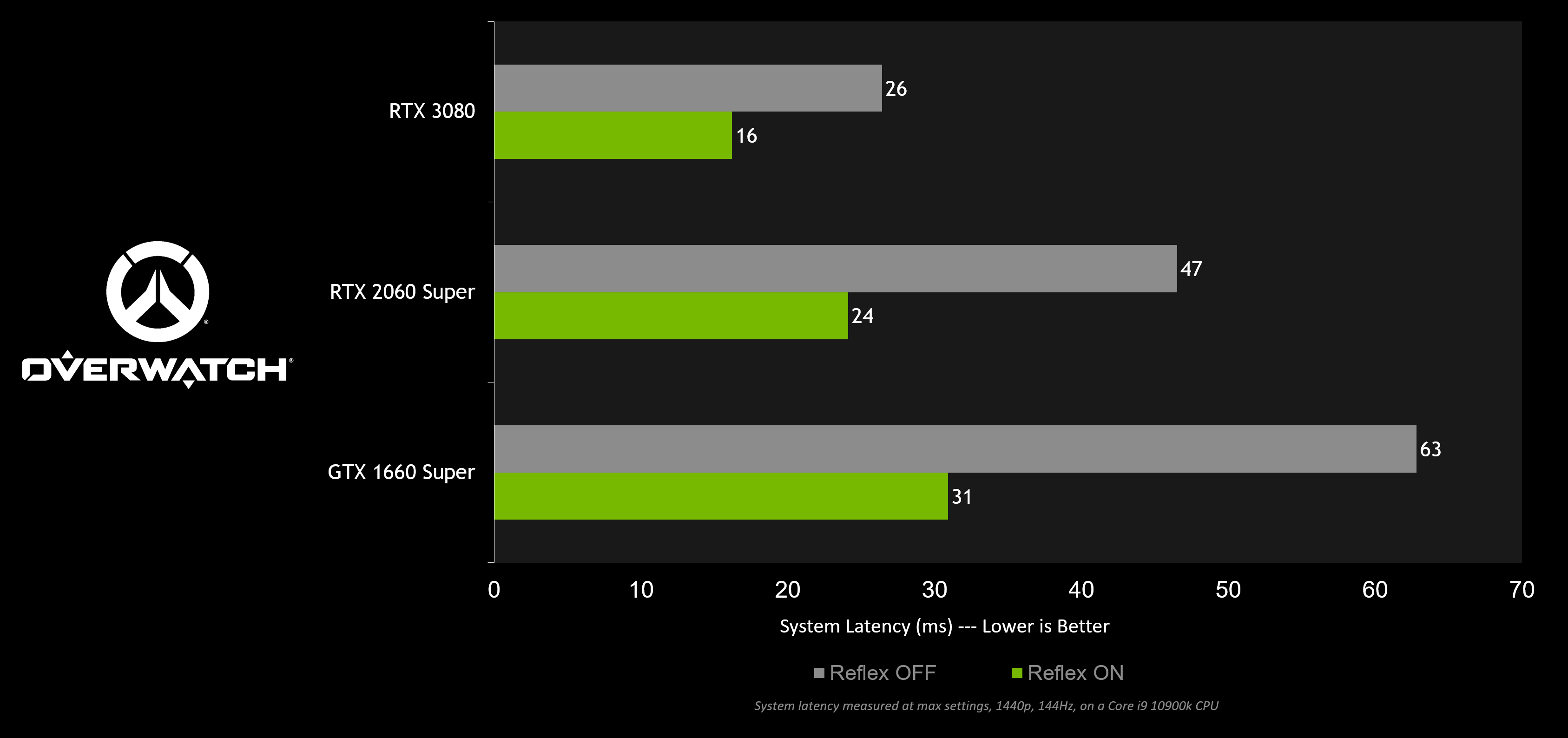
Overwatch players with a GTX 900 series graphics card or newer will be able to take advantage of Nvidia Reflex. To start off with, Reflex will be available on the Public Test Realm version of Overwatch on PC and will be rolled out into the main game in the weeks to come.
Overwatch's implementation of Nvidia Reflex also takes things a step further by including a Latency Flash Indicator, to Reflex compatible monitors can monitor latency in real time while playing.
Discuss on our Facebook page, HERE.
KitGuru Says: Nvidia Reflex has become very popular quite quickly, with implementations in Call of Duty, Apex Legends, Fortnite, Rainbow Six Siege, Destiny 2, Valorant and now, Overwatch. Do many of you use Nvidia Reflex when its available? Has it made a noticeable difference for you?