KitGuru KitGuru.net – Tech News | Hardware News | Hardware Reviews | IOS | Mobile | Gaming | Graphics Cards


During Computex, Micron announced its first PCIe 4.0 SSDs using 176-layer NAND flash memory, the Micron 2450 series and the Micron 3400 series. Besides the new SSDs, it also showed the 1α-based LPDDR4x and DDR4 memory modules.
The Micron 2450 series will be available in three form factors: M.2-2280, M.2-2242, and M.2-2230. Available with 256GB, 512GB, and 1TB capacities, these SSDs are aimed at everyday computing and should be priced accordingly. Read speeds may go up to 3,600MB/s, while write speeds can “only” reach 3,000MB/s.
Unlike the 2450 SSD, the Micron 3400 SSDs are only available in the M.2-2280 size and with 512GB, 1TB, and 2TB storage capacities. With sequential reads reaching up to 6,600 MB/s and sequential writes up to 5,000 MB/s, these SSDs can accelerate workloads considerably even if you're upgrading from a PCIe 3.0 SSD.
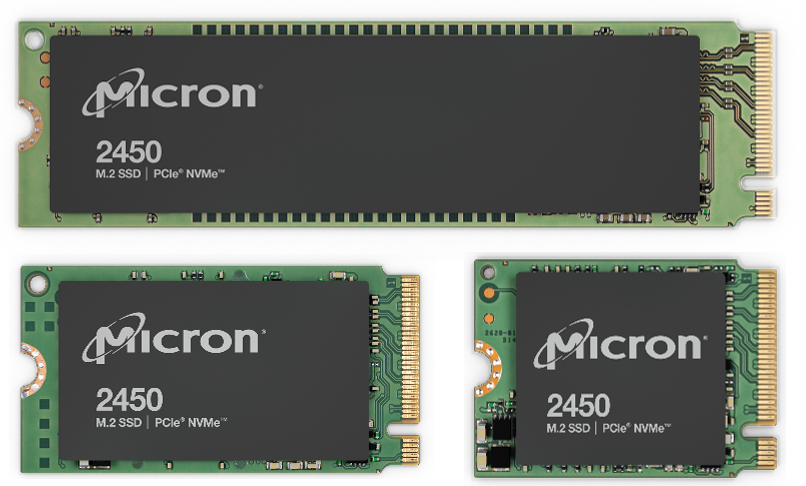
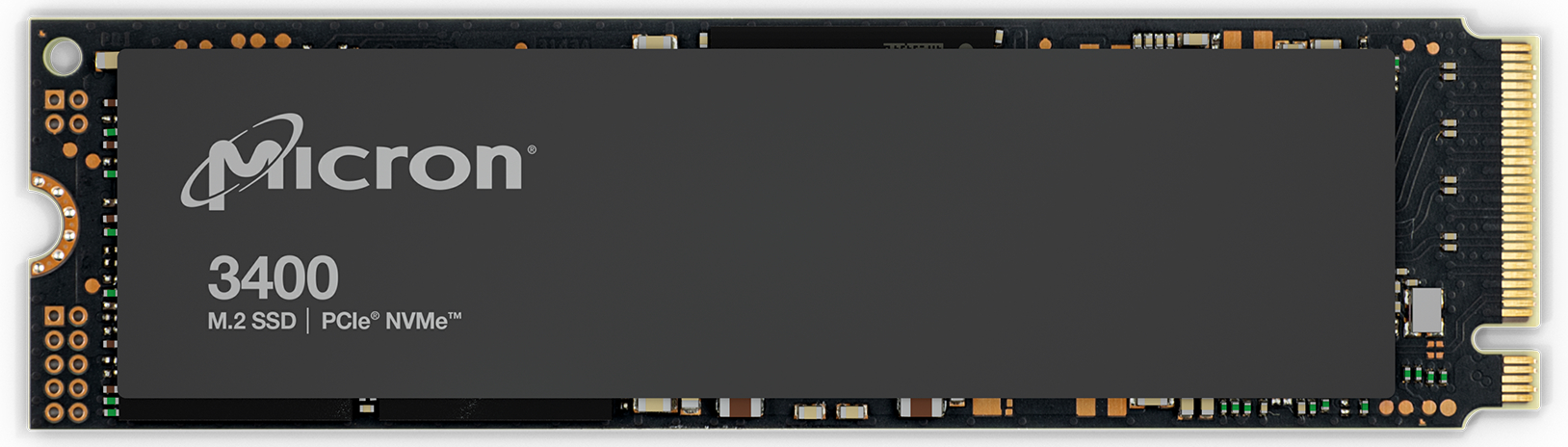
Both SSD series come with a heat spreader to reduce throttling and feature Micron's own NVMe 1.4 SSD controller. Micron notes it may use another 3rd party SSD controller in these drives due to the current chip shortage.
Micron also announced the shipment of the world's first 1α-based LPDDR4x and DDR4 memory modules, promising to consume less power while increasing density. According to Micron, the new memory modules provide “a 40% improvement in memory density and up to 20% improvement in power savings” when compared to standard LPDDR4x memory.
KitGuru says: A DDR4 upgrade now may seem a bit counterproductive, but like we've seen with DDR3, even after mainstream and server platforms jump to DDR5, older memory technologies will still be useful.