KitGuru KitGuru.net – Tech News | Hardware News | Hardware Reviews | IOS | Mobile | Gaming | Graphics Cards


When Microsoft first announced that its DirectStorage technology would be coming to PC, it was assumed that the feature would work on Windows 10. When the company announced Windows 11, it said that the storage acceleration API would only be supported on the new OS. Fortunately, Microsoft has since reversed this decision.
In most PC systems, when a game is loaded from the storage drive where it's installed, the CPU and RAM are responsible for decompressing the data. Once it finishes, the data is sent to the GPU. With DirectStorage, things work differently. Instead, the system moves game data directly from the storage drive to the GPU, moving the decompression step from the CPU to the GPU.
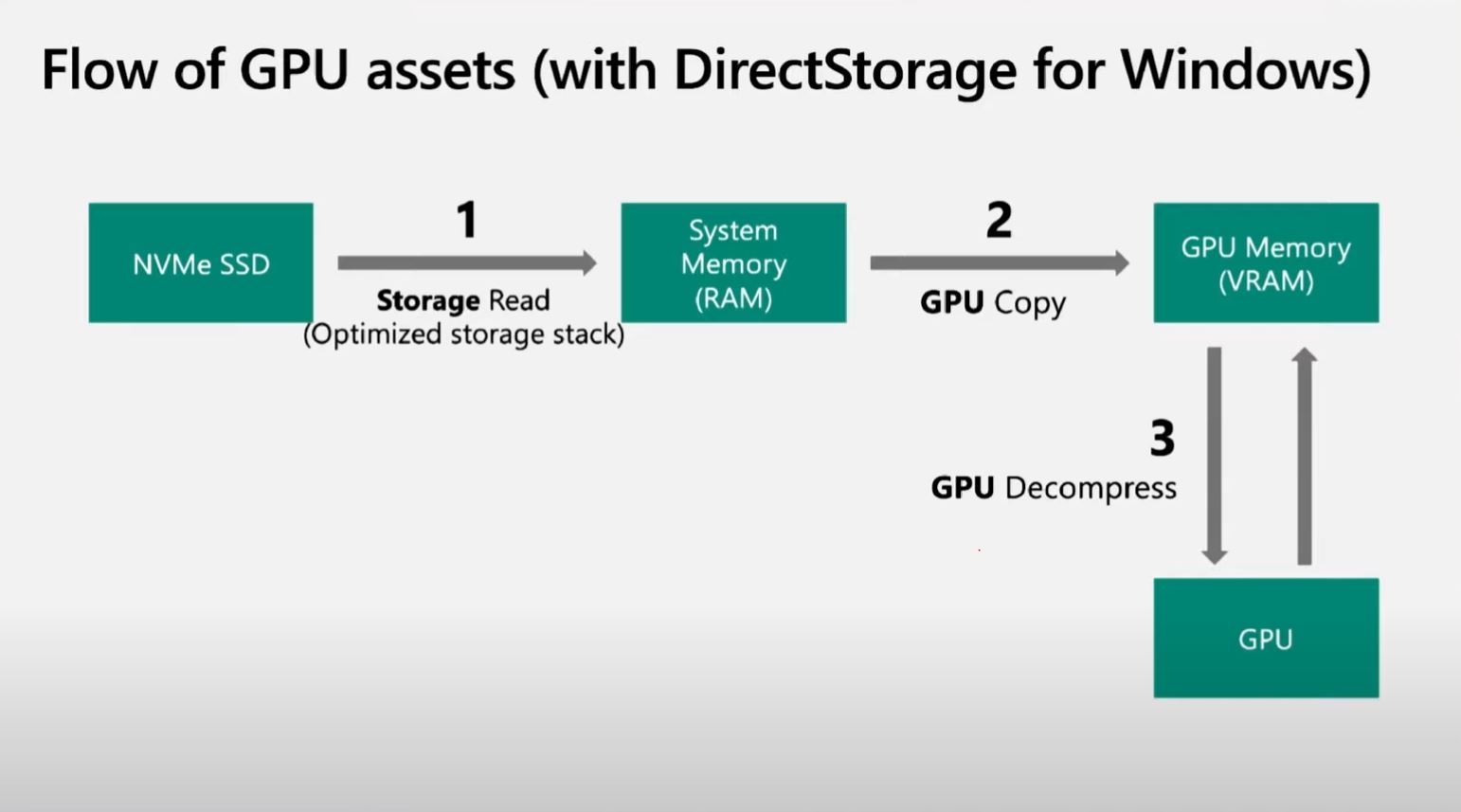
DirectStorage is already widely used on Xbox Series X|S consoles, resulting in faster loading times. Now, PCs can also benefit from improved storage performance thanks to this technology. Microsoft initially stated this technology would be exclusive for Windows 11, but it has since clarified in a blog post that Windows 10 version 1909 or later will also support it.
Regardless of the storage drive where the game is installed, DirectStorage compatible titles always load faster on a compatible systems, even if installed on an HDD. However, games installed on a Windows 11 system should load faster than on a Windows 10 system because Microsoft's upcoming OS will use an upgraded OS storage stack, while Windows 10 uses the legacy OS storage stack.
Discuss on our Facebook page, HERE.
KitGuru says: It's not known when Microsoft will introduce support for DirectStorage on Windows 10, but given the benefits it brings, it should be well received when it arrives.