KitGuru KitGuru.net – Tech News | Hardware News | Hardware Reviews | IOS | Mobile | Gaming | Graphics Cards


Today during Apple's ‘one more thing' event, the first ARM-powered MacBook was officially announced. Apple is officially moving on from Intel CPUs for macOS, starting with the 2020 MacBook Air.
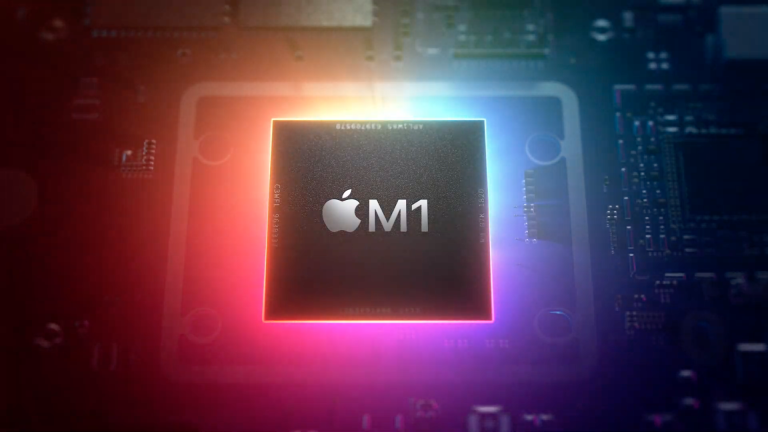
The MacBook Air is shipping with an Apple Silicon M1 processor, which is built on TSMC's 5nm process. It eight cores, split between four ‘high-performance' cores and four ‘high-efficiency' cores. If you are familiar with Apple's iPad or iPhone SoCs, then you'll be quite familiar with this idea already. The M1 seems to have quite a lot in common with the current A14 Bionic found in the iPhone 12 and iPad Pro.
According to Apple, the 2020 MacBook Air is faster than “98 percent of PC laptops sold in the last year”. In a comparison, Apple claims that the new MacBook Air delivers 3.5x better CPU performance compared to the previous Intel MacBook Air. Graphics performance is also said to be 5x better than previous generations of Intel MacBooks.
Aside from that, you can expect the new MacBook Air to feature a super thin and light chassis, a 49.9Whr battery, a 13-inch 2560×1600 display, up to 16GB of RAM and up to 2TB of storage. The 2020 MacBook Air is available starting this month with prices starting at $999 USD.
KitGuru Says: The first ARM-powered MacBook has officially arrived. Now we'll just have to wait to see user benchmarks to see how it holds up compared to previous Intel-based laptops.