KitGuru KitGuru.net – Tech News | Hardware News | Hardware Reviews | IOS | Mobile | Gaming | Graphics Cards


Nvidia rolled out a new DLSS Software Development Kit (SDK) a few days ago, bringing the most recent DLSS Transformer model out of beta. Now, testing with the latest SDK shows huge VRAM improvements when using the latest DLSS model.
As noted by VideoCardz, this latest SDK, version 310.3.0, also brings crucial VRAM consumption optimisations. Nvidia's official changelog briefly noted these improvements, with more detailed information in the new DLSS Programming Guide.
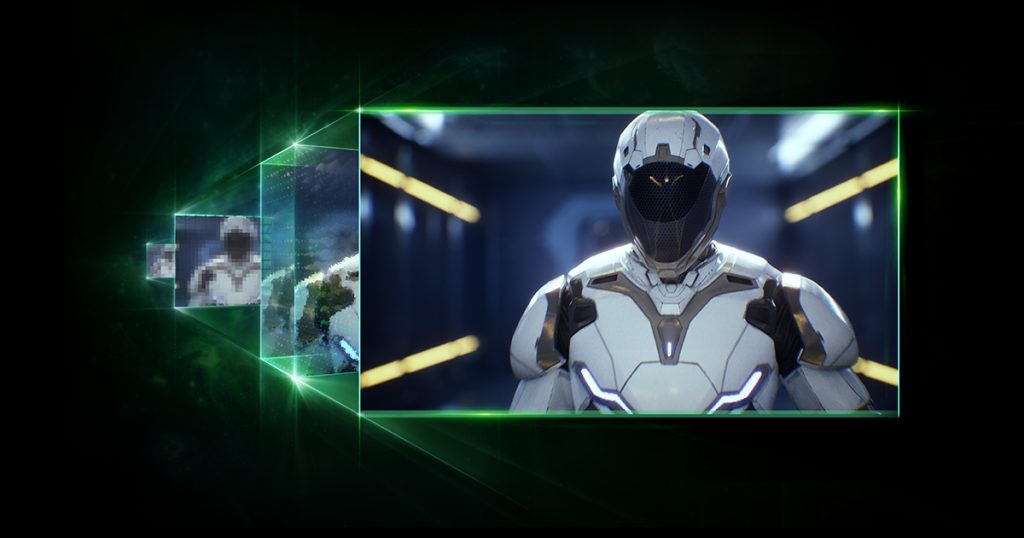
At 1080p resolution, the 310.3.0 SDK's Transformer model consumes 87.77 MB of VRAM. This represents a 19.8% reduction compared to the previous beta version, which used 106.9 MB. Similar VRAM decreases, averaging around 20%, are applicable across higher resolutions, up to 8K. The following table details the VRAM reduction per resolution when moving from DLSS version 310.2.0 to version 310.3.0:
| Resolution | DLSS Version 310.2.0 | DLSS Version 310.3.0 | VRAM Reduction |
|---|---|---|---|
| 1920×1080 | 106.90 MB | 85.77 MB | 21.13 MB |
| 2560×1440 | 181.11 MB | 143.54 MB | 37.57 MB |
| 3840×2160 | 387.21 MB | 307.37 MB | 79.84 MB |
| 7840×4320 | 1517.60 MB | 1225.17 MB | 292.43 MB |
For typical configurations, such as a GPU with 8 GB of VRAM running at 1080p resolution, the DLSS model's footprint now accounts for approximately 1% of the total available memory. While the new Transformer model still requires more VRAM than the older CNN model (which used 60.83 MB at 1080p), the gap has significantly narrowed.
Discuss on our Facebook page, HERE.
KitGuru says: Have you already tried the new DLSS Transformer model version 310.3.0? Did you notice any reduction in VRAM usage with the latest DLSS version?