KitGuru KitGuru.net – Tech News | Hardware News | Hardware Reviews | IOS | Mobile | Gaming | Graphics Cards


Patriot Memory has just launched the P400 V4, a new PCIe Gen 4.0 x4 M.2 SSD that promises read speeds of up to 6,200 MB/s. Suitable for PC and PlayStation 5 consoles, the P400 V4 comes in various storage configurations, ranging from 500GB to 4TB.
This versatile drive delivers sequential read speeds of up to 6,200 MB/s and write speeds of up to 5,200 MB/s, making it ideal for gamers, content creators, and anyone who wants to upgrade their system with faster storage. The P400 V4 leverages the latest PCIe Gen 4.0 x4 NVMe technology to achieve its speeds while maintaining low power consumption. On the PlayStation 5, the drive delivers sequential read speeds of up to 6,000 MB/s, ensuring rapid loading times for a smoother gaming experience. Alternatively, due to its slim design, you can mount it on most SSD enclosures, making a portable SSD out of it.
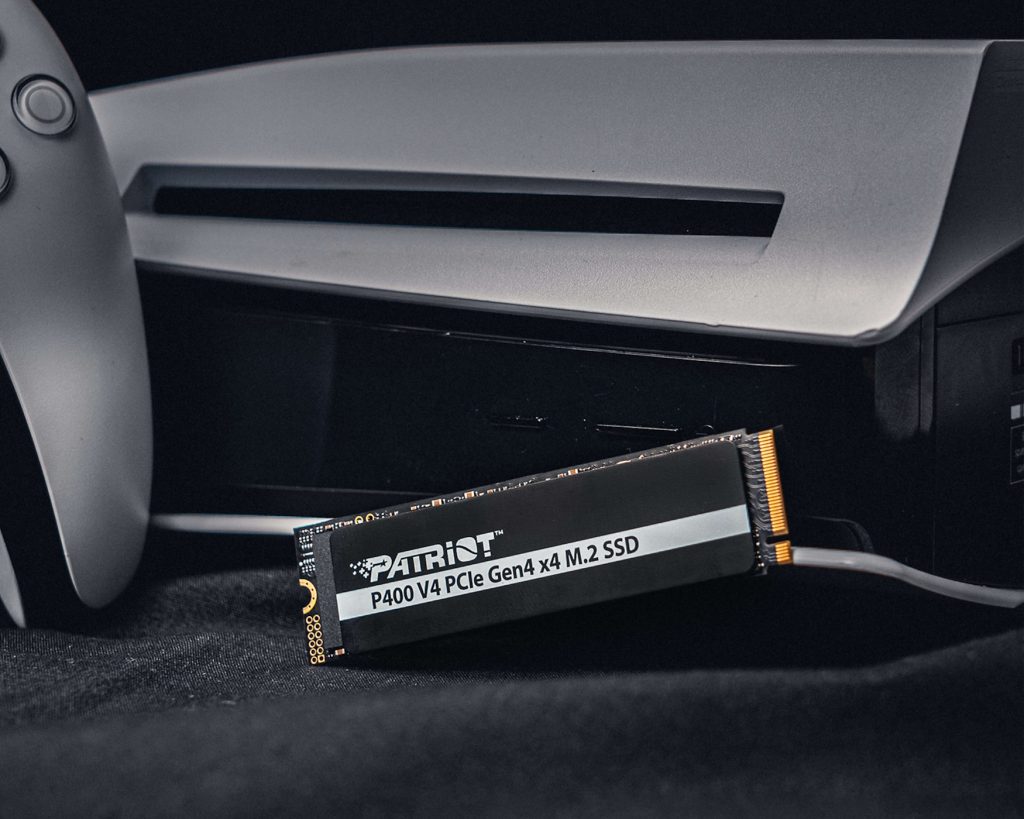
To keep things running smoothly, the P400 V4 features an advanced graphene heatshield to manage thermals, even during intensive workloads. Its compact M.2 2280 form factor makes it suitable for many systems besides consoles, including slim laptops and small form factor PCs.
Available with up to 4TB of storage, the P400 V4 has a rated endurance of up to 1280 TBW (Total Bytes Written). Moreover, these new Patriot SSDs are backed by a 5-year manufacturer warranty.
KitGuru says: With many PCIe 4.0 SSDs only going up to 2 TB, the P400 V4 4 TB model could be worth considering for users looking for bigger storage in a single device.