 KitGuru KitGuru.net – Tech News | Hardware News | Hardware Reviews | IOS | Mobile | Gaming | Graphics Cards


One of the toughest markets to compete in these days is gaming accessories. Where once upon a time Razer stood alone, now there are dozens of companies vying to be the gamer's number one choice when they go into battle. KitGuru has just taken delivery of a gaming headset from a new brand called Gamdias. Is it a sound investment?
While we're always happy to see new brands, the market is congested, so the first thing to consider is where has this headset been positioned?
The yardstick for positioning is a combination of featureset and price. In a nutshell, the Gamdias Hephaestus is retailing around the £70 mark and they have surround sound and some intelligent rumbling technology.
That puts it between the CM Storm Sirus 5.1 Gaming Headset at £58 and the Asus Vulcan Pro at £89 – both of which feature high quality construction and surround sound audio. More importantly, the Speedlink Medusa NX is only £50 with a similar featureset.

- Cable Length: 2.5m
- Dimension(LxWxH): 232 x 100 x 216 mm
- Frequency range: 20 ~ 20KHz
- Plug type: Gold-plated USB plug
- Sensitivity: 117dB + / – 4 dB at 1 kHz
- Impedance: 32 Ohms
- Driver diameter: 40mm
- Driver magnets: NdFeB
- Driver membrane: N/A
- Microphone size: 6.0 * 5.0mm
- Microphone Sensitivity: -46dB + / – 3 dB
- Maximum input power: 100 mW
- Microphone frequency range: 100 ~ 10KHz
- Microphone impedance: 2.2 K Ohms
- Vibration unit frequency range: 20 ~ 200Hz
- Vibration unit sensitivity: 82dB + / – 4 dB
- Vibration unit impedance: 8 Ohms
- Vibration unit maximum input power: 1 W
The Gamdias web site claims that the Hephaestus is the world's number one headset, but it's hard to imagine how that can be true given the serious market penetration that has been achieved over the years by companies like Razer, Roccat, SteelSeries and the like – and that's before you get to the relatively new entries such as Plantronics.
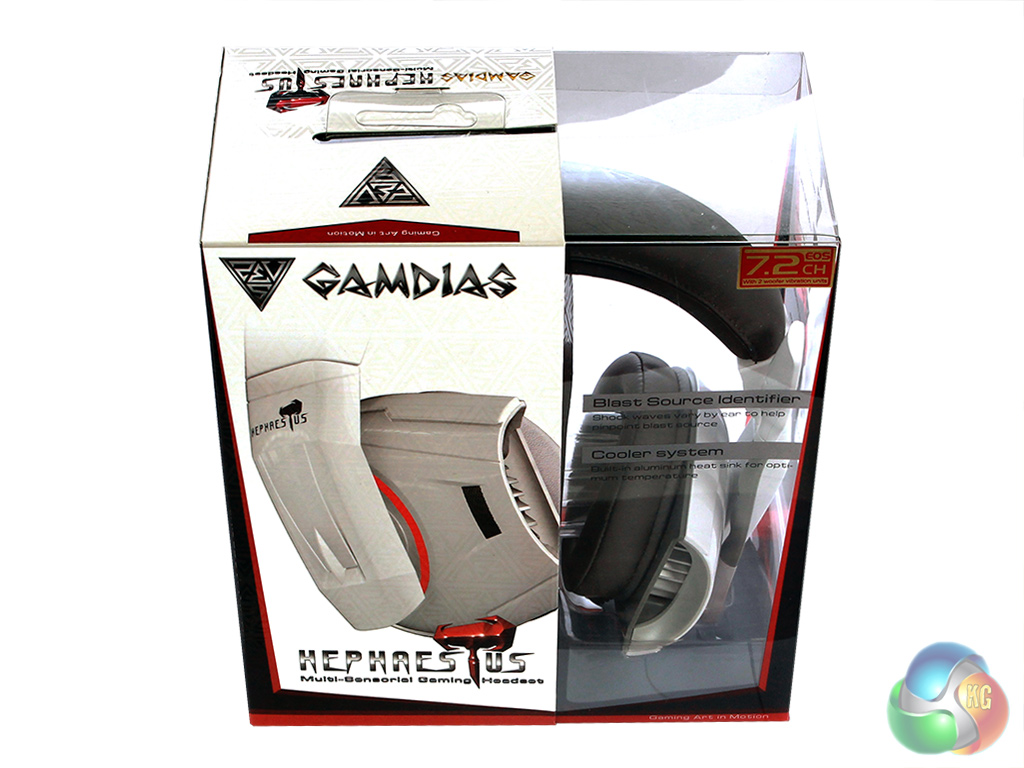
For now, let's put claims about market position to one side and focus on what Gamdias says that this headset will do.
It's key features are very clearly laid out on the packaging, including:-
- Virtual 7.1 channel effect
Delivering faithful and reverberating simulated 7.1 channel sound effect - Environment sound effect simulation
Carefully tuned professional gaming acoustic simulator, letting user choose their favourite acoustic environment through simple settings by EOS - Microphone sound change
Exclusive EOS controlled microphone sound changer, allowing easy high/low pitch tuning - Blast Source Identifier
Shock waves vary by ear to help pinpoint blast source - Ergonomic comfort
Leather headband & ear pads for comfort during prolonged gameplay - Cooler system
Built-in aluminium heat sink for optimum temperature - Noise cancelling mic
Active noise cancellation microphone filters out unwanted noise signal for clear messages to team - Flexible mic arm
Microphone arm can bend in any direction for personalized usage
There's no shortage of packaging to ensure that the headset survives shipping:-
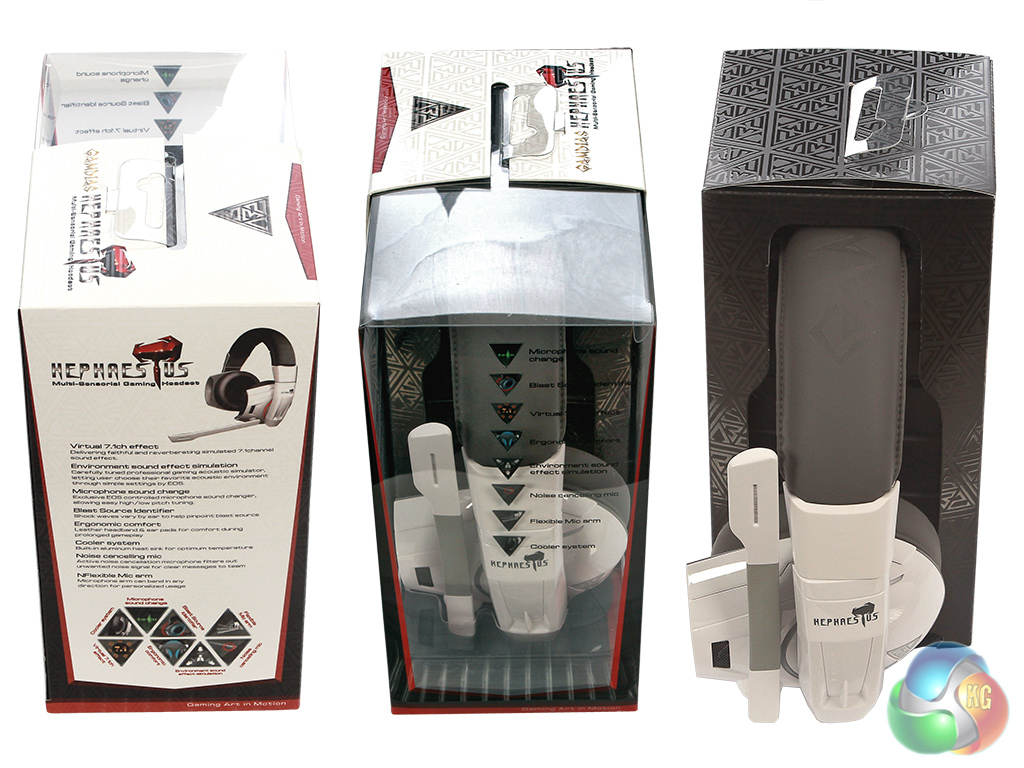

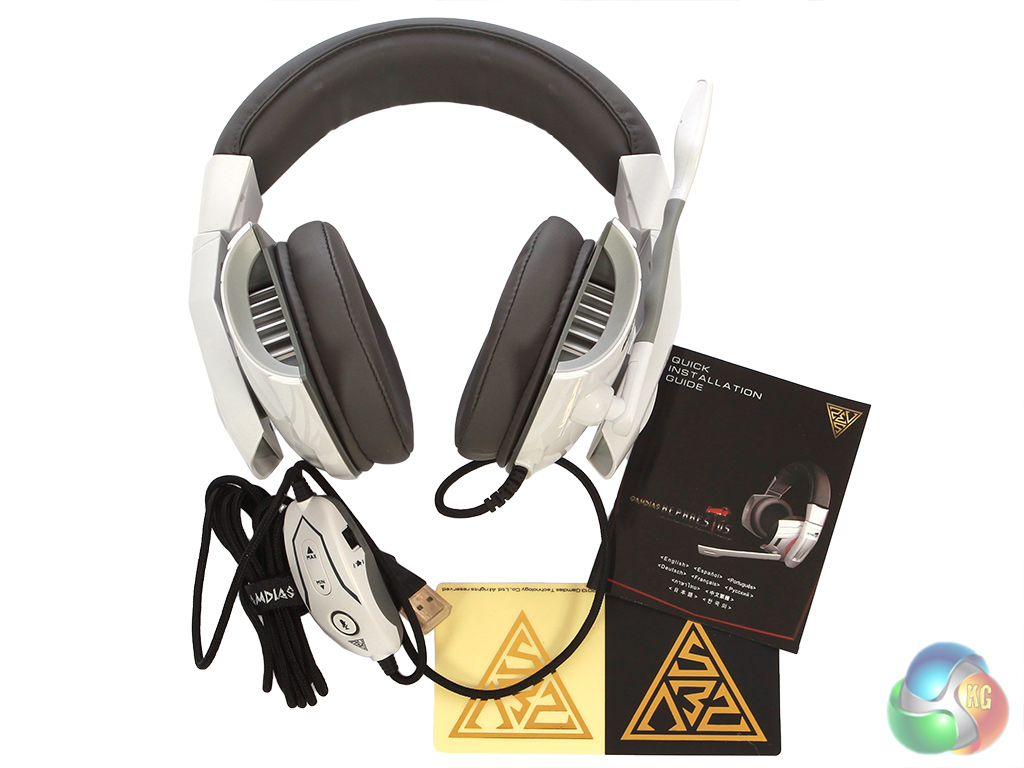
Once you open up the packaging, the there isn't much in the box apart from the headset, instructions and a couple of stickers.
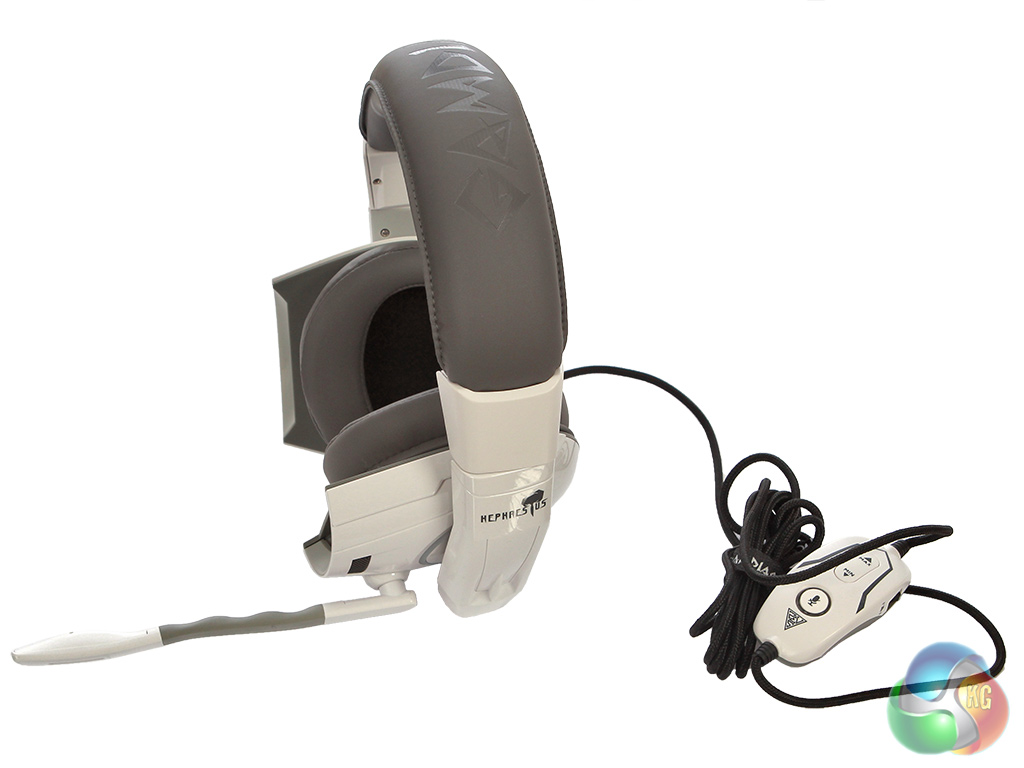
The headset itself is all about ergonomics, there's no denying that. Every joint is flexible and the padding is lush. How that will cope with harsh treatment in the long term, we can't be sure, but it certainly makes a good first impression.
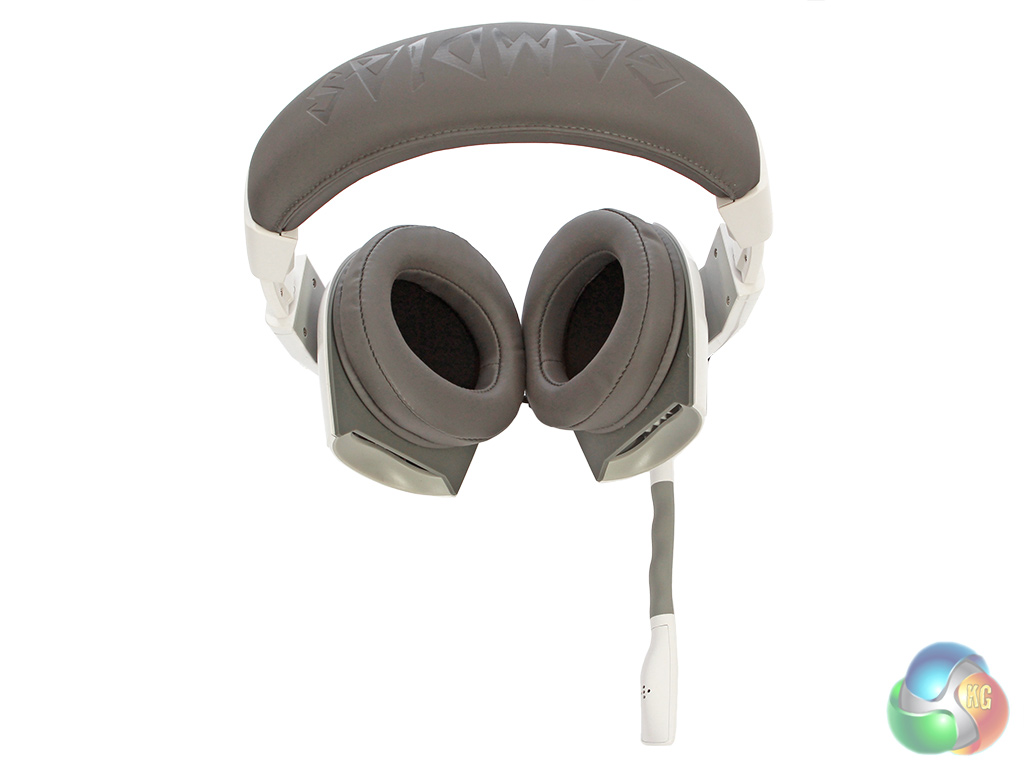
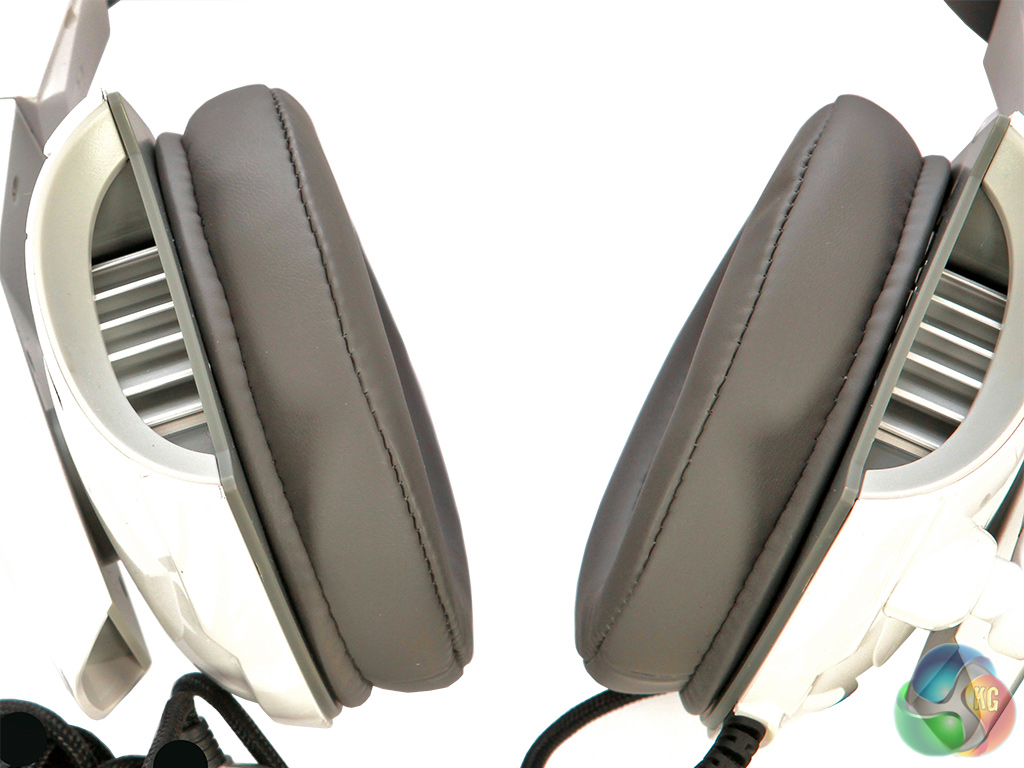
Inspecting the earpieces themselves, you are straight away aware of the integrated aluminium heatsinks and the work that's been done to try and achieve intelligent air flow. Each ear piece also includes a software-controlled intelligent vibration system which, Gamdias claims, will allow you to understand your gaming environment more fully – as explosions will not only have an audio detonation, but also a physical vibration component.
Imagine yourself in a massive warehouse, in total darkness with a blindfold on and a pistol in your hand. Now imagine you have an armed competitor in the warehouse. Even with no idea of where your opponent is, imagine they make a small noise, create a small vibration.
You turn, instantly, and fire. How close do you think you'd get to hitting them? Our guess is pretty close. Improved audio is definitely something that will add to the gaming experience in the future – and projects like TrueAudio.
One of the key features of the Gamdias Hephaestus headset is the combination of surround sound and significant vibration creation. While not exhaustive, there are a few ‘fan sites‘ on the web which list games that support this kind of user experience. If you know of a better one, please feel free to share it with us over on Facebook.
Users can access special wallpapers etc on a dedicated Gamdias Hephaestus page, complete with the latest ‘Hera' software pack here.

Getting a ‘Software could not be verified' message was a little disconcerting, it means that Gamdias has not fully registered its software. Strange.
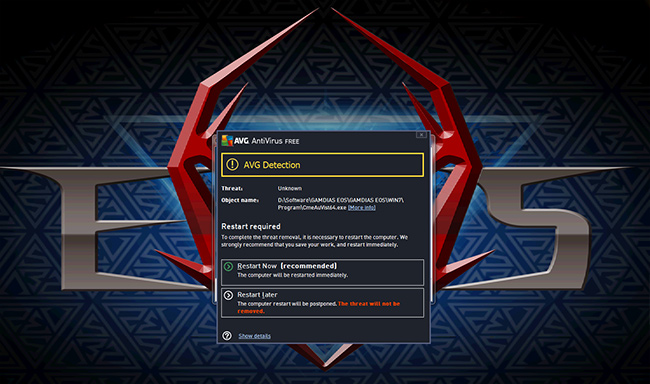
Slightly stranger was getting an AVG ‘Medium Level' alert when the Hera software installed.
A quick check online shows that some other companies can flag similar ‘false positives' with their installs, but it's still something that we would rather not see at all.
Once installed, we put the headset through an extensive series of trials, from music to gaming to home entertainment.
Our jumping off point was the Dolby demo page, which offers a broad range of interesting tests for any kind of surround sound system – and an interesting way to use up several gigabytes of download data.
The Gamdias Hephaestus headset does a reasonable job of sending tingles down your spine when you turn on the vibration system and use the right content. While the separation might be a little clearer than the Meduza NX, the vibrations were of a similar magnitude and we can't easily say that the ‘directionality' of spatial noises were better or more realistic.
Separation during entertainment testing came via Star Trek: Into Darkness on BluRay. It was clear and with decent depth, but certainly not overpowering.
We have to say that when in use, in a dark place, the Gamdias headset looks damned attractive with its integrated glowing bits.
The headset, shot in cinema conditions, is on the right.

By this point, we'd had the headset on for a while and our ears were pretty comfortable.
The air vents and integrated aluminium heatsinks definitely seemed to make for a slightly cooler experience which helps if you are prone to sweating.
We then moved onto music, putting the headset through a variety of trials, including Motorhead, Emeli Sande, Disclosure and Patricia Kopatchinskaja's attack on Bartok (because we know that some of you like nothing better than reliving your Apocalypse Now fantasies – gaming with classical tunes in the background).
While the audio reproduction for music was OK, there simply wasn't enough volume at times. The Medusa NX can rattle your jaw and make your flatmates complain about the noise, even when they're sitting across the room. The Gamdias Hephaestus is more refined, but also quieter.
Lastly, we used the headset for in game testing, to see if the adding ‘intelligent spatial vibration system' made us more effective killers. Overall, the experience was good, but not significantly better than the opposition.
One other point, not directly related to the headset itself, is the remote control. The time it takes to raise/lower volume is too long and the result is that it feels sluggish. On the plus side, we were able to use the mic to control a Windows PC with little effort – so it's more than capable of carrying your screams to other team members during battle conditions.
While the packaging is attractive, the build quality seems good and the feature set rich, we feel that it is going to take a serious push from Gamdias over the next 12-24 months if they truly want to establish themselves as a brand.
Why?
Well there are headsets like the Medusa NX from Speedlink that offers a similar specification set – alongside pure volume that's enough to clear the wax from your ears with no olive oil/cotton buds – and all for £50.
Which is £20 less than the Gamdias Hephaestus at £70.
It's not an exact like-for-like, because the Gamdias spatial technology is one level above that offered by cheaper headsets, so it's going to be a personal value judgement.
Pros
- Attractive design, makes you look like a Captain Scarlett Angel Interceptor
- Integrated heatsinks are an interesting approach to keeping ears cool
- Audio is clear and the vibration system works, more or less
Cons
- Volume does not go loud enough
- Weird software installation experience
- Too much competition at this price point for it to be a clear winner

KitGuru says: Lots of competition in this space, but with some innovative features and good overall build quality, it's certainly Worth Buying if you like the styling – which you can see for yourself at Multiplay i51 at the Ricoh Arena in Coventry from 18th to 21st April.
Spot on with this write-up, I honestly feel this website needs far more attention. I’ll
probably be returning to see more, thanks for the info!
I’m impressed, I must say. Rarely do I encounter a blog that’s both educative and
entertaining, and let me tell you, you have hit the nail on the head.
The problem is an issue that too few folks are speaking intelligently about.
Now i’m very happy that I stumbled across this during my hunt for something
regarding this.
Might not have scored as high as some, but I love these headphones for the BIG METAL BLOCKS in each ear 🙂
I love it whenever people come together and share opinions.
Great site, continue the good work!
Hello! Do you know if they make any plugins to safeguard against
hackers? I’m kinda paranoid about losig everything I’ve worked hard on.
Any tips?
Normally I do not learn post on blogs, however I wissh to say that this write-up very forced me to take a look att and
do so! Youur writing style has been surprised me. Thank you, very great post.