KitGuru KitGuru.net – Tech News | Hardware News | Hardware Reviews | IOS | Mobile | Gaming | Graphics Cards


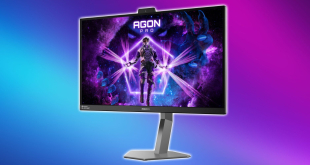
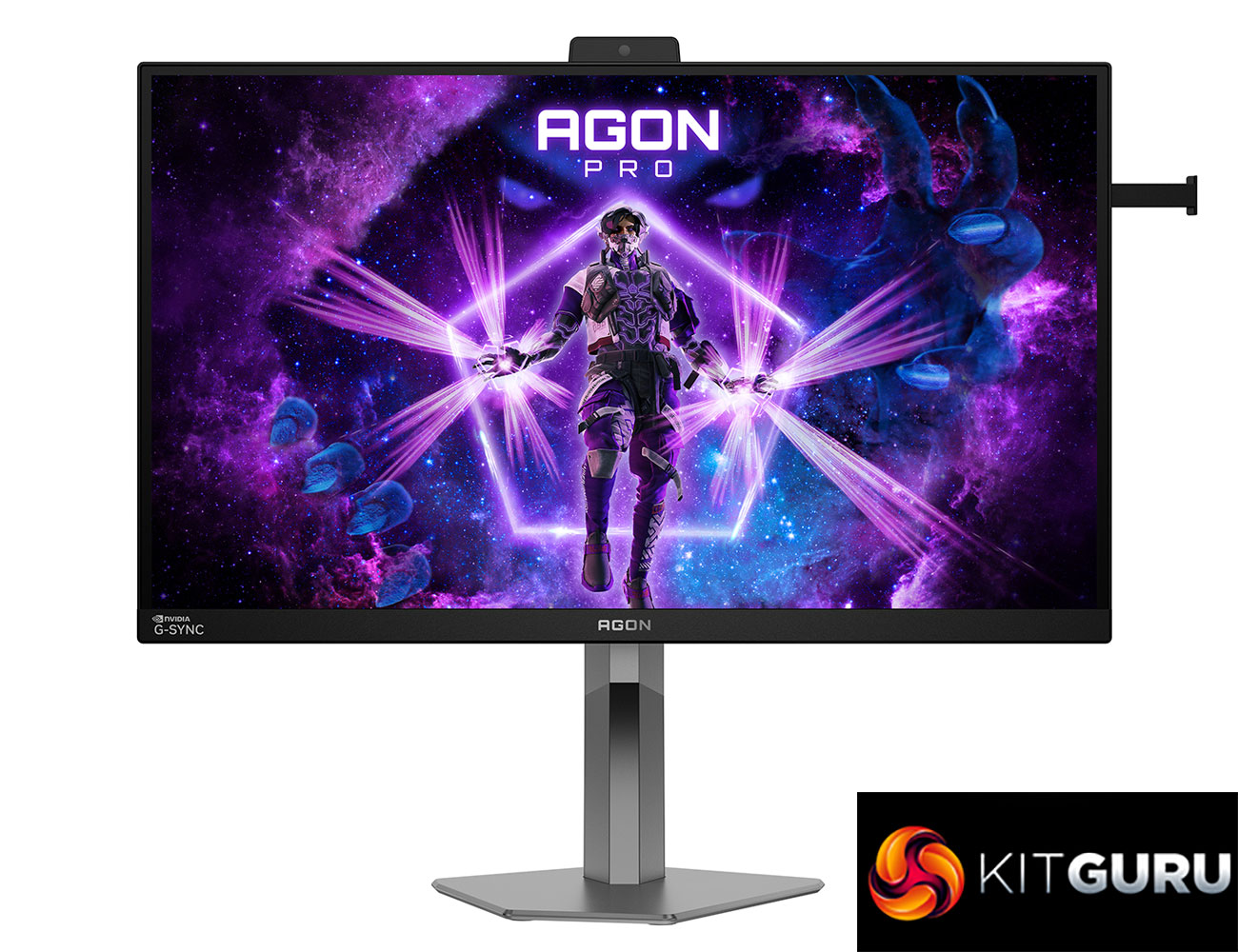
Today we're checking out the AOC Agon Pro AG276QSG2. The model number may not make it immediately obvious, but this is a rather exciting monitor for one main reason – it supports Nvidia's new G-Sync Pulsar backlight strobing technology that was officially launched at CES 2026. It's built around a 27in 1440p IPS panel with a 360Hz refresh rate, so that alone sounds pretty competitive – but what does Pulsar bring to the table? We find out today.
Timestamps:
00:00 Intro
00:57 Pricing and other Pulsar models
01:31 But what is G-Sync Pulsar?
03:43 Pulsar motion clarity examples
06:00 Overdrive and response times
07:28 Panel testing
10:30 Real-world gaming experience
12:17 Monitor design
13:36 Closing thoughts
First things first – pricing. The AOC AG276QSG2 is listed for pre-order on both Scan and OCUK for just under £560, making it the cheapest of the two other G-Sync Pulsar monitors that are currently listed here in the UK, given Acer's model is £600, and the ASUS is £629. Given all Pulsar monitors use the same panel, and considering Pulsar behaviour itself is tuned by Nvidia, performance between all three is likely to be near-identical, so the lower price alone could swing a lot of buyers towards this AOC model.
G-Sync Pulsar
But we're getting ahead of ourselves, so let's take a step back and first answer the question – what exactly is G-Sync Pulsar?
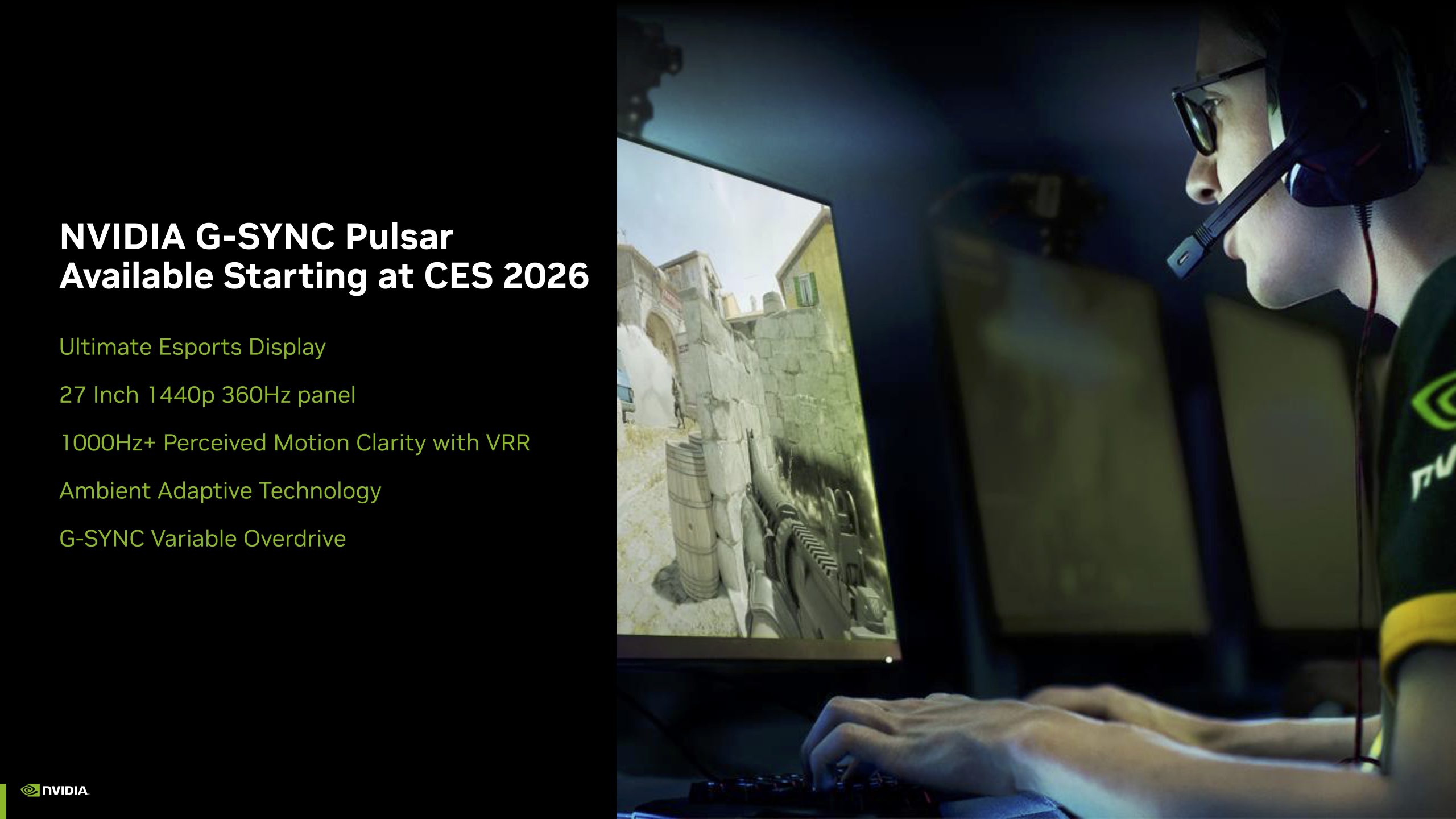
We don't need to go into too much depth here, as it was announced back at CES 2024, we got hands-on in April that year, and more recently Nvidia published an in-depth blog explaining exactly how the technology works.
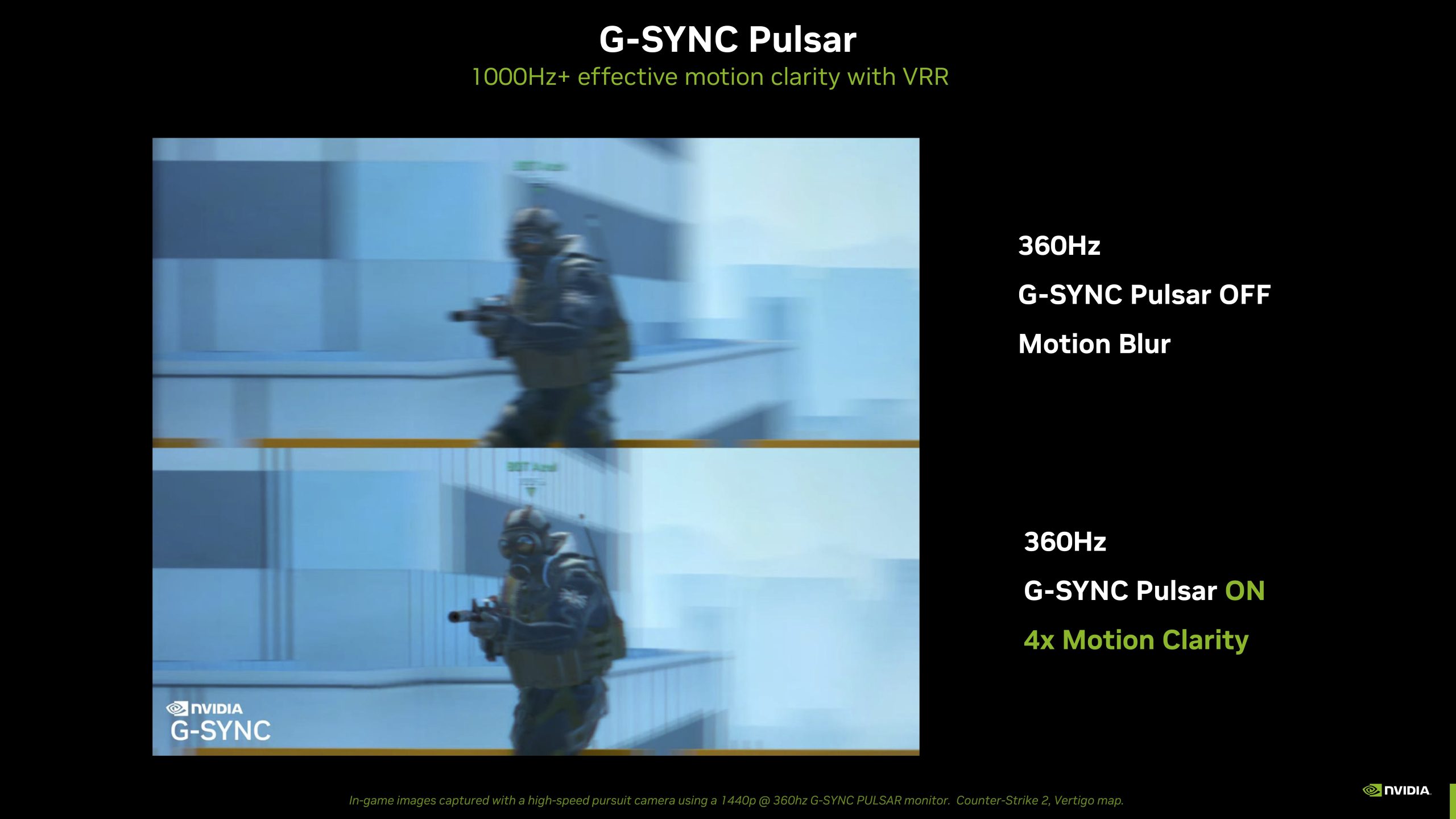
In a nutshell, Pulsar is the combination of high-tech backlight strobing and G-Sync variable refresh rate technology. While some monitors have married adaptive sync and backlight strobing together in the past, Pulsar is a much more advanced system that is designed to dramatically improve perceived motion clarity throughout the VRR window.
At its most basic level, backlight strobing works by reducing the amount of time each frame is visible. With Pulsar, Nvidia says that the backlight is only pulsed for 25% of the frame time, meaning each image is only briefly illuminated once the pixels have fully settled. In theory, that 1/4 frame visibility translates into 4x lower persistence, and this is how the company claims ‘1000Hz+ effective motion clarity'.
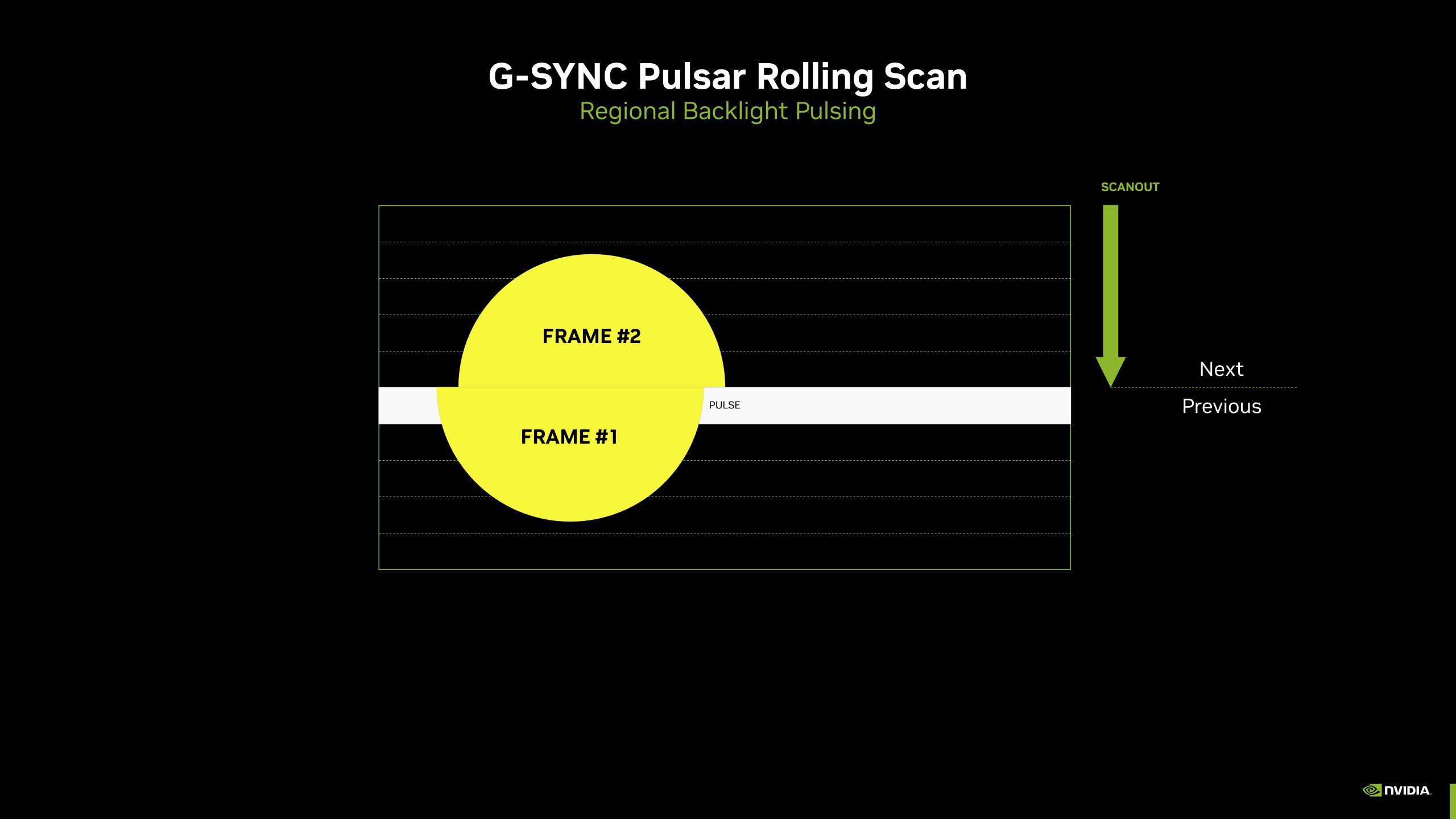
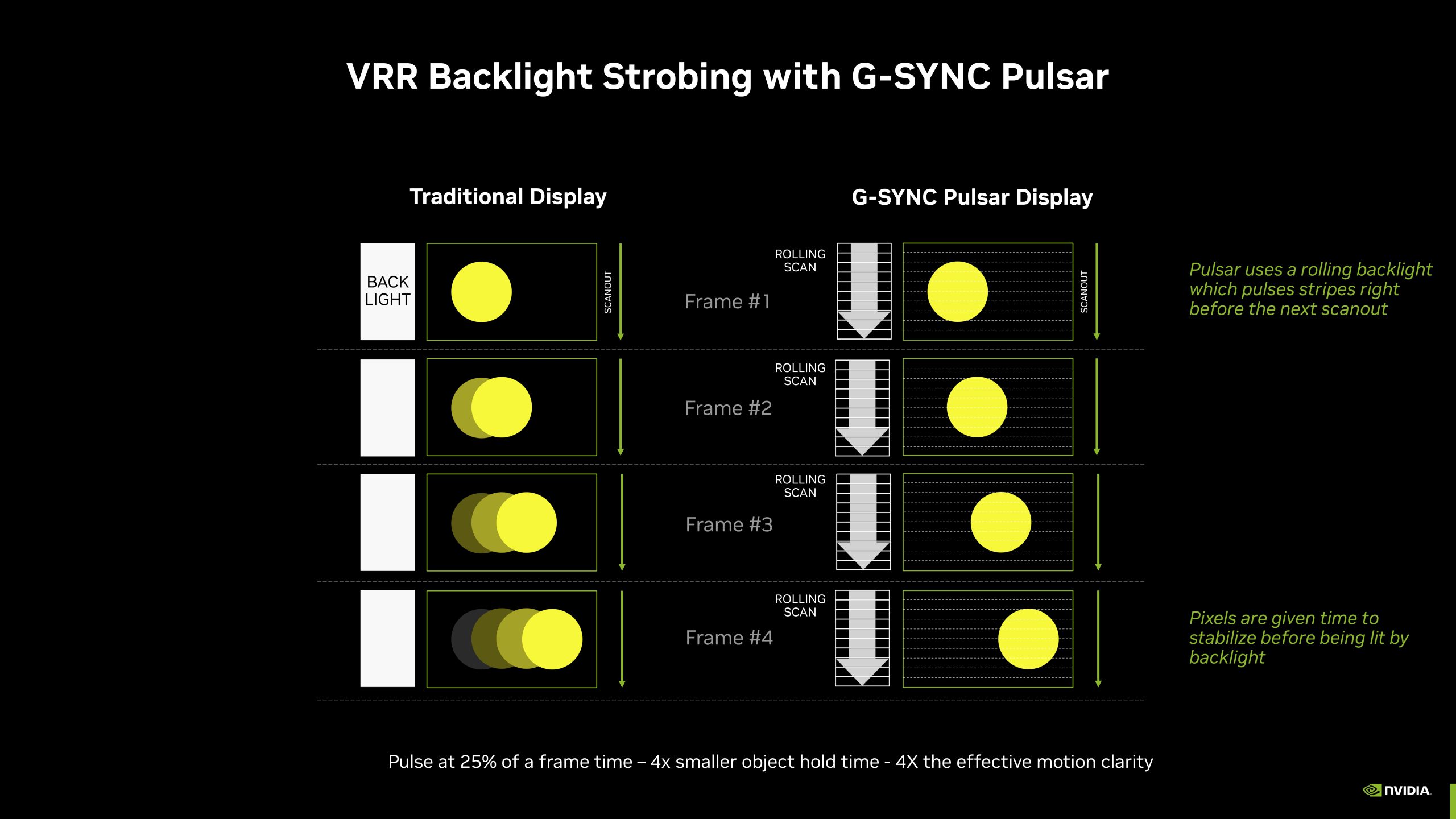
The G-Sync integration is the added secret sauce. More basic backlight strobing implementations typically run at fixed refresh rates and fire the backlight at a fixed point in the refresh cycle, regardless of how long the GPU took to deliver the frame or how well the panel transitions have completed. That leads to the usual strobing artifacts we're used to seeing, like crosstalk, double images, and inconsistent clarity especially at lower refresh rates. Pulsar, however, is driven directly by the MediaTek scaler which now has G-Sync built in, so the display knows exactly when a frame starts, when pixel response has stabilised, and when to flash the backlight.
On top of that, Pulsar incorporates what Nvidia calls a ‘rolling scan'. By utilising multiple horizontal backlight strips that can be pulsed independently, Pulsar strobes different sections of the panel sequentially, rather than the whole panel being strobed at once. This should lead to dramatically reduced crosstalk and consistent clarity from top to bottom, something that isn't true for previous backlight strobing implementations.
Specification:
- Screen size (inch): 27
- Screen size (cm): 68.58
- Flat / Curved: Flat
- Panel treatment: Antiglare (AG)
- Pixel pitch: 0.2328 mm
- Pixels per inch: 108.79
- Panel resolution: 2560 x 1440
- Resolution name: QHD
- Aspect ratio: 16:9
- Panel type: Fast IPS
- Backlight type: WLED
- Max refresh rate: 360 Hz
- Response time (GtG): 1 ms
- Response time (MPRT): 0.3 ms
- Static contrast ratio: 1000:1
- Viewing angle (CR10): 178 / 178
- Display colours: 16.7 Million
- Brightness in nits: 450 cd/m²
- Bezel type (front): 3-sided frameless
- Bezel colour (front): Black
- Bezel finishing (front): Texture
- Cabinet colour (backside): Grey, Black
- Cabinet finishing (backside): Texture
- Removable stand: ✓
- Speaker power: 2 W x 2
- Kensington lock: ✓
- VESA mount support: With VESA bracket accessory
- Tilt: -3.5° ~ 18.5°
- Height adjust: 130 mm
- Swivel: -18.5° ~ 18.5°
- Pivot: -90° ~ 90°
- HDMI: 2x HDMI 2.1 (TMDS)
- Digital HDCP (HDMI): HDCP 2.2
- DisplayPort: DisplayPort 1.4 x 1
- USB hub: ✓
- USB generation: USB 3.2 (Gen 1), 5 Gbit/s
- USB type downstream: 3 x USB-A
- USB type upstream: 1 x USB-B
- Audio output: 1x Audio out
- Warranty period: 3 years