KitGuru KitGuru.net – Tech News | Hardware News | Hardware Reviews | IOS | Mobile | Gaming | Graphics Cards


Our main test involves using an X-Rite i1 Display Pro Plus colorimeter and utilising Portrait Display's Calman Ultimate software. The device sits on top of the screen while the software generates colour tones and patterns, which it compares against predetermined values to work out how accurate the screen is.
The results show:
- A monitor’s maximum brightness in candelas or cd/m2 at various levels set in the OSD.
- A monitor’s contrast ratio at various brightness levels in the OSD.
- Gamut coverage, primarily focusing on sRGB and DCI-P3 colour spaces.
- Greyscale accuracy, measured across 20 shades, with an average colour balance reported.
- The exact gamma levels, with a comparison against preset settings in the OSD.
- The colour accuracy, expressed as a Delta E ratio, with a result under 3 being fine for normal use, and under 2 being great for colour-accurate design work.
We first run these tests with the display in its out-of-the-box state, with all settings on default. If there is an sRGB emulation option or other useful mode then we may test that too. We then calibrate the screen using the Calman Ultimate software and run the tests again.
You can read more about our test methodology HERE.
Default settings
Brightness and Contrast (Full Screen)
Pulsar Off
| OSD Brightness | White Luminance (cd/m2) | Black Luminance (cd/m2) | Contrast Ratio |
| 50 | 51.8 | 0.055 | 937:1 |
| 100 | 104.8 | 0.112 | 940:1 |
| 200 | 210.6 | 0.223 | 943:1 |
| 300 | 317.2 | 0.336 | 945:1 |
| 400 | 420.6 | 0.445 | 944:1 |
| 500 | 456.3 | 0.483 | 944:1 |
Kicking off with brightness and contrast, the OSD gives a brightness range from 50 up to 500, and we found the minimum to be fairly accurate, hitting 52 nits, but we topped out at 456.3 nits. It's still plenty bright for an LCD, but it's not quite the 500 nits you might expect from the OSD labelling!
Unfortunately though, black levels are higher than we'd like, resulting in fairly mediocre contrast of around 945:1. Considering other high-end IPS panels can now do more like 1400 or 1500:1, and combining that with the fact this is a premium Pulsar display, it is a little disappointing to see these results.
Pulsar On
| OSD Brightness | White Luminance (cd/m2) | Black Luminance (cd/m2) | Contrast Ratio |
| 100 | 110.2 | 0.117 | 942:1 |
| 200 | 204.2 | 0.216 | 947:1 |
| 300 | 292.7 | 0.308 | 949:1 |
| 400 | 375 | 0.395 | 949:1 |
| 500 | 453 | 0.478 | 948:1 |
Out of interest, I did re-test with Pulsar enabled, and the main difference here is that the minimum brightness cannot be adjusted below 100 in the OSD. Otherwise, general behaviour is exactly the same – though that in itself is a big win, as often backlight strobing would reduce brightness, but not so with Pulsar.
Screen Uniformity
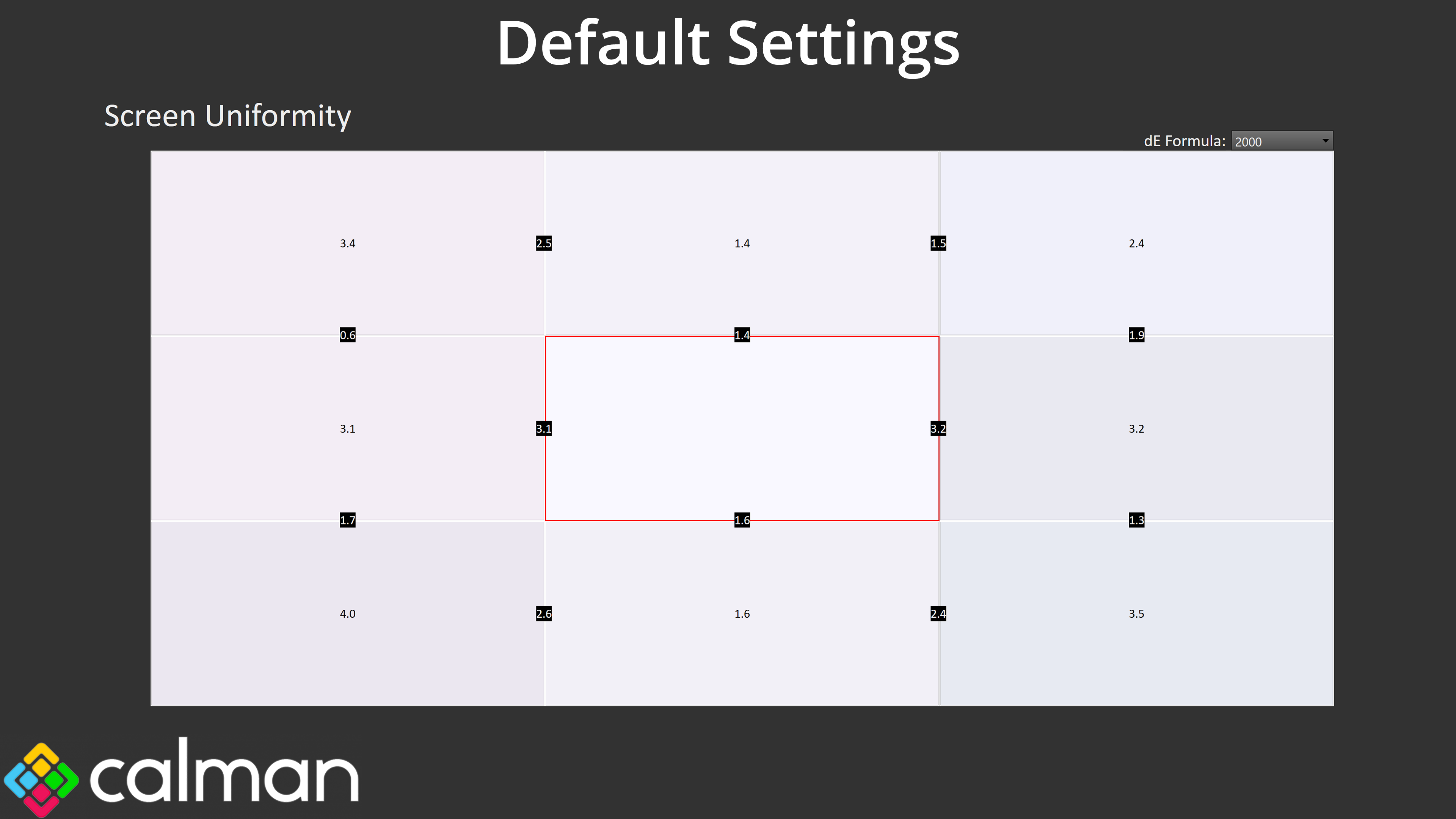
Screen uniformity could be better though, with some sections showing deltaE figures over 3.0. I can't say it was noticeable during day to day use, and it's unlikely you're looking at this screen for any serious creative work, but something to be aware of.
Gamut (CIE 1976)
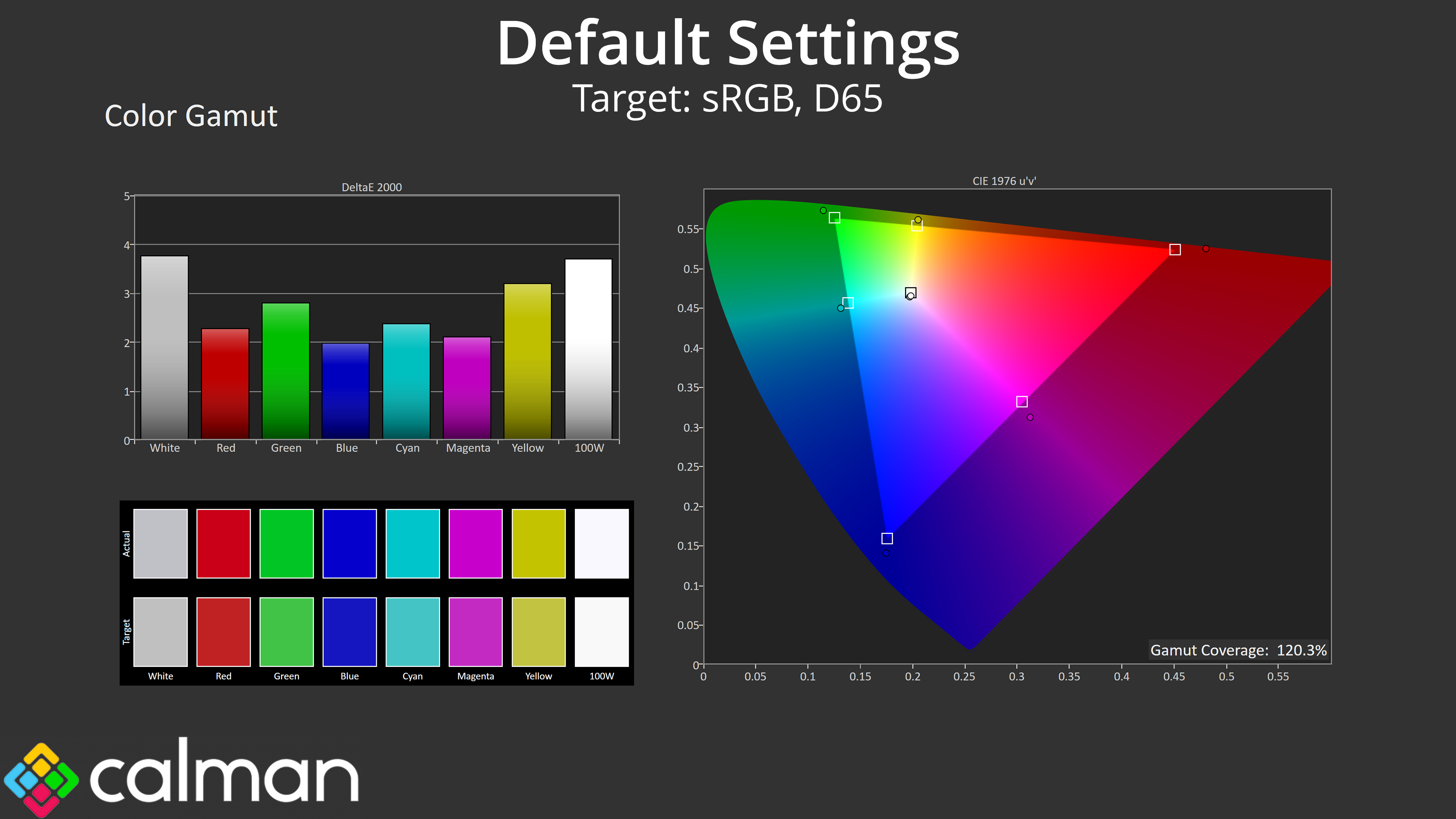
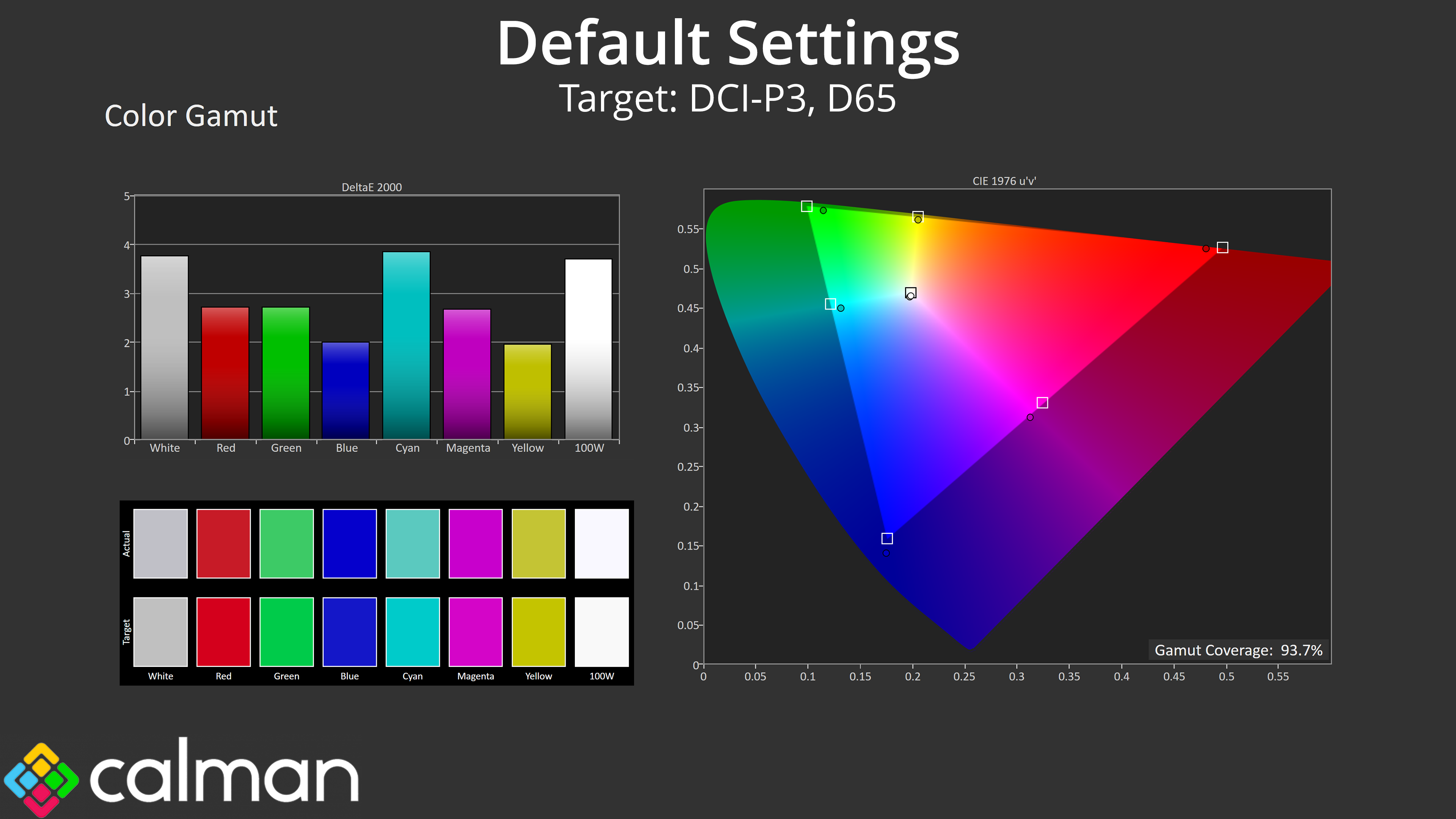
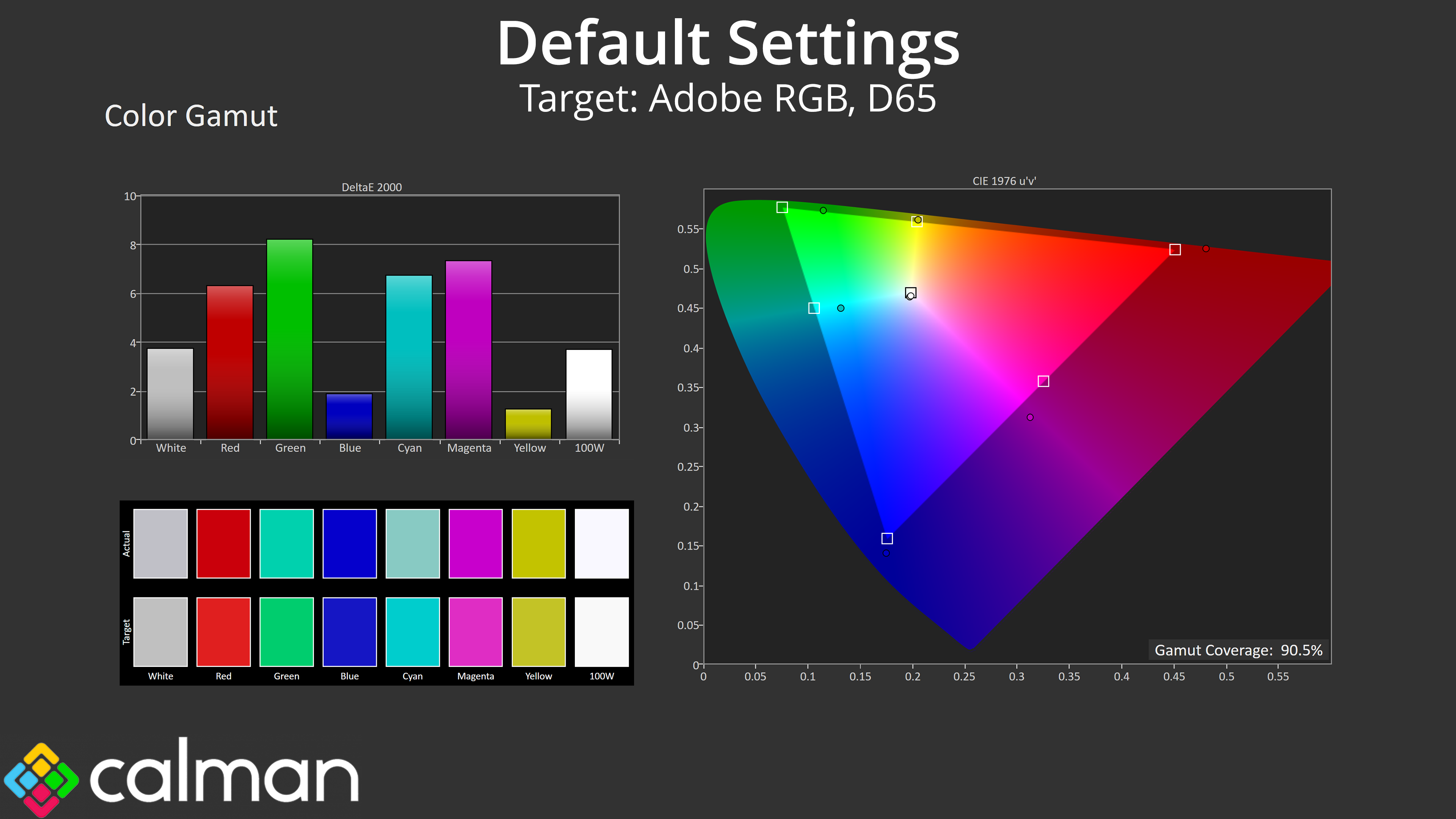
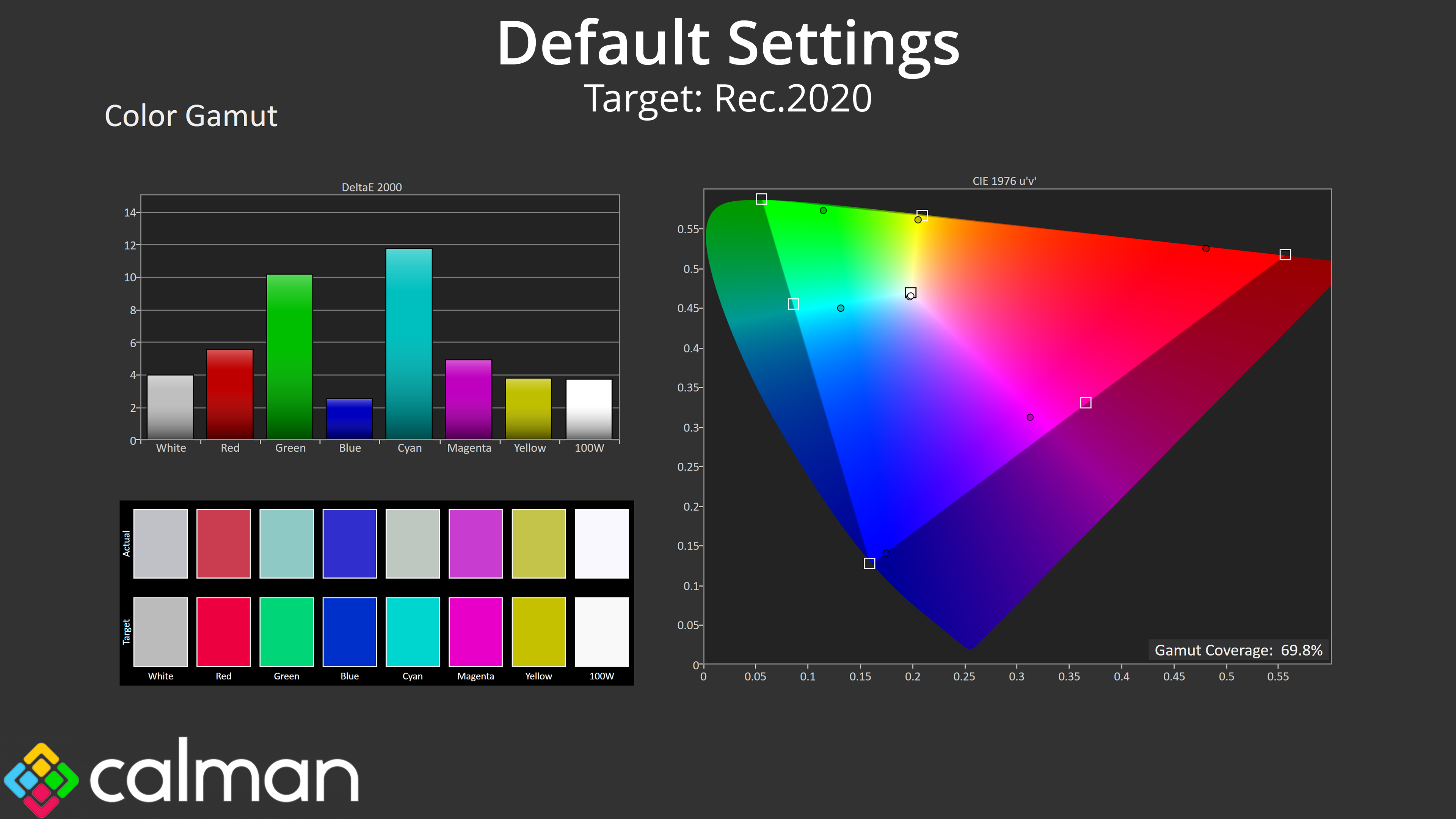
| Colour space | Coverage (%) |
| sRGB | 120.3 |
| DCI-P3 | 93.7 |
| Adobe RGB | 90.5 |
| Rec.2020 | 69.8 |
As for gamut, it's reasonably wide as IPS panels go, well exceeding the sRGB space, but it's obviously not on QD-OLED levels, given we see 93.7% DCI-P3, 90.5% Adobe RGB and 69.8% Rec.2020 coverage.
Greyscale
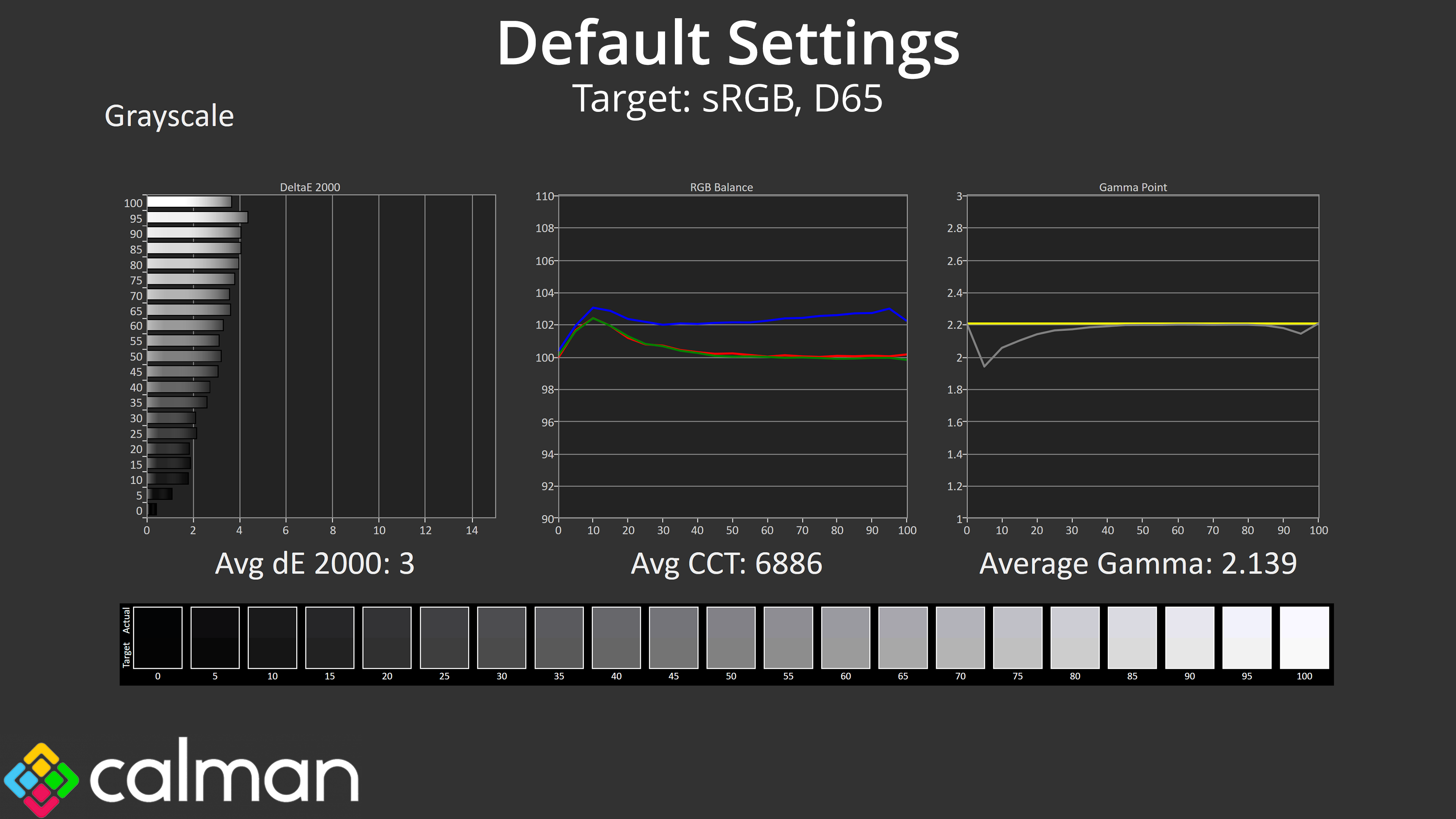
Then we come to greyscale, which is decent if not spectacular. The colour balance is slightly cool, but only slightly, averaging 6886K, just a 6% deviation from the 6500K target. Gamma is also pretty good, closely hugging the 2.2 target line with the exception of the small dip at the start of the curve.
Saturation
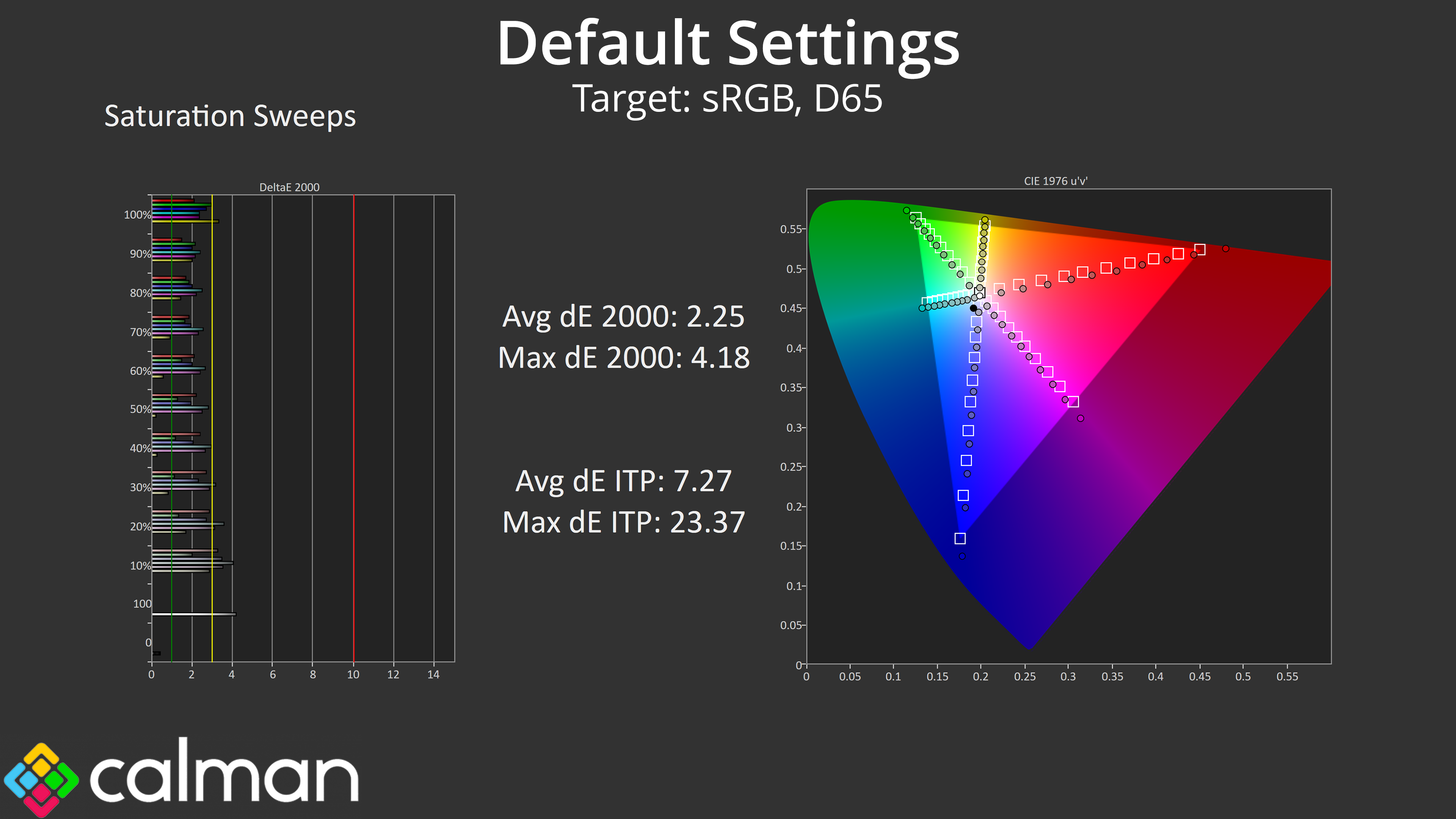
Saturation sweeps do show some oversaturation relative to sRGB as we'd expect, though the inaccuracy isn't terrible, with an average deltaE 2000 of 2.25.
Colour Accuracy
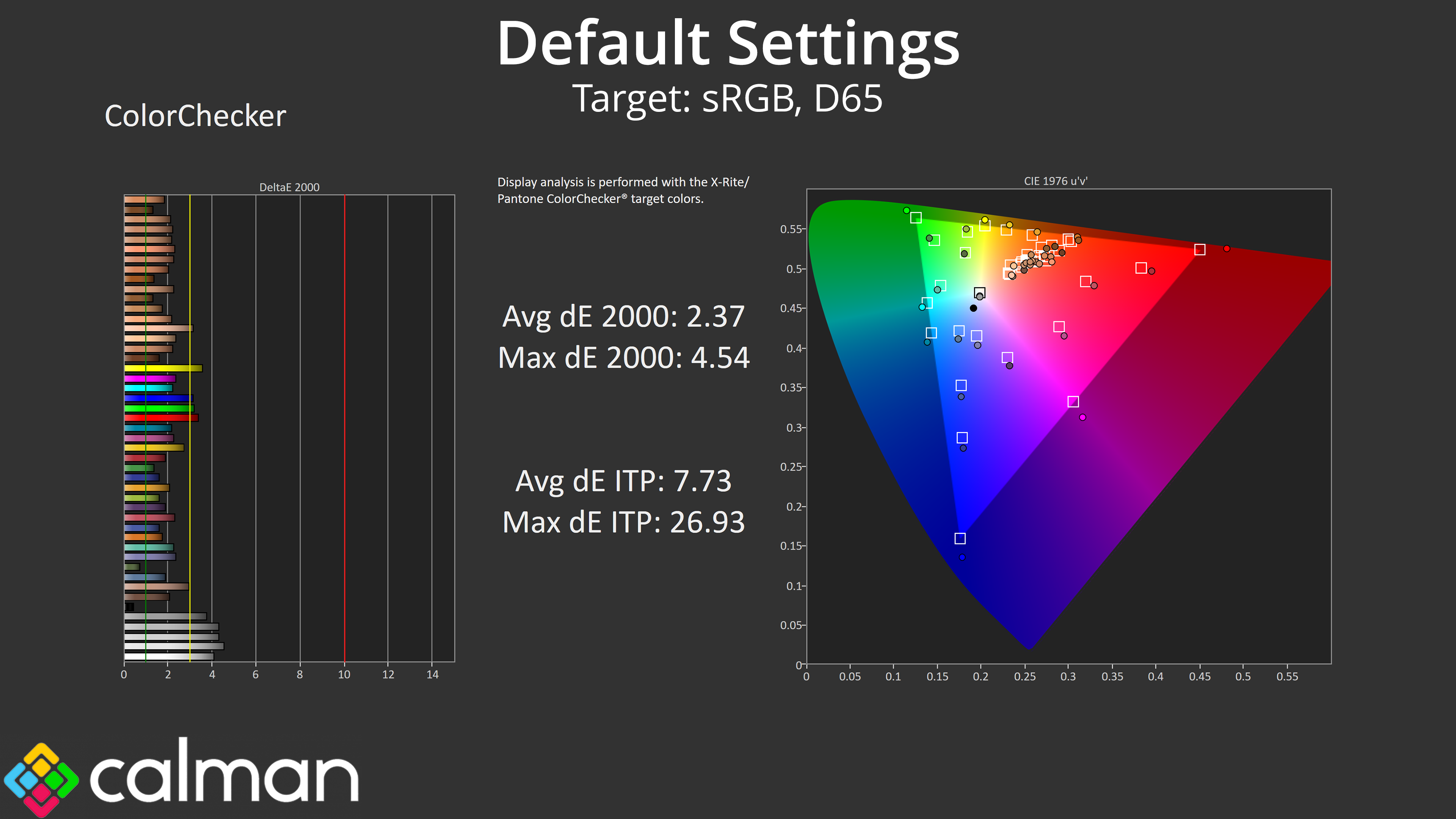
Likewise, general colour accuracy is solid but not class leading, this time with an average dE 2000 of 2.37.
sRGB Emulation Mode
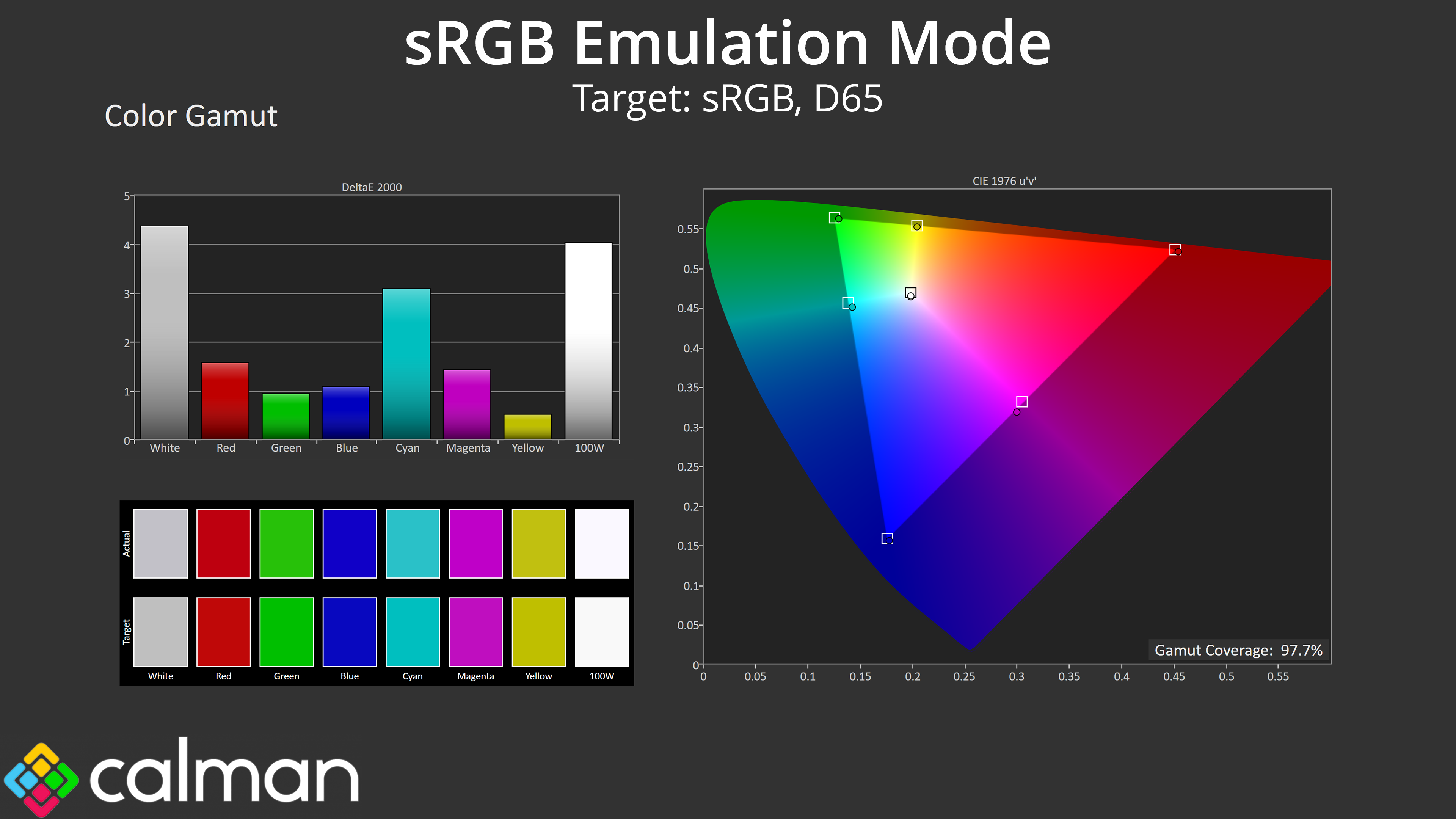
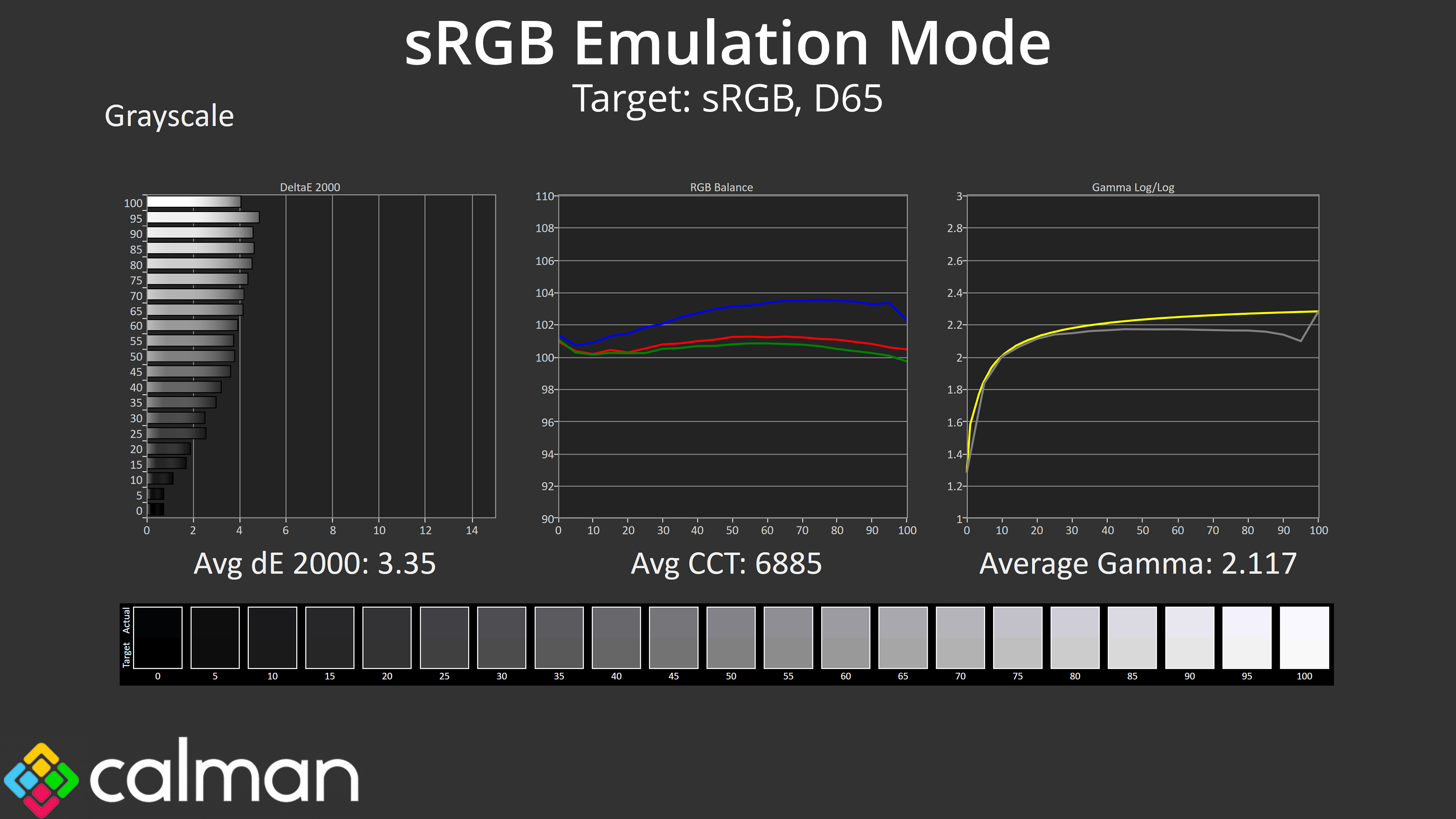
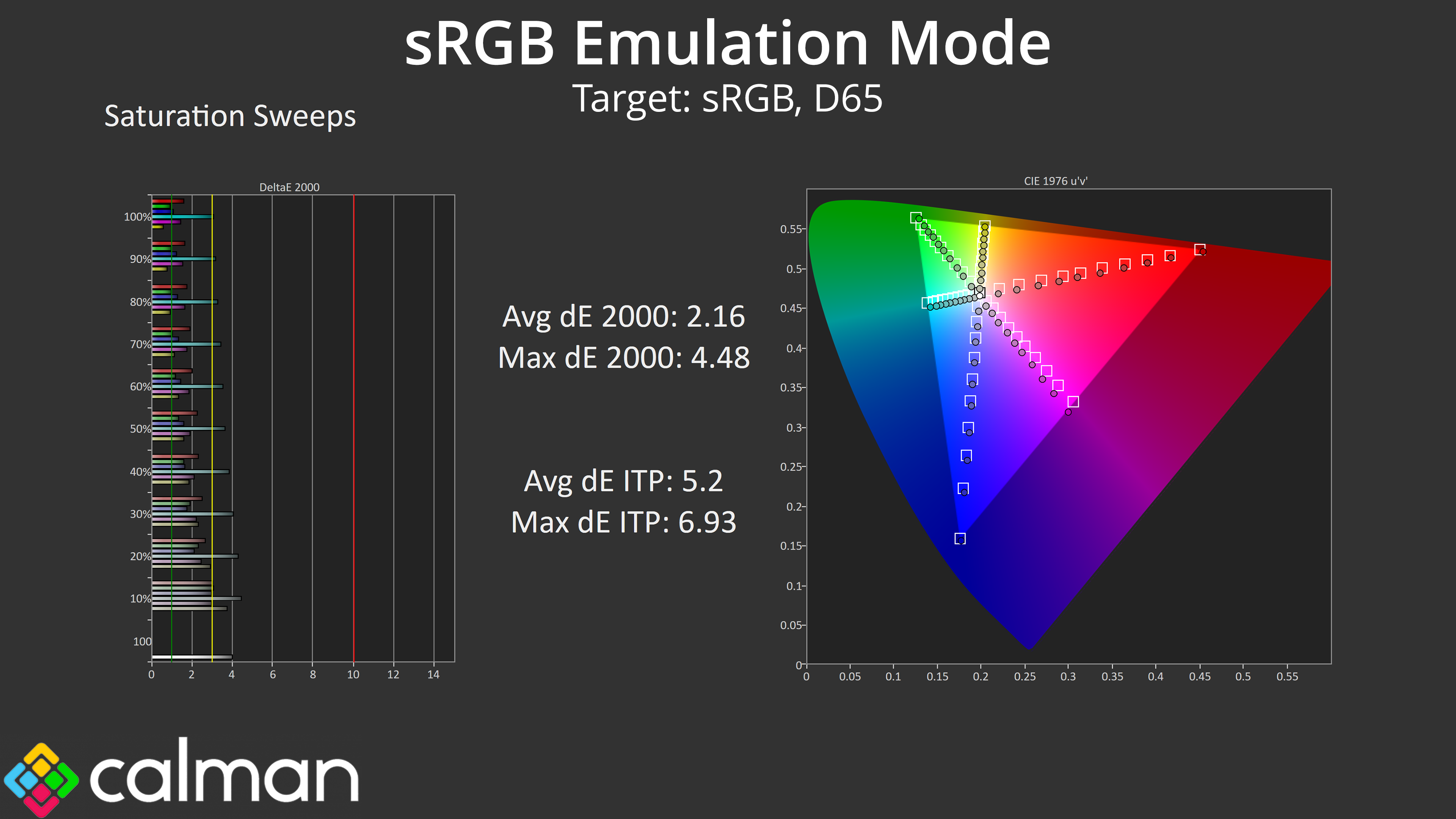
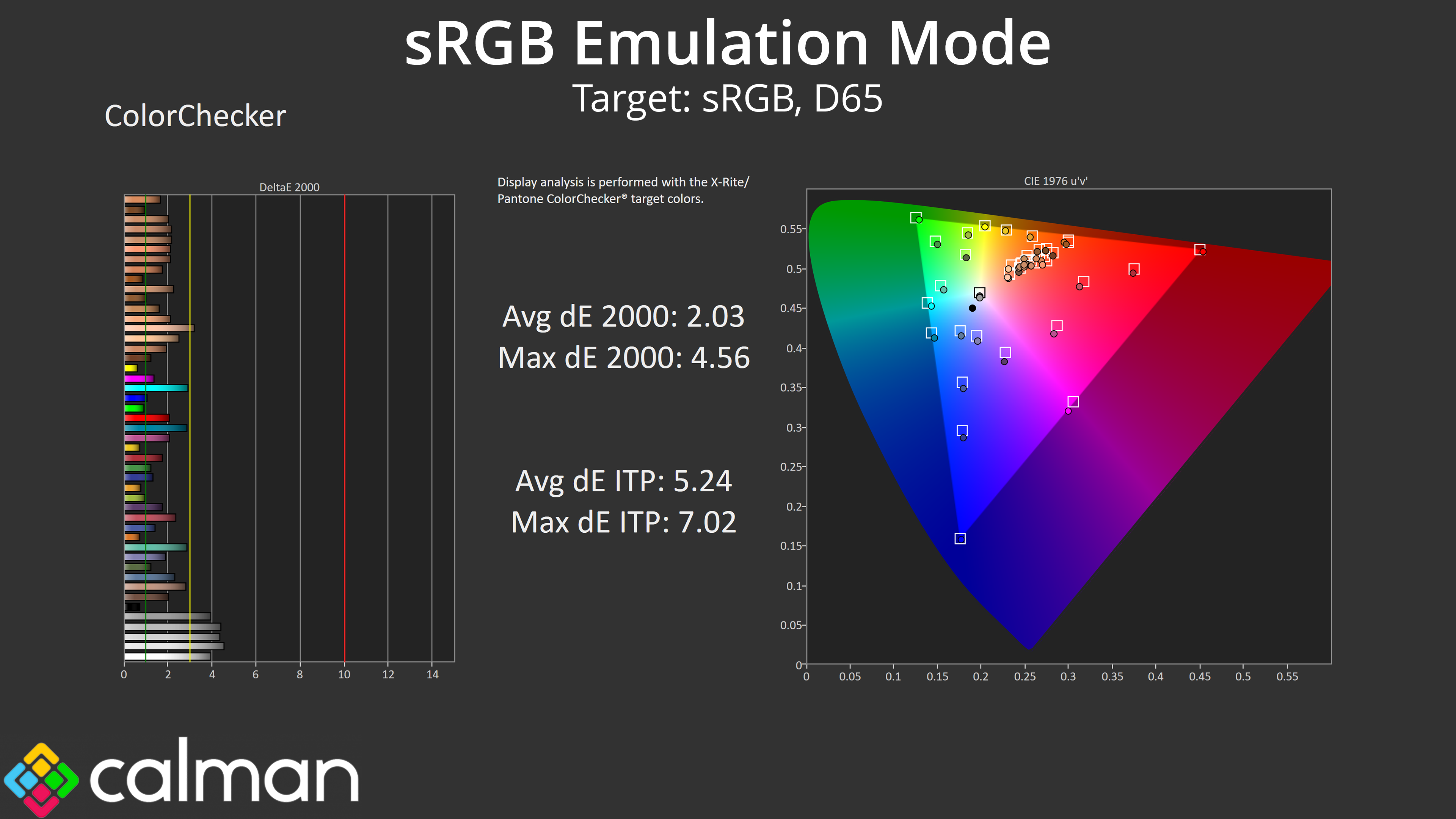
The good news is that AOC has included an sRGB mode in the OSD, and this does a good job at clamping the gamut to prevent oversaturation. Colour balance is unchanged, though gamma is now slightly lower than before, but at least the initial dip has been eliminated. Overall saturation and colour accuracy average deltaEs are improved, but not by much over stock.
Calibrated Results
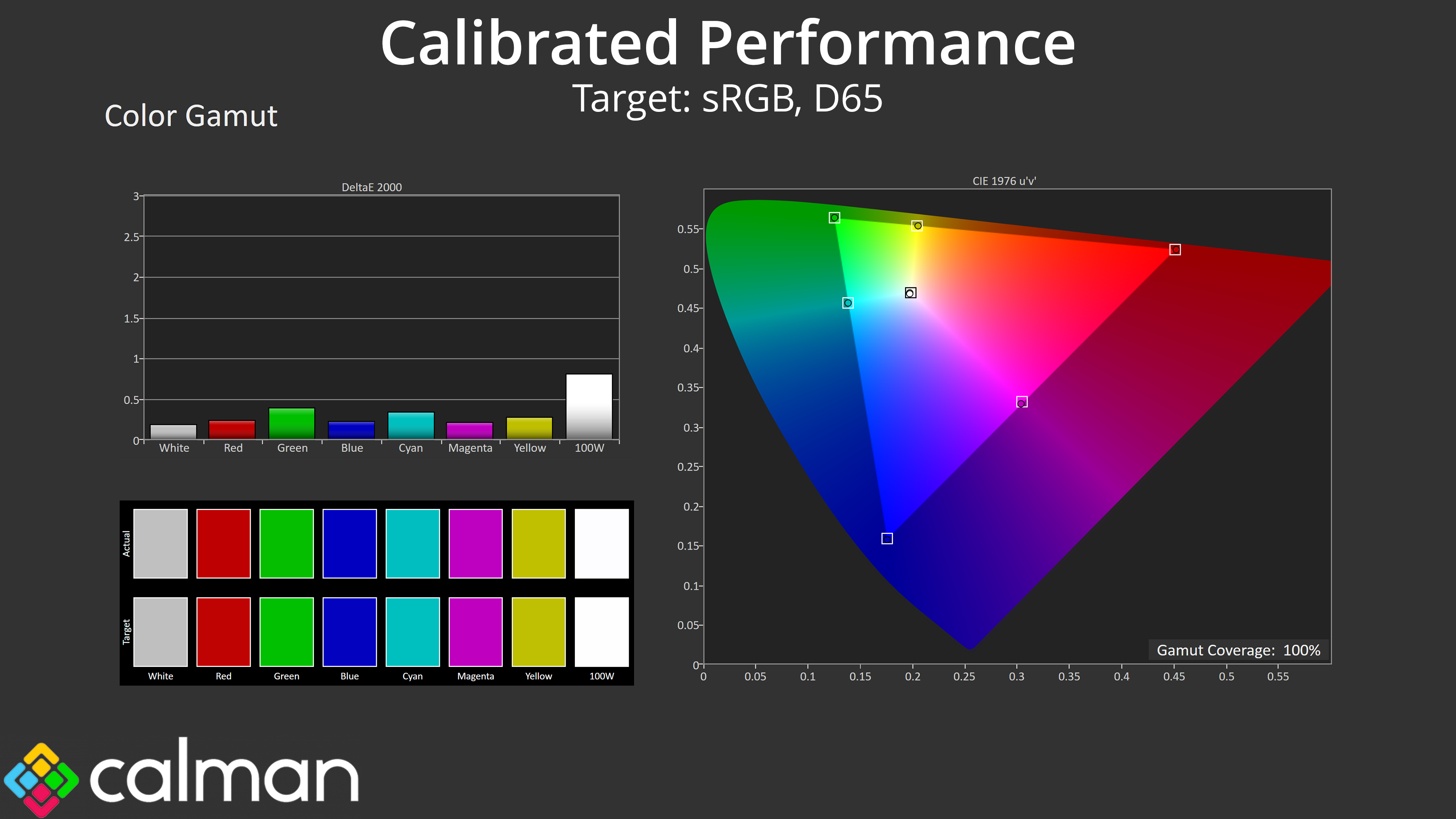
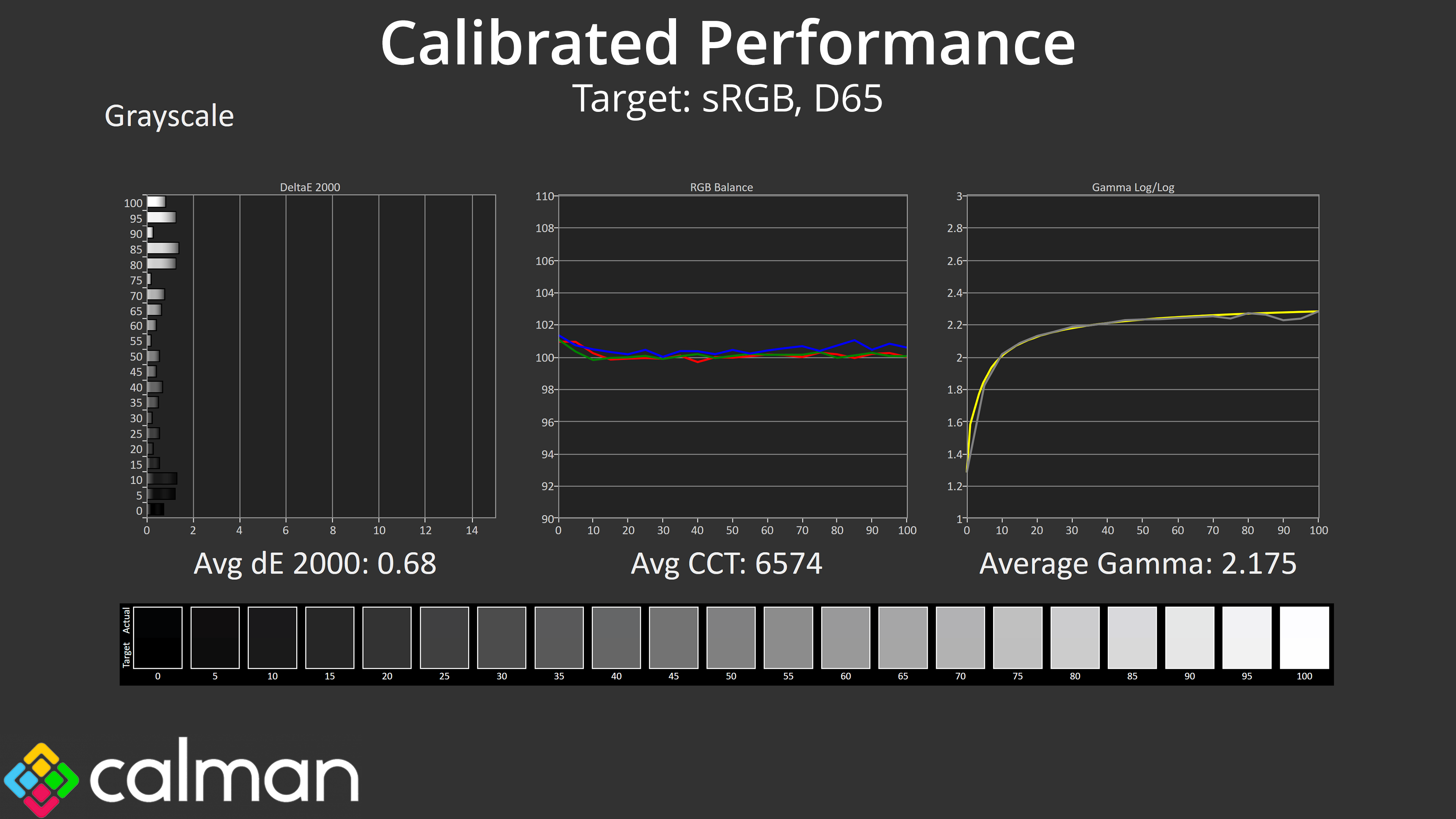
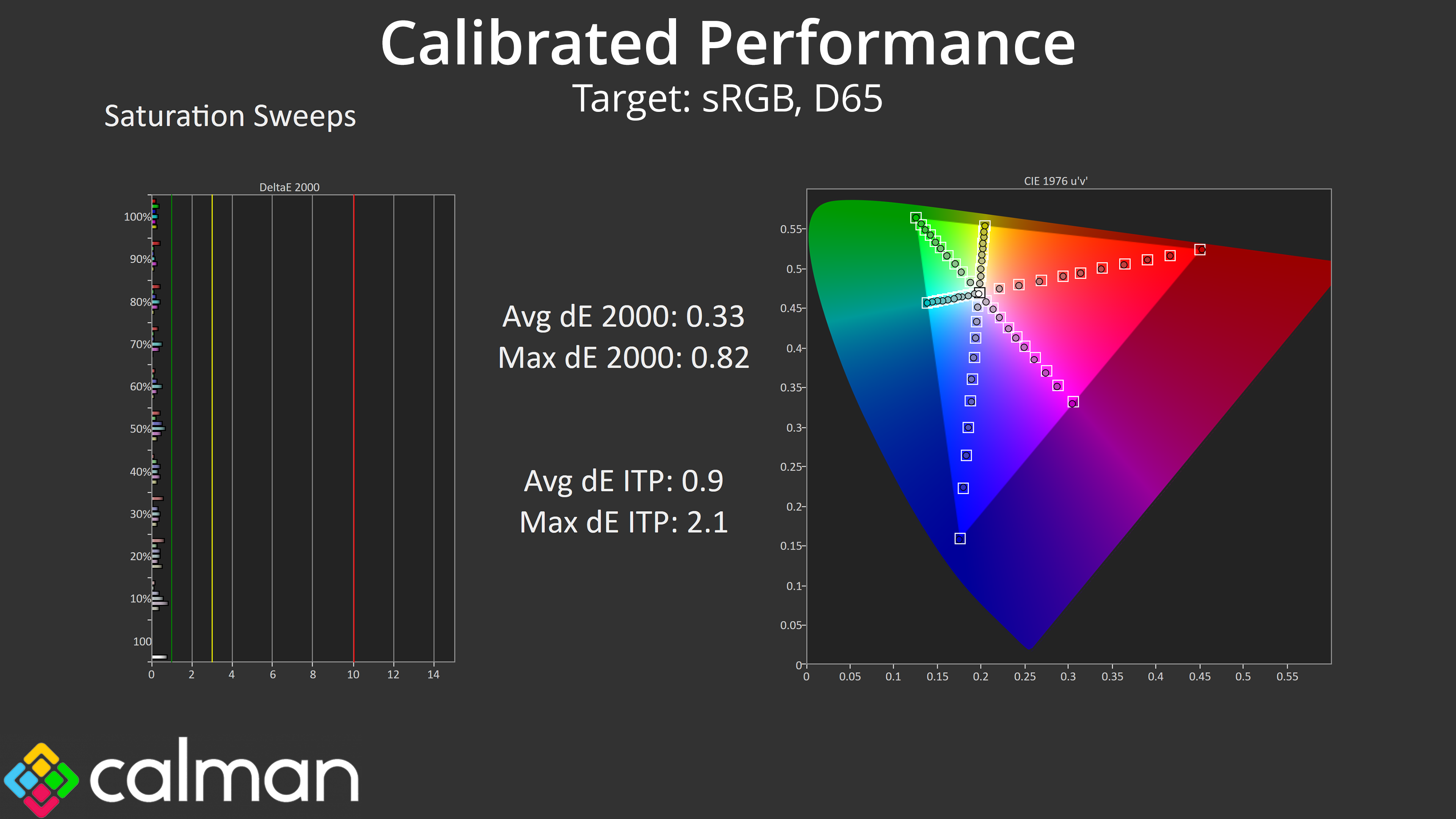
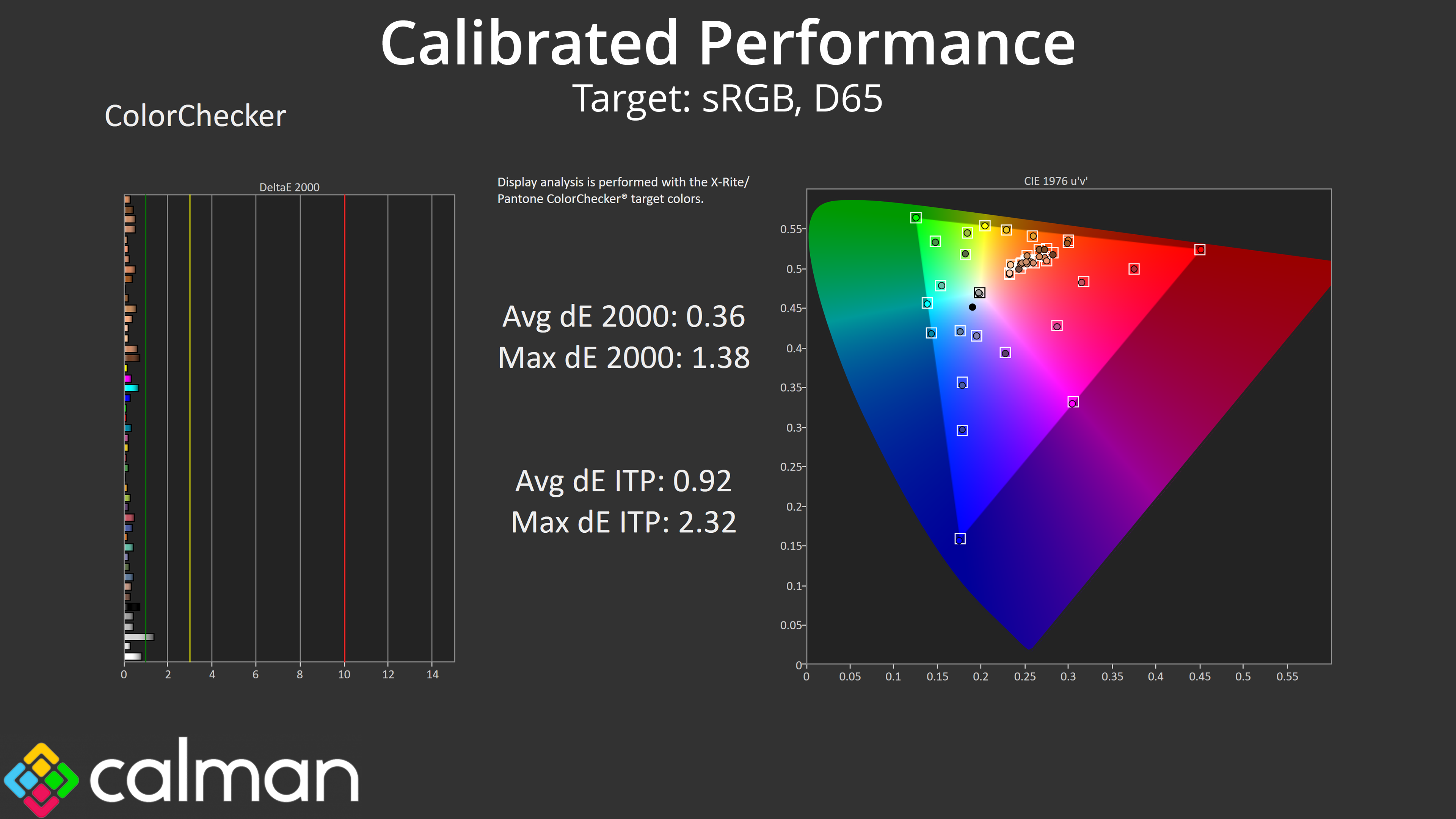
That leaves us with a full calibration to show the best-possible results for this panel, and the figures are stunning, with average error rates dropping below 1 across the board, and even lower than that for the saturation and colour accuracy metrics.