KitGuru KitGuru.net – Tech News | Hardware News | Hardware Reviews | IOS | Mobile | Gaming | Graphics Cards


It's been some time coming, but today we have finally been able to present our full review of a G-Sync Pulsar monitor, in the form of AOC's Agon Pro AG276QSG2. No doubt about it, this is a very capable screen and Pulsar brings huge benefits to perceived motion clarity, but there are other factors to consider before splashing out on the £559 asking price.
First things first, though, G-Sync Pulsar simply works incredibly well. By utilising a high-tech backlight strobing technology, in tandem with proper G-Sync VRR, we saw noticeably better image clarity with Pulsar enabled at every refresh rate tested. Pulsar running on this 360Hz LCD even delivers superior motion clarity to an OLED running at 500Hz, and that is a huge win for consumers as it means you don't have to drive frame rates to extreme levels to benefit from reduced blurring.
It's dead easy to use as well, being a simple on/off toggle, and it has variable overdrive built-in, so you don't need to worry about adjusting any settings for different games – to echo Jensen's immortal words, it just works. Right now, Pulsar can be enabled from as low as 75Hz, but Nvidia is working on a new firmware to get it running at just 48Hz, so we'll have to see how that behaves in the future.
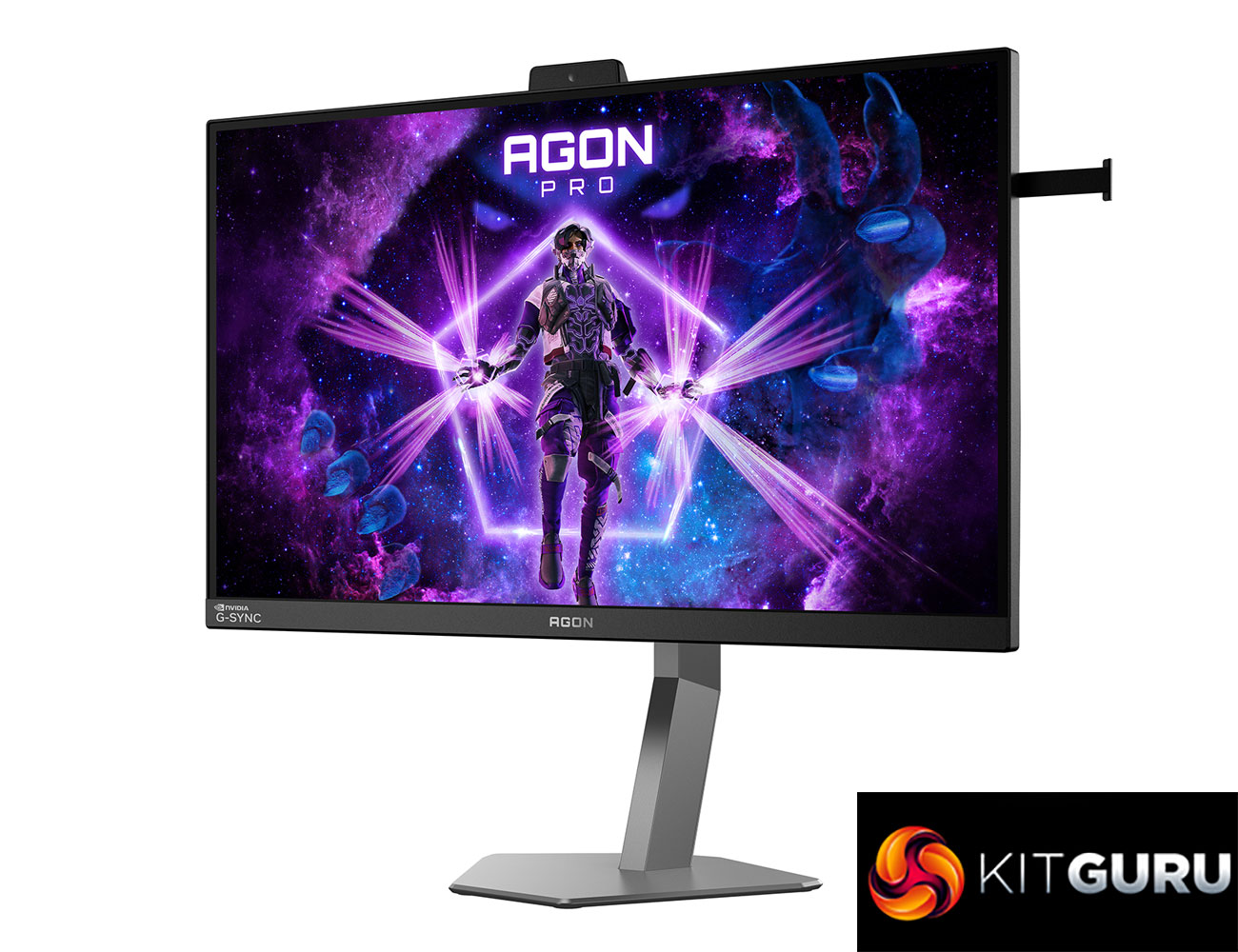
The thing to remember is that, as good as Pulsar is, there is more to a monitor – and your gaming experience – than just reducing motion blur. After all, Pulsar is a technology designed for LCD monitors, so we still find areas of weakness that are inherent to LCD-based panels, such as this IPS one. I'm primarily talking about low contrast, given we measured just 945:1 for the AG276QSG2, but you also have to factor in HDR as well, which is essentially non-existent due to the lack of local dimming technology.
That means, while Pulsar may have the edge over an OLED monitor for pure motion clarity, you get other benefits with OLED like the true blacks and infinite contrast, plus proper HDR support with per-pixel dimming. Exactly what your priorities are will depend on the types of games you play and your general preferences, so there's no right or wrong. It's also worth saying that this is only the first panel to support Pulsar, and who knows what other implementations we might see down the line.
Right now, though, the AOC Agon Pro AG276QSG2 is still absolutely worth buying – it's a well-configured monitor that will have huge appeal to competitive gamers thanks to G-Sync Pulsar. Hopefully we see even more screens hit the market with Pulsar before long.
We found it listed on Scan and OCUK for just under £560.
Pros
- G-Sync Pulsar works incredibly well, significantly improving perceived motion clarity.
- Pulsar also means you don't need to drive extreme frame rates to reduce blur.
- Variable overdrive is built-in.
- Response times themselves are rapid.
- Generally well-configured factory calibration.
- Gets decently bright at over 450 nits.
Cons
- Low contrast by modern IPS standards.
- No local dimming hardware so doesn't deliver any sort of real HDR experience.
- Competing OLED screens offer other advantages at a similar price.
- Panel uniformity could be better.
- Lacks USB-C and KVM functionality.
KitGuru says: G-Sync Pulsar is here and the AOC AG276QSG2 is a very appealing monitor because of it. Whether or not you buy it instead of an OLED screen will depend, but it's certainly made us want to see more screens packing Pulsar technology.