KitGuru KitGuru.net – Tech News | Hardware News | Hardware Reviews | IOS | Mobile | Gaming | Graphics Cards


Our main test involves using an X-Rite i1 Display Pro Plus colorimeter and utilising Portrait Display's Calman Ultimate software. The device sits on top of the screen while the software generates colour tones and patterns, which it compares against predetermined values to work out how accurate the screen is.
The results show:
- A monitor’s maximum brightness in candelas or cd/m2 at various levels set in the OSD.
- A monitor’s contrast ratio at various brightness levels in the OSD.
- Gamut coverage, primarily focusing on sRGB and DCI-P3 colour spaces.
- Greyscale accuracy, measured across 20 shades, with an average colour balance reported.
- The exact gamma levels, with a comparison against preset settings in the OSD.
- The colour accuracy, expressed as a Delta E ratio, with a result under 3 being fine for normal use, and under 2 being great for colour-accurate design work.
We first run these tests with the display in its out-of-the-box state, with all settings on default. If there is an sRGB emulation option or other useful mode then we may test that too. We then calibrate the screen using the Calman Ultimate software and run the tests again.
You can read more about our test methodology HERE.
Default settings
Brightness and Contrast (Full Screen)
| OSD Brightness | White Luminance (cd/m2) | Black Luminance (cd/m2) | Contrast Ratio |
| 0% | 26.7 | 0.0 | ~Infinite |
| 25% | 101.1 | 0.0 | ~Infinite |
| 50% | 175.8 | 0.0 | ~Infinite |
| 75% | 247.7 | 0.0 | ~Infinite |
| 100% | 323.7 | 0.0 | ~Infinite |
Starting off with brightness testing, we can immediately see the benefit to the new Tandem OLED panel, hitting almost 325 nits for a full screen white, where previous-gen models like the PGO32UFS did well to hit 250 nits. It also gets pleasantly dim at just 27 nits minimum.
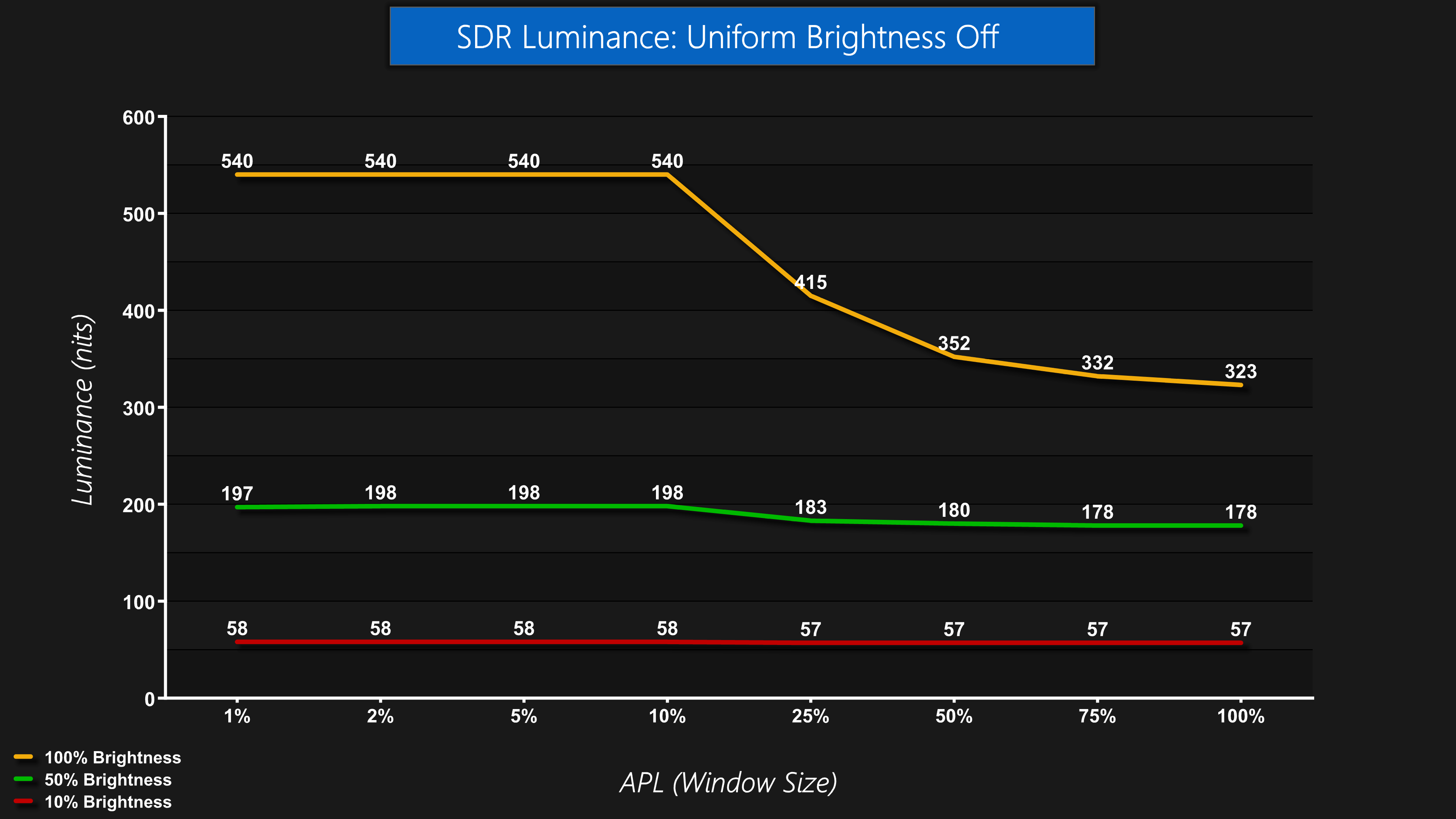
There is a Uniform Brightness setting in the OSD too, essentially allowing you to have higher peak brightness for smaller window sizes (APLs) if you want – with the setting disabled, we saw up to 540 nits peak, though that drops off as the window size increases.
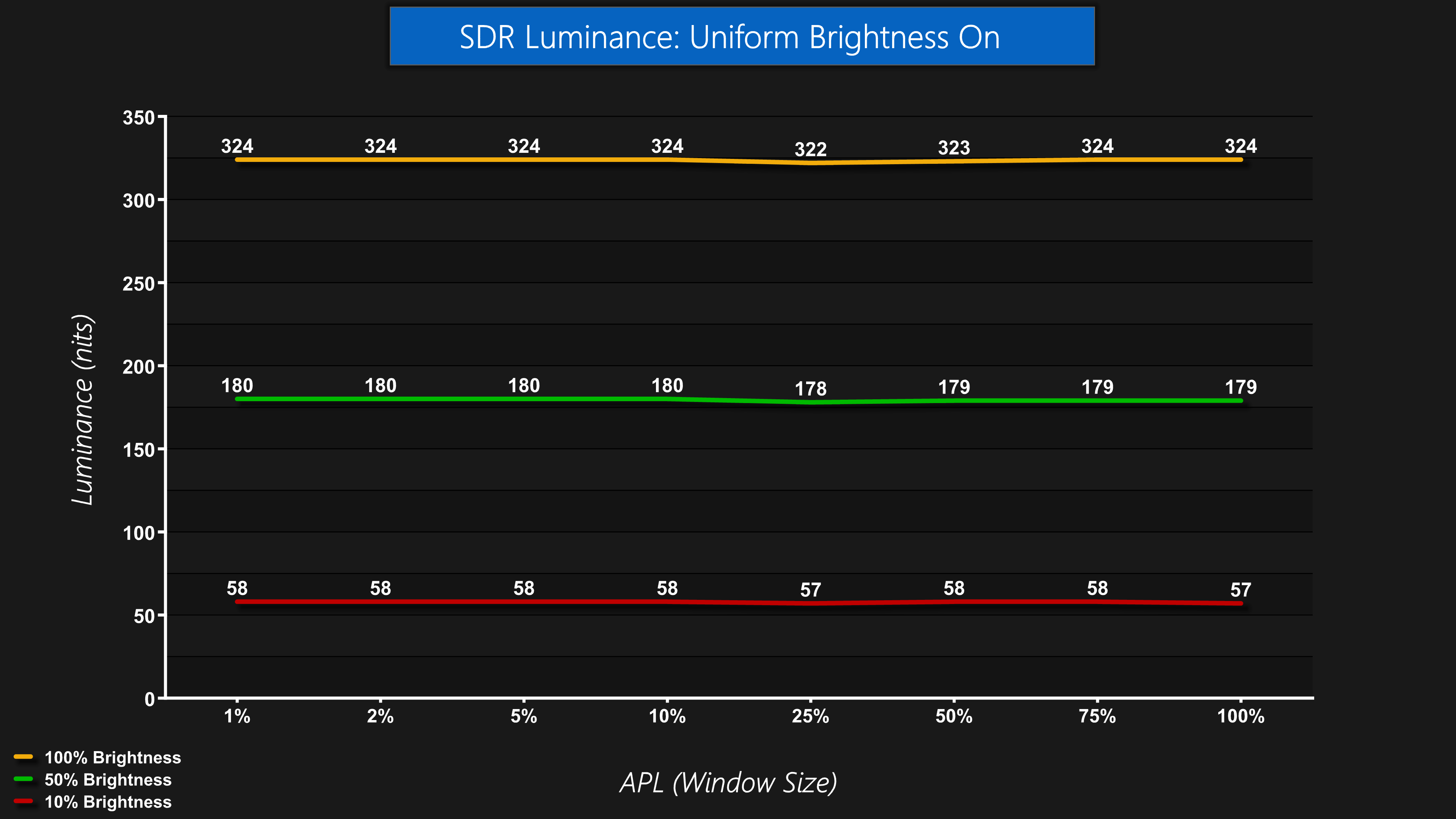
If you enable Uniform Brightness, things are capped at around the 325 nit mark and there's no brightening or dimming depending what's on screen – it's perfectly uniform, as the name suggests!
Screen Uniformity
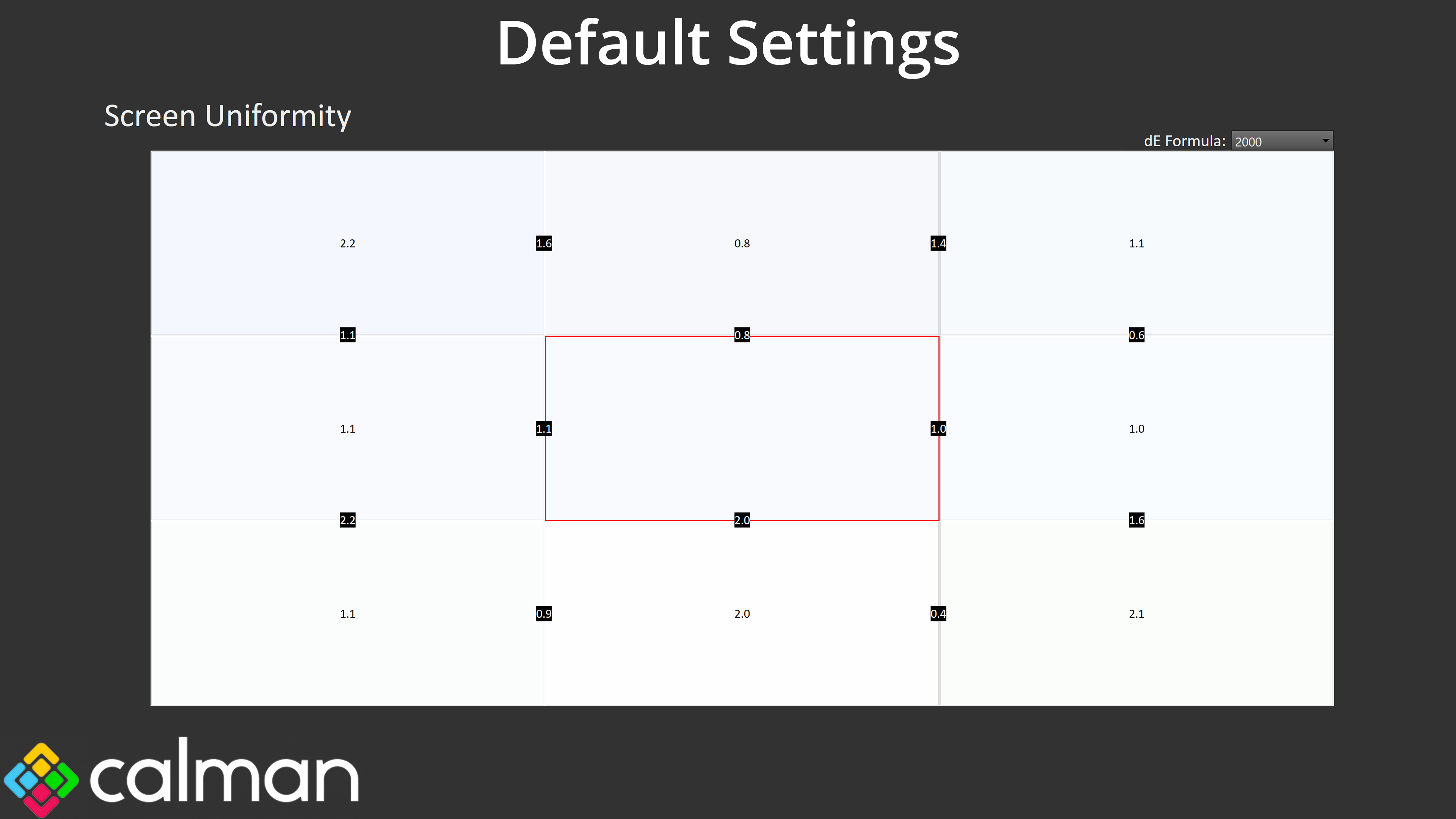
Panel uniformity is very good too, with very little deviation across the screen, as we'd expect from an OLED.
Gamut (CIE 1976)
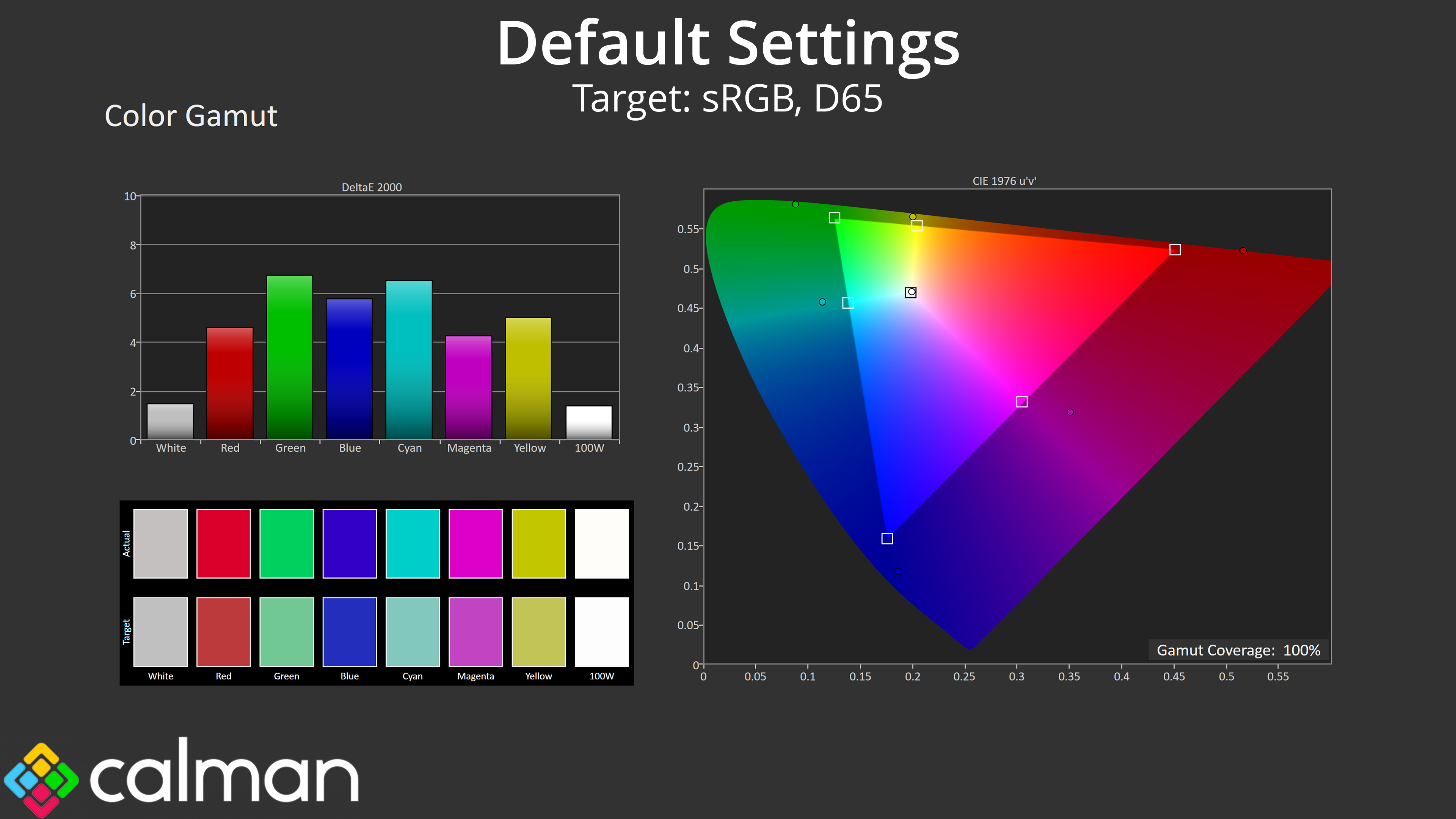
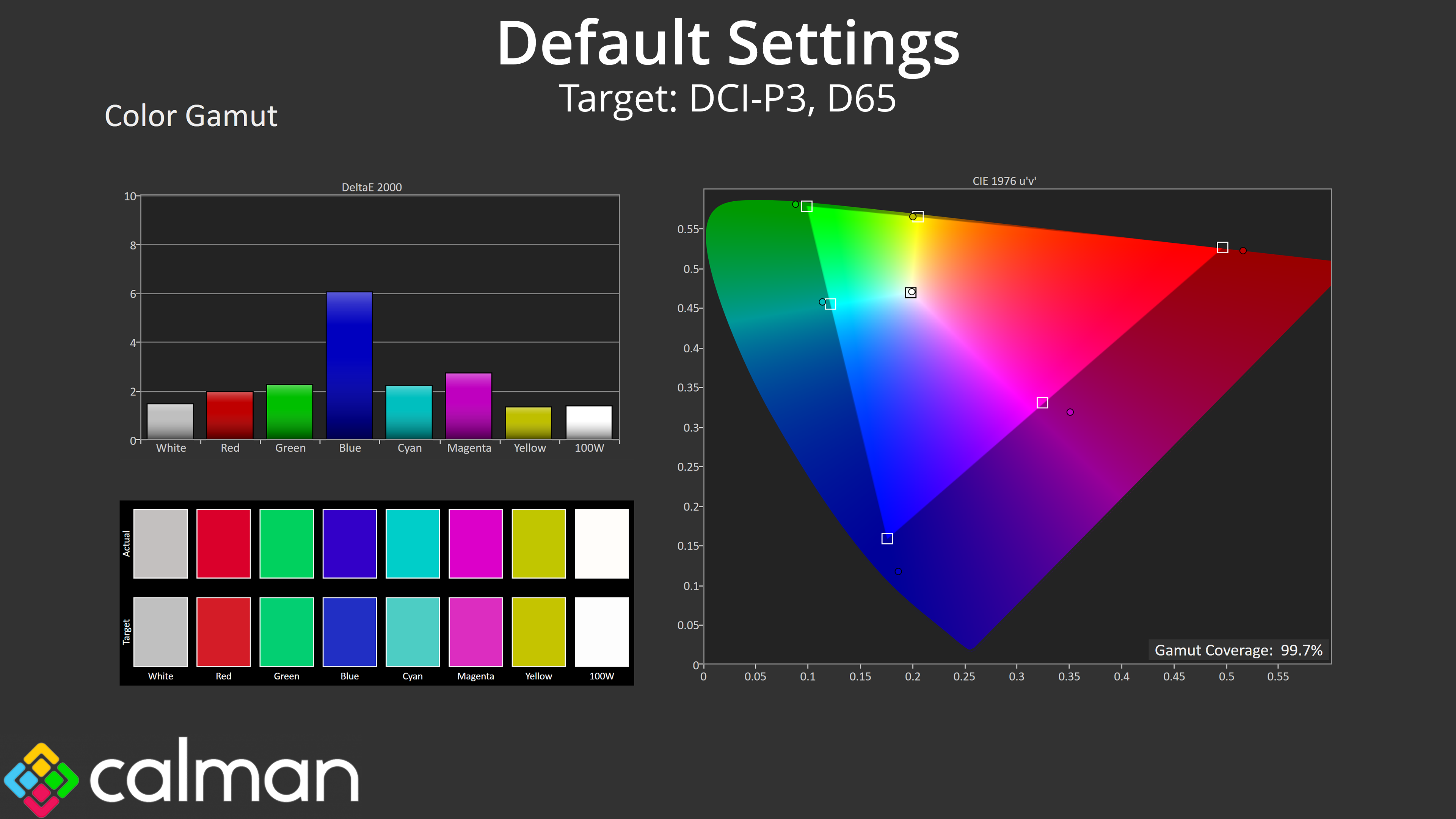
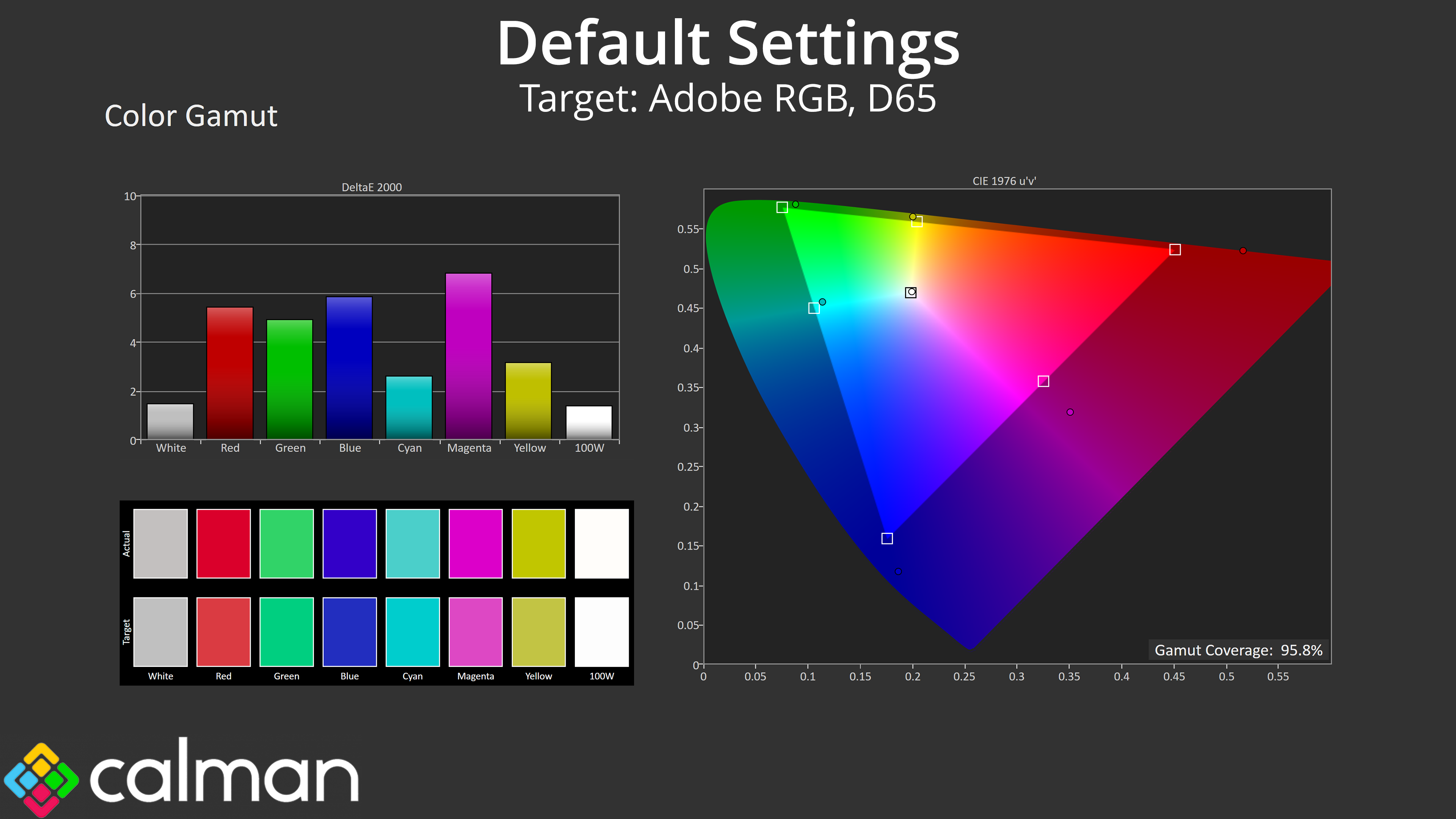
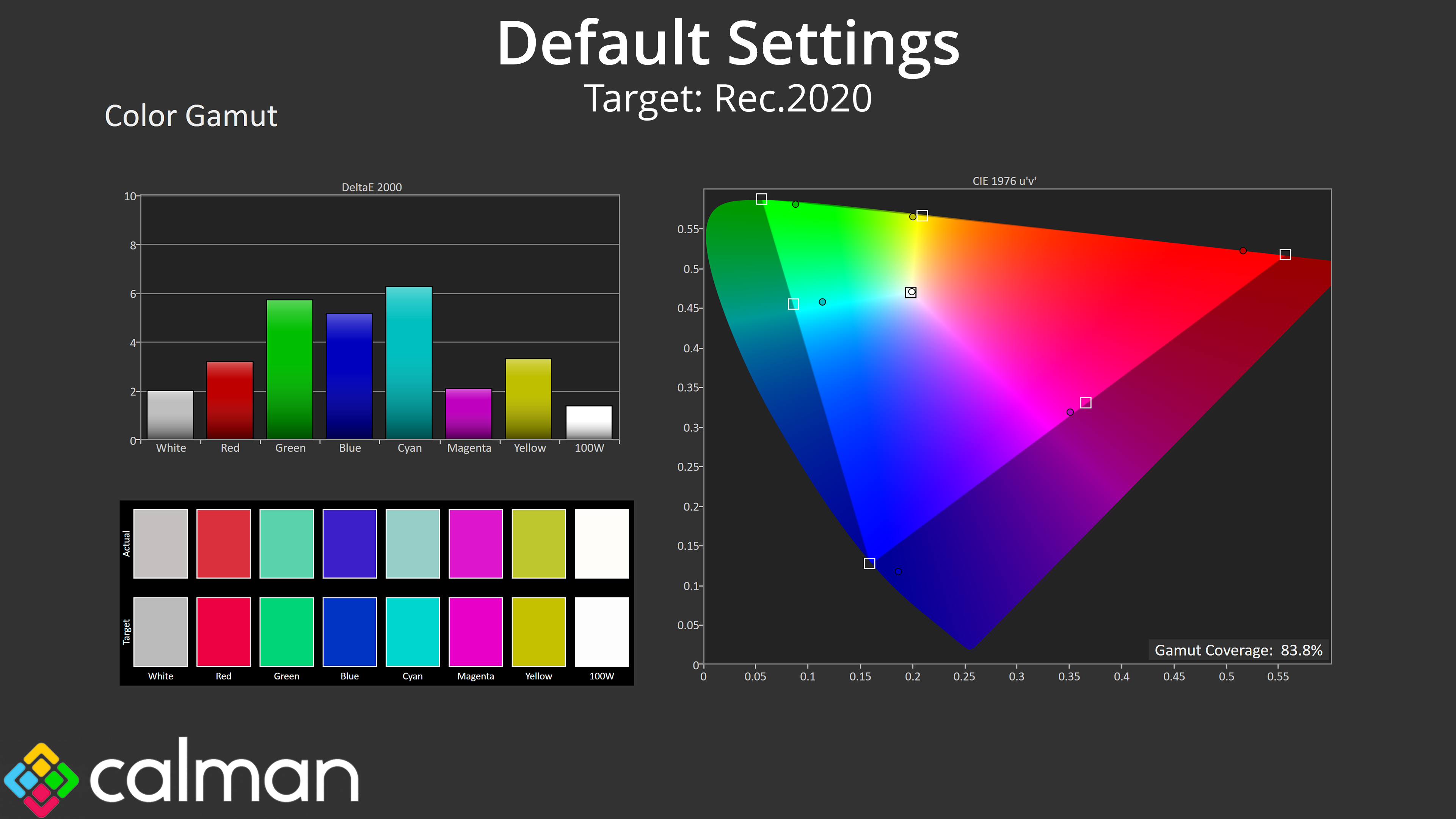
| Colour space | Coverage (%) |
| sRGB | 100 |
| DCI-P3 | 99.7 |
| Adobe RGB | 95.8 |
| Rec.2020 | 83.8 |
Then we have gamut, which is another benefit to the new Tandem OLED panel, as it is exceedingly wide – well surpassing the sRGB space and offering 99.7% DCI-P3, 95.8% Adobe RGB and 83.8% Rec.2020. For reference, the PGO32UFS only offered 71.7% coverage for Rec.2020, so things have been significantly improved with the 4th Gen panel.
Greyscale
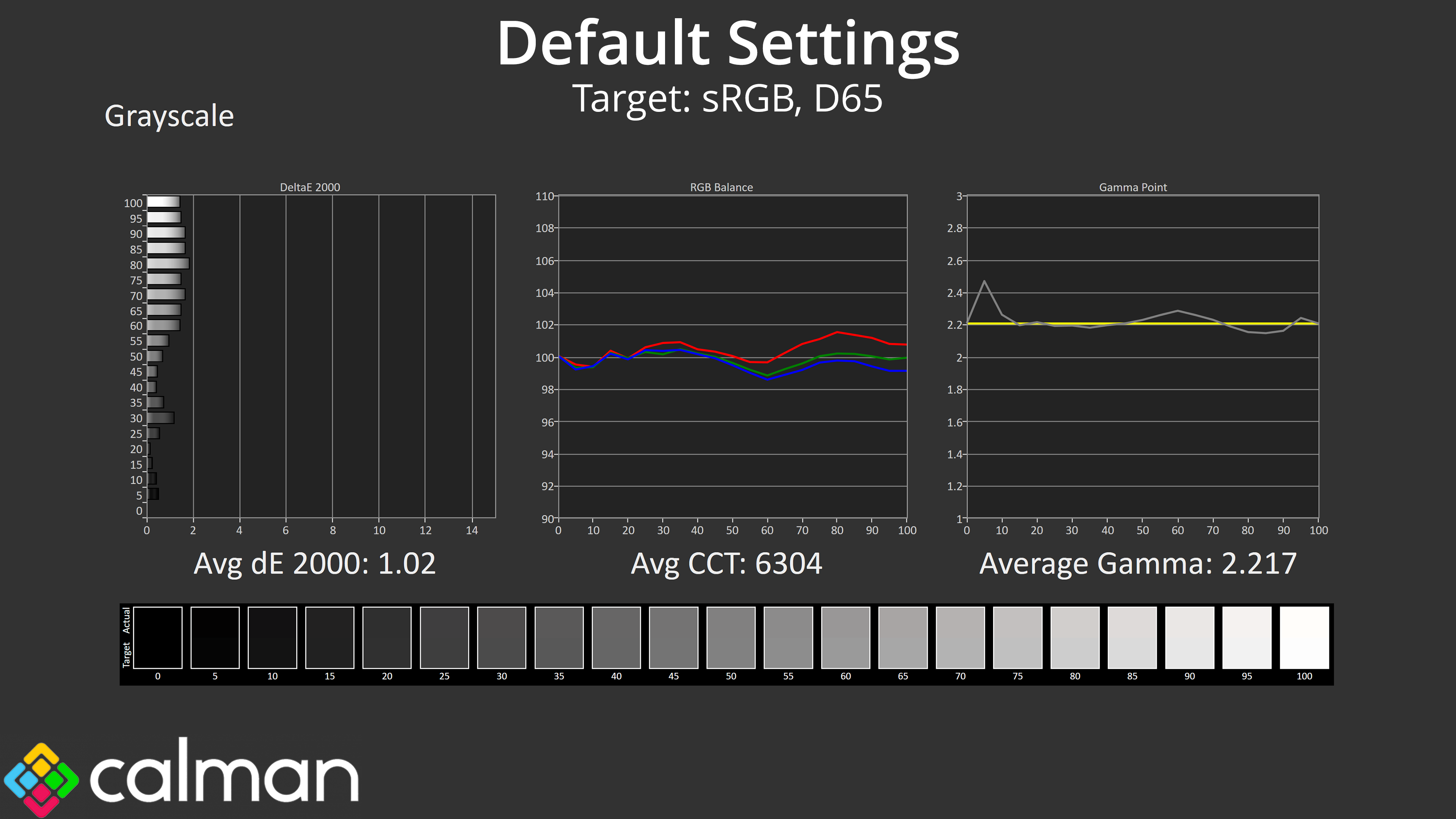
It's great to see that ASUS has done a stellar job with the factory calibration, too. Colour balance is very even and averages 6304K, just a 3% deviation from the 6500K target – not something you'd realistically notice day-to-day. Gamma is also very accurate, other than one small spike to 2.4 early on, it closely hugs the 2.2 target and averages 2.217. All in all, the greyscale average deltaE 2000 of 1.02 indicates superb accuracy out of the box.
Saturation
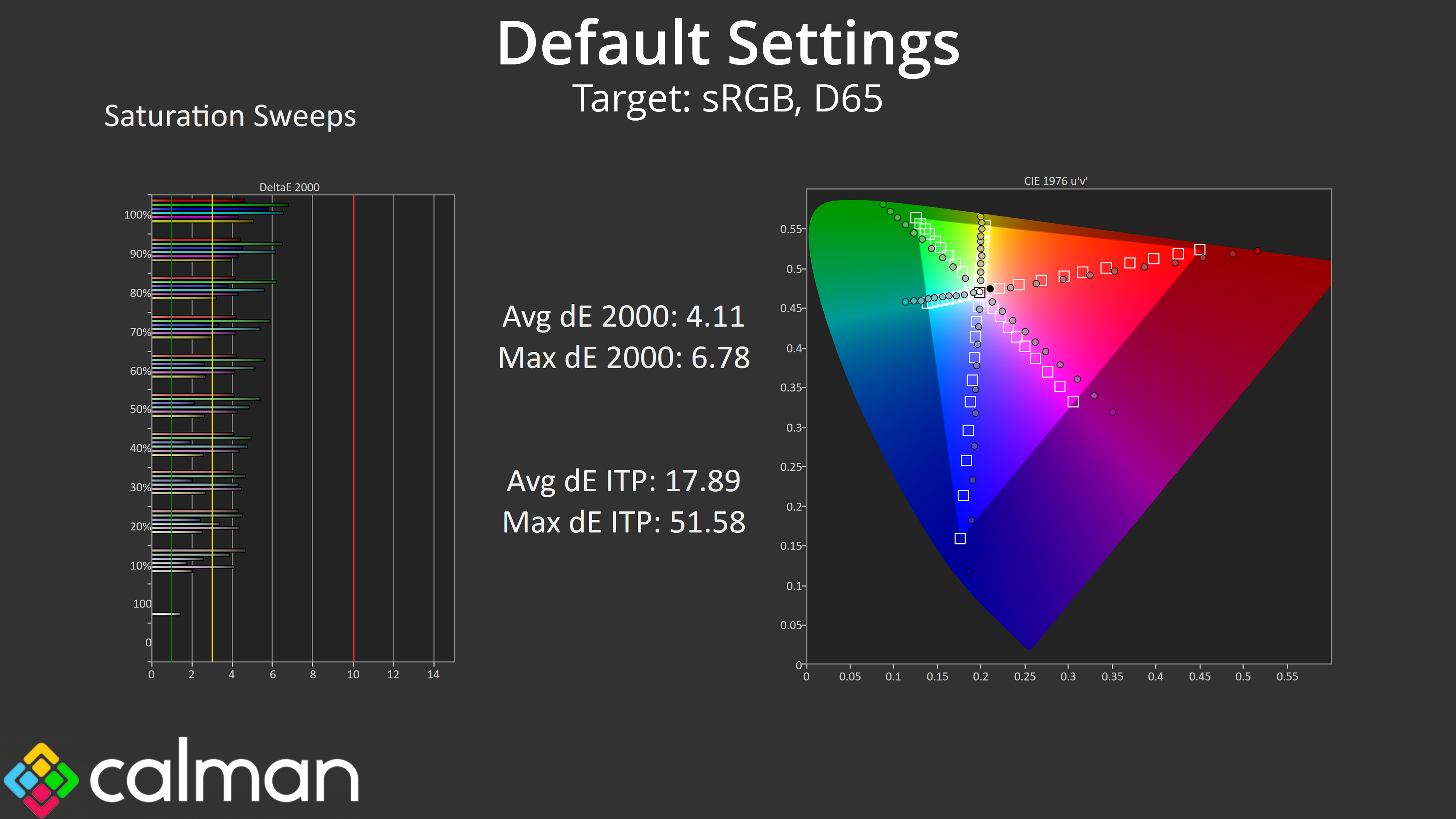
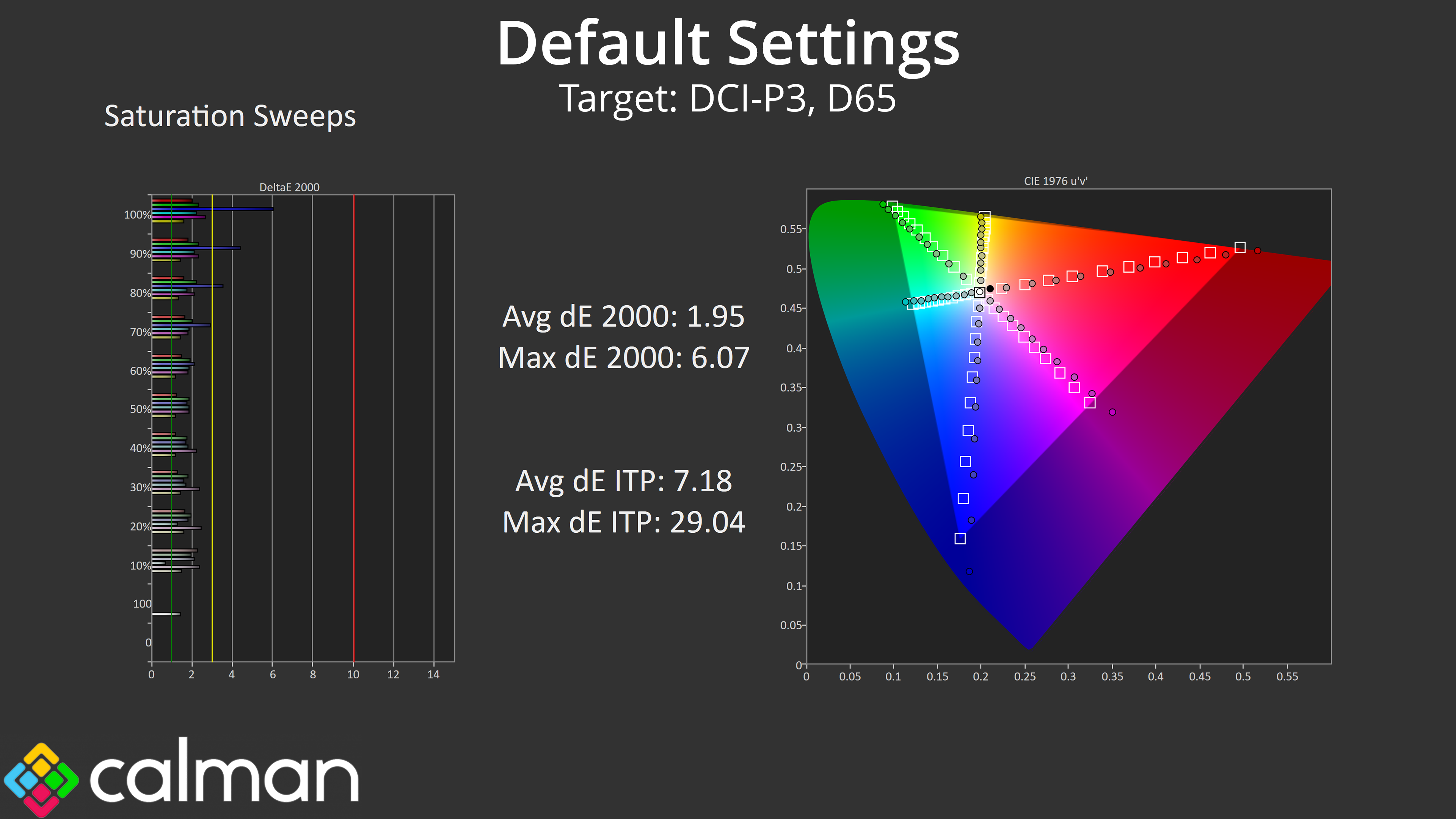
Given how wide the gamut is, it's natural to see high levels of oversaturation relative to the sRGB space, though accuracy is much improved comparing against DCI-P3.
Colour Accuracy
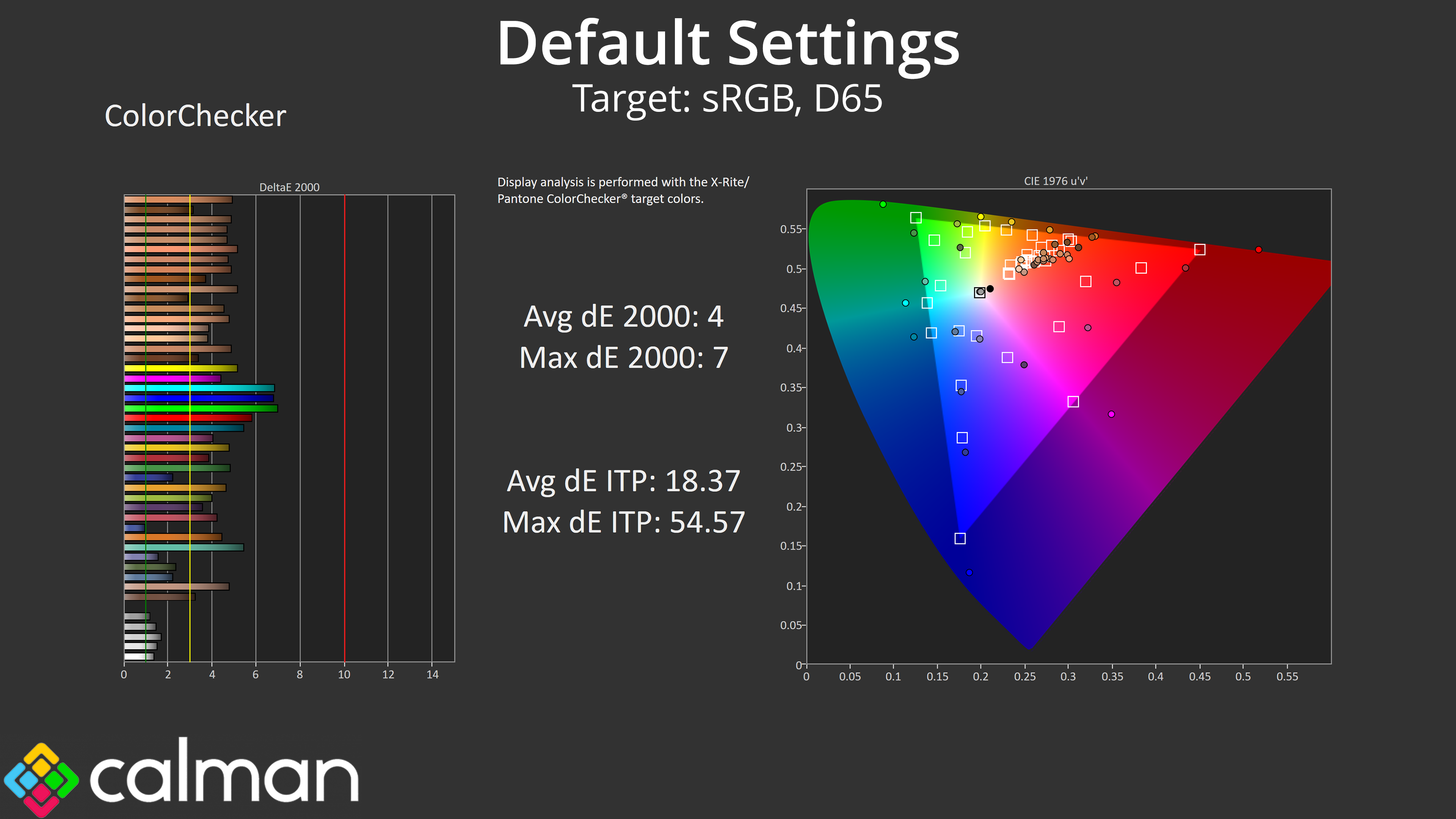
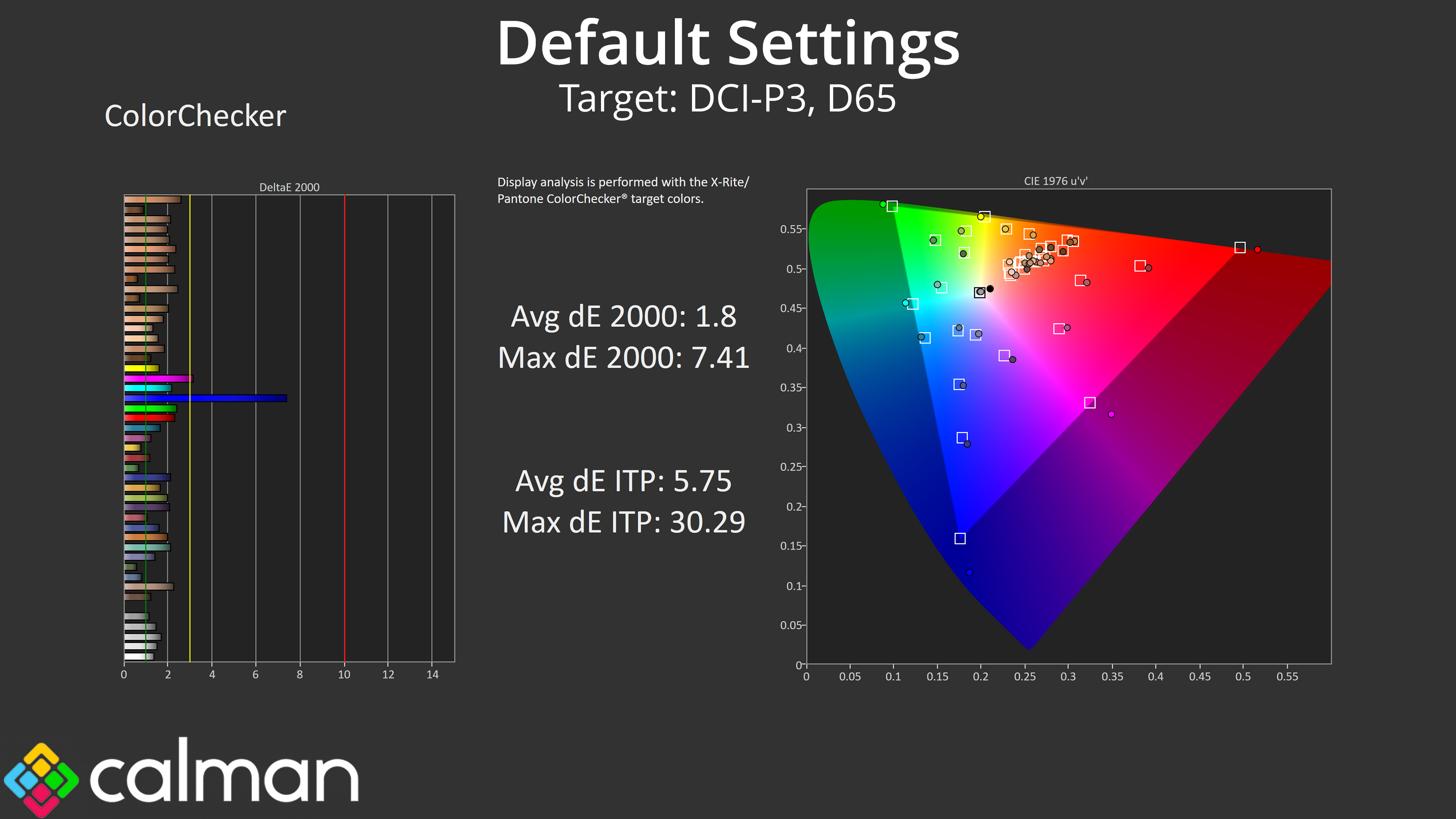
The game goes for colour accuracy – in its default, unclamped mode, there's just too much saturation, resulting in high levels of inaccuracy relative to sRGB. The DCI-P3 results are much better though, averaging a deltaE 2000 of 1.8.
sRGB Emulation Mode
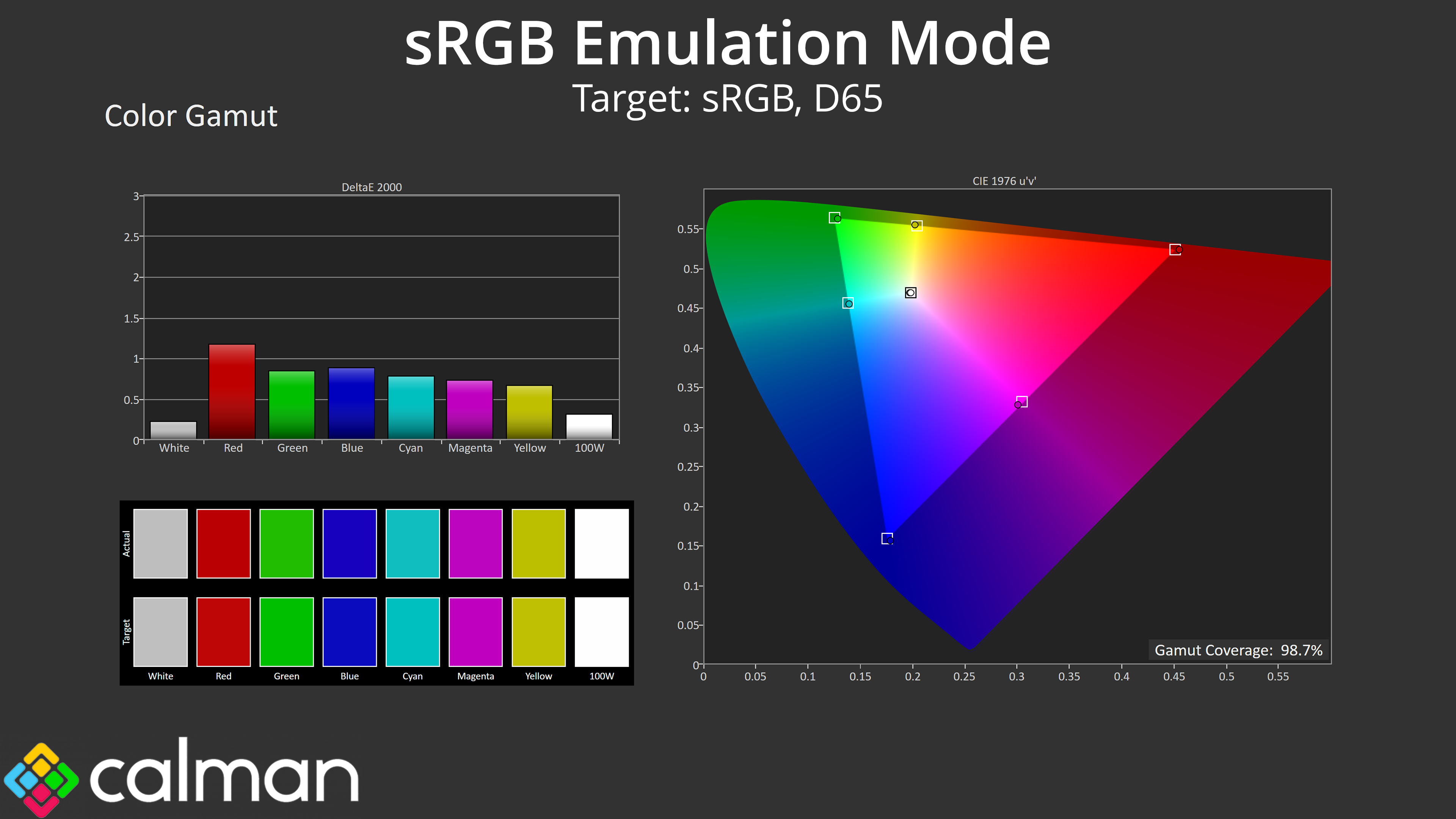
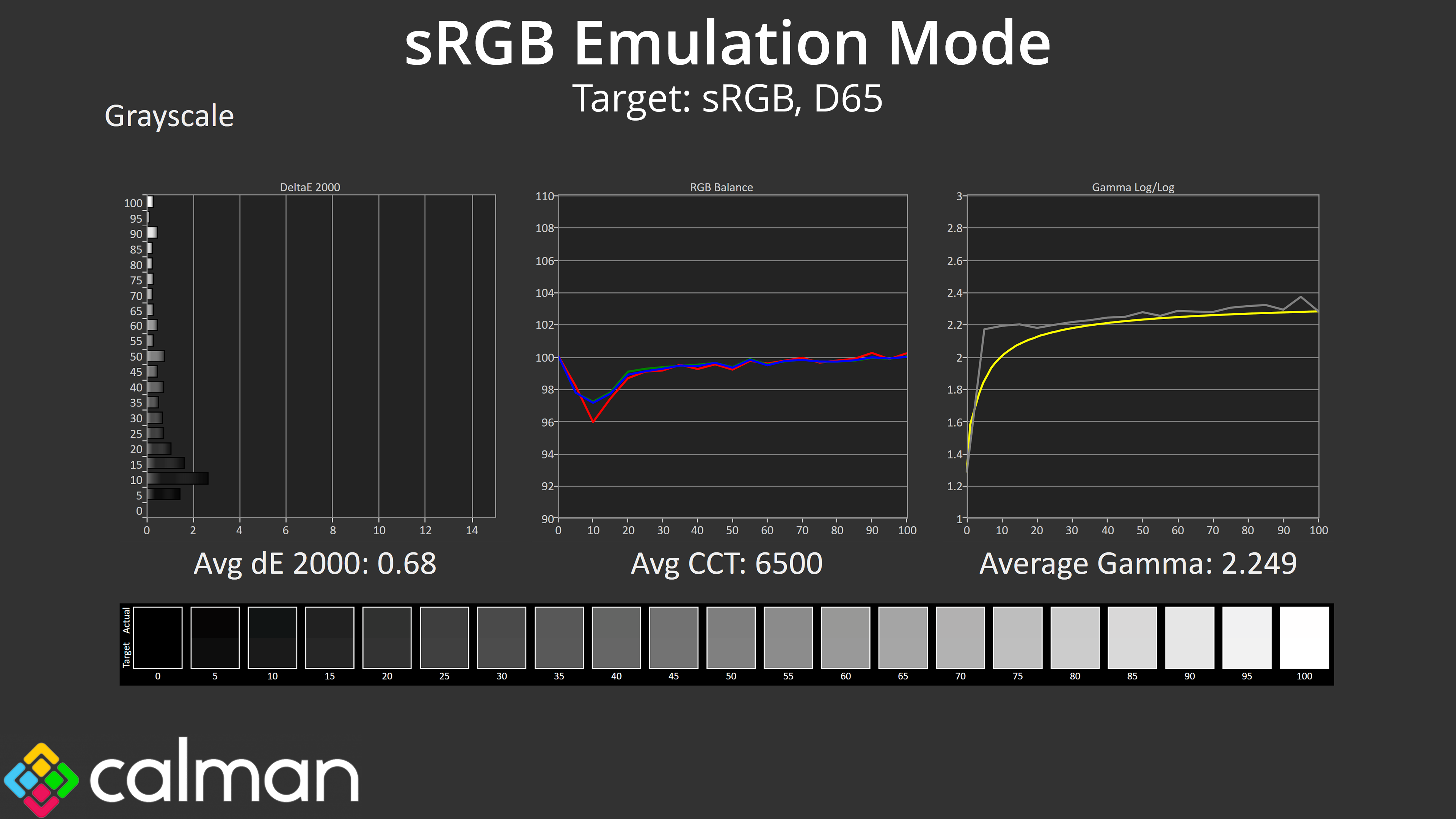
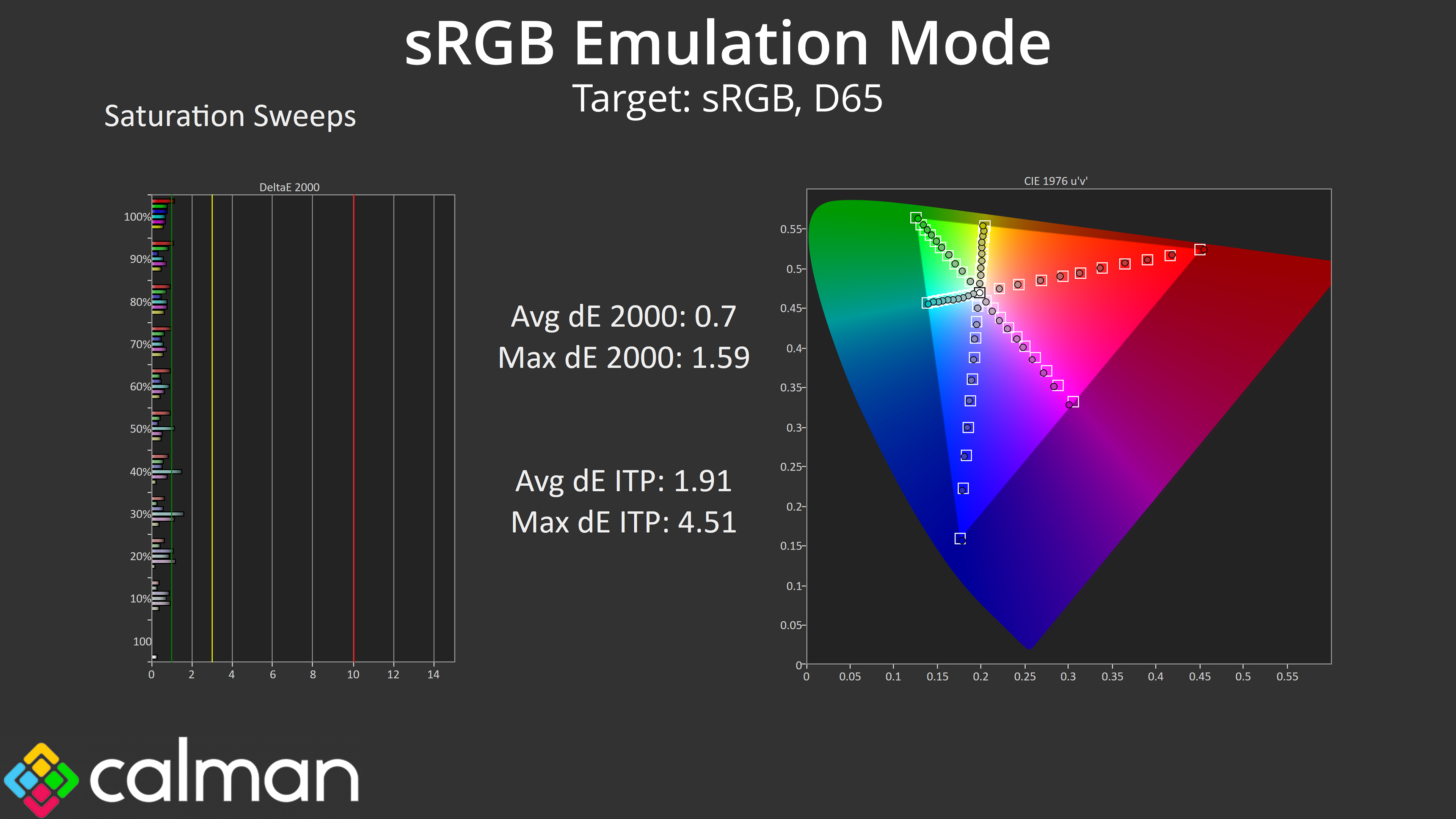
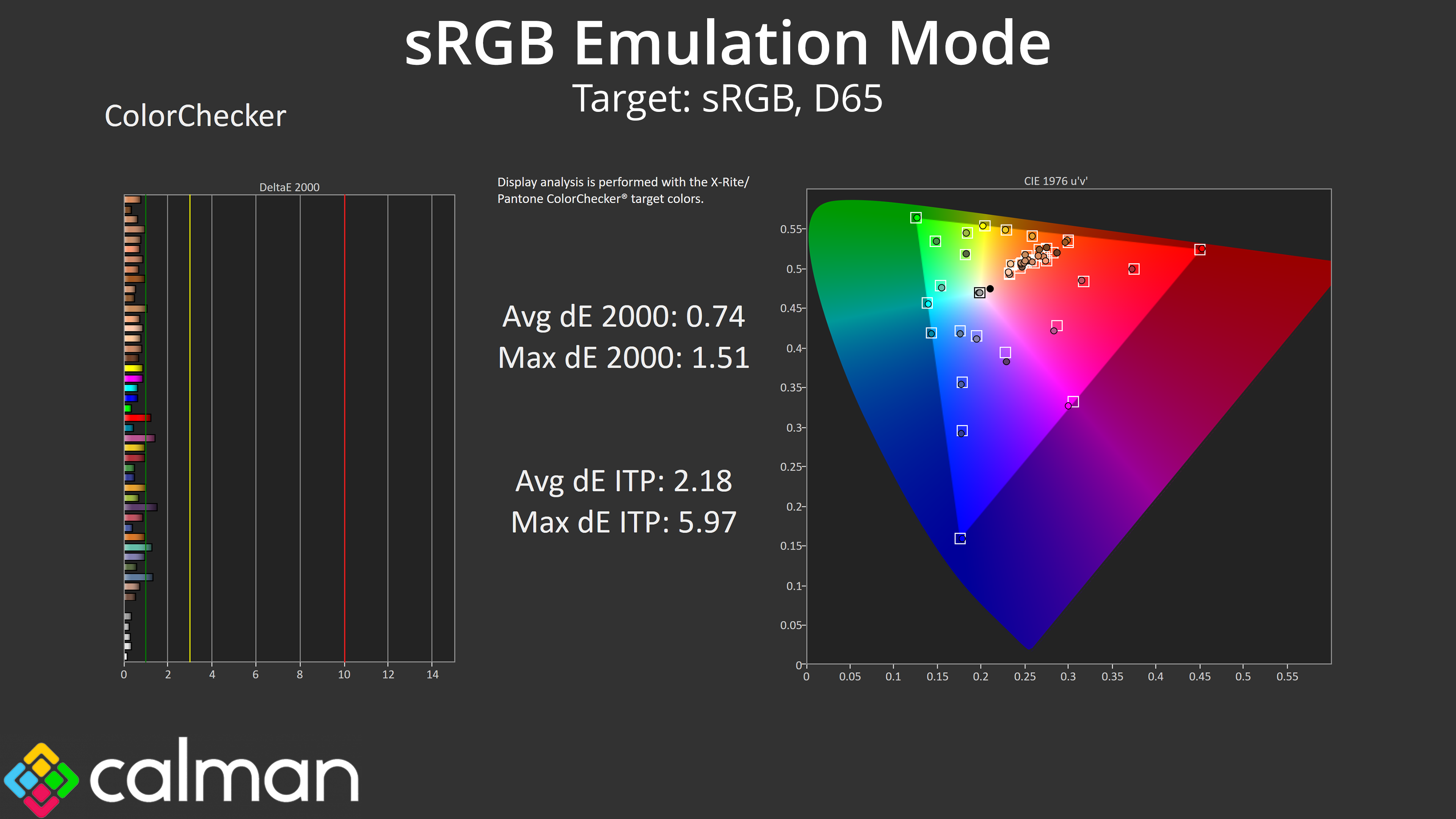
The good news is that ASUS does provide an sRGB emulation mode – specifically we are using the ‘sRGB Cal' mode, and that does a great job at clamping the gamut to prevent oversaturation. It's also jaw-droppingly accurate in terms of greyscale, averaging 6500K on the nose for colour balance, while gamma averages 2.249. Saturation and colour accuracy average deltaEs also fall below 1, indicating an incredibly high level of accuracy that is quite stunning!
Calibrated Results
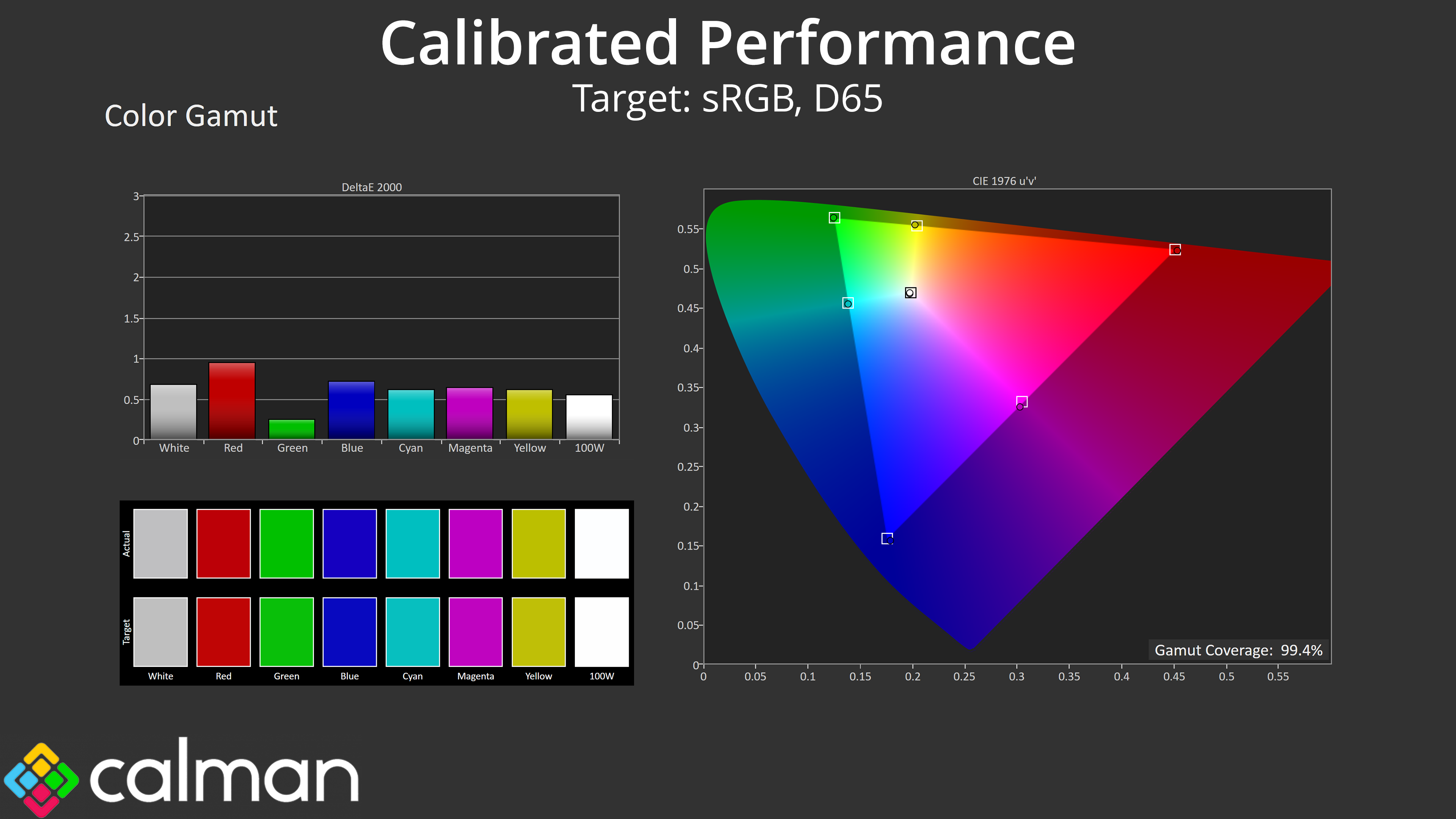
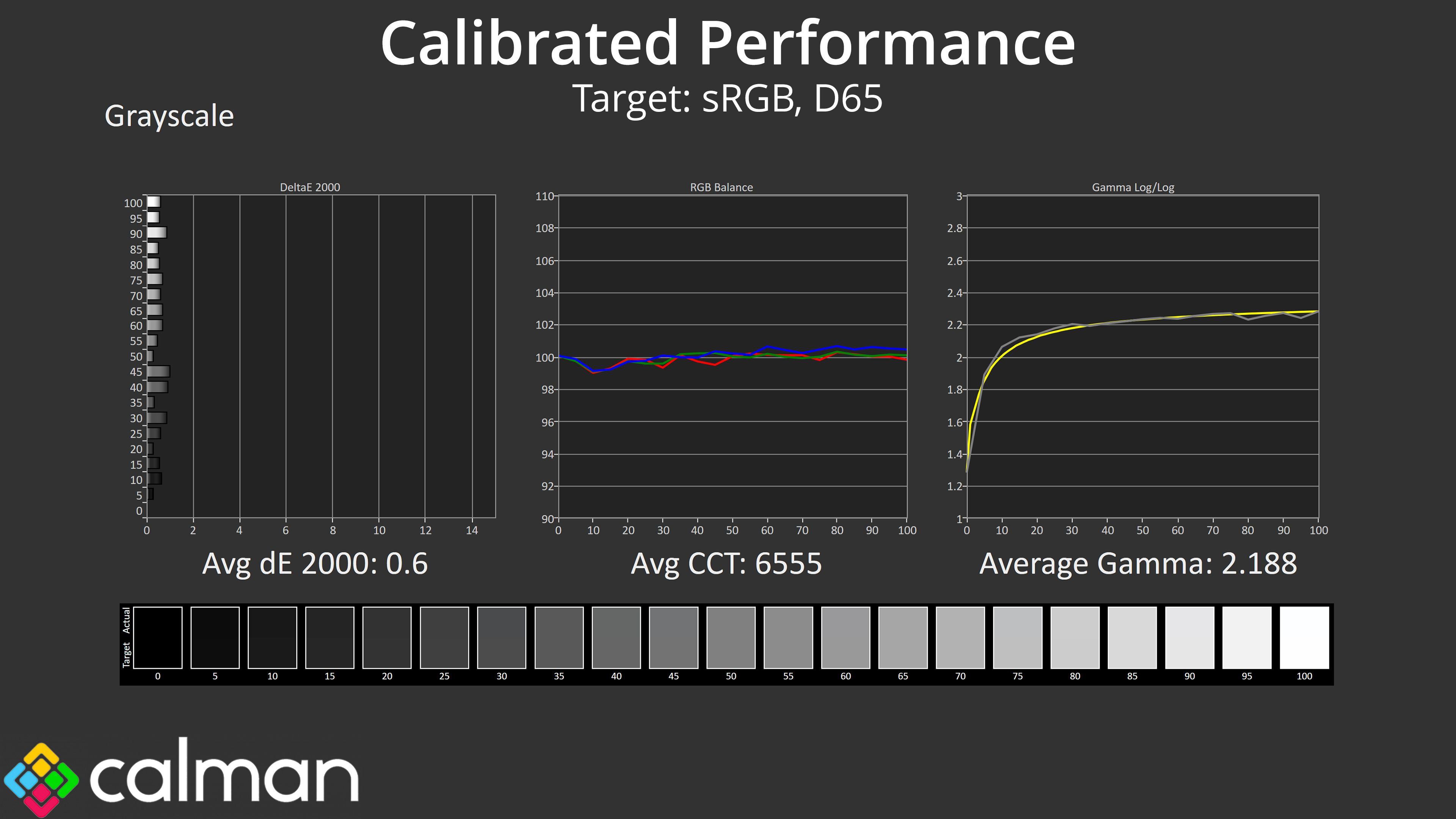
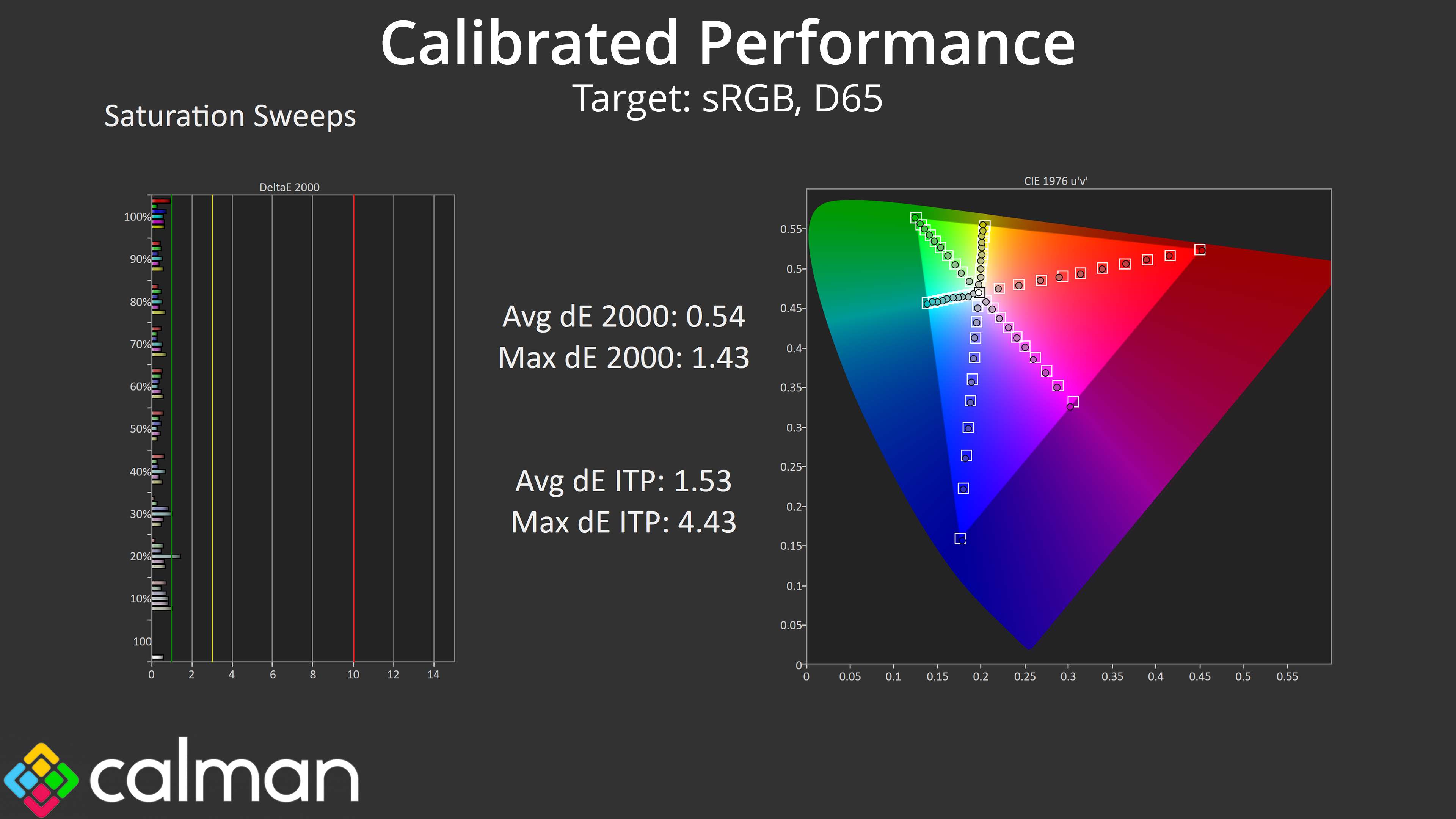
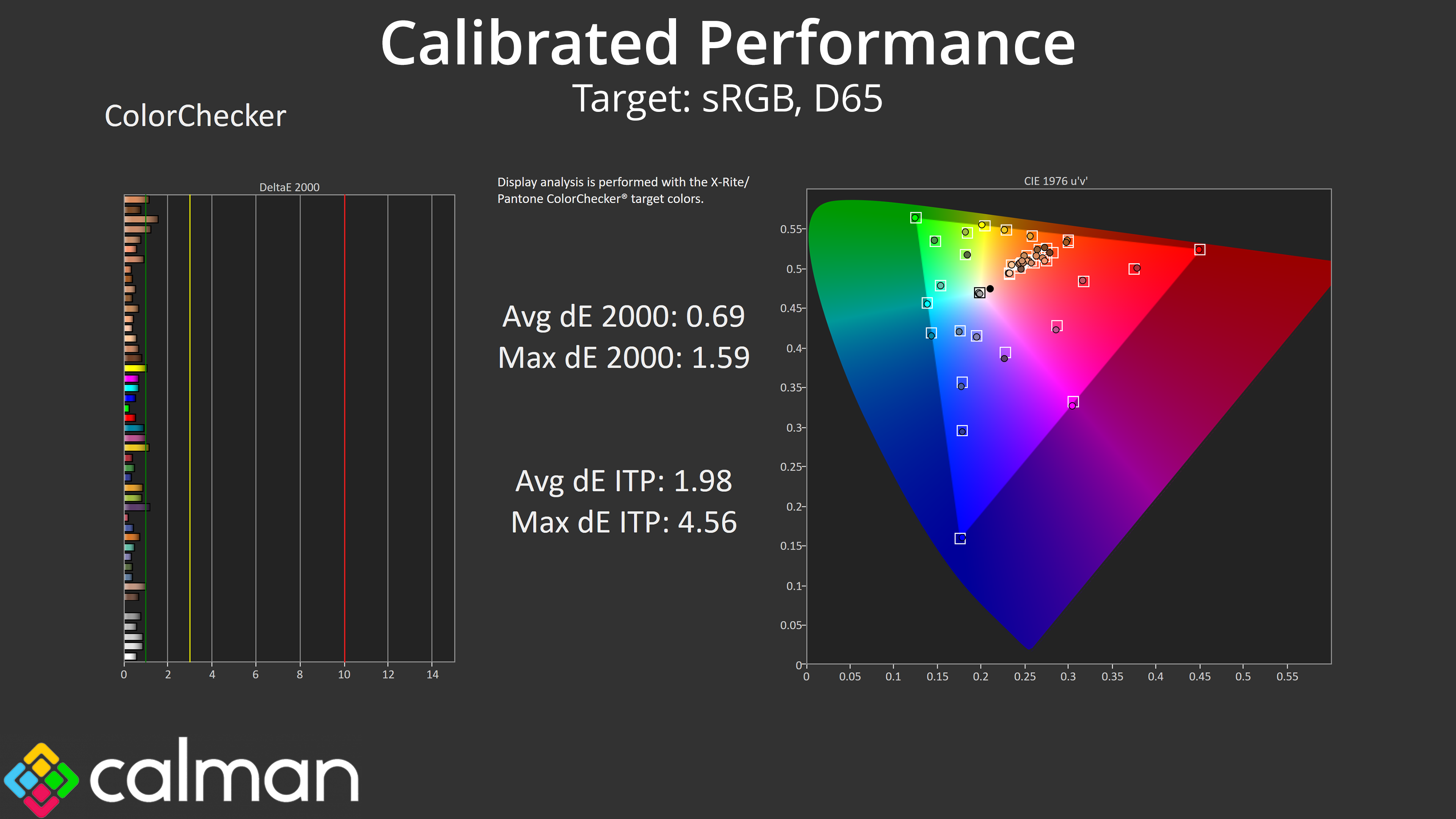
The sRGB mode is so good that I really don't think it's worth calibrating at all – we did see marginally better results after a full calibration, but considering the built-in sRGB is that good and doesn't require any hardware or software tools to use, 99% of people will be better off just using that mode!