KitGuru KitGuru.net – Tech News | Hardware News | Hardware Reviews | IOS | Mobile | Gaming | Graphics Cards


Our main test involves using an X-Rite i1 Display Pro Plus colorimeter and utilising Portrait Display's Calman Ultimate software. The device sits on top of the screen while the software generates colour tones and patterns, which it compares against predetermined values to work out how accurate the screen is.
The results show:
- A monitor’s maximum brightness in candelas or cd/m2 at various levels set in the OSD.
- A monitor’s contrast ratio at various brightness levels in the OSD.
- Gamut coverage, primarily focusing on sRGB and DCI-P3 colour spaces.
- Greyscale accuracy, measured across 20 shades, with an average colour balance reported.
- The exact gamma levels, with a comparison against preset settings in the OSD.
- The colour accuracy, expressed as a Delta E ratio, with a result under 3 being fine for normal use, and under 2 being great for colour-accurate design work.
We first run these tests with the display in its out-of-the-box state, with all settings on default. If there is an sRGB emulation option or other useful mode then we may test that too. We then calibrate the screen using the Calman Ultimate software and run the tests again.
You can read more about our test methodology HERE.
Default settings
Brightness and Contrast (Full Screen)
| OSD Brightness | White Luminance (cd/m2) | Black Luminance (cd/m2) | Contrast Ratio |
| 0% | 8.8 | 0.00 | ~Infinite |
| 25% | 55.6 | 0.00 | ~Infinite |
| 50% | 102.5 | 0.00 | ~Infinite |
| 75% | 150.7 | 0.00 | ~Infinite |
| 100% | 201.2 | 0.00 | ~Infinite |
Kicking off with brightness testing, this is the probably the biggest indicator that Philips is using a lower quality panel than other QD-OLEDs, given it peaks at just over 200 nits. For reference, every other QD-OLED I've tested can do 250-260 nits for a full screen white, so this is a definite step down, and it could be something to consider as OLEDs aren't the brightest anyway for regular SDR usage.
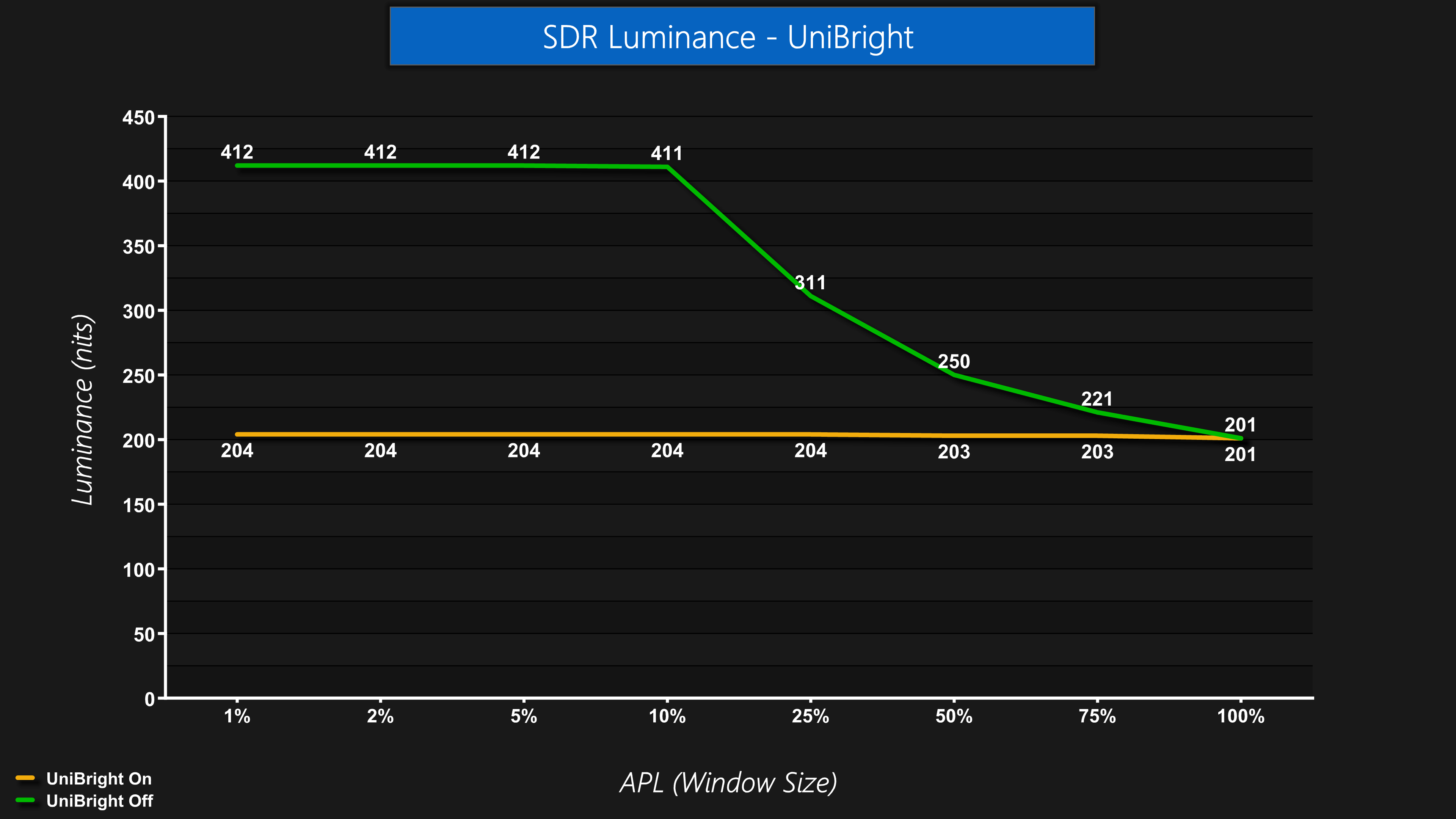
By default, output luminance is completely steady regardless of APL, or window size, and this is thanks to the ‘UniBright' setting, actually found within the OLED Panel Care sub-menu. You can disable this which will let you achieve higher peak brightness for smaller window sizes, but that results in noticeable dimming as the window size increases. It's good to have the option, though, so users can adjust to their preference.
Screen Uniformity
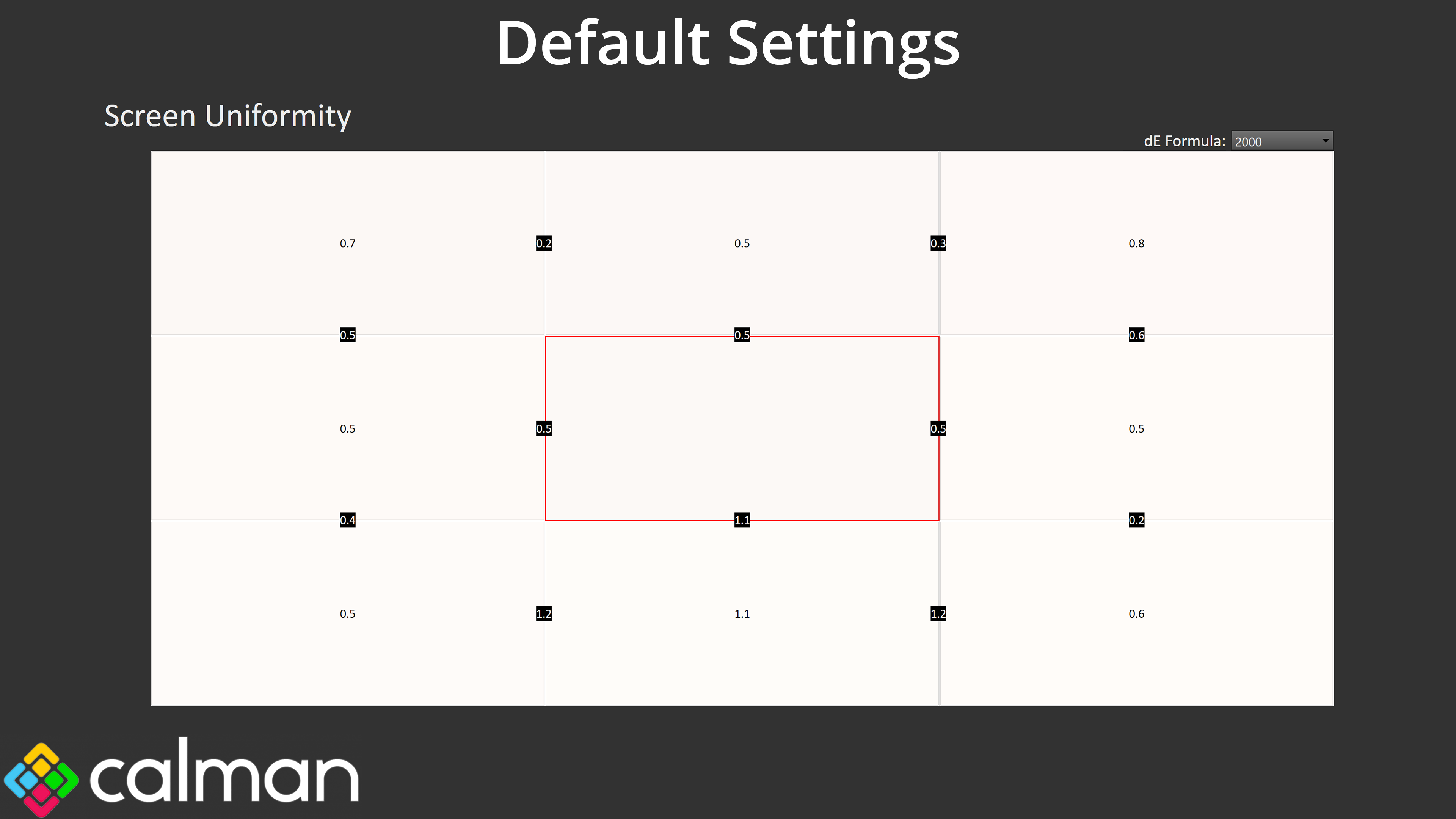
As we'd expect from an OLED, overall panel uniformity is very good indeed with very little deviation across the panel.
Gamut (CIE 1976)

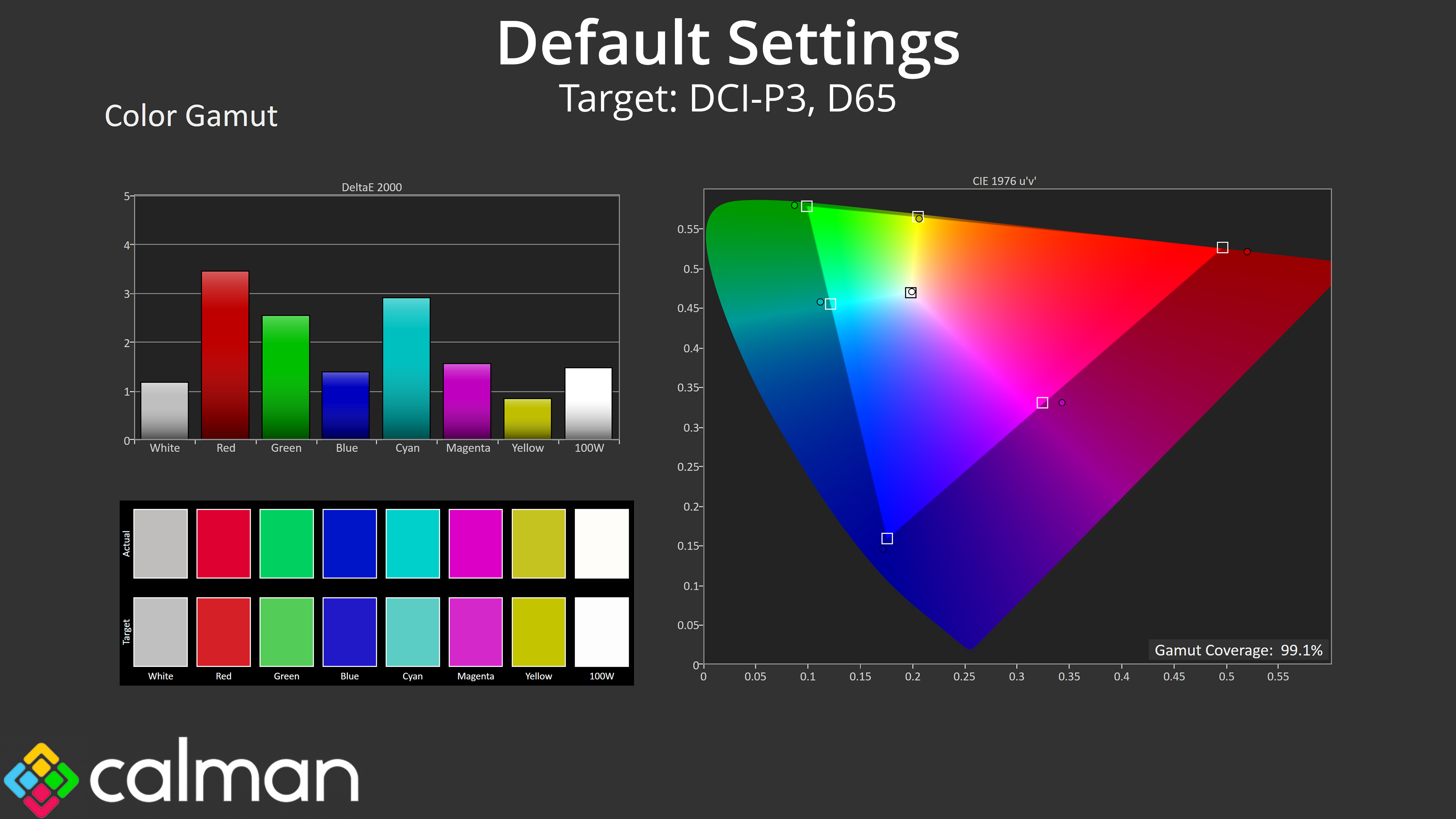
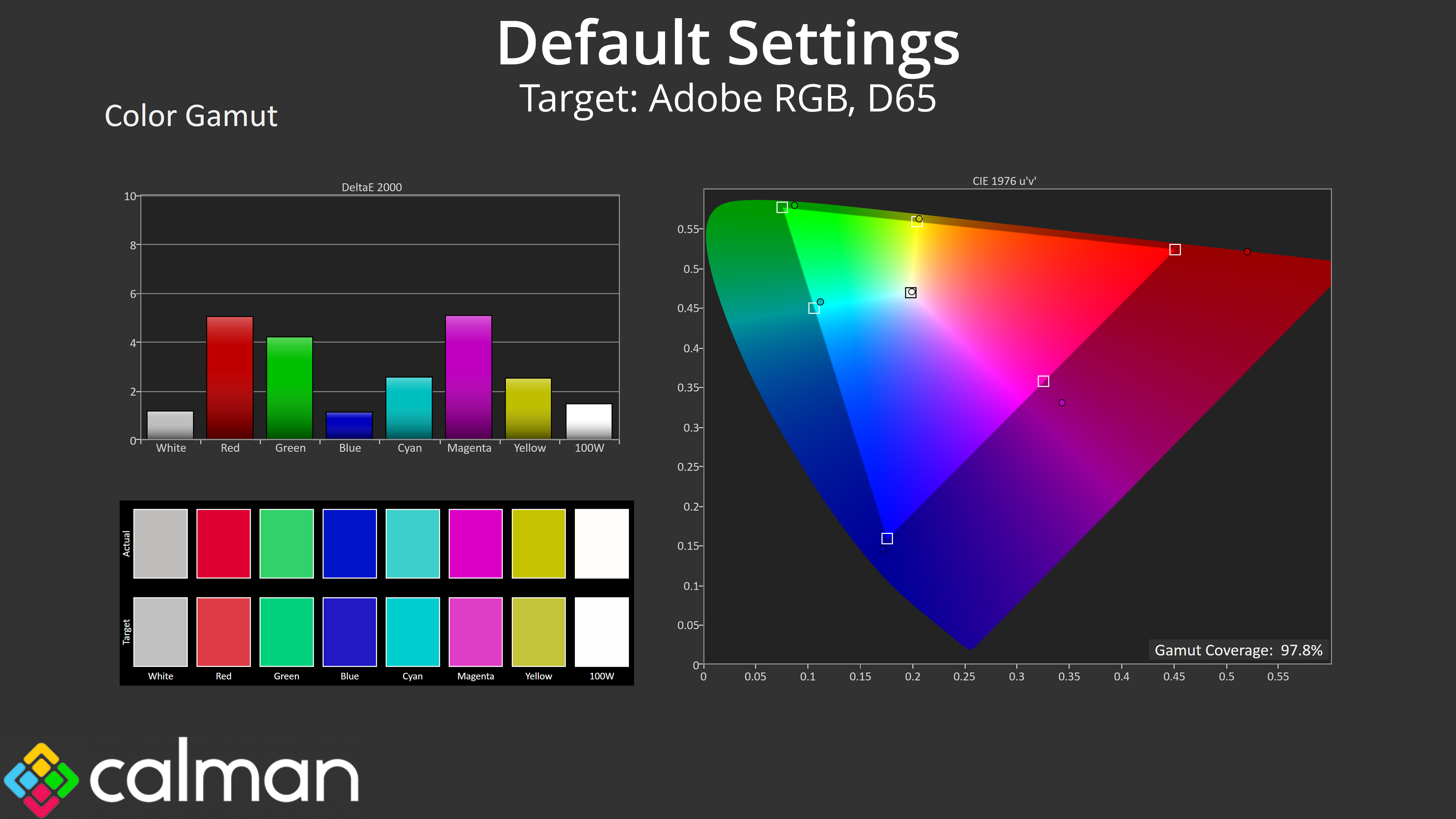
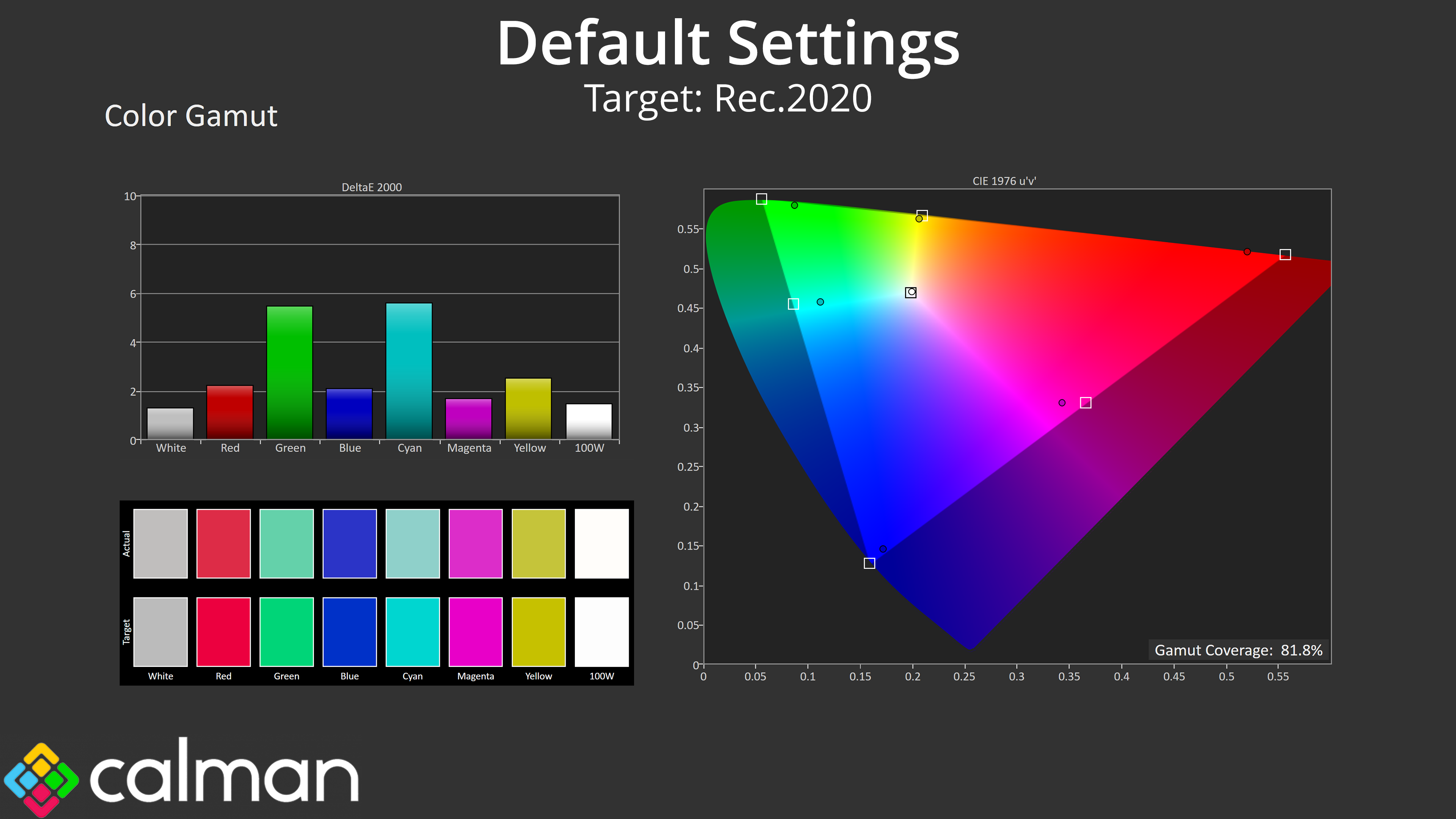
| Colour space | Coverage (%) |
| sRGB | 140.9 |
| DCI-P3 | 99.1 |
| Adobe RGB | 97.8 |
| Rec.2020 | 81.8 |
Gamut is also typical of a QD-OLED, given it far surpasses the sRGB space and offers 99.1% DCI-P3, 97.8% Adobe RGB, alongside 81.8% Rec.2020.
Greyscale
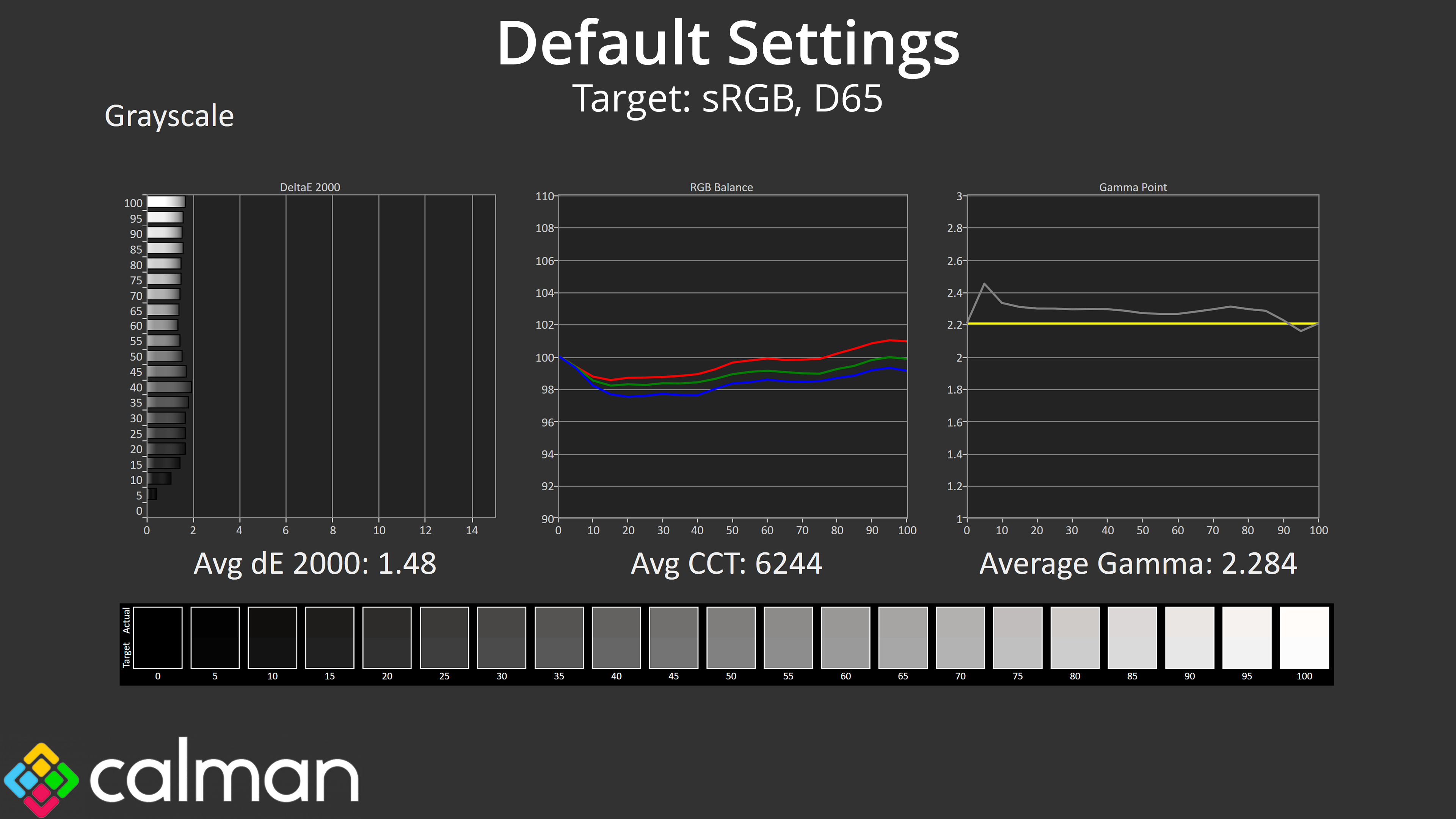
I'm also pleased to say that general factory calibration is solid. The colour balance is oh so slightly warm, averaging 6244K, but that's barely a 4% deviation from the 6500K target, so it's hardly noticeable. Gamma is also solid, a touch high across the range but averages 2.284 without any significant peaks or dips. Overall, the greyscale deltaE 2000 averages 1.48, indicating very good accuracy indeed.
Saturation
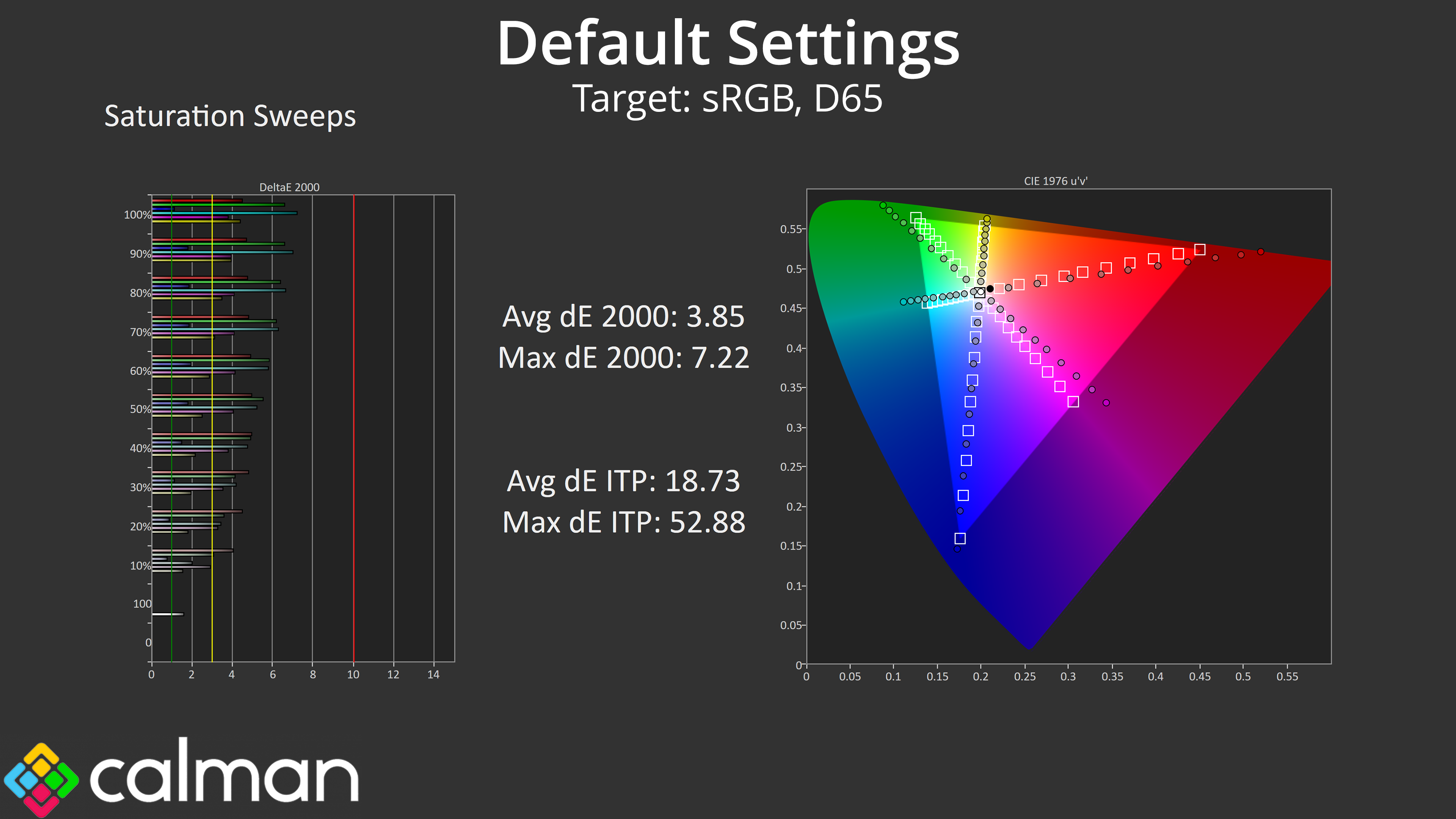

Saturation levels are high, as we'd expect from a QD-OLED, leading to a fair degree of inaccuracy relative to both the sRGB and DCI-P3 colour spaces.
Colour Accuracy

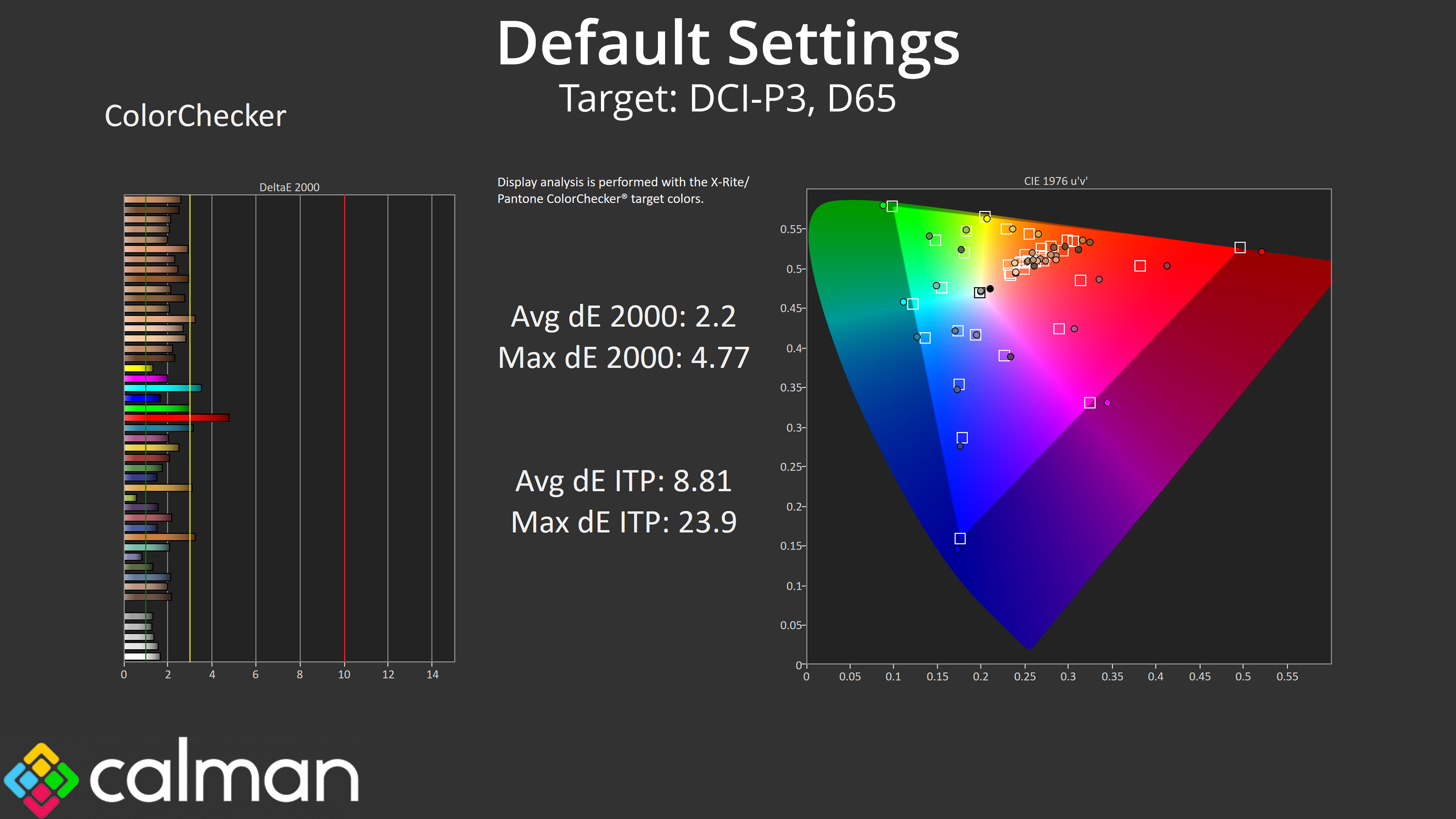
That has a knock-on effect for our colour testing, too – the average dE 2000 of 4.64, relative to sRGB, is very similar to other panels achieve, as is the improved 2.2 average when testing against the DCI-P3 space.
sRGB Emulation Mode


Philips does also include an sRGB mode in the OSD and this does a good job of clamping the gamut to prevent over-saturation. Greyscale is much the same as it was before, though there's one dip towards the end of the gamma curve, but saturation and colour accuracy average deltaEs have improved into the 1.2-1.5 range, so this mode is well worth using, without being the absolute best we've ever tested.
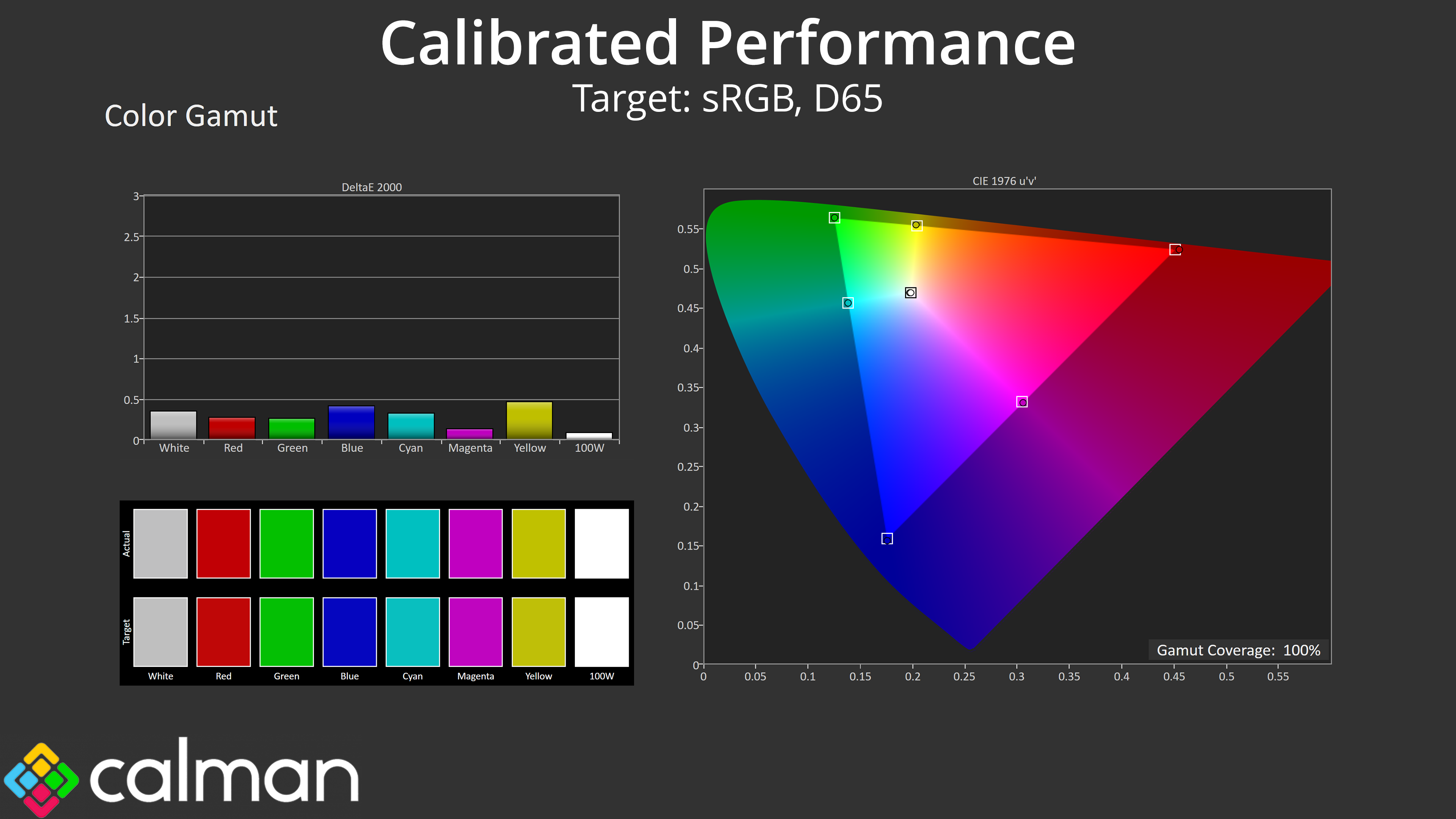
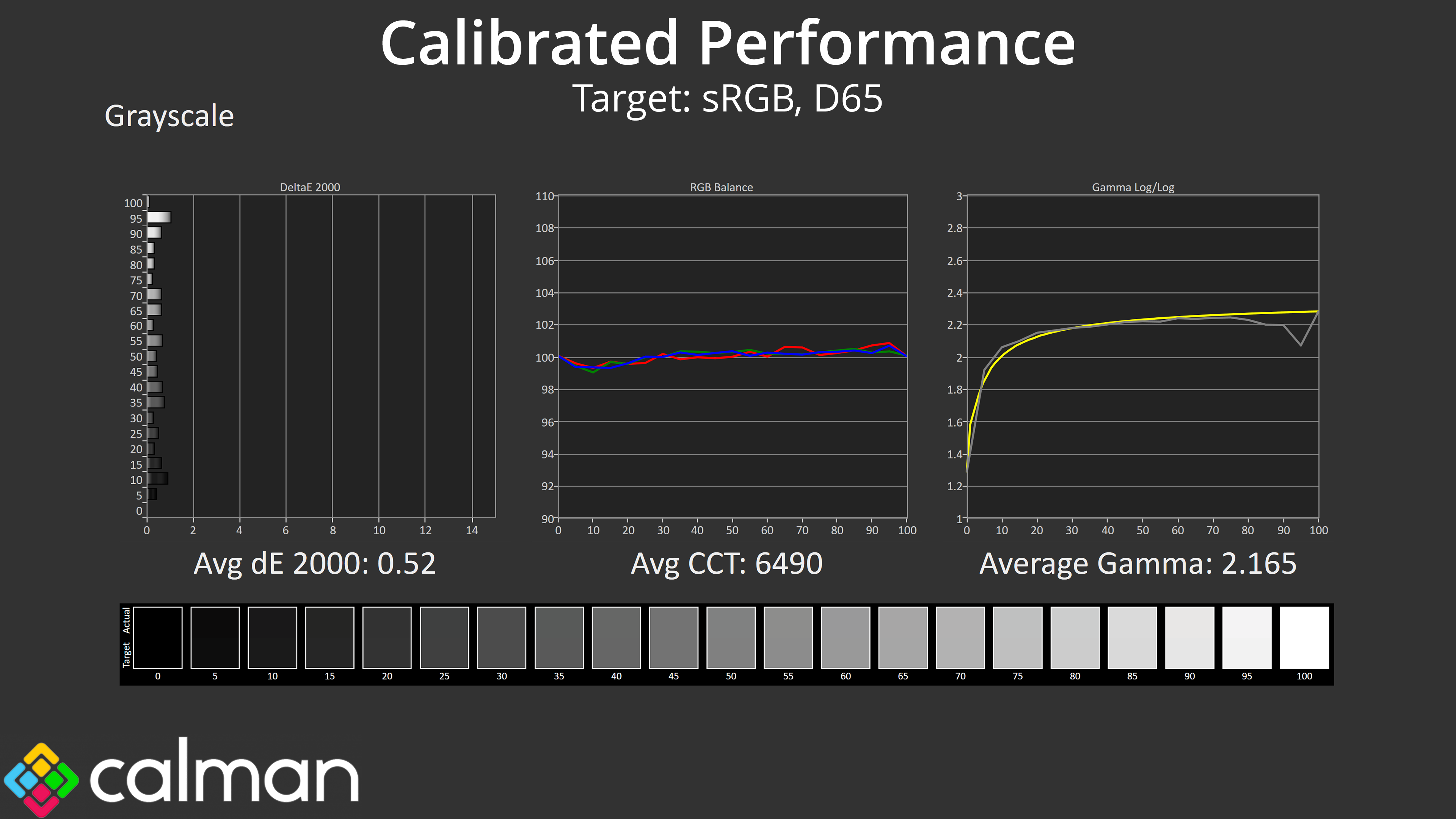
Calibrated Results
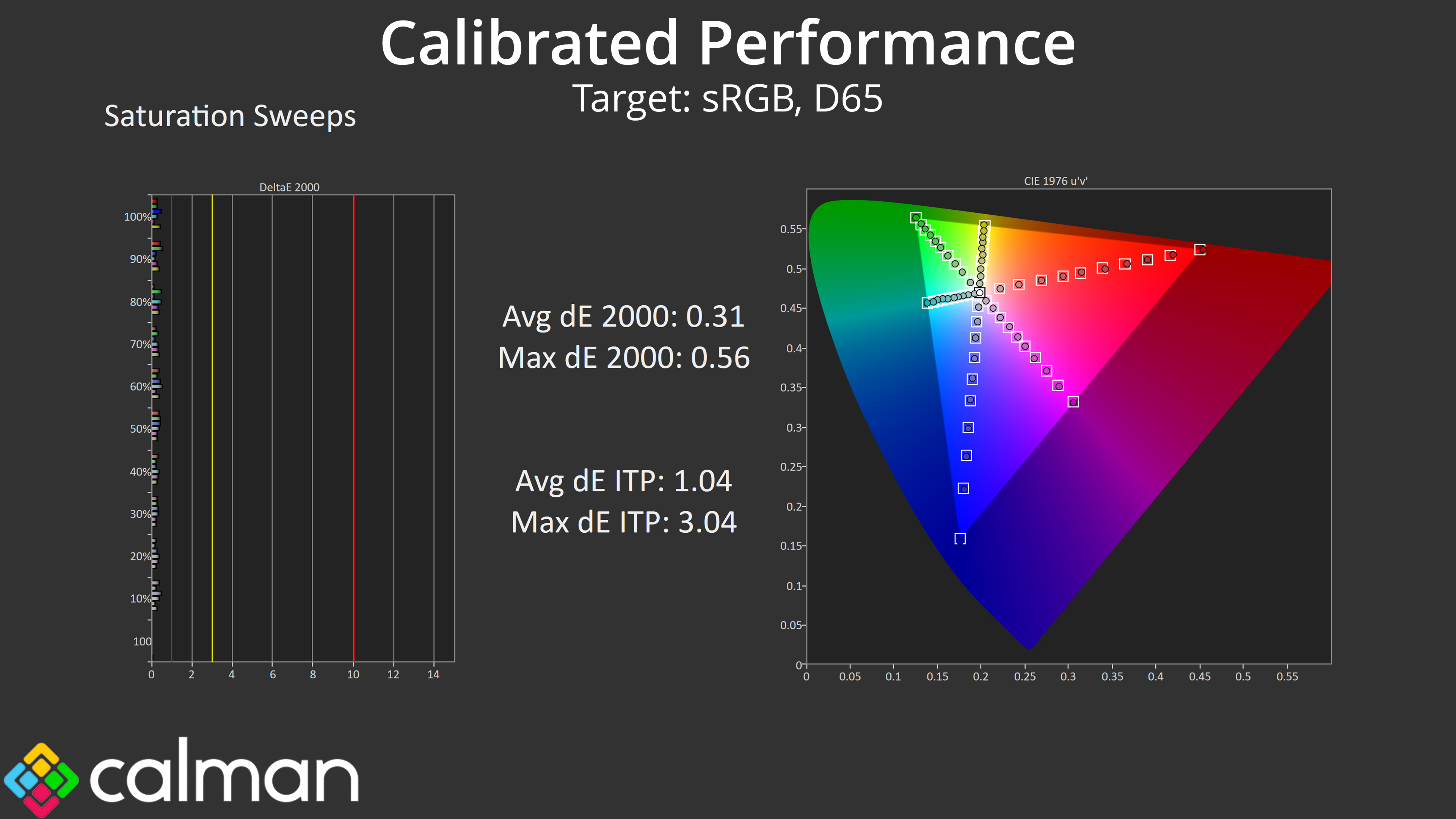
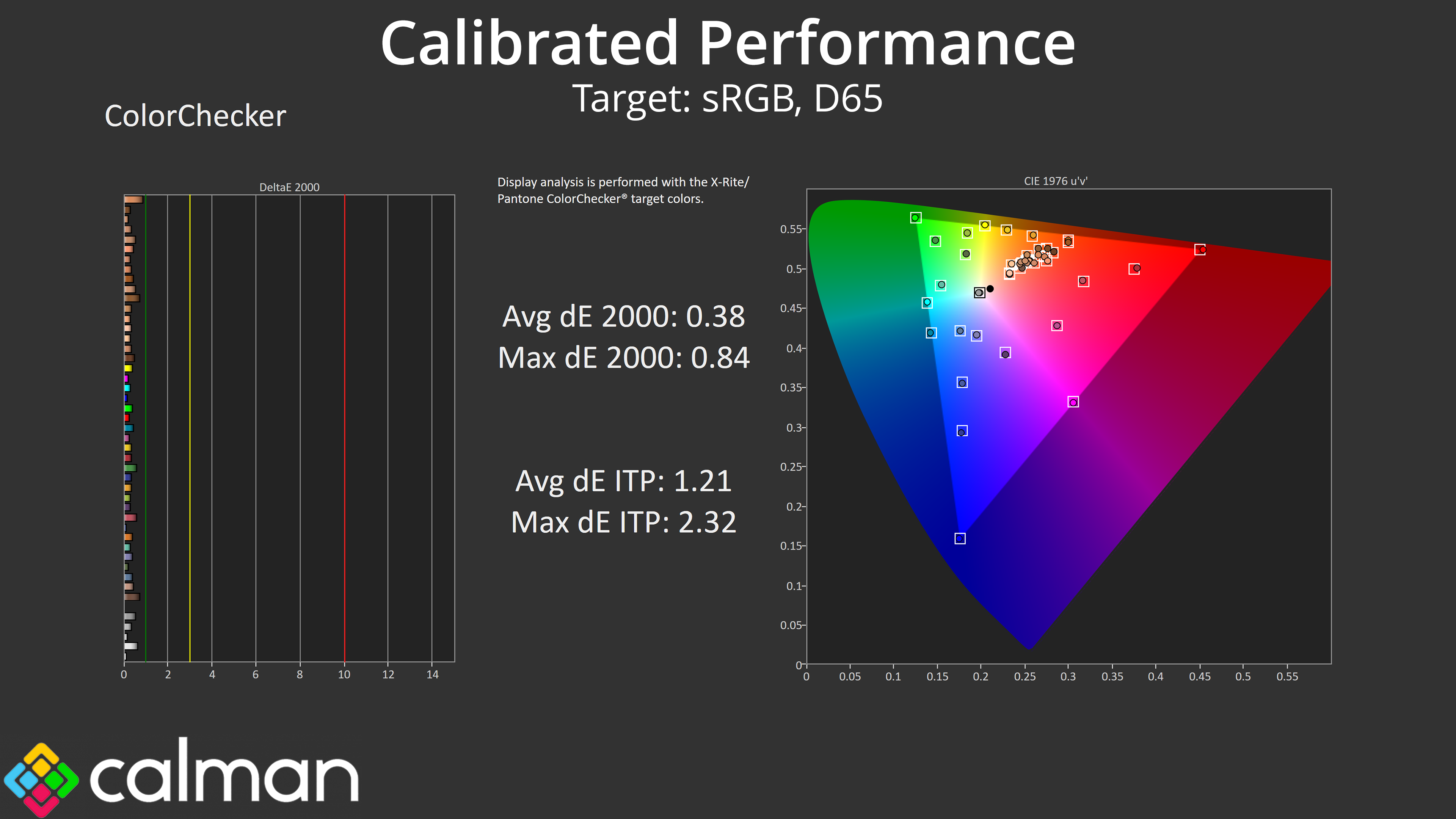
For peak performance we ran through a full calibration using Calman Ultimate. I can't imagine too many people will be calibrating a budget OLED, but you never know and the results go to show what the panel is capable of if you have the right software and hardware tools.