KitGuru KitGuru.net – Tech News | Hardware News | Hardware Reviews | IOS | Mobile | Gaming | Graphics Cards


Windows users have long relied on the default disk.sys driver for storage management, a component that has mainly remained fundamentally unchanged since its introduction in 2006. While Windows has supported the NVMe protocol since Windows 8.1, the legacy driver continues to treat modern high-speed solid-state storage as a legacy SCSI disk. To address this bottleneck, Microsoft has officially introduced nvmedisk.sys for Windows Server 2025, but apparently, Windows 11 25H2 also has it hidden away.
The team over at Notebookcheck tested this new driver on a Windows 11 PC, and as promised by Microsoft, the deeper NVMe awareness appears to be paying dividends in raw throughput. The testing suggests that nvmedisk.sys provides a measurable performance uplift across both sequential and random read/write workloads compared to the old driver. By bypassing the legacy SCSI translation layer, the new driver allows the OS to interface more directly with the flash controller, reducing overhead and improving latency on high-end drives such as the Samsung 990 Pro and Crucial T705. You can find the results before and after installing the new driver below:
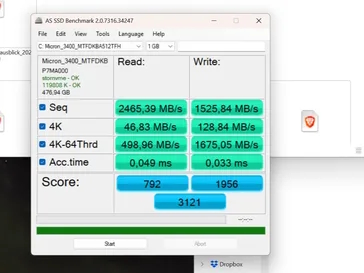
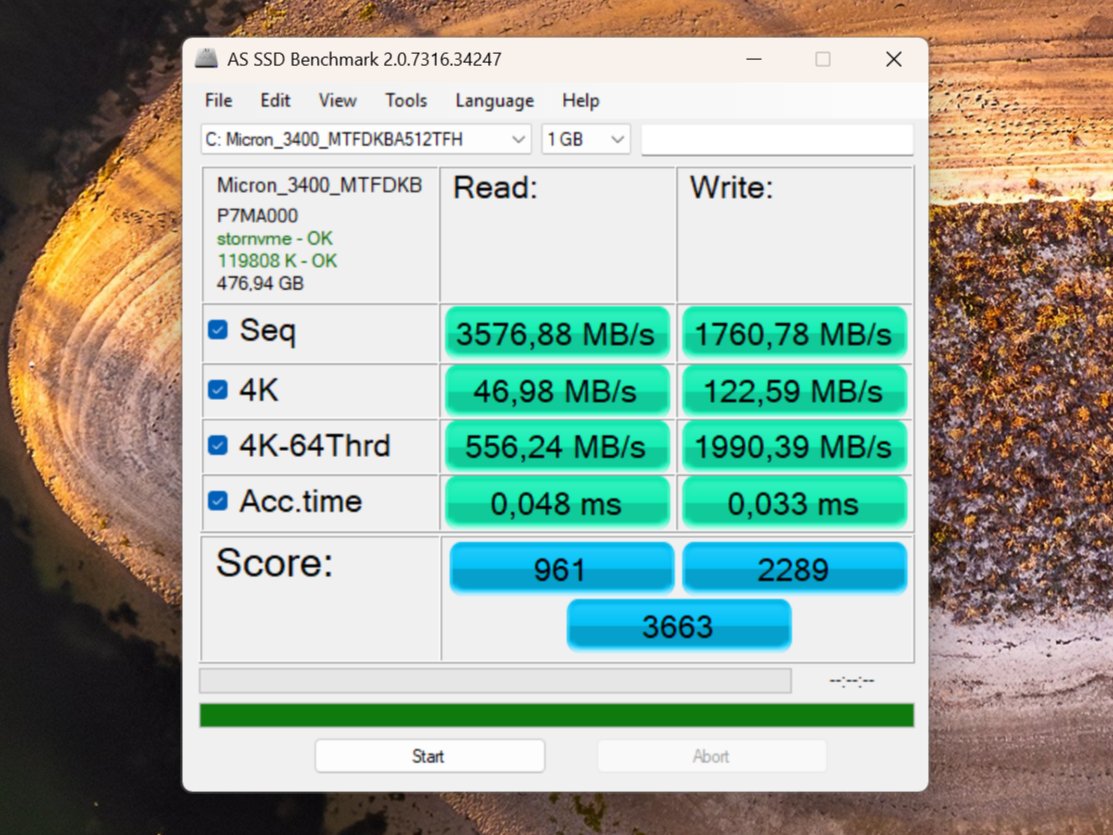
Image credit: Noteboocheck
Although impressive, enthusiasts looking to force the transition should proceed with extreme caution, as the driver is not yet enabled by default for all hardware configurations. Current reports indicate that forcing nvmedisk.sys via registry modifications can lead to severe system instability or a total failure to boot if the underlying SSD controller lacks specific compatibility hooks. To verify which driver your system is currently using, users must navigate to Driver Details in Device Manager.
Given the potential for data loss or unbootable partitions, we strongly advise against manually switching drivers without a full-disk backup at hand. While the performance gains are enticing for those chasing benchmark records, the new driver is still in a soft launch.
KitGuru says: It is about time Microsoft retired a driver stack from 2006 for high-end storage. The question that remains is when it will arrive at a stable build.