KitGuru KitGuru.net – Tech News | Hardware News | Hardware Reviews | IOS | Mobile | Gaming | Graphics Cards


To test real-life file/folder performance we use a number of different file/folder combinations to test the read and write performance of the NAS device. Using the FastCopy utility to get an MB/s and time taken for each transfer, the data is written from and read back to a 2TB Gen 4 SSD.
Transfer Details
- Data file – 100GB.
- Windows 11 iso – 5.4GB.
- File folder – 50GB – 28,523 files.
- Movie demos 8K – 21GB – (11 demos).
- Raw Movie Clips 4K – 16GB – (9 MP4V files).
- Single large image – 5GB – 1.5bn pixel photo.
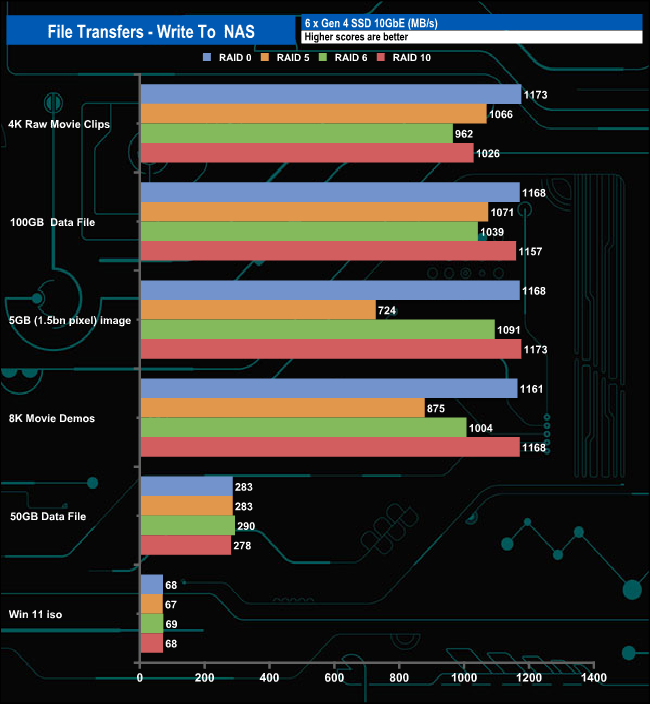

When dealing with the Real Life File transfer the Flashstor 6 Gen 2 is for the most part pretty consistent when writing the files, with 13 transfers over 1GB/s. The fastest speed we saw was 1,173MB/s for the 4K Movie folder transfer (RAID 0) and the 8K Movie folder (RAID 10),
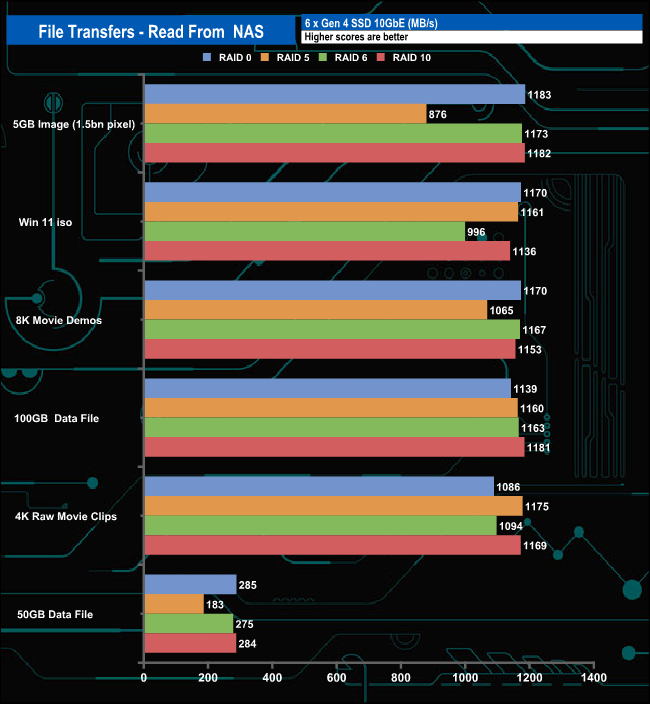
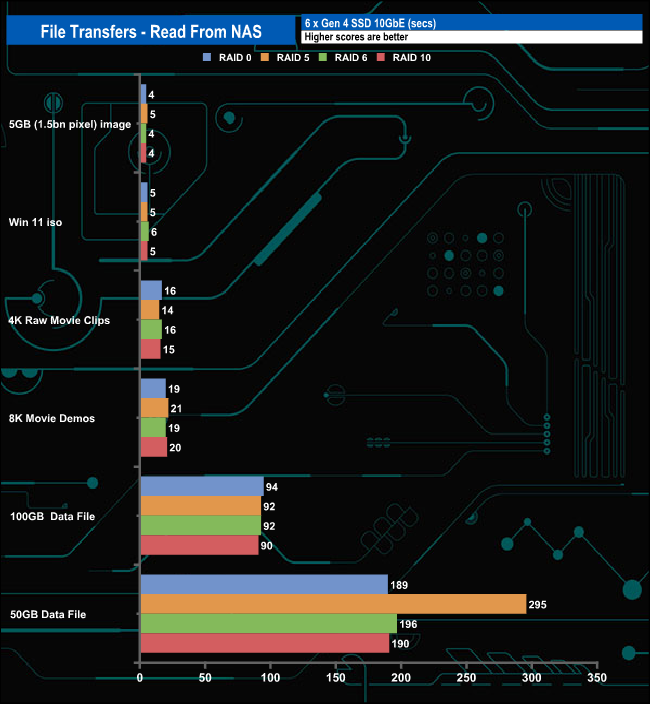
When it came to reads the 5GB photo transfer just came out on top with the fastest performance coming from the RAID 0 array at 1,183MB/s just ahead of the RAID 10 and RAID 6 arrays.