KitGuru KitGuru.net – Tech News | Hardware News | Hardware Reviews | IOS | Mobile | Gaming | Graphics Cards


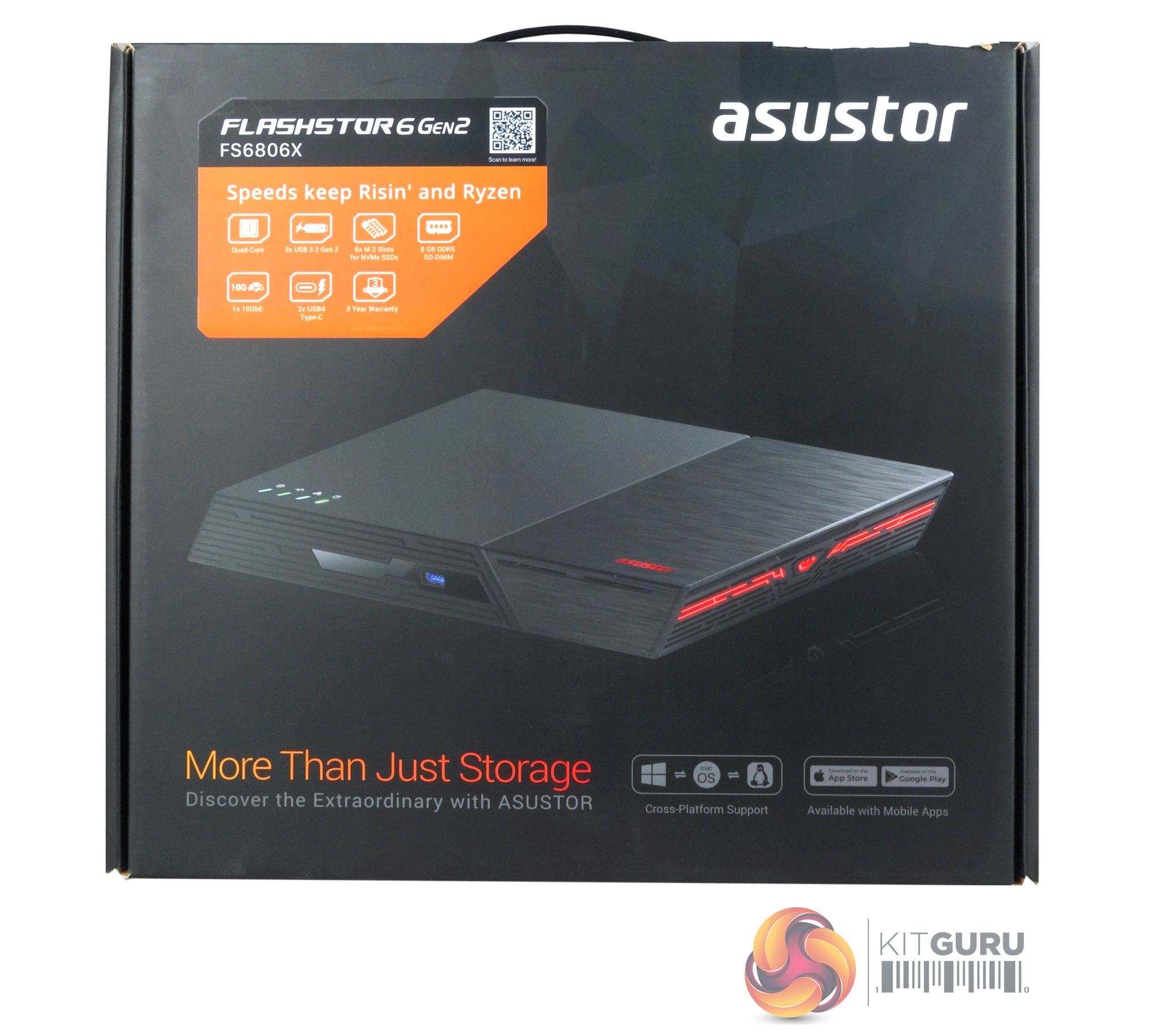
The Flashstor 6 Gen 2 comes in a fairly compact box complete with a carrying handle. On the front is a 3/4 front view image of the unit. Above the image is a label displaying logos of the headline features of the NAS; Quad-core CPU, two USB 4.0 ports, three USB 3.2 Gen 2 ports, 6 NVMe M.2 slots, 8GB of DDR5 memory, 10GbE port and a three-year warranty. Under the image there are two groups of icons, three represent the platforms that the Flashstor 6 supports – Windows, Mac OS and Linux and two for the Apple and Android mobile app support. The image also shows how one side lights up when the power is on.
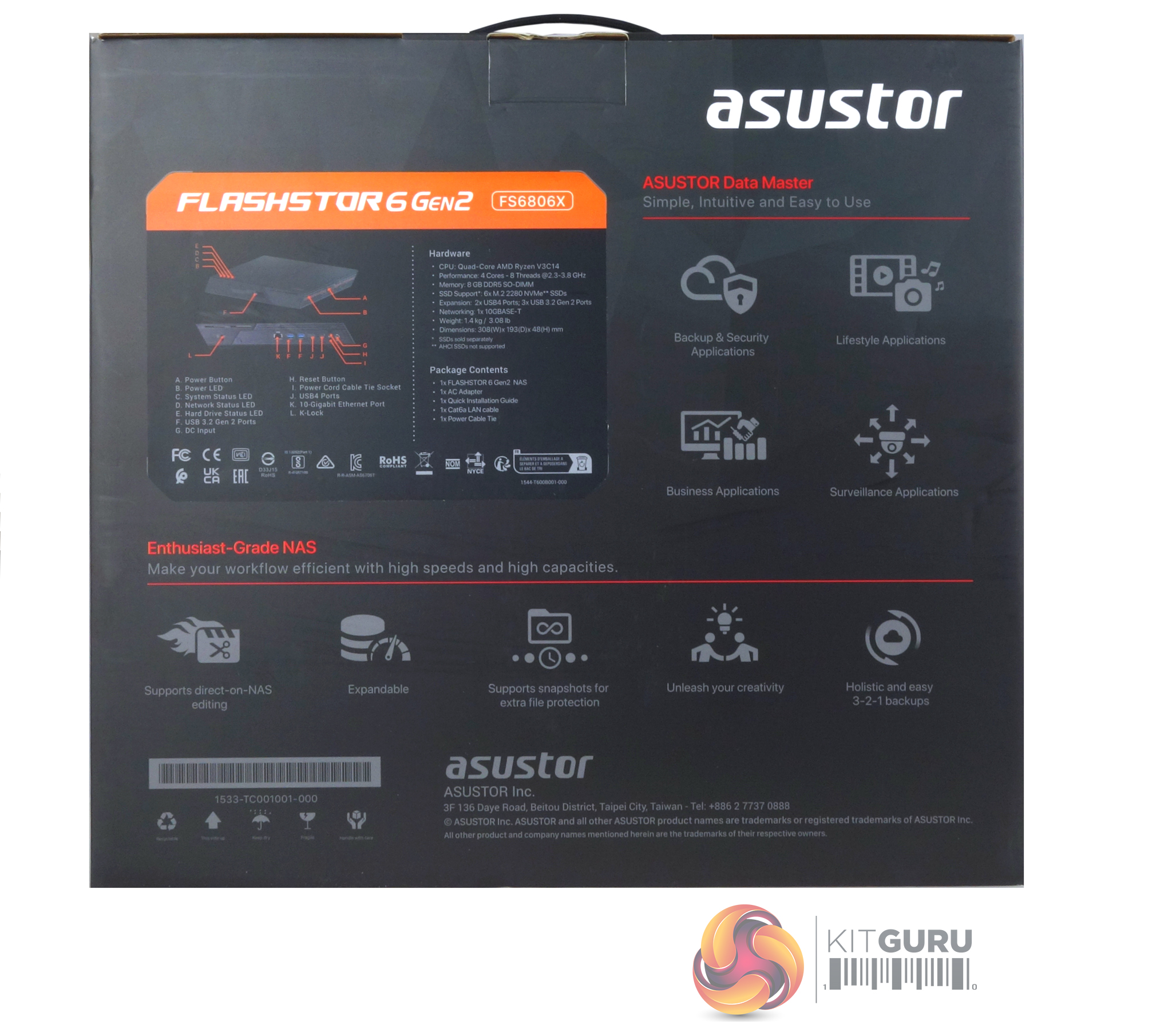
A similar label sticker is on the back of the box but on this one, there are two images of the Flashstor 6, one describing the features on the top and front of the unit while the other one is the rear of the unit pointing out the ports. Next to the image are two lists, one for the hardware and the other for the box bundle.
Next to this label is a group of icons showing features of the ADM (Asustor Data master) OS; Back up & Security, Lifestyle, Business and Surveillance apps. Under the label is another of row of icons displaying some of what the NAS can do such as direct-on- NAS editing, snapshot file protection, easy backups and storage expandability support.
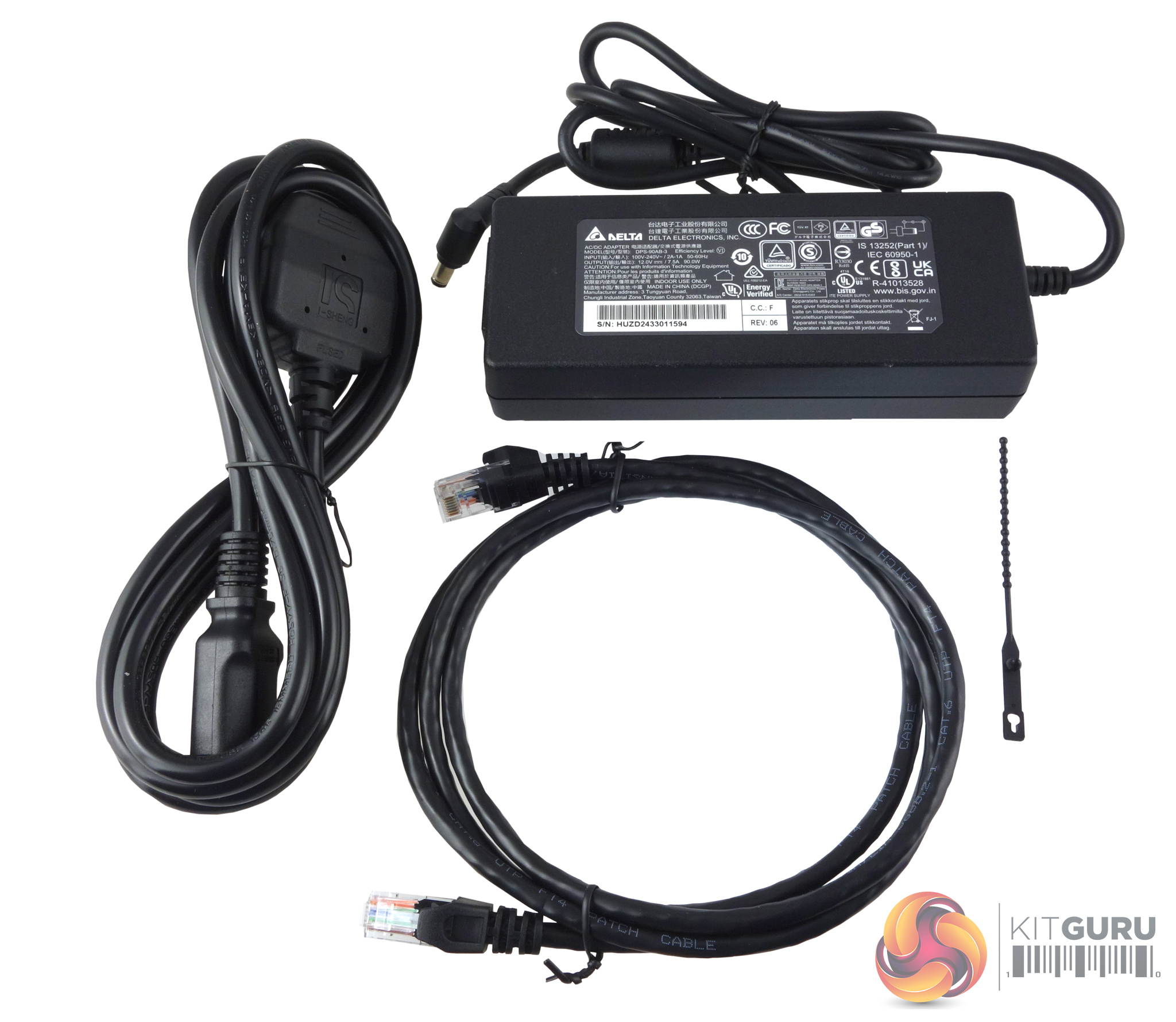
The box bundle for the Flashstor 6 Gen 2 contains a 90W power adaptor (Delta DPS-90AB-3), a 10GbE Cable (Cat6a), a power cord tie and a QIG (Quick Installation Guide).