KitGuru KitGuru.net – Tech News | Hardware News | Hardware Reviews | IOS | Mobile | Gaming | Graphics Cards


Razer has been producing gaming headsets for years, and now the company has announced its latest addition to its audio range – the Razer Opus. These new headphones feature THX Certified audio and advanced hybrid Active Noise Cancellation.
Most people will agree that music is best enjoyed when there is no background noise. In an effort to remove the noise, Razer decided to equip its Razer Opus with an Advanced Hybrid Active Noise Cancelling (ANC) system. The ANC system uses four dedicated microphones that are designed to accurately remove external sound, while the Opus also has two microphones that are used for voice chat.
Razer Opus’ comes with leatherette ear cushions and the headphones weigh in at just 245 grams. Each battery charge lasts up to 25 hours with ANC on, and the headphones comes with a Quick Attention Mode that makes it possible to hear the outside world when needed. As for connectivity, the Opus can use either Bluetooth 4.2 or a 3.5mm cable.
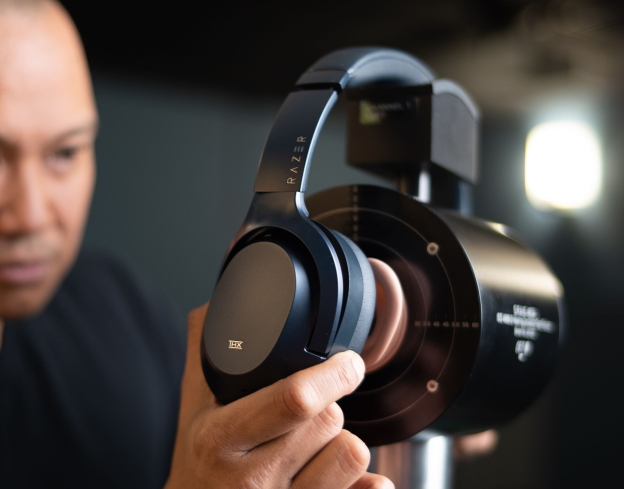
Image credit: Razer
“Through close collaboration with the Opus design team, we were able to provide input throughout the development process,” said Peter Vasay, Head of THX Certification. “The result is a high-performance wireless headphone that delivers a rich, balanced soundstage, clear vocals, and deep impactful bass optimized for music, games, and movies.”
Razer Opus is already available directly from Razer, with a price tag of £199.99.
Discuss on our Facebook page HERE.
KitGuru says: What do you think about these new headphones from Razer?