KitGuru KitGuru.net – Tech News | Hardware News | Hardware Reviews | IOS | Mobile | Gaming | Graphics Cards


Considering how long some Kickstarter campaigns can take to deliver to their backers, it's great to see Trinity with a number of finished products available, after less than a year. Not only that, but it has been kind enough to send us not one, but two pairs of aftermarket in-ear headphones.
Featuring strong cabling, neodymium drivers, replaceable tuners (with the Deltas) and strong bundles, they represent some viable points for those looking to upgrade their stock smartphone headphones. At least on paper. We are here to test whether they stand up under scrutiny.
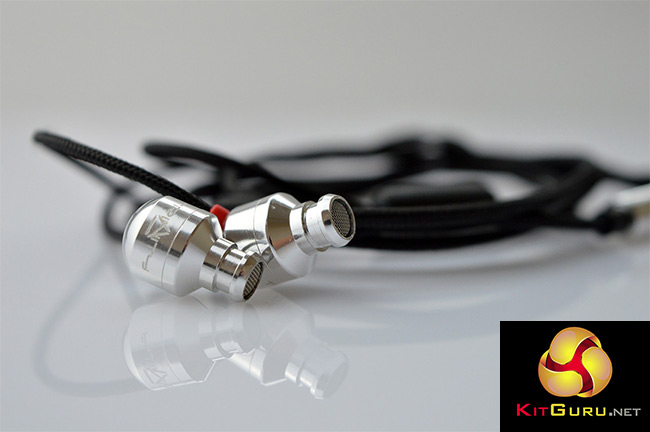
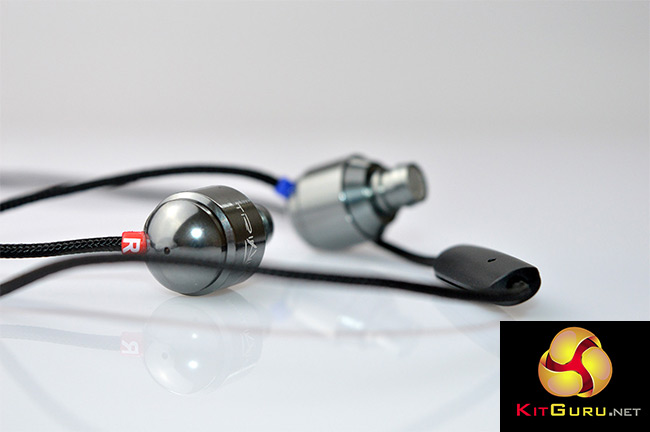
Optional tuners are something we are starting to see more of with in-ear earphones and it is a major feature of the Deltas. The Hyperions are not quite so lucky, but it will be interesting to see how effective they are changing the sound nonetheless.
Trinity Delta Specifications
- Drivers: Balanced Armature + 8mm neodymium dynamic.
- Swappable Tuning filters: Silver, purple, gold.
- Impedance: 16Ohm.
- Sensitivity: 110 +/- 3DB.
- Frequency response: 19 – 21000 hz.
- Jack: 24ct Gold plated 3.5mm Jack.
- Cable: 1.2M Cable length.
Trinity Hyperion Specifications
- Drivers: 8mm Neodymium.
- Impedance: 16Ohm.
- Sensitivity: 108 +/- 3DB.
- Frequency response: 19 – 21000Hz.
- Jack: 24ct Gold plated 3.5mm.
- Cable: 1.2M length cable.
- Remote: Universal remote/Mic for use with iOS/Android/Windows smart phones.
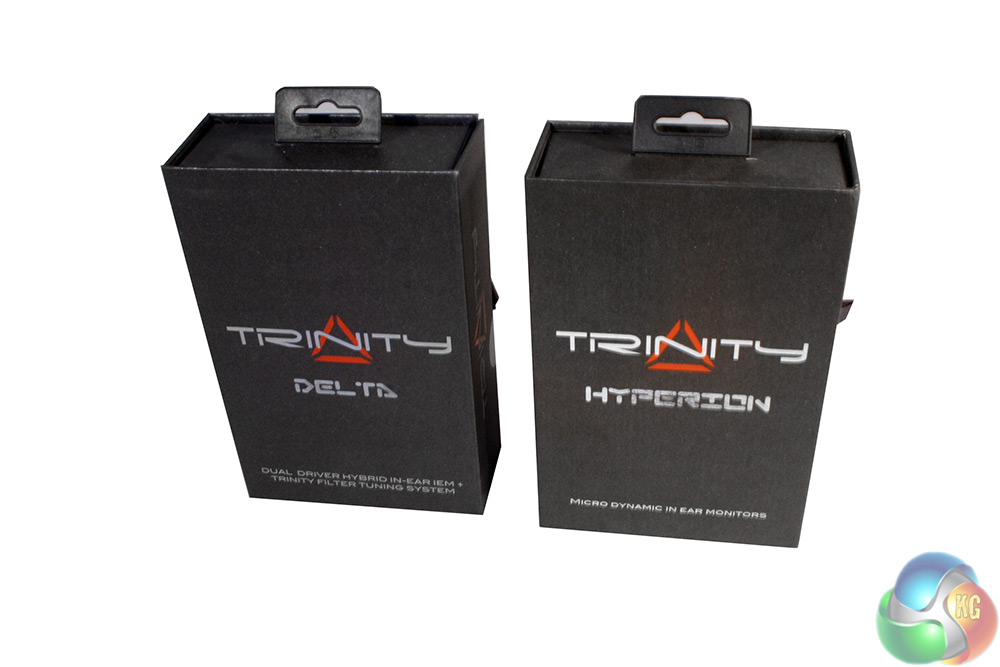
The two boxes for the different sets of headphones are almost identical, featuring slate grey, high quality cardboard and no product imagery whatsoever: just the company logo and the name of the headphones; front and back.
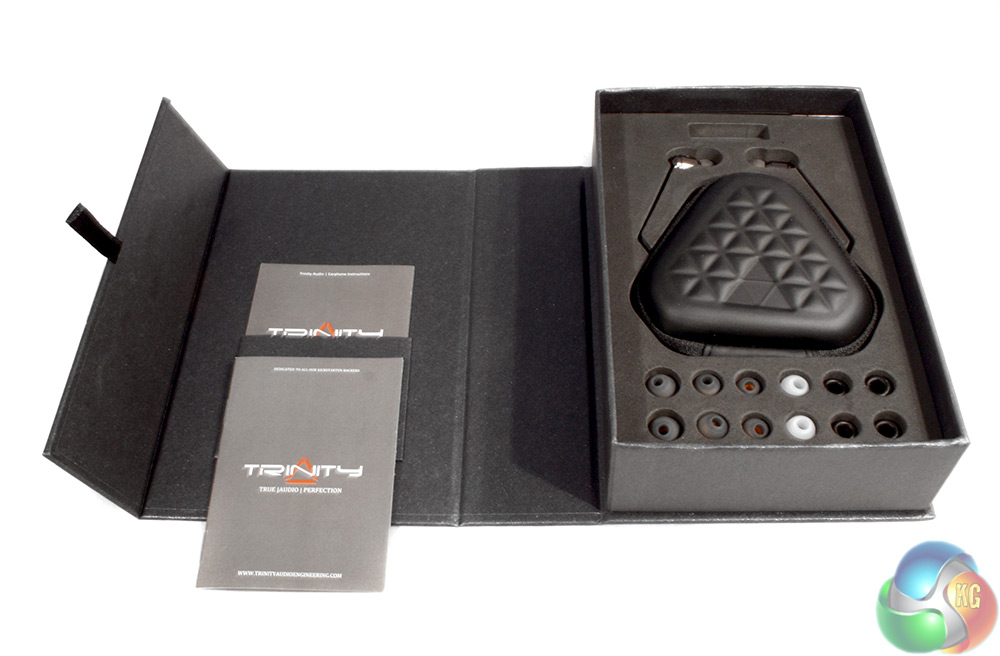
Both also fold open after you pull away the magnetic lid, revealing a little warranty booklet and a number of extras.
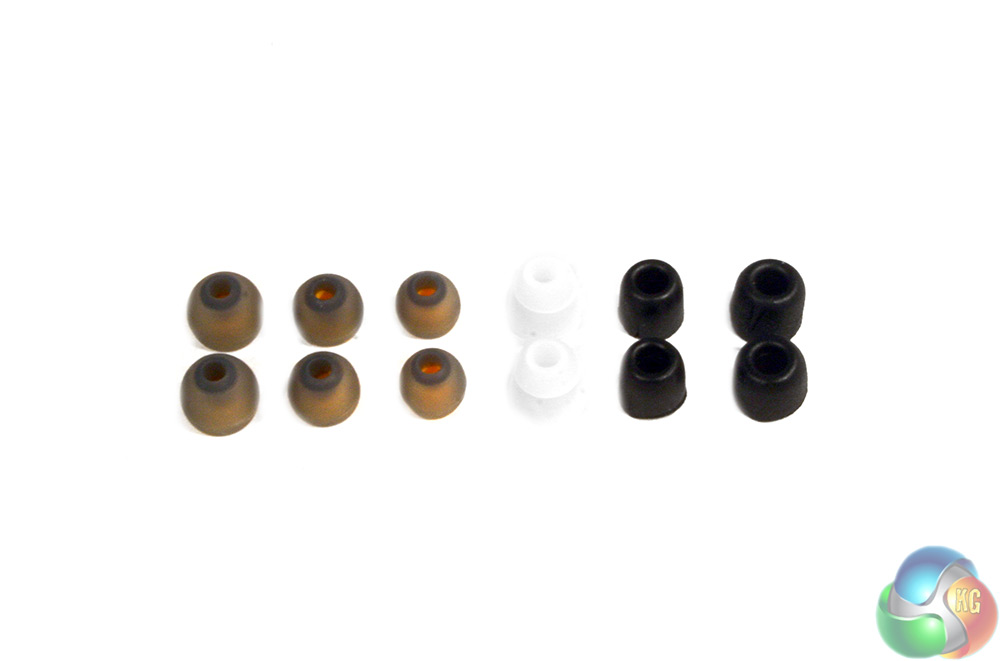
Both come with a neat, little carry case and six extra sets of various earphone tips, some silicon; some memory foam, as well as a clip for attaching to your clothes (to mitigate microphonics) and a 90 degree, 3.5mm converter jack.
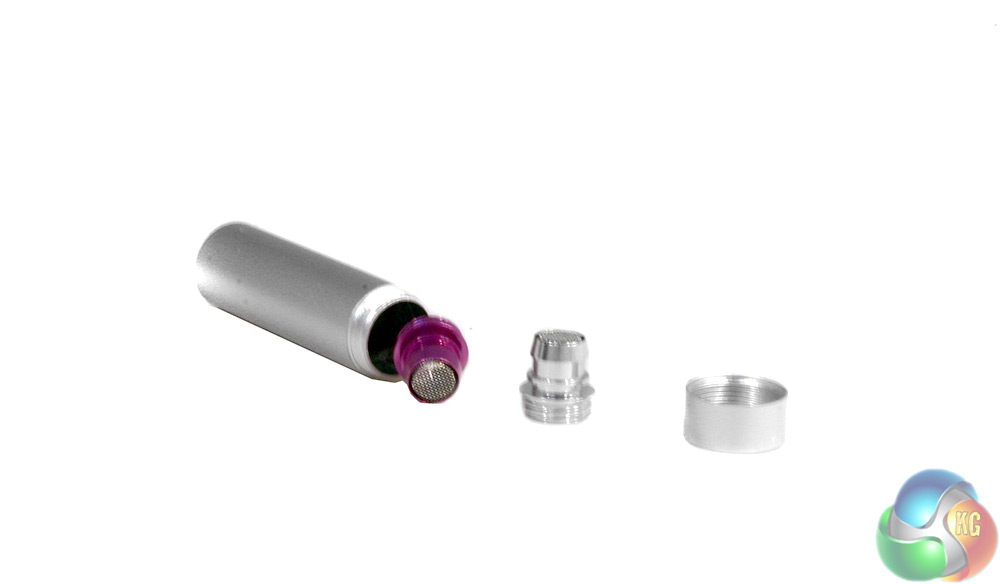
The Delta headphones however, also come with a little silver cylinder containing additional tuning filters. These are designed to make adjustments to the sound to make it bassier, more natural or to add more treble. They come in the little silver tube to make them more portable, should you wish to carry a pair around with you for swapping out at some point.
The headphones themselves are very similar from the exterior. Both feature stock earphones (though the Deltas are larger) with silicon tips and long, carefully wrapped, black cables ending in a silver and gold 3.5mm jack. The only obvious difference is the material the cables are wrapped in. While the Hyperion's have a traditional rubber coating, the Deltas has something quite different.
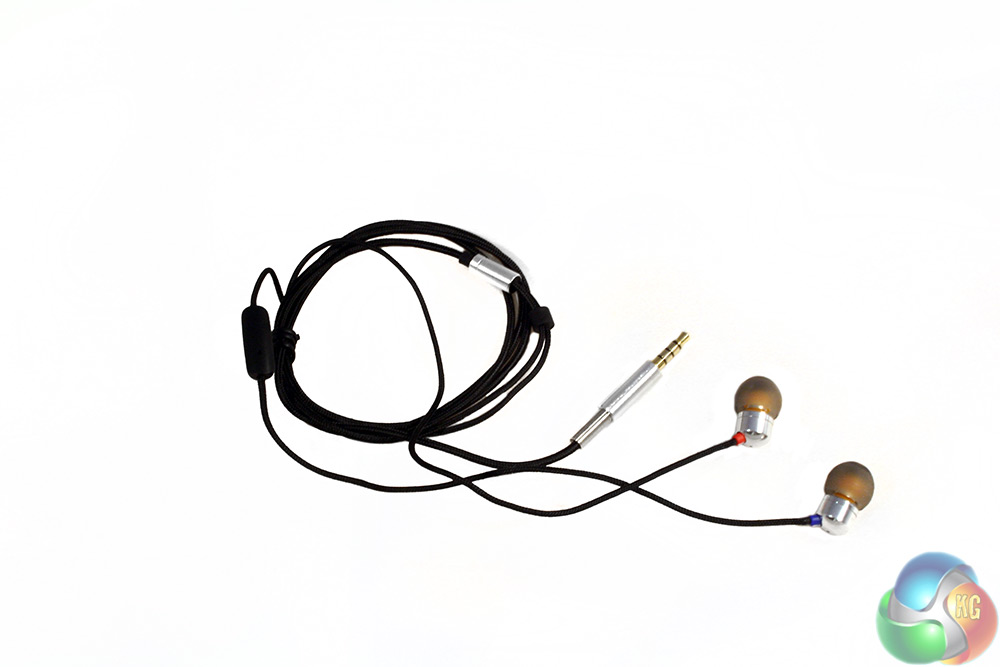
The Delta's have a multi-weave cable which feels very tough and durable, as well as having a slightly more enthusiast look compared to traditional rubber or plastic cabling. Better yet, it appears to have almost no cable memory, so you need not worry much about getting this cable twisted up.
It too comes with full aluminium housings for the earphones and 3.5mm jack and there is a spring that extends out from the audio jack to give it additional flexibility and prevent shearing.
The jack is also 24 carat gold plated.
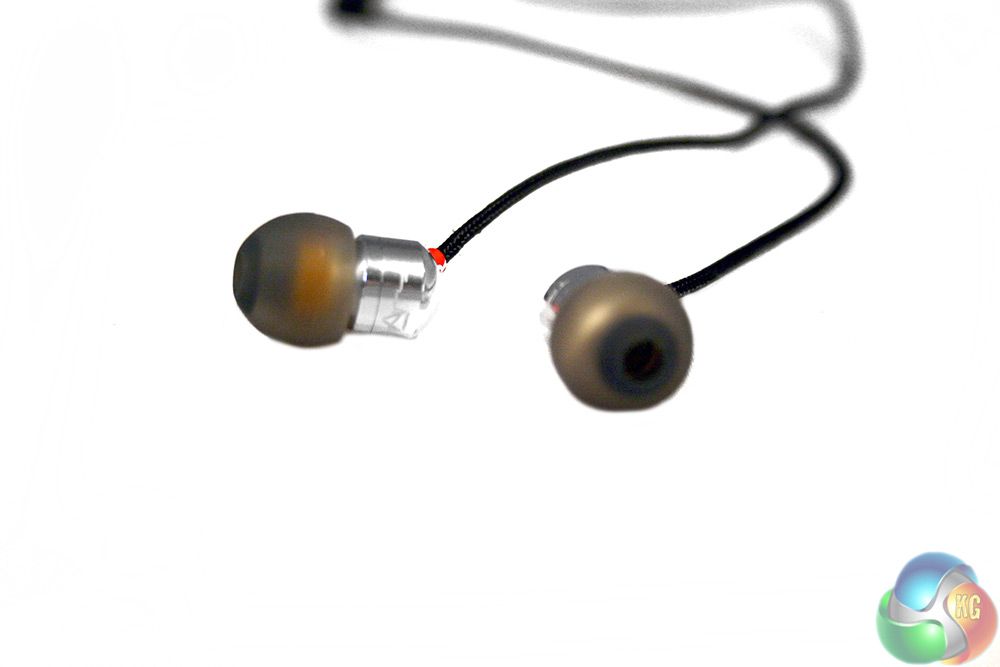
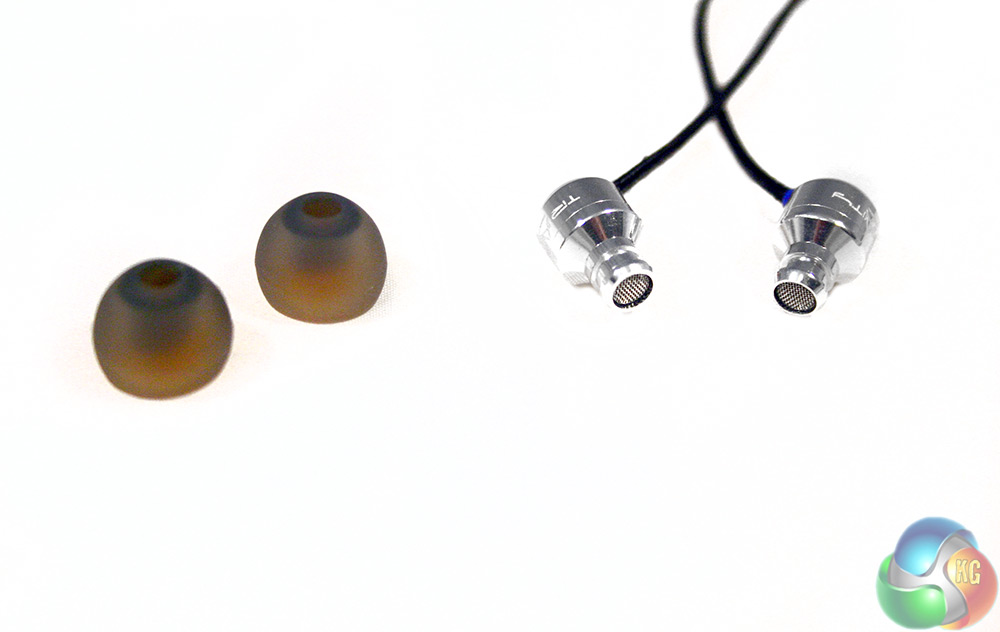
The Delta headphones have an aluminium housing for the earphones, with small red/blue tags with R/L on them to let you know which earphone is designed for which ear. The stock silicon tips are easily removed and show you the tuners underneath. These ones however, are not removable.
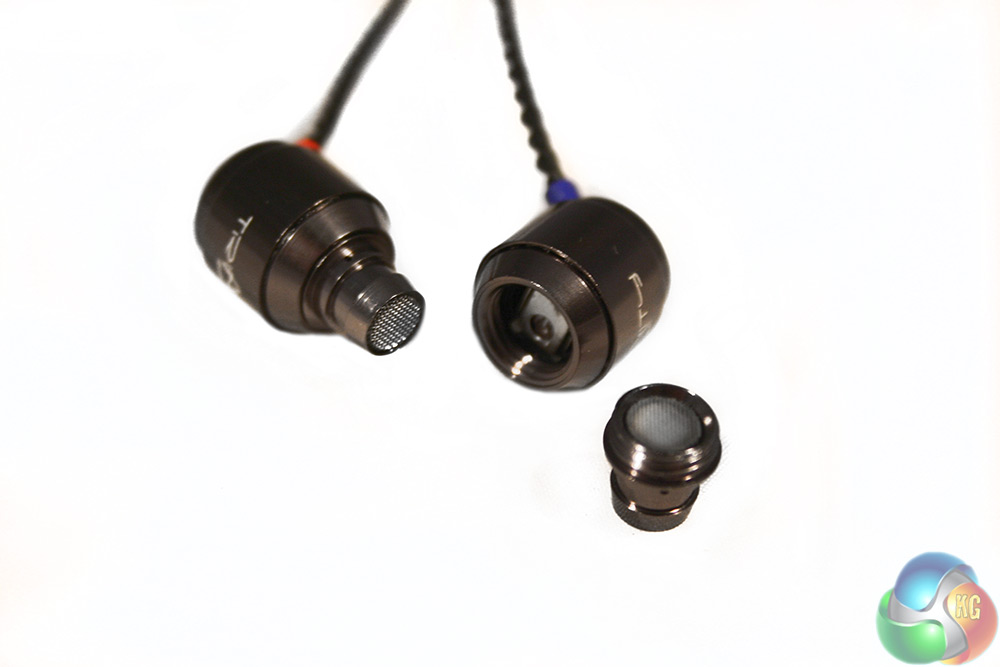
That is very different with the Delta earphones. A quick screw motion is all that is required to take them off and the alternatives can be swapped in just as easily. The whole process takes seconds, so it is not beyond the realm of possibility to switch them out regularly. It is not something you would want to be doing all the time, but changing tuner based on your mood is perfectly viable.
The three tuners offer a more bass heavy sound with the silver tuners, a ‘natural' sound with the gunmetal greys and a more treble orientated soundscape with the purple tuners. The additional golds mute much of the bass, but give a very vibrant sound to other aspects of the frequency spectrum.
To test the Trinity Hyperion and Delta earphones, we put them through their paces listening to a variety of tracks from different genres, all at CD quality or above, using a Sony Xperia Z2 smartphone. While listening we performed various tasks like running, working and simply relaxing. We factored in the earphones overall comfort while in use, but most particularly we considered their sound quality.
We also tried out all of the Delta's tuning filters to see how they affected the sound and searched for our personal preference with them.
Hyperion
At just £30, these are a very affordable set of earphones for a smartphone, but is the sound quality up to par?
The short answer is yes, they sound fantastic. Clarity is top notch, with all parts of the spectrum coming through loud and clear, regardless of volume. Cranking your phone or similar device up to its maximum does little to stress the Trinity Hyperions, so whether you prefer to listen to quieter versions or really test your eardrums, you can feel confident that you won't lose any of the crispness at the top end of the volume scale.
The bass on these earphones is excellent, with plenty of punch and that deep rumble at the low end that is so rarely seen in some of the more gamer-centric headphones we often review.
Despite the bass' strengths though, it is nice that the Hyperion's sound is not dominated by it. Classical music and more atmospheric chillout tracks sound fantastic too. Vocals don't get lost in the mix and you can pin point lots of individual instruments as part of really busy tracks.
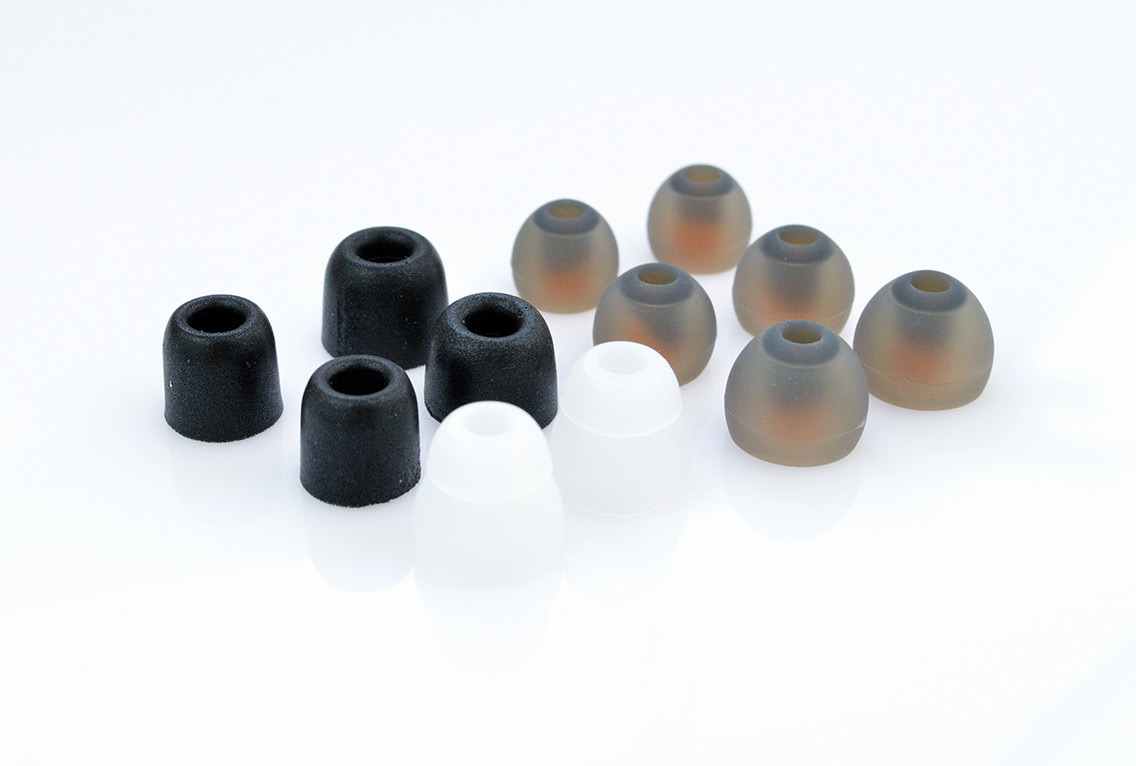
The number of tips offered with these earphones is a nice touch
If there was one criticism of the Hyperion earphones is that the mid-range can sometimes feel a little weak, with the higher frequencies forward in the presentation. It is not a mood killer by any means and for some tracks is actually quite welcome, but it is worth noting that these are slightly treble-heavy earphones.
Without the ability to change tuning filters as with some of Trinity's other headphones, you can only adjust this on the software level, but a little tweaking with the EQ can eliminate most of the slight over abundance of higher frequency strength.
There is the usual issue with microphonics that in-earphones are commonly subject to as well, but Trinity has included a handy clothing clip which in the right spot can eliminate this entirely. If not, just loop the cable over your ears and it disappears altogether.
Comfort wise the Hyperions felt invisible. They are so small that you do not feel them once they are in place and as long as you pick the right size tip for your ears there was not much of an issue with them falling out during strenuous activity either.
Sound isolation is pretty strong. If you are listening through these at high volumes, be very careful jogging on a road, you could quite easily miss hearing a car coming up behind you. I cannot tell you how many times loved ones had to tap me for attention while reviewing these.
Delta
The Delta earphones are immediately more substantial than the Hyperion earphones, taking up that bit more room in your palm and in your ear. Despite this more obvious footprint though, they are much more subtle than their high frequency focused brothers – even when fitted with the treble tuners, which you would imagine would produce a similar sound.
However since these earphones come pre-fitted with the bassier silver tuners, that is what your first experience with these headphones is likely to be. The change was much more subtle than that we have seen with other bass-orientated in-ear tuners, even if it did make the bottom end feel that bit more capable.
Heavier tracks obviously saw the most benefit from such a tuner and if you like your tracks thick and rumbly, the bass tuner does a fantastic job of shaking your eardrums to the core. They do however start to bleed over into the lower-mid range, so chances are most users will prefer the more neutral sounding bullet grey tuners which are what Trinity describes as “natural” sounding.
With those tuners in place, you get a really crisp sound. Mids are clear and strong and the highs work well in tandem without that overbearing feeling that the Hyperions occasionally suffered with. If you like the idea of such a sound though, or just have songs that you think would benefit from such a high, high-end, then the purple treble boosting tuners are an option.

Changing tips is easy and has a dramatic impact on the type of sound the earphones produce
It is worth considering that they do cut back on the amount of bass in most tracks. There is still some punch, but do not expect these to offer much in the way of a low-end rumble. That is reserved almost exclusively for the bass tuners. The same can be felt with the gold tuners that come in their own separate plastic zip bag, but they do offer a very vivid, clear sound – something for the detail sound lovers out there.
My personal preference during testing was the natural tuners, though yours may be entirely different and that is why it is so nice that Trinity gives that option. Regardless of tuner choice though, audio quality on these earphones is excellent. A marked improvement over both stock smartphone headphones and the much cheaper Hyperions.
Like the Hyperions however, the Trinity Deltas are perfectly comfortable. They are larger and therefore more obvious and are a little easier to knock loose during high-intensity activities. However one really interesting note to take about the multi-weave cable, is that it almost totally eliminates all microphonics.
While many in-ear and over-ear headphones can struggle with vibrations from the cable materialising as a rubbing noise through the cans themselves, that barely happens at all with the Deltas, even if you rub the cable on clothing. It is still there in small doses, but it is far less noticeable. The Delta's cable is fantastic.
Both
Both sets of earphones come with a large number of alternative tips you can play around with. Although they do offer different feels for comfort and stability, there is some measure of sound difference between the silicon and memory foam tips too, so consider playing with the different types before settling to find the right sound for you.
Although there was some difference in the make up of the cables, both were extremely sturdy. The jacks too were excellent, able to hold on to the hardly-light smartphone we used for testing if it slipped off a desk or out of a pocket. Although we are sure Trinity would not recommend it, you can even lift that same phone back up to waist level by pulling on the cable.
It is tough.
It is easy to see why Trinity was successful in its Kickstarter campaign: it really knows how to make earphones.
Hyperion
The Hyperions are a fantastic budget alternative to earphones bundled with smartphones and MP3 players, offering a strong sound at all frequency levels and a surprising amount of bass. Clarity is still present at the top end of the volume scale too, and nothing ever gets too muddy – though the mid-range does occasionally get stepped on in tracks where the higher frequencies are well represented.
Not only is the sound quality good, but the cable is strong and durable – I particularly liked the spring mounted on the earphone jack – and the earbuds are comfortable too. The fact that Trinity goes so far as to give as many as seven different pairs of tips to guarantee you have a comfortable fit is a testament to the quality of the product.
Which is why it is so surprising that these earphones are so affordable. At just £35, Trinity's Hyperion earphones offer a well-rounded, rugged, great sounding and great looking product at a price that anyone who wants to upgrade stock headphones can afford.
You can buy the Trinity Hyperion earbuds from the official store here.
Discuss on our Facebook page, over HERE.
Pros
- Great sound quality, surprising amount of bass.
- Comfortable – after a few minutes you do not even know you are wearing them.
- Strong cable which rarely gets tangled.
- Carry case, cable clip and 90 degree audio jack round out a solid bundle.
- Very affordable.
Cons
- Treble can be a bit dominant at times, overshadowing mids in some songs.
- When you've tried earphones with swappable tuning filters, you do miss it in a set like this.
KitGuru Says: Trinity's Hyperion earphones are fantastic value and while not perfect, offer a solid upgrade for stock-quality earphones in a very well provisioned package.

Delta
The Delta earphones are equally impressive, but in different ways. With a price tag that is almost three times that of the Hyperion earphones, the Deltas would need to be particularly strong to be a comparable recommendation.
While not quite as financially viable a purchase, the Deltas are a solid buy. The sound quality of these earphones is simply fantastic, offering a strong and broad sound that never muddies, has great bass, good highs and strong mids. The sound is punchy and powerful without muddying the mix and if there are any parts of the spectrum you would like to see given more oomf, the bundled tuning filters let you customise that via the hardware – and there are always EQ tweaks to augment that if needed.
The over all bundle offered with the Deltas is fantastic too. Along with the neat and stylish carry case, there are the additional tuners and their own carry puck, a huge number of additional earbud tips, a clothing clip and a 90 degree audio jack. There are also the gold tuners too which feel a little neglected coming in their own separate bag, but they offer even greater breadth in sound options so are much appreciated.
Although not quite as good value as its cheaper cousins, the Trinity Delta earphones are fantastic quality in build and sound and offer a still quite affordable option for those looking to explore higher quality earphones. There feels like there is some headroom on this set too, so if you buy yourself a higher quality media player with a better amp in the future, we would not be surprised if your smartphone dedicated earphones sound even better.
Availability of the Delta earphones is a little difficult right now because Trinity are currently accepting pre-orders for their sequel, the Delta 2s. Although we will need to review those to give our accurate, honest opinion on their abilities, based on what the Delta v1s showed us, we have every confidence that they will be a solid buy.
Discuss on our Facebook page, over HERE.
Pros
- Fantastic sound quality throughout the frequency range.
- Great bundle: carry case, ear bud tips.
- Best earphone cable we have ever tested – almost no microponics.
- Durable, great build quality.
- Huge customisation options with swappable tuning filters.
Cons
- Larger buds mean they're not quite as comfortable as smaller Hyperions.
- Impossible to find right now.
KitGuru Says: While the Hyperions may offer an awesome choice for audio lovers on a budget, the Deltas are the next step up. Deep customisation and great sound quality are hard to beat, though perhaps their sequel will do just that.