KitGuru KitGuru.net – Tech News | Hardware News | Hardware Reviews | IOS | Mobile | Gaming | Graphics Cards


Right back at the start of this year, Leo reviewed Thermaltake's WaterRAM memory kit, essentially delivering RAM pre-configured for water cooling enthusiasts with a full block that covers all four DDR4 dimms. At the time, the kit we had was 32GB running at 3200MHz but now, a faster version is hitting the market.
Thermaltake has now launched a 32GB WaterRAM kit with speeds of 3600MHz, In addition, the original 3200MHz kit is now available in both 32GB and 16GB versions, so you can save some money if you only need 16GB for your system.
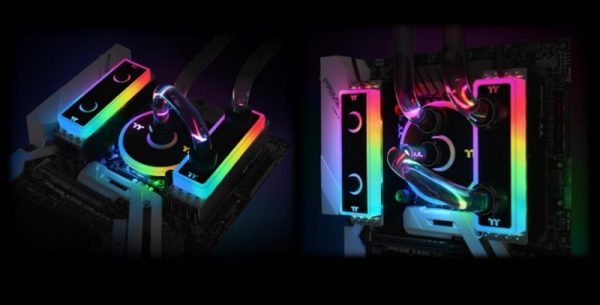
While pre-installed water blocks are the key selling point here, RGB is another big focus, with 12 Addressable RGB LEDs found on the cooler. With Addressable RGB, each LED can be individually controlled, so you can customise the look of your system even further. Thermaltake's RGB gear is also cross-compatible with most major motherboard makers, including ASUS, MSI, Gigabyte and ASRock.
The 32GB 3600MHz kit is certainly not cheap though, coming in at $469.99. The 3200MHz 32GB kit is currently $439.99 and the 16GB kit is $249.99. Alternatively, you can just by the RGB waterblock on its own and add in your own memory for $119.99 via the Thermaltake store.
KitGuru Says: Not many people choose to watercool their RAM, so this is certainly a niche market. Still, something like this would look very good in a custom loop, so it all comes down to how much you want to spend and how much you want to add to your cooling loop. What do you guys think of TT's WaterRAM?