KitGuru KitGuru.net – Tech News | Hardware News | Hardware Reviews | IOS | Mobile | Gaming | Graphics Cards


More details about the upcoming AMD Ryzen 5000 mobile processors have surfaced through a leaked presentation. Besides describing the improvements coming with the new architecture, this presentation also includes comparisons between the Ryzen 5000H APUs and the currently available mobile APUs and CPUs from AMD and Intel.
Besides the leaked slides shared by VideoCardz, the website also confirmed that Cezanne APUs will feature a 180mm² die with 10.78B transistors. Compared to the Renoir APUs, that's an increase of 15% and 10%, respectively.
Starting with the performance uplifts over the previous generation flagship SKUs, the Ryzen 9 5980HX comes with a +23% improvement over the Ryzen 9 4900H on single-thread performance. Comparing the Ryzen 9 5900HX to Intel Core i9-10980HK, it delivers up to 19% more single-thread performance than Intel's flagship mobile processor.
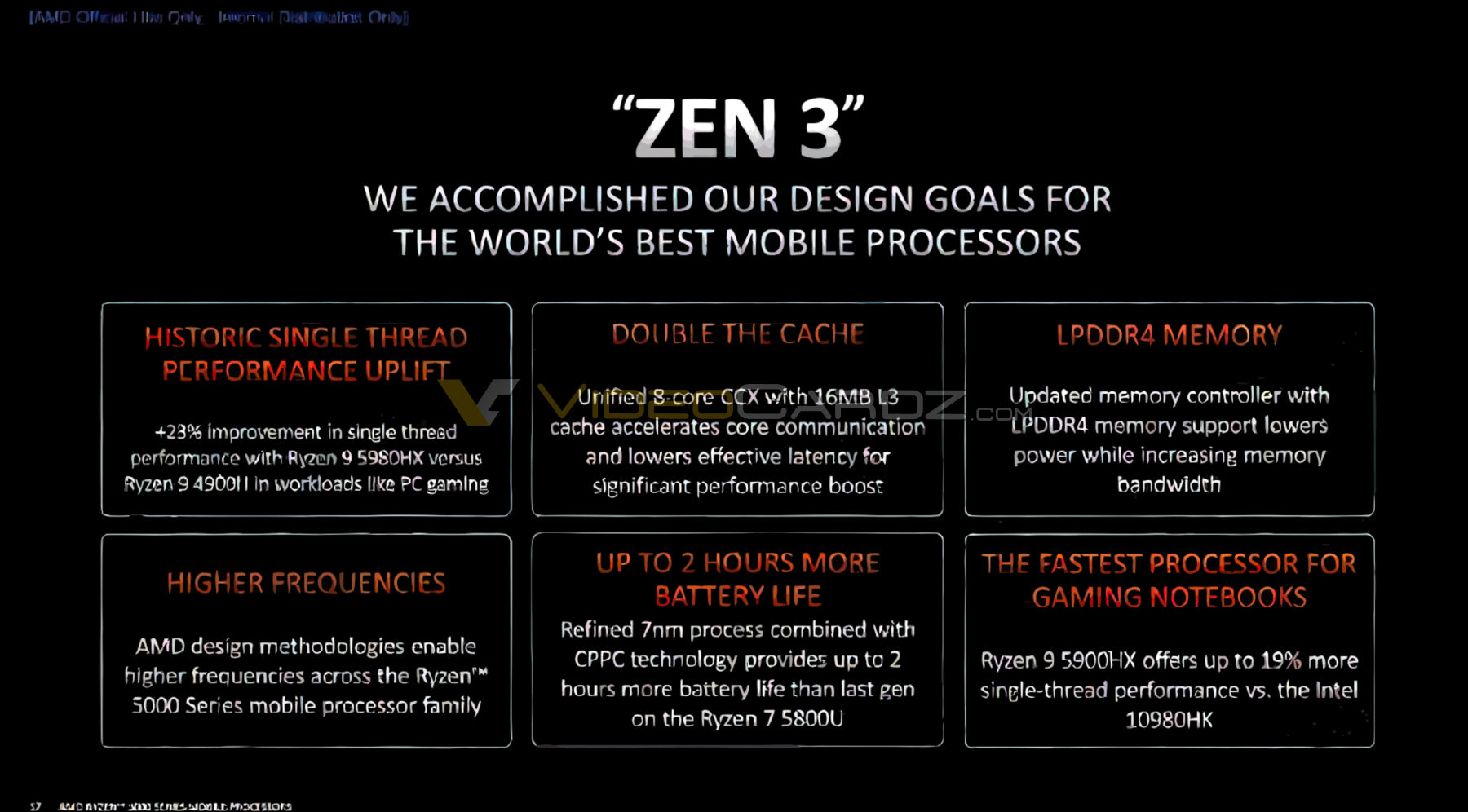
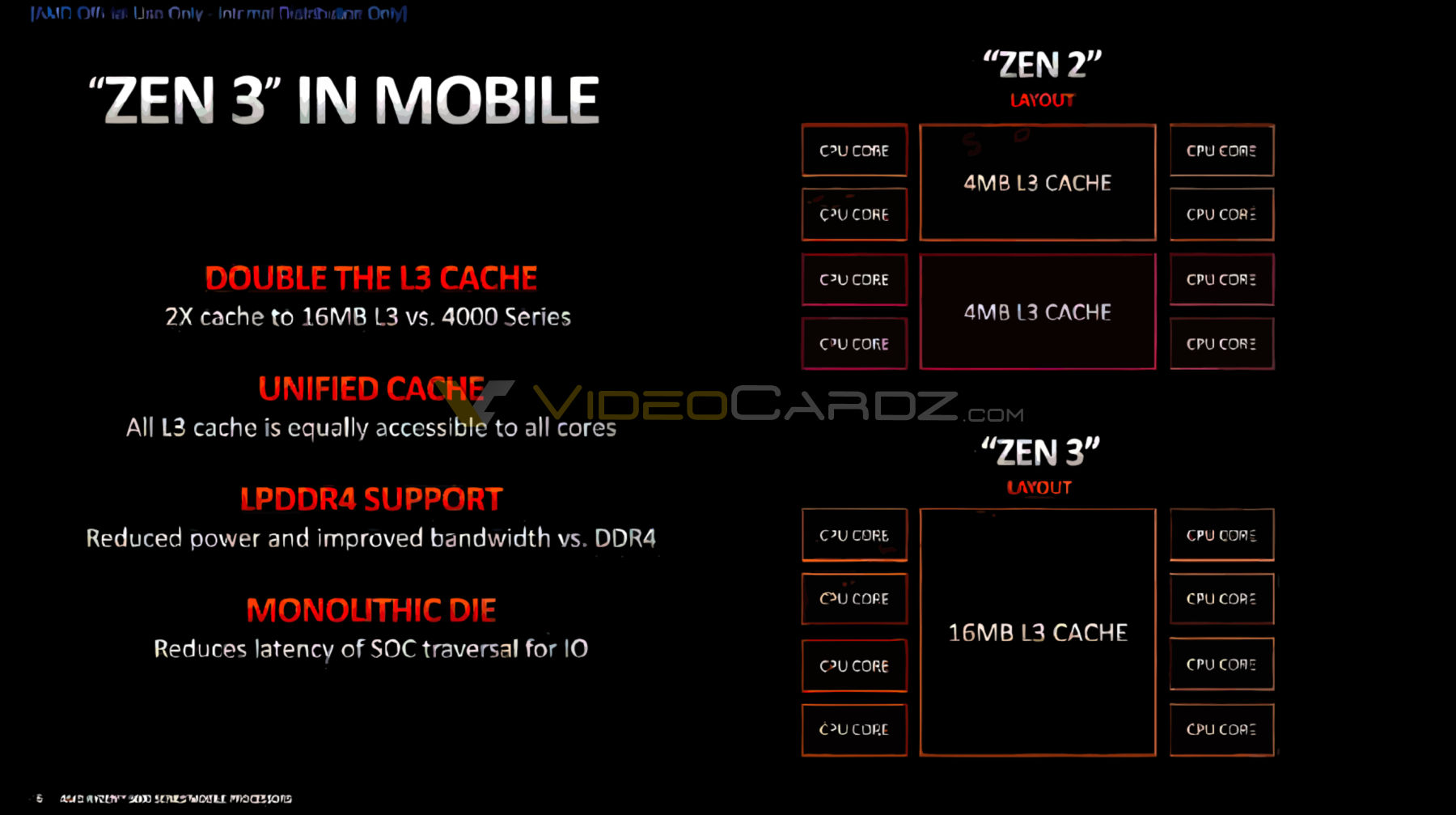
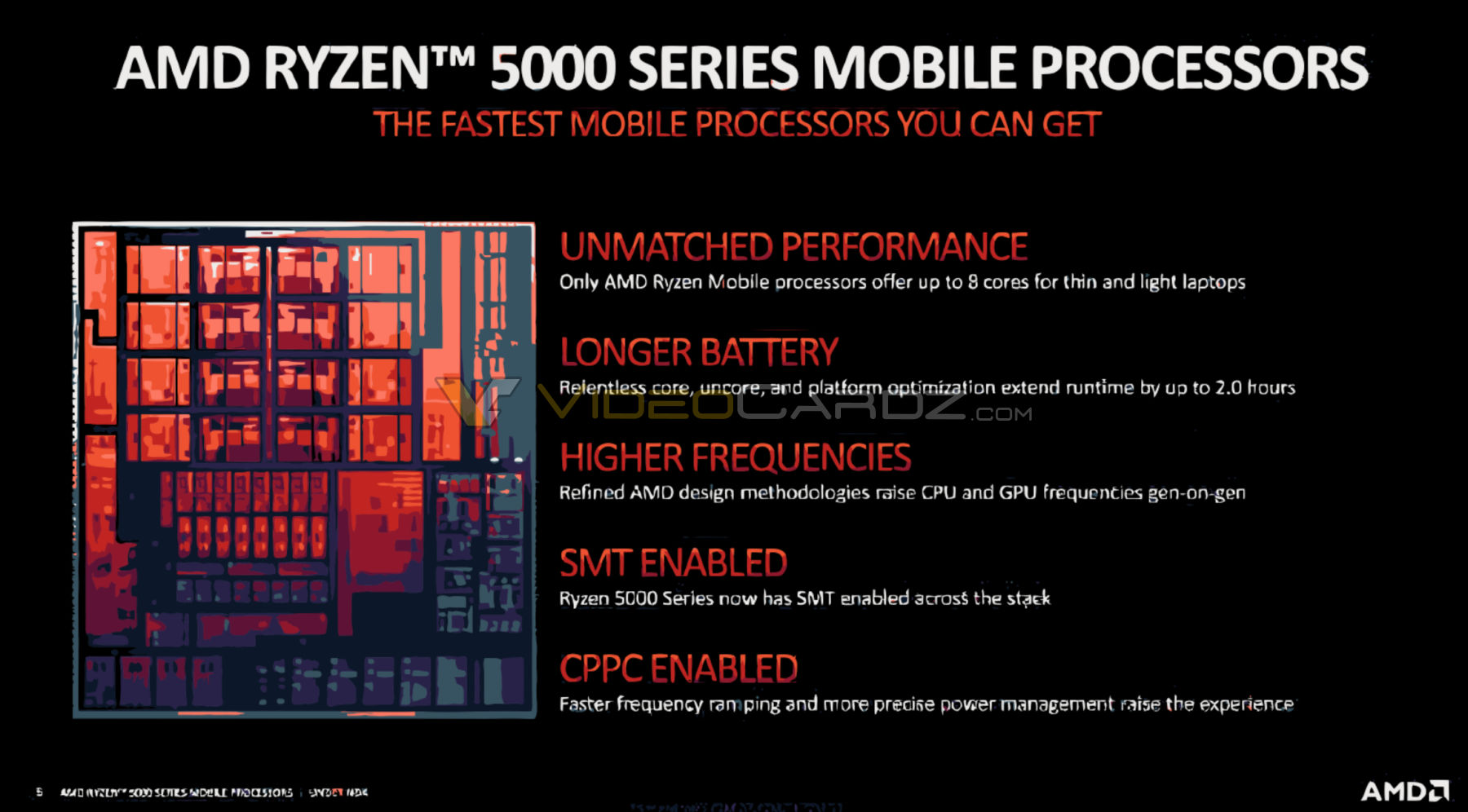
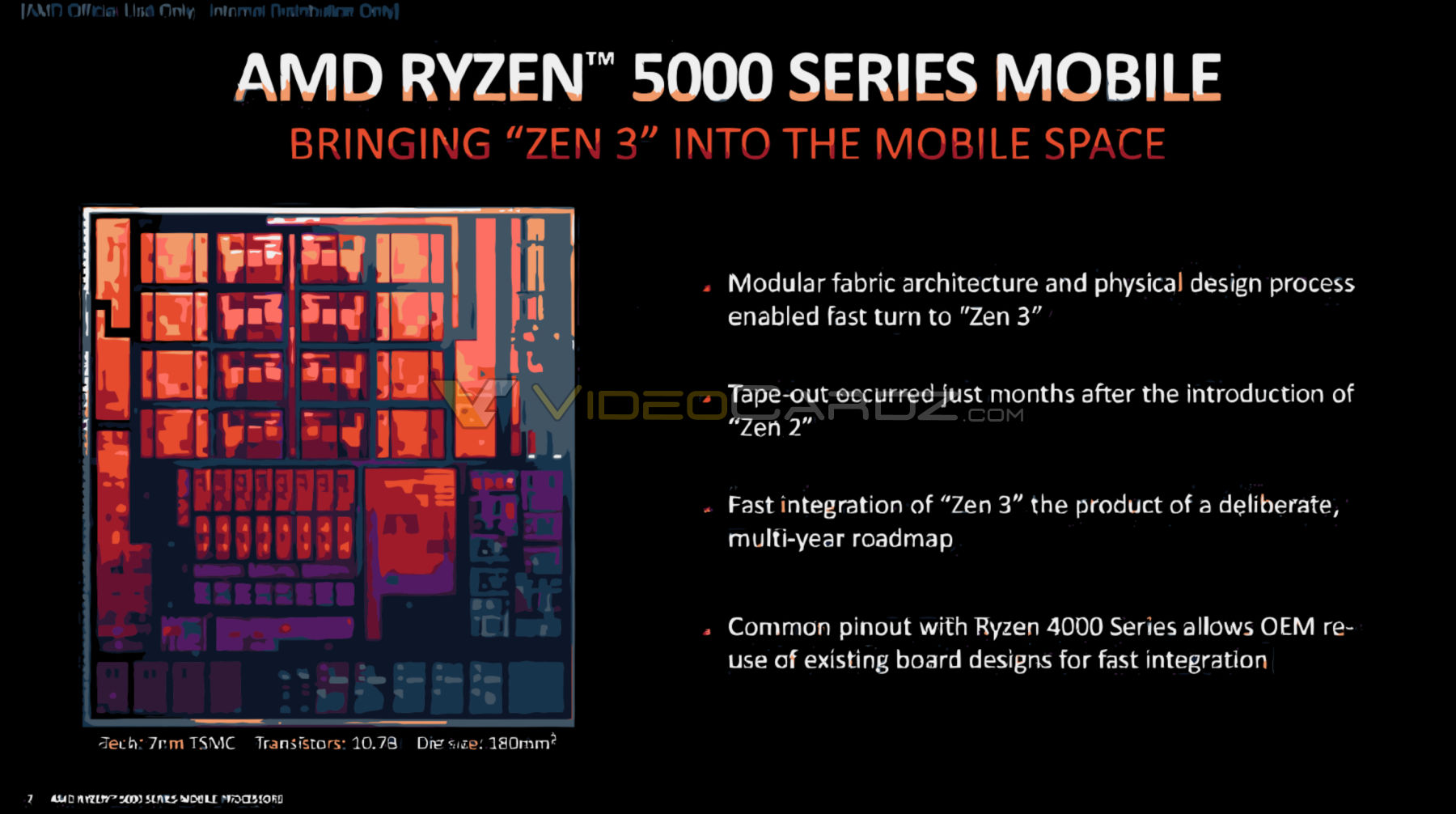
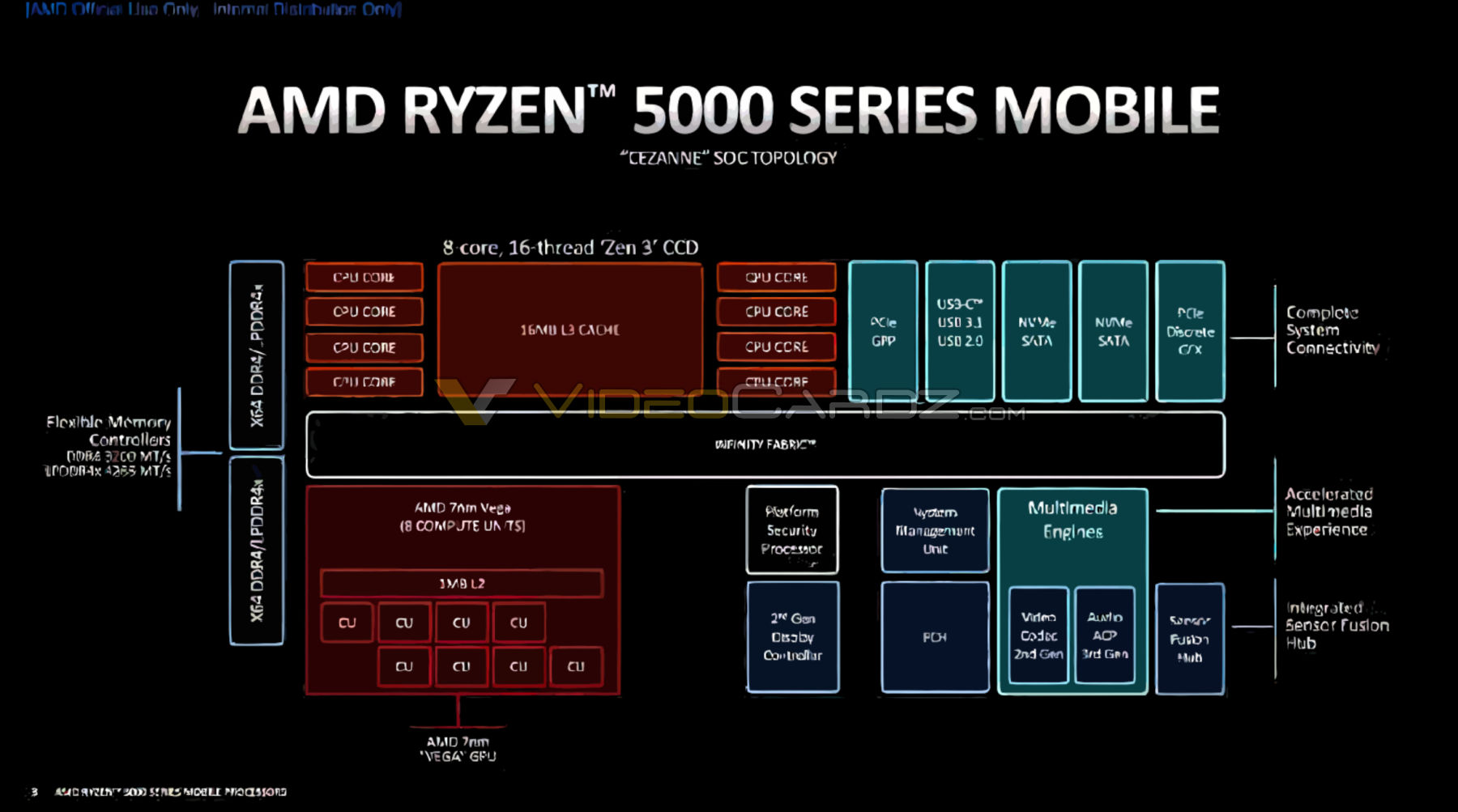
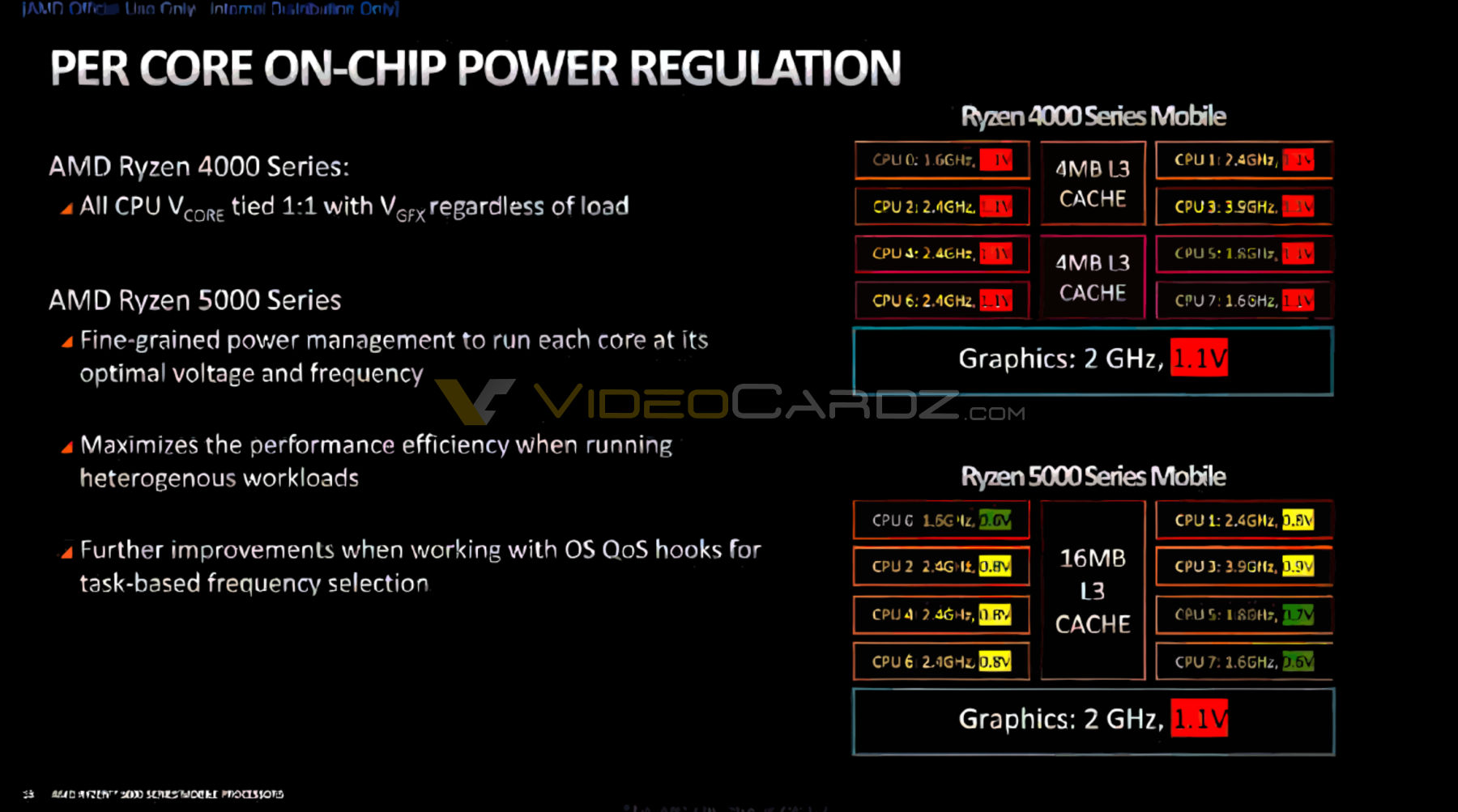
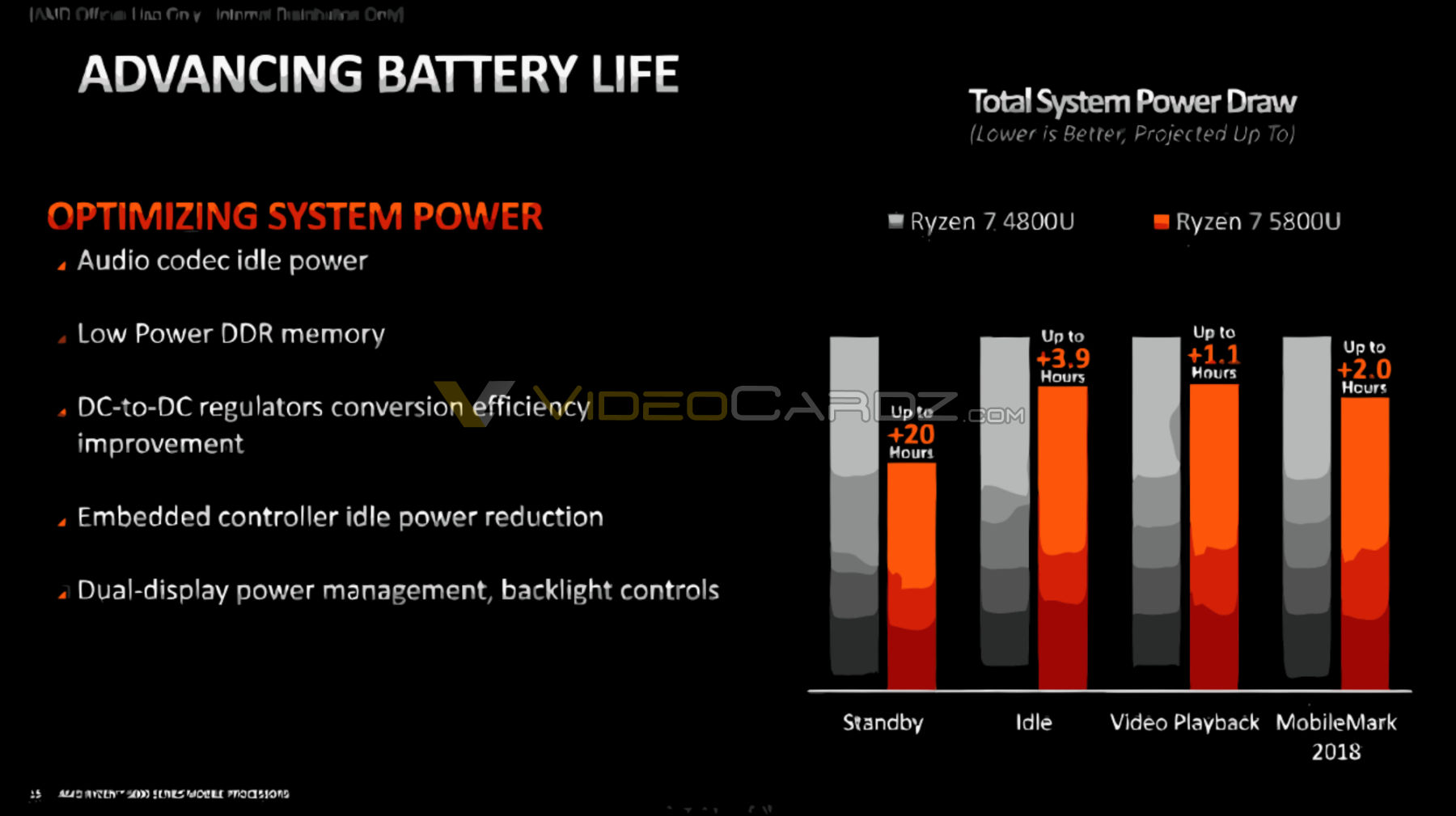
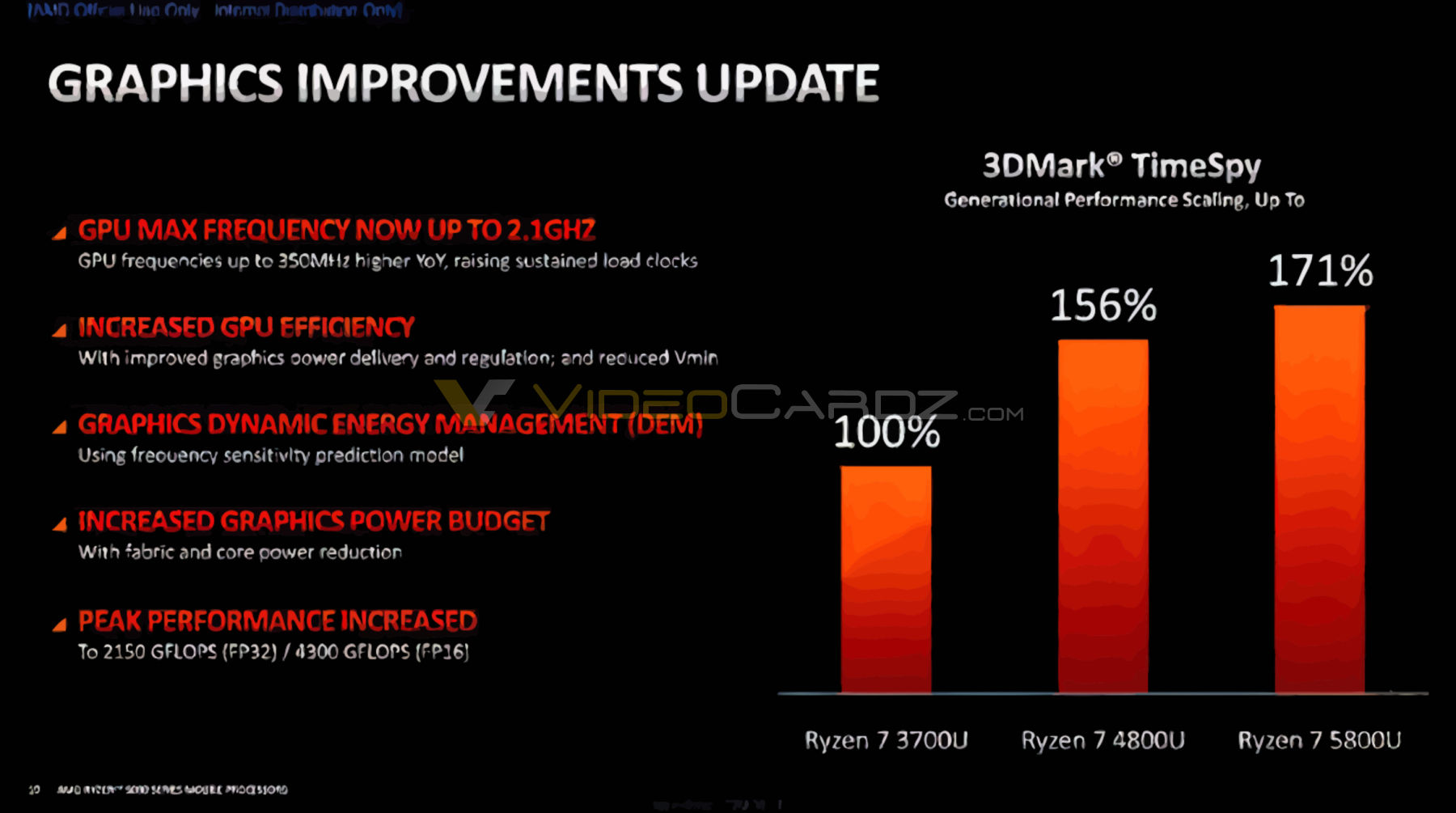
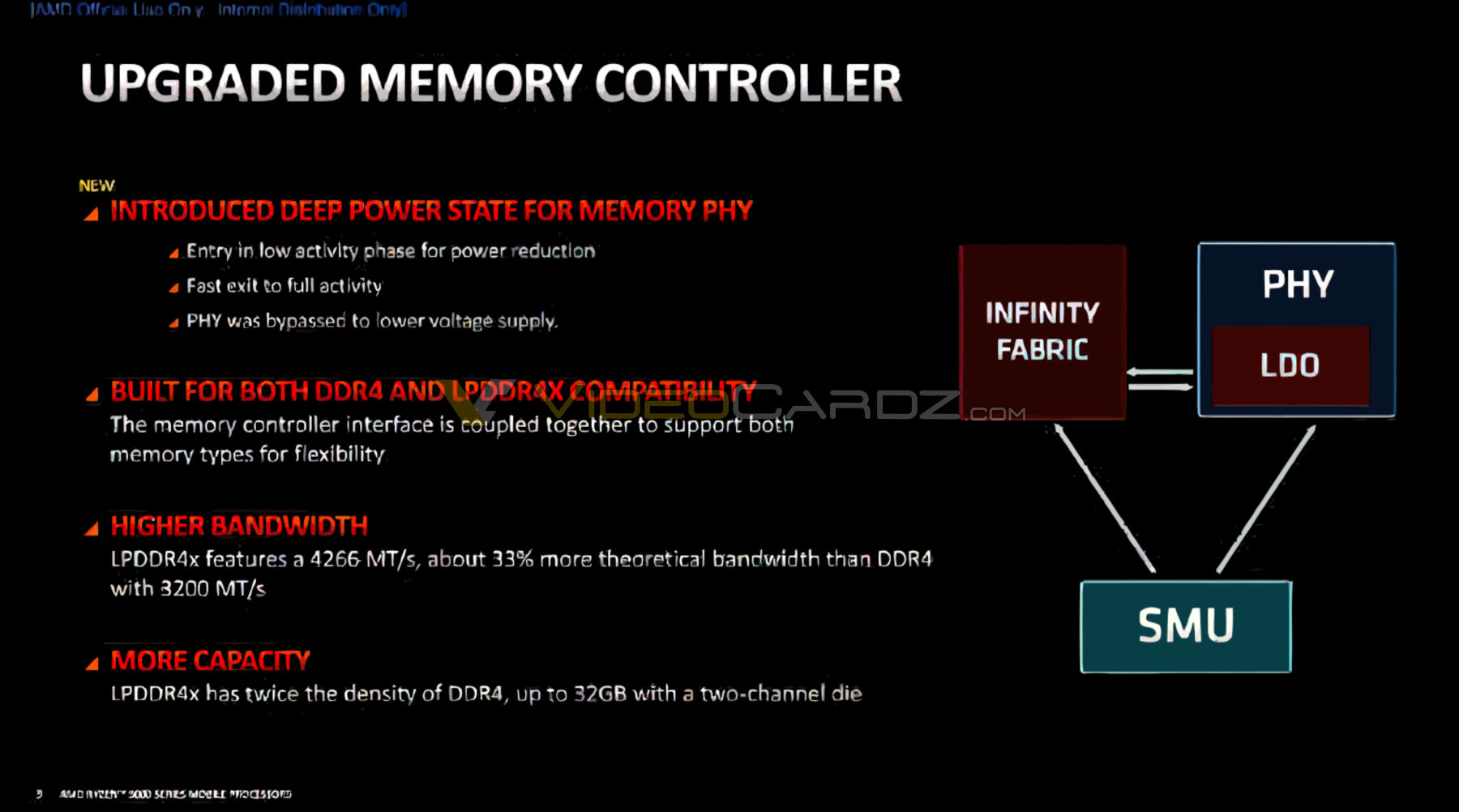
Image credit: VideoCardz
These increases result from multiple improvements over the previous generation, including doubling the L3 cache to 16MB and unifying it, employing Zen3 cores, introducing support for LPDDR4 memory, and upgrading die to a monolithic design to reduce latency. All these resulted in an increase in the operating frequencies and IPC.
The CPU part wasn't the only one to be improved. Although the Ryzen 5000 APUs will still use a Vega iGPU, the operating clocks have increased by 350MHz, up to 2.1GHz, resulting in a 10% improvement over the Ryzen 4000 mobile APUs.
Lastly, there are some changes in the power delivery system. Besides featuring per core on-chip power regulation to optimise efficiency, AMD also introduced a deep power state for memory, which further reduces the power consumed. According to AMD, this should result in up to 2 hours of extra battery life.
Laptops equipped with Ryzen 5000 APUs are expected to release in February 2021.
KitGuru says: How will AMD Ryzen 5000 mobile processors fare against the competition? Are you considering buying a new laptop this year? Will you choose one powered by an Intel CPU or an AMD CPU?