KitGuru KitGuru.net – Tech News | Hardware News | Hardware Reviews | IOS | Mobile | Gaming | Graphics Cards


Ghostwire: Tokyo has finally landed on Xbox after a year of PS5 console exclusivity. Unfortunately, the game has not come without its share of issues, with the Xbox version being labelled as ‘quantifiably worse” than the PS5 version.
During the most recent Digital Foundry podcast, the team brings up Ghostwire: Tokyo and the differences between the console versions. According to their tests, the Xbox version “runs worse than PlayStation 5”, adding that the Series S version is particularly poor. It is also noted that the ray-tracing on the Xbox version is “somewhat lower quality” than the PS5 version.
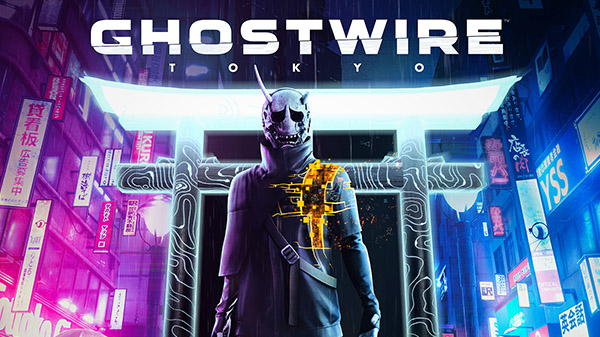
While the game runs at a similar resolution across PS5 and Xbox Series X, frame rates are “typically 5 to 10% worse” when comparing the same scenes. In all, it is a confusing situation, as the Xbox Series X does boast a stronger GPU than the PS5, but it doesn't seem to be being utilised to its full advantage.
Some issues that were present in the game at launch on PS5 have also not yet been fixed in time for the new Spider's Thread content update and Xbox release.
Tango Gameworks has been a very busy studio lately. The company reportedly has two unannounced projects in the works, one of which is said to be an RPG. There have also been rumours that the studio is working on The Evil Within 3, which was hinted at in an easter egg in Hi-Fi Rush, the studio's latest game. Tango Gameworks had been secretly working on Hi-Fi Rush for years before shadow-dropping it on Xbox and PC in February 2023.
Discuss on our Facebook page, HERE.
KitGuru Says: It would seem that Ghostwire: Tokyo is in need of some extra patches. I'm sure after a couple of updates, we'll start to see better parity between the Xbox Series X and PS5 versions but it is a shame that this work wasn't completed in time for launch.