KitGuru KitGuru.net – Tech News | Hardware News | Hardware Reviews | IOS | Mobile | Gaming | Graphics Cards


Microsoft announced that Windows 11 would feature Windows Dynamic Lighting in the past year. This new OS component would allow users to have a single point of control for everything related to their systems' and peripherals' RGB lighting. Now, Asus looks to be amongst the first to support this new feature.
Gaming gear, known for its excessive RGB lighting, often requires specific software or third-party solutions for synchronisation, leading to compatibility issues. The introduction of Windows Dynamic Lighting as a built-in personalisation option is set to change this. This feature allows users to customise and synchronise lighting across multiple devices, provided manufacturers support them.
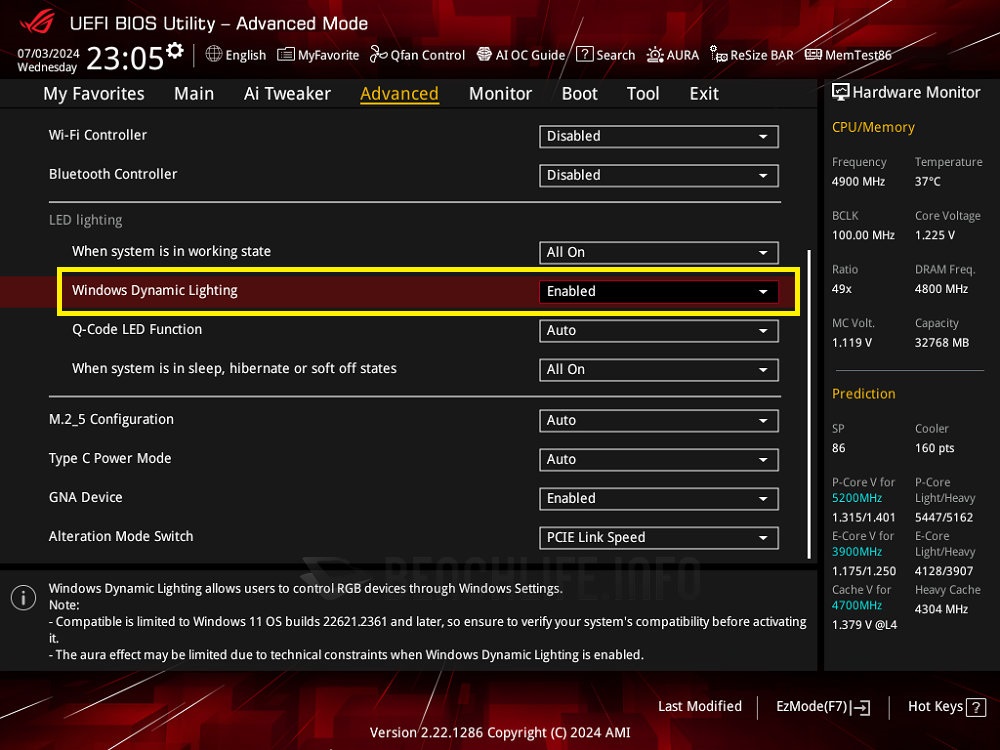
Image credit: Benchlife
Asus has already enabled this feature for headphones and laptops, but it seems it has already started to extend support to include motherboards. A recent Benchlife report (via VideoCardz) revealed that Asus motherboards equipped with AMD 600 and Intel 700 chipsets (picture is of a ROG Strix Z790-E Gaming WIFI) now support Windows Dynamic Lighting. This functionality can be activated or disabled via the BIOS under the LED Lighting tab.
While Windows Dynamic Lighting may seem less sophisticated than third-party utilities, its potential for widespread adoption is still promising. The fast response from manufacturers, like ASRock offering Dynamic Lighting support just three months after Microsoft's initial announcement, suggests that this feature's appeal is expected to grow, potentially prompting Microsoft to enhance its functionality.
Discuss on our Facebook page, HERE.
KitGuru says: Should Microsoft invest in improving Windows Dynamic Lighting, or is it enough to allow for basic RGB lighting synchronisation across all of your devices in a single location?