KitGuru KitGuru.net – Tech News | Hardware News | Hardware Reviews | IOS | Mobile | Gaming | Graphics Cards


Valve is reportedly developing a new feature for the Steam client that lets buyers gauge how well a game will run on their system. Newly discovered code strings in the Steam client suggest that the store will soon provide estimated frame rates for games based on real-world hardware data shared by the community.
The discovery, first highlighted on the ResetEra forums by dex3108, points toward a Steam Store interface where users can select their specific CPU and GPU configuration to generate a performance chart. This comes after Valve's recent launch of the “SteamOS Performance Logging” beta, which has been gathering anonymous frame rate and system data from Steam Deck and SteamOS users.
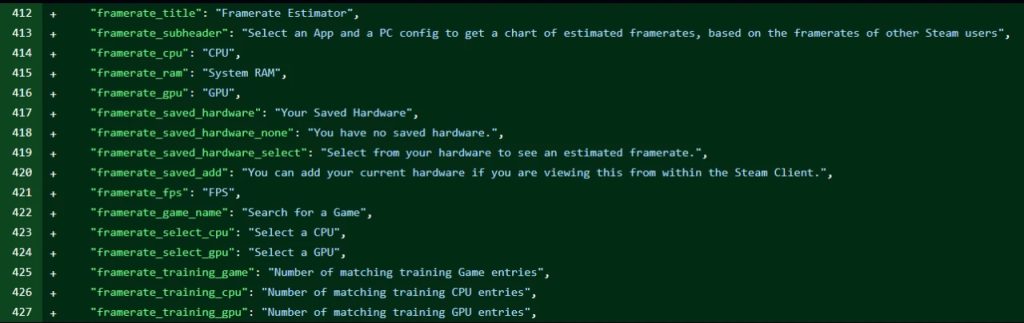
Image credit: dex3108
By aggregating this data, Valve can provide a “normalised” expectation of how a game performs at various resolutions and settings, effectively creating the world's largest live benchmark database. However, because PC performance is influenced by a chaotic mix of background processes, thermal throttling, hardware combinations, resolution, and upscaling technologies, a simple average might not tell the whole story. To solve part of this problem, it would be nice if, in addition to the system config, users could also see the exact graphics settings.
Also, for handheld gamers, this tool could serve as a much needed “Verified 2.0”. While the current green checkmark system tells a user whether a game works, it doesn't indicate whether it runs at a locked 60 FPS or a shaky 30 FPS. Crowdsourced FPS charts would allow Steam Deck owners to see exactly what kind of performance “Verified” actually translates to in practice.
Discuss on our Facebook page, HERE.
KitGuru says: This is perhaps the most consumer-friendly move Valve has made since introducing the refund system on Steam.