KitGuru KitGuru.net – Tech News | Hardware News | Hardware Reviews | IOS | Mobile | Gaming | Graphics Cards


It's been a while since a new GPU hit the market, and we could even argue that AMD's RX 9070 GRE isn't new at all, given it actually launched in April 2025 as a Chinese regional exclusive. As of today, however, AMD has announced global availability and a $549 MSRP, while here in the UK we've been told to expect pricing in the £469-479 region.
To cut right to chase, given we are already very familiar with AMD's existing RDNA 4 lineup, the RX 9070 GRE offers no major surprises. It sits between the RX 9070 and RX 9060 XT, slotting in closer to the former than the latter, given it has 14% fewer cores than the 9070, but some 50% more than the 9060 XT.
In terms of gaming performance, funnily enough it came in 14% slower on average than the RX 9070 at 1440p, while it is roughly 30% ahead of the 9060 XT. I think the most interesting comparison is against Nvidia's RTX 5070, though, and we saw the AMD GPU come in 6% slower. I do encourage our readers to check out as many reviews as possible, as performance versus the GeForce competition can vary dramatically from game to game, so other outlets may well find different overall margins.
As we know, however, Nvidia holds the upper hand for ray tracing and things are no different here. There are plenty of games where the 9070 GRE will offer a good ray traced experience, but in titles with heavier ray tracing, and particularly path tracing, the RTX 5070 is streets ahead. We even saw the 5060 Ti 16GB coming in faster when looking at Alan Wake 2 and Black Myth: Wukong, so if that's your priority, Team Green is the way to go.
We measured power draw consistently around the 220W figure, though this would have been more like 240W if we weren't testing at reference specifications. Either way, it's not particularly high by modern standards, but it is actually the same level of power as the RX 9070 (non-XT and non-GRE), and we know that GPU is significantly faster. That, of course, has a clear knock-on effect that the 9070 GRE isn't the most efficient, and lags behind the 9060 XT 16GB, 5060 Ti 16GB and RTX 5070 as well.
Ultimately, the success of the RX 9070 GRE is all going to come down to pricing, and this is where I am somewhat concerned for the GPU. Even at the lower end of what we've been told to expect here in the UK, a £469 MSRP makes this just £30 cheaper than the RTX 5070, despite all the advantages the GeForce card has to offer – like its raw performance, superior ray tracing, DLSS and MFG support, plus it's more efficient and offers better productivity and AI workload capabilities.
Realistically, I think the 9070 GRE will need to be at least £50 cheaper to put clear daylight between it and the RTX 5070. Ideally, stumping up around £550 for an RX 9070 would be even more beneficial given it packs in 16GB VRAM, rather than the 12GB we find here and on the RTX 5070, for that matter. However, the situation has changed since RDNA 4 and the 50 series launched last year, and memory is now a lot more expensive, as exemplified by RX 9060 XT 16GB models often coming in over 25% more expensive than MSRP.
At the end of the day, the RX 9070 GRE was never going to set the world alight, but it could be worth considering, provided pricing makes sense versus the competition and AMD's own stack. At launch, however, it's certainly looking like it will need a price adjustment, with AMD confirming a £489.99 SEP, and that is just far too close to the real-world selling price of the RTX 5070.
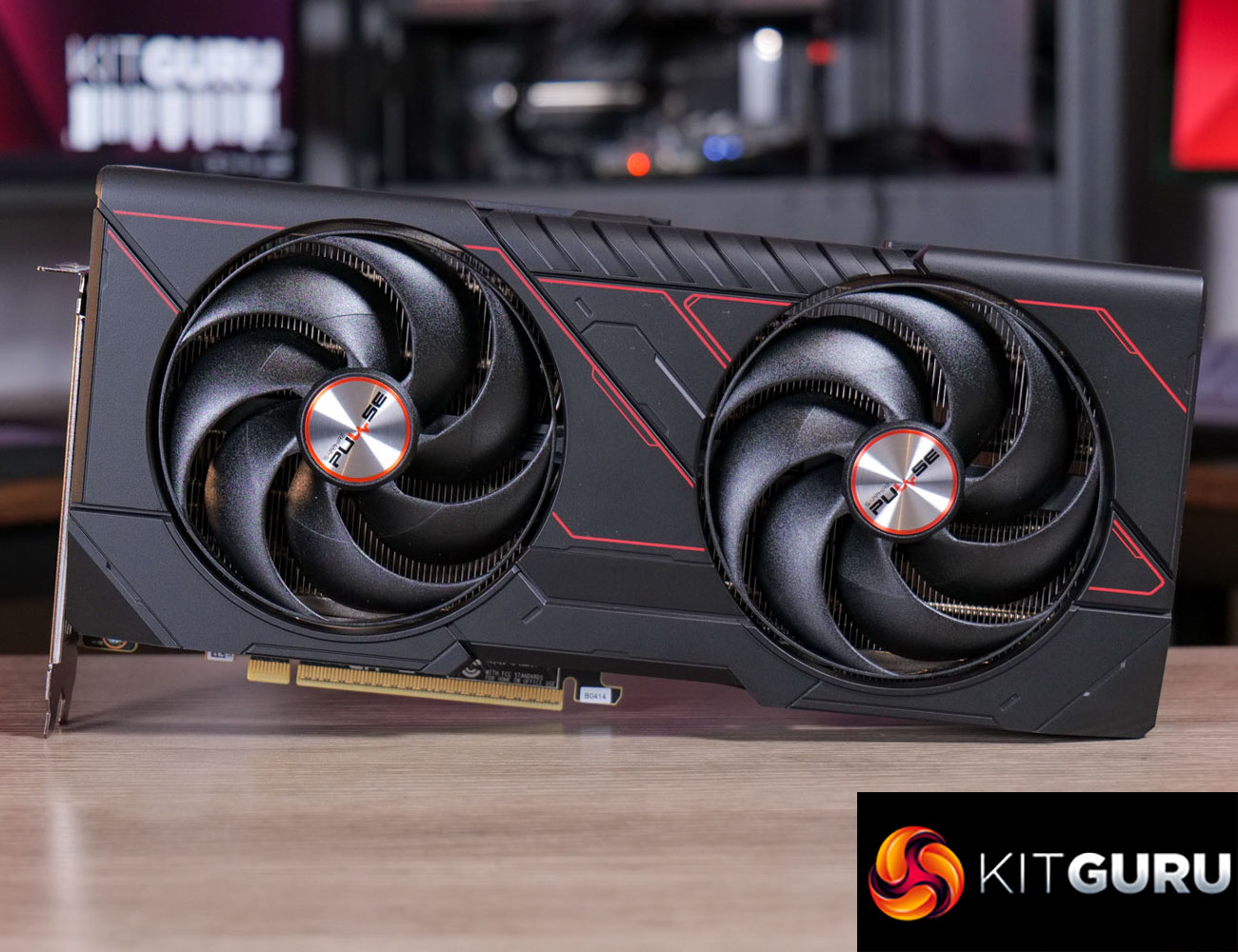
A final word on the Sapphire Pulse card we used for our testing today. It runs quiet and cool despite being a pretty compact card by modern standards, while memory temperatures appear much improved versus other RDNA 4-based models. It's not as feature-rich as the Nitro+ series, but Pulse is usually available at or around MSRP, so it's definitely one to look out for.
AMD has confirmed the UK SEP is £489.99 for the RX 9070 GRE.
Pros
- Solid 1440p gaming performance.
- Can offer a decent ray traced experience, too (but not in every game.)
- FSR 4 support.
- Sapphire Pulse card runs quiet and cool.
Cons
- Expected UK price puts it too close to the RTX 5070.
- Still struggles in more demanding ray traced/path traced games, particularly compared to GeForce.
- FSR 4, while significantly better, lacks the near-universal game support of DLSS.
- Lags behind in terms of efficiency.
- 12GB VRAM still isn't great for longevity, though market conditions have changed compared to last year.
KitGuru says: The RX 9070 GRE is nothing to write home about – it could be worth considering at a sensible price, but if not, the RTX 5070 is superior across the board.