KitGuru KitGuru.net – Tech News | Hardware News | Hardware Reviews | IOS | Mobile | Gaming | Graphics Cards


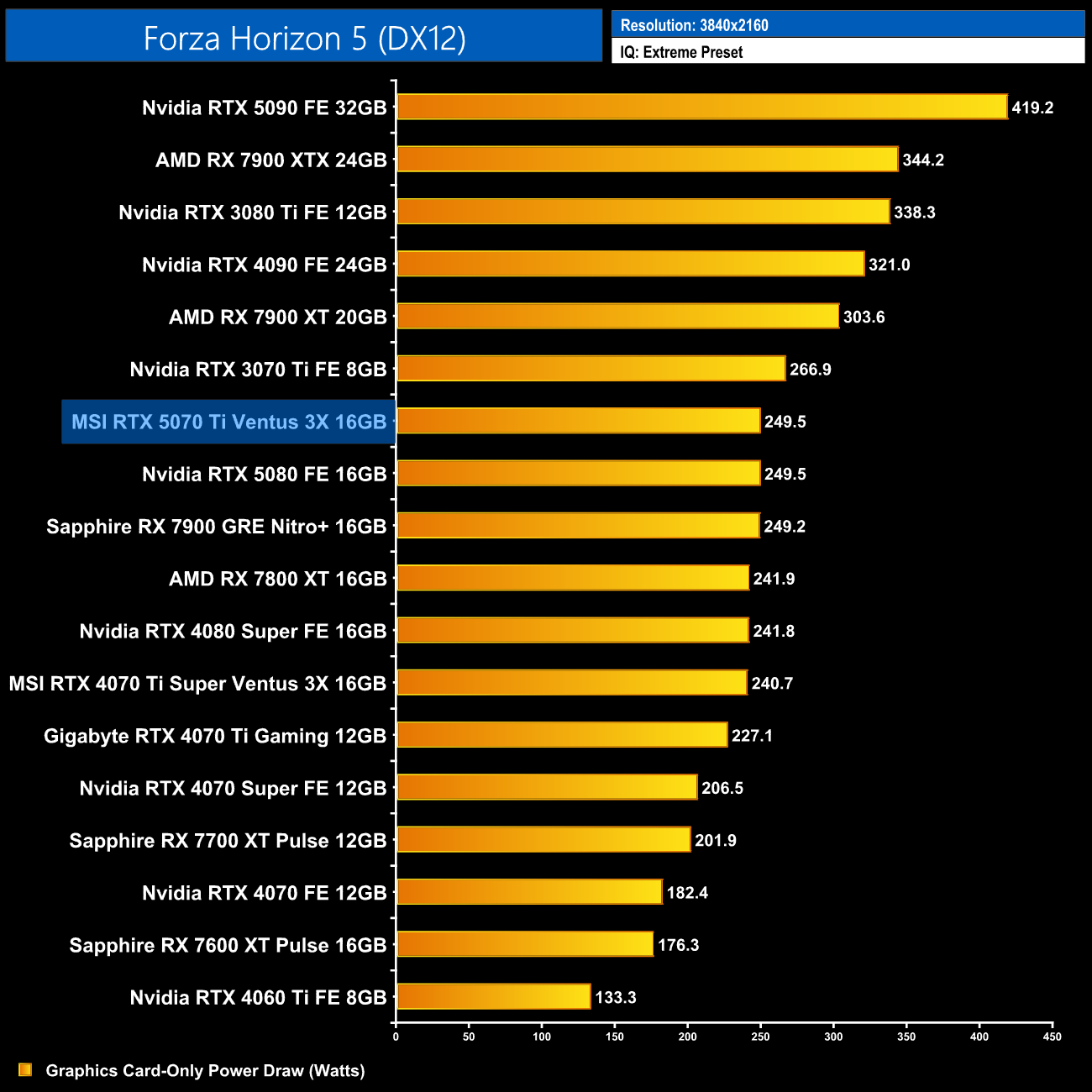
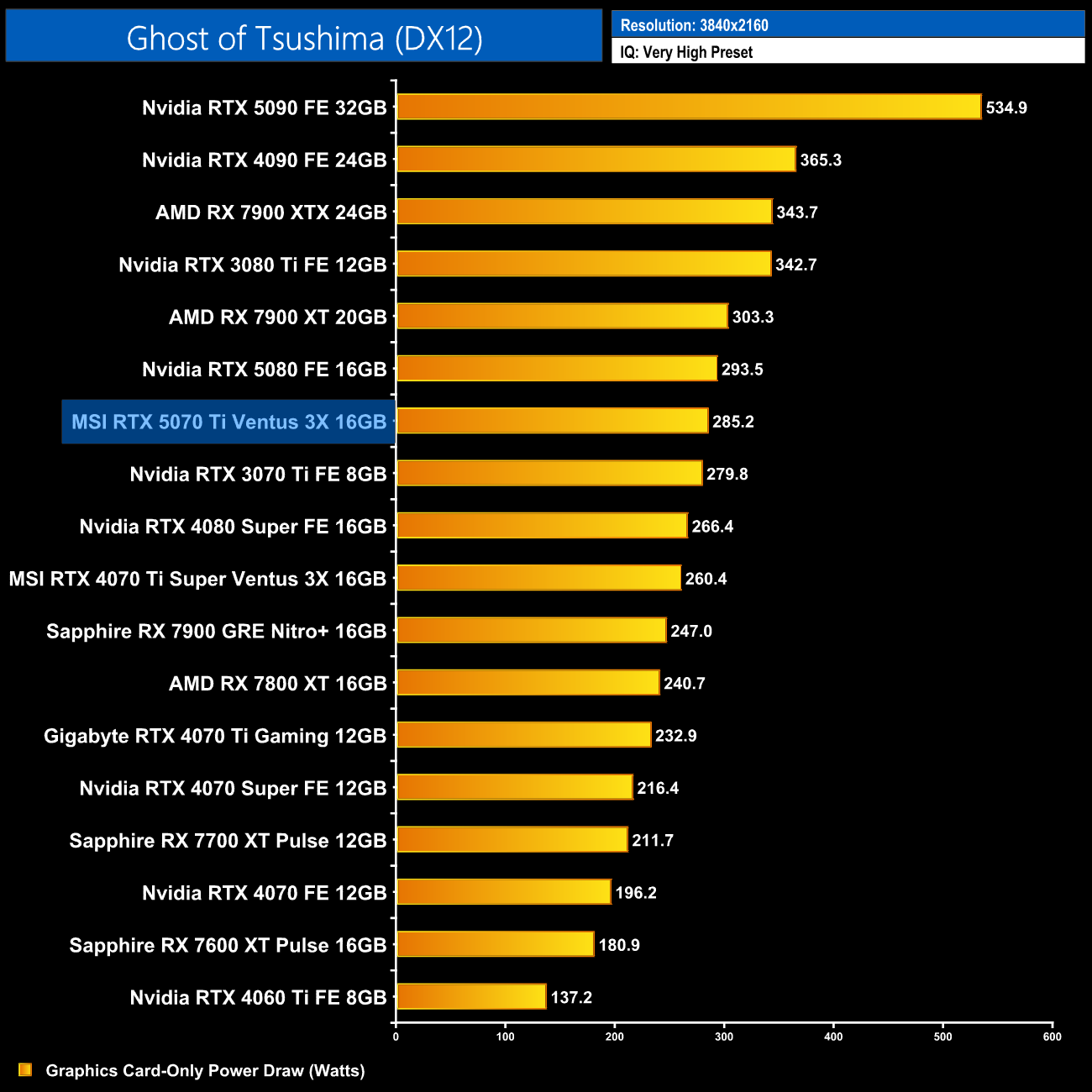
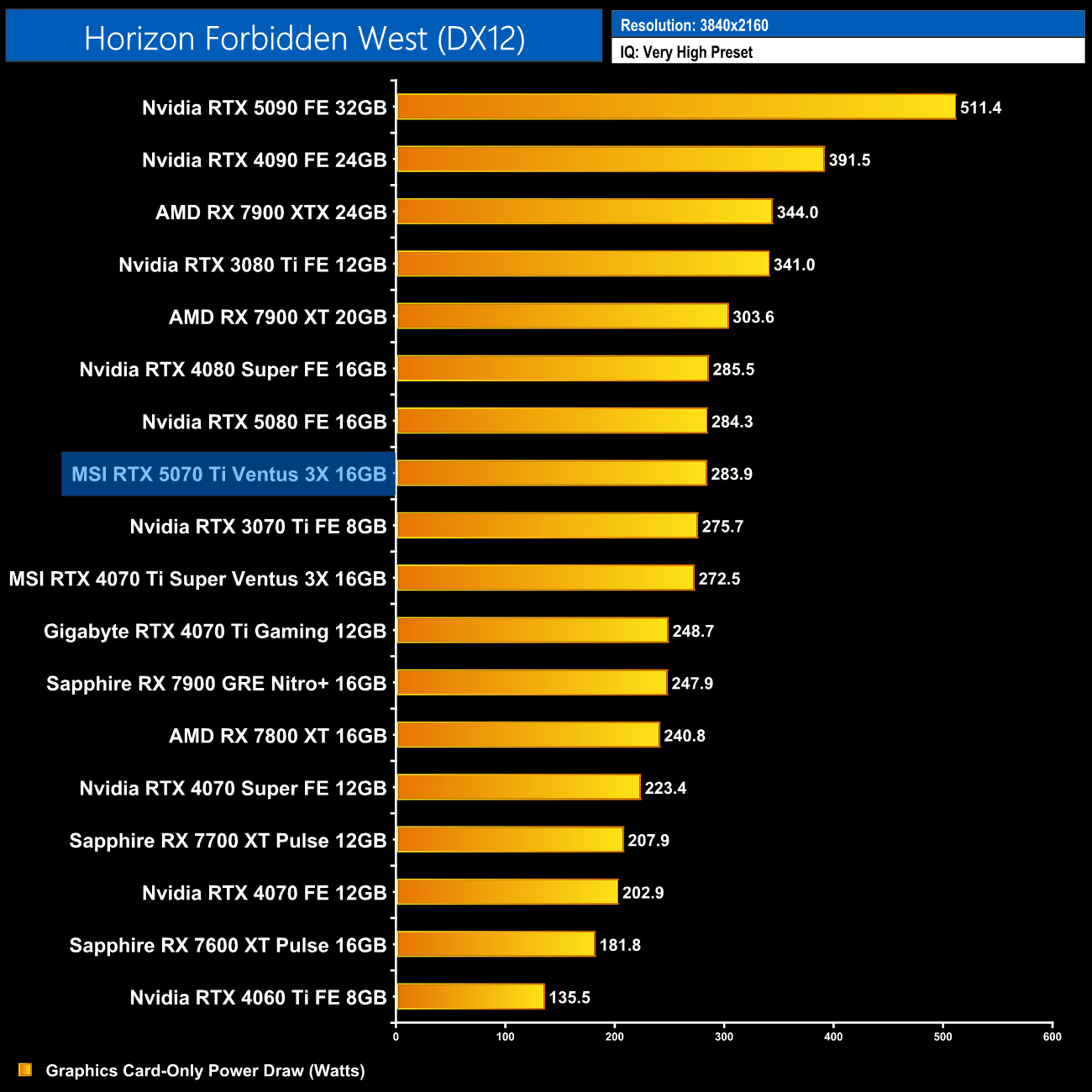
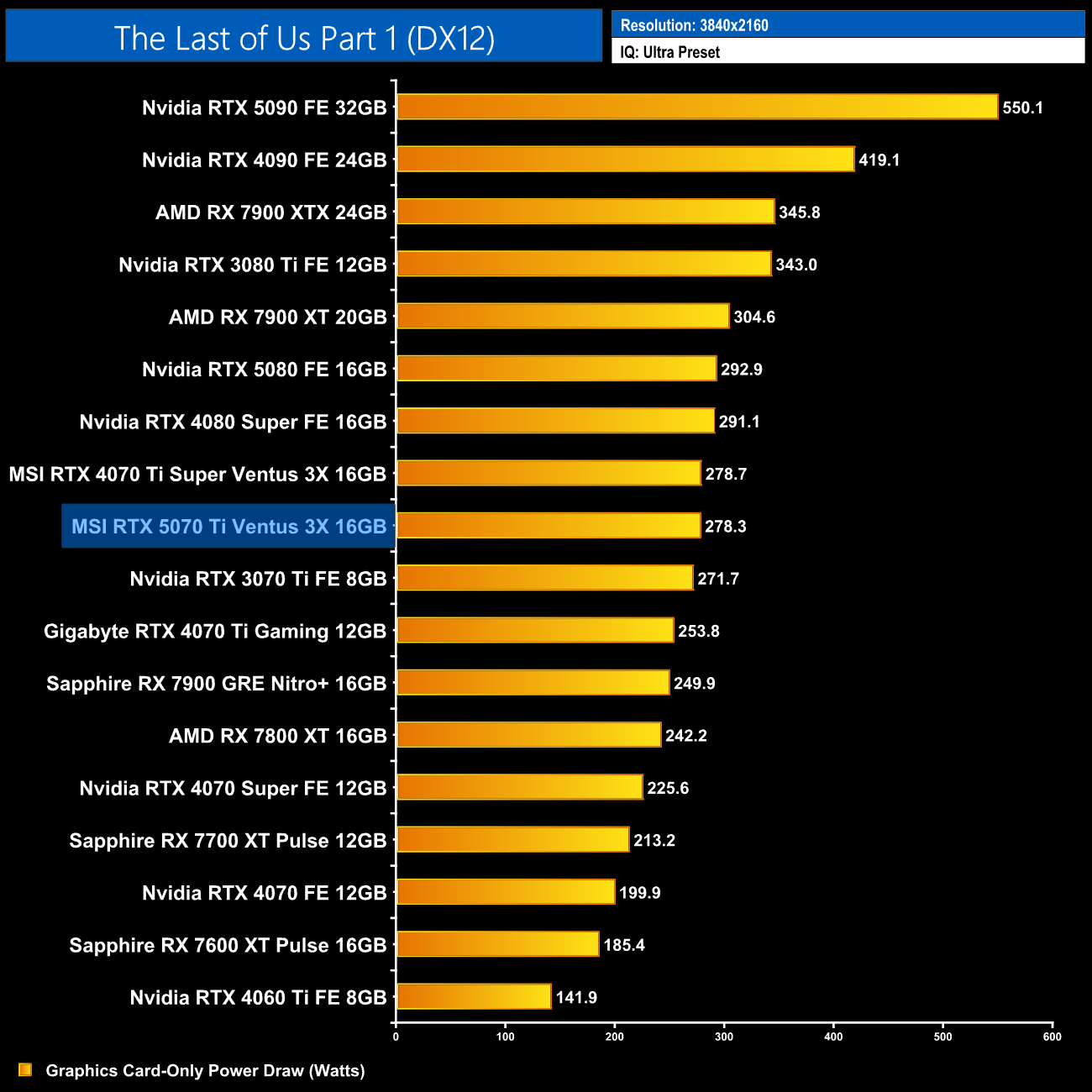
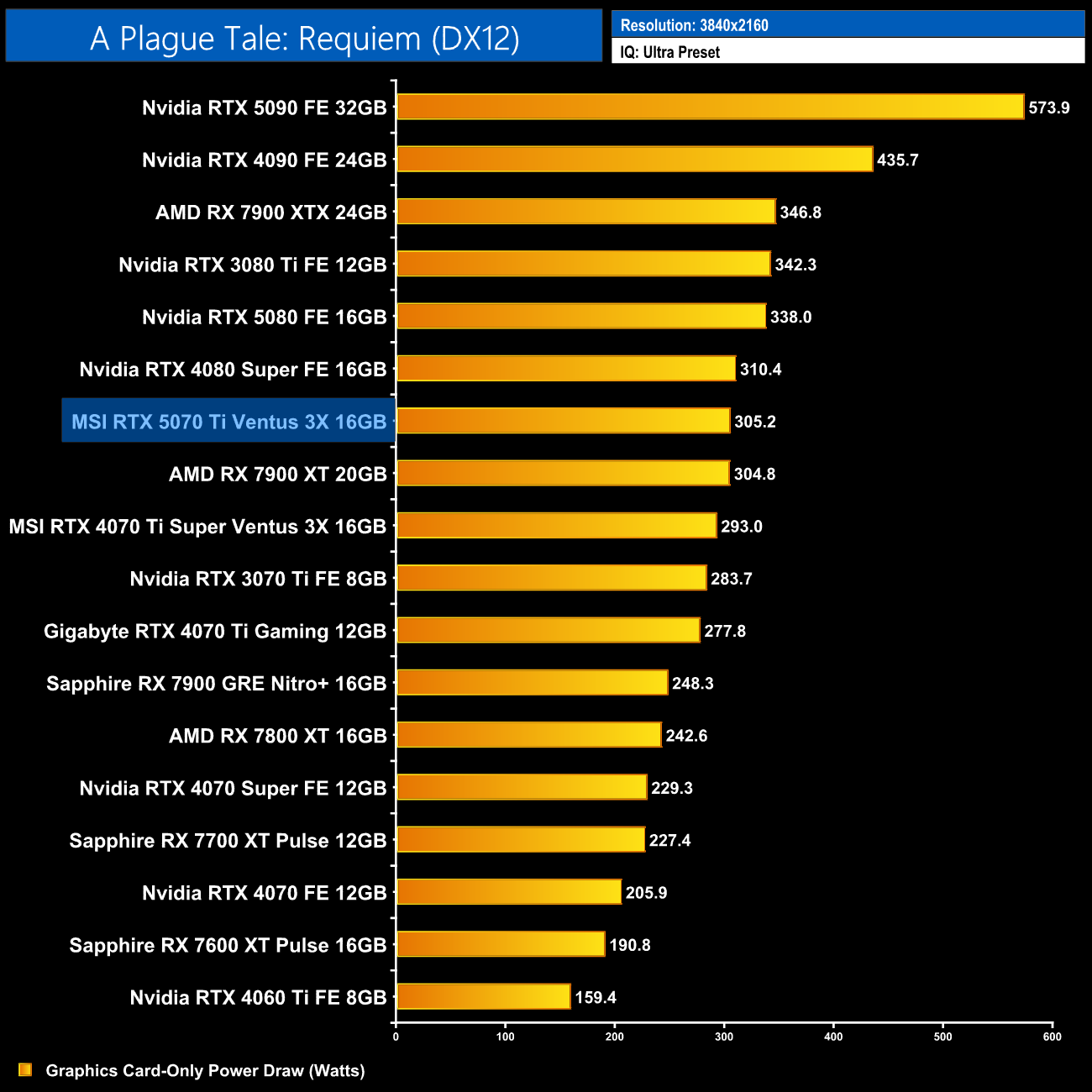
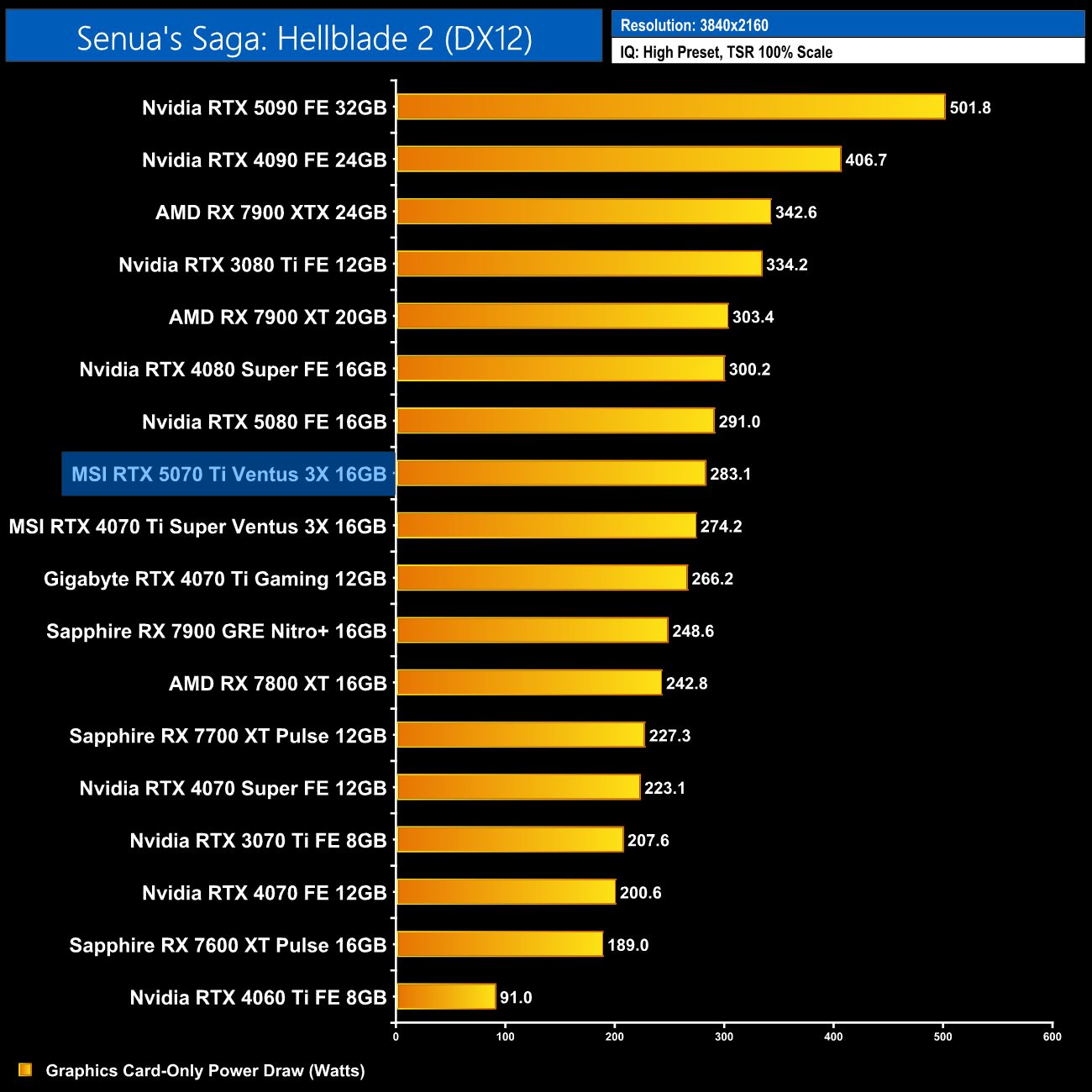
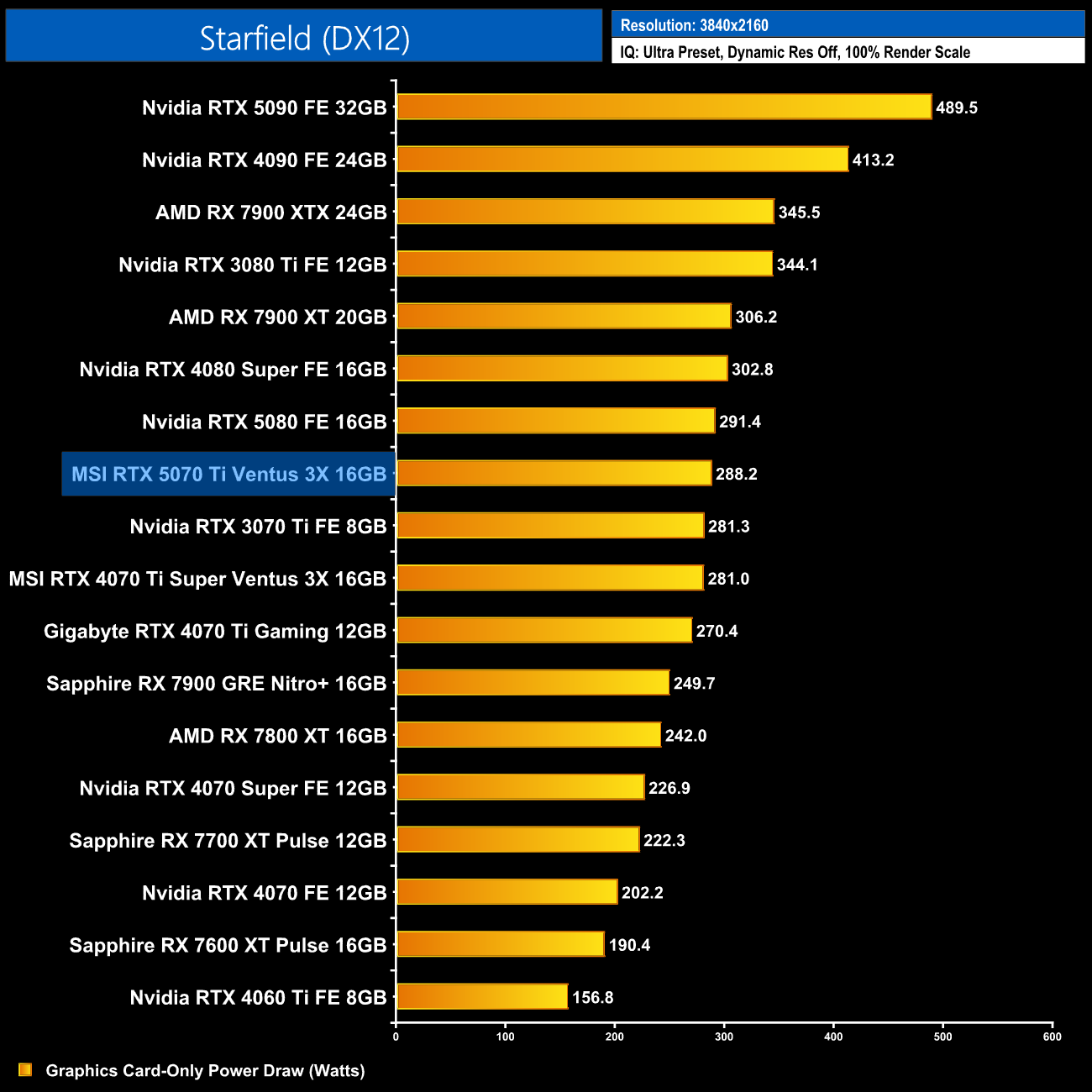
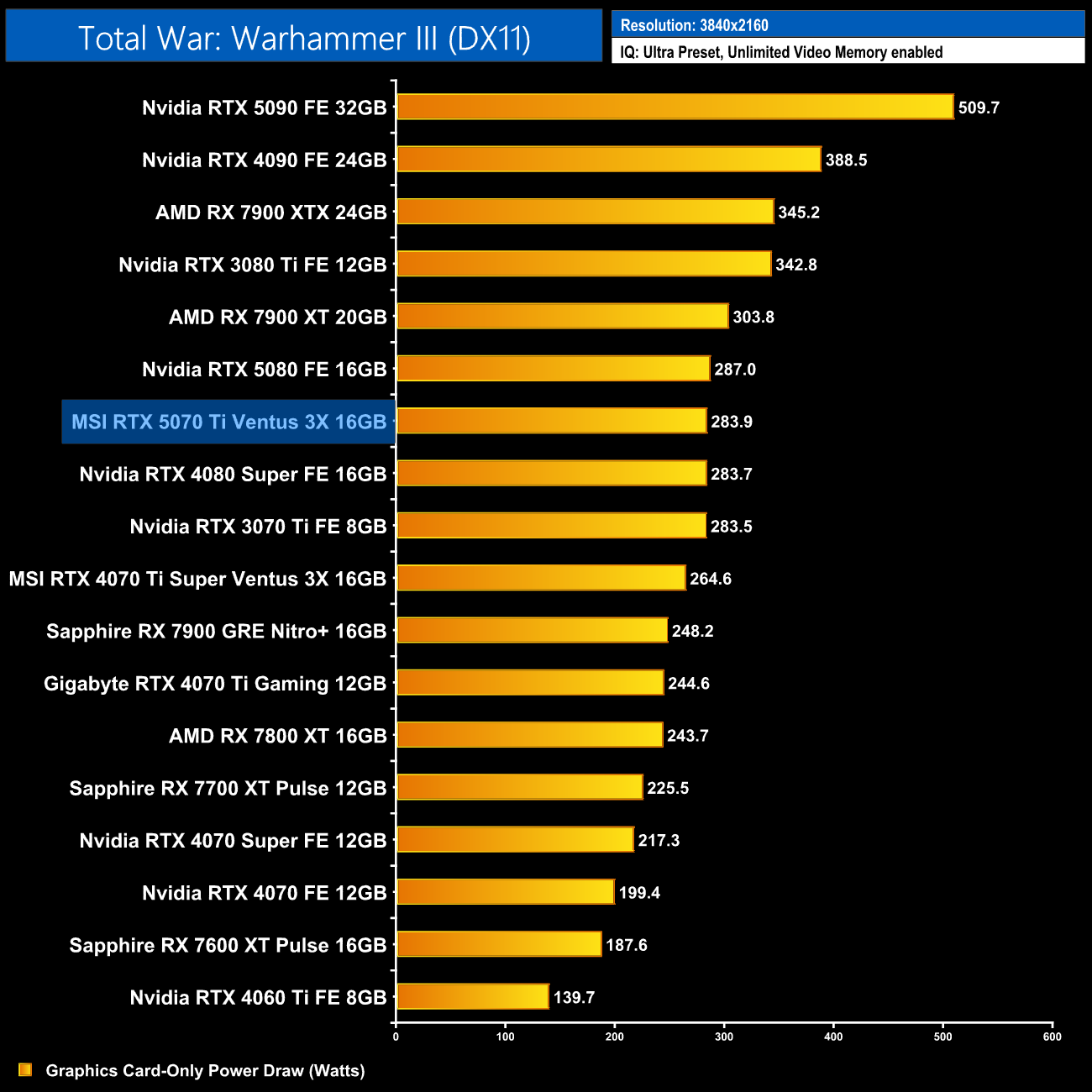
Here we present power draw figures for the graphics card-only, on a per-game basis for all twelve games we tested at 2160p (4K). This is measured using Nvidia's Power Capture Analysis Tool, also known as PCAT. You can read more about our updated power draw testing methodology HERE.
Per-Game Results at 2160p (4K):
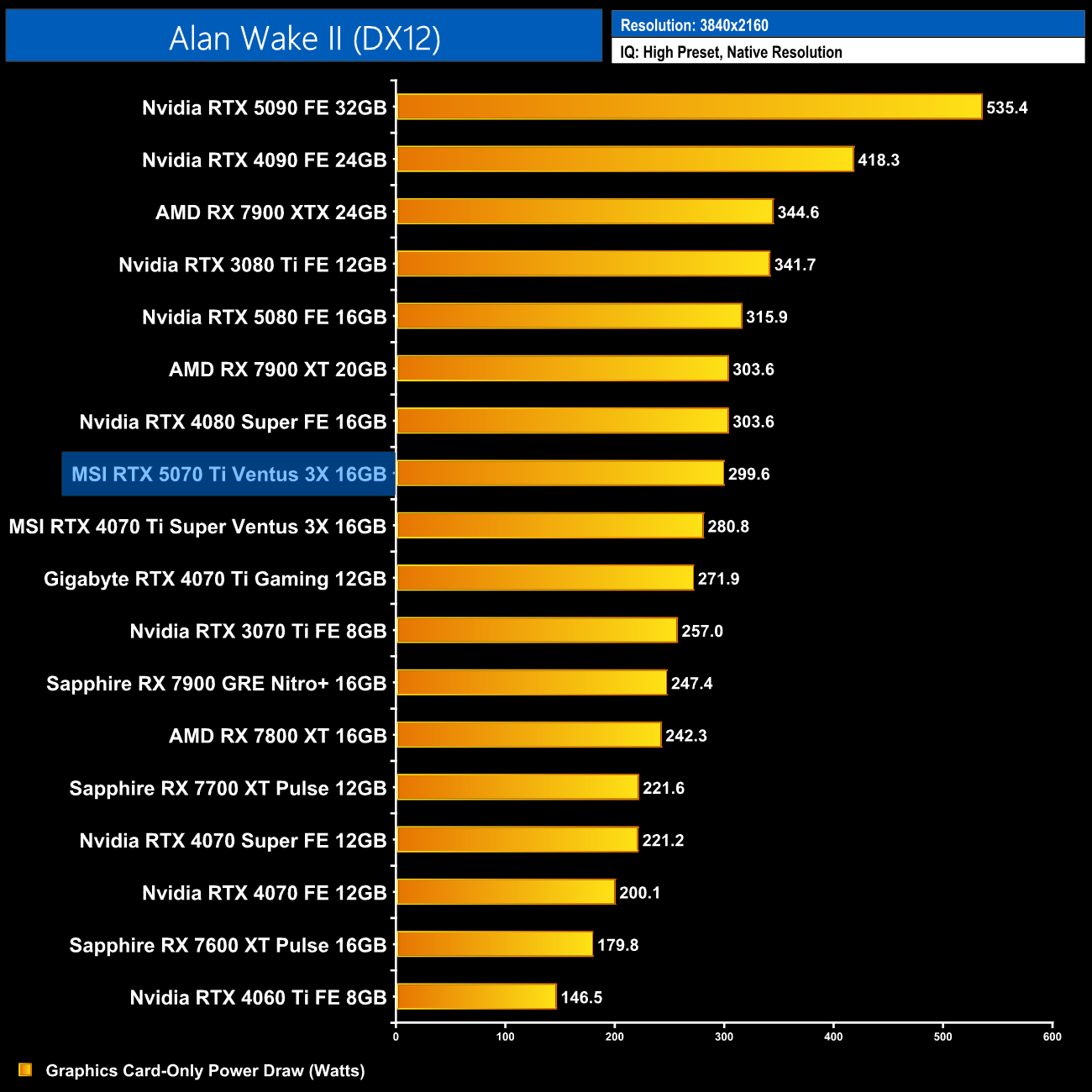
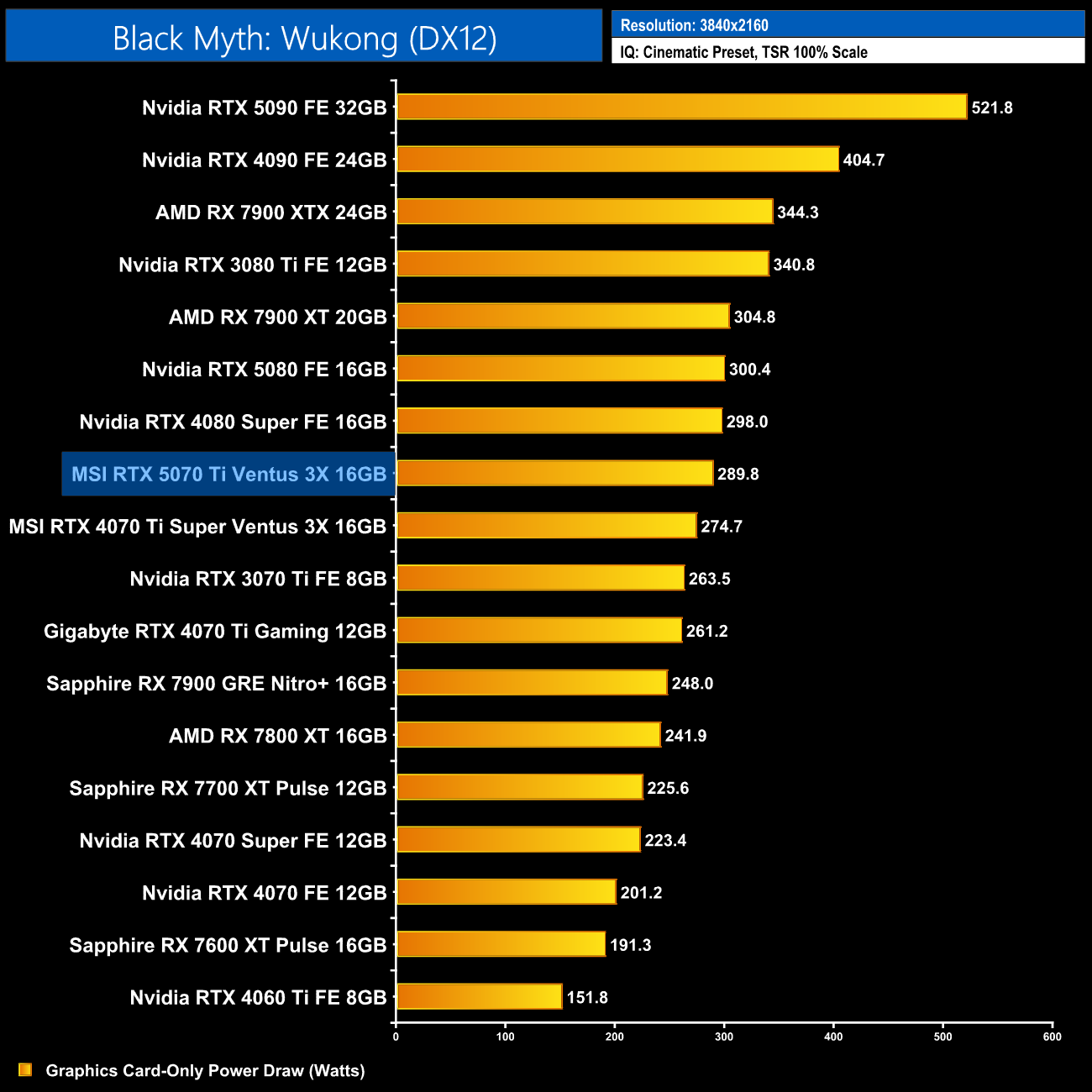
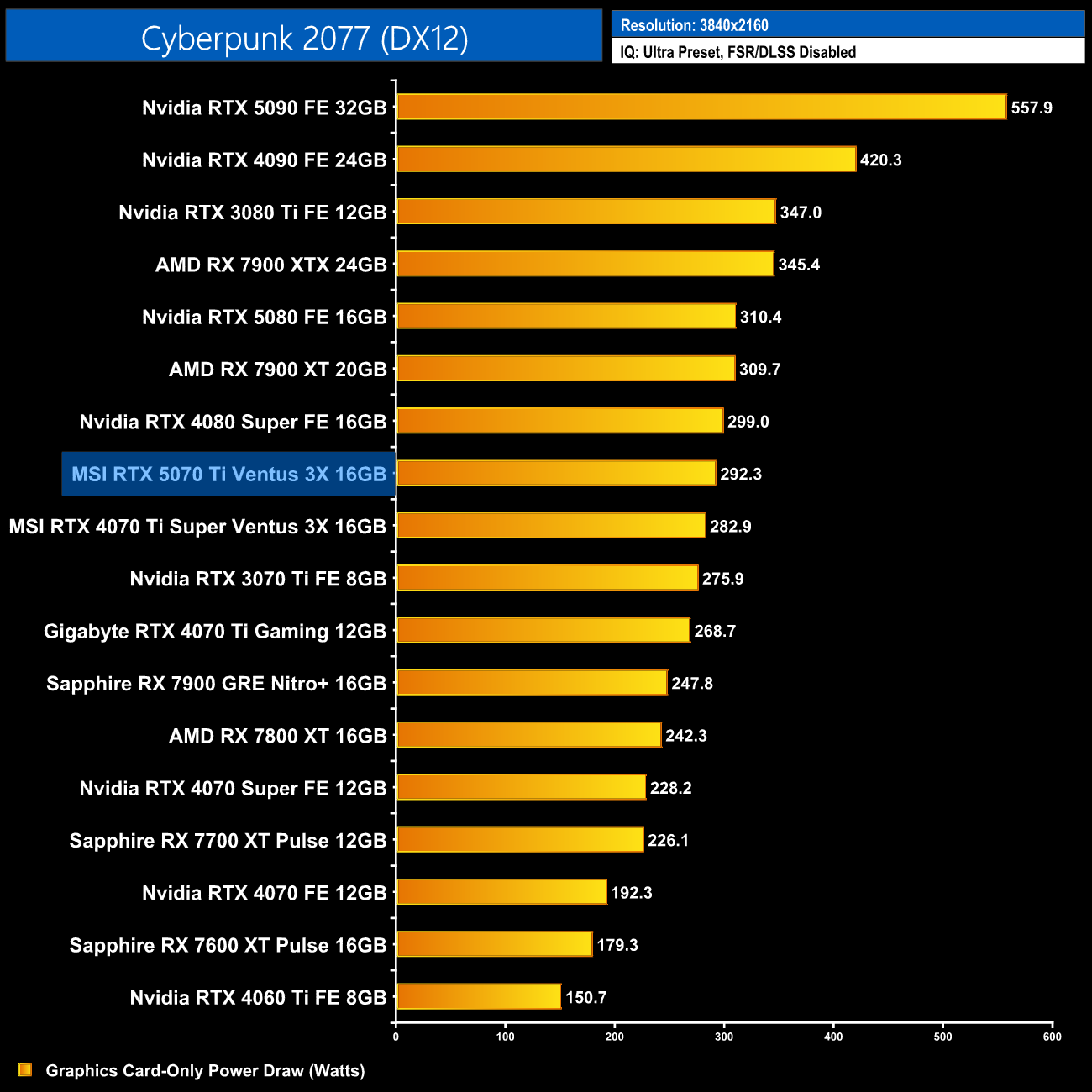
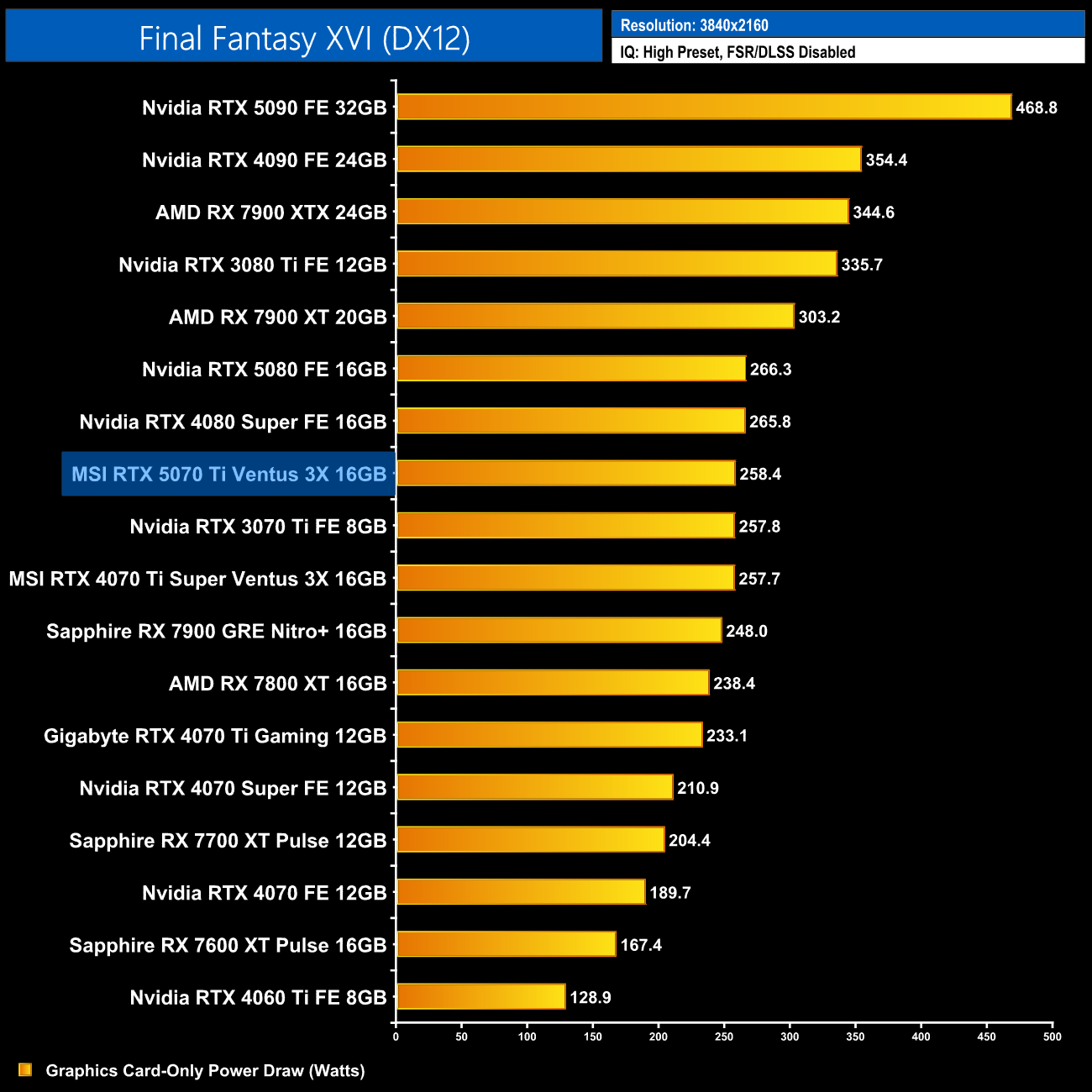
Click to enlarge.
12-Game Average at 2160p (4K):
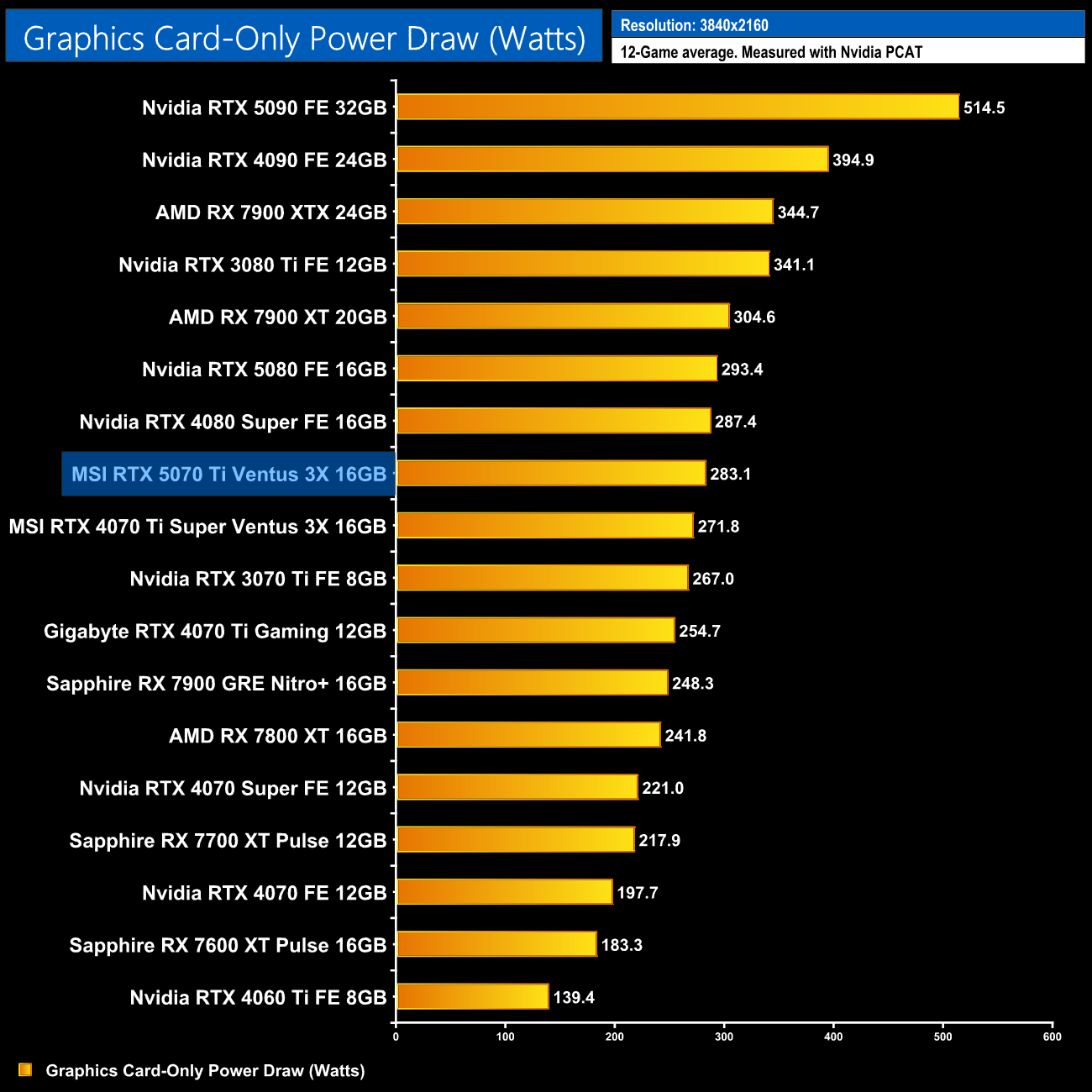
It's only at 4K do we see the RTX 5080 pulling away slightly, but it's still only drawing 10W more on average than the 5070 Ti. The new card averaged 283W, which is below the 300W TGP, but I wasn't expecting to see such a small delta between itself and the 5080.
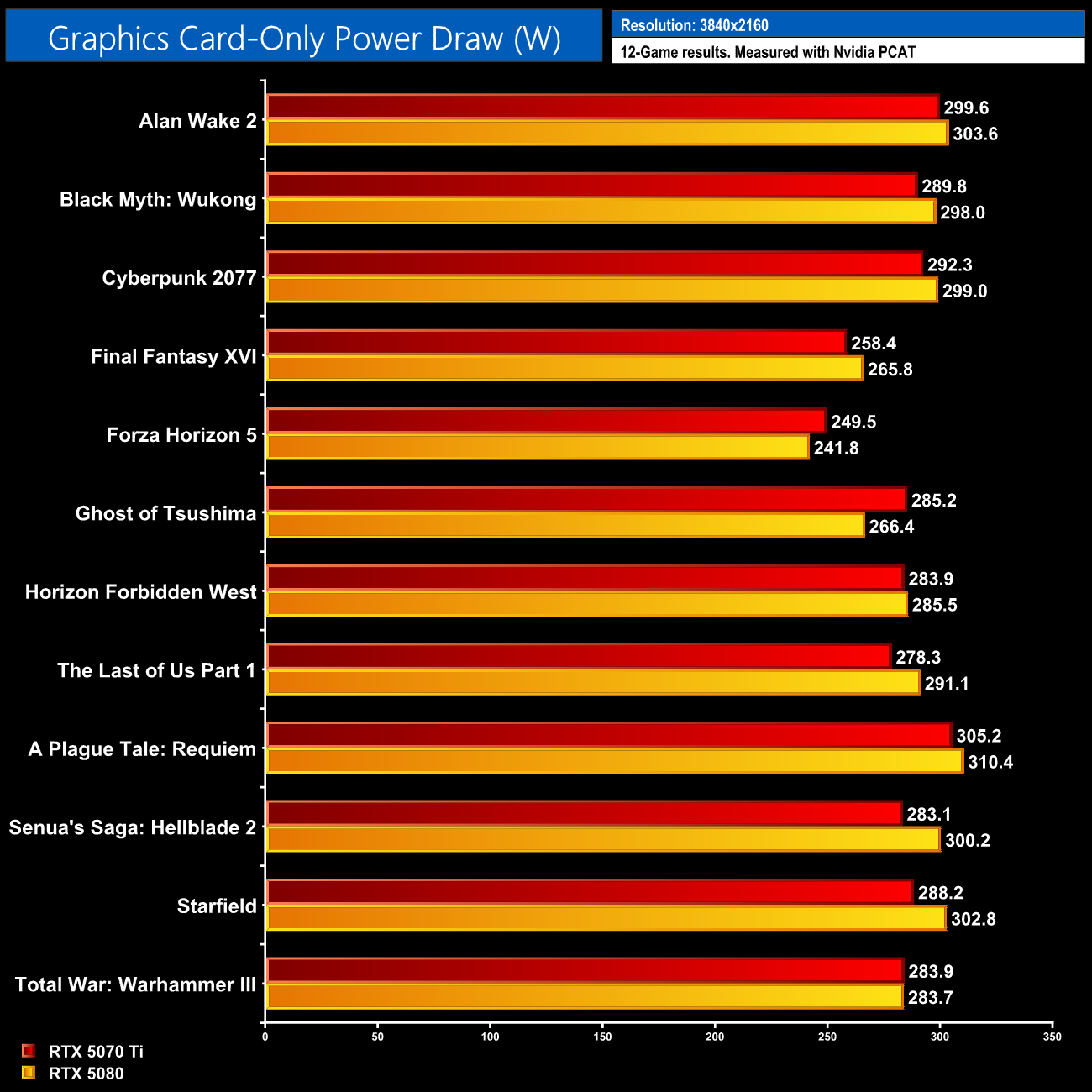
Once again, directly comparing power draw from the two cards shows there's really not much in it, and the 5070 Ti actually draws more power in certain games, like Forza Horizon 5 and Ghost of Tsushima. I wonder if this is due to the RTX 5070 Ti being slightly lower quality silicon, so it requires a more aggressive voltage/frequency curve, but it's hard to say for definite.
Ray tracing results
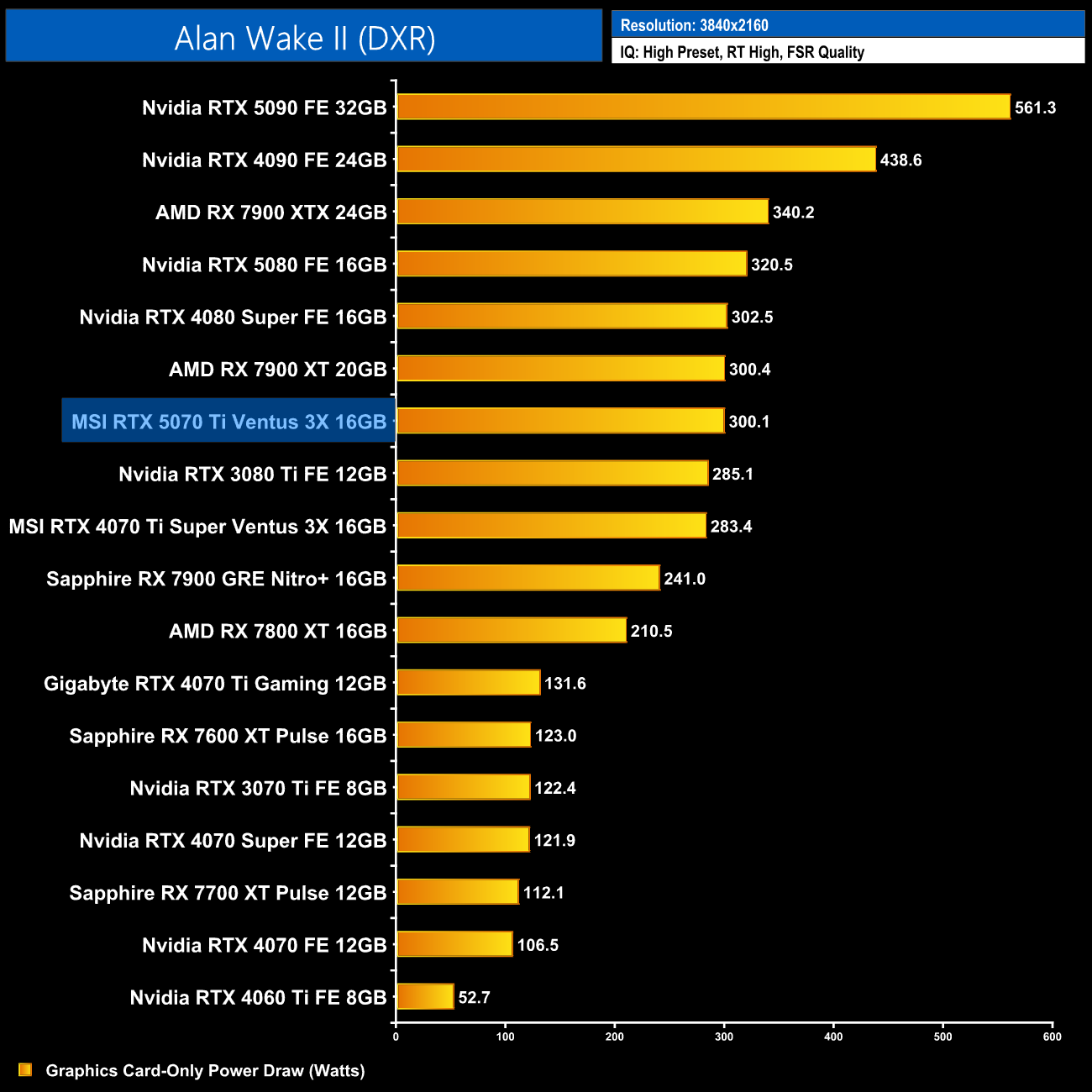
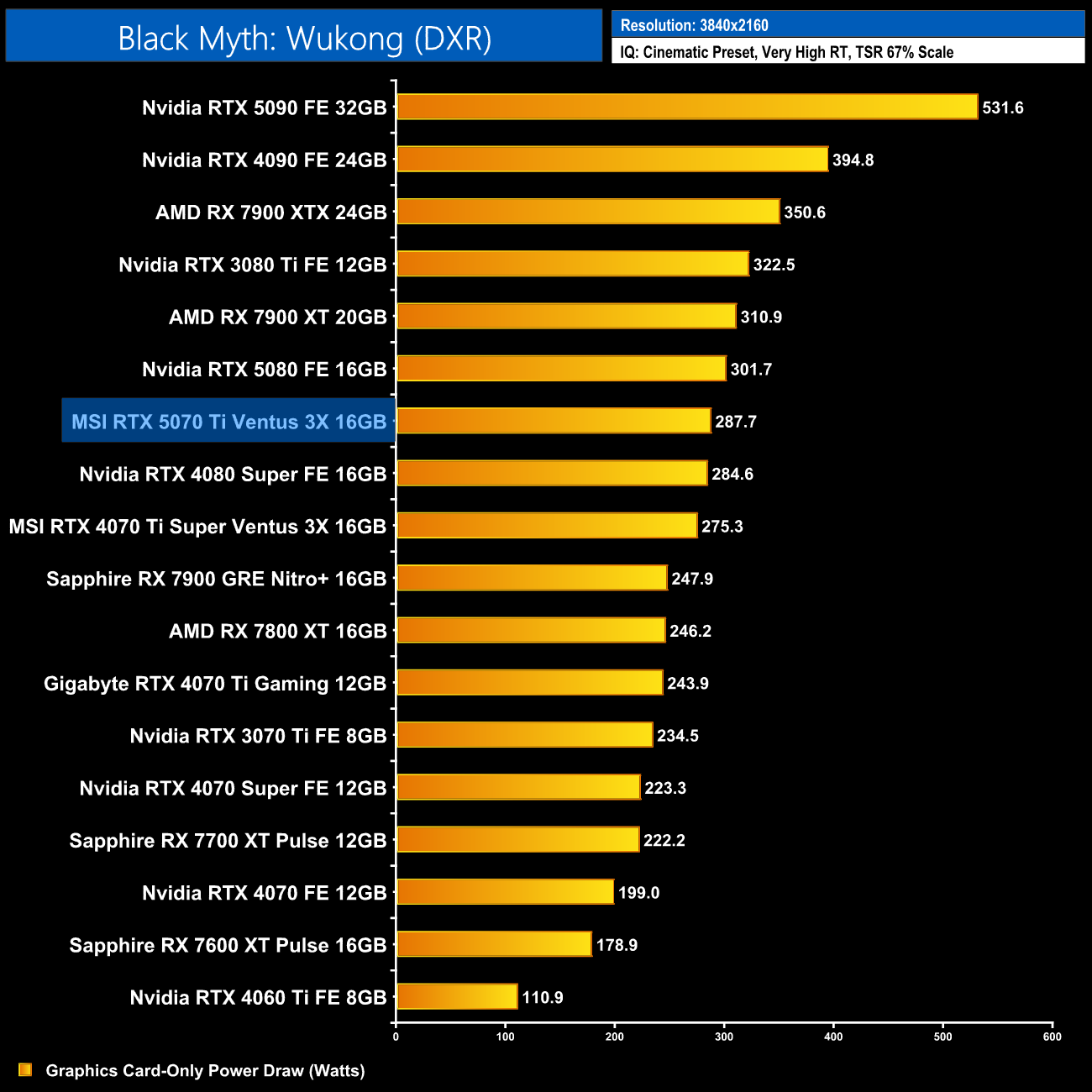
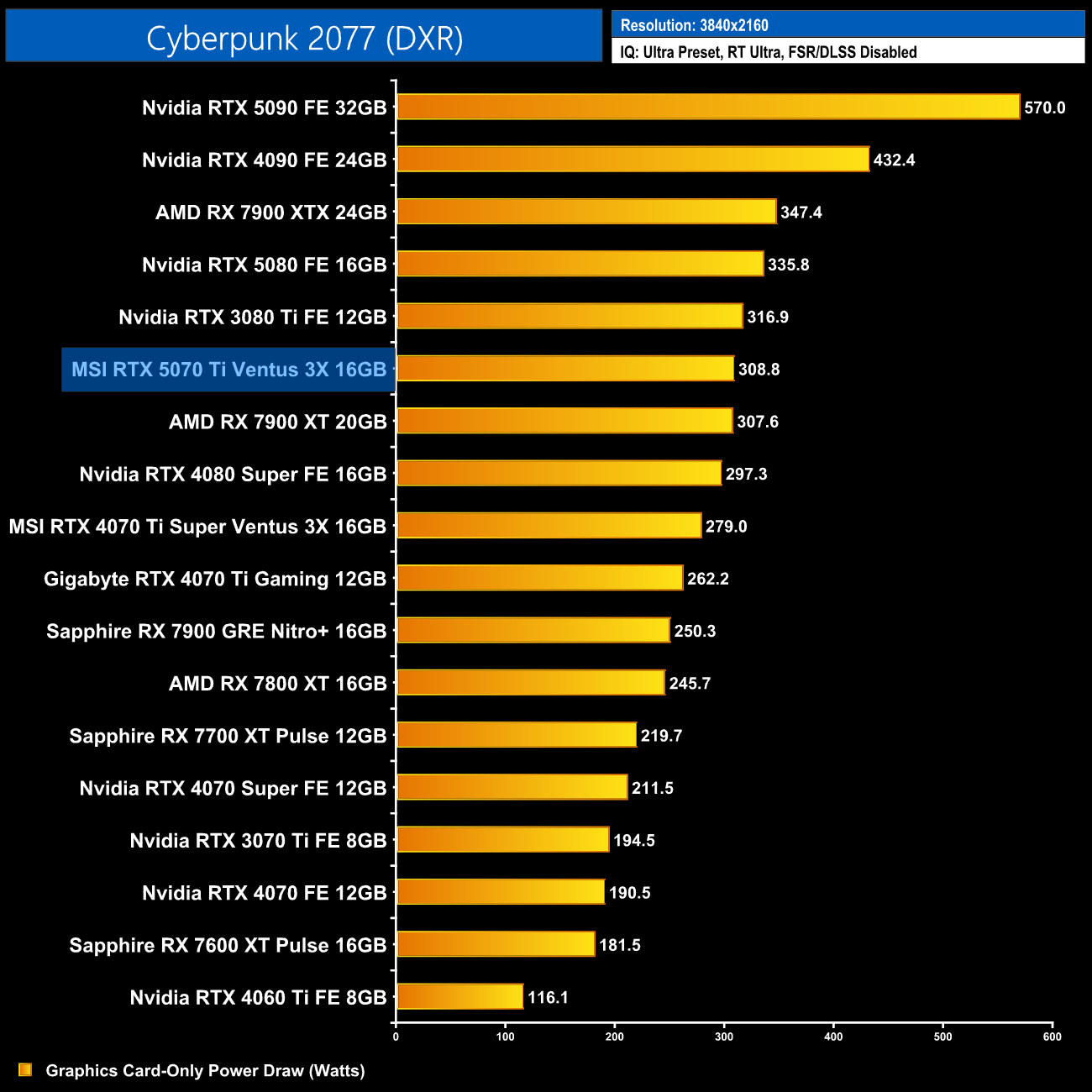
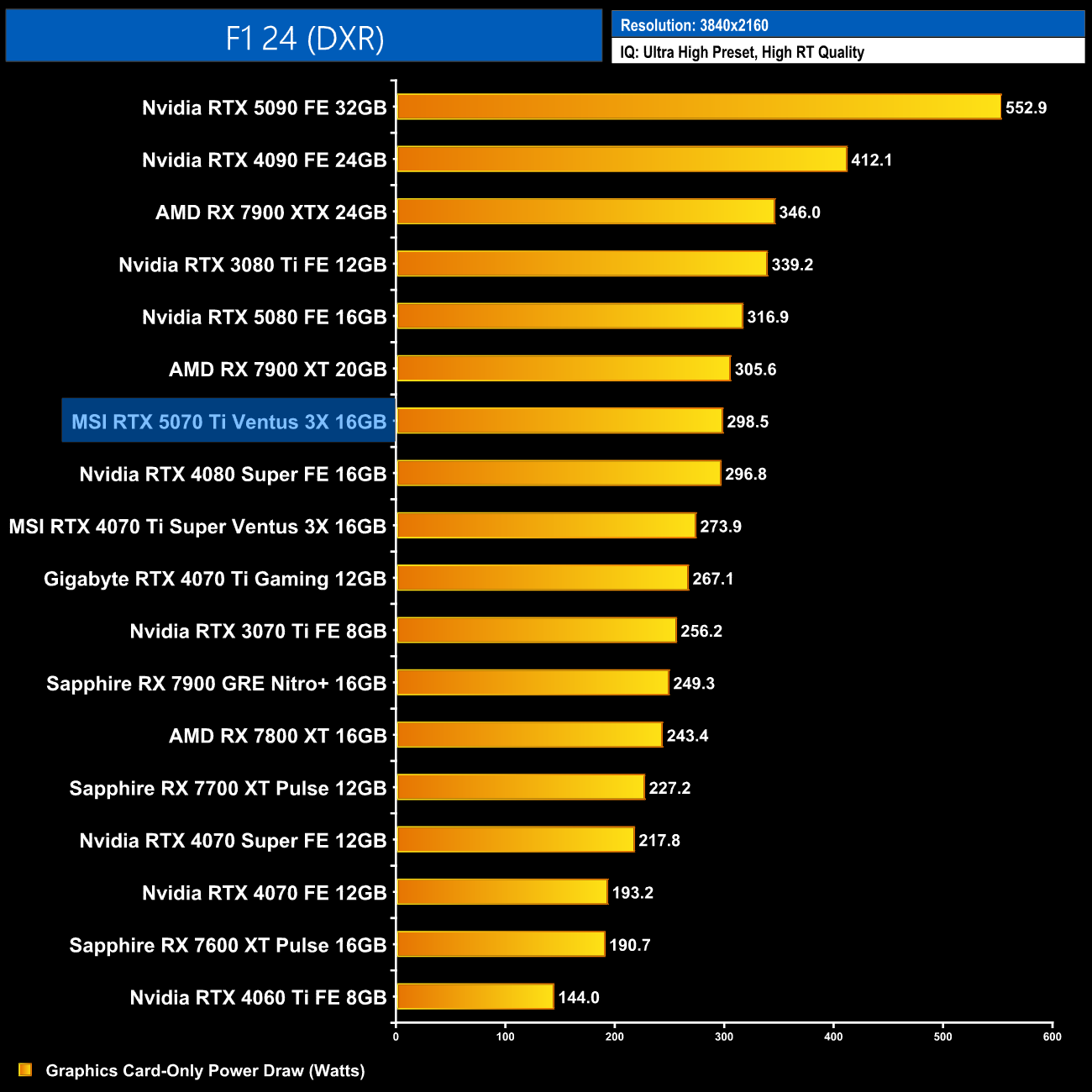
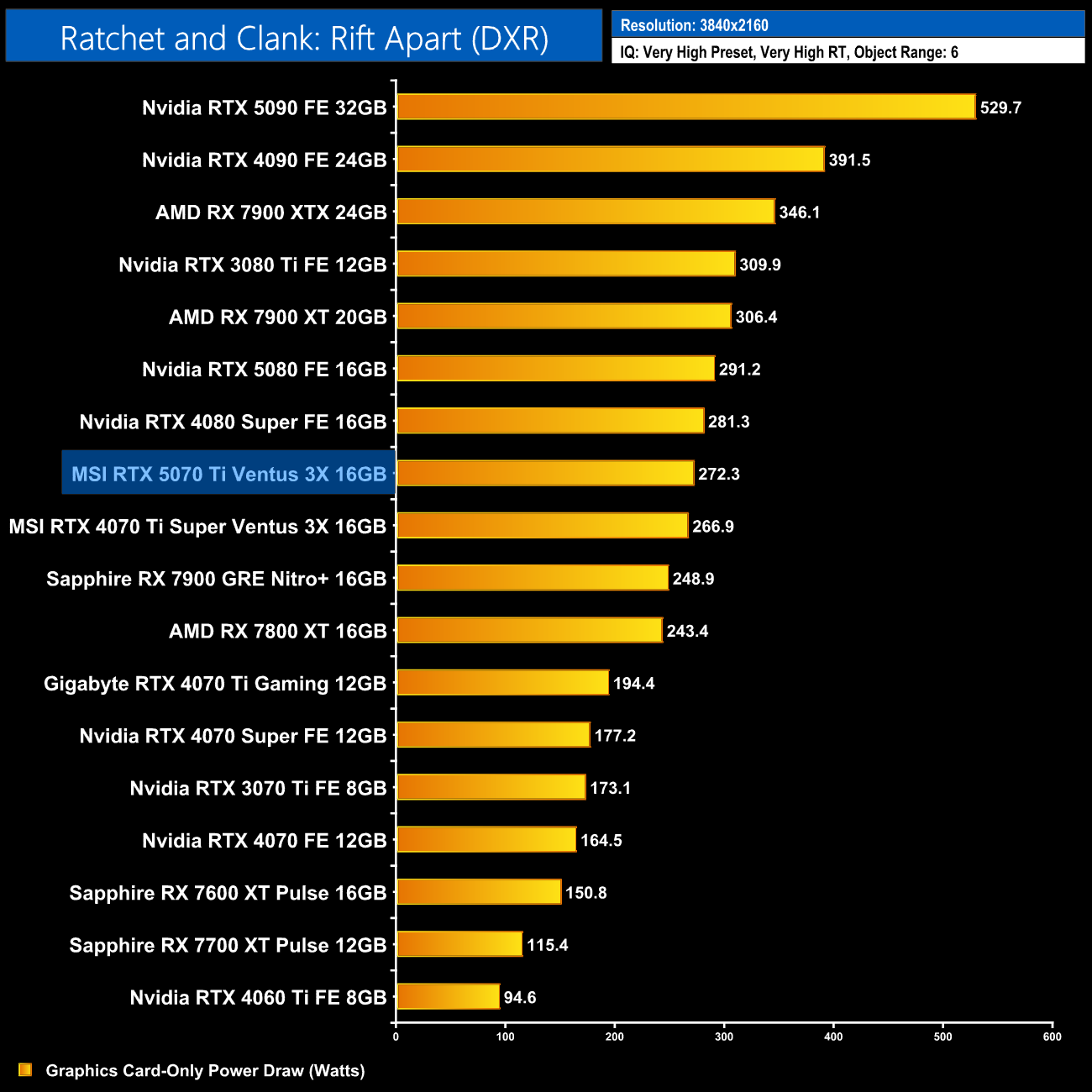
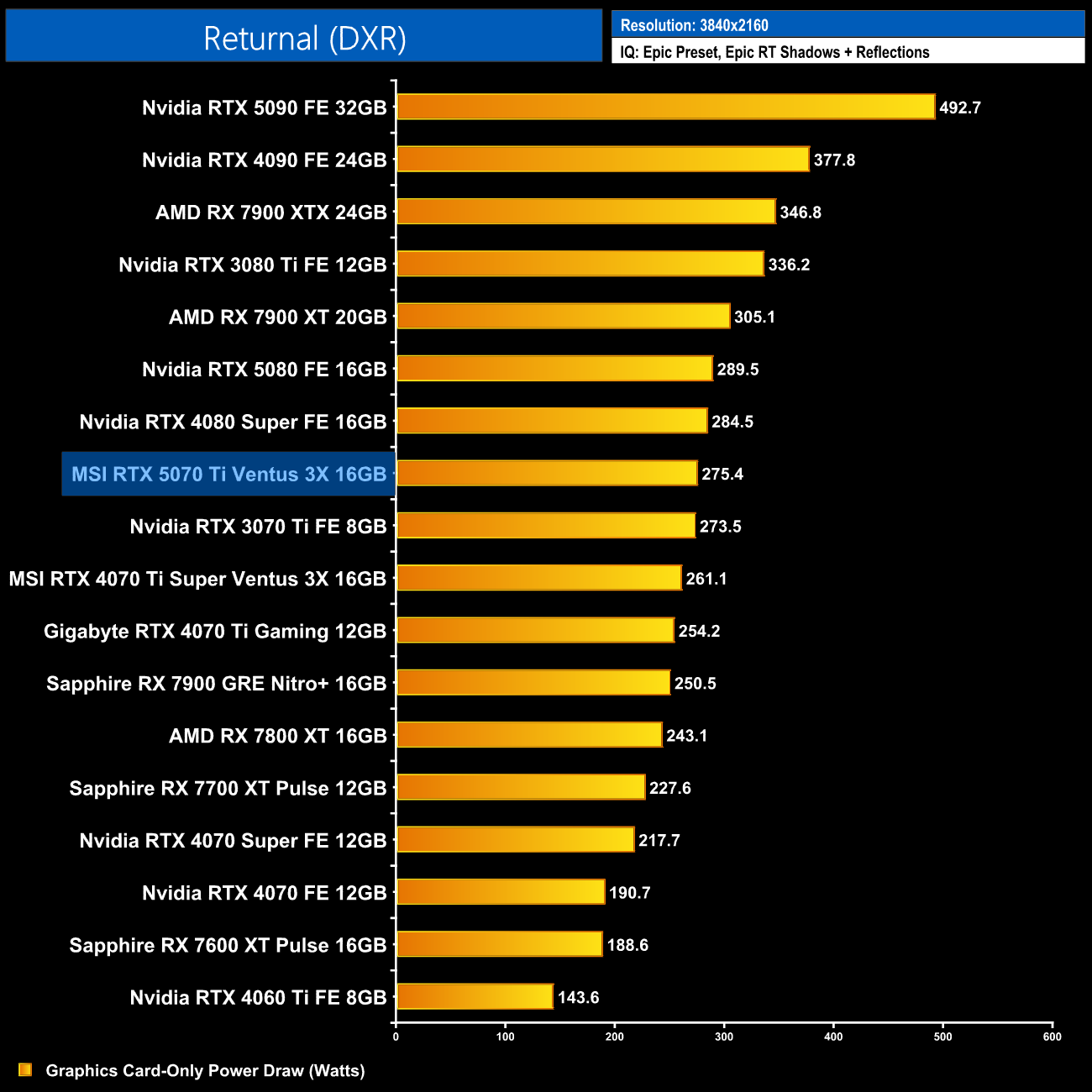
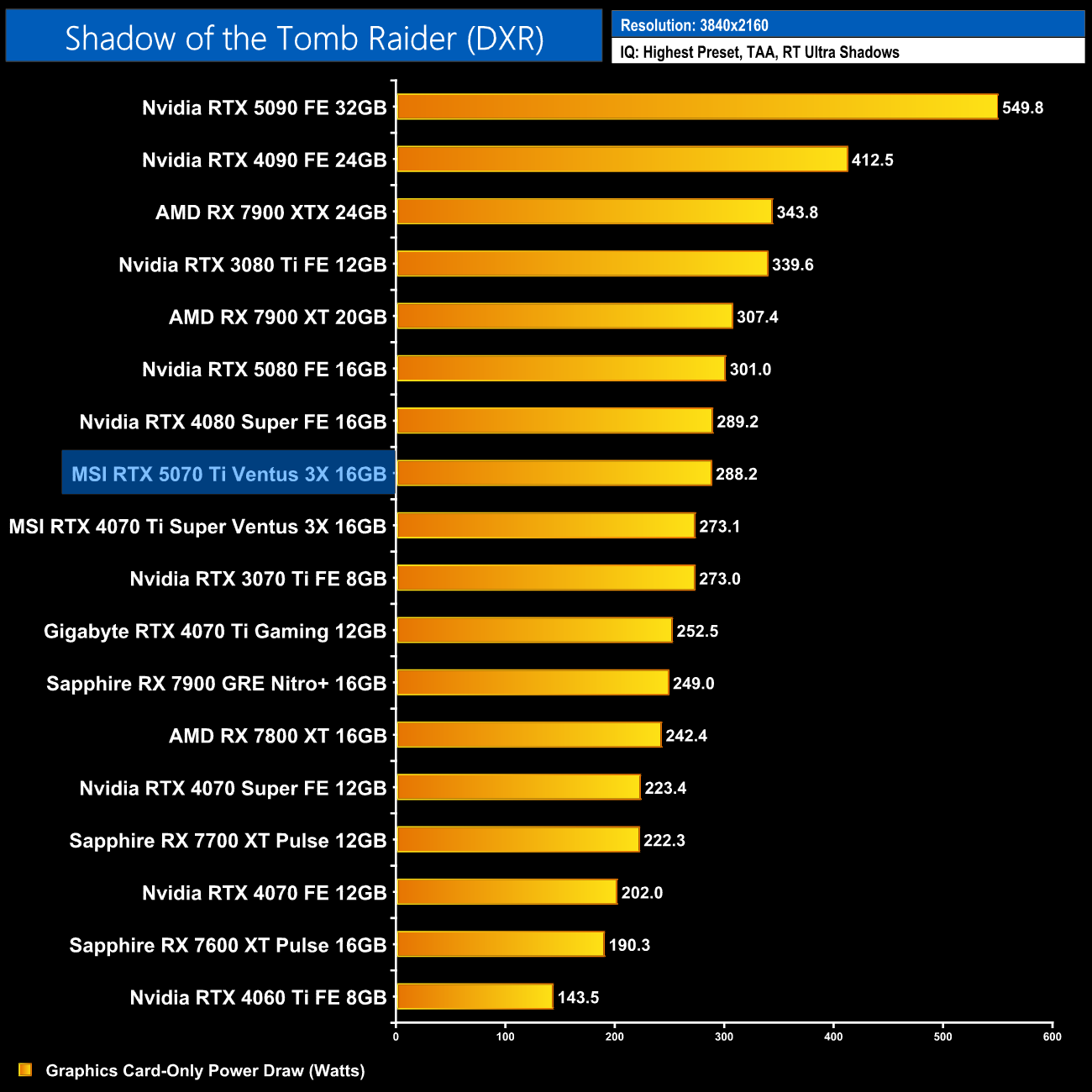
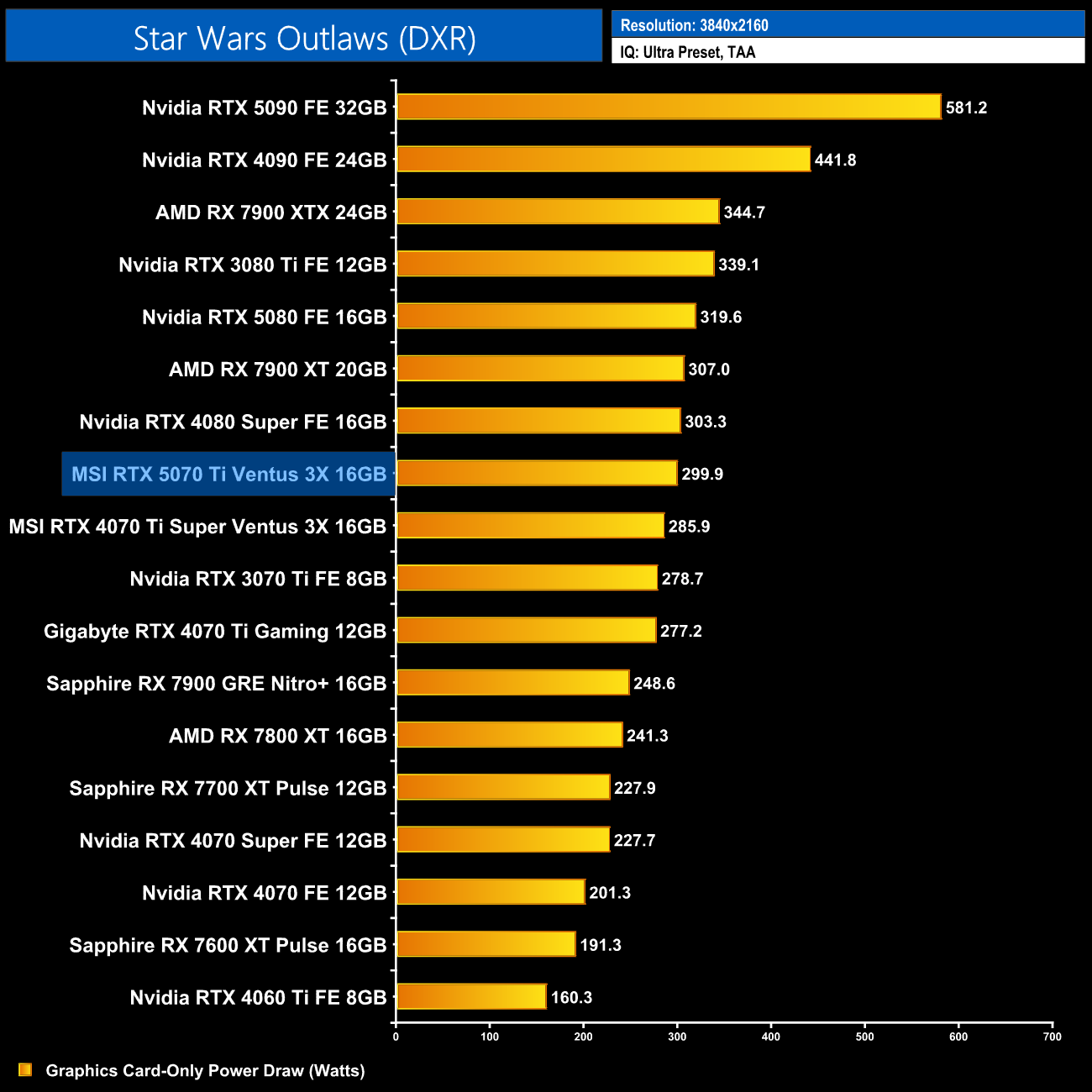
As a bonus, we now include the power figures for all eight games we test with ray tracing enabled.
8-Game ray tracing average:
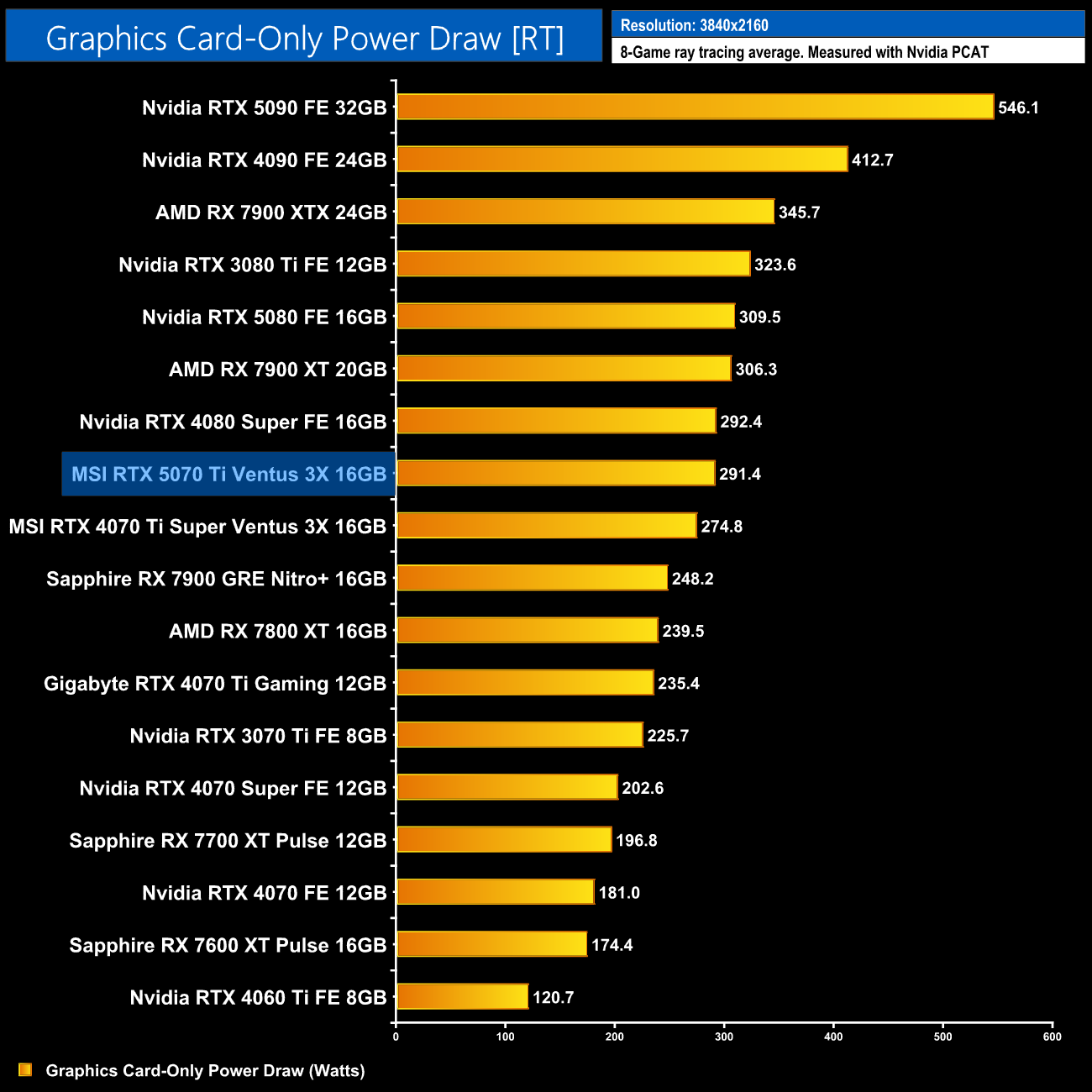
Power draw hits 291W with ray tracing enabled, which now comes in just under 20W less than the RTX 5080.