KitGuru KitGuru.net – Tech News | Hardware News | Hardware Reviews | IOS | Mobile | Gaming | Graphics Cards


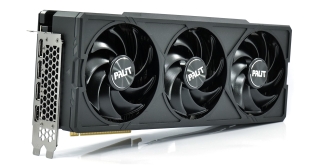
Following on from our review of Nvidia's RTX 4070 Super Founders Edition yesterday, today we can present reviews of two partner cards. This article is focused on the Palit JetStream OC, but we also have a review of the Gigabyte Aero OC if you are interested. The JetStream is a simple, no frills design that eschews RGB lighting and added extras in favour of a simpler approach. Let's find out just how good it is.
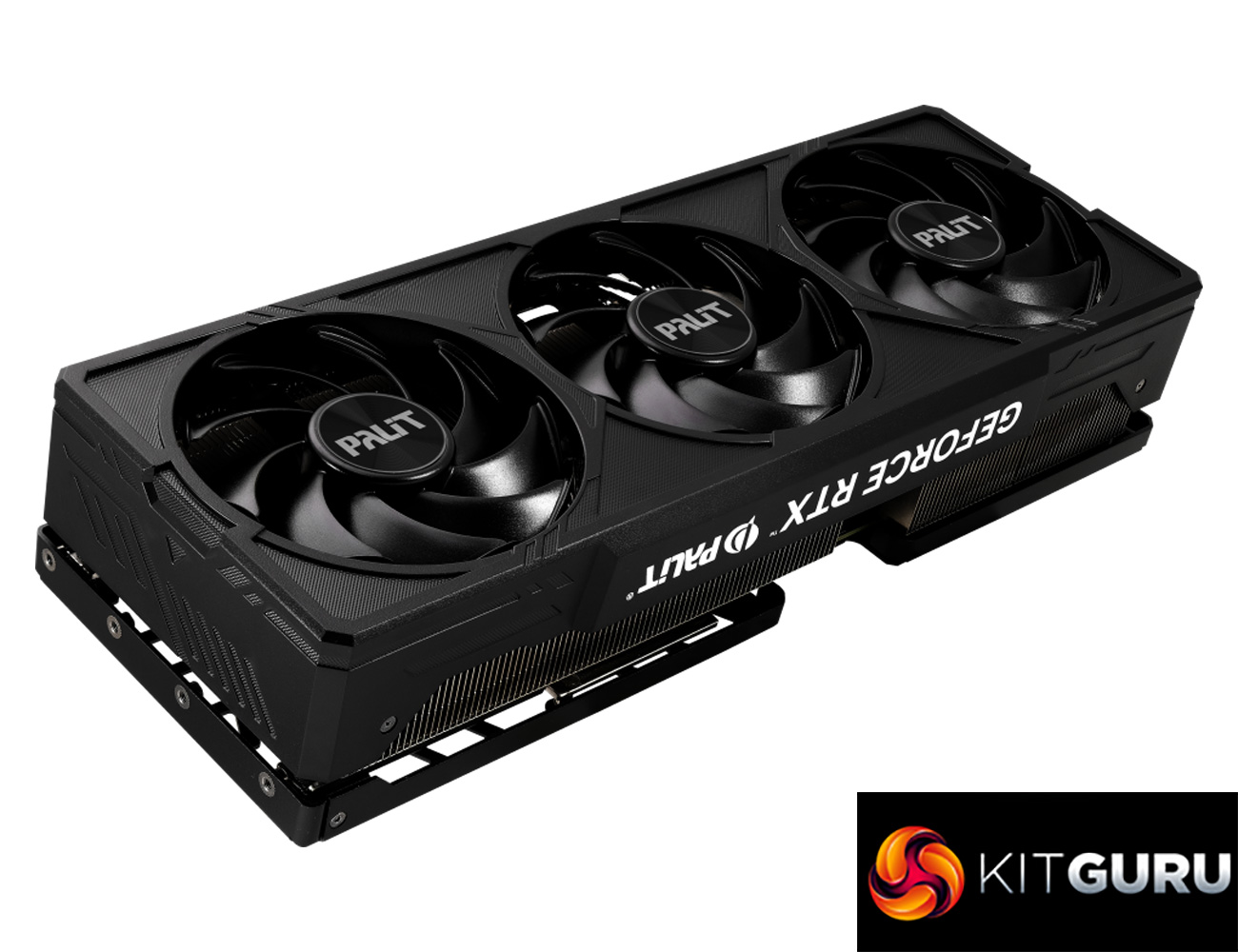
Unlike many other custom cards, Palit's RTX 4070 Super favours a simple design approach. It's entirely black, with a triple-slot triple-fan cooler, no RGB lighting or LEDs or any kind, no on-board fan headers, no included accessories or any other real features – it's very much just a heatsink and a PCB attached via some screws. That's not necessarily a bad thing though, and it could well appeal to those looking for a ‘set and forget' experience.
| RTX 4090 | RTX 4080 | RTX 4070 Ti | RTX 4070 Super | RTX 4070 | |
| Process | TSMC N4 | TSMC N4 | TSMC N4 | TSMC N4 | TSMC N4 |
| SMs | 128 | 76 | 60 | 56 | 46 |
| CUDA Cores | 16384 | 9728 | 7680 | 7168 | 5888 |
| Tensor Cores | 512 | 304 | 240 | 224 | 184 |
| RT Cores | 128 | 76 | 60 | 56 | 46 |
| Texture Units | 512 | 304 | 240 | 224 | 184 |
| ROPs | 176 | 112 | 80 | 80 | 64 |
| GPU Boost Clock | 2520 MHz | 2505 MHz | 2610 MHz | 2475 MHz | 2475 MHz |
| Memory Data Rate | 21 Gbps | 22.4 Gbps | 21 Gbps | 21 Gbps | 21 Gbps |
| L2 Cache | 73728 KB | 65536 KB | 49152 KB | 49152 KB | 36864 KB |
| Total Video Memory | 24GB GDDR6X | 16GB GDDR6X | 12GB GDDR6X | 12GB GDDR6X | 12GB GDDR6X |
| Memory Interface | 384-bit | 256-bit | 192-bit | 192-bit | 192-bit |
| Memory Bandwidth | 1008 GB/Sec | 716.8 GB/Sec | 504 GB/Sec | 504 GB/Sec | 504 GB/Sec |
| TGP | 450W | 320W | 285W | 220W | 200W |
First, a quick spec recap. Just like the RTX 4070 Ti and RTX 4070, the new 4070 Super uses a cut-down AD104 die, measuring 295mm2. The fundamental building blocks are still the same of course, with the RTX 4070 Super offering a total of 56 Streaming Multiprocessors (SMs), each housing 128 CUDA Cores, for a total of 7168. We also find 56 RT cores, 224 Tensor cores, 224 Texture Units, and 80 ROPs.
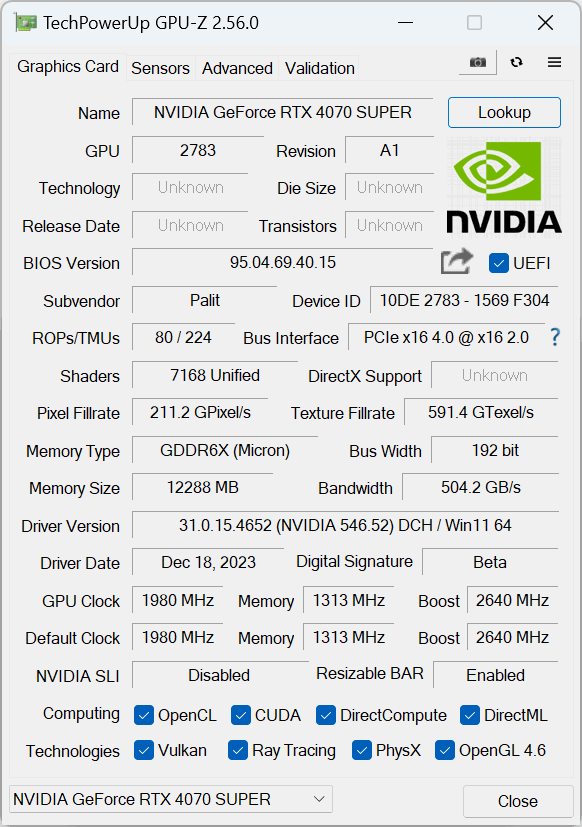
TSMC's N4 node has Nvidia cranking up the clock speed significantly this generation, with the reference RTX 4070 Super sporting the same 2475MHz rated boost clock as the original model. Palit has bumped this up a fair amount with the JetStream OC however, with a rated boost clock of 2640MHz.
The memory configuration also remains the same as both the 4070 and 4070 Ti. That means a relatively narrow 192-bit memory interface, so even with 12GB GDDR6X running at 21Gbps, total memory bandwidth comes in at 504 GB/s, lower than the RTX 3070 Ti. That said, there has been a substantial upgrade to the L2 cache with the Ada architecture, with the RTX 4070 now offering 49.1MB, compared to just 6MB for GA102.
Considering the increased core-count, power draw is naturally a touch higher than the RTX 4070, with the reference 4070 Super boasting a 220W TGP. Palit has increased this further though, this time with a 240W TGP for the JetStream OC.
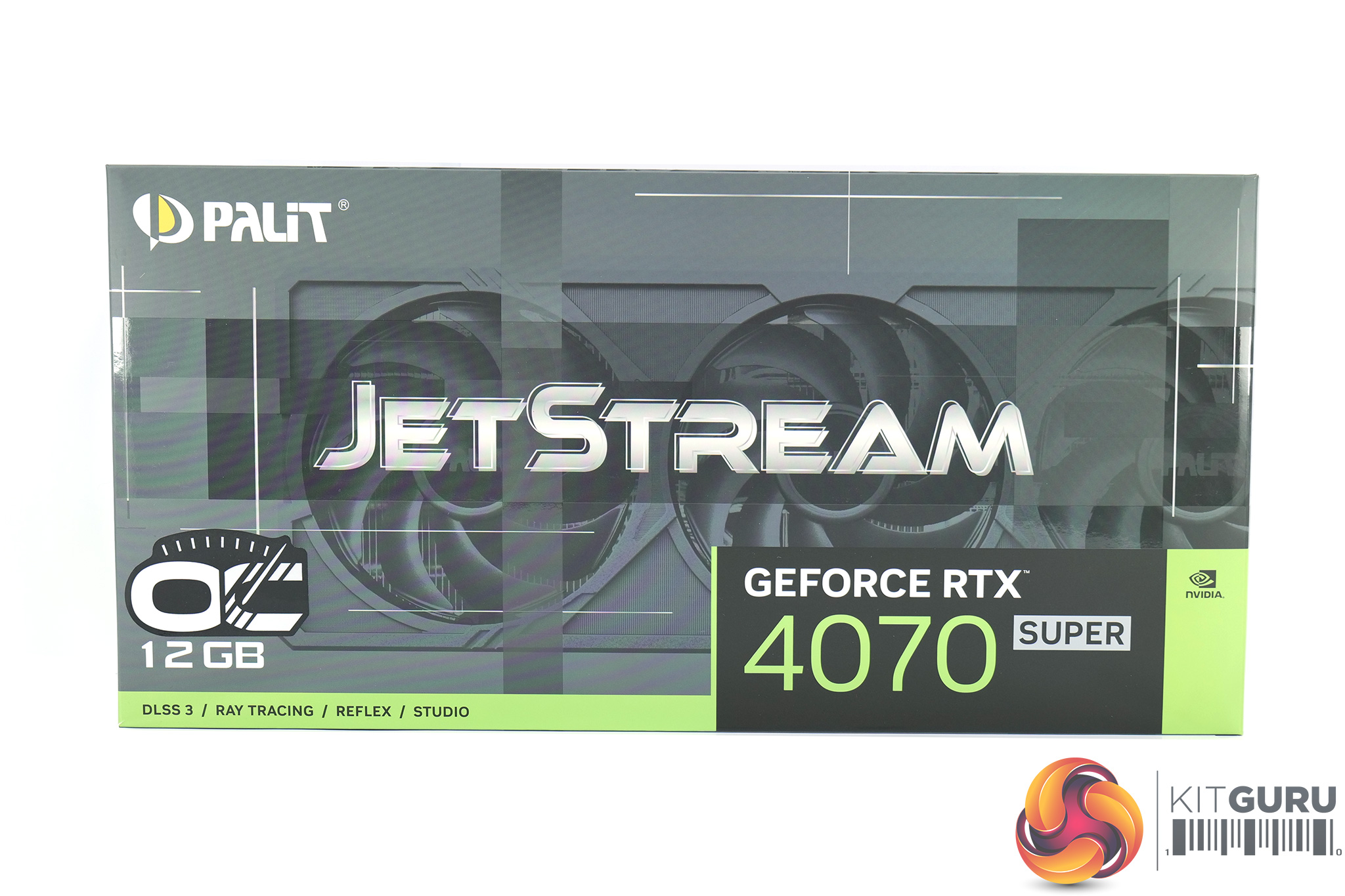
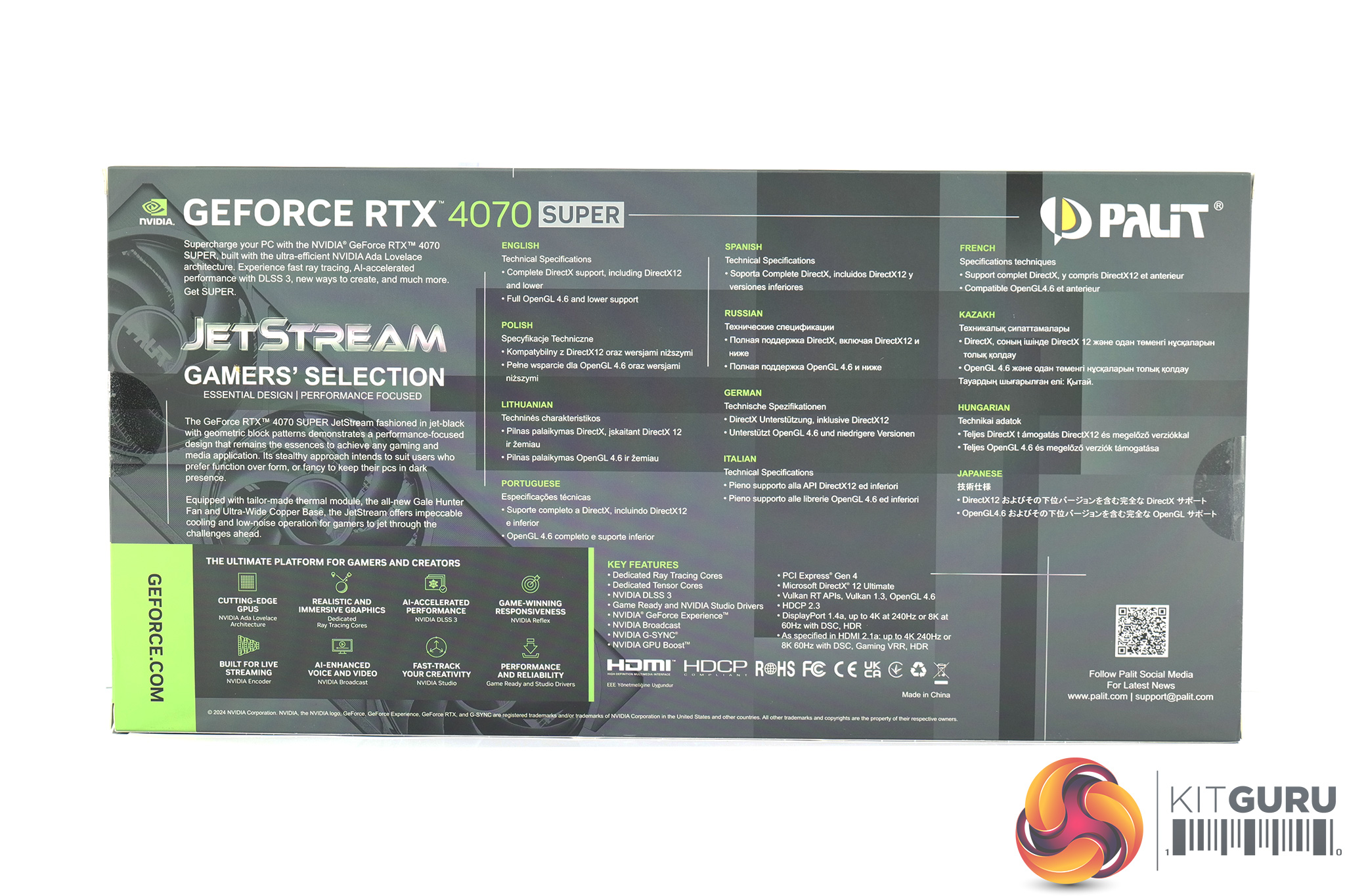
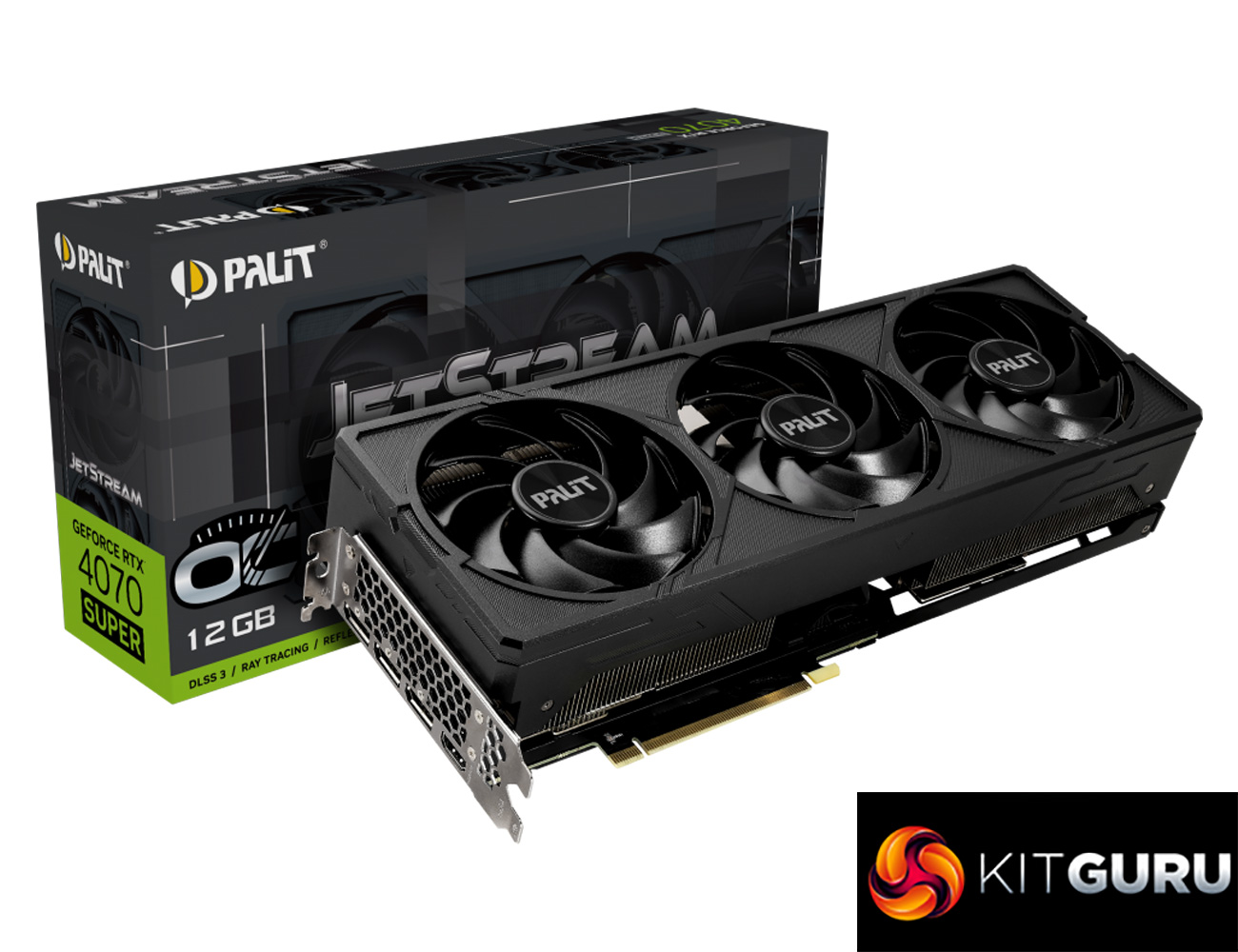
Palit's RTX 4070 Super JetStream OC ships in a grey box, with a desaturated image of the graphics card visible underneath the large JetStream logo. On the back, key features of the card are highlighted in multi-lingual text.
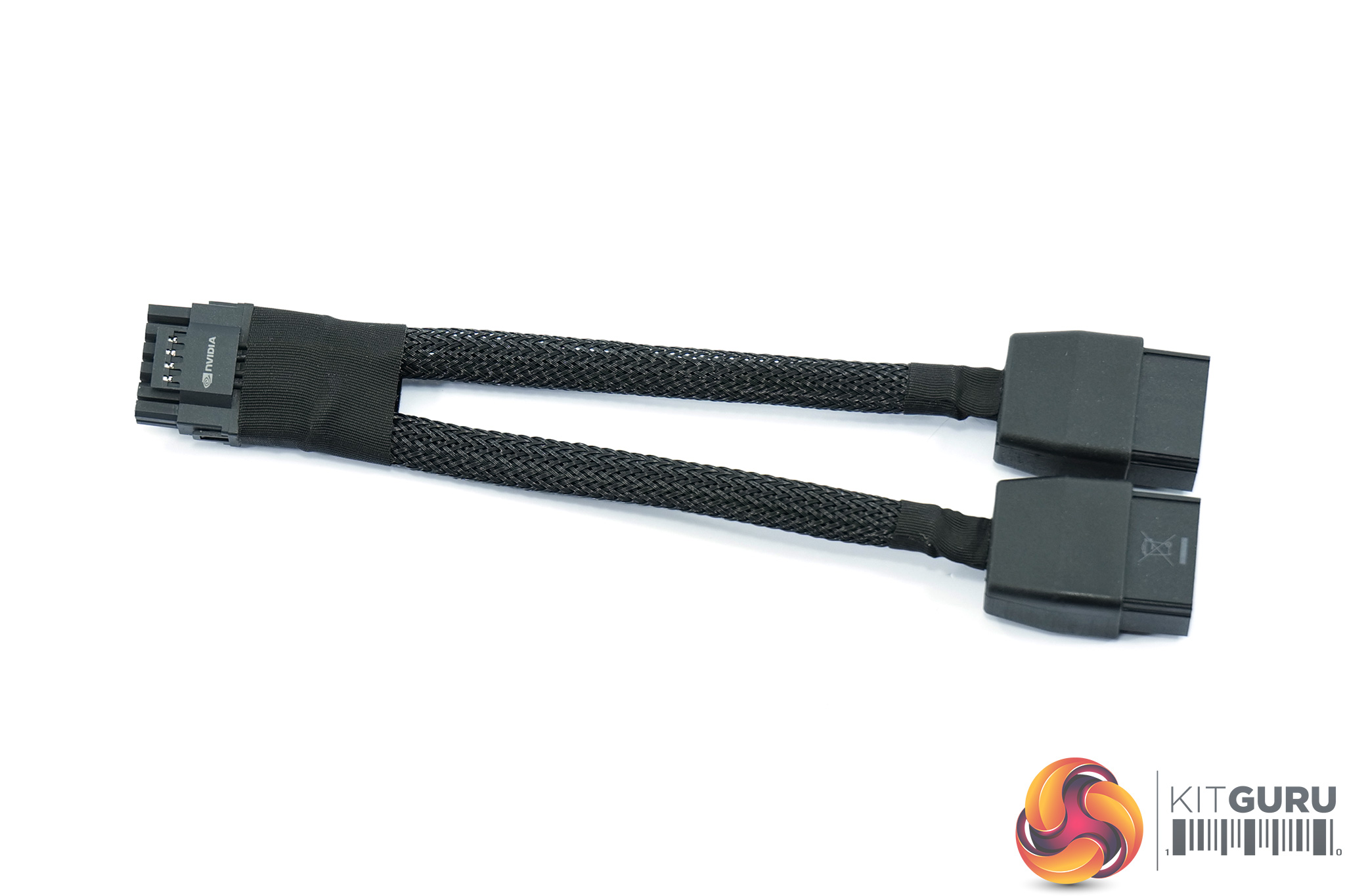
Inside the box, the only included accessory is a dual 8-pin power adapter – meaning there are no quick start guides or other pieces documentation to be found.
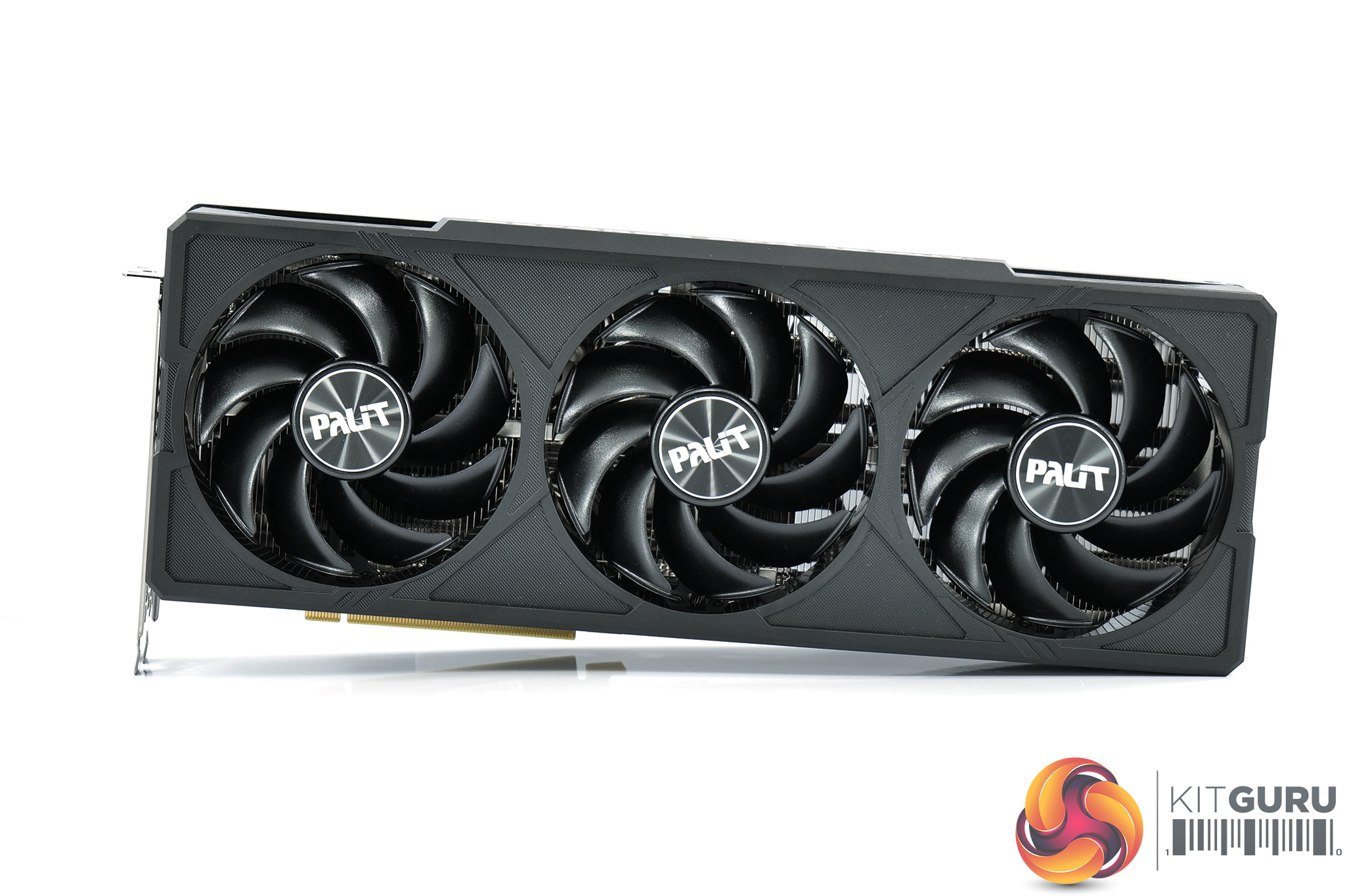
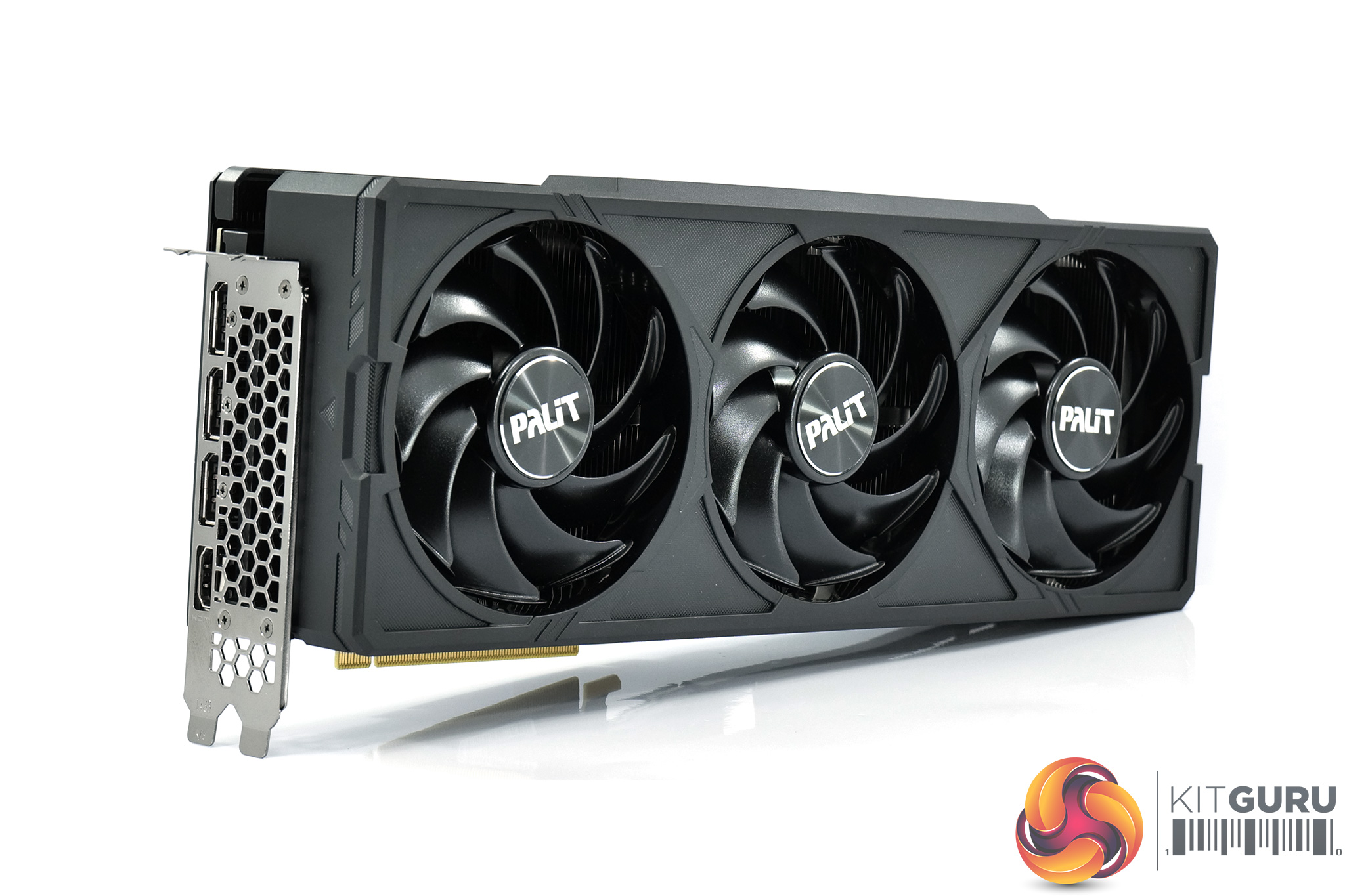
Taking a look at the card itself, Palit has opted for a plastic shroud that is entirely matte black. It does feature some design elements which Palit describes as ‘geometric block patterns' to add some visual interest, but it's a very low-key design. Some may love this, some may find it a touch boring, but I quite like the understated aesthetic.
We also get a look at three Gale Hunter fans, each measuring approximately 95mm in diameter. These come fitted with ‘winglets' on each fan tail, something Palit claims can help concentrate airflow and avoid the ‘vortex effect'.
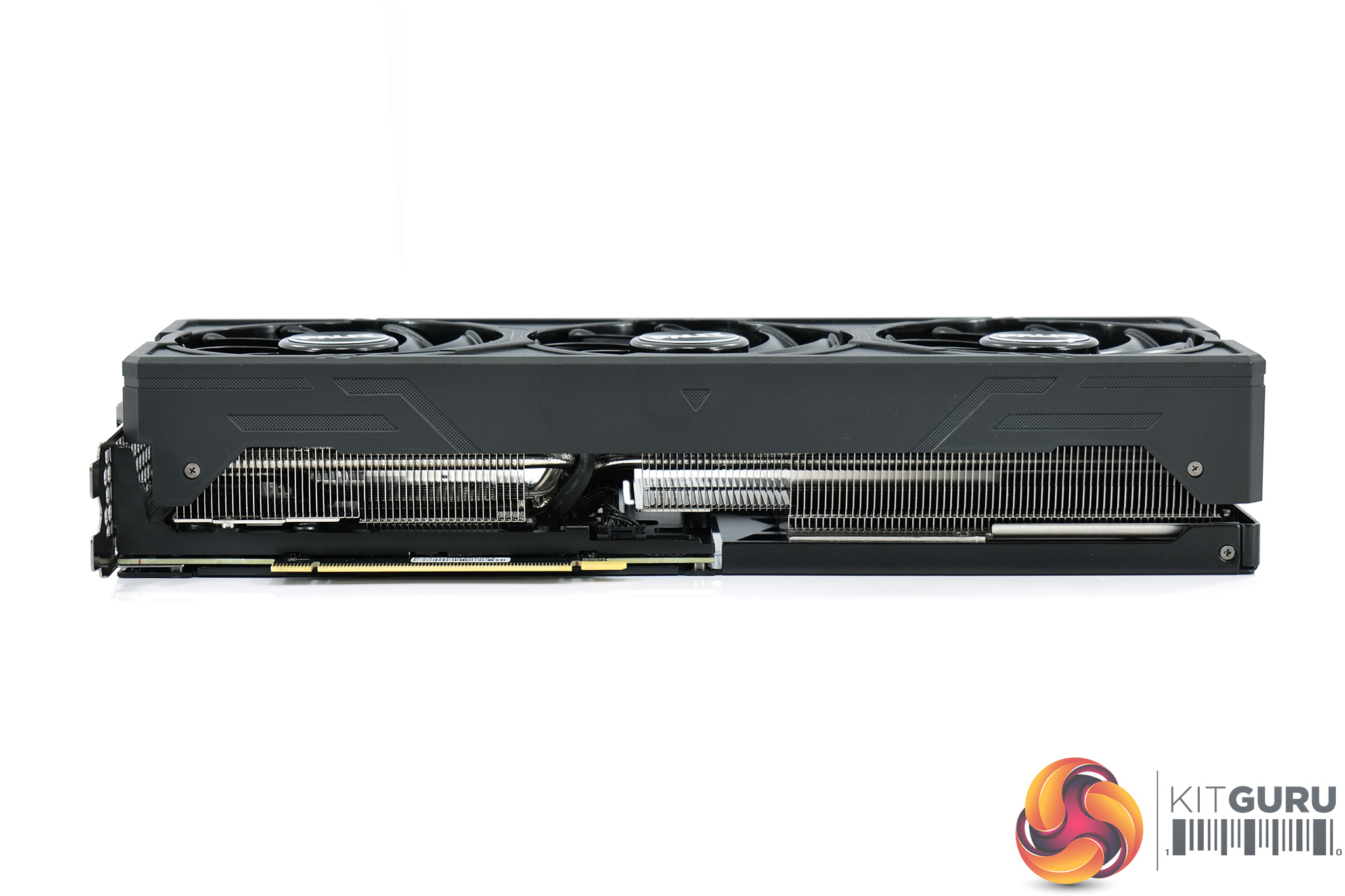
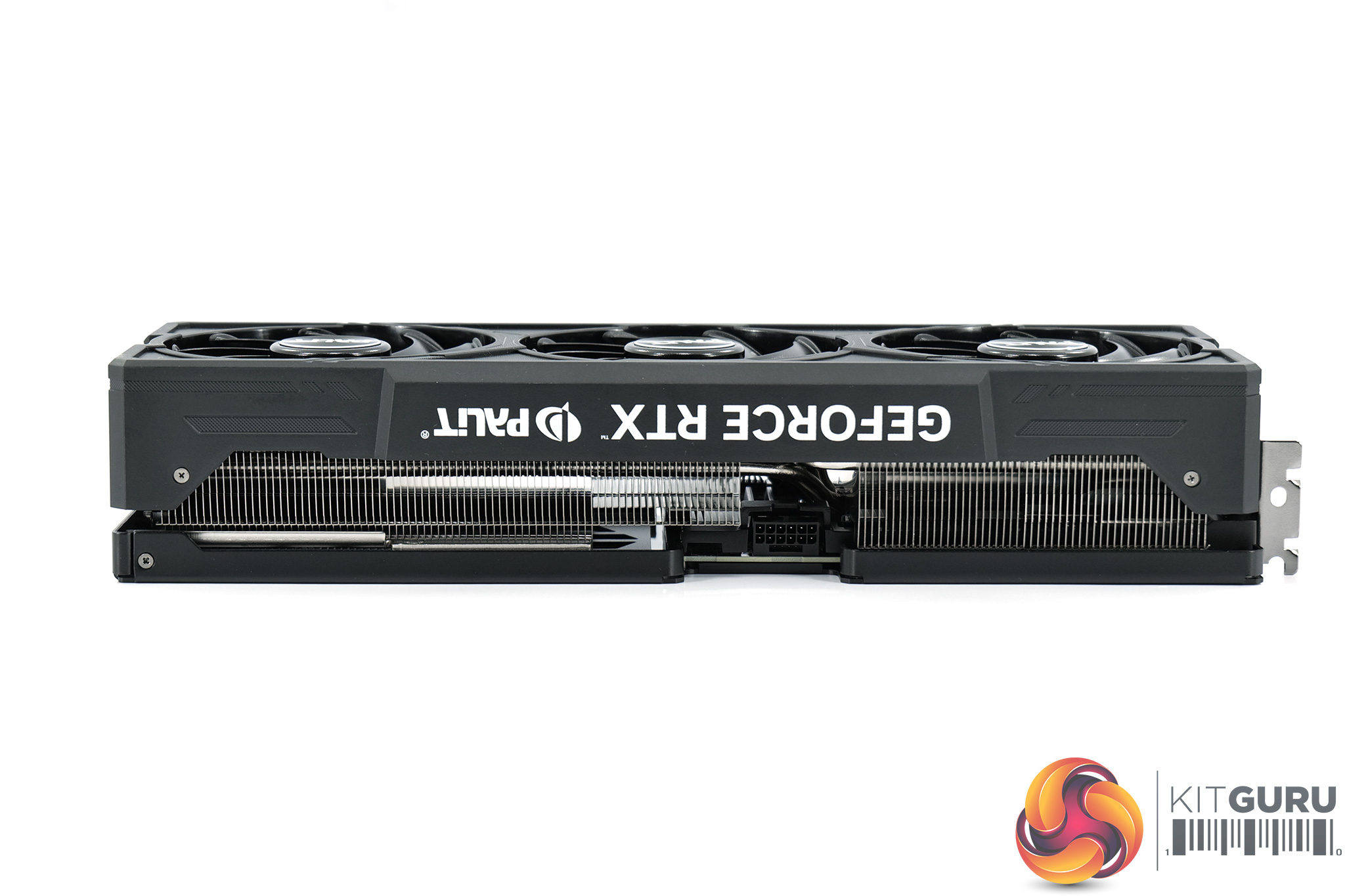
In terms of dimensions, the JetStream OC measures 328.9 x 130.5 x 63.5mm, while it weighed in at 1440g on my scales.
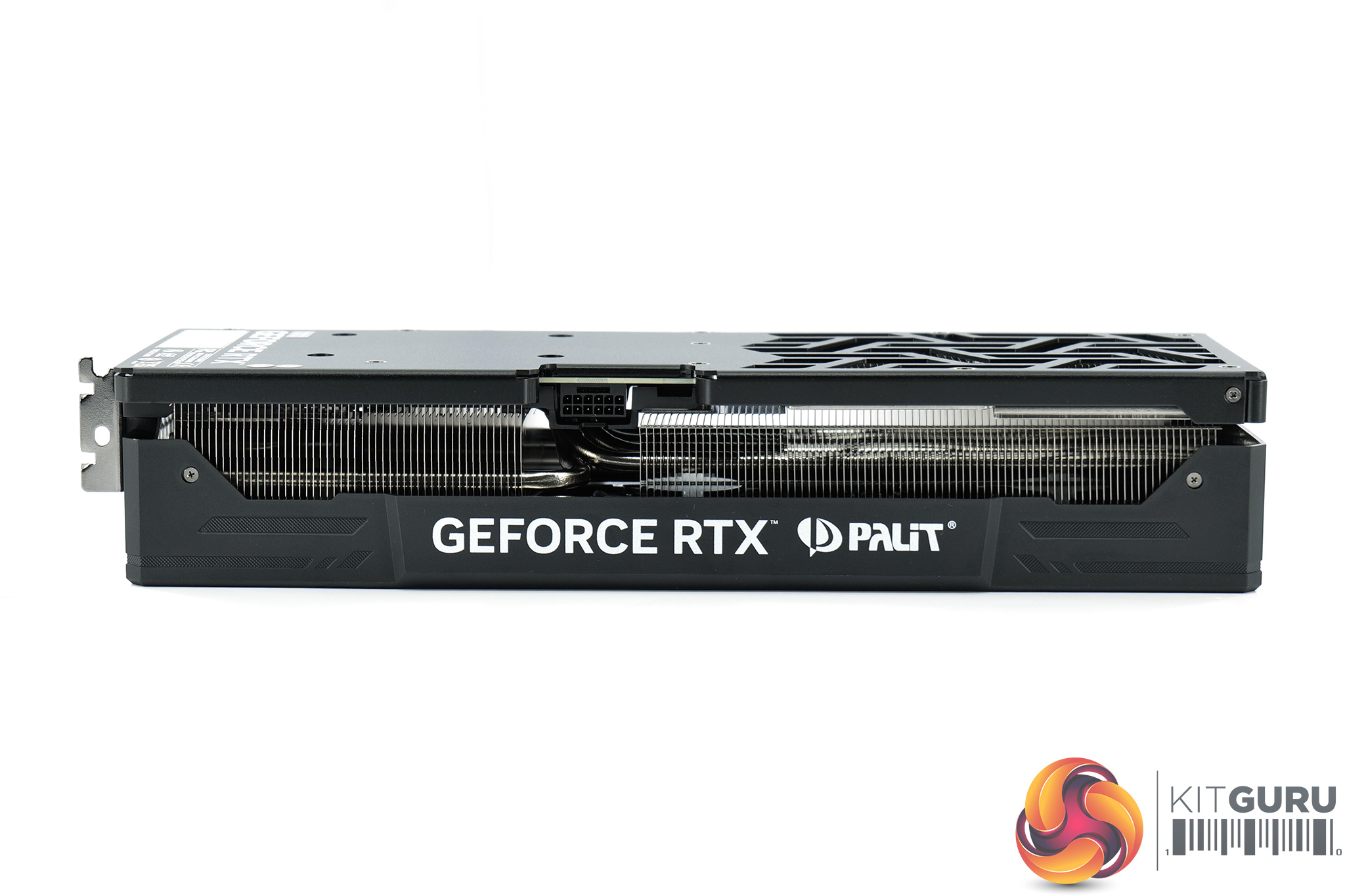
The front side of the card is home to the GeForce RTX and Palit logos, though do note these are only printed in white text and do not illuminate once turned on.
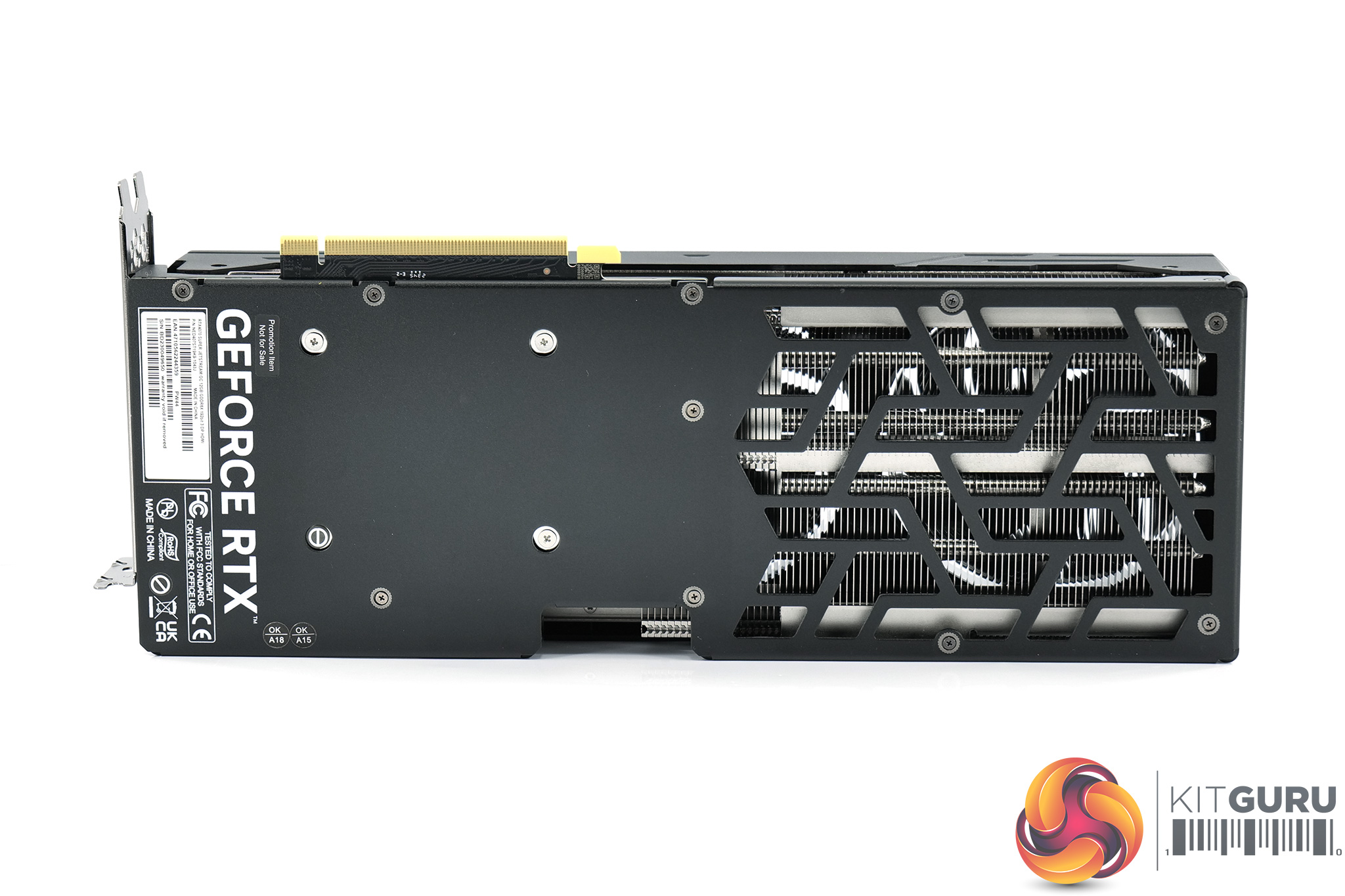
As for the backplate, this is a full-length metal design, though there's some large cutouts towards the end of the card to allow air to pass directly through the heatsink. Palit is also using what is describes as an Anti-Gravity Plate as part of the internal construction of the card which should help prevent sagging.
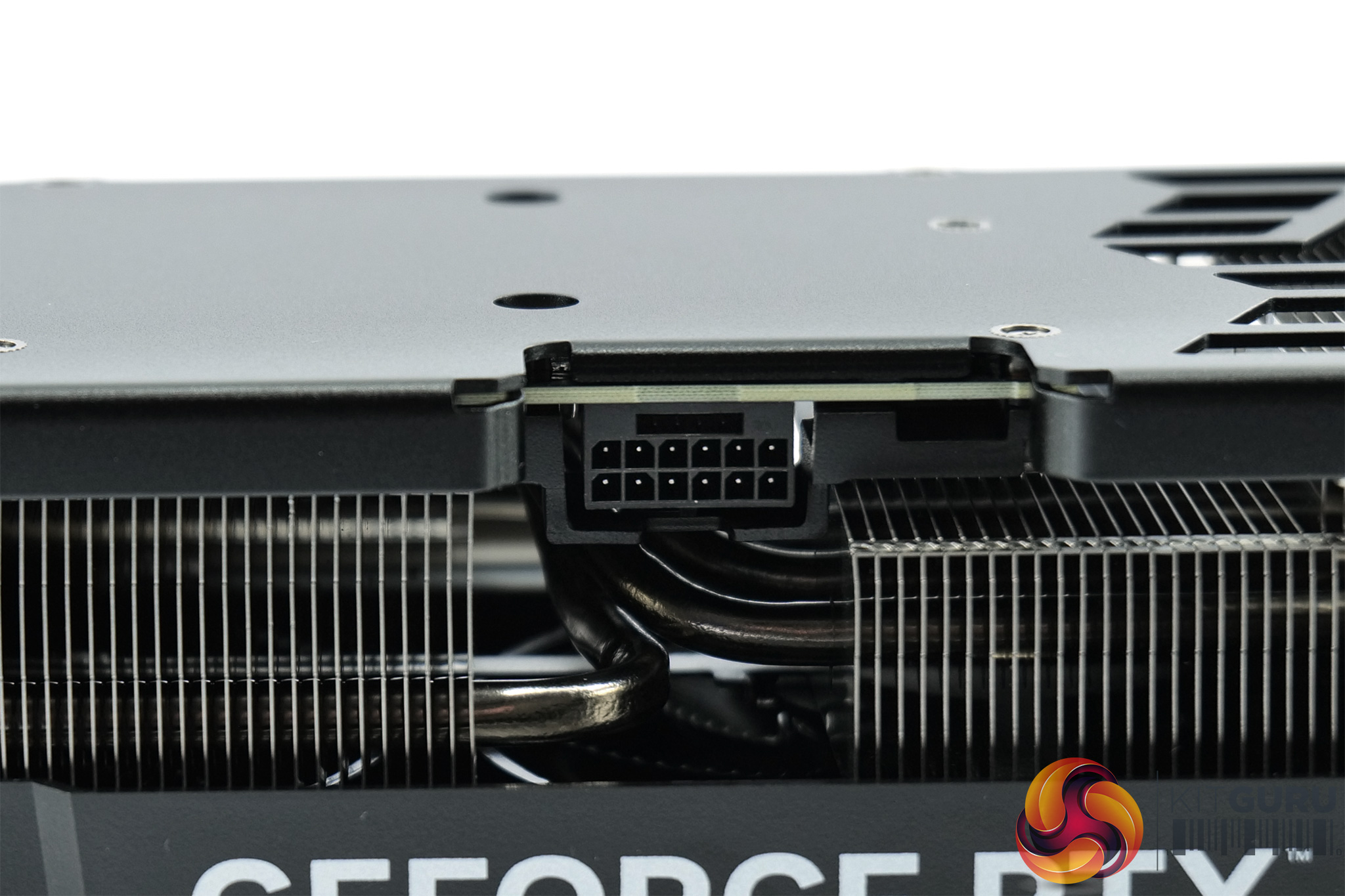
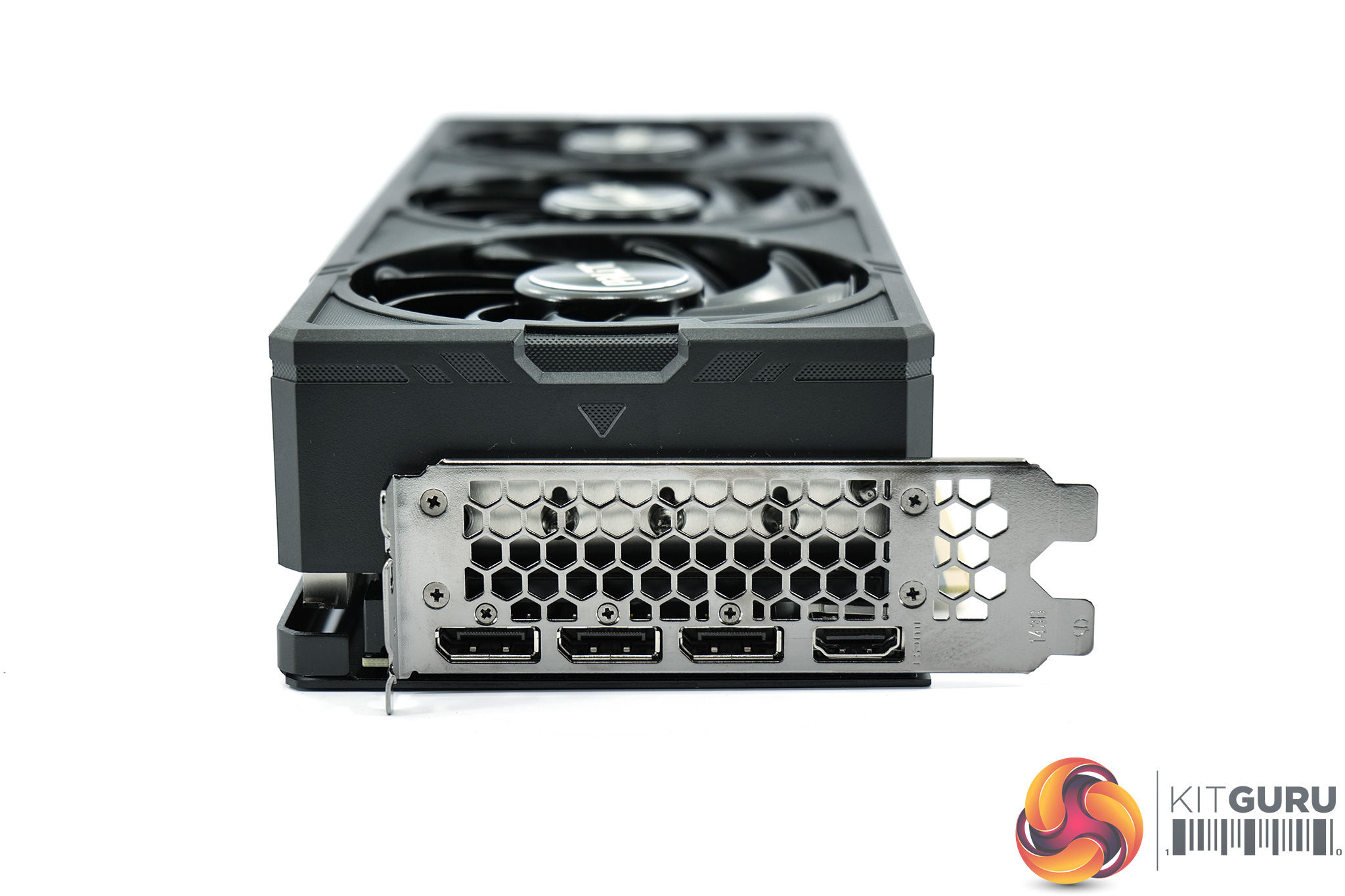
Power is supplied by a single 12VHPWR/PCIe Gen5 power connector, though a dual 8-pin adapter is included in the box. Display outputs are standard, with 3x DisplayPort 1.4 and 1x HDMI 2.1 connectors.
Driver Notes
- AMD GPUs were benchmarked with the Adrenalin 23.12.1 driver.
- Nvidia GPUs (except RTX 4070 Super) were benchmarked with the 546.33 driver.
- RTX 4070 Super was benchmarked with the 546.52 driver supplied to press.
Results are only directly comparable where this exact configuration has been used.
Test System:
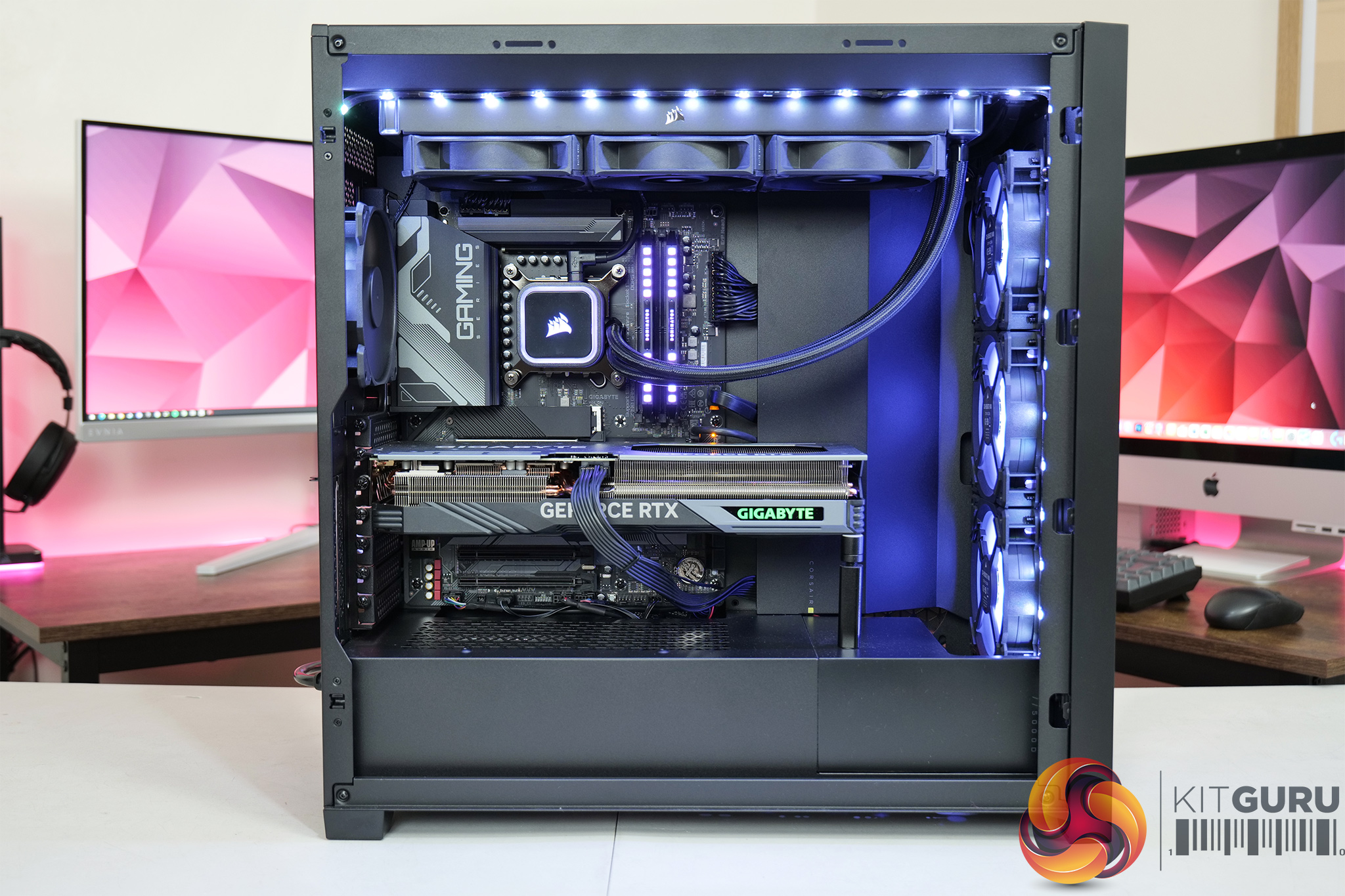
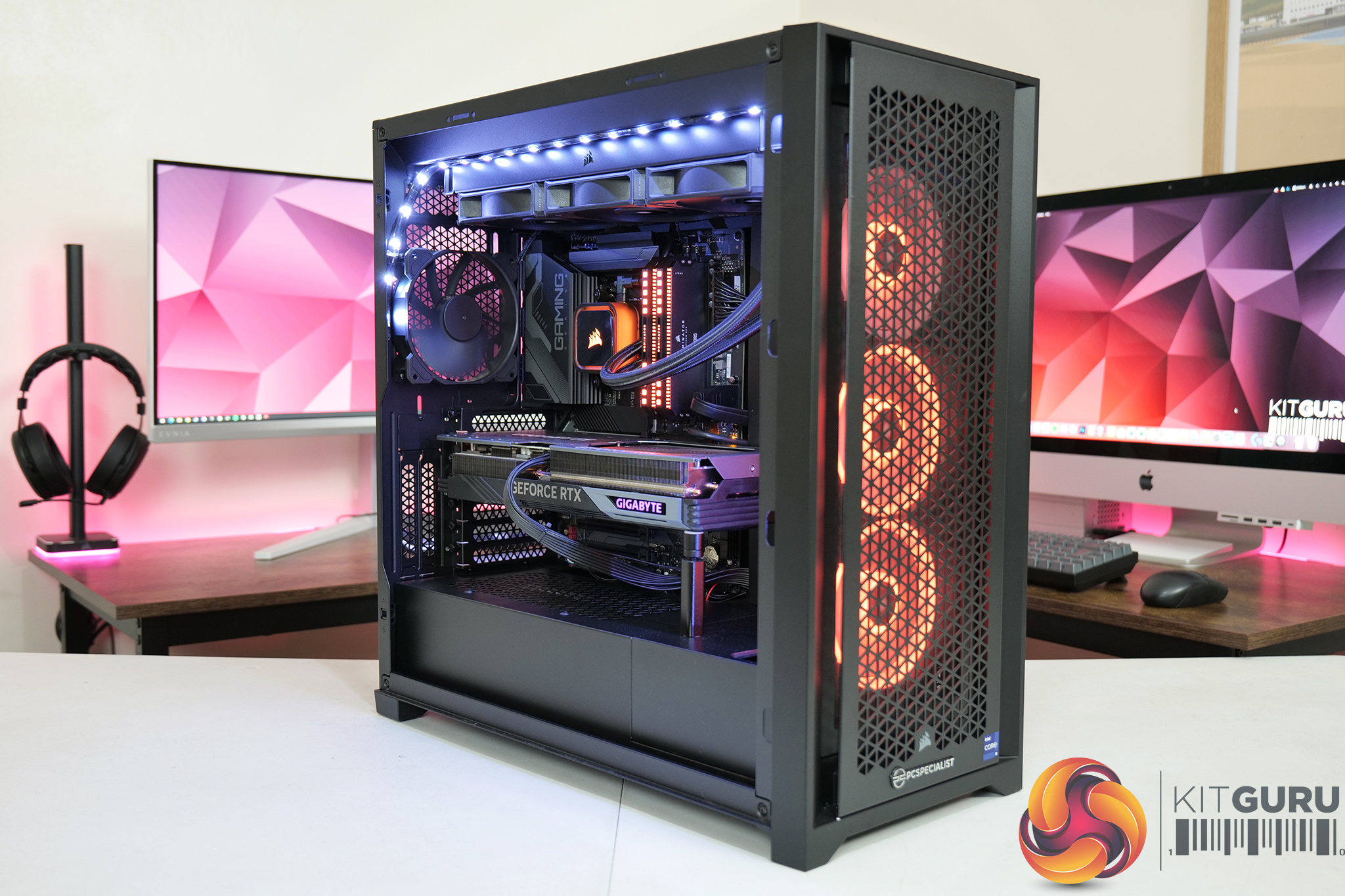
We test using a custom built system from PCSpecialist, based on Intel’s Rocket Lake platform. You can read more about this system HERE and configure your own PCSpecialist system HERE.
| CPU |
Intel Core i9-13900KS
|
| Motherboard |
Gigabyte Z790 Gaming X AX
|
| Memory |
32GB (2x16GB) Corsair Dominator Platinum RGB DDR5 6000MHz
|
| Graphics Card |
Varies
|
| SSD |
4TB Seagate Firecuda 530 Gen 4 PCIe NVMe
|
| Chassis | Corsair 5000D Airflow Tempered Glass Gaming Case |
| CPU Cooler |
Corsair iCUE H150i Elite RGB High Performance CPU Cooler
|
| Power Supply |
Corsair 1600W Pro Series Titanium AX1600i Digital Modular PSU
|
| Operating System |
Windows 11 23H2
|
| Monitor |
MSI Optix MPG321UR-QD
|
| Resizable BAR |
Enabled for all supported GPUs
|
Comparison Graphics Cards List
- AMD RX 7900 XTX 24GB
- AMD RX 7900 XT 20GB
- AMD RX 7800 XT 16GB
- Sapphire RX 7700 XT Pulse 12GB
- AMD RX 6700 XT 12GB
- Nvidia RTX 4090 FE 24GB
- Nvidia RTX 4080 FE 16GB
- Gigabyte RTX 4070 Ti Gaming 12GB
- Gigabyte RTX 4070 Supe Aero OC 12GB
- Nvidia RTX 4070 Super FE 12GB
- Nvidia RTX 4070 FE 12GB
- Gigabyte RTX 3080 Eagle 10GB
- Nvidia RTX 3070 FE 8GB
All cards were tested at reference specifications.
Software and Games List
- 3DMark Fire Strike & Fire Strike Ultra (DX11 Synthetic)
- 3DMark Time Spy (DX12 Synthetic)
- 3DMark DirectX Raytracing feature test (DXR Synthetic)
- Alan Wake II (DX12)
- Assassin's Creed Mirage (DX12)
- Avatar: Frontiers of Pandora (DX12)
- Cyberpunk 2077 (DX12)
- F1 23 (DX12)
- Forza Horizon 5 (DX12)
- Hitman 3 (DX12)
- The Last of Us Part 1 (DX12)
- Marvel's Spider-Man Remastered (DX12)
- A Plague Tale: Requiem (DX12)
- Ratchet and Clank: Rift Apart (DX12)
- Red Dead Redemption 2 (DX12)
- Resident Evil 4 (DX12)
- Returnal (DX12)
- Shadow of the Tomb Raider (DX12)
- Starfield (DX12)
- Total War: Pharaoh (DX11)
We run each benchmark/game three times, and present mean averages in our graphs. We use FrameView to measure average frame rates as well as 1% low values (99th percentile) across our three runs.
Here we test five games, all at 2560×1440 resolution using maximum image quality settings.
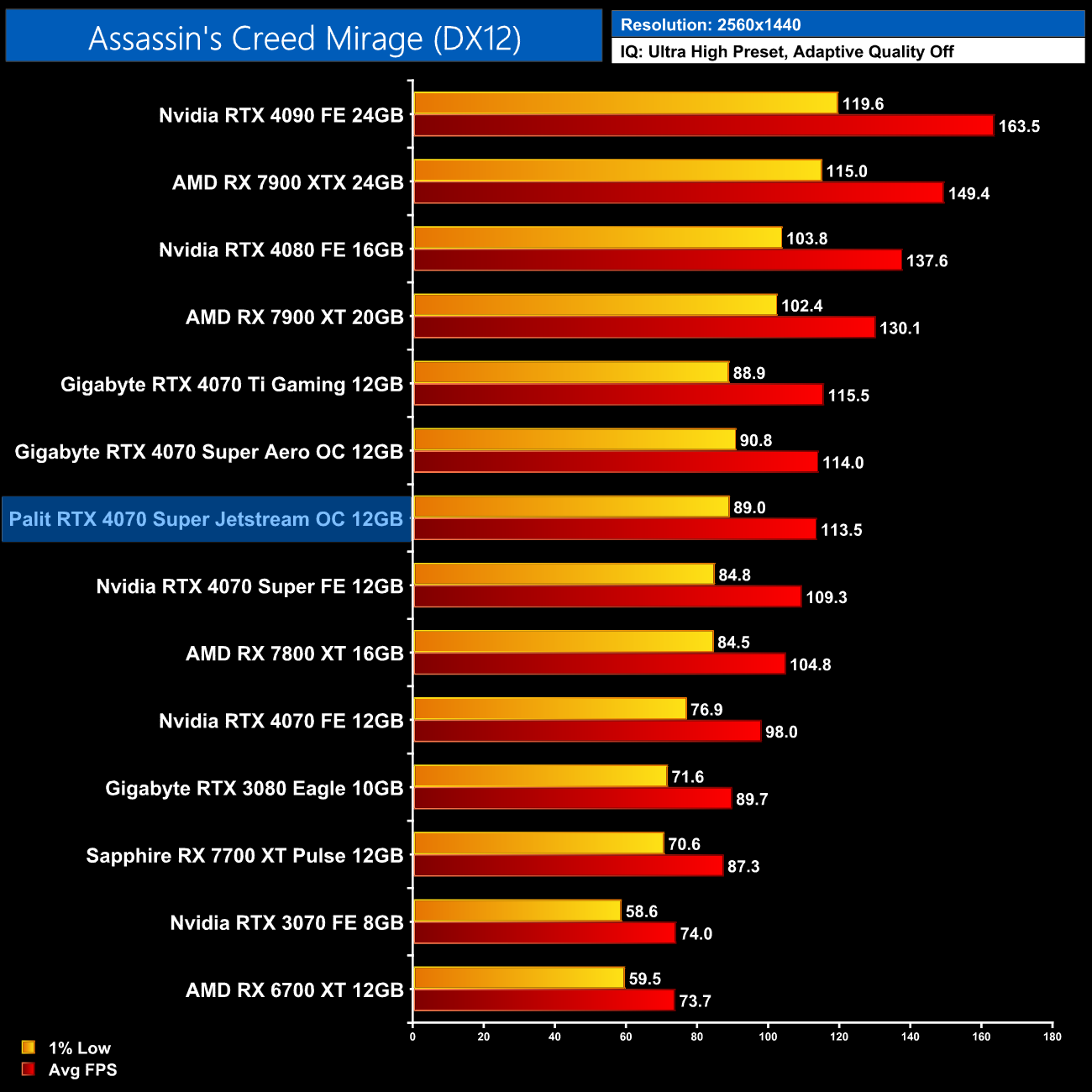
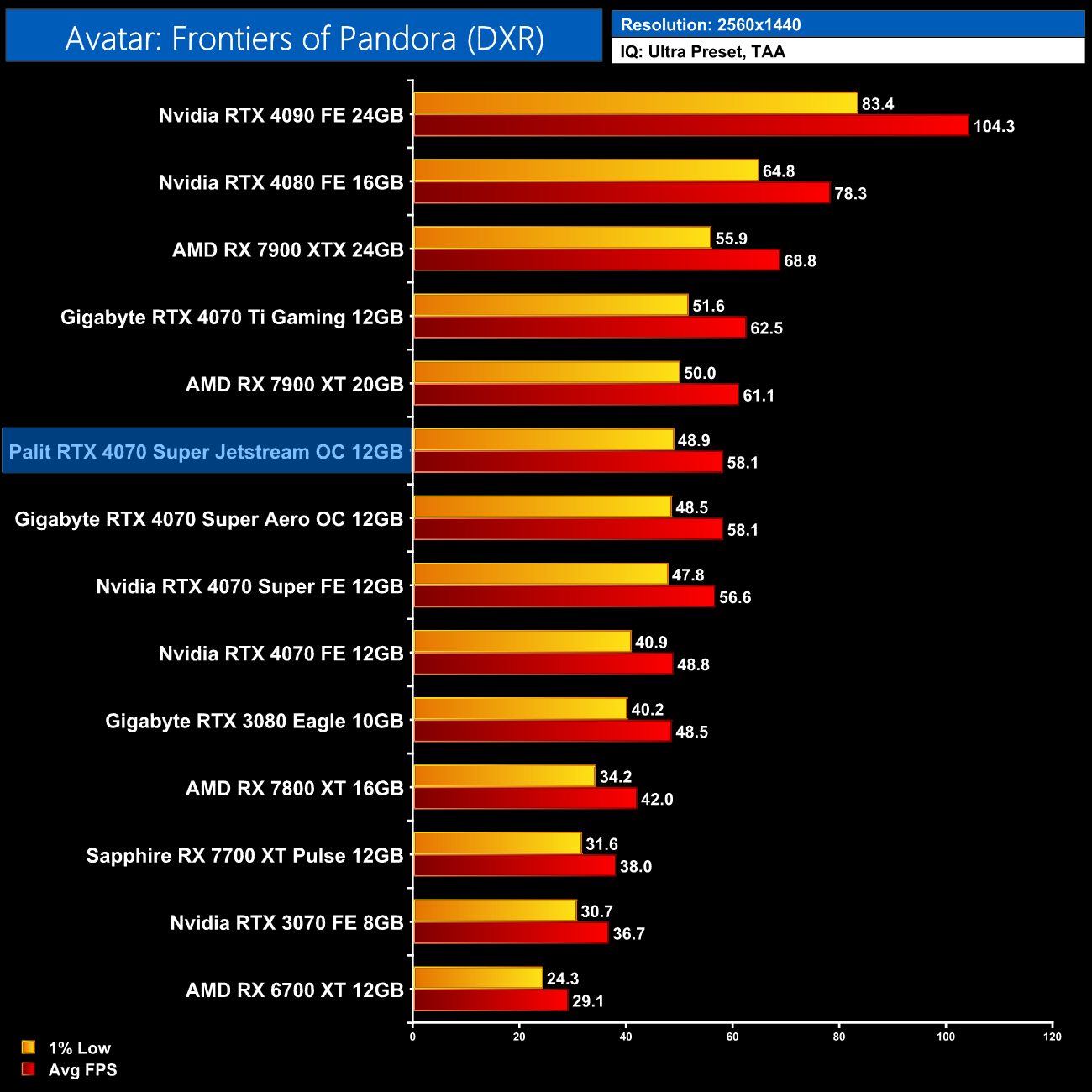
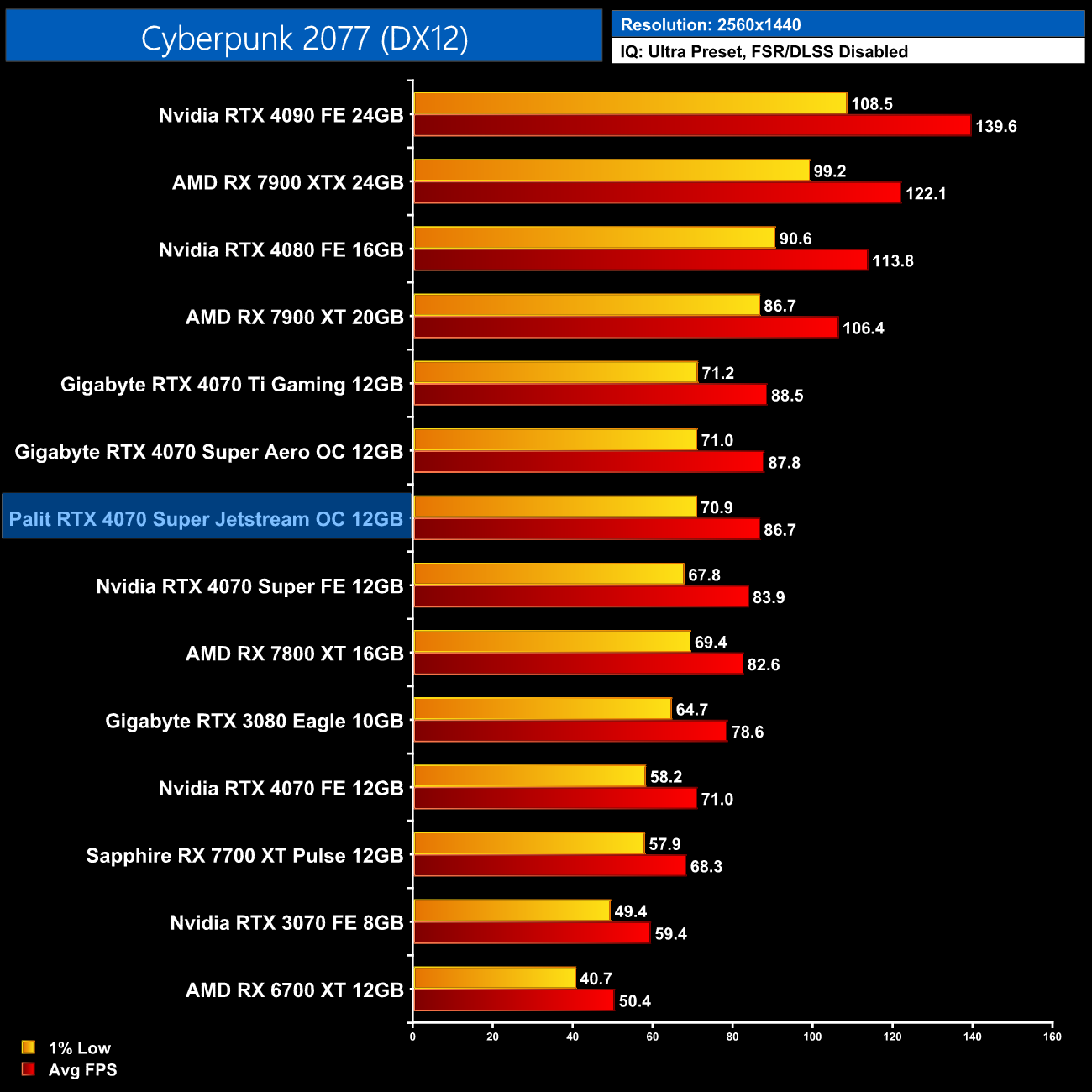
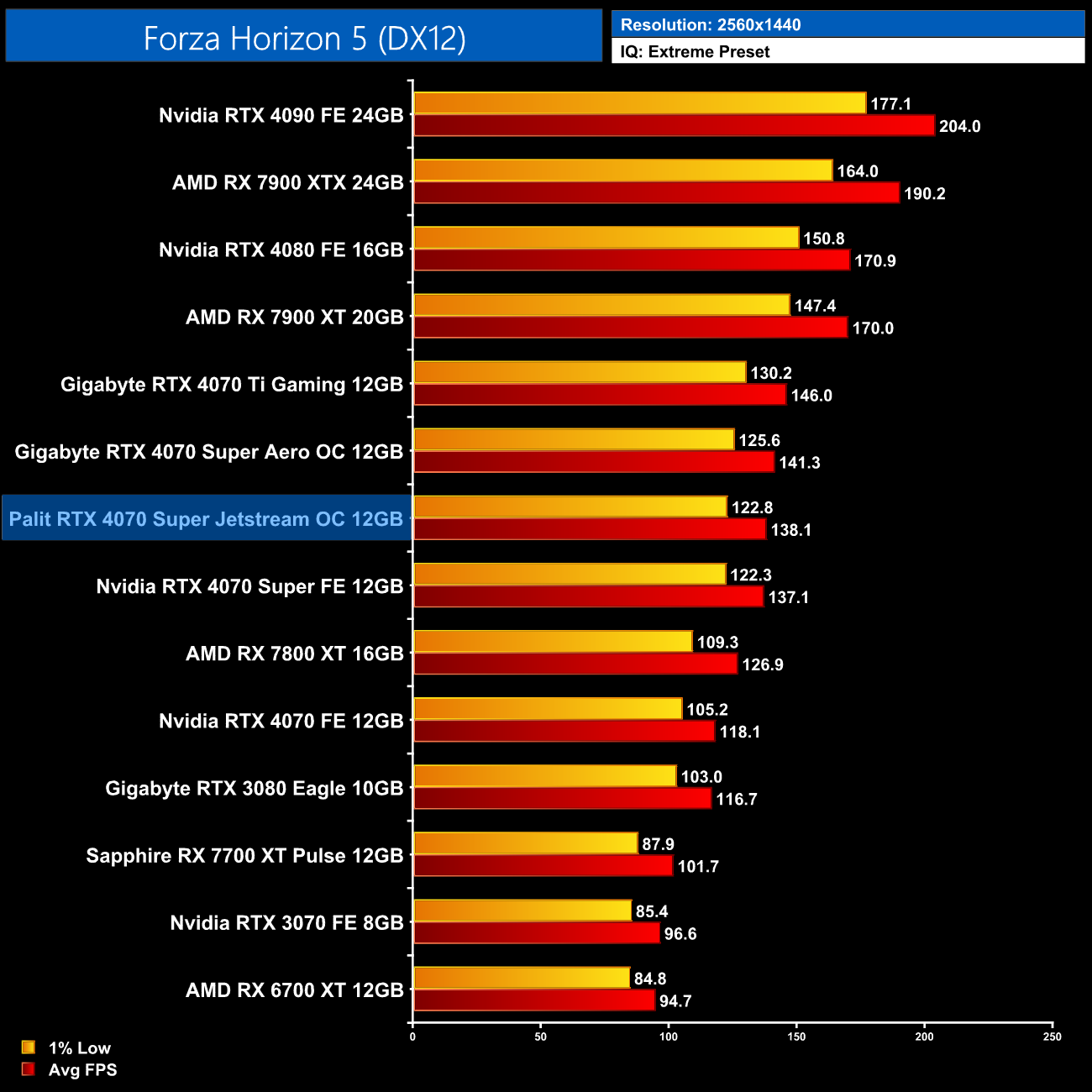
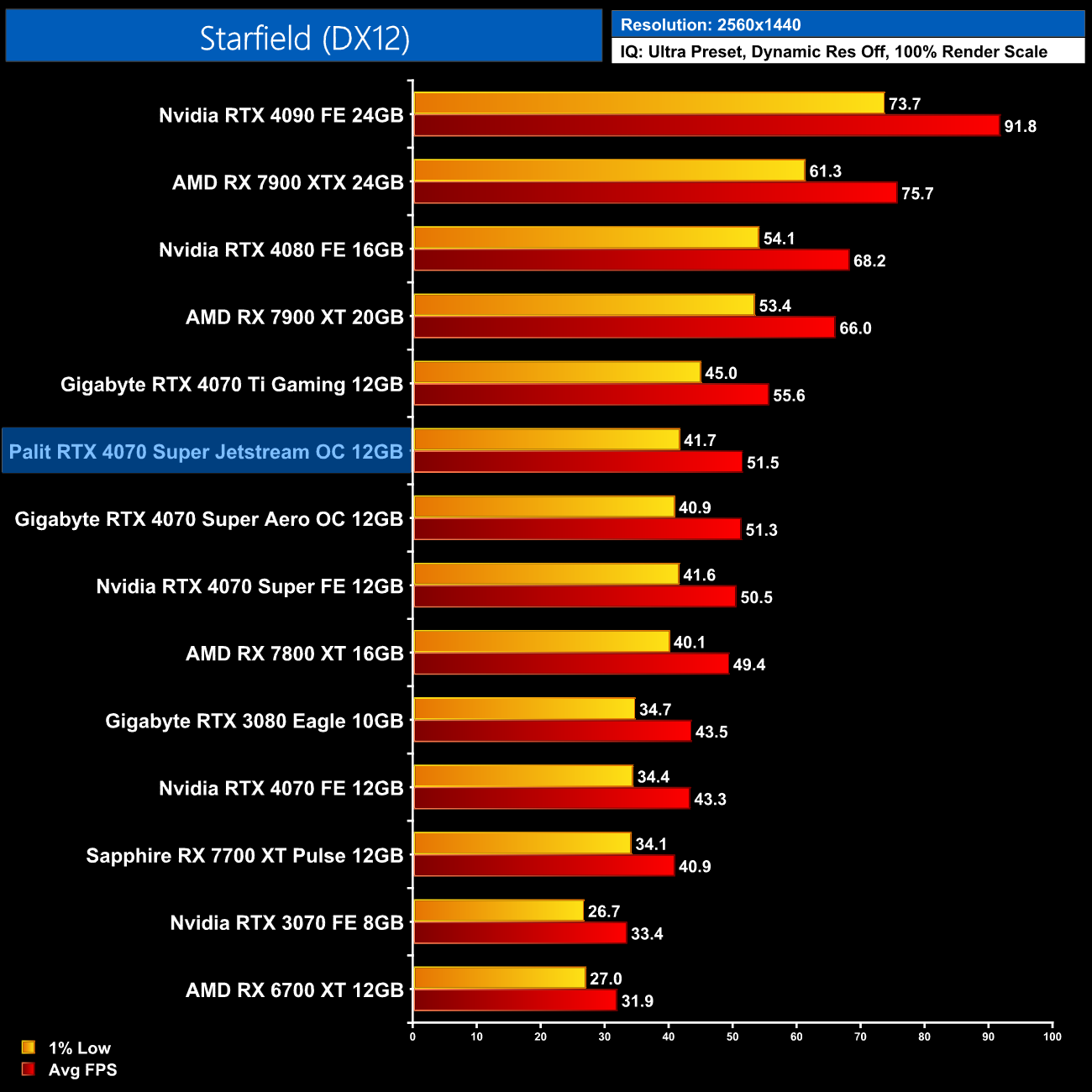
We don't focus heavily on gaming performance in these AIB card reviews, for the simple reason that factory overclocks don't make that much difference. Despite a theoretical clock speed advantage of 165MHz, real-world gaming performance is only 2-3% ahead of the Nvidia Founders Edition across the 5 games we tested. That does put the JetStream OC even closer to the 4070 Ti, but the differences are very small compared to the Founders Edition. If you do want to see how the 4070 Super performs in a much wider array of games, check out our day 1 review.
Here we present the average clock speed for each graphics card while running Cyberpunk 2077 for 30 minutes. We use GPU-Z to record the GPU core frequency during gameplay. We calculate the average core frequency during the 30 minute run to present here.
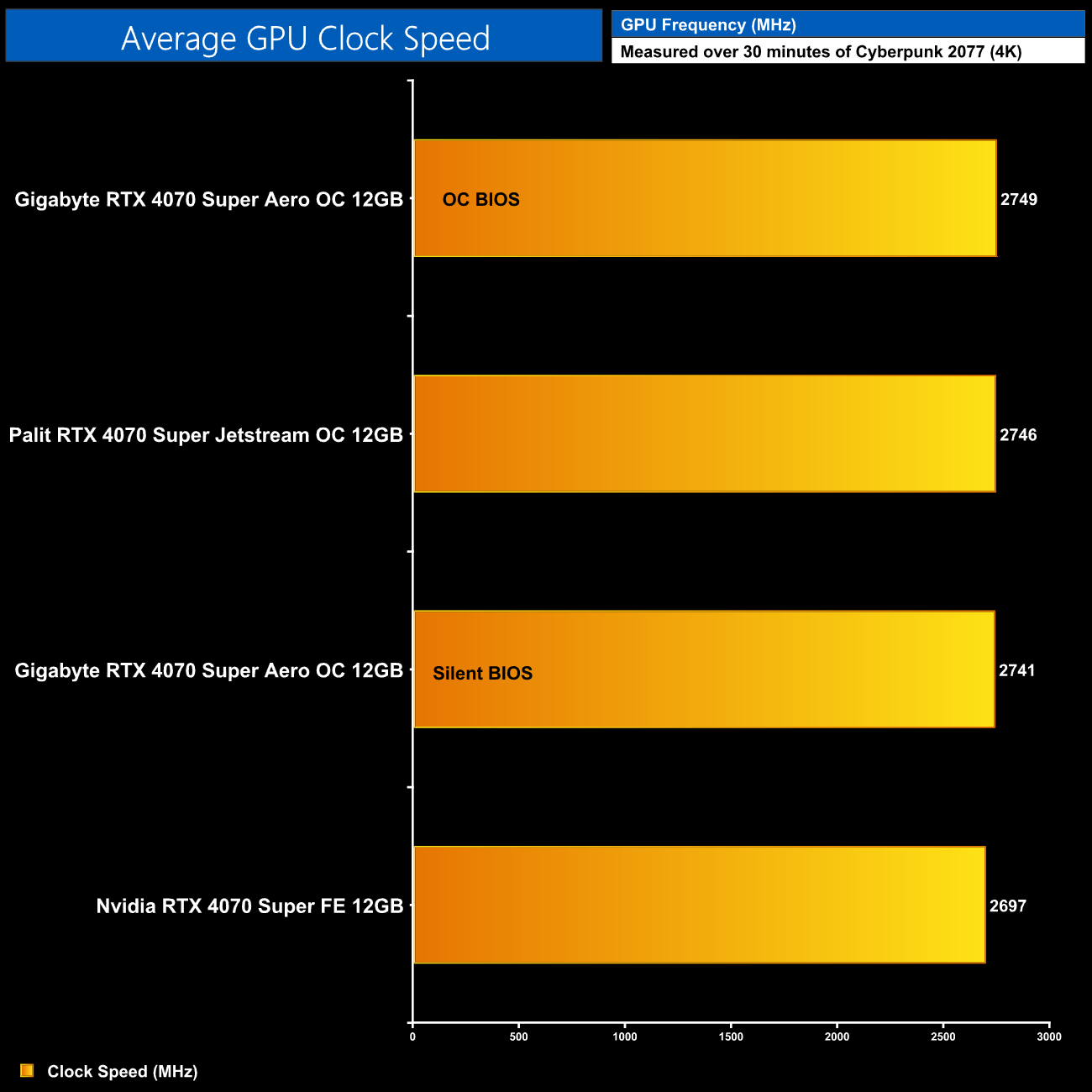
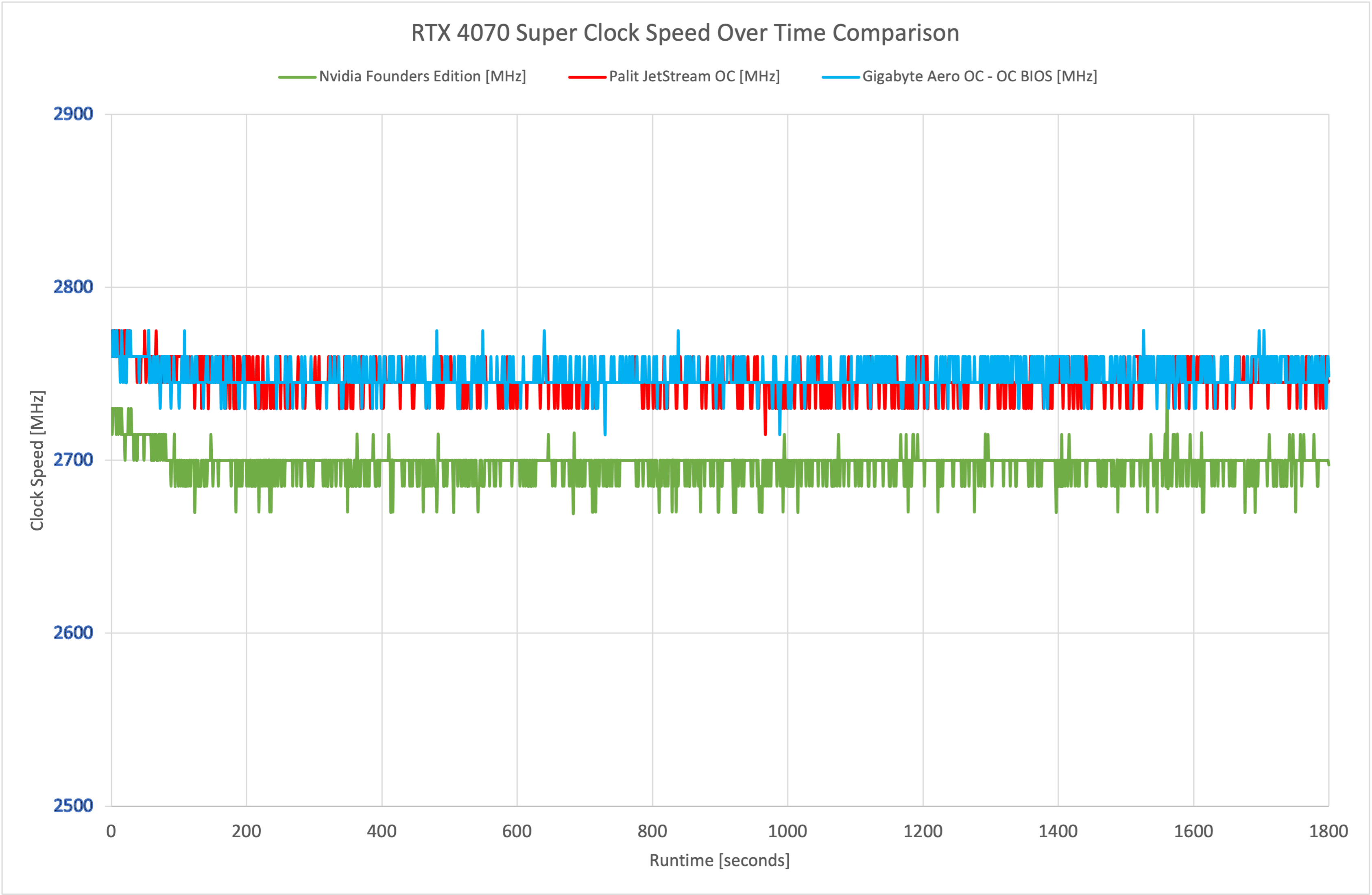
The JetStream OC does enjoy a small performance advantage over Nvidia's Founders Edition thanks to slightly higher clock speeds, as it hovered around the 2750MHz mark during our testing. In fact, it averaged 2746MHz after a 30-minute stress test, so it's about 50MHz faster than the Founders Edition in the real world.
For our GPU temperature testing, we measure the peak GPU core temperature under load. A reading under load comes from running Cyberpunk 2077 for 30 minutes.
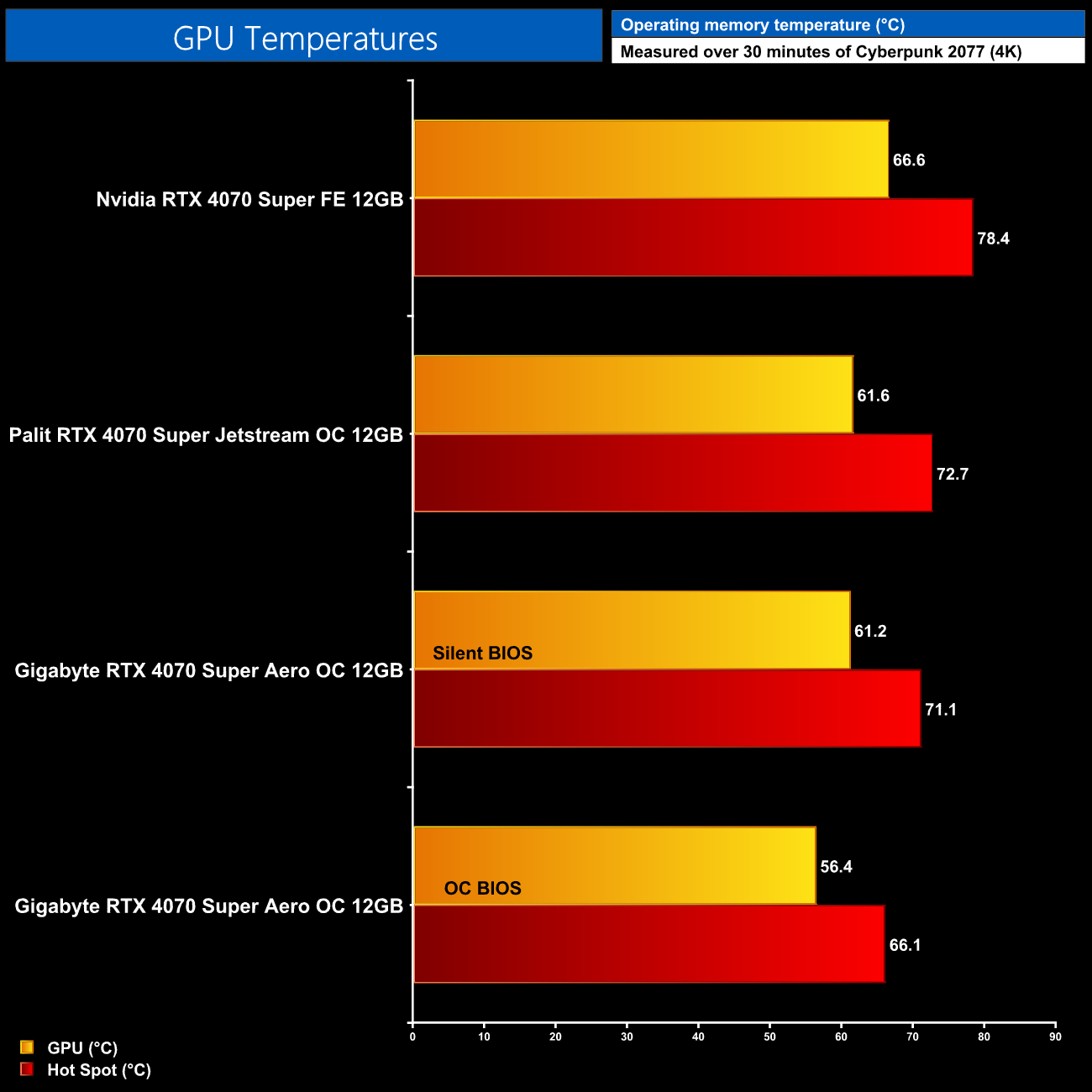
Out of the box thermal performance also shows a decent improvement compared to the Founders Edition. GPU temperature has dropped by 5C, while the hotspot sees a reduction of almost 6C. We do see better results from the Gigabyte Aero OC, particularly that card's OC BIOS, but the JetStream still delivers good results with a GPU temperature below 62C.
For our memory temperature testing, we measure the peak memory temperature under load. A reading under load comes from running Cyberpunk 2077 for 30 minutes.
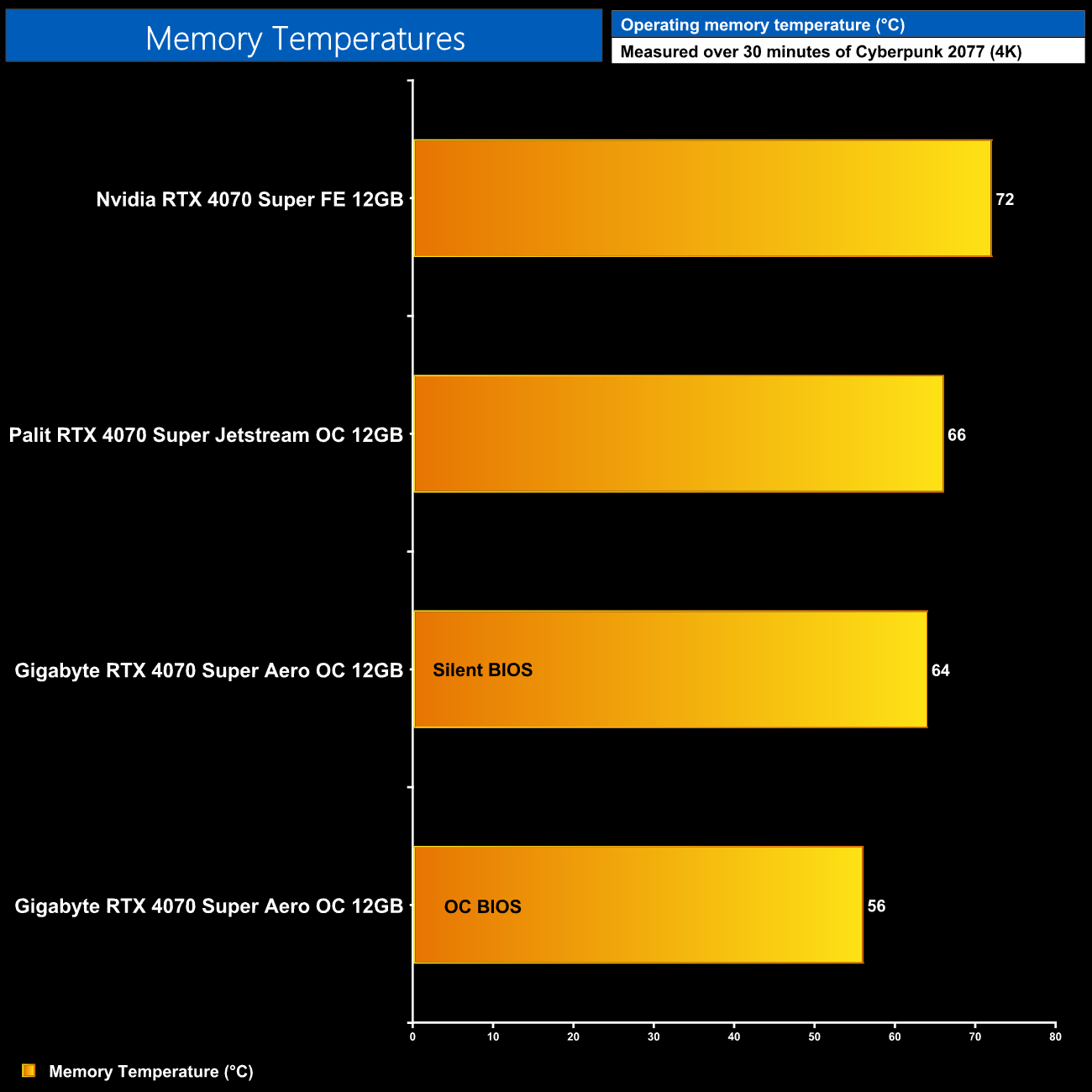
Likewise, the JetStream OC improves on memory temperatures by 6C compared to the Founders Edition, though it can't match the Aero OC for raw performance.
We take our noise measurements with the sound meter positioned 1 foot from the graphics card. I measured the noise floor to be 32 dBA, thus anything above this level can be attributed to the graphics cards. The power supply is passive for the entire power output range we tested all graphics cards in, while all CPU and system fans were disabled. A reading under load comes from running Cyberpunk 2077 for 30 minutes for 30 minutes.
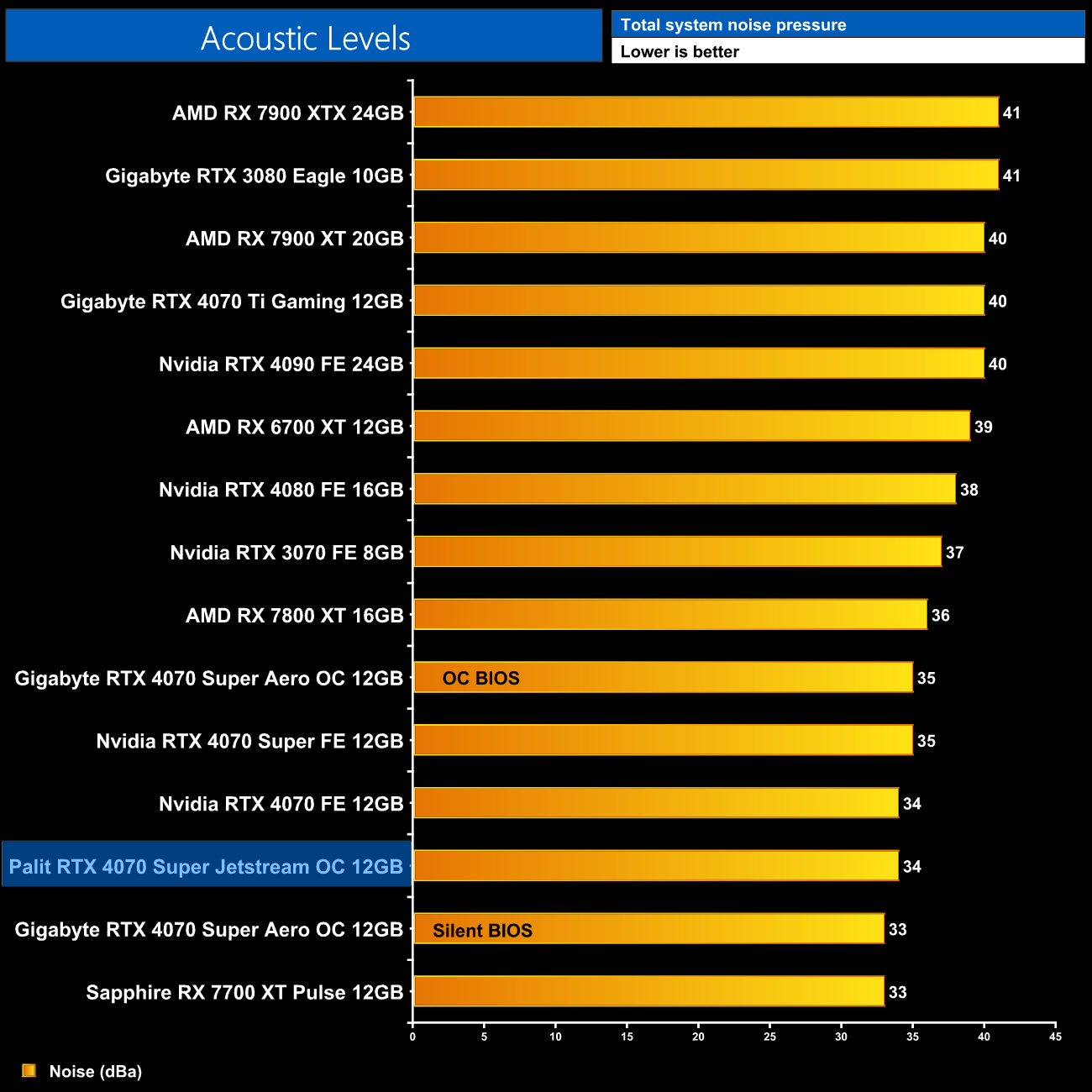
Fan noise is very innocuous, with the three fans spinning at just 1150pm, and that saw our sound meter hit 34dBa. Is it a massive difference compared to the Founders Edition? No, but it's still a very quiet graphics card either way, and I didn't notice any audible coil whine.
Following on from our stock thermal and acoustic testing, here we re-test the operating temperature of the GPU, but with noise levels normalised to 40dBa. This allows us to measure the efficiency of the overall cooling solution as varying noise levels as a result of more aggressive fan curves are no longer a factor.
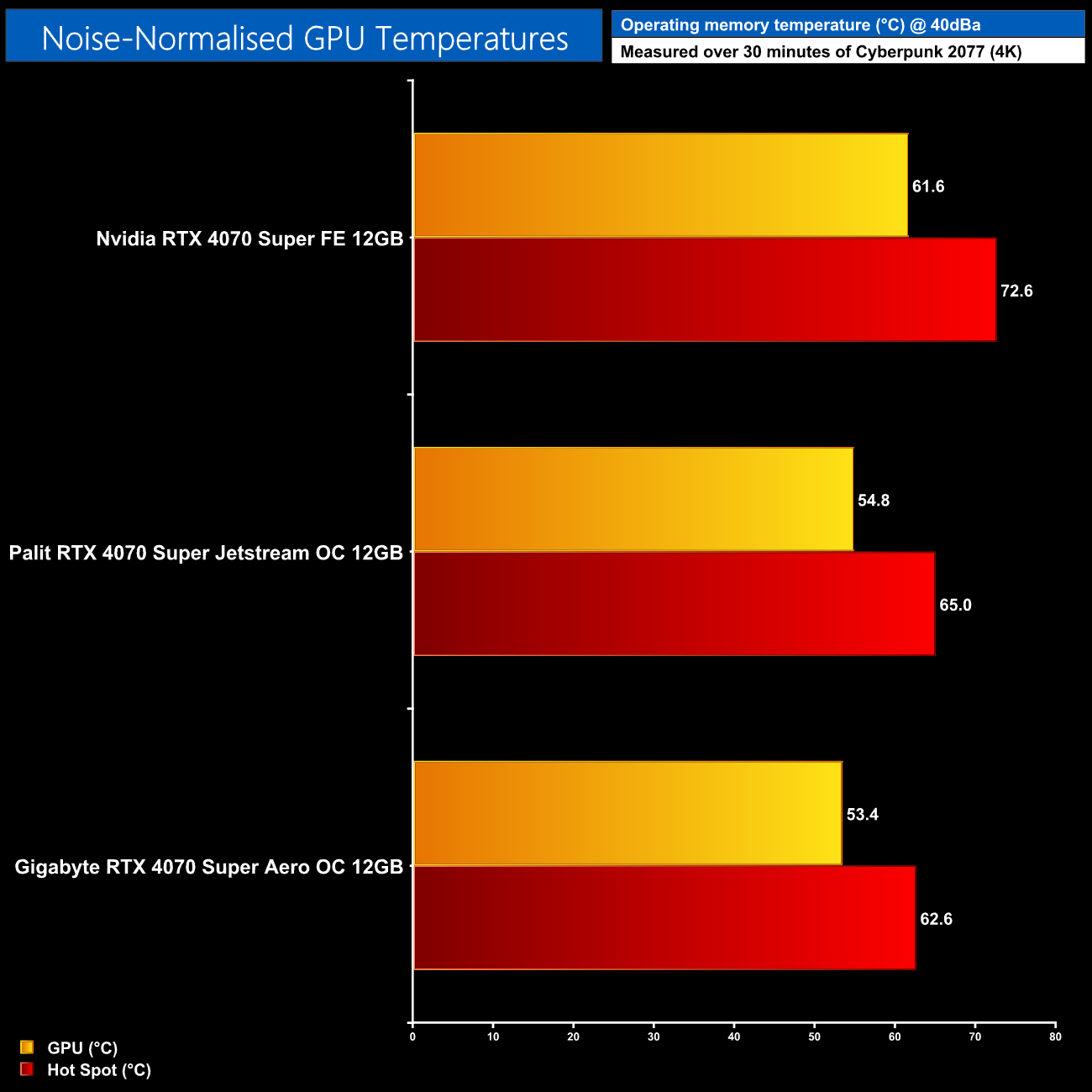
For our noise-normalised thermal testing, we increased fan speed to 1780rpm in order to reach 40dBa of noise. This saw temperatures hit just 54.8C on the GPU and 65C for the hot spot, a clear improvement over the Founders Edition, and only 2-3C hotter than the Aero OC.
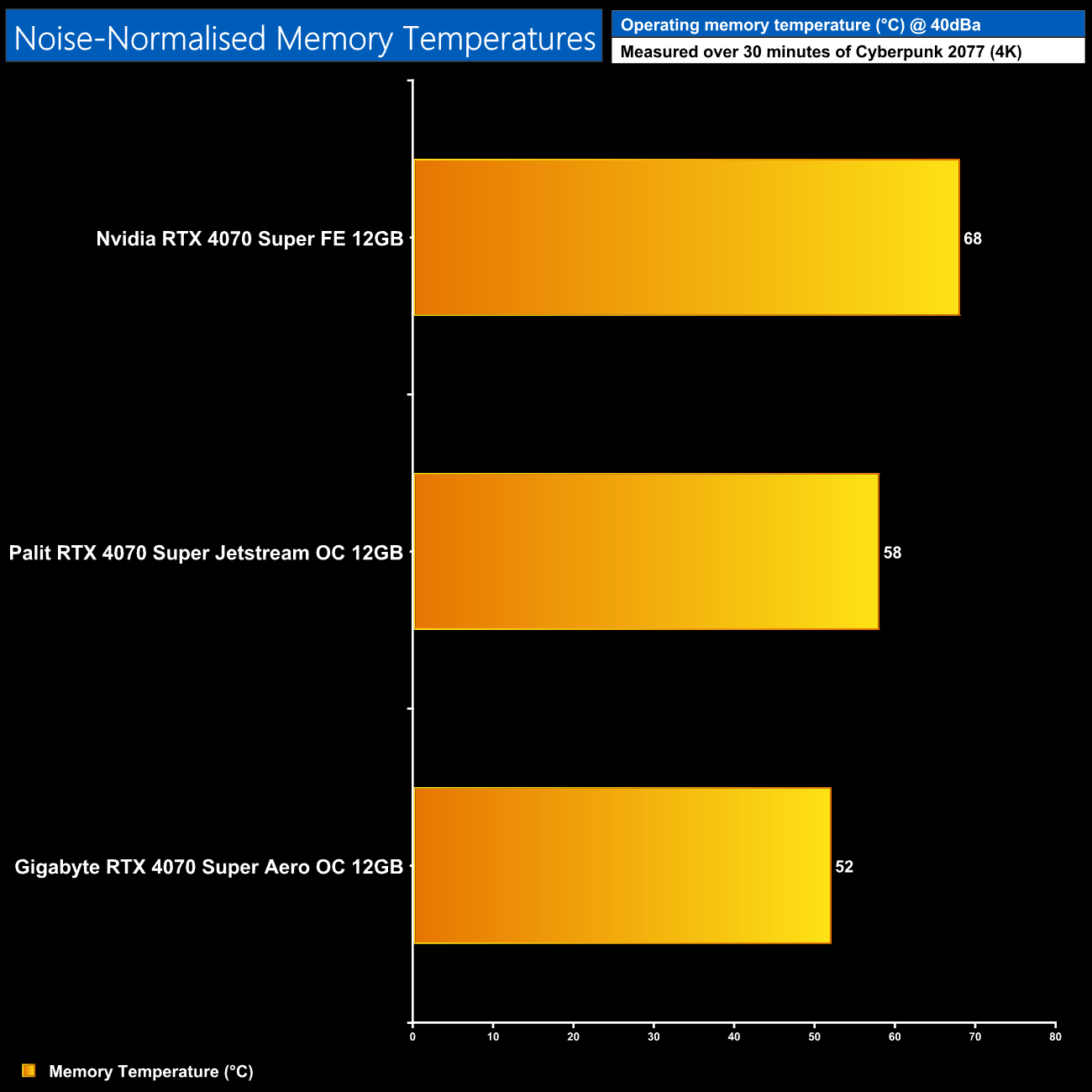
Noise-normalised memory temperatures peaked at 58C, a 10C reduction compared to the Founders, though that is 6C hotter than the Aero OC.
We use Nvidia PCAT to measure power draw of the graphics card only, with readings from both the PCIe slot and the PCIe power cables combined into a single figure. We use Cyberpunk 2077 (1440p) for this testing.
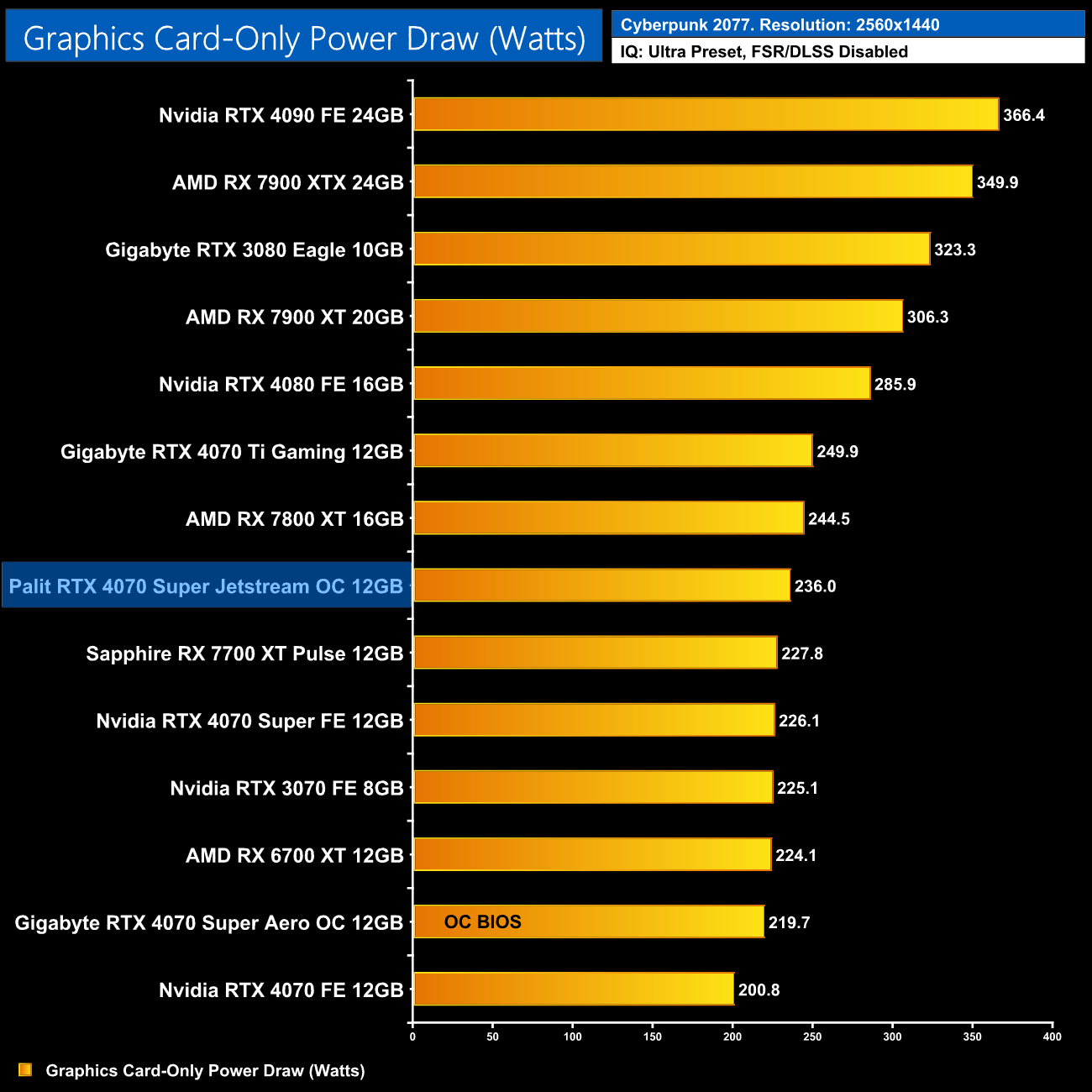
Given the higher clock speed and increased TGP, power draw comes in a touch above the Founders Edition, hitting 236W in our testing.
Combining the power draw values shown above with the performance data, we present performance per Watt for each graphics card tested:
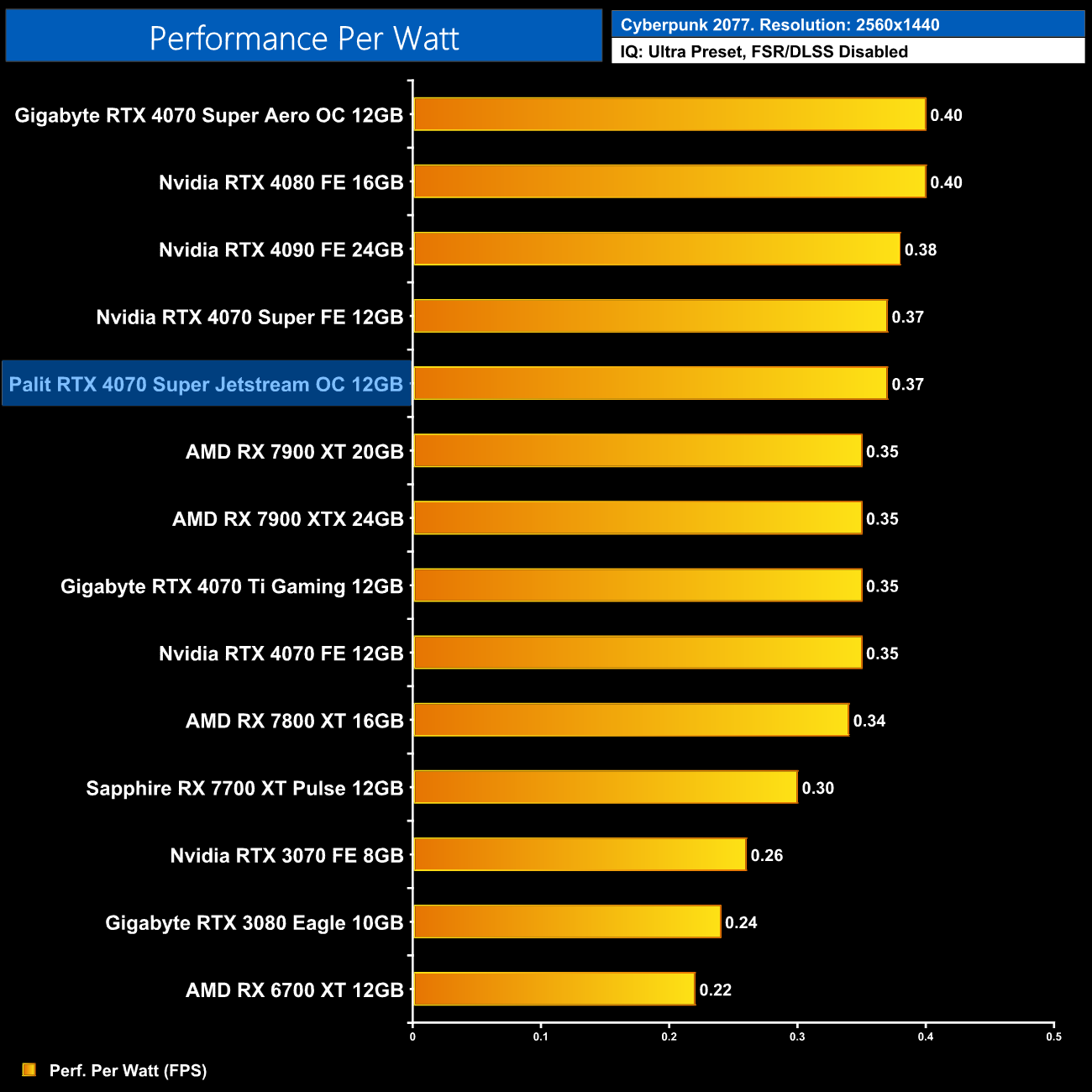
That small increase in power draw aligns with a small increase in performance, and overall efficiency is unchanged compared to Nvidia's Founders Edition.
For our manual overclocking tests, we used MSI Afterburner. Our best results are as below.
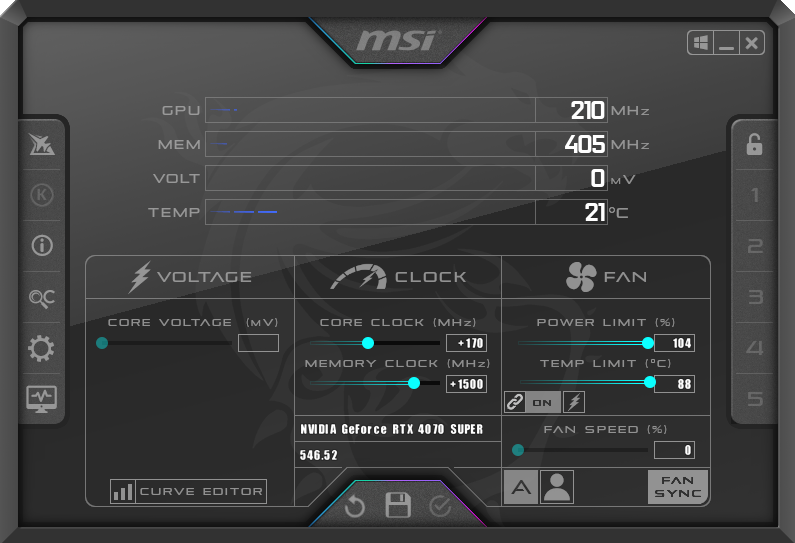
Interestingly, Palit only allows the power limit to be increased up to 104%, so it cannot be increased above 255W. We were still able to add 170MHz to the GPU core and 1500MHz to the memory while overclocking.
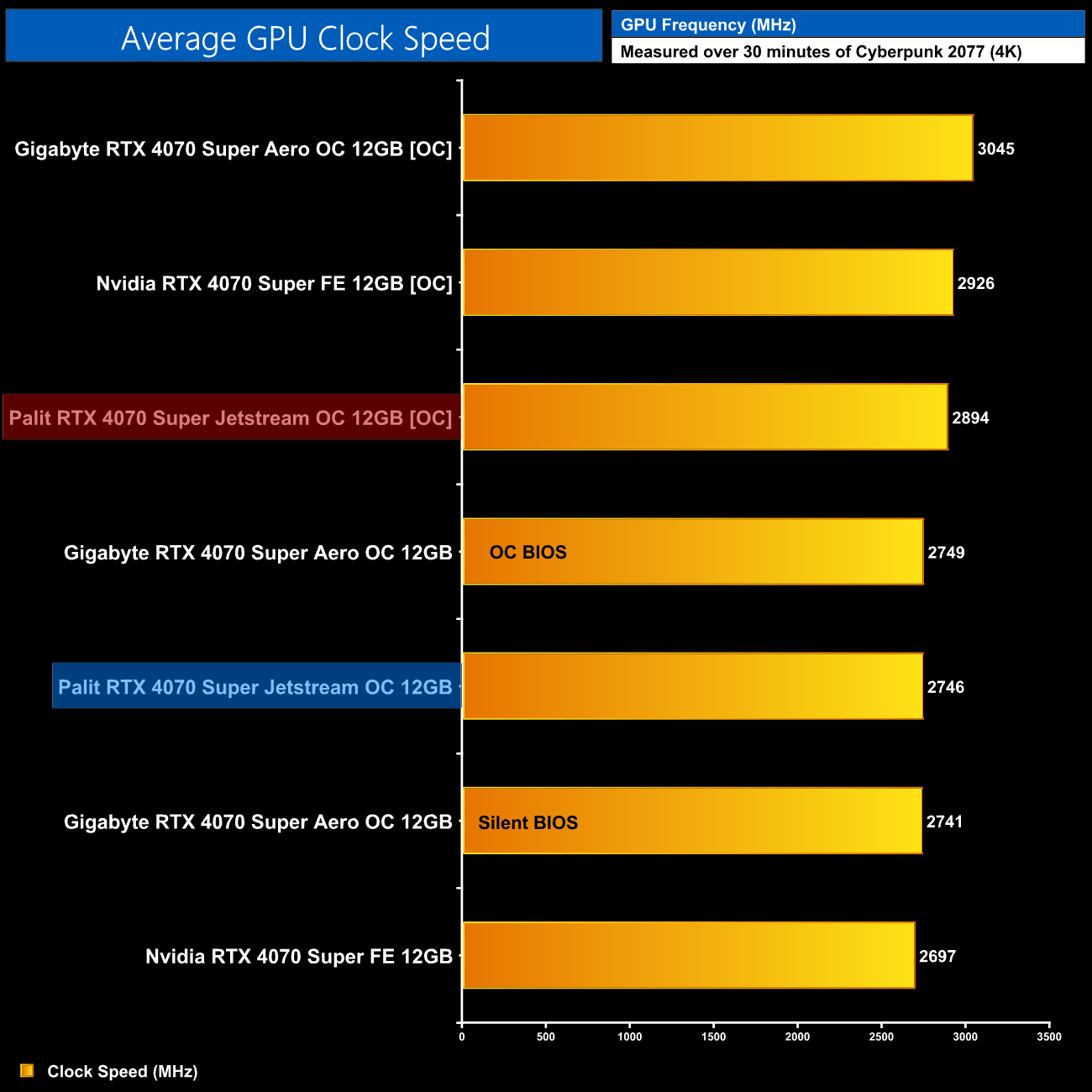
This overclock saw real-world clock speed average 2894MHz, which is slightly slower than what we managed with the Founders and Aero OC cards.
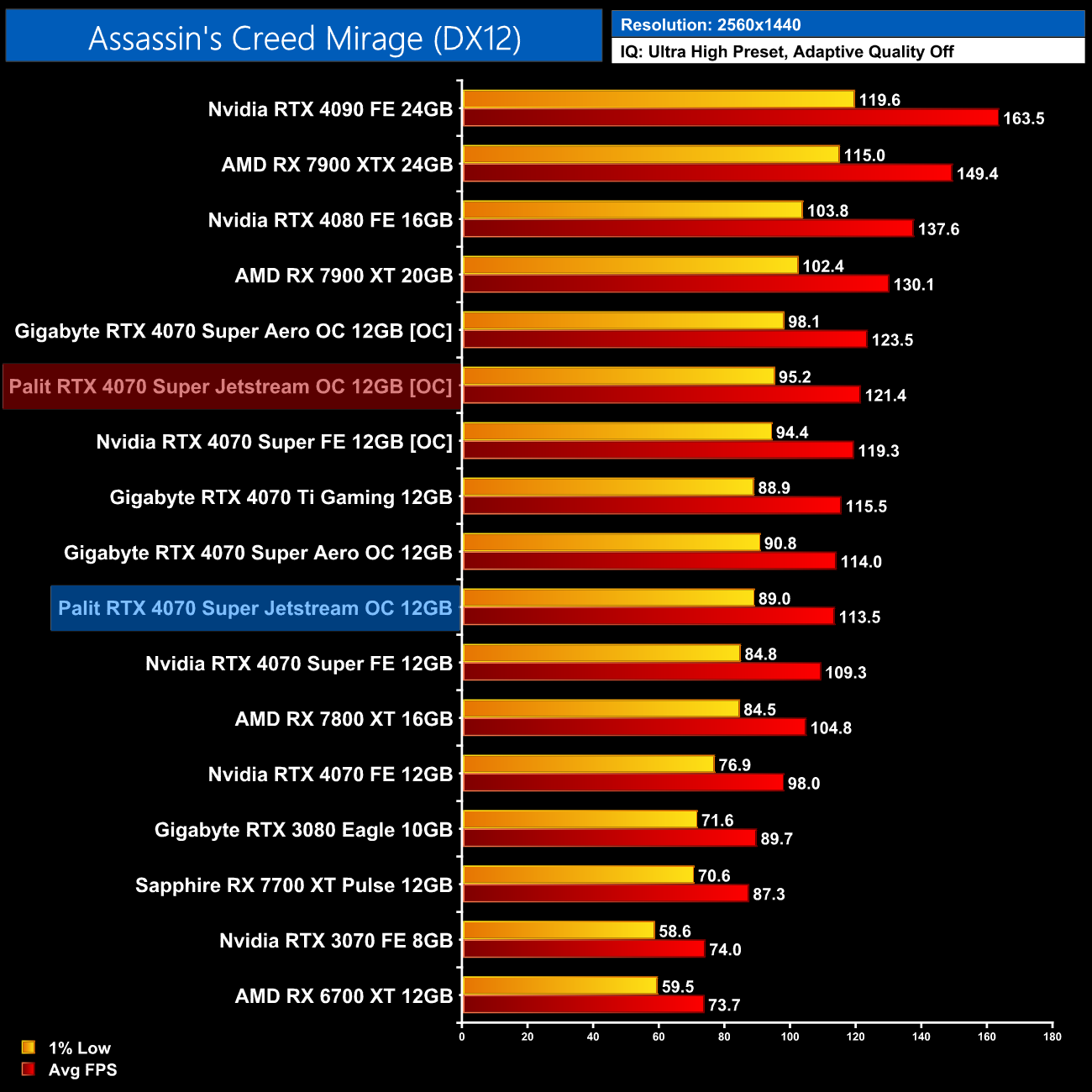
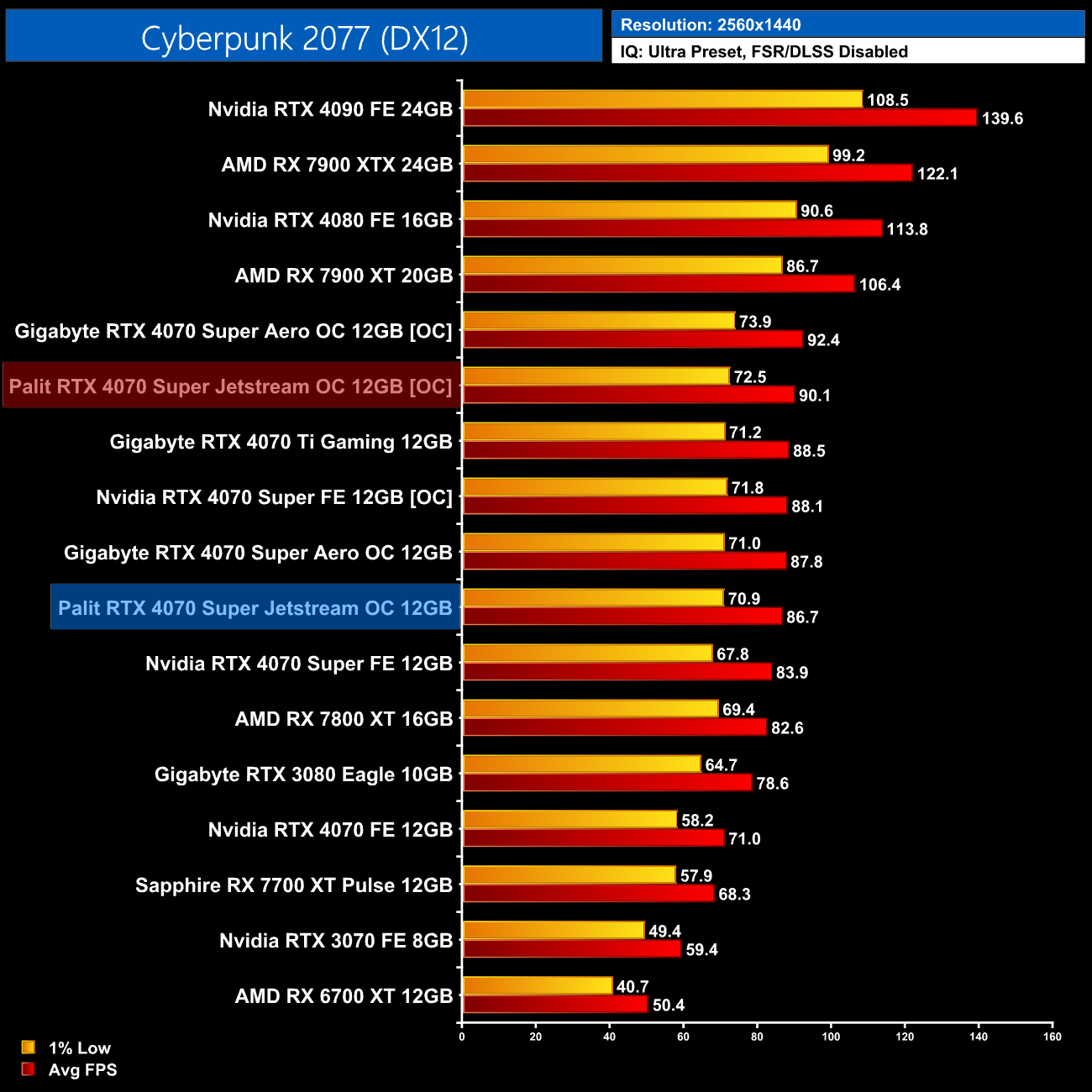
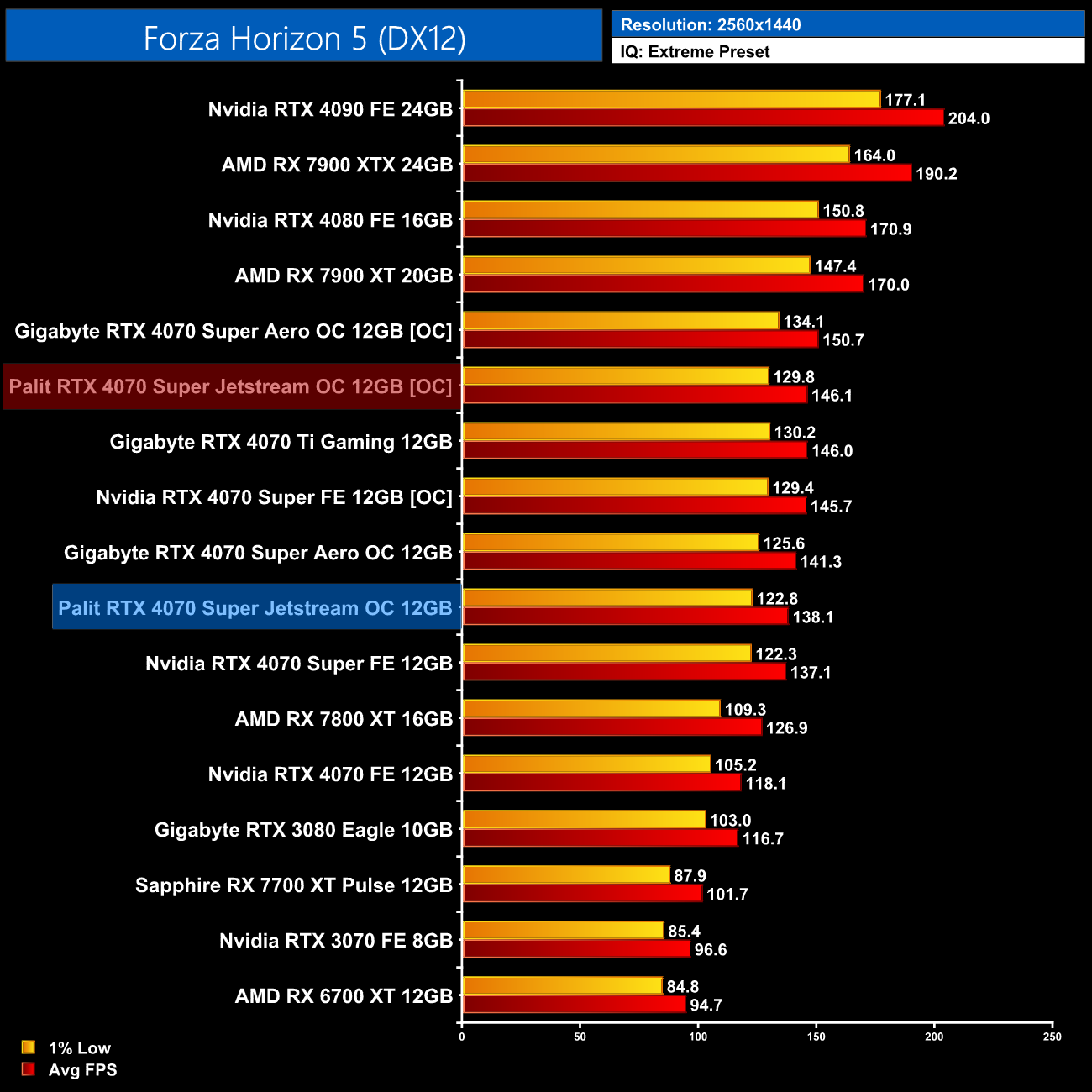
We still saw acceptable frame rate increases as a result of this overclock, in the 4-7% region depending on the game. It won't make a massive difference to your gaming experience but it may be worth it for some.
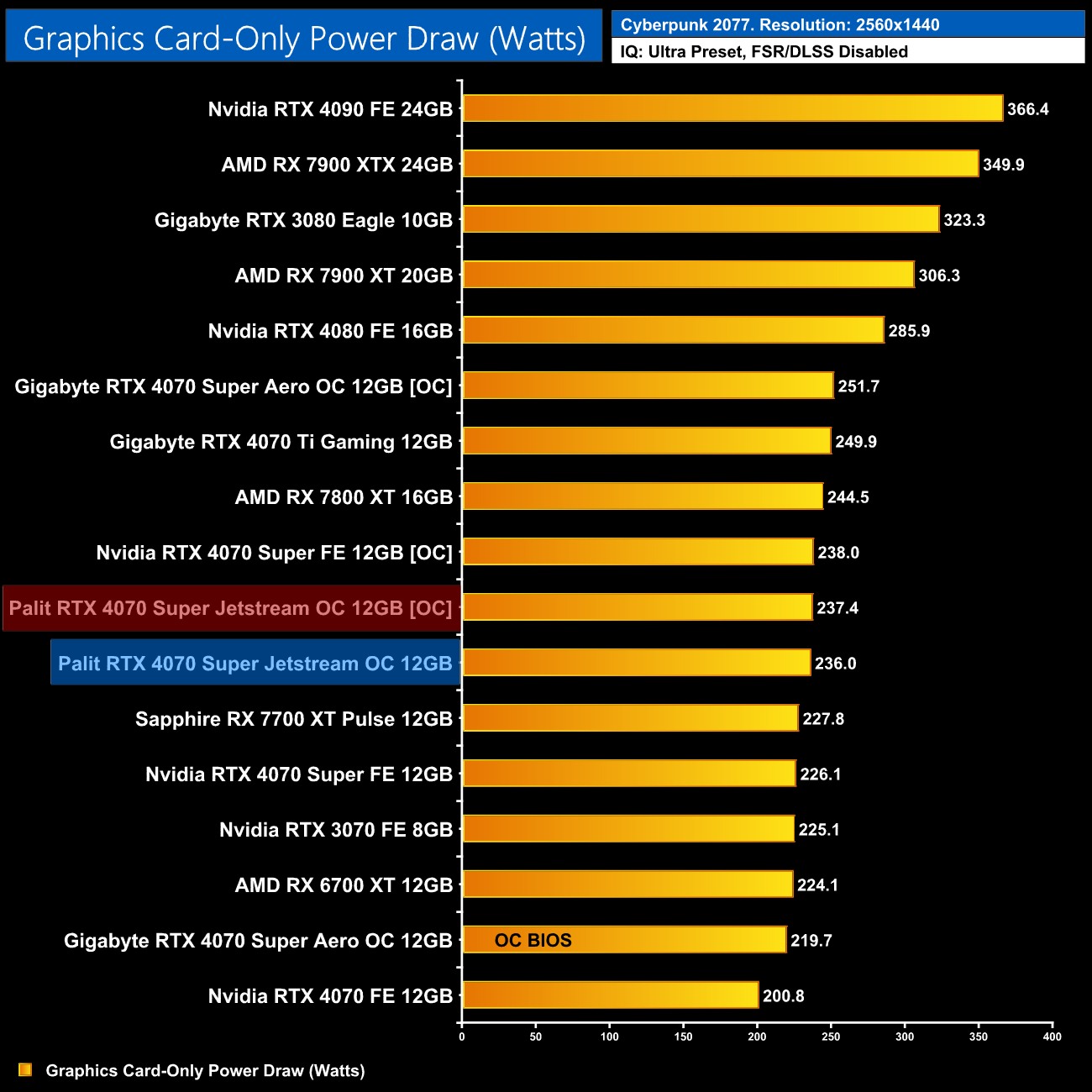
Power draw didn't change much even once overclocked, we measured just a 1W difference overclocked versus stock.
The Palit RTX 4070 Super JetStream OC has been an interesting card to asses. Palit themselves are quite upfront about the fact that this is a graphics card for those who ‘prefer function over form', given it lacks any kind of LED lighting or extra bells and whistles that may drive up the price.
Instead, the JetStream OC focuses on doing the basics right, and it is pretty successful. It offers thermal performance that's about 5C cooler than the Founders Edition out of the box, while we saw a 7C delta between the two cards in our noise-normalised testing. The default fan curve is very relaxed too, with the three fans spinning at just 1150rpm under load in Cyberpunk 2077.
Actual gaming performance is only a whisker better than what we saw from the Founders Edition, thanks to the JetStream OC's relatively mild factory overclock – in the real world, it ran about 50MHz faster than the Founders Edition. That still means it's a very capable GPU for 1440p, or even entry-level 4K gaming, just don't expect massive frame rate increases compared to the reference card.
In terms of complaints, I have only two real issues with the JetStream OC. The first is that the power limit can only be increased by 4%, so overclocking headroom is fairly limited. That's not a major critique, though I am more disappointed by the lack of dual-BIOS. I understand the JetStream OC is going for a ‘no frills' approach, but dual-BIOS is such a useful feature to have, and I really would expect it at the price point of a 4070 Super.
Speaking of price, at the time of writing we don't have a confirmed MSRP from Palit for the JetStream OC. We know it won't be a MSRP card as that position is occupied by Palit's Dual model, but considering the relative lack of features I am hoping for only a modest price premium over the baseline £579 MSRP. Anything above a 10% increase would feel on the steep side to me, but if the JetStream OC comes in below that it'd certainly be worth picking up if you want a cool and quiet graphics card that doesn't mess around.
Discuss on our Facebook page HERE.
Pros
- Simple, understated design.
- Cooler is a decent improvement over the Founders Edition.
- Fans are very quiet under load, spinning at 1150rpm.
- Noise-normalised temperatures are competitive with the more premium Gigabyte Aero OC.
- We'd hope for only a small price premium over the £579 MSRP.
- Support for the full RTX feature set including DLSS, ray tracing etc.
Cons
- Lacks dual-BIOS.
- Power limit can only be increased by 4%.
- Appearance and lack of lighting won't appeal to everyone.
KitGuru says: It's a simple yet effective graphics card – hopefully Palit can deliver it at a reasonable price, too.