KitGuru KitGuru.net – Tech News | Hardware News | Hardware Reviews | IOS | Mobile | Gaming | Graphics Cards


Starting out with a look at operating frequencies, this is where we see obvious deficits for these non-X processors versus their higher-powered X siblings.
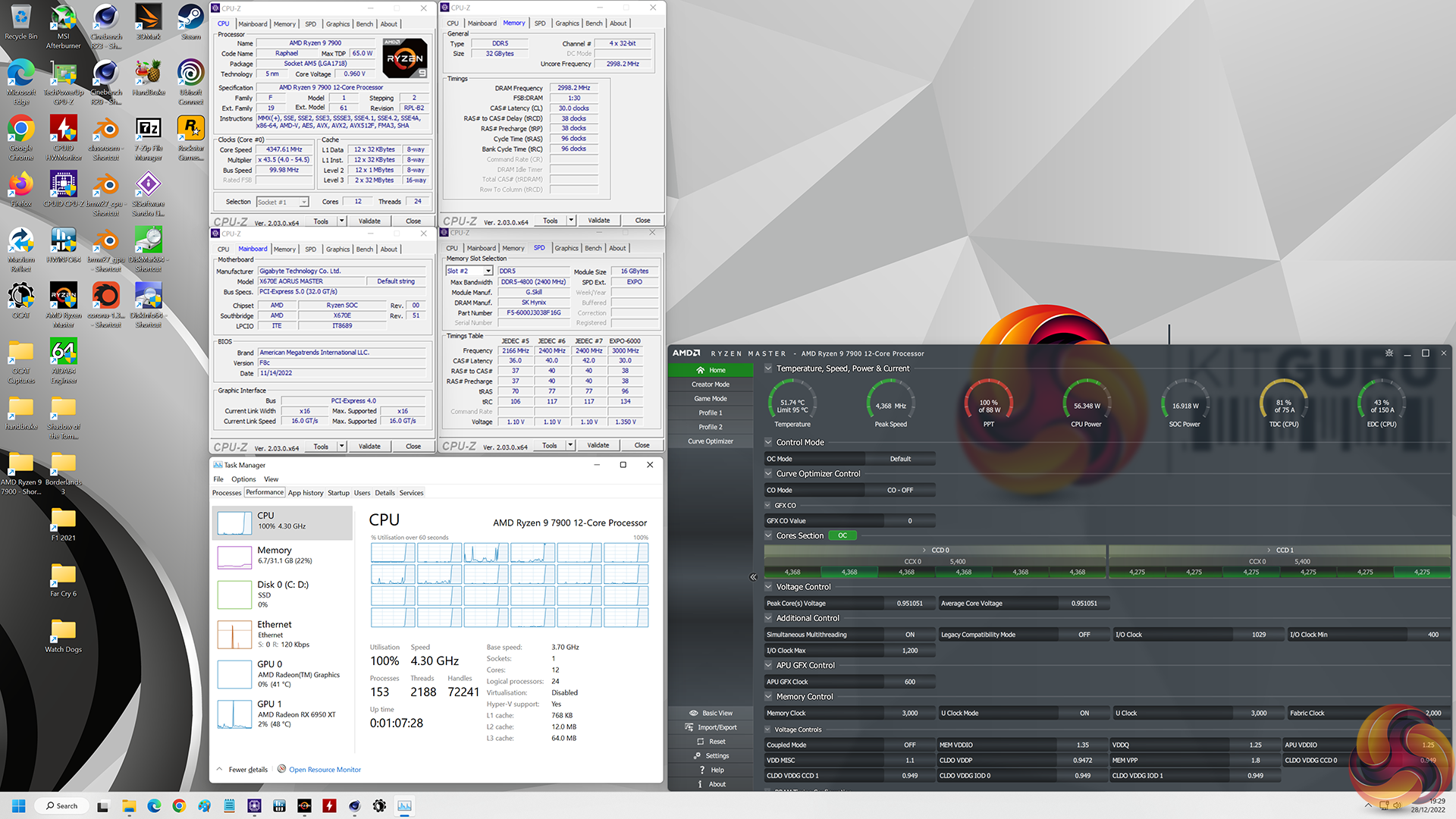
The Ryzen 9 7900 runs at around 4.35GHz all-core under a Cinebench workload. The stock Ryzen 9 7900X, by comparison, was pushing 5.1GHz.
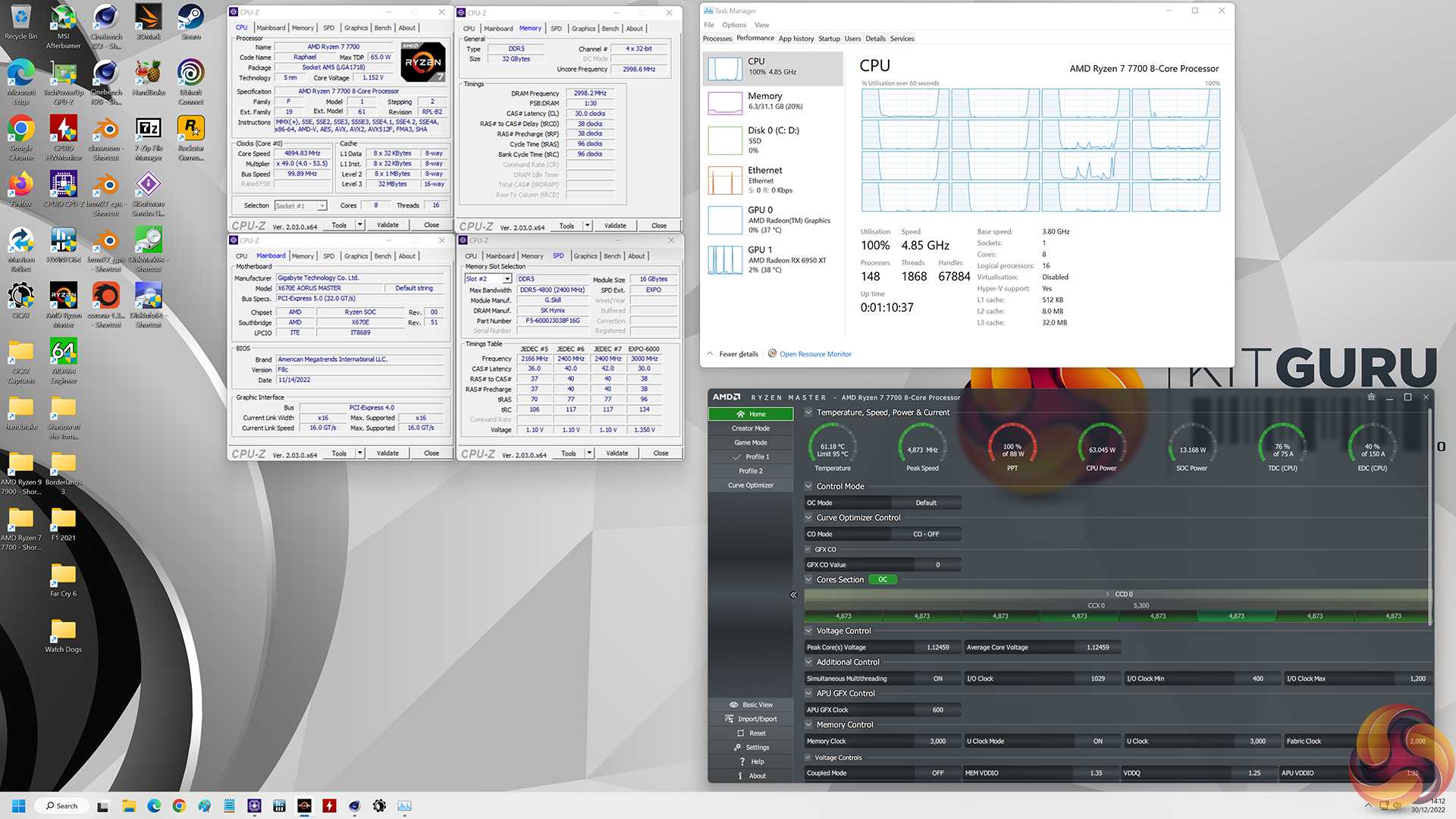
The Ryzen 7 7700 runs at around 4.9GHz all-core in Cinebench. This is around 250-300MHz slower than the Ryzen 7 7700X.
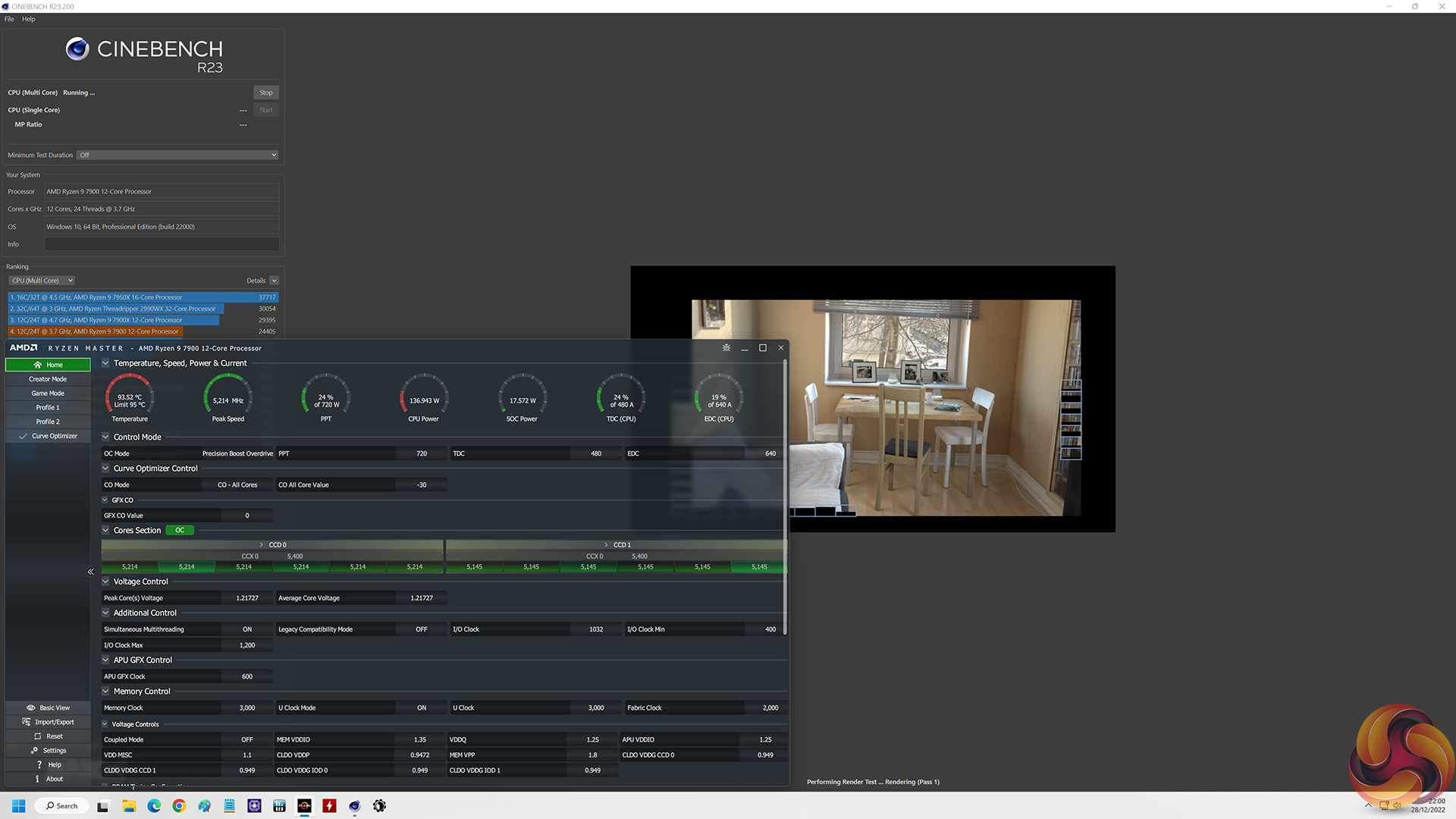
For overclocking, I ran Curve Optimiser, but this resulted in a frequency setting that was unstable for 7-Zip and Handbrake. Instead, I reverted to relying upon AMD’s good old Precision Boost 2 algorithm and leveraging Precision Boost Overdrive.
This one-click overclock is ideal for the 65W TDP chips as it allows extra power budget to be pushed their way, and the higher frequencies that come with that.
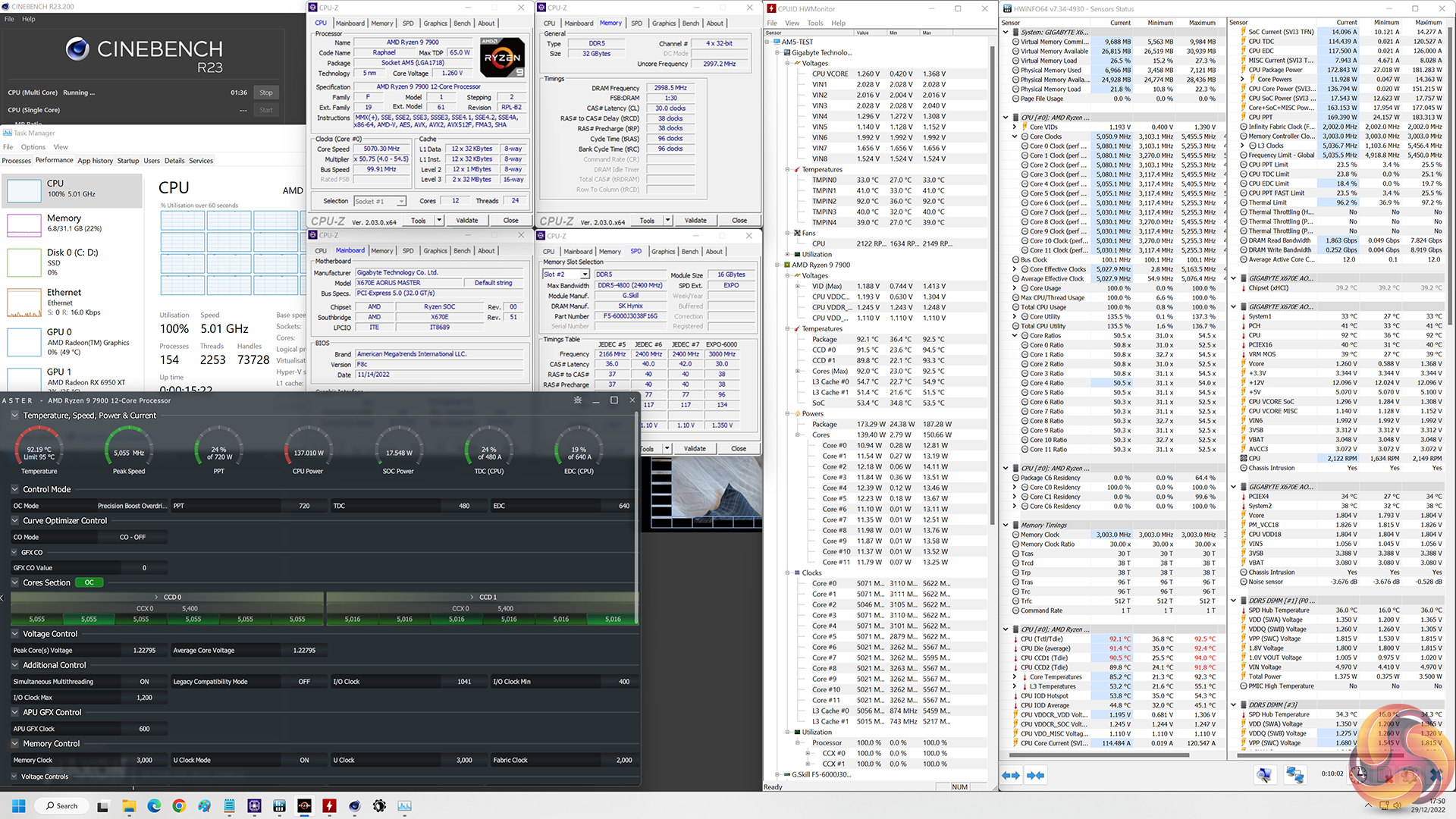
The Ryzen 9 7900 ran at 5.05GHz under its PBO all-core load. This is only 50MHz slower than the stock Ryzen 9 7900X.
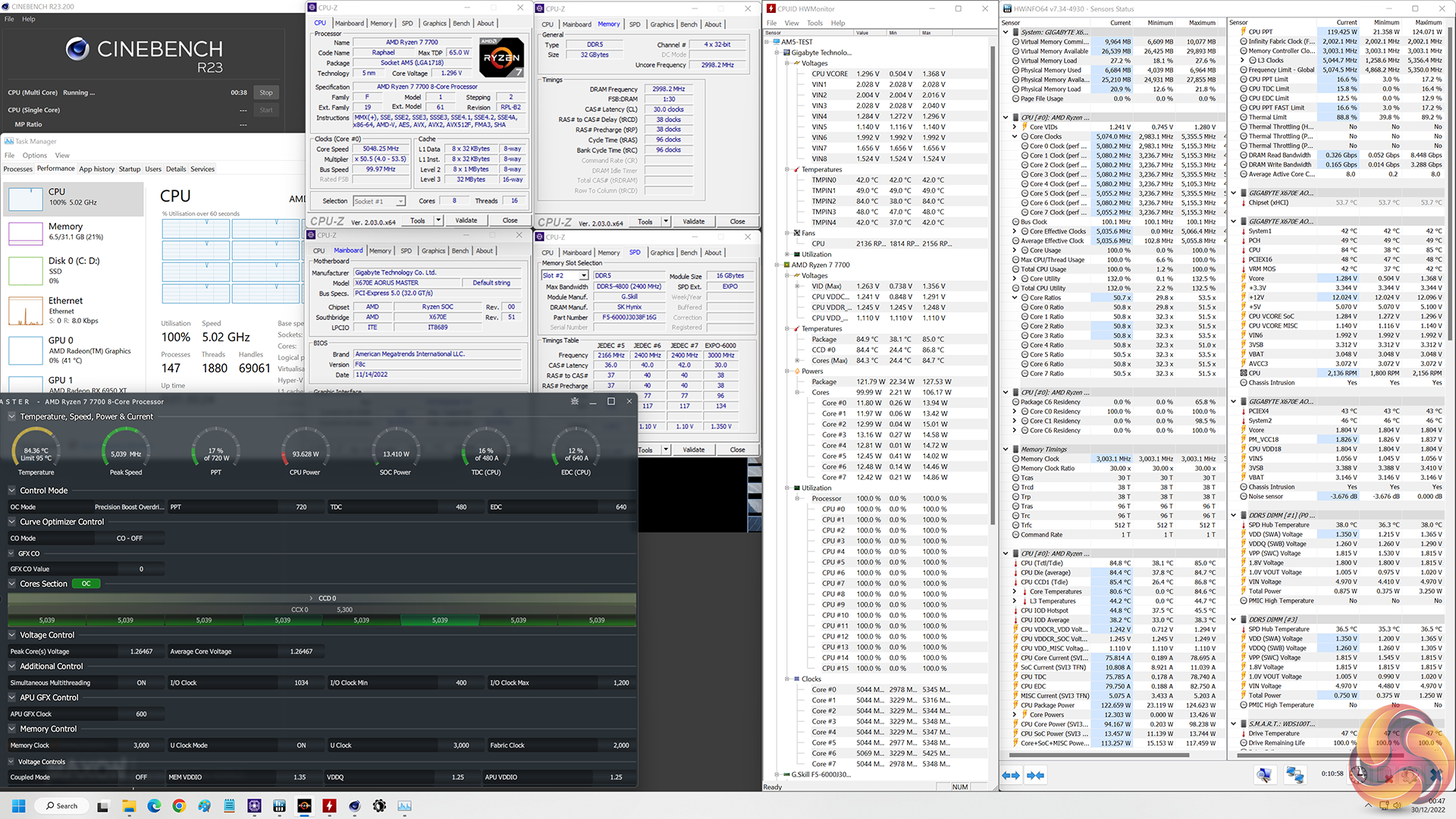
The Ryzen 7 7700 measured in at 5.07GHz all-core, which is just over 100MHz slower than the default Ryzen 7 7700X. In short, PBO looks to be an excellent way of pushing these cheaper processors to similar frequencies as their X-rated sibling.